Η διαδικτυακή αγορά αρωμάτων έχει αναπτυχθεί σημαντικά, αγγίζοντας τα 3 € δισεκατομμύρια σε έσοδα έως το 2025 και προβλέπεται να ξεπεράσει τα 5 € δισεκατομμύρια έως το 2027. Αυτή η μετατόπιση καθοδηγείται από νεότερους καταναλωτές, εργαλεία βασισμένα στην τεχνητή νοημοσύνη και τάσεις στα μέσα κοινωνικής δικτύωσης όπως το #PerfumeTok, το οποίο επηρέασε το 45% των αγορών αρωμάτων στις ΗΠΑ τα τελευταία χρόνια. Οι Millennials και η Gen Z κυριαρχούν στις διαδικτυακές αγορές προϊόντων ομορφιάς, αντιπροσωπεύοντας το 48% και το 35% των αγορών, αντίστοιχα.
Οι βασικές τάσεις που διαμορφώνουν την αγορά περιλαμβάνουν:
- Εξατομίκευση μέσω AI: Εργαλεία που συγκρίνουν την AI με την παραδοσιακή αρωματοποιία ώστε να ταιριάξουν τις μυρωδιές με τη χημεία του δέρματος και τις προτιμήσεις, μειώνουν τη μεταμέλεια από τυφλές αγορές (blind-buy) κατά 86%.
- Επιρροή των Social Media: Πλατφόρμες όπως το TikTok ενισχύουν την ανακάλυψη αρωμάτων, αν και μόλις το 2% των αγορών πραγματοποιείται απευθείας εντός των εφαρμογών.
- Μοντέλα Δειγματισμού Πρώτα (Sampling-First): Μειώνουν τη μεταμέλεια αγοράς και οδηγούν σε ποσοστά επαναληπτικών αγορών 3,2 φορές υψηλότερα από τις παραδοσιακές μεθόδους.
- Διασυνοριακές Αγορές: Οι Ευρωπαίοι καταναλωτές εξερευνούν όλο και περισσότερο διεθνείς πλατφόρμες για niche και premium αρώματα.
Κορυφαίοι παίκτες όπως το Amazon και το TikTok Shop πρωτοστατούν στην ευκολία και την ανακάλυψη, ενώ εταιρείες όπως η Scento εστιάζουν στον εξατομικευμένο δειγματισμό και στη μείωση των άσκοπων αγορών. Έως το 2026, οι διαδικτυακές πωλήσεις αρωμάτων αντιπροσωπεύουν το 35% της παγκόσμιας αγοράς, με την Ευρώπη να παρουσιάζει ιδιαίτερα ισχυρή ανάπτυξη στις κατηγορίες πολυτελείας.
Στατιστικά Διαδικτυακής Αγοράς Αρωμάτων 2026: Ανάπτυξη, Πωλήσεις & Συμπεριφορά Καταναλωτή
Διαδικτυακές Πωλήσεις Αρωμάτων: Μερίδιο Αγοράς και Αριθμοί Ανάπτυξης
Δεδομένα Παγκόσμιων και Ευρωπαϊκών Διαδικτυακών Πωλήσεων
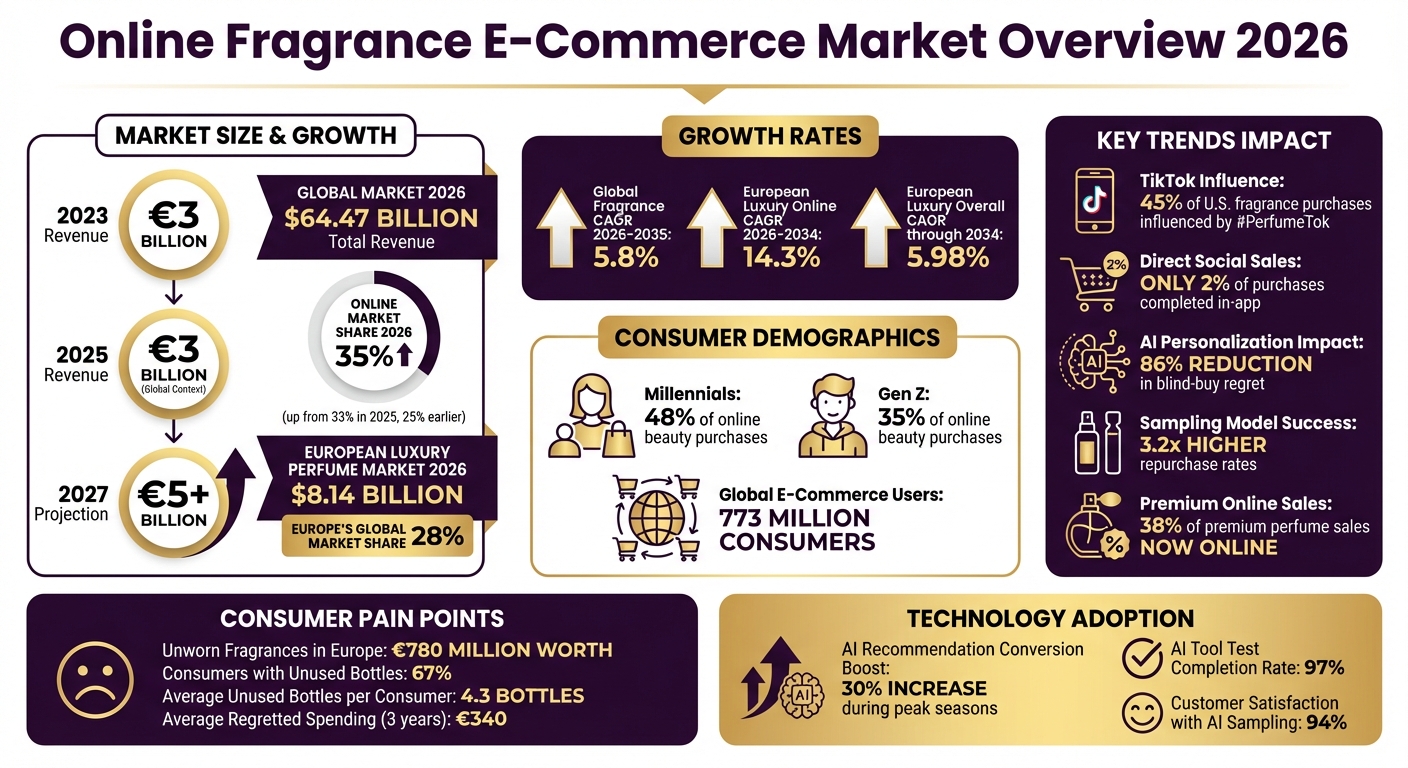
Οι διαδικτυακές πωλήσεις αρωμάτων καταγράφουν σταθερή άνοδο, καταλαμβάνοντας το 35% της παγκόσμιας αγοράς έως το 2026, σε σύγκριση με το 33% το 2025 και μόλις 25% τα προηγούμενα χρόνια. Αυτή η ανάπτυξη υπογραμμίζει την αυξανόμενη στροφή προς τις ψηφιακές πλατφόρμες σε μια αγορά που αναμένεται να αποφέρει $64,47 δισεκατομμύρια σε έσοδα έως το 2026.
Στην Ευρώπη, η τάση προς τις διαδικτυακές αγορές αρωμάτων είναι ακόμη πιο έντονη. Οι διαδικτυακές πωλήσεις στον τομέα των πολυτελών αρωμάτων προβλέπεται να αναπτυχθούν με σύνθετο ετήσιο ρυθμό ανάπτυξης (CAGR) 14,3% από το 2026 έως το 2034. Η Ευρώπη, η οποία αντιπροσωπεύει το 28% της παγκόσμιας αγοράς αρωμάτων, οφείλει μεγάλο μέρος της επιτυχίας της στις ισχυρές επιδόσεις σε βασικές αγορές όπως η Γαλλία, η Ιταλία και το Ηνωμένο Βασίλειο. Ο ευρωπαϊκός τομέας πολυτελών αρωμάτων αποτιμάται σε $8,14 δισεκατομμύρια το 2026, με συνολικό CAGR 5,98% έως το 2034. Παγκοσμίως, η αγορά αρωμάτων αναμένεται να επεκταθεί με CAGR 5,8% μεταξύ 2026 και 2035.
Τα κανάλια direct-to-consumer κερδίζουν επίσης έδαφος, με το 38% των πωλήσεων premium αρωμάτων να πραγματοποιείται πλέον μέσω διαδικτύου. Αυτά τα στοιχεία παρέχουν μια σταθερή βάση για τη διερεύνηση των καινοτομιών που τροφοδοτούν αυτήν την ανάπτυξη.
Τι Οδηγεί την Ανάπτυξη του Ηλεκτρονικού Εμπορίου
Η ραγδαία επέκταση των διαδικτυακών πωλήσεων αρωμάτων μπορεί να αποδοθεί στις εξελίξεις στην τεχνολογία AI, στην άνοδο του social commerce και στην άνεση που αναμένουν πλέον οι καταναλωτές. Ψηφιακά εργαλεία όπως η εύρεση αρωμάτων βάσει AI και οι εικονικές δοκιμές βοηθούν στη γεφύρωση του κενού που αφήνει η αδυναμία φυσικής δοκιμής των αρωμάτων στο διαδίκτυο.
Τα μέσα κοινωνικής δικτύωσης έχουν επίσης αναδιαμορφώσει τον τρόπο με τον οποίο οι καταναλωτές ανακαλύπτουν αρώματα. Πλατφόρμες όπως το TikTok, μέσα από τάσεις όπως το #PerfumeTok, σε συνδυασμό με κριτικές από influencers, δημιουργούν ένα αίσθημα «αυτοπεποίθησης για τυφλή αγορά» στους αγοραστές. Επιπλέον, το ηλεκτρονικό εμπόριο καταρρίπτει τα εμπόδια στην πολυτελή αρωματοποιία, καθιστώντας τα εκλεκτά αρώματα πιο προσιτά στους καταναλωτές σε μικρότερες ευρωπαϊκές πόλεις.
Κορυφαίοι Διαδικτυακοί Έμποροι Αρωμάτων κατά Μερίδιο Αγοράς
Οι Κύριοι Παίκτες στο Διαδικτυακό Εμπόριο Αρωμάτων
Η ευρωπαϊκή αγορά ηλεκτρονικού εμπορίου αρωμάτων το 2026 παρουσιάζει έναν συνδυασμό κολοσσών γενικού λιανεμπορίου και εξειδικευμένων πλατφορμών ανακάλυψης. Το Amazon ηγείται της κούρσας, χάρη στις ασυναγώνιστες δυνατότητες logistics που διαθέτει, οι οποίες εξασφαλίζουν ταχεία παράδοση σε ολόκληρη την Ευρώπη. Δημοφιλή προϊόντα, όπως τα αρώματα της Sol de Janeiro, κυριαρχούν συχνά στις λίστες των best seller του. Για τους καταναλωτές που δίνουν προτεραιότητα στην ευκολία, το Amazon παραμένει μια σταθερή επιλογή.
Το TikTok Shop έχει κερδίσει γρήγορα έδαφος, επεκτεινόμενο από το Ηνωμένο Βασίλειο και την Ιρλανδία σε βασικές αγορές όπως η Ισπανία, η Γαλλία, η Γερμανία και η Ιταλία έως τον Μάρτιο του 2025. Η επιρροή της πλατφόρμας πηγάζει από viral τάσεις όπως το #PerfumeTok, οι οποίες οδηγούν το 45% των αγορών αρωμάτων που εμπνέονται από τα μέσα κοινωνικής δικτύωσης. Ωστόσο, μόλις το 2% αυτών των πωλήσεων ολοκληρώνεται απευθείας στην εφαρμογή. Αυτό το χάσμα μεταξύ ανακάλυψης και αγοράς αναδεικνύει τόσο μια πρόκληση όσο και μια ευκαιρία στο social commerce: ενώ το TikTok δημιουργεί ζήτηση, μεγάλο μέρος της μετατροπής συμβαίνει αλλού.
Σε μεμονωμένες αγορές, συγκεκριμένοι παίκτες διατηρούν την πρωτοκαθεδρία. Το εκτεταμένο χαρτοφυλάκιο της Coty εξασφαλίζει την πρωτιά της στην Αυστρία, το ισχυρό δίκτυο διανομής της Orbico εγγυάται την επιτυχία στη Σλοβενία, και η Chanel διατηρεί την απόλυτη κυριαρχία της στον τομέα της πολυτέλειας στην Ελβετία.
Η Θέση της Scento στο Ηλεκτρονικό Εμπόριο Αρωμάτων
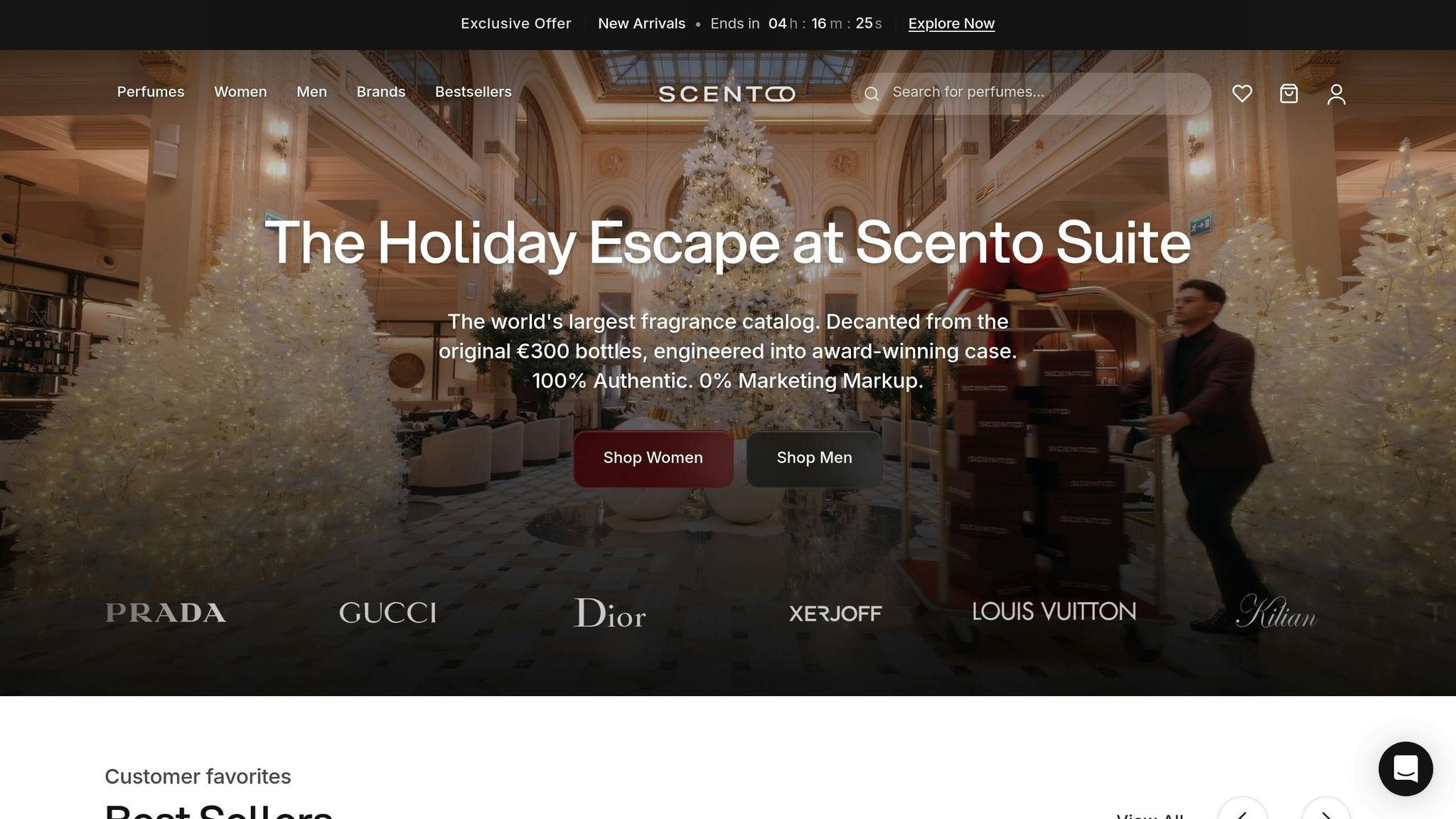
Ανάμεσα σε αυτούς τους ανταγωνιστές, η Scento έχει διαμορφώσει μια ξεχωριστή θέση στον τομέα της καθοδηγούμενης ανακάλυψης του ευρωπαϊκού ηλεκτρονικού εμπορίου αρωμάτων. Δραστηριοποιούμενη σε 19 αγορές, η εταιρεία δίνει λύση σε ένα σημαντικό πρόβλημα του κλάδου: αρώματα αξίας 780 € εκατομμυρίων μένουν αχρησιμοποίητα κάθε χρόνο λόγω λανθασμένων αγορών. Με έδρα την Place Vendôme στο Παρίσι, η Scento ανακοίνωσε μια στρατηγική επένδυση ύψους 25 € εκατομμυρίων τον Νοέμβριο του 2025 για να επεκτείνει τα εργαλεία εξατομίκευσης μέσω AI και την πιστοποιημένη εφοδιαστική της αλυσίδα.
Η Scento αντιμετωπίζει την πρόκληση των τυφλών αγορών δίνοντας έμφαση στην «οσφρητική ρευστότητα» αντί για την αφοσίωση σε ένα και μοναδικό μπουκάλι. Με έναν κατάλογο που περιλαμβάνει περισσότερους από 90 οίκους designer και niche, η εταιρεία χρησιμοποιεί τεχνητή νοημοσύνη για να ταιριάξει τα αρώματα με τη χημεία του δέρματος, τις εποχιακές προτιμήσεις και τον τρόπο ζωής του κάθε ατόμου. Αυτή η μέθοδος εξατομικευμένου δειγματισμού έχει μειώσει τη μεταμέλεια αγοράς κατά 86% σε σύγκριση με τις παραδοσιακές τυφλές αγορές και έχει επιτύχει ποσοστό ικανοποίησης 94% μεταξύ των χρηστών.
«Οι καταναλωτές δεν ζουν μονοδιάστατα – οι ταυτότητες, οι προτιμήσεις και οι καθημερινές μας συνήθειες είναι ρευστές. Η Scento χτίζει το μέλλον του luxury retail αρωμάτων σεβόμενη αυτή τη φυσική ρευστότητα.» – Sebastian Dobrincu, Συνιδρυτής και CEO της Scento
Συμπεριφορά Καταναλωτή: Αξία Παραγγελίας, Επιστροφές και Συσκευές Αγορών
Μέση Αξία Παραγγελίας για Διαδικτυακές Αγορές Αρωμάτων
Το 2023, τα έσοδα του ηλεκτρονικού εμπορίου αρωμάτων έφτασαν το εντυπωσιακό ποσό των $3 δισεκατομμυρίων, με τις προβλέψεις να δείχνουν ότι θα μπορούσαν να ξεπεράσουν τα $5 δισεκατομμύρια έως το 2027. Αυτή η άνοδος μπορεί να συνδεθεί με το «lipstick effect», όπου τα εκλεκτά αρώματα λειτουργούν ως μια σχετικά προσιτή πολυτέλεια σε περιόδους οικονομικής αβεβαιότητας.
Η αλλαγή στις καταναλωτικές συνήθειες οδηγεί επίσης αυτήν την ανάπτυξη. Πολλοί αγοραστές προτιμούν πλέον να δημιουργούν επιλεγμένες «γκαρνταρόμπες αρωμάτων» προσαρμοσμένες σε διαφορετικές διαθέσεις και περιστάσεις, απομακρυνόμενοι από την ιδέα ενός και μόνο signature αρώματος. Αυτή η αλλαγή έχει οδηγήσει σε πιο συχνές, μικρότερες αγορές καθ’ όλη τη διάρκεια του έτους, συνδυάζοντας πολυτελή μπουκάλια υψηλής ραπτικής με πιο οικονομικές επιλογές όπως body mists σε τιμές που ξεκινούν ακόμη και από 3 £. Αυτές οι εξελισσόμενες αγοραστικές συμπεριφορές αναδιαμορφώνουν τον τρόπο με τον οποίο οι έμποροι προσεγγίζουν την πρόκληση των υψηλών ποσοστών επιστροφής που σχετίζονται με τις τυφλές αγορές.
Ποσοστά Επιστροφών για Τυφλές Αγορές (Blind-Buy)
Παρά την ευκολία των διαδικτυακών αγορών, η τυφλή αγορά αρωμάτων παραμένει ένα δύσκολο ρίσκο για πολλούς καταναλωτές. Μόνο στην Ευρώπη, τα αχρησιμοποίητα αρώματα αντιστοιχούν σε εκτιμώμενα 780 € εκατομμύρια, με το 67% των αγοραστών να παραδέχεται ότι έχει τουλάχιστον ένα μπουκάλι που δεν χρησιμοποιεί ποτέ. Κατά μέσο όρο, οι καταναλωτές διαθέτουν 4,3 αχρησιμοποίητα μπουκάλια και ξοδεύουν περίπου 340 € σε αρώματα για τα οποία έχουν μετανιώσει μέσα σε διάστημα τριών ετών.
Για την αντιμετώπιση αυτού του ζητήματος, ορισμένοι έμποροι έχουν εισαγάγει τέλη επιστροφής ή αυστηρότερες πολιτικές επιστροφών. Ωστόσο, αναδύονται πιο αποτελεσματικές λύσεις, όπως τα μοντέλα δοκιμής δειγμάτων (sampling-first) και η εξατομίκευση βάσει τεχνητής νοημοσύνης. Για παράδειγμα, πλατφόρμες που προσφέρουν αυθεντικά δείγματα και οσφρητικό προφίλ έχουν καταγράψει μείωση κατά 86% στη μεταμέλεια αγοράς. Αυτές οι στρατηγικές ενισχύουν επίσης τα ποσοστά επαναληπτικών αγορών, τα οποία είναι 3,2 φορές υψηλότερα όταν οι καταναλωτές δοκιμάζουν ένα δείγμα πριν δεσμευτούν σε ένα μπουκάλι κανονικού μεγέθους.
Μοτίβα Αγορών: Κινητά έναντι Υπολογιστών
Οι κινητές συσκευές αποτελούν πλέον το κύριο εργαλείο για την ανακάλυψη αρωμάτων, με 773 εκατομμύρια καταναλωτές παγκοσμίως να χρησιμοποιούν πλατφόρμες ηλεκτρονικού εμπορίου για να αναζητήσουν αρώματα. Τα μέσα κοινωνικής δικτύωσης όπως το TikTok και το Instagram παίζουν καθοριστικό ρόλο σε αυτή την τάση, με το TikTok μόνο να επηρεάζει το 45% των αγορών αρωμάτων που καθοδηγούνται από τα social media στις Ηνωμένες Πολιτείες. Ωστόσο, μόνο το 2% των πωλήσεων αρωμάτων ολοκληρώνεται απευθείας εντός αυτών των εφαρμογών.
Αυτό αναδεικνύει μια διαδρομή αγοράς σε πολλαπλές συσκευές. Ενώ το κινητό λειτουργεί ως η κύρια πλατφόρμα ανακάλυψης, πολλοί καταναλωτές στρέφονται σε επιτραπέζιους υπολογιστές ή άλλες συσκευές για να ολοκληρώσουν τις αγορές τους. Αυτή η συμπεριφορά αντικατοπτρίζει την ευρύτερη ψηφιακή εξέλιξη στο luxury retail αρωμάτων. Για να προσαρμοστούν, οι έμποροι εστιάζουν σε mobile-first σχεδιασμούς και εμπειρίες μέσω εφαρμογών. Αυτές συχνά διαθέτουν εργαλεία προτάσεων AI που αναλύουν παράγοντες όπως η χημεία του δέρματος και οι προτιμήσεις αρωμάτων, μειώνοντας τους κινδύνους των τυφλών αγορών από κινητές συσκευές.
sbb-itb-fb213bc
Η Τεχνολογία Αλλάζει το Ηλεκτρονικό Εμπόριο Αρωμάτων
Ο τρόπος με τον οποίο αγοράζουμε αρώματα στο διαδίκτυο εξελίσσεται χάρη στις τεχνολογικές εξελίξεις. Καθώς οι καταναλωτές επιδιώκουν να ελαχιστοποιήσουν την αβεβαιότητα των τυφλών αγορών, όπως για παράδειγμα όταν επιλέγουν το κατάλληλο άρωμα για δώρο, καινοτόμα εργαλεία μεταμορφώνουν την εμπειρία του ηλεκτρονικού εμπορίου.
Προτάσεις AI στις Αγορές Αρωμάτων
Τα εργαλεία τεχνητής νοημοσύνης αντιμετωπίζουν μία από τις μεγαλύτερες προκλήσεις στις διαδικτυακές αγορές αρωμάτων: την αδυναμία φυσικής δοκιμής των οσμών. Αναλύοντας παράγοντες όπως η χημεία του δέρματος, οι εποχιακές προτιμήσεις, ακόμη και τα συναισθηματικά ερεθίσματα, αυτά τα συστήματα δημιουργούν εξατομικευμένα οσφρητικά προφίλ για να καθοδηγήσουν τους αγοραστές προς αρώματα που είναι πιθανό να λατρέψουν.
Οι έμποροι που υιοθετούν την τεχνητή νοημοσύνη έχουν αναφέρει εντυπωσιακά αποτελέσματα. Για παράδειγμα, τα ποσοστά επαναληπτικών αγορών έχουν εκτιναχθεί κατά 3,2 φορές όταν οι αγοραστές δοκιμάζουν πρώτα αρώματα που προτείνονται από συστήματα AI. Ένα χαρακτηριστικό παράδειγμα είναι η Import Parfumerie, η οποία υιοθέτησε το Fragrance Finder της Inference Beauty στα τέλη του 2025. Αυτό το εργαλείο πέτυχε ποσοστό ολοκλήρωσης του τεστ 97% και αύξησε τα ποσοστά μετατροπής κατά 30% κατά τις περιόδους αιχμής των αγορών. Το Fragrance Finder χρησιμοποιεί επίσης οπτικά στοιχεία που δημιουργούνται από AI για την αναπαράσταση των αρωματικών νοτών, καθιστώντας τα πολύπλοκα οσφρητικά προφίλ πιο κατανοητά - χωρίς να απαιτείται φυσικό δείγμα.
«Η οπτικοποίηση των αρωματικών νοτών στο ηλεκτρονικό εμπόριο αποτελεί το ελάχιστο πρότυπο για την ουσιαστική προσέλκυση των διαδικτυακών αγοραστών αρωμάτων.» — Estella Benz, CEO, Inference Beauty
Ενώ η τεχνητή νοημοσύνη ενισχύει την εξατομίκευση, τα μέσα κοινωνικής δικτύωσης αναδιαμορφώνουν τον τρόπο με τον οποίο οι καταναλωτές ανακαλύπτουν νέα αρώματα.
Social Commerce: TikTok Shop και Instagram

Οι πλατφόρμες κοινωνικής δικτύωσης έχουν αναδειχθεί σε βασικούς παράγοντες στην ανακάλυψη αρωμάτων. Το TikTok, για παράδειγμα, επηρεάζει πλέον το 45% των αποφάσεων αγοράς αρωμάτων. Από το 2022 έως το 2023, hashtags όπως το #PerfumeTok και το #PerfumeTikTok σημείωσαν εκρηκτική άνοδο - 450% και 280%, αντίστοιχα. Αυτές οι τάσεις καθοδηγούνται από περιεχόμενο που δημιουργούν οι ίδιοι οι χρήστες και από προτάσεις influencers, οι οποίες εμπνέουν τους καταναλωτές να εξερευνήσουν αρώματα στο διαδίκτυο και να ολοκληρώσουν τις αγορές τους μέσω των ιστοσελίδων λιανικής.
Η τεχνολογία και οι κοινωνικές πλατφόρμες επαναπροσδιορίζουν ξεκάθαρα τον τρόπο με τον οποίο βιώνουμε και αγοράζουμε αρώματα, δημιουργώντας μια πιο ελκυστική και ενημερωμένη αγοραστική διαδρομή.
Διασυνοριακό Ηλεκτρονικό Εμπόριο στις Ευρωπαϊκές Αγορές Αρωμάτων
Καθώς οι διαδικτυακές αγορές αρωμάτων συνεχίζουν να αυξάνονται, οι Ευρωπαίοι καταναλωτές εξερευνούν ολοένα και περισσότερο διασυνοριακές πλατφόρμες για να αποκτήσουν πρόσβαση σε niche έναντι designer αρωμάτων που δεν είναι διαθέσιμα σε τοπικό επίπεδο. Έως το 2025, η ευρωπαϊκή αγορά πολυτελών αρωμάτων αποτιμήθηκε σε 19 € δισεκατομμύρια, με τα διαδικτυακά κανάλια να αντιπροσωπεύουν το 25% των παγκόσμιων αγορών αρωμάτων. Αυτή η ανοδική τάση αναδεικνύει μια βασική αλλαγή: οι καταναλωτές ανυπομονούν να γνωρίσουν διάσημους παριζιάνικους οίκους, ιστορικούς Ιταλούς αρωματοποιούς και ανεξάρτητους artisanal δημιουργούς που συχνά απουσιάζουν από τα φυσικά καταστήματα της περιοχής τους. Αυτή η μετατόπιση υπογραμμίζει την αυξανόμενη σημασία των διασυνοριακών αγορών στον κλάδο της αρωματοποιίας.
Τι Οδηγεί τις Διασυνοριακές Πωλήσεις Αρωμάτων
Το κύριο κίνητρο για τις διασυνοριακές αγορές είναι η πρόσβαση σε μοναδικά προϊόντα. Οι καταναλωτές σε μικρότερες ευρωπαϊκές αγορές συχνά δυσκολεύονται να βρουν niche brands που ανακάλυψαν μέσω των μέσων κοινωνικής δικτύωσης ή από προτάσεις influencers. Αυτό τους οδηγεί σε διαδικτυακές πλατφόρμες που παρέχουν πιστοποιημένη πρόσβαση σε αυτά τα δυσεύρετα αρώματα. Ωστόσο, η διαδικασία δεν στερείται προκλήσεων. Τα γλωσσικά εμπόδια και οι ανησυχίες σχετικά με απομιμήσεις προϊόντων μπορούν να κάνουν τους αγοραστές επιφυλακτικούς, ειδικά όταν άγνωστοι σε αυτούς έμποροι δεν προσφέρουν εξατομικευμένη τοπική εμπειρία ή εγγυήσεις γνησιότητας.
Πώς η Scento Διευκολύνει τις Διασυνοριακές Αγορές
Η Scento αντιμετωπίζει αυτές τις προκλήσεις άμεσα, με καινοτόμες λύσεις σχεδιασμένες να απλοποιούν τις διασυνοριακές αγορές αρωμάτων.
Η πλατφόρμα της εκτείνεται σε 27 αγορές και υποστηρίζει 12 γλώσσες, προσφέροντας ένα πιστοποιημένο δίκτυο με περισσότερα από 2.000 επαληθευμένα brands. Η Scento ενσωματώνει επίσης τον δειγματισμό μέσω AI για να απογειώσει την εμπειρία αγορών. Τον Νοέμβριο του 2025, η εταιρεία εξασφάλισε στρατηγική επένδυση ύψους 25 € εκατομμυρίων για να επεκτείνει την πρωτοβουλία της «Υποδομή Ηλεκτρονικού Εμπορίου Αρωμάτων Επόμενης Γενιάς» σε 19 ευρωπαϊκές αγορές. Αυτή η προσπάθεια επικεντρώνεται στη βελτίωση των logistics για τον πιστοποιημένο δειγματισμό και στην παροχή premium εξυπηρέτησης πελατών. Επιτρέποντας στους καταναλωτές να δοκιμάζουν τα αρώματα πριν δεσμευτούν σε μια πλήρη αγορά, το σύστημα της Scento που βασίζεται στην AI έχει μειώσει τη μεταμέλεια αγοράς κατά το εντυπωσιακό ποσοστό του 86%.
«Η Scento χτίζει το μέλλον του luxury retail αρωμάτων σεβόμενη αυτή τη φυσική ρευστότητα. Συνδυάζουμε πιστοποιημένες αλυσίδες εφοδιασμού με την ανακάλυψη αρωμάτων μέσω AI, ώστε να προσφέρουμε το κατάλληλο premium άρωμα την κατάλληλη στιγμή.»
- Sebastian Dobrincu, Συνιδρυτής και CEO, Scento
Συμπέρασμα: Τι Επιφυλάσσει το Μέλλον για τις Online Αγορές Αρωμάτων
Η διαδικτυακή αγορά αρωμάτων εξελίσσεται με ταχύτατους ρυθμούς. Το 2023, οι διαδικτυακές πωλήσεις αρωμάτων έφτασαν τα $3 δισεκατομμύρια, και οι προβλέψεις δείχνουν ότι το ποσό αυτό θα ξεπεράσει τα $5 δισεκατομμύρια έως το 2027. Αυτή η ανάπτυξη έρχεται να απαντήσει σε ένα χρόνιο πρόβλημα του κλάδου: τις τυφλές αγορές. Σε όλη την Ευρώπη, αυτές οι αγορές χωρίς προηγούμενη δοκιμή έχουν οδηγήσει σε αχρησιμοποίητα αρώματα αξίας 780 € εκατομμυρίων.
Η τεχνολογία διαδραματίζει καθοριστικό ρόλο στην αναμόρφωση του τρόπου με τον οποίο οι άνθρωποι αγοράζουν αρώματα. Εργαλεία που βασίζονται στην τεχνητή νοημοσύνη βοηθούν τους πελάτες να κάνουν επιλογές με μεγαλύτερη σιγουριά, μειώνοντας τους κινδύνους μιας τυφλής αγοράς. Παράλληλα, πλατφόρμες όπως το TikTok εξελίσσονται σε σημαντικούς κόμβους ανακάλυψης αρωμάτων. Με hashtags όπως το #PerfumeTok και το #PerfumeTikTok να συγκεντρώνουν δισεκατομμύρια προβολές, το social commerce επηρεάζει βαθιά τον τρόπο με τον οποίο οι καταναλωτές εξερευνούν και επιλέγουν αρώματα.
Μια νέα τάση, την οποία οι αναλυτές αποκαλούν «agentic commerce», αρχίζει επίσης να αναδύεται. Περιλαμβάνει ψηφιακούς βοηθούς AI που δημιουργούν πιο ομαλές εμπειρίες αγορών, εστιάζοντας σε προτάσεις βασισμένες στη διάθεση αντί για τις παραδοσιακές περιγραφές νοτών. Ταυτόχρονα, υπάρχει αυξανόμενο ενδιαφέρον για λειτουργικά αρώματα που υπόσχονται να βελτιώσουν τον ύπνο, τη μνήμη ή τη συναισθηματική ευεξία. Οι διασυνοριακές αγορές αποτελούν έναν ακόμη τομέα που κερδίζει έδαφος, καθώς οι Ευρωπαίοι αγοραστές στρέφονται όλο και περισσότερο σε πολύγλωσσες πλατφόρμες με πιστοποιημένες εφοδιαστικές αλυσίδες για να αποκτήσουν πρόσβαση σε niche οίκους.
Για τις επιχειρήσεις, η προσοχή πρέπει να στραφεί στη δημιουργία αυθεντικών εμπειριών ανακάλυψης που μειώνουν την αβεβαιότητα των αγοραστών. Αυτό σημαίνει παροχή εργαλείων όπως προτάσεις μέσω AI, λεπτομερείς οσφρητικές αναλύσεις και προγράμματα δειγματισμού που επιτρέπουν στους καταναλωτές να δοκιμάζουν εκλεκτά αρώματα πριν επενδύσουν σε μπουκάλια πλήρους μεγέθους. Η παράδοση της Scento σε 26 ευρωπαϊκές χώρες αποτελεί ένα σαφές παράδειγμα του πώς οι εταιρείες προσαρμόζονται σε αυτό το τεχνολογικά προηγμένο περιβάλλον.
Συχνές Ερωτήσεις (FAQs)
Πώς κάνει η AI τις διαδικτυακές αγορές αρωμάτων πιο εξατομικευμένες και αξιόπιστες;
Η τεχνητή νοημοσύνη αναδιαμορφώνει τον τρόπο με τον οποίο αγοράζουμε αρώματα στο διαδίκτυο, προσφέροντας εξατομικευμένες προτάσεις αρωμάτων. Αναλύοντας τις προτιμήσεις ενός αγοραστή, τις προηγούμενες αγορές και το συνολικό του στιλ, βοηθά στον εντοπισμό αρωμάτων που ταιριάζουν με το προσωπικό του γούστο. Αυτό εξαλείφει μεγάλο μέρος της αβεβαιότητας που συνοδεύει την επιλογή ενός αρώματος χωρίς να το έχει μυρίσει κανείς προηγουμένως.
Επιπλέον, τα εργαλεία AI αναλύουν τα περίπλοκα οσφρητικά προφίλ σε οπτικές αναπαραστάσεις των αρωματικών νοτών. Αυτό διευκολύνει τους αγοραστές να κατανοήσουν και να συγκρίνουν διαφορετικές επιλογές, αντιμετωπίζοντας την πρόκληση της αγοράς αρωμάτων χωρίς φυσική δοκιμή. Γεφυρώνοντας το χάσμα ανάμεσα στην αισθητηριακή εμπειρία των αγορών σε φυσικό κατάστημα και την άνεση της διαδικτυακής περιήγησης, η AI ενισχύει την εμπιστοσύνη και δημιουργεί μια πιο απολαυστική εμπειρία για τους λάτρεις των αρωμάτων.
Πώς επηρεάζουν τα μέσα κοινωνικής δικτύωσης τις διαδικτυακές αγορές αρωμάτων;
Τα μέσα κοινωνικής δικτύωσης έχουν μεταμορφώσει τον τρόπο με τον οποίο οι άνθρωποι ανακαλύπτουν και επιλέγουν αρώματα στο διαδίκτυο. Πλατφόρμες όπως το TikTok και το Instagram βρίσκονται στην πρώτη γραμμή, με τάσεις όπως το #PerfumeTok να συγκεντρώνουν δισεκατομμύρια προβολές και να επηρεάζουν τις αγοραστικές αποφάσεις. Μέσα από την αφήγηση ιστοριών (storytelling), τις κριτικές από influencers και τις viral αναρτήσεις, αυτές οι πλατφόρμες επιτρέπουν στους χρήστες να συνδεθούν με την ουσία ενός αρώματος - ακόμη και χωρίς να το έχουν μυρίσει οι ίδιοι.
Το TikTok πρωτοστατεί στη διαμόρφωση των τάσεων στα αρώματα, ενώ το Instagram το συμπληρώνει προσφέροντας αναλυτικές κριτικές και ελκυστικές, φιλόδοξες εικόνες. Μαζί, παρέχουν στα brands έναν δυναμικό χώρο για να συνδεθούν με το κοινό, κεντρίζοντας το ενδιαφέρον και εμπνέοντας αγορές με τρόπους σύγχρονους και δημιουργικούς.
Γιατί γίνονται όλο και πιο δημοφιλείς οι διεθνείς αγορές αρωμάτων;
Οι διεθνείς αγορές αρωμάτων γνωρίζουν ολοένα και μεγαλύτερη δημοτικότητα, κυρίως χάρη στην ευκολία και την ποικιλία που προσφέρουν οι διαδικτυακές πλατφόρμες. Σήμερα, οι καταναλωτές μπορούν να εξερευνήσουν μια εκτεταμένη γκάμα αρωμάτων από όλο τον κόσμο, πολλά από τα οποία ενδέχεται να μην είναι διαθέσιμα στα τοπικά τους καταστήματα. Οι εξελίξεις στο ηλεκτρονικό εμπόριο, όπως η πολύγλωσση υποστήριξη και η δραστηριοποίηση σε πολλές χώρες, έχουν κάνει τις διασυνοριακές αγορές πιο ομαλές και προσιτές από ποτέ.
Πλατφόρμες κοινωνικής δικτύωσης όπως το TikTok και το Instagram διαδραματίζουν επίσης σημαντικό ρόλο σε αυτή την τάση. Εισάγουν τους καταναλωτές σε παγκόσμιες τάσεις και οίκους αρωματοποιίας, πυροδοτώντας την περιέργεια και τη ζήτηση. Επιπλέον, εργαλεία όπως οι προτάσεις μέσω AI και τα αξιόπιστα δίκτυα logistics ενισχύουν την εμπιστοσύνη των καταναλωτών όταν αγοράζουν αρώματα από το εξωτερικό. Όλες αυτές οι καινοτομίες μαζί με την ευκολία των online αγορών μεταμορφώνουν τον τρόπο με τον οποίο οι άνθρωποι ανακαλύπτουν και αποκτούν αρώματα από κάθε γωνιά του πλανήτη.

