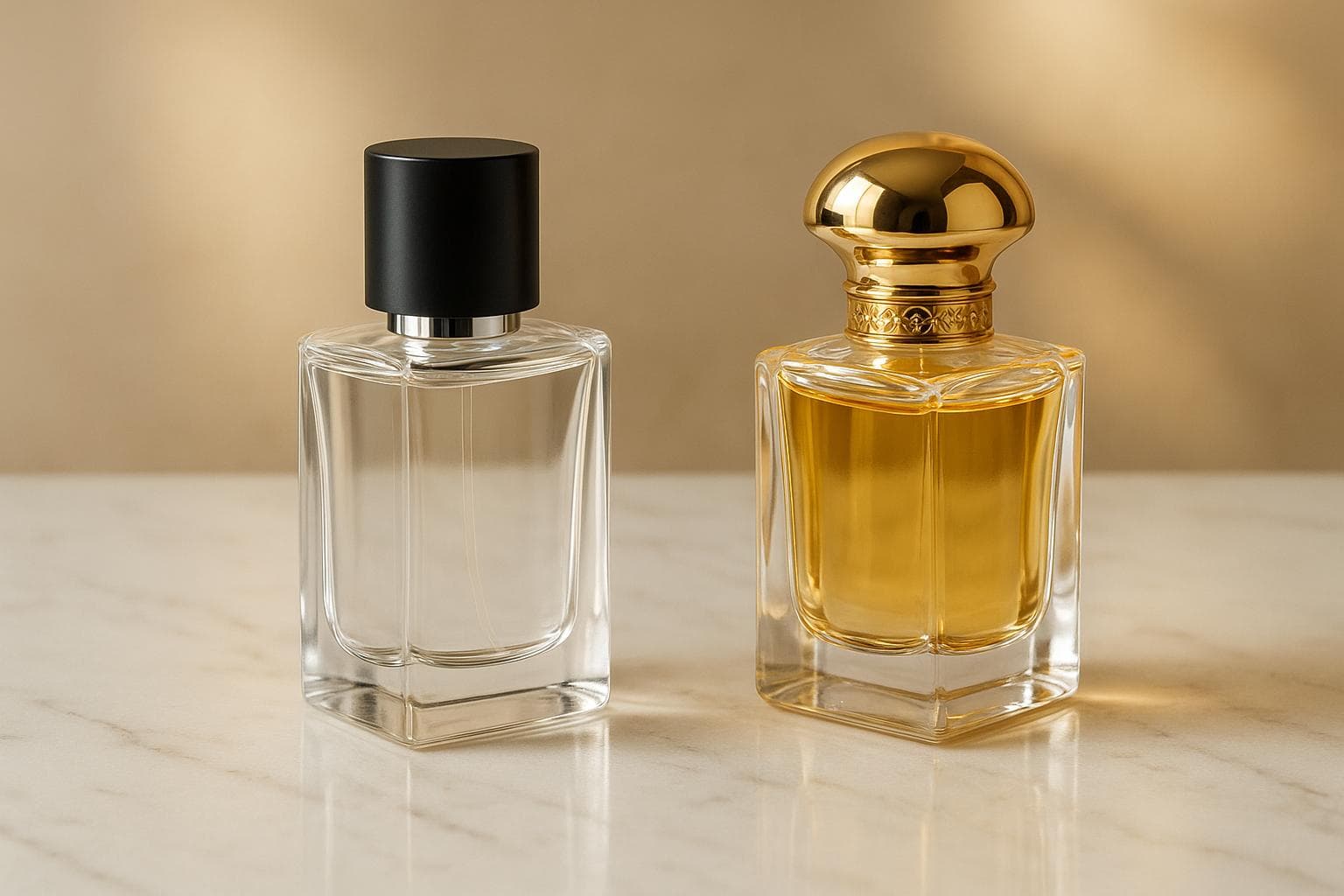
Fragrantica defines niche as perfume made for ‘a specific market sector formed by an audience with a distinct demand’, while designer perfumes carry the name of a fashion, jewellery or accessories house. At Scento, the median 8 ml niche decant costs €36.95, against €24.90 for designer.
Niche and designer perfumes serve different purposes and audiences. Designer fragrances, from brands like Chanel and Dior, are widely available, crafted for mass appeal, and priced between €50–€150. Niche perfumes, from houses like Le Labo and Creed, focus on artistry, use rare ingredients, and cost €100–€500+. While designer scents emphasize versatility and accessibility, niche options prioritize exclusivity and personal expression.
Quick Comparison
| Aspect | Designer Perfumes | Niche Perfumes |
|---|---|---|
| Production Scale | Mass-produced (100,000+ bottles) | Small batches (1,000–5,000 bottles) |
| Availability | Department stores and online retailers | Specialized boutiques and brand websites |
| Price Range | €50–€150 | €100–€500+ |
| Scent Style | Broad, crowd-pleasing | Experimental and personal |
| Ingredients | Mix of synthetic and natural | Rare, high-quality, region-specific |
| Sampling | Easy to test in stores | Limited; often requires online services |
Designer perfumes are perfect for everyday use and simplicity, while niche options cater to fragrance enthusiasts seeking something rare and bold. Services like Scento sell decants in 2 ml, 5 ml and 8 ml vials, allowing you to explore both categories without committing to full bottles.
Production Scale and Availability
Mass Production vs. Small-Batch Crafting
Designer perfumes benefit from the backing of hefty budgets, which translates into large-scale production and widespread availability. Big names like Dior, Chanel, and Calvin Klein have the resources to manufacture their fragrances on a massive scale, ensuring they’re accessible across the globe.
Niche perfumes, on the other hand, are all about small-batch craftsmanship. Brands like Le Labo and Byredo prioritize quality over quantity, often producing only a few thousand bottles per release. This approach allows them to use rare or costly ingredients that wouldn’t be feasible for mass production. For perspective, while a designer fragrance might see production runs exceeding 100,000 bottles, niche perfume houses typically cap their releases at 1,000 to 5,000 bottles. This method not only ensures attention to detail but also creates a sense of exclusivity - making these perfumes both more desirable and pricier. The smaller scale of production also impacts their distribution and availability, influencing where and how you can experience these scents.
Where to Buy and Sample
Designer perfumes are easy to find. They’re sold online and at major department stores, retail chains, and brand-specific websites. You can walk into stores like Macy’s, Sephora, or Ulta Beauty and test these fragrances on the spot, making the buying process straightforward.
Niche perfumes, however, take a different route. Their availability is usually limited to specialized boutiques or the brand’s own website. This exclusivity often means you’ll need to visit select high-end stores in major cities or purchase directly online - sometimes without the chance to sample the scent beforehand.
Sampling also varies significantly. Designer fragrances typically come with readily available testers at multiple locations. In contrast, sampling niche perfumes can be a bit of a challenge. That’s where services like Scento step in, offering 2 ml, 5 ml and 8 ml decants of luxury designer and niche fragrances poured from original bottles. This kind of service makes it easier to explore new scents without committing to a full-sized bottle.
Production and Distribution Comparison
Here’s a quick breakdown of how designer and niche perfumes differ:
| Aspect | Designer Perfumes | Niche Perfumes |
|---|---|---|
| Production Scale | Large-scale (100,000+ bottles) | Small batches (1,000–5,000 bottles) |
| Distribution | Department stores, retail chains, online | Specialized boutiques, brand websites |
| Availability | Widely accessible | More exclusive |
| Sampling | Easy to test in-store and online | Limited opportunities to sample |
The exclusivity of niche perfumes can make them more alluring but also harder to find and sample. While some niche brands are teaming up with luxury retailers to showcase their creations in-store and online, their overall distribution remains far more selective compared to their designer counterparts.
Scent Profile and Ingredients
Mass Appeal vs. Experimental Scents
Designer perfumes are created to resonate with a broad audience. Their goal is to craft fragrances that are universally appealing, sticking to familiar, crowd-pleasing profiles. Think of classics like Dior Sauvage or Chanel No. 5 - these scents are designed to be instantly recognizable and widely loved.
Niche perfumes, however, take a different route. They lean into creativity and bold experimentation, often venturing into less conventional scent combinations that challenge the norms. Unlike designer brands, which rely on extensive market research to ensure global appeal, niche houses prioritize artistic expression and breaking away from mainstream trends. This difference in philosophy also influences the type of ingredients they use.
Ingredient Quality and Creative Freedom
The ingredients play a pivotal role in setting designer and niche perfumes apart. Niche fragrances often feature rare, high-quality, or natural ingredients sourced from specific regions, reflecting a commitment to exceptional raw materials. These perfumes are crafted with higher concentrations of perfume oils, allowing for more intricate and evolving scent profiles.
"Niche perfumes can only be made by artisan perfumers. Each scent is composed according to strict industry principles using only the highest quality ingredients. The perfume produced is unique, rich and superior in quality." — Scent City
Designer perfumes, in contrast, rely on a mix of synthetic and natural ingredients to ensure consistency across large-scale production. While niche perfumers focus on creativity and premium ingredients, designer brands prioritize accessibility and uniformity, making their scents more predictable and easier to produce at scale.
Scent and Ingredient Comparison
| Aspect | Designer Perfumes | Niche Perfumes |
|---|---|---|
| Scent Philosophy | Broad appeal for a wide audience | Focus on artistic experimentation |
| Ingredient Sourcing | Combination of synthetic and natural for consistency | Rare, region-specific natural ingredients |
| Concentration | Standard levels for consistent performance | Higher concentrations for layered complexity |
| Creative Freedom | Guided by market demands | Driven by artistic vision |
| Scent Evolution | Stable and consistent profile throughout wear | Dynamic, evolving layers over time |
| Ingredient Cost | Balanced for mass production | Premium materials, cost is secondary |
Niche perfumers highlight their commitment to quality by using rare, expensive, and natural ingredients in higher concentrations. This approach not only enhances the depth and complexity of their fragrances but also explains their higher price points and limited availability. Designer perfumes, on the other hand, focus on balancing ingredient quality with large-scale production efficiency, keeping their scents accessible to a broader audience.
Pricing and Value
Budget-Friendly vs. Premium Pricing
The difference in pricing between designer and niche perfumes highlights their contrasting approaches to fragrance creation. Designer fragrances typically range from $50 to $150. For example, Dior Homme EDT is priced at $103.99, while J’adore D’eau costs $139.99.
On the other hand, niche fragrances command higher prices, starting at $100 and going beyond $500. Brands like Parfums de Marly fall within the premium niche category, with offerings such as Oajan priced at $360.00 and Unisex Greenley EDP Spray at $346.50. Ultra-luxury houses like Creed take it a step further - Creed Viking 100ML is priced at $510.00, and Creed Tabarome Millesime at $490.00. This price disparity is often attributed to the use of rare ingredients and artisanal production methods. For instance, producing a single ounce of rose oil requires thousands of rose petals.
Price per ml: niche and designer at Scento
Across the Scento catalogue, the median 8 ml designer decant costs €24.90, which is €3.11 per ml. The median 8 ml niche decant costs €36.95, or €4.62 per ml, so the niche median is 48% higher. In the 2 ml size the medians are €7.90 for designer and €11.90 for niche. Niche-classed houses make up 55% of the perfumes Scento prices at 8 ml. The ten perfumes below pair familiar designer and niche names at the same 8 ml size, using retail prices read in October 2026.
| Perfume | House | Class | 8 ml | Per ml |
|---|---|---|---|---|
| Sauvage | Dior | Designer | €25.90 | €3.24 |
| Aventus | Creed | Niche | €34.90 | €4.36 |
| Libre | Yves Saint Laurent | Designer | €23.95 | €2.99 |
| Baccarat Rouge 540 | Maison Francis Kurkdjian | Niche | €39.95 | €4.99 |
| Le Male | Jean Paul Gaultier | Designer | €22.95 | €2.87 |
| Layton | Parfums de Marly | Niche | €32.95 | €4.12 |
| Santal 33 | Le Labo | Niche | €44.95 | €5.62 |
| Oud Wood | Tom Ford (Private Blend) | Designer | €48.95 | €6.12 |
| Imagination | Louis Vuitton | Designer | €44.90 | €5.61 |
| Interlude Man | Amouage | Niche | €38.95 | €4.87 |
Price does not decide the class. Oud Wood, from Tom Ford’s Private Blend line, and Louis Vuitton’s Imagination are designer-house perfumes that cost more per ml than niche Aventus, Layton and Baccarat Rouge 540. Fragrantica puts it plainly: “Niche doesn’t have to do with price but specificity.”
Value Perception and Bottle Sizes
The idea of "value" varies significantly between designer and niche perfumes. Niche fragrances are often viewed as luxury investments, emphasizing exclusivity, artistry, and high-quality ingredients. In contrast, designer perfumes are seen as accessible luxury, offering brand recognition at a more approachable price point. Additionally, the design of the bottle can influence perceived value - a heavier, more intricate bottle often signals premium quality.
However, both categories share a common challenge: full-sized bottles, typically 50–100 ml, often go unused. This can make the investment feel less worthwhile, especially when experimenting with new scents. This issue highlights the need for more flexible ways to explore fragrances.
Scento as a Budget-Smart Solution
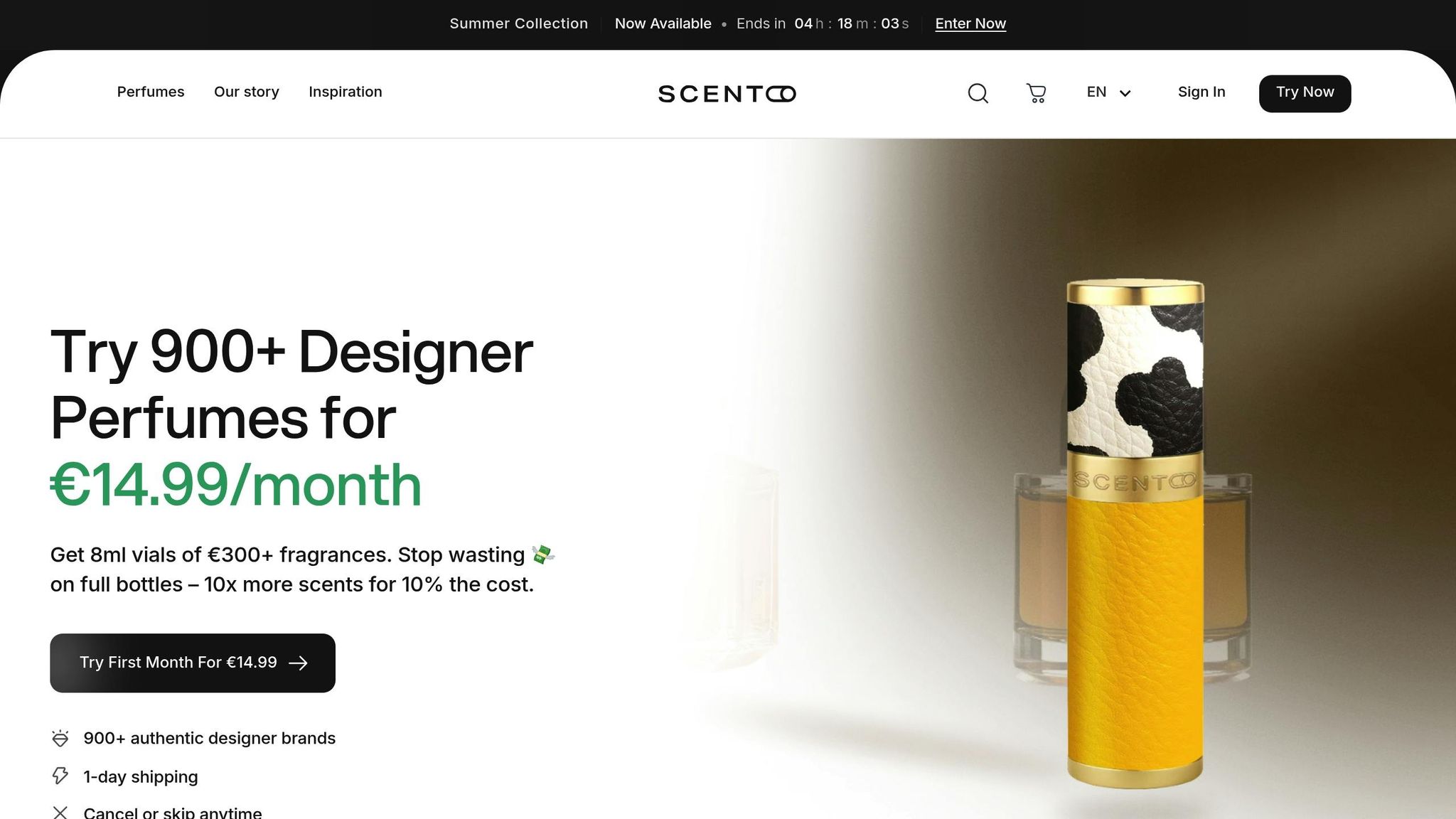
Scento addresses this challenge by offering a cost-effective alternative to purchasing full-sized bottles.
This trial-sized approach not only reduces waste but also maximizes value, making it an appealing option for both designer and niche fragrance enthusiasts. The service includes tracked delivery to 26 EU countries and a free-delivery threshold of €75, minimizing the risks tied to traditional full-sized purchases.
The fragrance market is evolving rapidly, with luxury brands projected to account for 12% of all U.S. prestige fragrance sales in 2024, growing faster than the overall category. This trend underscores the appeal of innovative, flexible solutions like Scento, which cater to the needs of modern fragrance lovers.
What drives the price gap
Designer houses spend heavily on marketing and on placing their perfumes in a very wide range of shops. A good share of the price of a designer bottle pays for that reach. Niche houses tend to put more of their budget into the liquid itself and sell through fewer, more selective doors.
Batch size matters too. Small batches cost more per bottle than perfumes made at scale, and distributor and sales-agent margins add further to a niche price. Some houses also commission bespoke packaging, such as crystal flacons and weighted caps, which raises the cost of the bottle before any perfume goes in.
Price and quality are not the same thing
A higher price does not guarantee a better perfume. To judge quality, look at how long the scent lasts on your skin, how it develops from top to heart to base notes, the quality of the materials, and whether each bottle smells the same as the last. Many designer perfumes perform as well as niche ones, and Dior Sauvage is known for both projection and longevity.
A niche perfume can also be too experimental for daily wear, while a well-made designer scent may be the better buy. Value depends on how often you wear it: an affordable bottle you reach for every day is worth more than an expensive one left on the shelf.
How to choose between niche and designer
Sample before you commit, and give each scent at least 20 minutes on skin so you can judge its full evolution. Designer perfumes suit daily wear and shared spaces, while niche perfumes suit occasions and personal statements. Scento sells 2 ml, 5 ml and 8 ml decants of both, so you can try a few of each; start with our guide to niche perfume samples.
sbb-itb-fb213bc
Target Audience and Brand Philosophy
When it comes to choosing between designer and niche fragrances, understanding their target audience and underlying brand philosophy can make all the difference.
Broad Appeal vs. Niche Enthusiasts
Designer perfumes are crafted with mass appeal in mind, making them ideal for everyday use. Their goal is to resonate with a wide audience, offering familiar and versatile scents that suit a variety of tastes and occasions.
Niche perfumes, however, cater to a more select group - enthusiasts and collectors who value originality and artistic expression. These consumers often see fragrance as a form of self-expression rather than just a pleasant aroma. Interestingly, many younger buyers are drawn to this perspective, favoring individuality and unique scents over mainstream options. This shift highlights a growing trend toward personal identity and creativity in fragrance choices.
The differences in these audiences naturally influence how each category approaches marketing and branding.
Marketing Strategies and Brand Identity
Designer brands focus heavily on brand recognition and lifestyle imagery to connect with a broad customer base. Their campaigns often feature relatable, aspirational visuals designed to appeal to everyday consumers.
In contrast, niche brands emphasize exclusivity, craftsmanship, and the artistry behind their creations. They rely more on storytelling and word-of-mouth to communicate their value. This approach draws in customers who appreciate the creativity and narrative behind a scent, rather than just its name or price tag.
Designer fragrances are widely available through various retail channels, reinforcing their accessibility and broad appeal. Meanwhile, niche brands often choose curated, exclusive outlets to maintain their distinct and elevated identity.
What European buyers choose: Scento order data
Niche houses took 65% of the decants buyers paid for at Scento between October 2025 and September 2026, and designer houses took 35%, according to the Scento Fragrance Index, which counts paid decant units and leaves out Scento’s own house perfumes.
The index follows the house classification in Scento’s catalogue, with obvious misfiles corrected: Ralph Lauren, Issey Miyake and Salvatore Ferragamo count as designer.
The niche share has been rising. It was 61% in the first half of that period and 66% in the second half. Quarter by quarter it moved from 60% to 62%, then 65%, then 67%.
- Q4 202560%
- Q1 202662%
- Q2 202665%
- Q3 202667%
By house, Louis Vuitton ranks first with 9.5% of decants, followed by Amouage (8.5%), Parfums de Marly (7%), Creed (6.5%) and Xerjoff (5%). Tom Ford (4.5%), Maison Francis Kurkdjian (3.5%), Initio Parfums Prives (3%), By Kilian (3%) and Dior (2.5%) complete the top ten. Seven of the ten are classed niche; Louis Vuitton, Tom Ford and Dior are designer. For the wider picture, see our niche perfume statistics.
Ready to try some of these houses? Our guide to the best niche perfumes of 2026 groups its picks by style, one perfume per house.
Niche or designer: how the houses are classed
Scento’s catalogue classes each house it sells as niche or designer; the table shows twelve, with ownership where a source confirms it.
| House | Class | Note |
|---|---|---|
| Le Labo | Niche | Owned by The Estée Lauder Companies since October 2014 |
| Creed | Niche | Acquired by Kering in 2023, part of L’Oréal since 31 March 2026 |
| Maison Francis Kurkdjian | Niche | LVMH took a majority share in 2017 |
| Byredo | Niche | Puig acquired a majority stake in 2022 |
| Penhaligon’s | Niche | Acquired by Puig in 2015 |
| Amouage | Niche | — |
| Parfums de Marly | Niche | — |
| Xerjoff | Niche | — |
| Tom Ford | Designer | Its Private Blend line includes Oud Wood and Tobacco Vanille; The Estée Lauder Companies completed its acquisition of the brand in 2023 |
| Louis Vuitton | Designer | — |
| Dior | Designer | — |
| Jo Malone London | Designer | — |
Niche describes what a house makes and for whom, not who owns it: Le Labo is niche and belongs to a group that also owns designer brands.
Complete Comparison Table
Here’s a detailed breakdown of how designer and niche perfumes differ:
| Aspect | Designer Perfumes | Niche Perfumes |
|---|---|---|
| Production Scale | Mass-produced to ensure wide availability | Crafted in small batches, focusing on exclusivity |
| Distribution | Backed by extensive resources for large-scale production and broad distribution | Limited by rare ingredients, often restricting availability |
| Availability | Readily available in department stores, online shops, and big-box retailers | Typically found in curated boutiques or directly through the brand |
| Price Range | €50 to €150 | €100 to €500+ |
| Scent Philosophy | Designed to appeal to a wide audience with balanced, popular scent profiles | Focused on creativity, originality, and premium ingredients |
| Ingredient Quality | Uses quality materials aimed at creating universally appealing scents | Prioritizes rare, high-grade ingredients for complex and distinctive fragrances |
| Scent Complexity | Features familiar, crowd-pleasing notes | Embraces unconventional combinations with unique ingredients |
| Concentration | Contains standard perfume oil concentrations | Often formulated with higher concentrations of perfume oils |
| Performance | Provides good longevity and projection | Known for superior longevity and sillage due to richer formulas |
| Target Audience | Appeals to the mass market, loyal brand followers, and everyday users | Attracts fragrance enthusiasts, collectors, and those seeking distinctive scents |
| Value Proposition | Emphasizes brand recognition and visually appealing bottle designs | Highlights storytelling, exclusive scent profiles, and individuality |
| Marketing Approach | Relies on celebrity endorsements and large-scale advertising campaigns | Grows through word-of-mouth and reviews within the fragrance community |
| Creative Freedom | Limited by the need to cater to broad appeal | Allows for greater experimentation and intricate compositions |
This comparison underscores the distinct identities of each category. Designer perfumes offer accessible luxury, perfect for those seeking versatility and everyday elegance. On the other hand, niche fragrances cater to those who value exclusivity, artistry, and a more personal connection to their scent.
Explore both worlds effortlessly with Scento’s 2 ml, 5 ml and 8 ml decants, featuring over 1,000 authentic perfumes to help you find your perfect match.
Conclusion
Choosing between niche and designer perfumes ultimately depends on what you value most in a fragrance. Designer perfumes are known for their accessibility, affordability, and broad appeal - perfect for those looking for a dependable, versatile scent to complement their daily routine. They often serve as a gateway into the world of luxury fragrances.
On the other hand, niche perfumes cater to those who appreciate artistry, unique compositions, and premium ingredients. These fragrances stand out by prioritizing creativity and individuality over mass-market appeal. As Fabbrica della Musa insightfully puts it:
"A designer perfume may complete your look. A niche fragrance may reveal something about you."
– Fabbrica della Musa
If brand recognition and ease of availability are your priorities, designer perfumes are a sensible choice. But if you’re seeking a scent that tells a story and offers a more personal, exclusive experience, niche fragrances are worth exploring.
Luckily, you don’t have to choose one path exclusively. Services like Scento offer 2 ml, 5 ml and 8 ml decants, allowing you to explore both designer and niche options without committing to a full bottle.
Whether you prefer the universal charm of designer scents or the artistic allure of niche creations, understanding these distinctions helps you select fragrances that align with your style, budget, and personal preferences.
Your questions, answered
- What does niche perfume mean?
- Fragrantica defines niche as perfume made for 'a specific market sector formed by an audience with a distinct demand', while designer perfumes carry the name of a fashion, jewellery or accessories house. Fragrantica gives Le Labo as an example of a niche house. The difference lies in who the perfume is made for, not in its price.
- Is niche perfume worth the money?
- It can be. At Scento the median 8 ml niche decant costs €36.95 against €24.90 for designer, a gap of 48%. A higher price does not guarantee better quality, though, and a well-made designer perfume is often the better buy. Test a decant first, wear it for at least 20 minutes, and decide by how it develops on your skin.
- Is it worth spending more on a niche oud than a designer one?
- Not automatically. A niche oud is not better simply because of its label, and some designer-house ouds are priced like niche: Oud Wood, from Tom Ford's Private Blend line, costs €48.95 for 8 ml at Scento. Compare the two on your own skin through decants, and judge the opening, the development and how long each lasts.
- Is Le Labo niche or designer?
- Le Labo is niche in Scento's catalogue. Fragrantica names it as an example of a niche house. It has belonged to The Estée Lauder Companies since October 2014, which shows that niche describes what a house makes and for whom, not whether a larger group owns it.
- Do niche perfumes last longer than designer perfumes?
- Not by category. Wear time follows the concentration and the materials, and concentration labels are not standardised: as Fragrantica notes, any brand can label a liquid containing 10% perfume composition as "Extrait de Parfum". The reliable test is to wear the perfume on your skin and see how long it lasts.
- What should I think about when choosing between niche and designer perfumes?
When choosing between niche and designer perfumes, it’s worth weighing a few important aspects. Niche perfumes often stand out for their artistic and unconventional compositions, frequently incorporating rare or unexpected ingredients. They’re an excellent choice if you’re after a scent that feels bold and entirely your own. Designer perfumes, by contrast, are crafted with broad appeal in mind, offering fragrances that are versatile, dependable, and widely admired.
Your decision might also hinge on budget and availability. Niche fragrances tend to come with a higher price tag and can be more challenging to track down. Designer options, however, are generally more affordable and easy to find in most retail stores. At the heart of it, your pick will reflect your personal preferences - do you lean toward a unique and standout fragrance, or do you gravitate toward something classic and universally loved?
- Why do niche perfumes use rare ingredients, and how does this impact their scent and price?
Niche perfumes are known for incorporating rare and opulent ingredients such as oud, ambergris, and exotic floral extracts. These components are celebrated for their uniqueness and depth, creating fragrances that exude character and sophistication.
The process of sourcing these rare materials is often complex and time-consuming, driving up production costs. This is why niche perfumes tend to come with a premium price tag. Beyond just a fragrance, they offer an elevated experience for those looking for something extraordinary and exclusive.
- Why should I use Scento's decant service to try different fragrances?
Scento is a perfume decant and sample retailer, and every product is available for one-time purchase without any subscription. You get 2 ml, 5 ml and 8 ml vials, plus a 30 ml bottle decant on most perfumes - perfectly sized for experimenting with new scents and finding the ones that truly resonate with you.
This setup not only helps you save money but also reduces waste, as you can sample fragrances before deciding to invest in a larger bottle. It’s a simple, hassle-free way to enjoy authentic designer perfumes while curating a collection that reflects your unique style, one scent at a time.

