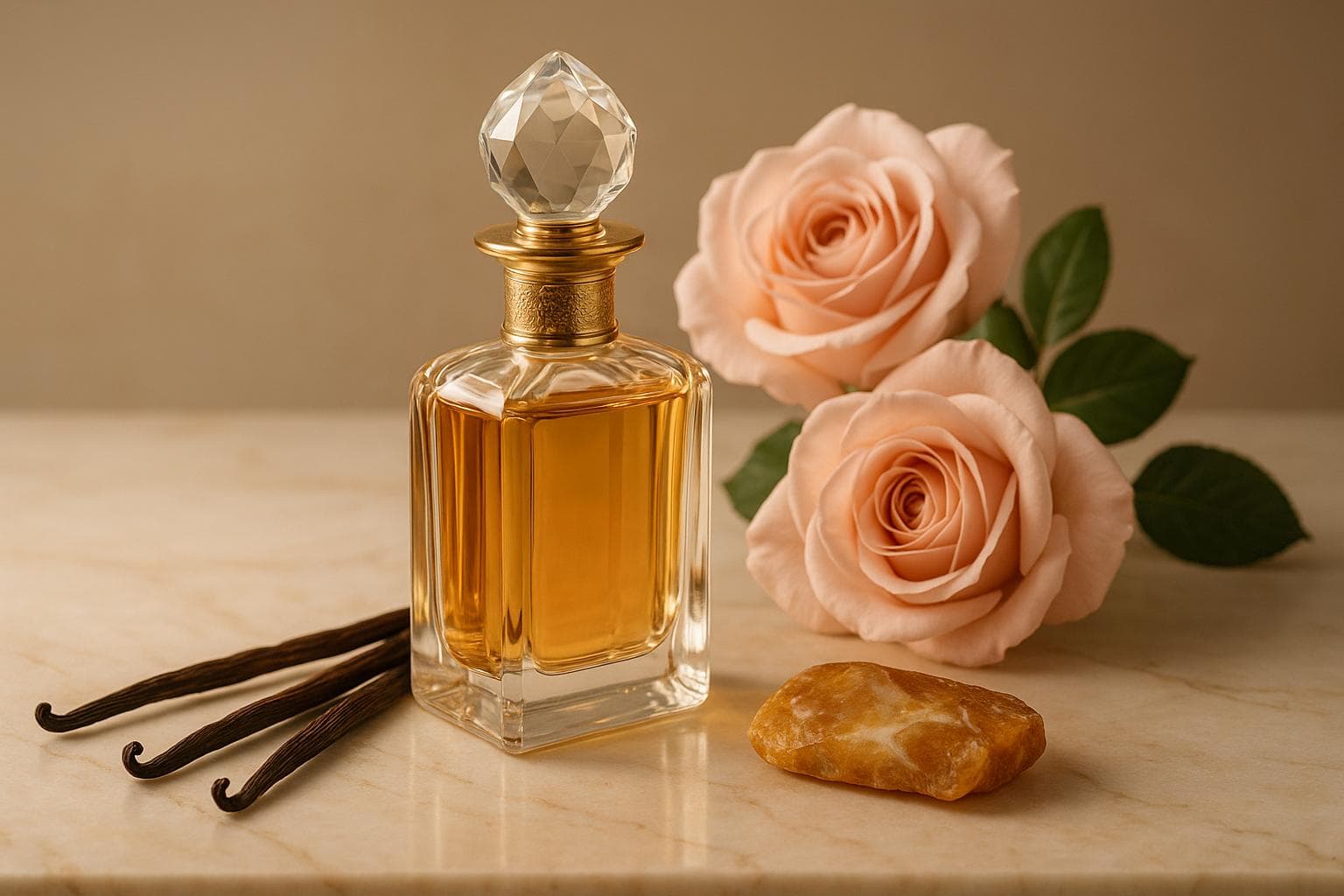
A designer perfume’s price is mostly not the juice: raw materials are a minority of the cost, while packaging, licensing, advertising and retail margin carry the rest — which is why the same formula costs very differently across houses.
Designer perfumes are expensive for several reasons. From rare ingredients to luxurious packaging and high marketing costs, every detail adds to the price. Here’s a quick breakdown:
- Premium Ingredients: Rare natural materials like oud ($38,000–$56,000/kg) and rose oil ($8,000–$12,000/kg) drive up costs. Advanced synthetic ingredients also require costly development.
- Brand Prestige: Designer labels use pricing to signal exclusivity and status, often limiting production to create scarcity.
- Packaging & Marketing: Custom bottles, celebrity endorsements, and elaborate campaigns significantly increase prices.
- Retail Markups: Department stores add 45%-60% markups, further inflating costs.
For example, a $150 perfume bottle may contain only $1.50 worth of fragrance ingredients. The rest comes from packaging, advertising, and retail expenses.
Want luxury without the high price? Focus on alternatives like decants that let you explore premium fragrances without overspending.
Perfume is expensive because most of the price pays for everything around the liquid. Scento analysis of Interparfums, a listed fragrance maker, shows that in 2025 cost of sales took about 36% of its net sales, advertising and promotion 19.8%, other overheads about 26% and operating profit 18.2%, before any shop adds its own margin.1 Rare naturals like oud lift some niche formulas.
Key figures on what a perfume’s price pays for
Fragrance ingredients in a $150 perfume bottle
Scento analysis
Markup department stores add to a designer perfume
Scento analysis
Share of Interparfums’ 2025 net sales spent on advertising and promotion
Interparfums 1
Interparfums’ 2025 gross margin: production costs took the remaining 36.4%
Interparfums 1
Typical market price of oud
Scento analysis
Share of a product’s total cost that packaging can account for
Scento analysis
Premium Ingredients Drive Up Costs
Designer perfumes are crafted using high-quality ingredients sourced from around the world or developed in cutting-edge labs. While drugstore perfumes rely on more affordable materials, luxury fragrances often include components that can cost more per kilogram than gold. Let’s break down how both rare natural ingredients and advanced synthetics contribute to these elevated costs.
Rare Natural Materials
Many natural ingredients used in perfumes are scarce, difficult to harvest, and require intricate processing to extract their essential oils. These factors make them incredibly expensive.
Take oud, for example. This sought-after ingredient can cost up to $50,000 per kilogram, with market prices typically ranging between $38,000 and $56,000 per kilogram. Only a small fraction - less than 7% - of wild Aquilaria trees naturally produce oud, and overharvesting has further endangered these trees, driving up its value.
Another example is orris butter, which can fetch up to $100,000 per kilogram, with most prices ranging between $38,000 and $53,000 per kilogram. Similarly, ambergris, a rare substance derived from whales, ranges from $11,000 to $66,000 per kilogram, with the best-quality specimens exceeding $20,000 per kilogram.
Floral oils also illustrate the high costs of natural materials. For instance, rose oil costs between $8,000 and $12,000 per kilogram. To produce just one ounce of rose oil, approximately 60,000 roses (weighing about 180 kilograms) must be steam distilled. Likewise, jasmine absolute costs between $4,000 and $9,000 per kilogram, requiring about 2,000 pounds of jasmine flowers to produce a single pound of oil.
Here’s a closer look at the sheer volume of flowers needed to create these precious oils:
| Ingredient | Flowers/Materials Needed for 1 kg of Oil |
|---|---|
| Jasmine | 7–8 million flowers |
| Rose | Around 600,000 roses |
Other natural ingredients, like sandalwood oil ($3,000 per kilogram) and vanilla absolute (ranging from $1,500 to $4,500 per kilogram), add to the costs of luxury perfumes.
Current per-kilo prices for oud, rose, orris, vanilla and ambergris, each with its source, are tracked in our perfume ingredient prices report.
Advanced Synthetic Components
In addition to natural materials, premium synthetic ingredients play a significant role in modern perfumery. These compounds, developed using advanced technology, account for about 80% of today’s perfume formulations and include over 3,100 unique synthetic compounds.
Developing synthetic ingredients is no small feat. For example, registering a new raw material for commercial use can cost an average of 150,000 euros. The overall fragrance ingredients market is projected to reach $21.94 billion by 2029, reflecting the importance of these components in the industry. Leading suppliers like Givaudan, Firmenich, Robertet, and IFF provide luxury perfume houses with the highest-quality synthetic ingredients. These meticulously engineered compounds allow perfumers to achieve consistent, precise scent profiles, though this level of quality comes with a higher price tag.
"Our biggest cost is fragrance oil."
The history of synthetic ingredient pricing also highlights the role of technological advancements in shaping costs. For instance, vanillin - a key synthetic fragrance component - was priced at 8,750 francs per kilogram in 1876. By 1885, the price dropped to 938 francs per kilogram, and by 1900, it had fallen to under 115 francs per kilogram.
Whether natural or synthetic, the ingredients used in designer perfumes reflect a dedication to excellence and exclusivity, which is why these fragrances command such high prices. Each component in a luxury perfume is a testament to the craftsmanship and precision that goes into creating a truly exceptional scent.
Brand Names and Limited Availability
When it comes to designer perfumes, the price tag often reflects more than just the cost of rare ingredients. The prestige of the brand and its exclusivity play a big role in driving up costs. For many buyers, owning a designer fragrance isn’t just about the scent - it’s about the status and identity tied to the brand.
Brand Reputation and Heritage
Purchasing a luxury fragrance is as much about the name on the bottle as it is about the liquid inside. This is where the concept of prestige pricing comes into play - brands set higher prices to signal superior quality and exclusivity. It’s a psychological tactic: people tend to associate higher prices with better quality, making these fragrances symbols of status rather than just everyday products.
Jean-Noël Kapferer, an expert in luxury marketing, describes luxury goods as:
"An inessential, desirable item that is expensive or difficult to obtain."
Designer perfume brands embrace this philosophy. By keeping their products expensive and sometimes harder to find, they amplify their desirability and maintain an aura of exclusivity. Interestingly, these fragrances often serve as an entry point into the luxury world. Unlike handbags or watches that can cost thousands of dollars, a perfume offers a taste of luxury at a relatively accessible price. This strategy not only draws in new customers but also fosters brand loyalty. Even small details, like pricing perfumes at round numbers (e.g., $150 instead of $149.99), reinforce the perception of premium quality.
To add to the allure, many brands intentionally limit production, making their products feel even more special.
Limited Production and Special Collections
Scarcity is a powerful motivator. By producing limited quantities or releasing special collections, luxury brands create a sense of urgency and exclusivity around their fragrances. When a perfume is labeled as “limited edition” or part of an “exclusive collection,” it taps into our natural desire for rare and hard-to-get items, often prompting quicker purchases.
However, balancing exclusivity with global expansion is no easy feat. As The Wall Street Journal puts it:
"One way to avoid overexposure is to sell fewer items at much higher prices."
This approach has become even more relevant with the growing popularity of niche fragrances - smaller brands that focus on unique craftsmanship and rare ingredients. To stay competitive, established luxury brands have responded by releasing even more limited editions and exclusive collections, ensuring their products remain desirable in a crowded market. These strategies not only maintain the allure of luxury but also hint at ways to make high-end experiences more accessible without losing their premium edge.
sbb-itb-fb213bc
Additional Costs Beyond the Fragrance
When you purchase a designer perfume, you’re paying for much more than just the scent. The premium price reflects a combination of factors, including high-end packaging, extensive marketing efforts, and the layered costs of distribution. These elements work together to create the luxurious experience associated with designer fragrances.
Custom Bottles and Luxury Packaging
Packaging plays a significant role in the overall cost of a luxury perfume. Studies indicate that packaging can account for anywhere from 10% to 40% of a product’s total cost. For designer fragrances, brands spare no expense, opting for materials like high-quality glass, leather, and premium paper to craft their packaging. Boxes often feature sophisticated touches such as magnetic closures, sleeve designs, and specialty printing effects. Inside, you’ll find customized interiors and foam inserts designed to protect the delicate bottles during transit.
This attention to detail does more than just safeguard the product - it transforms the unboxing into an experience. The premium feel of the packaging helps the fragrance stand out on shelves and enhances the overall perception of luxury.
Marketing Campaigns and Celebrity Partnerships
Marketing is another major cost driver for designer perfumes. The global market for celebrity-endorsed fragrances alone is valued at over $11 billion. Research shows that perfumes backed by celebrity endorsements can see sales increases of 20% to 50% compared to those without. This trend is particularly strong among younger consumers: 45% of Gen Z and 32% of Millennials report purchasing products endorsed by celebrities or influencers.
Take, for instance, Elizabeth Taylor’s iconic fragrance launches. Her 1987 debut of Passion was supported by a $10 million marketing campaign, which helped drive sales to $100 million by 1991. Following that, her White Diamonds fragrance launched in 1991 with a $20 million promotional budget and went on to generate over a billion dollars in sales by 2007.
"Passion is the ingredient in me that has made me who I am. It’s my passion for life… my passion for passion that has made me never give up." — Elizabeth Taylor
Today, brands use a mix of traditional advertising, celebrity endorsements, and social media to generate buzz. Social media platforms, in particular, allow celebrities to directly engage with their fans, creating exclusive campaigns that amplify awareness and drive sales.
Distribution and Retail Markups
The journey of a designer perfume from production to your hands involves multiple intermediaries, each adding their own markup to cover expenses. As a result, luxury fragrances often retail for anywhere between $150 and over $500 per bottle. High-end retailers, for example, typically operate with profit margins ranging from 45% to 60%.
These stores also invest heavily in creating an opulent shopping experience. From elegant displays and knowledgeable sales staff to exclusive launch events and personalized services, every detail is designed to reflect the brand’s prestige. All these factors contribute to the final price tag of a luxury fragrance. Together, they ensure that buying a designer perfume feels as exclusive as wearing it.
- Production (cost of sales)36.4%
- Advertising and promotion19.8%
- Other selling, general and administrative costs25.7%
- Operating profit18.2%
Shares add up to 100.1% because of rounding.
Scento: Designer Fragrances Without the Designer Price Tag
Luxury perfumes often come with hefty price tags, thanks to the cost of production, branding, and packaging. Scento offers a refreshing alternative, simplifying the way people experience premium scents while keeping costs in check. This service makes it easier - and far more affordable - to enjoy designer fragrances.
How Scento Works
Customers gain access to a massive selection of over 1,000 authentic perfumes from iconic brands like Dior, Tom Ford, and Louis Vuitton. You can pick a new scent with each order or let Scento curate recommendations tailored to your preferences.
The fragrance subscription box market in the U.S. is growing fast, with projections showing an annual growth rate of 22.1% from 2025 to 2030. On a broader scale, the beauty subscription box market is expected to hit $1.49 billion by 2025. Sampling small sizes is one way to explore fragrance without committing to a full bottle.
"A perfume subscription is the best way to discover a world of fragrance at an affordable price... A perfume subscription allows you to test different scents and find your favorites without having to commit to a costly full-sized bottle."
- Bettina O’Neill, Executive Vice President of Business Development and Merchandising.
This model not only makes luxury scents more accessible but also encourages a personalized, risk-free way to explore fragrances.
What decant buyers choose: Scento order data
Scento order data from October 2025 to September 2026 shows that 56% of the decants customers paid for were perfumes whose 8 ml vial costs €30 or more at Scento’s member price.7 Buyers pay for the liquid in small sizes rather than for the packaging and advertising built into a full bottle.
Affordable Luxury and Practicality
Each 8 ml vial from Scento offers around 120 sprays - enough to last about a month with regular use. This eliminates the need to splurge on full-size bottles that often go unused or expire before they’re finished.
The price difference is striking. A 10 ml travel-size spray of a designer perfume typically costs $30 to $40. Scento delivers nearly the same amount for a fraction of the price. As MarieAnna Ferdinand, EVP of Fragrance Development at Tru Fragrance, puts it:
"Travel-sized perfume is a great way to test a fragrance before investing in the full-size option."
Scento is a perfume decant and sample retailer, and every product is available for one-time purchase without any subscription. This is particularly valuable since scent preferences are deeply personal and can change with the seasons.
Size matters as much as brand: in 10ML’s Perfume Price-per-ml Index, the median price falls from €3.60 per ml for a 3 ml decant to €2.57 per ml for a 30 ml decant (8 October 2026).4
Bringing Luxury Scents to Everyone
By cutting the high costs associated with luxury perfume production and packaging, Scento opens the door to high-end fragrances for a much wider audience. The service meets the growing demand for personalized scent experiences, allowing consumers to sample a variety of perfumes without committing to full-size bottles.
Scento’s model is perfect for those who want to build a diverse fragrance collection. Subscribers can experiment with seasonal scents, special-occasion perfumes, or even the latest trends - all without breaking the bank.
On top of that, the service eliminates the need for in-store shopping. With convenient home delivery and quality guarantees, Scento makes it easy to explore top-tier fragrances from the comfort of your home. It’s a hassle-free way to enjoy the luxury of premium scents without the usual financial or time investment.
Conclusion: Affordable Access to Luxury Fragrances
The pricing breakdown of luxury perfumes reveals some eye-opening truths. In a $150 bottle of high-end perfume, the actual fragrance ingredients might only cost between $1.20 and $1.50. Meanwhile, the filled bottle, including its packaging, runs about $20. On top of that, department stores often apply markups ranging from 60% to 100%. Surprisingly, the cost of the bottle, box, and display carton can be four to six times higher than the fragrance itself. To add to the expense, a single-page ad in a major fashion magazine can cost over $31,000. These inflated costs highlight the need for a smarter, more accessible solution.
Scento addresses these challenges by stripping away the unnecessary expenses tied to fancy packaging and hefty retail markups. This model eliminates the costly extras - packaging premiums, retail markups, and high marketing expenses - that dominate traditional perfume pricing.
The subscription approach also aligns with the growing preference among American consumers for value and flexibility. Each 8ml vial, offering roughly 120 sprays, provides enough fragrance for a month of regular use. This setup allows subscribers to explore new scents, switch fragrances to match their mood or the season, and build a versatile collection without breaking the bank.
How we compiled this
Company figures on this page come from the annual results and panel data named in the sources list, checked on 8 October 2026. The cost breakdown is Scento’s calculation from Interparfums’ 2025 results: cost of sales is 100% minus the 63.6% gross margin, and other overheads are total selling, general and administrative costs minus advertising and promotion. Figures marked “Scento analysis” are Scento’s own reading of published prices and research.
“Scento order data” means the Scento Fragrance Index: Scento’s own analysis of paid decant orders placed between October 2025 and September 2026 and shipped across Europe. It publishes shares only, never order counts, unit counts or revenue.
- Each decant a customer paid for counts once, whatever its size.
- Cancelled, test, staff and free orders are excluded, as are full bottles, accessories and gift sets.
- Price tiers use each perfume’s current 8 ml member price at Scento; perfumes without one are left out of that split.
More research like this is collected on our perfume industry statistics hub.
Sources
- Interparfums, Inc. Reports Record 2025 Fourth Quarter and Full Year Results, Interparfums, 2026. globenewswire.com
- 2025 Full year results, Givaudan, 2026. givaudan.com
- Puig achieves strong growth and record sales over €5bn, Puig, 2026. puig.com
- Perfume Price-per-ml Index, 10ML, . 10ml.com
- US Prestige and Mass Beauty Retail Deliver a Positive Performance in 2025, Circana, 2026. circana.com
- The Scent of Success: New Innovations Elevate Fragrance, Fairchild Studio / WWD (Circana data), 2025. wwd.com
- Scento Fragrance Index, October 2025 to September 2026, Scento order data, 2026.
Your questions, answered
- Is Scento legit?
- Yes. Scento is operated by Scento International LTD, a registered Cyprus company (HE 477410) trading from Paris, founded by Sebastian Dobrincu, whose columns run in Forbes and Entrepreneur. Every bottle it decants passes a 12-point intake authentication — more than 50,000 bottles received and verified since 2021 — and orders ship tracked to 26 European countries with a published returns policy.
- Are Scento decants authentic?
- Yes. Every decant is hand-poured from an original full-sized bottle sourced through authorised European retailers — never a clone, dupe or inspired-by version. The manufacturer's batch code stays with that original bottle and is not printed on Scento decant vials, so a vial without a code is expected.
- How is Scento different from Scentbird or subscription boxes?
- Scentbird's own terms state it delivers only within the United States, Canada or the United Kingdom, and term plans cannot be cancelled before the term ends. Scento ships to 26 European countries and every decant is a one-time purchase; the Scento+ membership is optional.
- How much does it cost to make perfume?
- Very little compared with the shelf price. Scento's analysis finds that a $150 perfume bottle may contain only $1.50 worth of fragrance ingredients. Packaging can account for 10% to 40% of a product's total cost, and advertising, overheads and retail margins make up most of the rest.
- What is the markup on perfume?
- Markups stack at each step. Department stores add 45%–60% markups, according to Scento analysis. Before that, the brand itself earns a high gross margin. Interparfums reported 63.6% for 2025, meaning production costs were about 36% of what retailers paid it.
- Why is cologne so expensive?
- Cologne follows the same cost structure as perfume. Advertising, packaging and margins outweigh the juice, and higher concentrations cost more. In US prestige retail, parfums and eau de parfums drove 99% of fragrance juice gains in 2025, according to Circana, and they sell at higher prices than lighter concentrations.
- Are luxury perfumes worth the higher price?
- Judge by price per ml and by what is in the bottle. Rare naturals are genuinely costly: oud trades at $38,000–$56,000 per kg. 10ML's index shows the median per-ml price falling from €3.60 at 3 ml to €2.57 at 30 ml, so trying small sizes first lowers the risk.
- Why are designer perfumes so expensive when synthetic ingredients are an option?
Designer perfumes are known for being crafted with top-tier natural ingredients, which play a big role in their premium price tags. These ingredients often deliver a deeper, more nuanced scent that synthetic options struggle to match. The process of obtaining these materials - like harvesting delicate flowers or extracting essential oils - is both labor-intensive and time-consuming, further driving up costs.
But it’s not just about the ingredients. Luxury perfumes embody artistry and exclusivity. From the intricate craftsmanship to the use of rare materials, every detail is carefully considered. This blend of exceptional quality and the allure of exclusivity is what makes these fragrances so coveted - and why they command a higher price.
- Why are designer perfumes so expensive?
Designer perfumes often come with a hefty price tag, and much of that stems from the prestige and exclusivity tied to their brands. These luxury houses pour resources into sourcing top-tier ingredients, crafting elegant packaging, and ensuring every detail reflects exceptional artistry. It’s this dedication to quality and refinement that elevates their appeal.
Exclusivity also plays a big part. Limited editions and the rarity of certain fragrances create a sense of uniqueness, making them highly desirable. For many, buying a designer perfume isn’t just about the fragrance itself - it’s about indulging in the luxury, sophistication, and status that these brands represent.
- Why choose Scento's decant service instead of buying full-sized designer bottles?
Instead of dropping hundreds of dollars on a single designer bottle, you can explore a rotating selection of premium scents for just a fraction of the cost.
Scento lets you try out different fragrances without the pressure of committing to a full-sized bottle. It’s a budget-friendly way to find your signature scent - or simply enjoy switching things up whenever the mood strikes - without worrying about buyer’s remorse.
Cite this page
Scento (2026). Why Is Perfume So Expensive? 2026 Cost Breakdown. Updated October 8, 2026. https://www.scento.com/blog/why-designer-perfumes-cost-so-much-explained

