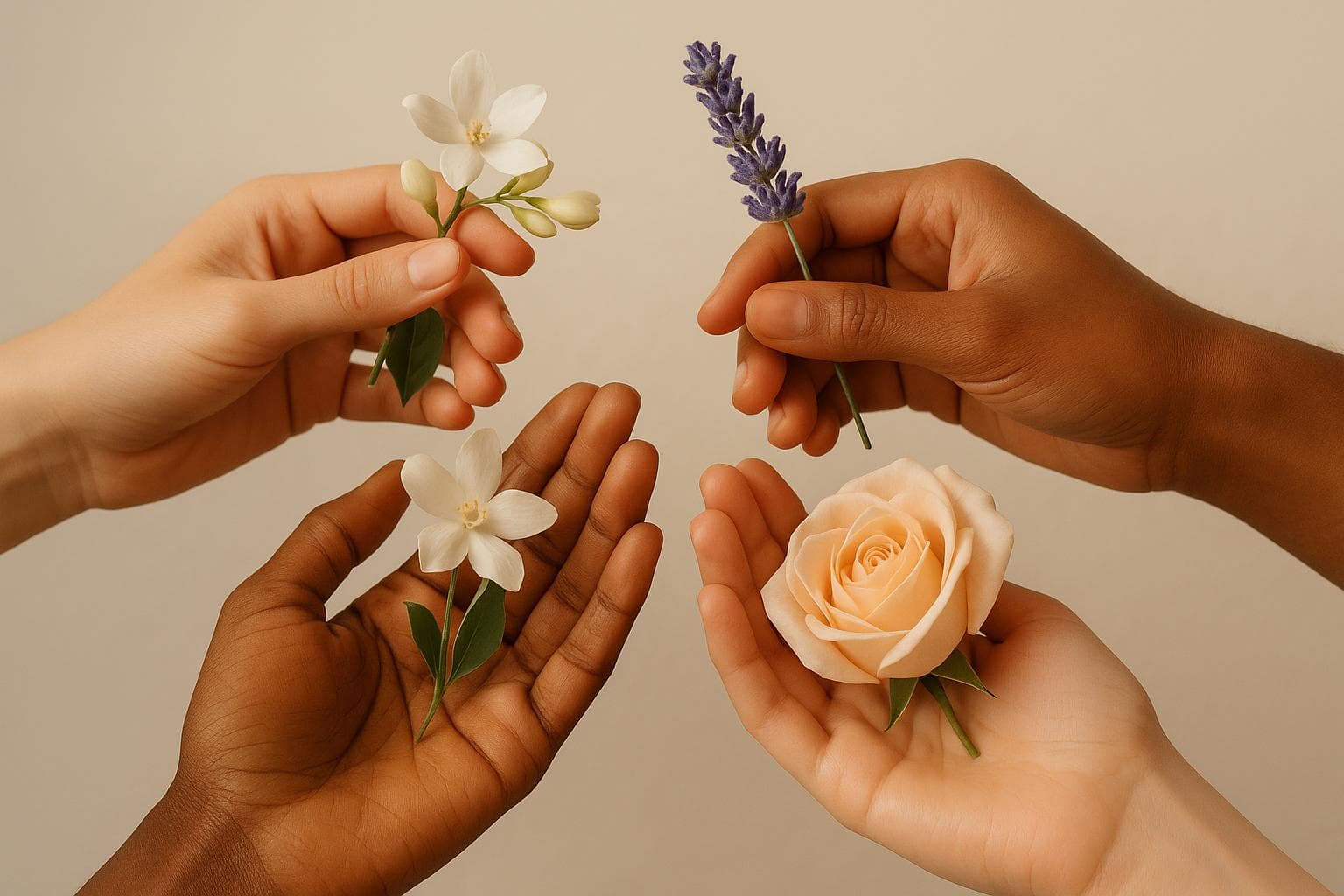
Το πώς γίνεται αντιληπτό ένα άρωμα εξαρτάται πολύ περισσότερο από την προσωπική έκθεση παρά από τον πολιτισμό: η ίδια νότα wintergreen γίνεται αντιληπτή ως καραμέλα στη Βόρεια Αμερική και ως φάρμακο στη Γαλλία, επειδή ο συσχετισμός έχει μαθευτεί, όχι κληρονομηθεί.
Ο τρόπος με τον οποίο αντιλαμβανόμαστε τα αρώματα υπερβαίνει κατά πολύ τη βιολογία — διαμορφώνεται από το περιβάλλον μας, τις προσωπικές αναμνήσεις και τις μαθημένες συσχετίσεις. Για παράδειγμα, η γωλθερία (wintergreen) μυρίζει σαν καραμέλα στον Καναδά, αλλά θυμίζει φάρμακο στη Γαλλία. Οι μελέτες δείχνουν ότι:
- Η εξοικείωση καθορίζει τις αρωματικές προτιμήσεις: το 37% του βαθμού απόλαυσης ενός αρώματος εξαρτάται από το πόσο συχνά το έχει συναντήσει κανείς.
- Η προσωπική εμπειρία έχει τη μεγαλύτερη σημασία: το 54% των αρωματικών προτιμήσεων πηγάζει από τις ατομικές αναμνήσεις και την έκθεση.
- Η πολιτισμική επίδραση είναι μικρότερη: ευθύνεται μόλις για το 6-7% των διαφορών στις προτιμήσεις.
Ενώ ορισμένες ευωδιές, όπως οι φρουτώδεις νότες, είναι καθολικά αρεστές, άλλες, όπως το oud ή το σανδαλόξυλο, φέρουν συγκεκριμένα νοήματα συνδεδεμένα με τελετουργίες και παραδόσεις. Ακόμη και η ονομασία ενός αρώματος μπορεί να αλλάξει τον τρόπο που νιώθουν οι άνθρωποι για αυτό, γεφυρώνοντας τα χάσματα στην αντίληψη. Σε τελική ανάλυση, οι αρωματικές σας προτιμήσεις είναι ένας συνδυασμός βιολογίας, ανατροφής και προσωπικών βιωμάτων.
The Science Behind Scent Perception
Ας εμβαθύνουμε στους βιολογικούς μηχανισμούς που διαμορφώνουν τον τρόπο με τον οποίο αντιλαμβανόμαστε τις μυρωδιές, βασιζόμενοι στην ιδέα ότι ενώ η φυσική αίσθηση της όσφρησης λειτουργεί παρόμοια σε όλους τους ανθρώπους, ο τρόπος με τον οποίο ερμηνεύουμε και αξιολογούμε τα αρώματα διαμορφώνεται από τις εμπειρίες της ζωής και τις πολιτισμικές επιρροές.
Πώς Λειτουργεί το Οσφρητικό Σύστημα
Κάθε φορά που συναντάτε ένα άρωμα, ξεκινά μια συναρπαστική βιολογική διαδικασία. Πτητικές χημικές ενώσεις από την ευωδιά ταξιδεύουν μέσω των ρινικών οδών προς το οσφρητικό επιθήλιο, έναν εξειδικευμένο ιστό εξοπλισμένο με εκατομμύρια οσφρητικούς υποδοχείς. Κάθε ένας από αυτούς τους υποδοχείς είναι συντονισμένος με ακρίβεια ώστε να αναγνωρίζει συγκεκριμένες μοριακές δομές.
Όταν ένα μόριο οσμής συνδέεται με έναν υποδοχέα, πυροδοτεί ένα σήμα που ταξιδεύει μέσω του οσφρητικού νεύρου στον οσφρητικό βολβό. Από εκεί, αυτά τα σήματα διακλαδώνονται σε διαφορετικά μονοπάτια. Ορισμένα κατευθύνονται στο μεταιχμιακό σύστημα, το τμήμα του εγκεφάλου που είναι υπεύθυνο για τα συναισθήματα και τις αναμνήσεις. Αυτός είναι ο λόγος για τον οποίο ορισμένα αρώματα μπορούν να σας μεταφέρουν αμέσως σε μια ανάμνηση της παιδικής ηλικίας ή να προκαλέσουν έντονα συναισθήματα. Άλλα σήματα αποστέλλονται στον φλοιό, όπου πραγματοποιείται η συνειδητή αναγνώριση, επιτρέποντάς σας να ταυτοποιήσετε και να επεξεργαστείτε τη μυρωδιά.
Αυτή η βιολογική διαδικασία είναι παγκόσμια — είτε βρίσκεστε στην Τανζανία, την Πολωνία είτε στις Ηνωμένες Πολιτείες, το οσφρητικό σας σύστημα λειτουργεί με τον ίδιο τρόπο. Ωστόσο, ενώ το «υλικό» της αντίληψης των οσμών παραμένει σταθερό, ο τρόπος με τον οποίο ο εγκέφαλός μας ερμηνεύει τις μυρωδιές διαμορφώνεται από ατομικές και πολιτισμικές εμπειρίες.
Είναι ενδιαφέρον ότι ακόμη και η αντίληψη της έντασης του αρώματος — πόσο έντονη ή αδύναμη φαίνεται μια οσμή — ποικίλλει ανάλογα με την κουλτούρα. Για παράδειγμα, οι άνθρωποι που εκτίθενται σε υψηλές συγκεντρώσεις ορισμένων μπαχαρικών ενδέχεται να αντιλαμβάνονται την έντασή τους διαφορετικά από εκείνους με μικρότερη έκθεση. Αυτό υποδηλώνει ότι ακόμη και οι βασικές αισθητηριακές διεργασίες επηρεάζονται από την εμπειρία και το πλαίσιο.
Επίκτητες έναντι Έμφυτων Αρωματικών Προτιμήσεων
Αν και το βιολογικό μας πλαίσιο για την ανίχνευση των οσμών είναι καθολικό, οι προτιμήσεις μας διαμορφώνονται σε μεγάλο βαθμό από όσα έχουμε μάθει και βιώσει.
Τι είναι, λοιπόν, αυτό που καθορίζει αν μας αρέσει ή όχι μια μυρωδιά — η βιολογία ή η εμπειρία; Η απάντηση είναι σύνθετη. Ενώ η μοριακή δομή ενός αρώματος παίζει ρόλο, η εξοικείωση και η προσωπική έκθεση έχουν πολύ μεγαλύτερη επίδραση. Μελέτες δείχνουν ότι η εξοικείωση είναι ο ισχυρότερος προγνωστικός παράγοντας για το αν κάποιος θα βρει ένα άρωμα ευχάριστο. Στην πραγματικότητα, η εξοικείωση ευθύνεται για το 37% της διακύμανσης στον τρόπο με τον οποίο οι άνθρωποι αξιολογούν τα αρώματα σε διαφορετικούς πληθυσμούς. Οι άνθρωποι έλκονται φυσικά από μυρωδιές που αναγνωρίζουν, αλλά το τι καθίσταται οικείο διαμορφώνεται εξ ολοκλήρου από την ατομική και πολιτισμική έκθεση.
Πάρτε για παράδειγμα τη γωλθερία (wintergreen). Στις Ηνωμένες Πολιτείες, η γωλθερία συνδέεται με καραμέλες και γλυκίσματα, καθιστώντας την μια ευρέως αγαπητή μυρωδιά. Στο Ηνωμένο Βασίλειο, ωστόσο, όπου η γωλθερία χρησιμοποιείται συνήθως σε φαρμακευτικά προϊόντα, συχνά αξιολογείται ως δυσάρεστη. Το οσφρητικό σύστημα ανιχνεύει τα ίδια μόρια και στις δύο περιπτώσεις, αλλά χρόνια διαφορετικών συσχετισμών οδηγούν σε εντελώς διαφορετικές αντιδράσεις.
Αυτό το μοτίβο επαναλαμβάνεται και με άλλα αρώματα. Για παράδειγμα, το γλυκάνισο, η γωλθερία και η κανέλα συνδέονται με γλυκά στις ΗΠΑ, αλλά στη Γαλλία συνδέονται με φαρμακευτικά σκευάσματα, ενώ στο Βιετνάμ κατηγοριοποιούνται ως ανθικά αλλά συσχετίζονται με την παραδοσιακή ιατρική. Αυτές οι διαφορές δεν είναι ασήμαντες — αντικατοπτρίζουν εντελώς διαφορετικές συναισθηματικές και γνωστικές αποκρίσεις στο ίδιο αισθητηριακό ερέθισμα.
Είναι ενδιαφέρον ότι όταν οι ερευνητές δίνουν ονόματα στις οσμές, οι πολιτισμικές διαφορές στην αντίληψη συχνά μειώνονται ή εξαφανίζονται εντελώς. Η ονομασία ενός αρώματος αυξάνει τους δείκτες εξοικείωσης και ευχαρίστησης σε όλους τους πολιτισμούς. Για παράδειγμα, η λέξη «βανίλια» μπορεί να προκαλέσει πιο συνεπείς αντιδράσεις μεταξύ των πληθυσμών από ό,τι η ίδια η μυρωδιά όταν παραμένει απροσδιόριστη. Αυτό υποδηλώνει ότι η γλώσσα ενεργοποιεί κοινές νοητικές αναπαραστάσεις, γεφυρώνοντας ορισμένα από τα κενά που δημιουργούν οι πολιτισμικές διαφορές.
Καθολικά Μοτίβα και Επίκτητες Συσχετίσεις
Ενώ οι αρωματικές προτιμήσεις διαμορφώνονται σε μεγάλο βαθμό από την εμπειρία, εμφανίζονται ορισμένα καθολικά μοτίβα. Μελέτες σε ποικίλους πληθυσμούς — από κυνηγούς-συλλέκτες έως αστικές κοινωνίες — δείχνουν ότι οι φρουτώδεις οσμές αξιολογούνται σταθερά ως οι πιο ευχάριστες. Για παράδειγμα, η φράουλα και το ροδάκινο σημείωσαν 64,3 και 62,8 αντίστοιχα σε μια τυποποιημένη κλίμακα ευχαρίστησης. Αυτό μπορεί να υποδεικνύει έναν εξελικτικό δεσμό, καθώς αυτές οι μυρωδιές θα μπορούσαν να σηματοδοτούν ώριμες, θρεπτικές τροφές.
Ακόμη και οι συνδέσεις μεταξύ αρωμάτων και χρωμάτων είναι επίκτητες και όχι έμφυτες. Για παράδειγμα, μελέτες που συνέκριναν συμμετέχοντες από τις ΗΠΑ, τη Γερμανία, τη Μαλαισία και Κινέζους κατοίκους της Ολλανδίας αποκάλυψαν ποικίλα μοτίβα στον τρόπο με τον οποίο τα αρώματα συνδέονται με τα χρώματα. Οι συμμετέχοντες από τις ΗΠΑ και τη Γερμανία παρουσίασαν τη μεγαλύτερη επικάλυψη, ενώ οι Μαλαισιανοί και οι Κινέζοι κάτοικοι της Ολλανδίας διέφεραν περισσότερο. Αυτές οι συσχετίσεις αναπτύσσονται μέσω της επαναλαμβανόμενης έκθεσης σε συγκεκριμένα τρόφιμα και προϊόντα, υπογραμμίζοντας περαιτέρω πώς το πολιτισμικό πλαίσιο διαμορφώνει τις αισθητηριακές εμπειρίες.
Πώς η Κουλτούρα Διαμορφώνει τις Αρωματικές Προτιμήσεις
Η αίσθηση της όσφρησης είναι καθολική στους βιολογικούς της μηχανισμούς, αλλά βαθιά προσωπική στον τρόπο που την ερμηνεύουμε. Τα αρώματα που αγαπάμε — ή αντιπαθούμε — διαμορφώνονται από την ανατροφή μας, τη διατροφή μας και τις παραδόσεις που κληρονομούμε. Ενώ η βιολογία θέτει τα θεμέλια, είναι το πολιτισμικό υπόβαθρο της ζωής μας που δημιουργεί τις μοναδικές αρωματικές μας προτιμήσεις. Αυτό που μοιάζει παρηγορητικό για ένα άτομο μπορεί να φαίνεται ξένο ή ακόμη και απωθητικό για ένα άλλο. Αυτή η απόκλιση πηγάζει από τις εμπειρίες μας, οι οποίες διαμορφώνουν τον τρόπο με τον οποίο ερμηνεύουμε τις μυρωδιές πολύ περισσότερο από ό,τι η βιολογία.
Ιστορικοί και Περιφερειακοί Αρωματικοί Συσχετισμοί
Οι πόροι και οι παραδόσεις μιας περιοχής δημιουργούν συχνά χαρακτηριστικά αρώματα που γίνονται μέρος της ταυτότητάς της. Αυτές οι ευωδιές είναι κάτι περισσότερο από απλές ευχάριστες μυρωδιές — κουβαλούν ιστορίες, τελετουργίες και νοήματα.
Πάρτε το oud, για παράδειγμα. Αυτό το πλούσιο, ξυλώδες άρωμα αποτελεί ακρογωνιαίο λίθο της αρωματοποιίας της Μέσης Ανατολής και των ισλαμικών τελετουργιών εδώ και αιώνες. Καίγεται ως θυμίαμα σε σπίτια και τζαμιά, φοριέται ως πολυτελές άρωμα και είναι άρρηκτα συνδεδεμένο με γιορτές και την καθημερινή ζωή. Για όσους μεγάλωσαν στην περιοχή του Κόλπου, το oud είναι εμποτισμένο με παράδοση και πολιτισμική σημασία. Αντίθετα, κάποιος που το συναντά για πρώτη φορά σε ένα δυτικό πλαίσιο μπορεί να το βρει έντονο ή ασυνήθιστο.
Ομοίως, στην Προβηγκία της Γαλλίας, η λεβάντα συνδέεται εδώ και καιρό με την καθαριότητα και τη θεραπεία. Τα λιβάδια λεβάντας καλλιεργούνται για γενιές, ενσωματώνοντας το άρωμα στην ταυτότητα της περιοχής. Δεν αποτελεί έκπληξη το γεγονός ότι οι Γάλλοι συμμετέχοντες σε διαπολιτισμικές μελέτες δείχνουν ισχυρότερη σύνδεση με τη λεβάντα σε σύγκριση με τους Καναδούς ομολόγους τους. Από προϊόντα καθαρισμού μέχρι αρώματα και παραδοσιακά γιατροσόφια, η λεβάντα στη Γαλλία αποπνέει φρεσκάδα και εκλεπτυσμό.
Στη Νότια και Ανατολική Ασία, αρώματα όπως το σανδαλόξυλο, το γιασεμί και το θυμίαμα έχουν βαθιούς δεσμούς με την πνευματικότητα και τις τελετές. Αυτά τα αρώματα είναι βασικά στοιχεία σε τελετουργίες ναών, στον διαλογισμό και σε φεστιβάλ, δημιουργώντας ισχυρούς συναισθηματικούς δεσμούς. Για κάποιον που είναι βυθισμένος σε αυτές τις παραδόσεις, αυτά τα αρώματα μπορεί να προκαλέσουν γαλήνη και δέος. Αλλά για άλλους, που δεν είναι εξοικειωμένοι με τέτοια πλαίσια, μπορεί να μην προκαλέσουν την ίδια ανταπόκριση.
Ακόμη και ένα άρωμα τόσο απλό όσο η γωλθερία (wintergreen) υπογραμμίζει τις πολιτισμικές διαφορές. Η έρευνα δείχνει ότι οι Γάλλοι συμμετέχοντες συχνά βρίσκουν τη γωλθερία λιγότερο ελκυστική σε σύγκριση με τους Γαλλοκαναδούς. Γιατί; Στη Γαλλία, η γωλθερία συνδέεται με φαρμακευτικά προϊόντα, ενώ στον Καναδά συνδέεται με καραμέλες και γλυκίσματα. Τα ίδια αρωματικά μόρια προκαλούν εντελώς διαφορετικούς συσχετισμούς — φάρμακα έναντι λιχουδιών — ανάλογα με το πολιτισμικό πλαίσιο.
Αυτό το μοτίβο επεκτείνεται και σε άλλα οικεία αρώματα, όπως το γλυκάνισο και η κανέλα. Στις Ηνωμένες Πολιτείες, αυτά τα μπαχαρικά συνδέονται συχνά με επιδόρπια, ενώ στη Γαλλία μπορεί να παραπέμπουν σε φαρμακευτικές χρήσεις. Εν τω μεταξύ, στο Βιετνάμ, αυτές οι μυρωδιές μπορούν να ταξινομηθούν ως ανθικές, παραμένοντας ωστόσο συνδεδεμένες με την παραδοσιακή ιατρική.
Αυτές οι περιφερειακές αρωματικές υπογραφές μάς οδηγούν φυσικά στο να εξετάσουμε πώς οι καθημερινοί περιβαλλοντικοί παράγοντες διαμορφώνουν περαιτέρω τις προτιμήσεις μας.
Η Επίδραση της Διατροφής και του Περιβάλλοντος στην Αντίληψη των Αρωμάτων
Πέρα από τις πολιτισμικές παραδόσεις, η διατροφή και το περιβάλλον μας διαδραματίζουν επίσης καθοριστικό ρόλο στη διαμόρφωση αυτού που βρίσκουμε ευχάριστο. Αυτό που τρώμε και μυρίζουμε καθημερινά δημιουργεί μια βάση αναφοράς για το τι θεωρείται οικείο — και η εξοικείωση συχνά υπαγορεύει την προτίμηση.
Τα έντονα μπαχαρικά, τα τρόφιμα που έχουν υποστεί ζύμωση ή οι παραδοσιακές μέθοδοι μαγειρικής μπορούν να επαναπροσδιορίσουν αυτό που θεωρούμε «φυσιολογική» ένταση για ένα άρωμα. Για παράδειγμα, το να μεγαλώνει κανείς σε ένα νοικοκυριό γεμάτο τολμηρά αρώματα μαγειρικής καλλιεργεί διαφορετική ανοχή στις δυνατές μυρωδιές από ένα σπίτι με ηπιότερες γαστρονομικές παραδόσεις. Με την πάροδο του χρόνου, αυτή η έκθεση δεν δημιουργεί απλώς ανοχή — μπορεί ακόμη και να μετατρέψει αυτά τα έντονα αρώματα σε αγαπημένα.
Μια μελέτη που συνέκρινε πέντε διαφορετικούς πληθυσμούς — τους κυνηγούς-συλλέκτες Hadza στην Τανζανία, τους Tsimane’ στη Βολιβία, τους Yali στη Νέα Γουινέα και αστικούς πληθυσμούς στην Πολωνία και τη Μαλαισία — υπογράμμισε πώς τα καθημερινά περιβάλλοντα διαμορφώνουν την οσφρητική αντίληψη. Οι Hadza, για παράδειγμα, αξιολόγησαν τις οσμές ως λιγότερο ευχάριστες συνολικά, ενώ οι Πολωνοί συμμετέχοντες τις βρήκαν πιο ευχάριστες. Οι Yali, εν τω μεταξύ, είχαν τόσο ξεχωριστές προτιμήσεις που σχεδόν δεν ταυτίζονταν με καμία άλλη ομάδα. Αυτές οι διαφορές αναδεικνύουν πώς τα μοναδικά οικολογικά πλαίσια και οι καθημερινές εμπειρίες επηρεάζουν τις οσφρητικές προσλαμβάνουσες.
Σε βιομηχανοποιημένα περιβάλλοντα, οι άνθρωποι εκτίθενται συχνά σε μια τυποποιημένη σειρά από εμπορικά αρώματα — σκεφτείτε απορρυπαντικά ρούχων, αποσμητικά χώρου και προϊόντα προσωπικής φροντίδας. Αυτά δημιουργούν κοινά σημεία αναφοράς. Αντίθετα, οι παραδοσιακοί πληθυσμοί βασίζονται στο φυσικό περιβάλλον και σε πατροπαράδοτες πρακτικές, οι οποίες οδηγούν σε εντελώς διαφορετικά οσφρητικά πλαίσια. Καμία προσέγγιση δεν είναι εγγενώς ανώτερη· απλώς αντικατοπτρίζουν διαφορετικούς τρόπους εμπειρίας του κόσμου.
Ακόμη και ο τρόπος με τον οποίο αντιλαμβανόμαστε την ένταση ενός αρώματος — αν φαίνεται έντονο ή διακριτικό — διαμορφώνεται από την τακτική έκθεση. Για παράδειγμα, κάποιος που καίει συχνά θυμίαμα μπορεί να αντιλαμβάνεται τη δύναμή του διαφορετικά από κάποιον που το συναντά για πρώτη φορά.
Είναι ενδιαφέρον ότι η ονομασία μιας οσμής μπορεί να γεφυρώσει ορισμένα από αυτά τα πολιτισμικά χάσματα. Μελέτες δείχνουν ότι όταν στους συμμετέχοντες αναφέρεται το όνομα μιας οσμής, οι διαφορές στο πόσο ευχάριστη τη βρίσκουν συχνά μειώνονται ή και εξαφανίζονται. Αυτό υποδηλώνει ότι ενώ οι αρχικές μας αντιδράσεις επηρεάζονται από το πολιτισμικό υπόβαθρο, το πλαίσιο και οι πληροφορίες μπορούν να αναδιαμορφώσουν αυτές τις αντιλήψεις.
Για όποιον τολμά να δοκιμάσει αρώματα από διαφορετικές παραδόσεις — είτε δοκιμάζει oud για πρώτη φορά, είτε εξερευνά το ασιατικό θυμίαμα, είτε δοκιμάζει gourmand αρώματα από άλλη περιοχή — αξίζει να θυμάται ότι οι πρώτες εντυπώσεις μπορούν να μεταβληθούν. Αυτό που αρχικά φαίνεται ασυνήθιστο θα μπορούσε, με τον χρόνο και την εξοικείωση, να γίνει μια αγαπημένη προσθήκη στο αρωματικό σας ρεπερτόριο.
Το Άρωμα στις Τελετουργίες και την Καθημερινή Ζωή
Το άρωμα έχει τη μοναδική ικανότητα να γεφυρώνει το προσωπικό με το συλλογικό, συνδυάζοντας βαθιά προσωπικές αναμνήσεις με κοινές πολιτισμικές πρακτικές. Από τον εορτασμό των ορόσημων της ζωής μέχρι τη διαμόρφωση της καθημερινής ρουτίνας, οι ευωδιές λειτουργούν συχνά ως ένας αισθητηριακός μίτος που μας συνδέει με την κληρονομιά, τις πεποιθήσεις και την ταυτότητά μας. Αυτό που ένας πολιτισμός μπορεί να γιορτάζει με ένα συγκεκριμένο άρωμα, ένας άλλος μπορεί να το προορίζει για επίσημες ή πένθιμες περιστάσεις, αποδεικνύοντας πώς η ευωδιά είναι συνυφασμένη με το νόημα και την παράδοση.
Το Άρωμα σε Τελετές και Εορτασμούς
Σε όλο τον κόσμο, τα αρώματα διαδραματίζουν κεντρικό ρόλο σε τελετές που καθορίζουν τις πιο σημαντικές στιγμές της ζωής. Δεν αναβαθμίζουν απλώς την ατμόσφαιρα· φέρουν συμβολικό βάρος, αντανακλώντας πνευματικές, πολιτισμικές και συναισθηματικές αξίες.
Στους ινδουιστικούς γάμους στην Ινδία, αρώματα όπως το γιασεμί, το τριαντάφυλλο και το σανδαλόξυλο υφαίνονται σε κάθε στάδιο του εορτασμού. Γιρλάντες γιασεμιού ανταλλάσσονται μεταξύ της νύφης και του γαμπρού, τριαντάφυλλα κοσμούν τους βωμούς των ναών και πάστα σανδαλόξυλου εφαρμόζεται κατά τη διάρκεια των προγαμιαίων τελετουργιών, γεμίζοντας τον αέρα με το κατευναστικό της άρωμα. Αυτές οι ευωδιές δεν είναι απλώς διακοσμητικές — αντιπροσωπεύουν την αγνότητα, τις ευλογίες και την ευημερία, αποτελώντας αναπόσπαστο μέρος της ένωσης.
Οι χριστιανικές εκκλησίες χρησιμοποιούν εδώ και αιώνες λιβάνι και σμύρνα κατά τη διάρκεια της Θείας Λειτουργίας και άλλων τελετών. Αυτές οι ρητίνες, που συχνά καίγονται σε σημαντικές περιστάσεις όπως τα Χριστούγεννα και το Πάσχα, δημιουργούν μια ατμόσφαιρα κατάνυξης και ευλάβειας. Η χρήση τους, βαθιά ριζωμένη σε παραδόσεις αιώνων, μετατρέπει την πράξη της λατρείας σε μια πολυαισθητηριακή εμπειρία, όπου το άρωμα γίνεται μια μορφή προσευχής.
Στην Ιαπωνία, η τέχνη του kōdō, ή «ο δρόμος του θυμιάματος», ανυψώνει το άρωμα σε διαλογιστική τελετουργία. Παρόμοια με μια ιεροτελεστία τσαγιού, οι συμμετέχοντες συγκεντρώνονται για να εκτιμήσουν και να στοχαστούν πάνω σε προσεκτικά επιλεγμένα θυμιάματα. Με ρίζες στον Βουδισμό Ζεν, αυτή η πρακτική δίνει έμφαση στην ενσυνειδητότητα, την αρμονία και την αισθητική ჭατένιση, μετατρέποντας το άρωμα σε μια συνειδητή πράξη πνευματικής σύνδεσης.
Οι πολιτισμοί της Μέσης Ανατολής και της Βόρειας Αφρικής τοποθετούν το oud στην καρδιά τόσο της καθημερινής ζωής όσο και των ειδικών εορτασμών. Είτε πρόκειται για την καύση κομματιών oud είτε για τη χρήση αρωμάτων με βάση το oud, αυτό το πλούσιο άρωμα συμβολίζει τη φιλοξενία, την περηφάνια και την κοινωνική θέση. Κατά τη διάρκεια του Ραμαζανιού και του Eid, η χρήση του oud εντείνεται, υπογραμμίζοντας τη σύνδεσή του με τη χαρά, την οικογένεια και την παράδοση.
Όταν οι ευωδιές συνδέονται σταθερά με σημαντικές τελετουργίες, αποκτούν συναισθηματική απήχηση. Για παράδειγμα, η συνάντηση με το άρωμα του λιβανιού ή του γιασεμιού έξω από τελετουργικά πλαίσια μπορεί να ανακαλέσει αμέσως αναμνήσεις και συναισθήματα που συνδέονται με αυτές τις στιγμές. Είναι ενδιαφέρον ότι μελέτες έχουν δείξει πως όταν στους ανθρώπους παρέχονται τα ονόματα και τα πολιτισμικά νοήματα συγκεκριμένων αρωμάτων, οι αντιλήψεις τους συχνά συγκλίνουν, ανεξάρτητα από το υπόβαθρό τους. Αυτό υποδηλώνει ότι η κατανόηση της σημασίας ενός αρώματος — όπως το γιατί το σανδαλόξυλο είναι ιερό στις ινδουιστικές τελετουργίες ή γιατί το oud εκτιμάται τόσο πολύ στη Μέση Ανατολή — μπορεί να γεφυρώσει τις πολιτισμικές διαφορές και να βαθύνει την εκτίμηση.
Το Άρωμα ως Ταυτότητα
Πέρα από τις επίσημες τελετές, το άρωμα παίζει ζωτικό ρόλο στην καθημερινή ζωή, διαμορφώνοντας τόσο την πολιτισμική όσο και την προσωπική ταυτότητα. Σε πολλά νοικοκυριά της Νοτιοανατολικής Ασίας και της Μέσης Ανατολής, το άρωμα αποτελεί ακρογωνιαίο λίθο της φιλοξενίας. Οι επισκέπτες γίνονται δεκτοί με θυμίαμα ή αρωματικά έλαια, με τον τύπο και την ένταση των αρωμάτων να αντικατοπτρίζουν τη γενναιοδωρία και την κοινωνική θέση του οικοδεσπότη. Σε ορισμένες κοινότητες, συγκεκριμένα αρώματα σηματοδοτούν ακόμη και την ηλικία, την οικογενειακή κατάσταση ή την κοινωνική τάξη, καθιστώντας τα μια άγραφη γλώσσα ταυτότητας.
Αυτές οι καθημερινές πρακτικές συχνά μεταλαμπαδεύονται από γενιά σε γενιά, διατηρώντας τις παραδόσεις ακόμη και όταν άλλα πολιτισμικά στοιχεία εξελίσσονται. Ωστόσο, αυτό που θεωρείται ευχάριστο ή κατάλληλο άρωμα ποικίλλει ευρέως. Για παράδειγμα, σε ορισμένες κοινότητες της Αφρικής και του Αμαζονίου, η φυσική μυρωδιά του σώματος αγκαλιάζεται ως ένδειξη αυθεντικότητας, σε πλήρη αντίθεση με τα δυτικά πρότυπα που δίνουν προτεραιότητα στην απόσμηση. Αυτές οι διαφορές αναδεικνύουν ποικίλες πολιτισμικές αξίες γύρω από τη φυσικότητα, την καθαριότητα και την αυτοέκφραση.
Οι γαστρονομικές παραδόσεις επηρεάζουν επίσης τις αρωματικές προτιμήσεις. Σε περιοχές όπου τα έντονα μπαχαρικά κυριαρχούν στην κουζίνα, παρόμοιες νότες εμφανίζονται συχνά σε αρώματα και προϊόντα προσωπικής φροντίδας, δημιουργώντας μια συνεκτική αισθητηριακή ταυτότητα. Ακόμη και η ένταση της χρήσης του αρώματος διαφέρει — ορισμένοι πολιτισμοί προτιμούν διακριτικά αρώματα που μένουν κοντά στο δέρμα, ενώ άλλοι αγκαλιάζουν έντονες ευωδιές που γεμίζουν τον χώρο, αντικατοπτρίζοντας βαθύτερες αξίες γύρω από τον προσωπικό χώρο και την κοινωνική αλληλεπίδραση.
Εξερευνώντας αρώματα από διαφορετικές παραδόσεις, αποκαλύπτεται πώς η ταυτότητα λειτουργεί σε δύο επίπεδα. Πρώτον, υπάρχουν τα πολιτισμικά πλαίσια που ορίζουν τους κυρίαρχους συσχετισμούς — όπως το τριαντάφυλλο για τους γάμους ή το θυμίαμα για τους ναούς. Στη συνέχεια, υπάρχει το προσωπικό στρώμα, όπου οι ατομικές εμπειρίες και αναμνήσεις διαμορφώνουν τις προτιμήσεις μέσα σε αυτά τα πλαίσια. Ενώ η κουλτούρα θέτει τα θεμέλια, η προσωπική ερμηνεία προσθέτει βάθος και ατομικότητα.
Οι σύγχρονες τάσεις συνδυάζουν όλο και περισσότερο τις παραδοσιακές οσφρητικές ταυτότητες με τον σύγχρονο τρόπο ζωής. Οι άνθρωποι αναζητούν παραδοσιακά αρώματα μέσω του «αρωματικού τουρισμού» ή εξερευνούν την παραδοσιακή αρωματοποιία κληρονομιάς για να συνδεθούν με την τοπική ιστορία. Οι ρουτίνες ευεξίας ενσωματώνουν πλέον αρώματα όπως το palo santo, το φασκόμηλο και το nag champa, εμπνευσμένα από πνευματικές πρακτικές. Εν τω μεταξύ, οι οίκοι πολυτελείας εισάγουν τελετουργικές νότες όπως oud, λιβάνι και σανδαλόξυλο σε mainstream αρώματα, φέρνοντας προγονικές παραδόσεις στην καθημερινή χρήση.
Ωστόσο, αυτή η ανάμειξη των παραδόσεων απαιτεί ευαισθησία. Ένα άρωμα που σηματοδοτεί γιορτή σε έναν πολιτισμό μπορεί να φέρει πένθιμα ή ιερά νοήματα σε έναν άλλο. Η κατανόηση της προέλευσης και της σημασίας αυτών των αρωμάτων επιτρέπει μια βαθύτερη εκτίμηση, αποφεύγοντας παράλληλα τα ατοπήματα.
Είτε πρόκειται για το γιασεμί των ινδικών γάμων, το λιβάνι των χριστιανικών τελετουργιών είτε το oud των συγκεντρώσεων στη Μέση Ανατολή, αυτά τα αρώματα αφηγούνται ιστορίες. Μας συνδέουν με τις ρίζες μας, σηματοδοτούν ποιοι είμαστε και ορίζουν τις στιγμές που διαμορφώνουν τη ζωή μας. Σε έναν κόσμο που συχνά μοιάζει ομογενοποιημένος, τα αρώματα που επιλέγουμε παραμένουν βαθιά προσωπικά και πολιτισμικά πλούσια, προσφέροντας έναν ουσιαστικό τρόπο έκφρασης της ταυτότητας και τιμής της παράδοσης.
sbb-itb-fb213bc
Γλώσσα και Περιγραφή Αρωμάτων
Ο τρόπος με τον οποίο περιγράφουμε τα αρώματα επηρεάζεται βαθιά από το πολιτισμικό μας υπόβαθρο και τις προσωπικές μας εμπειρίες, διαμορφώνοντας τον τρόπο που αντιλαμβανόμαστε και συνδεόμαστε με τις μυρωδιές. Η γλώσσα παίζει καθοριστικό ρόλο στην ενοποίηση αυτών των οσφρητικών εμπειριών, ωστόσο συχνά υστερεί όταν πρόκειται να αποτυπώσει την πεμπτουσία ενός αρώματος.
Αν δυσκολευτήκατε ποτέ να περιγράψετε ένα άρωμα πέρα από το να πείτε ότι «μυρίζει όμορφα» ή «σαν λουλούδια», δεν είστε οι μόνοι. Πολλές δυτικές γλώσσες βασίζονται σε συγκρίσεις με οικείες πηγές ή γενικούς όρους όπως «φρέσκο» ή «καθαρό». Αυτό δεν αποτελεί προσωπική αδυναμία — σχετίζεται περισσότερο με το περιορισμένο λεξιλόγιο που είναι διαθέσιμο για τη συζήτηση των οσμών με αφηρημένους όρους.
Είναι ενδιαφέρον ότι αυτό το γλωσσικό κενό δεν είναι καθολικό. Ορισμένοι πολιτισμοί έχουν αναπτύξει πλούσια, ακριβή λεξιλόγια για την περιγραφή των αρωμάτων, δείχνοντας ότι η πρόκληση αυτή διαμορφώνεται σε μεγάλο βαθμό από τις πολιτισμικές νόρμες.
Διαφορές στο Οσφρητικό Λεξιλόγιο ανά τους Πολιτισμούς
Πάρτε για παράδειγμα τη φυλή Jahai, μια ομάδα Orang Asli από τη χερσόνησο της Μαλαισίας. Η γλώσσα τους περιλαμβάνει 12–15 βασικούς όρους ειδικά για τις οσμές. Αντί να πουν «μυρίζει σαν βενζίνη», χρησιμοποιούν μια ενιαία λέξη για να περιγράψουν τις «τσουχτερές» μυρωδιές, καλύπτοντας τη βενζίνη, τον καπνό και ορισμένα φυτά. Έχουν ακόμη και μια ξεχωριστή λέξη για μυρωδιές που μπορούν να περιγραφούν ως «αιματηρές ή ψαρίσιες», αποτυπώνοντας μια μοναδική ιδιότητα αντί να τη συνδέουν με μια συγκεκριμένη πηγή.
Η έρευνα έχει δείξει ότι οι ομιλητές της Jahai αναγνωρίζουν τις μυρωδιές τόσο γρήγορα και με την ίδια συνέπεια όσο και τα χρώματα. Ομοίως, η φυλή Maniq της νότιας Ταϊλάνδης διαθέτει ένα περίπλοκο λεξιλόγιο οσμών συνδεδεμένο με τις πολιτισμικές της πρακτικές. Αντίθετα, οι ομιλητές της αγγλικής γλώσσας διαπρέπουν στην ονομασία των χρωμάτων, αλλά δυσκολεύονται να χαρακτηρίσουν με συνέπεια τις μυρωδιές. Σε κοινωνίες όπου η όσφρηση παίζει κεντρικό ρόλο στην καθημερινή ζωή — όπως η αναζήτηση τροφής και η περιβαλλοντική επίγνωση — η γλώσσα εξελίσσεται ώστε να κωδικοποιεί τις οσφρητικές πληροφορίες πιο αποτελεσματικά. Εν τω μεταξύ, οι βιομηχανοποιημένοι δυτικοί πολιτισμοί έχουν ιστορικά δώσει προτεραιότητα στις οπτικές περιγραφές έναντι των οσφρητικών.
Αυτές οι γλωσσικές διαφορές διαμορφώνουν επίσης τον τρόπο κατηγοριοποίησης των αρωμάτων. Για παράδειγμα, στις Ηνωμένες Πολιτείες, μυρωδιές όπως η κανέλα, το γλυκάνισο και η γωλθερία συνδέονται συχνά με γλυκά, όπως καραμέλες ή επιδόρπια. Στη Γαλλία, αυτά τα ίδια αρώματα προκαλούν φαρμακευτικούς συνειρμούς, ενώ στο Βιετνάμ συνδέονται με ανθικές νότες και παραδοσιακά γιατροσόφια.
Αυτό που είναι συναρπαστικό είναι πώς η παροχή ονομάτων για τα αρώματα μπορεί να γεφυρώσει αυτές τις πολιτισμικές διαφορές. Μελέτες έχουν δείξει ότι όταν δίνονται στους συμμετέχοντες ονόματα για τις οσμές μαζί με δείγματα, οι αξιολογήσεις τους για την εξοικείωση, την ευχαρίστηση, ακόμη και τη βρωσιμότητα βελτιώνονται. Οι πολιτισμικές διαφορές στην αντίληψη μειώνονται επίσης, ακόμη και στις μη λεκτικές αποκρίσεις. Η εξοικείωση παίζει σημαντικό ρόλο — ενώ ο πολιτισμός εξηγεί μόνο το 6–7% της διακύμανσης στις προτιμήσεις οσμών, η εξοικείωση ευθύνεται για το 37%. Απλώς η ονομασία ενός αρώματος και η σύνδεσή του με ουσιαστικές εμπειρίες το καθιστά πιο προσιτό και ευχάριστο.
Αυτές οι γνώσεις ανοίγουν συναρπαστικές δυνατότητες για το μάρκετινγκ αρωμάτων.
Εφαρμογές στο Μάρκετινγκ Αρωμάτων
Η κατανόηση του τρόπου με τον οποίο η γλώσσα και ο πολιτισμός επηρεάζουν την αντίληψη των αρωμάτων μπορεί να φέρει επανάσταση στον τρόπο με τον οποίο τα brands επικοινωνούν τα αρώματά τους. Μια περιγραφή που βρίσκει απήχηση στη Νέα Υόρκη μπορεί να αποτύχει στο Παρίσι — όχι επειδή αλλάζει το ίδιο το άρωμα, αλλά επειδή η γλώσσα που χρησιμοποιείται για την περιγραφή του φέρει διαφορετικές συνδηλώσεις. Το παραδοσιακό μάρκετινγκ αρωμάτων βασίζεται συχνά σε καθολικούς όρους όπως «ανθικό», «ξυλώδες» ή «φρέσκο», αλλά αυτοί οι περιγραφικοί όροι δεν μεταφράζονται πάντα με τον ίδιο τρόπο ανά τους πολιτισμούς. Για παράδειγμα, η προώθηση ενός αρώματος κανέλας και γλυκάνισου ως «γλυκιάς, gourmand λιχουδιάς» μπορεί να προσελκύσει τους Αμερικανούς καταναλωτές, αλλά να μπερδέψει τους Γάλλους αγοραστές, οι οποίοι συνδέουν αυτές τις νότες με φαρμακευτικά προϊόντα.
Για να γεφυρωθεί αυτό το χάσμα, τα brands θα πρέπει να συνδυάζουν καθολικούς περιγραφικούς όρους με πολιτισμικά εξειδικευμένες αφηγήσεις. Ενώ οι μοριακές ιδιότητες αντιπροσωπεύουν περίπου το 41% της προτίμησης ενός αρώματος, η υπόλοιπη διακύμανση — που διαμορφώνεται από την εξοικείωση, τον πολιτισμό και το προσωπικό γούστο — μπορεί να επηρεαστεί μέσω προσεγμένης αφήγησης.
Εδώ είναι που πλατφόρμες όπως το Scento έχουν ξεκάθαρο πλεονέκτημα. Προσφέροντας επιμελημένη ανακάλυψη αρωμάτων μέσω φιαλιδίων 2 ml, 5 ml και 8 ml, καθώς και μπουκαλιού decant 30 ml για τα περισσότερα αρώματα, το Scento επιτρέπει στους πελάτες να βιώσουν τα αρώματα από πρώτο χέρι, ξεπερνώντας την πρόκληση του να φανταστούν μια ευωδιά αποκλειστικά μέσα από ένα κείμενο. Οι λεπτομερείς, πολιτισμικά προσαρμοσμένες περιγραφές μπορούν να καθοδηγήσουν τους καταναλωτές να σχηματίσουν τους σωστούς νοητικούς συσχετισμούς, εμπλουτίζοντας το οσφρητικό τους λεξιλόγιο με την πάροδο του χρόνου.
Η έρευνα υποστηρίζει αυτή την εκπαιδευτική προσέγγιση. Οι σημασιολογικές ετικέτες — όπως οι λεπτομερείς περιγραφές, οι ιστορίες προέλευσης και τα πολιτισμικά πλαίσια — βοηθούν στη μείωση των αντιληπτικών διαφορών. Μελέτες δείχνουν ότι τα πολιτισμικά κενά στην αξιολόγηση των αρωμάτων συρρικνώνονται σημαντικά όταν παρέχονται ονόματα οσμών. Επιπλέον, έρευνα που συνέκρινε συμμετέχοντες από τις Ηνωμένες Πολιτείες, τη Γερμανία, την Ολλανδία, τη Μαλαισία και την Κίνα διαπίστωσε ότι ενώ οι συσχετισμοί χρώματος-οσμής είναι συνεπείς εντός των επιμέρους πολιτισμών, ποικίλλουν ευρέως μεταξύ τους. Αυτό υποδηλώνει ότι τα οπτικά στοιχεία μάρκετινγκ, όπως τα χρώματα της συσκευασίας και η εικονογράφηση, θα πρέπει να συμπληρώνουν τις τοπικά προσαρμοσμένες περιγραφές των αρωμάτων.
Η Scento είναι κατάστημα λιανικής με decants και δείγματα αρωμάτων, και κάθε προϊόν διατίθεται για εφάπαξ αγορά, χωρίς καμία συνδρομή. Το Scento+ είναι η προαιρετική συνδρομή μελών της Scento: το μηνιαίο κόστος επιστρέφει εξ ολοκλήρου ως πίστωση καταστήματος, την οποία ξοδεύετε σε όποιο άρωμα θέλετε, τα μέλη έχουν 10% έκπτωση, ένα δωρεάν δείγμα σε κάθε παραγγελία, ένα δωρεάν άρωμα κάθε έξι μήνες και ένα δώρο γενεθλίων, ενώ μπορείτε να κάνετε παύση όποτε θέλετε και, για ακύρωση, να επικοινωνήσετε με την ομάδα μας. Καθώς οι συνδρομητές εξερευνούν διαφορετικά αρώματα, χτίζουν σταδιακά ένα εξατομικευμένο λεξιλόγιο για να εκφράσουν τις προτιμήσεις τους. Οι μελέτες δείχνουν μάλιστα ότι τα σημασιολογικά ερεθίσματα μπορούν να μετατοπίσουν δραματικά τον τρόπο με τον οποίο οι άνθρωποι αξιολογούν την ευχαρίστηση ενός αρώματος — ακόμη και όταν το ίδιο το άρωμα δεν αλλάζει. Σε αγορές όπου οι άνθρωποι ίσως στερούνται τις λέξεις για να περιγράψουν τις μυρωδιές, εργαλεία όπως οι πυραμίδες των νοτών, οι ετικέτες διάθεσης ή οι οικείες αναλογίες μπορούν να βοηθήσουν τους πελάτες να εκφράσουν τα γούστα τους με μεγαλύτερη αυτοπεποίθηση.
Όταν οι καταναλωτές μπορούν να ονομάσουν ένα άρωμα και να το συνδέσουν με τις εμπειρίες τους, νιώθουν πιο σίγουροι για τις επιλογές τους. Καθώς το Scento επεκτείνει τις επιλογές του ώστε να περιλαμβάνει μεγαλύτερα επώνυμα μπουκάλια, αυτή η καθοδηγούμενη προσέγγιση στην ανακάλυψη αρωμάτων θα ενδυναμώσει τους πελάτες να λαμβάνουν τεκμηριωμένες αποφάσεις. Συνδυάζοντας εκπαίδευση, αφήγηση και πολιτισμική ευαισθησία, το Scento δημιουργεί μια πλουσιότερη, πιο συνδεδεμένη αρωματική εμπειρία.
Προσωπικές Προτιμήσεις Εντός των Πολιτισμών
Ο πολιτισμός θέτει το πλαίσιο για το πώς αντιλαμβανόμαστε τις ευωδιές, αλλά οι προσωπικές μας ιστορίες κρατούν τον πρωταγωνιστικό ρόλο. Ακόμη και άνθρωποι που μεγαλώνουν στην ίδια πόλη, μιλούν την ίδια γλώσσα και έρχονται σε επαφή με τα ίδια προϊόντα μπορούν να έχουν εντελώς διαφορετικές αντιδράσεις στο ίδιο άρωμα. Γιατί; Επειδή οι αναμνήσεις, τα συναισθήματα και οι καθημερινές μας εμπειρίες λειτουργούν ως προσωπικά φίλτρα, διαμορφώνοντας τον τρόπο με τον οποίο ερμηνεύουμε τις πολιτισμικές νόρμες.
Σκεφτείτε κάτι τόσο απλό όσο η μυρωδιά των ψητών κρεμμυδιών ή του φρέσκου καφέ στις Ηνωμένες Πολιτείες. Για πολλούς, αυτά τα αρώματα μπορεί να φέρουν ζεστές αναμνήσεις από εστιατόρια, οικογενειακά πρωινά ή χαλαρά σαββατοκύριακα. Για κάποιον όμως που υπέστη κάποτε τροφική δηλητηρίαση μετά από ένα παρόμοιο γεύμα, αυτές οι ίδιες μυρωδιές θα μπορούσαν να προκαλέσουν μια στιγμιαία αποστροφή — ακόμη και χρόνια αργότερα. Οι μελέτες δείχνουν επανειλημμένα ότι οι διαφορές στις προτιμήσεις αρωμάτων εντός του ίδιου πολιτισμού μπορούν να είναι εξίσου εντυπωσιακές με εκείνες μεταξύ διαφορετικών πολιτισμών. Αυτές οι ατομικές διαφορές οδηγούν συχνά σε επιλογές που ξεφεύγουν από τις πολιτισμικές προσδοκίες.
Εξισορροπώντας την Κοινωνία και το Προσωπικό Γούστο
Οι προσωπικές εμπειρίες συχνά υπερισχύουν των πολιτισμικών κανόνων όσον αφορά τις προτιμήσεις σε αρώματα. Για παράδειγμα, η γωλθερία συνδέεται με φαρμακευτικές νότες στη Γαλλία, αλλά έχει έναν γλυκό συσχετισμό που θυμίζει καραμέλα στον γαλλόφωνο Καναδά. Αυτό συμβαίνει επειδή η επαναλαμβανόμενη έκθεση σε ένα άρωμα σε συγκεκριμένα περιβάλλοντα διαμορφώνει το πώς νιώθουμε για αυτό. Ένα άρωμα που συνδέεται με μια ρομαντική σχέση μπορεί να φέρει για πάντα συναισθηματικό βάρος — θετικό ή αρνητικό — ενώ ένα άρωμα που σας θυμίζει έναν αγαπημένο παππού ή γιαγιά μπορεί να σας προσφέρει παρηγοριά, ανεξάρτητα από το τι επιτάσσει η μόδα.
Τα κοινωνικά πλαίσια επηρεάζουν επίσης τις επιλογές μας. Πολλοί άνθρωποι προσαρμόζουν τα αρώματά τους ανάλογα με την περίσταση — επιλέγοντας μια δροσερή κολόνια εσπεριδοειδών στη δουλειά για να εκπέμπουν επαγγελματισμό, και στη συνέχεια επιλέγοντας ένα ζεστό gourmand ή λουλουδάτο άρωμα στο σπίτι για μια πιο προσωπική, ζεστή ατμόσφαιρα. Αναγνωρίζοντας αυτό, οι σύγχρονοι οίκοι αρωμάτων απομακρύνονται από αυστηρές κατηγοριοποιήσεις όπως «για άνδρες» ή «για γυναίκες» και αντ’ αυτού πλαισιώνουν τα αρώματα γύρω από διαθέσεις ή περιστάσεις, όπως «cozy» ή «date night».
Έρευνα για τις Ατομικές Διαφορές
Η έρευνα υπογραμμίζει πόσο βαθιά προσωπικές είναι οι αρωματικές προτιμήσεις. Ενώ ο πολιτισμός αντιπροσωπεύει περίπου το 6–7% της διακύμανσης στις προτιμήσεις οσμών, το προσωπικό γούστο (54%) και η οικειότητα με το άρωμα (37%) κυριαρχούν, με τις μοριακές ιδιότητες να παίζουν ρόλο σε ποσοστό 41%.
Ακόμη και μέσα στον ίδιο πολιτισμό, η καθημερινή έκθεση σε μυρωδιές ποικίλλει δραματικά. Ένας barista, για παράδειγμα, μπορεί να αναπτύξει ισχυρή συγγένεια με αρώματα εμπνευσμένα από τον καφέ, ενώ κάποιος που σπάνια πίνει καφέ μπορεί να μην το κάνει. Ομοίως, ένας ερασιτέχνης μάγειρας που εργάζεται με μπαχαρικά όπως η κανέλα ή το κάρδαμο μπορεί να βρίσκει αυτές τις νότες ανακουφιστικές, ενώ άλλοι μπορεί να τις βρίσκουν υπερβολικά έντονες. Αυτές οι μικρές, καθημερινές διαφορές διαμορφώνουν αυτό που θεωρούμε «αρώματα παρηγοριάς».
Η βιολογία περιπλέκει περαιτέρω τα πράγματα. Οι γενετικές διαφορές στους οσφρητικούς υποδοχείς σημαίνουν ότι ορισμένοι άνθρωποι είναι ιδιαίτερα ευαίσθητοι σε συγκεκριμένα μόρια μυρωδιάς, ενώ άλλοι μόλις και μετά βίας τα παρατηρούν. Παράγοντες όπως η ηλικία, οι ορμονικές αλλαγές, οι συνήθειες καπνίσματος, ακόμη και τα χαρακτηριστικά της προσωπικότητας επηρεάζουν επίσης τον τρόπο με τον οποίο αντιλαμβανόμαστε και προτιμάμε τα αρώματα. Αυτή η πολυπλοκότητα ενισχύει την ιδέα ότι η επιλογή αρώματος πρέπει να σέβεται τόσο τις πολιτισμικές επιρροές όσο και τα ατομικά βιώματα.
Οι προτιμήσεις στα αρώματα είναι έντονα προσωπικές, και η προσπάθεια πρόβλεψης του τι θα αγαπήσει κάποιος αποκλειστικά με βάση τις πολιτισμικές τάσεις ή τα δημογραφικά στοιχεία είναι σχεδόν αδύνατη. Γι’ αυτό οι δοκιμαστικές προσεγγίσεις είναι τόσο αποτελεσματικές. Η δοκιμή ενός αρώματος σε διαφορετικά πλαίσια — είτε στη δουλειά, είτε σε ένα ραντεβού, είτε κατά τη διάρκεια ενός ήσυχου σαββατοκύριακου — σας βοηθά να δείτε πώς αλληλεπιδρά με την προσωπική σας χημεία, τις αναμνήσεις και τις συνήθειές σας.
Υπηρεσίες όπως το Scento καλύπτουν αυτή την ανάγκη προσφέροντας επιλεγμένα designer και niche αρώματα σε μικρές μορφές (φιαλίδια 2 ml, 5 ml και 8 ml, καθώς και μπουκάλι decant 30 ml για τα περισσότερα αρώματα). Αντί να δεσμευτείτε για ένα πλήρες μπουκάλι με βάση έναν γρήγορο ψεκασμό ή ένα μήνυμα μάρκετινγκ, μπορείτε να εξερευνήσετε πολλαπλά αρώματα με την πάροδο του χρόνου.
Για να αξιοποιήσετε στο έπακρο την εξερεύνησή σας, σκεφτείτε να κρατήσετε ένα ημερολόγιο αρωμάτων. Σημειώστε πότε και πού φοράτε κάθε άρωμα, πώς σας κάνει να νιώθετε και τυχόν αντιδράσεις που παρατηρείτε. Με την πάροδο του χρόνου, θα αναδυθούν μοτίβα, αποκαλύπτοντας τι πραγματικά αντηχεί στο μοναδικό σας γούστο — ανεξάρτητα από τις πολιτισμικές τάσεις.
Καθώς δοκιμάζετε αρώματα σε διάφορες κατηγορίες — εσπεριδοειδή, ξυλώδη, gourmand, ανθικά, ανάλαφρα έναντι έντονων — μπορεί να διαπιστώσετε ότι οι προτιμήσεις σας εξελίσσονται. Οι έρευνες δείχνουν ότι όσο αυξάνεται η εξοικείωση και αλλάζουν οι εμπειρίες της ζωής, τα συναισθήματά σας για ορισμένες νότες μπορούν να μετατοπιστούν, μετατρέποντας αρώματα που κάποτε απορρίπτατε σε νέα αγαπημένα. Ενώ ο πολιτισμός παρέχει ένα κοινό πλαίσιο, είναι η προσωπική σας ιστορία που τελικά διαμορφώνει τις αρωματικές σας επιλογές. Αυτός ο συνδυασμός ατομικών και πολιτισμικών επιρροών αναδεικνύει τη δύναμη των επιμελημένων δοκιμών αρωμάτων, προσφέροντας ένα μονοπάτι για να ανακαλύψετε μυρωδιές που μοιάζουν αυθεντικά δικές σας. Το να αγκαλιάσετε αυτό το ταξίδι μέσα από προσεκτική δειγματοληψία και αναστοχασμό είναι το κλειδί για να χτίσετε μια αρωματική γκαρνταρόμπα που αντικατοπτρίζει πραγματικά την ταυτότητά σας.
Συμπέρασμα
Η αίσθηση της όσφρησης καθοδηγείται από τη βιολογία, αλλά ο τρόπος με τον οποίο ερμηνεύουμε τα αρώματα είναι σε μεγάλο βαθμό επίκτητος. Ο τρόπος που αντιλαμβανόμαστε τις οσμές προέρχεται από έναν συνδυασμό βιολογικών προδιαθέσεων, πολιτισμικών επιρροών και προσωπικών εμπειριών. Η βιολογία θέτει τα θεμέλια — οι μελέτες αποκαλύπτουν ότι τα φρουτώδη αρώματα όπως η φράουλα και το ροδάκινο είναι γενικά αρεστά σε διάφορες ομάδες, από τις κοινότητες Hadza της Αφρικής έως τους κατοίκους των αστικών κέντρων της Μαλαισίας. Ωστόσο, η βιολογία από μόνη της δεν αφηγείται ολόκληρη την ιστορία. Η κουλτούρα παίζει τεράστιο ρόλο στην αναδιαμόρφωση αυτών των αντιλήψεων.
Πάρτε τη γωλθερία (wintergreen), για παράδειγμα: στον Καναδά συνδέεται με καραμέλες και θεωρείται ευχάριστη, ενώ στη Γαλλία συνδέεται με φάρμακα και αξιολογείται λιγότερο θετικά. Το ίδιο μόριο μυρωδιάς μπορεί να προκαλέσει εντελώς διαφορετικές συναισθηματικές αποκρίσεις ανάλογα με τους επίκτητους συσχετισμούς. Ομοίως, τα μπαχαρικά και οι ρητίνες συχνά φέρουν συγκεκριμένα πολιτισμικά νοήματα προτού υιοθετηθούν ως παγκόσμια σύμβολα κομψότητας. Αυτό που φαίνεται «φυσιολογικό» ή «εκλεπτυσμένο» σε ένα άρωμα δεν είναι προκαθορισμένο — διαμορφώνεται από την ιστορία και το πολιτισμικό πλαίσιο. Αυτή η πλούσια ποικιλομορφία βοηθά να εξηγηθεί γιατί οι προτιμήσεις στα αρώματα διαφέρουν τόσο πολύ από άτομο σε άτομο.
Ακόμη και μέσα στην ίδια οικογένεια ή κοινότητα, δύο άνθρωποι μπορεί να έχουν εντελώς διαφορετικές αντιδράσεις στο ίδιο άρωμα. Αυτό συμβαίνει επειδή οι αναμνήσεις, οι συνήθειες και οι συναισθηματικοί δεσμοί είναι βαθιά προσωπικοί. Οι έρευνες δείχνουν ότι ενώ η βιολογία και οι πολιτισμικές τάσεις επηρεάζουν τις προτιμήσεις, η προσωπική εμπειρία έχει τον ισχυρότερο αντίκτυπο. Τελικά, αυτό που απολαμβάνετε να φοράτε διαμορφώνεται περισσότερο από τις δικές σας αναμνήσεις και εμπειρίες παρά από ευρύτερα πολιτισμικά μοτίβα.
Αυτές οι γνώσεις είναι ιδιαίτερα χρήσιμες κατά την περιήγηση στη σημερινή αγορά αρωμάτων, όπου κυριαρχούν τα μεγάλα, ακριβά μπουκάλια — που συχνά κοστίζουν 200 $ ή περισσότερο. Πολλοί άνθρωποι δεν τελειώνουν ποτέ αυτές τις αγορές ούτε συνδέονται ουσιαστικά με τις ευωδιές. Για αρώματα με άγνωστες πολιτισμικές ρίζες — όπως εκείνα που περιέχουν oud, έντονο θυμίαμα ή φαρμακευτικά μπαχαρικά — είναι πιο έξυπνο να ξεκινά κανείς με μικρό μέγεθος. Τα μικρότερα μεγέθη σάς επιτρέπουν να δοκιμάσετε πώς αλληλεπιδρά ένα άρωμα με το δέρμα και τις αναμνήσεις σας πριν δεσμευτείτε για ένα πλήρες μπουκάλι.
Εδώ ακριβώς έρχεται το Scento. Με πρόσβαση σε πάνω από 1.000 αυθεντικά αρώματα, μπορείτε να εξερευνήσετε ένα ευρύ φάσμα ευωδιών χωρίς τον κίνδυνο δαπανηρών λαθών. Αυτή η προσέγγιση σέβεται τόσο την πολιτισμική ποικιλομορφία όσο και την προσωπική εξερεύνηση, βοηθώντας σας να ανακαλύψετε αρώματα που πραγματικά συντονίζονται μαζί σας.
Καθώς δοκιμάζετε διαφορετικές κατηγορίες — εσπεριδοειδή, ξυλώδη, gourmand, ανθικά ή πιο ανάλαφρα έναντι πιο έντονων αρωμάτων — οι προτιμήσεις σας ενδέχεται να μετατοπιστούν με την πάροδο του χρόνου. Η έρευνα δείχνει ότι καθώς αποκτάτε εξοικείωση και οι εμπειρίες της ζωής σας εξελίσσονται, τα συναισθήματά σας για ορισμένες νότες μπορούν να αλλάξουν. Μυρωδιές που κάποτε παραβλέπατε μπορεί να γίνουν τα νέα αγαπημένα σας. Πειραματιστείτε με αρώματα από διαφορετικές περιοχές και παραδόσεις, διατηρώντας ανοιχτό μυαλό. Αυτό που στην αρχή φαίνεται «παράξενο» μπορεί να γίνει «παρήγορο» καθώς σχηματίζετε νέους θετικούς συσχετισμούς. Αναλογιστείτε πώς οι αναμνήσεις και το υπόβαθρό σας διαμορφώνουν τις προτιμήσεις σας και χρησιμοποιήστε αυτή την αυτογνωσία για να καθοδηγήσετε το αρωματικό σας ταξίδι.
Συχνές Ερωτήσεις
Πώς οι πολιτισμικές διαφορές διαμορφώνουν τον τρόπο με τον οποίο οι άνθρωποι αντιλαμβάνονται ορισμένα αρώματα, όπως η γωλθερία (wintergreen);
Το πολιτισμικό υπόβαθρο επηρεάζει σε μεγάλο βαθμό τον τρόπο με τον οποίο τα άτομα αντιλαμβάνονται και ερμηνεύουν τα αρώματα. Πάρτε για παράδειγμα τη γωλθερία: στις Ηνωμένες Πολιτείες συνδέεται συνήθως με τσίχλες ή αθλητικές κρέμες, προκαλώντας συναισθήματα θαλπωρής και νοσταλγίας. Από την άλλη πλευρά, σε περιοχές της Ευρώπης, η ίδια μυρωδιά συνδέεται στενότερα με φαρμακευτικά προϊόντα, γεγονός που μπορεί μερικές φορές να προκαλέσει μια κλινική ή λιγότερο ελκυστική εντύπωση.
Αυτές οι αντικρουόμενες αντιδράσεις έχουν τις ρίζες τους στις ιστορικές χρήσεις και τα κοινωνικά πλαίσια, διαμορφωμένες από τον τρόπο με τον οποίο συγκεκριμένες οσμές ενσωματώνονται στην καθημερινή ζωή. Η αναγνώριση αυτών των πολιτισμικών διαφορών είναι κρίσιμη κατά τον σχεδιασμό αρωμάτων ή την προσαρμογή του μάρκετινγκ τους ώστε να έχει απήχηση σε ποικίλα κοινά.
Πώς επηρεάζει η γλώσσα τον τρόπο με τον οποίο αντιλαμβανόμαστε και εκτιμούμε τα αρώματα σε διαφορετικούς πολιτισμούς;
Η γλώσσα επηρεάζει βαθιά τον τρόπο με τον οποίο περιγράφουμε, ερμηνεύουμε και συνδεόμαστε με τα αρώματα σε όλο τον κόσμο. Κάθε γλώσσα προσφέρει το δικό της σύνολο λέξεων και εκφράσεων για τις ευωδιές, οι οποίες μπορούν να διαμορφώσουν τον τρόπο με τον οποίο οι άνθρωποι τις αντιλαμβάνονται και τις ταξινομούν. Για παράδειγμα, σε ορισμένους πολιτισμούς υπάρχουν ακριβείς όροι για ανεπαίσθητες αρωματικές διακρίσεις, ενώ άλλοι ενδέχεται να χρησιμοποιούν πιο γενικές περιγραφές.
Πέρα από το λεξιλόγιο, οι αφηγήσεις και οι παραδόσεις που είναι ενσωματωμένες στη γλώσσα συχνά διαμορφώνουν τους συναισθηματικούς δεσμούς που έχουν οι άνθρωποι με συγκεκριμένα αρώματα. Αυτά τα γλωσσικά και πολιτισμικά στρώματα αποκαλύπτουν τον περίπλοκο δεσμό ανάμεσα στον τρόπο που βιώνουμε τα αρώματα και στις ταυτότητες που διαμορφώνονται από το πολιτισμικό μας υπόβαθρο.
Γιατί πρέπει να ξεκινήσω με μικρότερα δείγματα αρωμάτων όταν εξερευνώ μυρωδιές από διαφορετικούς πολιτισμούς;
Η εξερεύνηση αρωμάτων από διαφορετικά πολιτισμικά υπόβαθρα μπορεί να μοιάζει με ένα αισθητηριακό ταξίδι. Δεδομένου ότι τα αρώματα είναι συχνά βαθιά ριζωμένα σε πολιτισμικές παραδόσεις και προτιμήσεις, αυτό που μοιάζει παρηγορητικό ή δελεαστικό σε έναν πολιτισμό μπορεί να φαίνεται εντελώς άγνωστο σε έναν άλλον. Το να ξεκινήσετε με μικρότερα δείγματα αρωμάτων είναι ένας πρακτικός τρόπος να γνωρίσετε αυτόν τον κόσμο χωρίς να δεσμευτείτε για ένα μπουκάλι πλήρους μεγέθους. Είναι ένας τρόπος χωρίς πίεση να πειραματιστείτε και να ανακαλύψετε τι πραγματικά ταιριάζει στο προσωπικό σας γούστο.
Το κλίμα, η κουζίνα, ακόμη και οι ιστορικές επιρροές μπορούν να διαμορφώσουν τον τρόπο με τον οποίο γίνεται αντιληπτό ένα άρωμα, προσθέτοντας επίπεδα πολυπλοκότητας στην εμπειρία. Η δειγματοληψία σάς επιτρέπει να πάρετε τον χρόνο σας, εκτιμώντας αυτές τις λεπτές αποχρώσεις και ανακαλύπτοντας πώς συντονίζονται μαζί σας. Επιπλέον, το να ξεκινάτε με μικρότερες ποσότητες βοηθά στη μείωση της σπατάλης και σας επιτρέπει να κάνετε προσεκτικές επιλογές με αυτοπεποίθηση καθώς επιμελείστε τη συλλογή των αρωμάτων σας.

