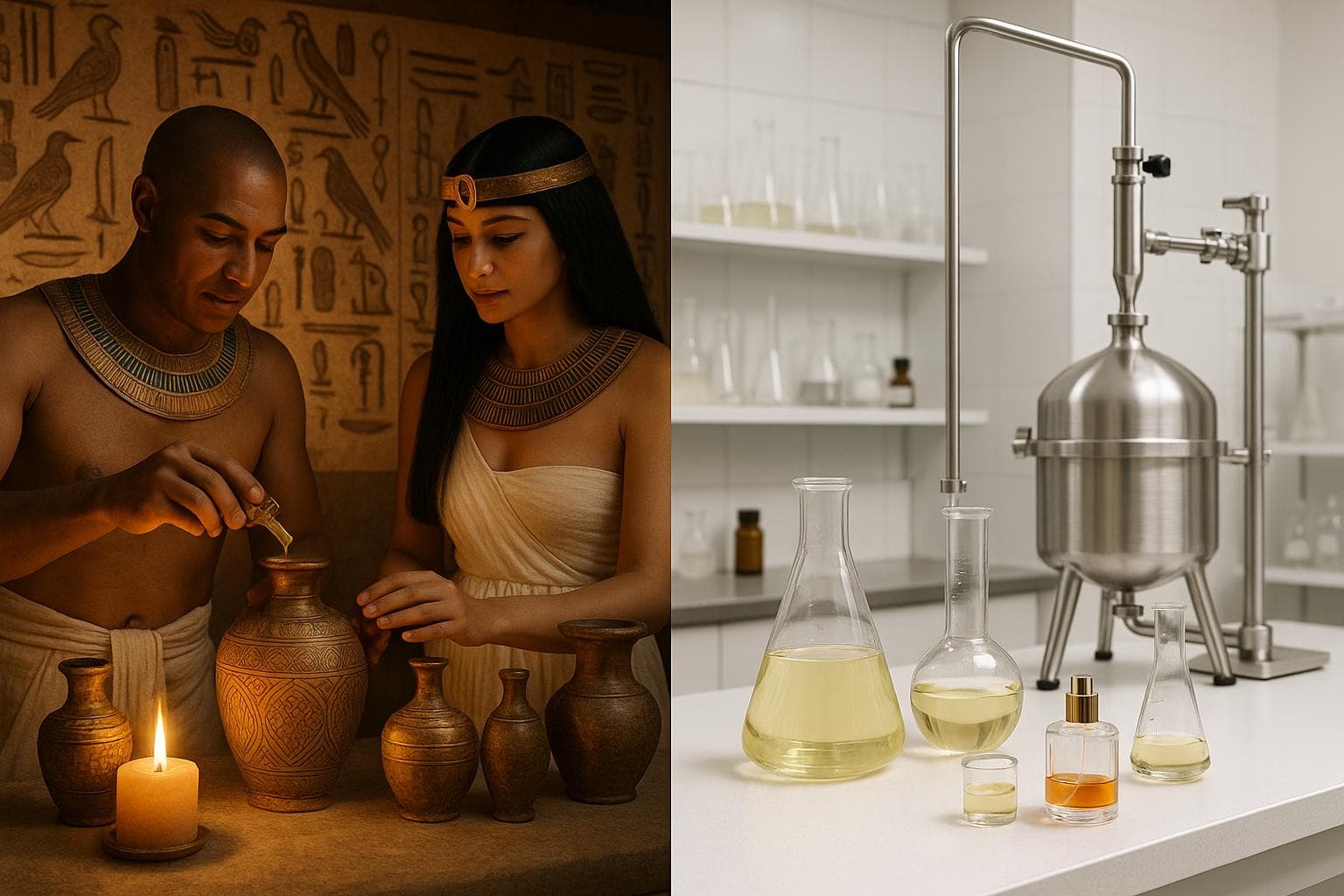
Il profumo si è evoluto dai rituali sacri dell’antico Egitto fino a diventare l’industria globale odierna. Gli antichi Egizi creavano fragranze utilizzando ingredienti naturali come incenso, mirra e loto, miscelati con oli o grassi animali. Questi profumi densi e oleosi erano impiegati per cerimonie religiose, pratiche di imbalsamazione e come segno di distinzione sociale. I loro metodi comprendevano la spremitura, la macerazione e una forma primordiale di enfleurage, avvalendosi di strumenti come mortai in pietra e recipienti di terracotta. I profumi venivano conservati in vasi di alabastro o nelle prime boccette di vetro, preservandone le qualità nel caldo clima egiziano.
Al contrario, la profumeria moderna unisce estratti naturali e molecole aromatiche sintetiche, disciolti in alcool per ottenere fragranze più leggere e durature. Tecniche avanzate come la distillazione in corrente di vapore e l’estrazione con CO₂ garantiscono una precisione assoluta, mentre la produzione su scala industriale risponde alla domanda mondiale. Oggi i profumi sono una forma di espressione personale, con proposte che spaziano da flaconi d’autore da 150 €–300 € a piccoli campioni da scoprire e provare.
Nonostante questa evoluzione, le antiche usanze continuano a influenzare la profumeria contemporanea. Ingredienti come l’incenso e la mirra restano amatissimi, e ricette storiche come il Kyphi ispirano reinterpretazioni contemporanee. Il profumo continua così a unire memoria e identità, creando un ponte attraverso millenni di storia.
| Aspetto | Antico Egitto | Profumeria moderna |
|---|---|---|
| Ingredienti | Elementi botanici naturali, oli e resine | Componenti naturali e sintetici |
| Estrazione | Spremitura, macerazione, enfleurage primordiale | Distillazione in corrente di vapore, estrazione con solventi, metodi con CO₂ |
| Base | Oli e grassi animali | Formulazioni a base alcolica |
| Strumenti | Mortai di pietra, recipienti di terracotta | Cromatografi, sistemi di dosaggio automatizzati |
| Finalità | Rituali, imbalsamazione, status sociale | Espressione personale, lusso, uso quotidiano |
| Conservazione | Vasi di alabastro, prime forme di vetro | Flaconi di vetro con vaporizzatore |
L’arte della profumeria si è trasformata radicalmente, ma la sua essenza — dare vita a fragranze capaci di evocare emozioni e identità — rimane intramontabile.
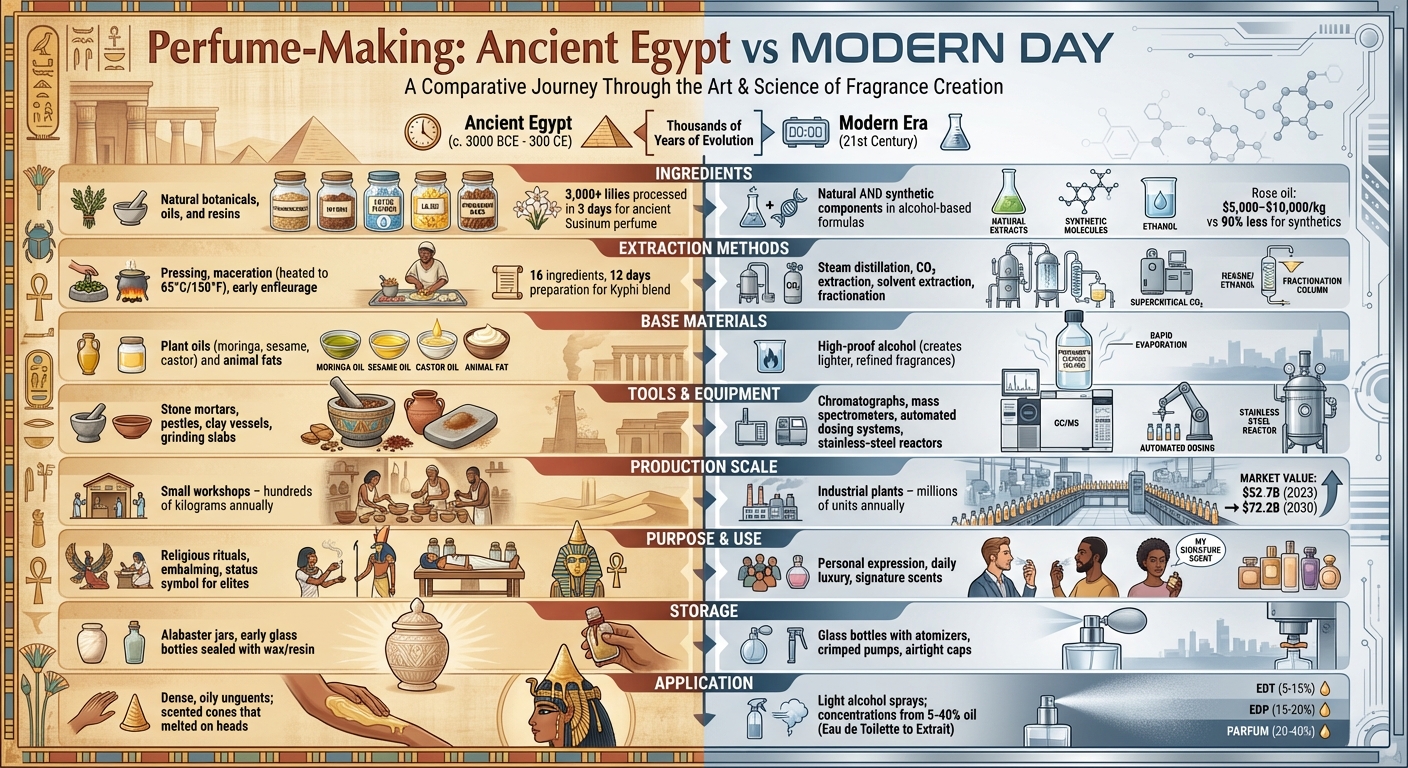
La creazione dei profumi nell’antico Egitto vs la profumeria moderna: un confronto completo
L’arte del profumo nell’antico Egitto
Importanza religiosa e sociale
Nell’antico Egitto, il profumo era molto più di un piacere dei sensi: rappresentava un ponte tra gli esseri umani e il divino. I sacerdoti svolgevano un ruolo essenziale nella preparazione delle composizioni aromatiche, fondamentali per le cerimonie nei templi. Queste fragranze accompagnavano rituali come i sacrifici animali e si credeva trasportassero le preghiere fino alle divinità. Una delle miscele più celebri, il kyphi, veniva offerta ogni sera agli dèi, a simboleggiare il legame con Osiride e il ciclo solare. Le ricette di tali profumi sacri venivano persino incise sulle pareti dei templi, a testimonianza del loro valore inestimabile.
Al di fuori delle mura sacre, il profumo era un segno di status, eleganza e purezza nella vita quotidiana. Nel clima arido, gli oli profumati non solo mantenevano la pelle idratata ma mascheravano anche gli odori sgradevoli, associando la fragranza alla purezza sia fisica che spirituale. In occasione di banchetti ed eventi sociali, gli ospiti indossavano spesso coni di unguento — solidi coni di grasso profumato posati sul capo. Questi si scioglievano lentamente con il calore, diffondendo il loro profumo per tutta la durata dell’incontro. L’impiego di resine d’importazione come l’incenso e la mirra, preziose e rare, sottolineava ulteriormente la ricchezza e l’accesso alle grandi rotte commerciali di chi le indossava. I profumi rivestivano inoltre un ruolo cruciale nell’aldilà: gli oli profumati venivano collocati nelle tombe per garantire lusso e benevolenza divina al defunto.
Queste consuetudini riflettevano la straordinaria cura degli Egizi nella selezione delle materie prime naturali, che definivano i loro inconfondibili profili olfattivi.
Materie prime naturali e caratteristiche olfattive
I maestri profumieri egizi disponevano di una ricca tavolozza di ingredienti, tra cui oli vegetali, resine, legni, erbe aromatiche e persino selezionati derivati animali. Oli base come quelli di moringa, lino, sesamo, ricino, mandorla e oliva erano comunemente utilizzati per assorbire e veicolare le fragranze. Resine come mirra, franchincenso, resina di trementina, benzoino e resine di pino donavano profondità e fungevano da fissativi. Piante e fiori aromatici — loto, gigli, rose, cannella, zafferano, menta, timo, ginepro e calamo aromatico — venivano coltivati lungo le sponde del Nilo o importati da terre lontane. Si ricordano in particolare le celebri spedizioni della Regina Hatshepsut nella terra di Punt (odierna Somalia/Eritrea), che condussero in patria tesori come incenso e mirra; la sovrana arrivò persino a far piantare alberi di incenso nei pressi del suo tempio a Luxor.
In assenza dell’alcool come solvente, i profumi egizi erano densi, oleosi e di lunghissima persistenza, all’opposto delle vaporizzazioni eteree che conosciamo oggi. Queste essenze venivano incorporate in oli e grassi, dando vita a consistenze affini a quelle di oli per il corpo o balsami. Il celebre kyphi, ad esempio, univa resine, miele, vino, frutta essiccata e spezie per sprigionare un aroma dolce, affumicato e resinoso. La sua ricetta prevedeva esattamente 16 ingredienti primari, a simboleggiare le 16 parti del corpo smembrato di Osiride, e richiedeva 12 giorni di preparazione, a ricordare i giorni trascorsi da Iside alla ricerca dello sposo. Tra gli altri profumi celebri figuravano il Mendesiano (una miscela di mirra e cassia in olio d’oliva), il Susinum (a base di giglio, mirra e cannella) e il Rhondinium (un accordo a base di rosa spesso associato all’amore). Queste formule introdussero i principi di stratificazione tra note di fondo, di cuore e di testa: concetti che guidano tuttora l’arte profumiera contemporanea.
Metodi di produzione e strumenti di lavorazione
Gli Egizi ricorrevano a diverse tecniche, quali la spremitura, la macerazione e una forma primitiva di enfleurage per estrarre le essenze. Il procedimento più immediato consisteva nello spremere fiori e piante aromatiche direttamente negli oli o nei grassi. Con la macerazione, i vegetali venivano immersi in sostanze grasse riscaldate a circa 65 °C (150 °F), per poi essere lasciati raffreddare ripetutamente finché la base non ne aveva assorbito l’aroma. L’enfleurage primordiale richiedeva di immergere più volte fiori freschi nel grasso per catturarne le frazioni volatili. Per resine e legni, il procedimento prevedeva di frantumarli, amalgamarli e scaldarli con oli o vino per liberarne le virtù aromatiche. L’olio di balanos, per esempio, veniva sottoposto a un riscaldamento continuo per 10 giorni per potenziarne la capacità di trattenere il profumo.
I profumieri adoperavano mortai e pestelli in pietra o ceramica per polverizzare resine, legni ed erbe essiccate, accanto a macine e bacili di miscelazione. Le fasi di riscaldamento e macerazione avvenivano in vasi di terracotta o metallo posti su fuochi vivi o braci ardenti. Una volta pronte, le fragranze venivano custodite in recipienti di pietra e alabastro, capaci di mantenere freschi gli oli e ridurre al minimo l’evaporazione nel clima torrido dell’Egitto. Alcuni vasi di alabastro, come quelli rinvenuti nella tomba di Tutankhamon, racchiudevano ancora tracce di antichi unguenti profumati. Più tardi, gli Egizi perfezionarono l’arte vetraria, realizzando piccole ampolle di vetro dal collo stretto provviste di tappo per ostacolare ulteriormente l’evaporazione.
La composizione delle fragranze era una disciplina altamente specializzata, spesso guidata da sacerdoti custodi di ricette sacre, trasmesse attraverso una rigorosa tradizione orale simile all’apprendistato. Questi metodi non si limitavano a catturare l’anima delle materie prime, ma preservavano il significato spirituale e culturale racchiuso in ogni creazione.
La straordinaria maestria e le tecniche sviluppate dai profumieri dell’antico Egitto hanno gettato le fondamenta di molte consuetudini che animano ancora oggi l’universo della profumeria artistica.
La profumeria moderna oggi
Espressione personale e commercio globale
L’universo delle fragranze ha percorso una lunga strada dai sacri laboratori templari dell’antico Egitto. Ciò che un tempo era riservato a cerimonie solenni e stirpi reali è divenuto per ciascuno un mezzo per esprimere il proprio stato d’animo, il proprio stile e la propria personalità. Oggi il mercato globale delle fragranze vive una fase di straordinaria vitalità: valutato 52,7 miliardi di dollari nel 2023, si stima raggiungerà i 72,2 miliardi di dollari entro il 2030. Questa ascesa è alimentata dal fascino delle maison di lusso, dalla diffusione di proposte accessibili e dal fiorire di case di profumeria di nicchia, dedicate a chi ricerca creazioni olfattive capaci di rispecchiare la propria individualità.
Questa evoluzione ha reso il profumo un elemento irrinunciabile della quotidianità, allontanandolo dalla sua antica dimensione di status symbol riservato a pochi privilegiati. I moderni canali distributivi includono boutique raffinate, piattaforme di e-commerce e servizi in abbonamento che portano fragranze d’autore e di nicchia agli appassionati di tutto il mondo. A differenza delle tirature limitate del passato, la profumeria contemporanea produce milioni di litri ogni anno, garantendo a chiunque la possibilità di trovare la propria firma olfattiva. Questa democratizzazione della fragranza ha aperto la strada a processi estrattivi d’avanguardia e a un rigore formulativo senza precedenti.
Componenti naturali e molecole di sintesi
I profumi contemporanei rappresentano un connubio perfetto tra natura e progresso scientifico. Preziosi estratti naturali come gelsomino, incenso e mirra dialogano con molecole sintetiche per esaltare la stabilità e rendere sostenibili i costi. Basti pensare che l’olio essenziale di rosa pura può raggiungere quotazioni comprese tra 5.000 $ e 10.000 $ al chilogrammo, mentre le alternative di sintesi permettono di riprodurne le sfumature a una frazione di tale valore — fino al 90% in meno.
I maestri profumieri orchestrano queste materie prime articolandole in tre distinte dimensioni olfattive:
- Note di testa: luminose ed effimere, spesso esperidate o aromatiche.
- Note di cuore: l’anima della composizione, ricca di sfaccettature floreali o speziate.
- Note di fondo: profonde e persistenti, scandite da accenti muschiati, legnosi o balsamici.
La concentrazione delle essenze definisce la persistenza e il sillage della fragranza. L’eau de parfum, con una quota del 15–20% di oli essenziali, offre una tenuta di 6–8 ore, mentre l’eau de toilette (al 5–15%) accompagna per 4–6 ore. L’extrait de parfum, la formula più ricca e concentrata attestandosi al 20–40%, permane per oltre 8 ore, evocando la magnifica densità degli antichi unguenti egizi.
Metodi di estrazione e tecnologie di laboratorio
La profumeria di oggi si avvale di metodologie sofisticate per estrarre la quintessenza più pura dalle materie prime vegetali. Tecniche come la distillazione in corrente di vapore (ideale per lavanda ed eucalipto), l’estrazione con CO₂ supercritica (che rispetta i composti termolabili di fiori e spezie) e l’estrazione con solventi volatili (dedicata a corolle fragili come il gelsomino e la tuberosa) garantiscono una precisione impensabile nelle epoche passate. Persino un enfleurage perfezionato trova ancora spazio per la lavorazione di infiorescenze eccezionalmente rare.
Dietro le quinte, strumentazioni d’eccellenza come gascromatografi e spettrometri di massa analizzano e certificano i profili molecolari, mentre la cromatografia liquida ad alte prestazioni (HPLC) vigila sulla costanza qualitativa dei lotti. Rigidi standard di sicurezza sono stabiliti da organismi internazionali come l’International Fragrance Association (IFRA) e la FDA, che disciplinano l’uso dei potenziali allergeni (ad esempio limitando il muschio di quercia allo 0,01%) e vietano materie di sintesi rischiose come il musk ketone. Queste tutele assicurano fragranze sicure, controllate e tracciabili, delineando un profilo radicalmente diverso rispetto all’empirismo del mondo antico.
Formati di prova e nuove esperienze di scoperta
Per molti amanti del profumo, l’acquisto a scatola chiusa di un flacone intero — dal valore sovente compreso tra 150 $ e 400 $ — può rappresentare un passo impegnativo. È in questo contesto che i formati da viaggio e i campioni assumono un ruolo fondamentale. Piccoli volumi come fiale da 2 ml, 5 ml e 8 ml, e un decant in flacone da 30 ml per la maggior parte dei profumi offrono l’opportunità di esplorare molteplici creazioni senza un investimento eccessivo. Un vaporizzatore da 8 ml, ad esempio, eroga circa 120 nebulizzazioni, ideali per due mesi di utilizzo quotidiano. Ciò concede il tempo necessario per apprezzare la vera evoluzione di una fragranza, dal debutto frizzante delle note di testa fino all’abbraccio intimo del fondo.
Rivenditori come Scento interpretano appieno questa tendenza, travasando gli originali in piccole fiale per consentire la scoperta olfattiva senza sprechi. A dicembre 2025, Scento contava già oltre 85.000 membri con una valutazione d’eccellenza pari a 4,8 su oltre 19.000 recensioni. Come ha confermato un cliente soddisfatto:
Finivo sempre per pentirmi di aver comprato un flacone intero dopo appena una settimana.
Queste soluzioni testimoniano come l’incontro tra tradizione e sensibilità moderna renda il viaggio nell’alta profumeria un’esperienza più accessibile, consapevole e affascinante che mai.
Antico Egitto e profumeria moderna a confronto
Ingredienti ed estrazione
L’evoluzione della profumeria racconta una straordinaria metamorfosi nelle formule e nelle tecniche. I profumieri dell’antico Egitto facevano affidamento su elementi botanici autoctoni o importati dalle rotte vicine, come incenso, mirra, fior di loto, gigli e cannella. Questi venivano infusi in oli vegetali o grassi animali, quali moringa, ricino, lino o sesamo. Privi di alcool, i loro profumi erano concentrati, densi e persistenti, applicati come ricche preparazioni oleose. Tra le metodologie estrattive spiccavano la spremitura, l’infusione a caldo nei grassi, la macerazione e un enfleurage embrionale, basato su pestatura e riscaldamento controllato. Basti considerare che per ricreare la storica formula del Susinum era necessario lavorare oltre 3.000 gigli nell’arco di soli tre giorni.
Al contrario, la profumeria contemporanea seleziona materie prime da ogni angolo del globo, sposando assolute ed estratti naturali con molecole di sintesi all’avanguardia. Metodi d’elezione come la distillazione a vapore, l’estrazione con solventi, l’impiego di CO₂ supercritica e il frazionamento restituiscono oli essenziali purissimi. Questi vengono poi armonizzati in alcool ad altissima gradazione o basi sofisticate, dando vita a creazioni aeree, luminose e sfaccettate nella classica architettura a piramide olfattiva, con una riproducibilità impeccabile.
Attrezzature e volumi di produzione
Anche gli strumenti e i ritmi produttivi hanno conosciuto una rivoluzione epocale. Gli artigiani dell’antichità impiegavano utensili semplici e manufatti in piccoli opifici, con i laboratori più importanti del Nuovo Regno capaci di produrre al massimo poche centinaia di chilogrammi all’anno.
Oggi la profumeria opera su volumi e standard industriali. I laboratori di ricerca e sviluppo accolgono apparecchiature di altissima precisione come cromatografi, camere climatiche di stabilità e stazioni robotizzate di dosaggio. I complessi di produzione vantano reattori di miscelazione in acciaio inox, apparati di filtrazione e linee di confezionamento automatizzate in grado di lavorare da migliaia a milioni di pezzi ogni anno. Sistemi informatici controllano rigorosamente temperature, velocità di agitazione e bilanciamento millimetrico dei componenti, garantendo un’eccellenza uniforme su scala planetaria.
Sviluppo delle formule e figura del profumiere
La genesi di una fragranza si è trasformata da rito esoterico e misterico in una professione d’arte altamente codificata. Nell’antico Egitto, le ricette erano segreti gelosamente custoditi, indissolubilmente legati al cerimoniale religioso e all’autorità del faraone. Tramandate a voce, queste formule racchiudevano un profondo valore mistico e numerologico. Ne sono un esempio i 16 ingredienti del Kyphi, scelti a ricordo delle 16 parti del corpo di Osiride, e i suoi 12 giorni di lavorazione, che rievocavano le tappe della ricerca compiuta da Iside.
I creatori contemporanei, noti come "nasi", lavorano a stretto contatto con direttori artistici e maison traducendo in note olfattive dettagliati brief progettuali. Tali documenti definiscono l’universo narrativo, il target di riferimento, le fasce di costo e le emozioni da suscitare. Le formule sono protette da rigide norme di tutela industriale, catalogate digitalmente e perfezionate al milligrammo. Le composizioni attuali puntano sull’identità del marchio, sulle tendenze della profumeria contemporanea e su parametri tecnici come sillage e tenuta, riflettendo il passaggio dall’offerta devozionale al lusso personale quotidiano.
Finalità e rituale quotidiano
Il ruolo riservato al profumo nella vita di ogni giorno ha vissuto un’altrettanto profonda metamorfosi. Nell’antico Egitto, le fragranze erano dedicate in primo luogo agli dèi e ai riti di passaggio verso l’eternità. Venivano impiegate sotto forma di unguenti o coni aromatici fusi sul capo, trovando solo in un secondo momento impiego presso la corte e le classi abbienti per finalità terapeutiche, protettive ed estetiche.
Nel mondo d’oggi, il profumo è il complemento supremo dell’eleganza individuale e un meraviglioso veicolo di espressione personale. Si indossa per il piacere di ogni giorno, si riserva a momenti memorabili o si sceglie per comunicare la propria presenza nel mondo. Tracce di ritualità sopravvivono nella ricerca intima della propria firma olfattiva o nella scelta della fragranza per il giorno delle nozze. Inoltre, le moderne opportunità di esplorazione — come i decant firmati Scento in fiale da 2 ml, 5 ml e 8 ml, e un decant in flacone da 30 ml per la maggior parte dei profumi — consentono di vivere e apprezzare profumi di lusso e di nicchia prima dell’acquisto definitivo del flacone, liberando la scelta dal timore dello spreco o dell’acquisto a scatola chiusa.
Tavola di raffronto
| Aspetto | Antico Egitto | Profumeria moderna |
|---|---|---|
| Materie prime | Elementi botanici locali (incenso, mirra, loto, giglio, cannella) in oli vegetali o grassi animali | Ingredienti globali naturali e sintetici disciolti in basi alcoliche raffinate |
| Estrazione | Spremitura, macerazione, riscaldamento ed enfleurage primordiale | Distillazione in corrente di vapore, estrazione con solventi, CO₂ supercritica e frazionamento |
| Strumenti | Mortai in pietra, pestelli, macine, recipienti di terracotta e anfore | Cromatografi, reattori in acciaio inossidabile e linee di confezionamento automatizzate |
| Volumi di produzione | Botteghe artigianali con rese di poche centinaia di chilogrammi all’anno | Impianti industriali con tirature da migliaia a milioni di esemplari l’anno |
| Sviluppo delle formule | Ricette sacre templari cariche di simbolismo, tramandate per via orale | Formulazioni digitalizzate, rigorosamente codificate e governate da parametri di mercato e normative |
| Conservazione | Vasi di alabastro o ampolle vitree primitive sigillate con cera o resina | Flaconi in vetro con pompa sigillata, vaporizzatore ed erogatore ermetico |
| Finalità | Culti rituali, imbalsamazione, cure terapeutiche e privilegio aristocratico | Espressione di sé, alta profumeria, cura della persona e stile quotidiano |
| Applicazione | Unguenti densi, coni profumati a lenta fusione o unzioni cerimoniali | Vaporizzazioni alcoliche per la vita quotidiana, le serate esclusive e signature scent personali |
sbb-itb-fb213bc
Ancient Egyptian Influence on Modern Perfumery
La sensibilità estetica dell’antico Egitto vive ancora nell’universo dei profumi di lusso, dove i flaconi più ricercati richiamano la grazia scultorea di quell’epoca lontana. Resine nobili come il franchincenso e la mirra, celebrate nei secoli per la loro profondità calda e fumosa, costituiscono tuttora la colonna portante di innumerevoli fragranze contemporanee. Questi accordi, protagonisti assoluti delle liturgie templari, donano un’aura di intramontabile mistero alle composizioni d’autore. La complessità nell’amalgamare gli aromi e l’intensa carica simbolica di quelle materie prime continuano a ispirare i nasi d’oggi nella riscoperta e reinterpretazione di ricette del passato.
L’esempio più fulgido di questa continuità è la leggendaria composizione del Kyphi, scolpita per sempre sulle pareti del Tempio di Edfu e intrisa della saga mitologica di Osiride. Questa fragranza ancestrale ha dato vita a molteplici rivisitazioni contemporanee. Nel 2021, il progetto di ricerca Alchemies of Scent ha fatto rivivere un altro accordo storico, il Susinum: un sontuoso tributo a base di giglio, mirra e cannella. Attraverso tecniche classiche come la macerazione e l’enfleurage, il team ha lavorato oltre 3.000 gigli in appena tre giorni, rispettando meticolosamente le fonti alessandrine. Tali imprese testimoniano la passione con cui l’alta profumeria odierna preserva la nobiltà delle tecniche delle origini.
Le maison più esclusive reinterpretano il fascino d’Egitto anche nel packaging e nell’arte del racconto olfattivo. Flaconi ispirati alle sagome dei faraoni, dettagli in geroglifico, scarabei dorati ed essenze custodite in teche che richiamano l’alabastro celebrano la fragranza come un gioiello regale. Questo legame tra profumo, distinzione e aura divina — cardine della civiltà dei faraoni — trova la sua naturale espressione nella profumeria moderna, dove il profumo si afferma quale autentico emblema di lusso ed esclusività. Persino pratiche artigianali come l’enfleurage, in cui i fiori cedono la propria essenza ai grassi, vengono saltuariamente riproposte in tirature d’arte, quale omaggio reverente alla storia a dispetto della velocità della produzione moderna.
Conclusioni
Il profumo ha compiuto un viaggio meraviglioso: dai sacri recessi dei santuari egizi alle eleganti teche delle profumerie più esclusive del pianeta. Eppure, la sua missione più autentica è rimasta immutata: definire l’identità, sublimare i momenti indimenticabili ed evocare emozioni profonde. Millenni fa, gli artigiani del Nilo univano resine, legni, erbe e corolle, lasciandoli macerare per giorni per ottenere oli di straordinaria opulenza. La profumeria di oggi eredita quell’alchimia e la innalza con l’apporto della scienza, armonizzando essenze pure, molecole sintetiche e basi alcoliche per regalare sfumature inedite, costanza e una scelta infinita — dalle acque profumate quotidiane alle creazioni di nicchia più ardite.
Il passaggio da omaggio votivo a lusso accessibile testimonia una luminosa evoluzione culturale. Nell’antico Egitto, capolavori come il mitico Kyphi — composto da 16 ingredienti e consacrato a Osiride — erano il privilegio esclusivo di divinità e faraoni. Oggi, la fragranza è un gesto intimo e irrinunciabile per milioni di persone: un tocco che dona sicurezza, rivela il proprio stile o regala pura armonia interiore. Questo patrimonio senza tempo si fonde con la tecnologia più avanzata, costruendo un dialogo eterno tra ieri e oggi.
È straordinario constatare come le antiche intuizioni guidino ancora i nasi moderni. Resine come l’incenso e la mirra sono pietre angolari di molte delle creazioni più esclusive, mentre procedimenti nobili come l’enfleurage tornano ad affascinare i laboratori più poetici della profumeria d’autore. Perfino importanti atenei ricreano le formule del passato, a riprova di come le ricette arcaiche continuino a nutrire l’ispirazione contemporanea.
Per gli amanti dei profumi più raffinati negli Stati Uniti, l’evoluzione della profumeria dai templi alle boutique dischiude orizzonti di scelta straordinari. Che si tratti di vaporizzare la propria eau de parfum preferita prima di una giornata di lavoro o di esplorare un bouquet raro per una serata speciale, si prende parte a un rituale che vanta cinquemila anni di eleganza. Servizi come Scento rendono questa ricerca piacevole e immediata, proponendo formati prova dai 2 ml fino al decant in flacone da 30 ml per consentire di vivere le più affascinanti fragranze di design prima di acquistare il flacone definitivo.
Con il mutare delle materie prime e delle abitudini contemporanee, la profumeria continuerà a reinventarsi. Tuttavia, la sua vocazione rimarrà eterna: legare insieme la memoria, l’anima e l’emozione attraverso il profumo. Dalle sale avvolte d’incenso degli antichi templi fino al primo gesto della vostra routine mattutina, la fragranza si conferma il filo invisibile e prezioso che unisce il passato dell’umanità al suo presente.
Domande frequenti
In che modo le tecniche di profumeria dell’antico Egitto hanno influenzato le fragranze moderne?
L’arte profumiera dell’antico Egitto ha lasciato un’impronta indelebile sulla creazione delle fragranze moderne. Selezionando ingredienti nobili come incenso, mirra e resine balsamiche, gli artigiani egizi hanno dato vita ad accordi olfattivi ricercati e apprezzati ancora oggi. Hanno inoltre aperto la strada ai primi processi di estrazione e miscelazione, ponendo le basi storiche delle lavorazioni raffinate che caratterizzano la profumeria contemporanea.
La loro filosofia esaltava la qualità superiore degli oli e una cura meticolosa nella lavorazione — canoni di eccellenza che guidano tuttora la creazione delle fragranze di prestigio.
Quali sono le principali differenze tra la profumeria dell’antico Egitto e quella contemporanea?
Gli antichi Egizi davano vita ai loro profumi avvalendosi di procedimenti come la spremitura manuale, la macerazione e forme rudimentali di distillazione. Fiori, foglie, cortecce e resine venivano lasciati in infusione in oli o grassi animali per estrarne le note aromatiche. Si trattava di pratiche lente che richiedevano giorni di lavoro e l’uso di strumenti elementari, rispecchiando l’ingegno artigianale dell’epoca.
La profumeria moderna, al contrario, impiega procedimenti tecnologici ad altissima precisione come la distillazione in corrente di vapore, l’estrazione con solventi e l’impiego di CO₂ supercritica. Questi macchinari d’avanguardia assicurano standard incomparabili di purezza, stabilità ed efficienza, permettendo di realizzare fragranze caratterizzate da una maggiore complessità armonica e da una persistenza prolungata.
Per quale motivo ingredienti come l’incenso e la mirra sono tuttora protagonisti nei profumi contemporanei?
L’incenso e la mirra rappresentano elementi cardinali della profumeria da molti secoli, amati per i loro aromi caldi, ricchi e sfaccettati capaci di legarsi armoniosamente a una vasta gamma di note olfattive. Queste nobili resine sono scelte per la loro abilità nel conferire struttura, avvolgenza e profondità alle formule, evocando suggestioni di nobiltà, spiritualità e alta raffinatezza.
La loro presenza nelle formule olfattive crea un legame ideale con le celebrazioni dell’antichità, di cui erano i simboli indiscussi. Anche nel nostro tempo continuano a essere fonte d’ispirazione per creazioni di profumeria classica e contemporanea, conquistando chiunque desideri una fragranza dal fascino senza tempo.

