Niniejsza analiza opiera się na przeglądzie belgijskiego rynku perfum przeprowadzonym przez Scento w okresie od października 2025 do kwietnia 2026 roku. Szczegółowa metodologia jest dostępna dla prasy na życzenie pod adresem [email protected].
Frequently asked questions
- Which European country consumes the most perfume per capita?
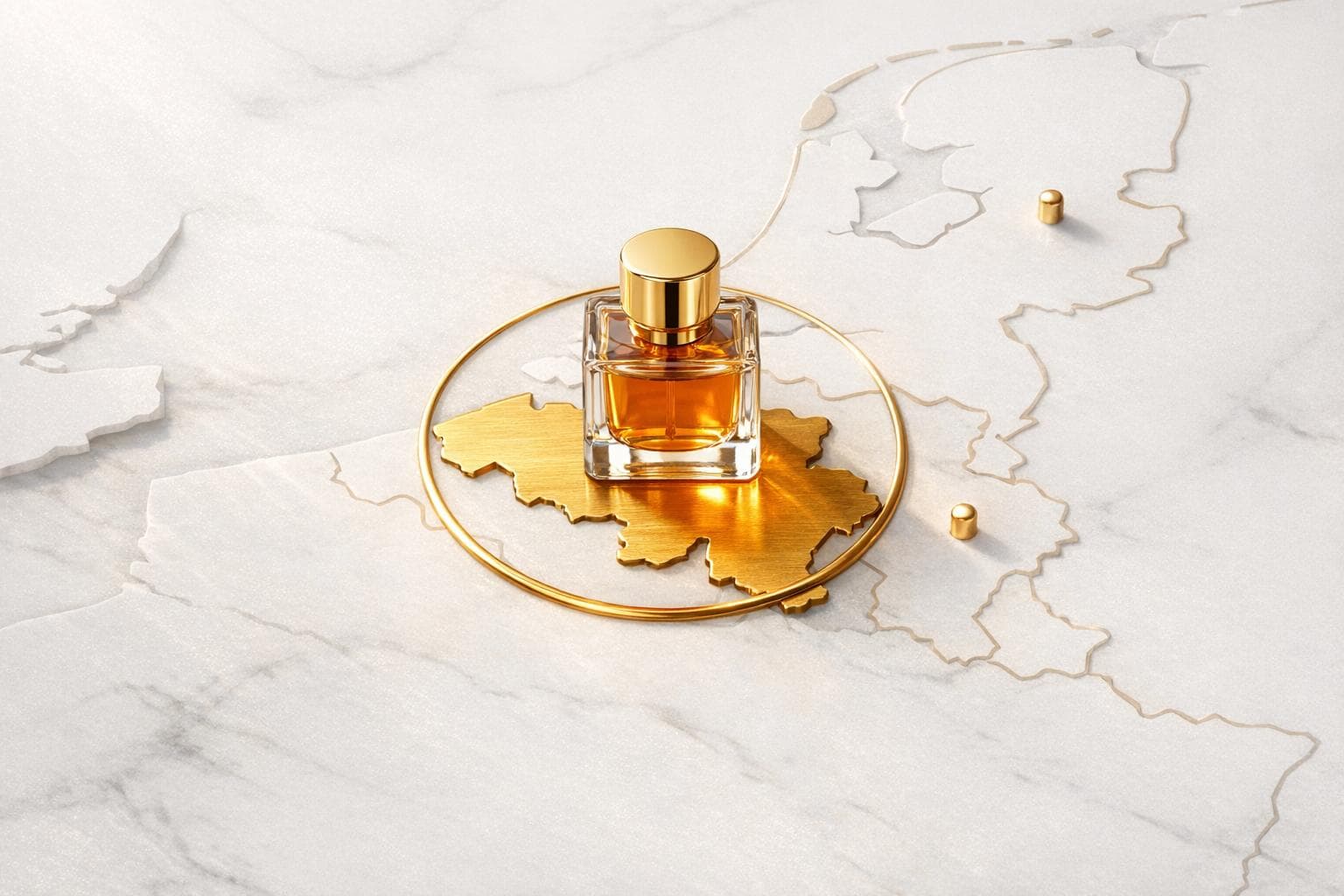
- Belgium leads the European Union on per-capita fragrance consumption, at approximately 1,486 kilograms per 1,000 population in 2024, a level no other EU member state has matched. Ireland is the closest peer at roughly 1,447 kilograms per 1,000, with the Netherlands a clear third at 836 kilograms per 1,000. On a per-capita basis, Belgium consumes roughly 1.78 times the fragrance volume of the Netherlands and approximately 6 times the EU average. Scento's view is that Belgium will retain this crown through at least 2030.
- Why does Belgium consume so much perfume?
- Four structural drivers stand out: geographic and linguistic position between France and the Netherlands giving Belgium deep French-perfumery cultural fluency combined with Dutch retail discipline, high urban-concentrated disposable income across Brussels, Antwerp, and Ghent, an embedded gifting tradition that drives outsized fourth-quarter retail volume, and sophisticated specialist retail infrastructure where ICI Paris XL alone operates over 120 Belgian doors. Scento's analysis: Belgian buyers treat fragrance as everyday personal expression rather than occasional indulgence, an unusual cultural pattern within Europe.
- Where do Belgian buyers shop for perfume?
- Specialist beauty retail dominates, led by ICI Paris XL as the country's third-largest cosmetics retailer by turnover with 120+ Belgian stores, followed by Planet Parfum, Inno as a department-store concession, and the smaller premium boutiques across Brussels, Antwerp, and Ghent. Cross-border shopping is a meaningful structural feature: Brussels residents drive to Paris for limited editions, Antwerp residents shop Maastricht's ICI Paris XL, and East Cantons residents source from Aachen. Online perfume sales are growing but remain a smaller share of channel mix than in the Netherlands or Germany.
- What perfume brands are most popular in Belgium?
- Belgium's bestseller rotation tilts more French than the EU average. Designer houses lead: Dior, Yves Saint Laurent, Lancome, Givenchy, Hermes, Guerlain, and Jean Paul Gaultier. The niche tier is led by Maison Francis Kurkdjian, especially strong in Brussels, with Parfums de Marly, Creed, Frederic Malle, and Diptyque rounding out the rotation. Belgium imports over 70% of its fragrance product from France, the United Kingdom, and the Netherlands, a direct reflection of its geographic and cultural positioning between the two capital fragrance markets of the European Union.
- How big is the Belgian fragrance market?
- In absolute terms, Belgium is the European Union's fifth-largest fragrance market by volume, despite a population of only 11.7 million. The market value sits in the high single-digit hundreds of millions of euro at retail. Per-capita consumption is the headline number at 1,486 kilograms per 1,000 in 2024, where Belgium punches well above its weight on this metric, exceeding markets with three or four times its population. The structural drivers behind the per-capita lead are geographic, cultural, and retail-infrastructure-based, and Scento expects them to remain durable.
- Is Belgium's perfume consumption growing?
- Yes, modestly. Value is growing roughly 2 to 3% per year nominal, with niche fragrance segment growth running materially faster at high single digits annually. Volume growth is closer to flat. The structural mix-shift toward premium and niche, combined with growing male and unisex penetration, is the main growth driver. Scento's forecast through 2030: Belgium retains the per-capita crown, niche captures another 8 to 12 percentage points of value share, and the male buyer segment moves toward 45% of total fragrance buyers.
- Do Belgian buyers shop perfume cross-border?
- Yes, extensively. Belgium's compact geography and three-language reality make cross-border perfume shopping a genuine structural feature. Brussels residents source limited editions from Paris perfumeries, Antwerp residents shop the Netherlands for ICI Paris XL promotions, and East Cantons residents source from Aachen and other German cities. This reciprocal flow means Belgium is simultaneously the EU's heaviest per-capita fragrance consumer and one of its most active fragrance logistics waypoints, both a destination market and a re-distribution node for the Benelux corridor.