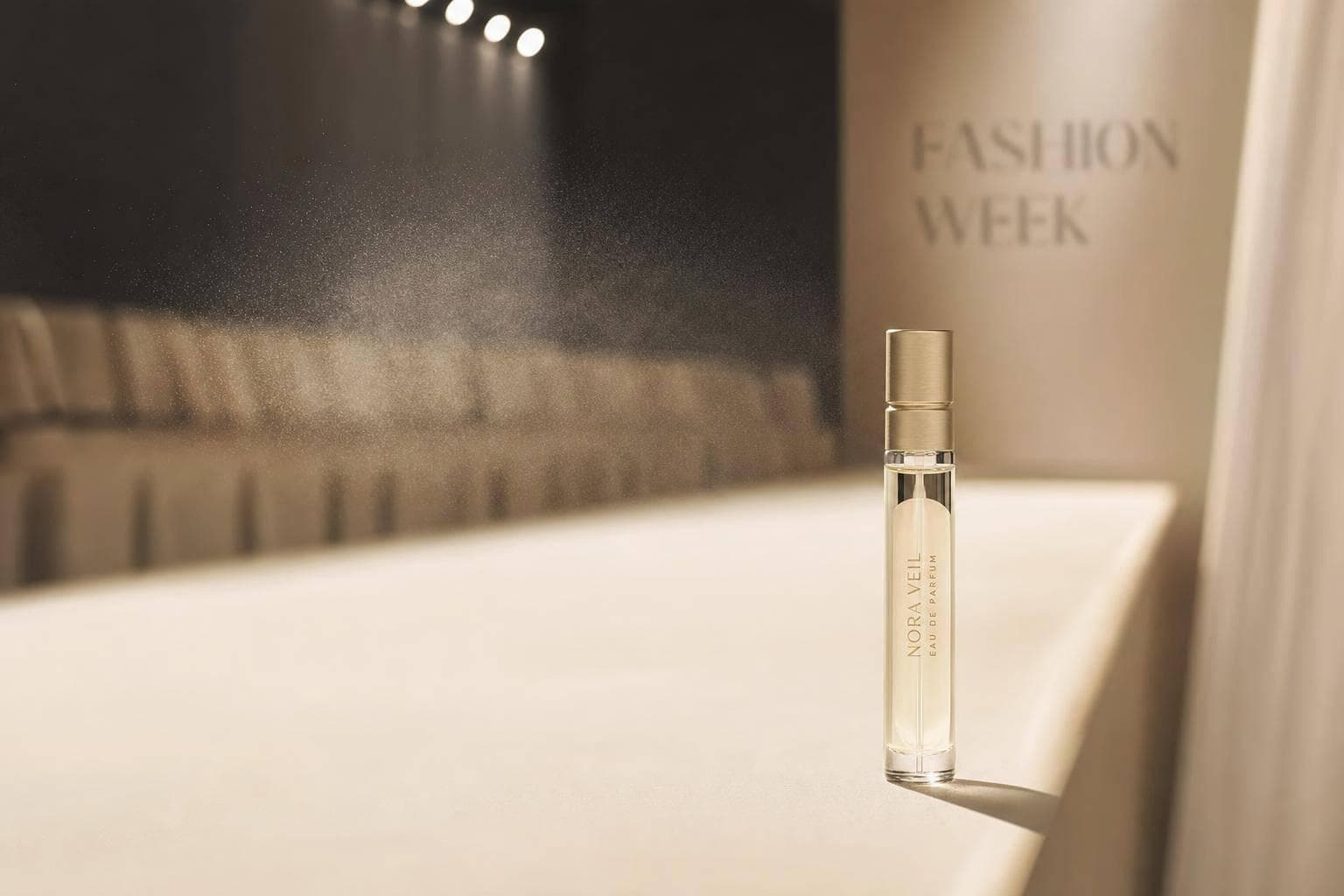
Zapach na wybiegu ma zaledwie od 8 do 20 minut, aby zadziałać, dlatego każda decyzja musi być niezwykle precyzyjna. Cały proces sprowadza się do pięciu etapów: przygotowania jasnego briefu, skomponowania zapachu pod harmonogram pokazu, przetestowania go w przestrzeni wydarzenia, opanowania dyfuzji oraz zachowania umiaru w dniu pokazu, z myślą o pełnej sali gości.
Gdyby ująć to najprościej:
- Zacznij od kolekcji, a nie od trendów perfumeryjnych
- Dopasuj moc zapachu do wnętrza, liczby gości i temperatury
- Projektuj pod kątem dynamiki pokazu: wejścia gości, pierwszej sylwetki, finału i wyjścia
- Wybierz właściwą metodę aplikacji: aromatyzację przestrzeni, tkaniny, modeli lub rozwiązanie hybrydowe
- Unikaj przesytu, ponieważ wypełniona sala całkowicie zmienia odbiór zapachu
Szczególną rolę odgrywają tu konkretne parametry. Wybiegi liczą zazwyczaj około 25–40 m, podczas gdy większe produkcje przekraczają 60 m. Intensywność warto weryfikować co 5 m. Wiele zespołów uruchamia subtelną dyfuzję na 20–30 minut przed otwarciem drzwi, a następnie zwiększa jej moc na 5–10 minut przed pojawieniem się pierwszej sylwetki. Taki harmonogram pozwala utrzymać wyrazistą obecność kompozycji, nie dopuszczając do jej przytłoczenia.
Kluczem do sukcesu jest bezkompromisowa spójność: ta kompozycja nie powstaje po to, by podobać się każdemu. Jej zadaniem jest dopełnienie jednej, konkretnej wizji artystycznej, w jednej przestrzeni, w określonym czasie - by następnie zyskać drugie życie w butikach, przesyłkach prasowych czy ekskluzywnych miniaturach.
Wniosek: najlepszy zapach na wybieg to nie ten najbardziej ekspansywny. To ten, który idealnie współgra z krawiectwem, harmonijnie wypełnia przestrzeń i pozostaje w pamięci na długo po wyjściu gości.
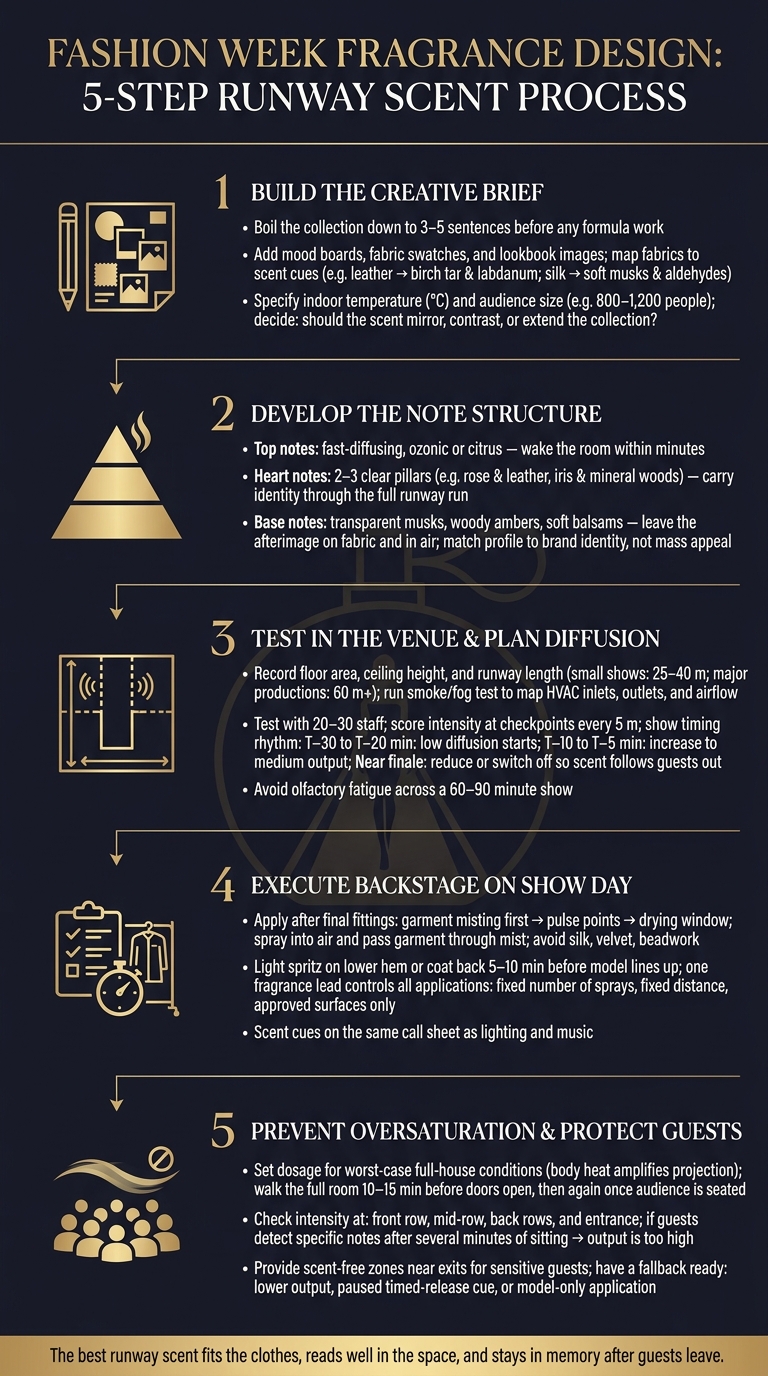
Fashion Week Fragrance Design: 5 — Step Runway Scent Process
Krok 1: Stwórz brief kreatywny na podstawie kolekcji
Brief kreatywny powinien powstać zanim rozpoczną się jakiekolwiek prace nad formułą. Zamknij esencję kolekcji w 3–5 zdaniach, a następnie dołącz moodboardy, próbki tkanin oraz zdjęcia z lookbooka. Dzięki temu perfumiarz przełoży narrację pokazu na język zapachu bez konieczności domysłów.
Przełóż sylwetki, tkaniny, barwy i sezon na kody olfaktoryczne
Sylwetki, tkaniny, paleta barw i sezon niosą ze sobą jednoznaczne impulsy olfaktoryczne. Wyraziste krawiectwo i mocno zarysowane ramiona naturalnie sugerują bardziej wytrawne, architektoniczne kierunki, takie jak wetyweria, kadzidło czy akordy skórzane. Płynne linie i cięty ze skosu jedwab prowadzą ku miękkim piżmom, transparentnym kwiatom i świetlistym aldehydom. Warto uszeregować kluczowe tkaniny według ich roli w kolekcji i przypisać każdej z nich konkretne pojęcia, którymi perfumiarz będzie mógł się posłużyć.
| Tkanina | Cechy charakterystyczne | Kierunek zapachowy |
|---|---|---|
| Skóra | Surowa, lśniąca, wyrazista | Dziegieć brzozowy, labdanum, szafran, zamsz, niuanse dymne lub tytoniowe |
| Jedwab | Gładki, świetlisty, nieważki | Transparentne kwiaty, miękkie piżma, zwiewne aldehydy |
| Denim | Swobodny, miejski, nieskazitelny | Cytrusy, czyste piżma, nuty mineralne lub metaliczne |
| Wełna / grube dzianiny | Ciepła, otulająca, wielowymiarowa | Cedr, ambra, kardamon, benzoes |
Podobnie funkcjonują palety kolorystyczne. Neony i wyraziste printy kierują uwagę ku rześkim cytrusom lub strukturom zielonym. Greige i pudrowy róż przywodzą na myśl miękkie nuty drzewne i piżma. Błękity i srebra harmonizują z tonami morskimi, irysem lub kadzidłem, podczas gdy kolory ziemi i złoto współgrają z ambrą i przyprawami.
Te wskazówki nadają projektowi kierunek, zanim jeszcze powstanie zarys kompozycji.
Sezon ma również fundamentalne znaczenie dla projekcji i intensywności zapachu. Przy pokazach wiosna/lato brief powinien przewidywać lżejsze, szybciej dyfundujące konstrukcje o umiarkowanym sillage, ponieważ wyższa temperatura naturalnie wzmacnia projekcję. Kolekcje jesień/zima prezentowane we wnętrzach znoszą bogatsze, trwalsze struktury oparte na żywicach, drewnie i przyprawach. Należy również określić przewidywaną temperaturę sali w °C oraz szacowaną liczbę gości (np. 800–1.200 osób), co pozwoli perfumiarzowi precyzyjnie dobrać koncentrację kompozycji.
Mając jasno nakreślony profil sensoryczny, można zdecydować, w jaką relację zapach wejdzie z samymi projektami.
Zdecyduj, czy zapach ma odzwierciedlać, kontrastować czy rozwijać kolekcję
Należy precyzyjnie określić, czy kompozycja ma odzwierciedlać, kontrastować z, czy też rozwijać kolekcję. Odzwierciedlenie utrzymuje pełną synergię z kreacjami: przydymione drewna doskonale uzupełnią mroczny romantyzm, a czyste, przejrzyste piżma – ascetyczny minimalizm. Kontrast wprowadza fascynujące napięcie artystyczne. Surowe krawiectwo zestawione z bogatą kompozycją kwiatowo-ambrową wzmacnia siłę wyrazu obu tych elementów. Rozwinięcie idzie o krok dalej – wykorzystuje zapach, by dopowiedzieć wątki historii marki, których sam wybieg nie jest w stanie pokazać, takie jak dziedzictwo historyczne, geografia czy przyszły kierunek rozwoju.
Brief musi być osadzony w stałych kodach olfaktorycznych domu mody. Powinien nawiązywać do jego ikonicznych surowców, uwzględniać świadome wykluczenia i wspierać ogólne uniwersum marki.
Daje to perfumiarzowi precyzyjny punkt wyjścia do ułożenia piramidy zapachowej na kolejnym etapie.
Krok 2: Opracuj koncepcję zapachu i dobierz strukturę nut
Gdy brief jest gotowy, twórca przechodzi od koncepcji do receptury. Wizualna atmosfera, ładunek emocjonalny i wymagania techniczne zostają przełożone na strukturę stworzoną z myślą o krótkim, dynamicznym pokazie mody.
W tym formacie czas ma kluczowe znaczenie. Każda warstwa zapachu spełnia inne zadanie w poszczególnych fazach pokazu: podczas wejścia gości, pierwszej sylwetki i wielkiego finału.
Skomponuj nuty głowy, serca i bazy pod kątem nastroju i dynamiki pokazu
Zapach na wybiegu funkcjonuje pod presją uciekających minut. Każdy poziom piramidy ma precyzyjnie przypisane zadanie.
Nuty głowy muszą błyskawicznie wypełnić i ożywić przestrzeń. Gdy goście zajmują miejsca, zapach powinien zaznaczyć swoją obecność w ciągu pierwszych kilku minut, pozostając eleganckim i nienapastliwym. Perfumiarze często sięgają po składniki o kontrolowanej lotności, takie jak molekuły ozonowe czy precyzyjnie wyselekcjonowane frakcje cytrusowe – swobodnie wypełniają one kubaturę i brzmią czysto z dystansu, po czym płynnie ustępują miejsca kolejnym akordom w momencie startu pokazu.
Nuty serca niosą tożsamość kolekcji przez cały czas trwania przejścia modeli. Zazwyczaj opiera się je na 2–3 wyrazistych filarach, takich jak duet róży ze skórą czy irysa z mineralnymi nutami drzewnymi. Celem jest zachowanie nienagannej spójności od pierwszego do ostatniego looku. W tej fazie doskonale sprawdzają się kwiaty, przyprawy i aromatyczne drewna, które harmonijnie wypełniają przestrzeń bez potrzeby stosowania nadmiernych dawek.
Nuty bazy tworzą zmysłowe wspomnienie. Po finale goście powinni wciąż wyczuwać na tkaninach i w powietrzu ciepły, harmonijny ślad, który utrwali pokaz w pamięci. Transparentne piżma, dyskretne ambry drzewne oraz miękkie balsamy, na przykład benzoes, sprawdzają się tu idealnie – przylegają do tekstyliów, nie obciążając nadmiernie kubatury wnętrza. W większości przypadków gęstość nut bazy jest tu znacznie lżejsza niż w klasycznej wodzie perfumowanej przeznaczonej do sprzedaży detalicznej.
Taka konstrukcja pozwala zespołowi sprawnie przetestować zachowanie zapachu w przestrzeni jeszcze przed dniem premiery.
Dopasuj profil zapachu do tożsamości marki, a nie do masowych upodobań
Zapach na fashion week nie powstaje tak, jak produkt komercyjny. Jego celem nie jest trafienie w gusta szerokiego odbiorcy, lecz wzmocnienie artystycznej narracji prezentowanej na wybiegu.
To założenie całkowicie definiuje recepturę. Mroczny, awangardowy dom mody może postawić na akordy dymu, atramentu, chłodnych przypraw i nuty metaliczne. Na co dzień taka kompozycja mogłaby budzić kontrowersje, lecz na wybiegu – w połączeniu z castingiem, ścieżką dźwiękową i scenografią – staje się absolutnie spójnym dziełem sztuki. Z kolei historyczny dom mody słynący z krawieckiego kunsztu wybierze szlachetną skórę, irys i polerowane drewno.
Niewielkie próbki pozwalają zespołowi na bieżąco kontrolować, jak poszczególne akordy zachowują się na tkaninach oraz w otwartej przestrzeni.
Krok 3: Przetestuj zapach na miejscu i zaplanuj dyfuzję
Kompozycja, która zachwyca na blotterze lub w zaciszu pracowni perfumiarza, może zachować się zupełnie inaczej w surowej przestrzeni eventowej. Miejsce pokazu weryfikuje wszystko: cyrkulację powietrza, temperaturę, wysokość sufitów, zagęszczenie widowni, a nawet dynamikę wchodzenia gości. Dlatego zapach musi zostać przetestowany w docelowym wnętrzu, a nie tylko w laboratorium. Jeśli przestrzeń nie jest jeszcze dostępna, testy należy przeprowadzić w możliwie najbardziej zbliżonych warunkach.
Oceń kubaturę sali, wentylację, gęstość widowni oraz dynamikę uwalniania zapachu
Punktem wyjścia jest sama architektura. Należy precyzyjnie zmierzyć powierzchnię, wysokość sufitu oraz długość wybiegu, gdyż parametry te determinują rozchodzenie się cząsteczek zapachowych. Kameralne pokazy operują wybiegami rzędu 25–40 m, podczas gdy spektakularne produkcje podczas fashion weeku mogą liczyć ponad 60 m.
Największym wyzwaniem bywa cyrkulacja powietrza. Należy zmapować nawiewy i wywiewy systemów HVAC, wejścia oraz wszelkie otwarte przestrzenie konstrukcyjne. Test dymowy przeprowadzony przed wdrożeniem zapachu pozwala precyzyjnie zaobserwować realny ruch mas powietrza. Ma to kolosalne znaczenie: intensywne oświetlenie sceniczne potrafi podnieść temperaturę przy wybiegu o kilka stopni Celsjusza, przyspieszając ulatnianie się nut głowy. W praktyce to właśnie te detale decydują o tym, czy kompozycja wybrzmi czysto, czy stopi się w nieczytelne tło.
Próbę generalną w obiekcie należy przeprowadzić co najmniej dzień przed pokazem, najlepiej o tej samej porze, co pozwoli odtworzyć zbliżone warunki termiczne i cyrkulację powietrza. Warto zaangażować 20–30 osób z personelu i oceniać intensywność w punktach kontrolnych co 5 m wzdłuż wybiegu i w strefach dla gości, po 10 minutach pracy dyfuzorów ze stałą mocą. Pozwala to bez trudu wykryć „martwe strefy” w dalszych rzędach oraz miejsca nadmiernej kumulacji przy urządzeniach.
Harmonogram jest równie istotny jak intensywność. Należy sprawdzić obecność zapachu przed wpuszczeniem gości, w trakcie pierwszej sylwetki oraz tuż przed finałem. Dla pokazu zaplanowanego na 19:30 optymalny schemat wygląda następująco:
- Uruchomienie dyfuzorów na niskiej mocy na 20–30 minut przed otwarciem drzwi, aby powitać gości subtelną nutą już w foyer.
- Zwiększenie wydajności do średniego poziomu na 5–10 minut przed wyjściem pierwszej modelki.
- Zmniejszenie intensywności lub wyłączenie dyfuzji na krótko przed finałem, by pozostała smuga zapachu naturalnie odprowadziła gości, nie stając się przytłaczająca.
Taka kontrola pozwala uniknąć zmęczenia węchowego w trakcie trwającego 60–90 minut wydarzenia.
Dobierz metodę dyfuzji zapewniającą kontrolę i powtarzalność
Wybór metody powinien wynikać bezpośrednio z wyników testów. W niektórych wnętrzach wystarczy aromatyzacja przestrzenna, w innych znacznie lepszy efekt przyniesie aplikacja na modeli, nawanianie ubrań lub dyfuzja punktowa. Przy najbardziej prestiżowych pokazach łączy się zazwyczaj dwie lub trzy metody: dyfuzja ambientowa tworzy bazę, a zapach na modelach czy kreacjach akcentuje najważniejsze momenty.
| Metoda dyfuzji | Miejsce zastosowania | Poziom kontroli | Wpływ na widownię | Główne kompromisy |
|---|---|---|---|---|
| Aromatyzacja przestrzeni (system HVAC lub niezależne dyfuzory) | Kanały HVAC lub rozmieszczenie wzdłuż wybiegu, wejść i widowni | Wysoki - wydajność i czas regulowane strefowo | Jednolita atmosfera dla wszystkich gości od wejścia do wyjścia | Ryzyko przesycenia; wymaga czasu na montaż techniczny; brak bezpośredniego powiązania z konkretnymi sylwetkami |
| Aplikacja na modelach (skóra i włosy) | Aplikacja na backstage’u przed wyjściem, w miejscach pulsu lub na włosy | Średni - możliwość standaryzacji dawki, trudna kontrola na samym wybiegu | Dynamiczne smugi zapachu przy wybiegu; najsilniejszy efekt w pierwszych rzędach | Nierównomierny zasięg na widowni; ryzyko błędów w aplikacji przez modeli; kwestia potencjalnych nadwrażliwości |
| Aromatyzacja backstage’u | Dyfuzja w garderobach i strefach oczekiwania za kulisami | Średnio-wysoki - zamknięta przestrzeń ułatwia precyzyjną kontrolę | Ograniczony zasięg na widownię; subtelne przenikanie w stronę wybiegu | Buduje nastrój wśród zespołu, lecz może pozostać niemal niezauważona przez główną publiczność |
| Aplikacja bezpośrednio na kreacje | Nanoszenie mgiełki lub preparacja wybranych sylwetek przed pokazem | Niski do średniego - możliwość precyzyjnego odmierzenia, lecz dyfuzja zależy od tkaniny i ruchu | Wyrazisty, intymny odbiór, gdy modele mijają gości lub fotografów | Ryzyko zaplamienia tkanin; słabnąca projekcja przy kolejnych użyciach; zróżnicowany odbiór w zależności od miejsca |
| Dyfuzja punktowa przy wybiegu (ukryte moduły lub sterowane atomizery) | Kompaktowe dyfuzory w elementach scenografii lub wzdłuż krawędzi wybiegu | Wysoki - możliwość wyzwalania w kluczowych momentach pokazu | Precyzyjne akcenty olfaktoryczne zsynchronizowane z muzyką lub światłem | Złożoność techniczna; ryzyko słyszalnego dźwięku dysz lub widoczności sprzętu; lokalne kumulacje przy złym ukierunkowaniu |
W przestronnych, postindustrialnych wnętrzach, powszechnie spotykanych w takich miastach jak Berlin, Hamburg czy Düsseldorf, optymalnym rozwiązaniem są profesjonalne nebulizatory zimnego powietrza zintegrowane z HVAC. Najwyższej klasy urządzenia pokrywają od 200 do ponad 4.000 m² na moduł w warunkach standardowych, a ich wydajność reguluje się w ml na godzinę. Zapewnia to pełną, powtarzalną kontrolę nad całą kubaturą.
W mniejszych salach lub układach wielostrefowych lepiej sprawdzają się jednostki wolnostojące. Sprawdzonym standardem jest rozstawienie ich co 10–15 m wzdłuż wybiegu i sektorów dla gości na umiarkowanej mocy. Cel jest prosty: aromat ma intrygować już przy wejściu, osiągając kulminację w najważniejszych odsłonach prezentacji.
Po uzyskaniu równomiernego nasycenia przestrzeni należy zablokować parametry emisji i zsynchronizować je z działaniami na backstage’u. Kolejnym krokiem jest precyzyjne skoordynowanie aplikacji z dynamiką całego pokazu.
Twój osobisty ekspert od zapachów już czeka
Wypełnij nasz szybki quiz zapachowy i odkryj autentyczne perfumy designerskie i niszowe dobrane do Twojego gustu – poznaj je w postaci dekantów i próbek 2, 5, 8 i 30 ml, aby przetestować każdy z nich, zanim zdecydujesz się na pełny flakon.
Znajdź swój zapachKrok 4: Perfekcyjna realizacja na backstage’u i synchronizacja z pokazem
Gdy dyfuzja została sprawdzona, a moc urządzeń zablokowana, w dniu pokazu liczy się wyłącznie bezbłędna dyscyplina. Koordynator ds. zapachu, reżyser pokazu, styliści, fryzjerzy i makijażyści muszą pracować w oparciu o ten sam scenariusz (cue sheet). Cel jest jasny: utrzymać idealną synchronizację zapachu z widowiskiem, nie zakłócając przymiarek ani pracy charakteryzatorów. W tym momencie kluczowe staje się wyczucie czasu.
Ustal harmonogram aplikacji na modelach, kreacjach i w przestrzeni
Aplikacja zapachu powinna nastąpić po finałowych przymiarkach, gdy fryzury i makijaże są już niemal ukończone. Należy zachować ścisłą kolejność: najpierw delikatna mgiełka wokół tkanin, następnie punkty tętna lub wewnętrzne warstwy odzieży, a na koniec krótka chwila na odparowanie. Taka sekwencja zabezpiecza zarówno czystość bukietu, jak i same kreacje będące sednem wydarzenia. Dopiero po tym etapie zespół przechodzi do aplikacji na skórę.
W przypadku ubrań najbezpieczniej jest rozpylić zapach w powietrze i przeciągnąć przez mgiełkę daną kreację. Należy bezwzględnie unikać bezpośredniego kontaktu z delikatnym jedwabiem, aksamitem czy zdobieniami z koralików, które mogłyby ulec odbarwieniu. Jeśli zależy nam na smudze zapachu na wybiegu, wystarczy jedno subtelne rozpylenie na dolny brzeg lub tył płaszcza na 5–10 minut przed wejściem modela na line-up, co pozwoli alkoholowi całkowicie odparować.
Spójność pomiędzy kolejnymi sylwetkami jest równie istotna jak sama formuła. Odstępstwa sprawią, że część modelek roztoczy zbyt mocną aurę, podczas gdy inne pozostaną niemal niewyczuwalne. Aby temu zapobiec, jedna dedykowana osoba powinna sprawować pełną kontrolę nad procesem według sztywnego protokołu:
- dokładnie taka sama liczba naciśnięć atomizera
- ta sama odległość natrysku
- wyłącznie zatwierdzone wcześniej strefy
Gwarantuje to nienaganną i zrównoważoną projekcję od pierwszego do ostatniego wyjścia.
Plan olfaktoryczny musi znaleźć się w tym samym harmonogramie produkcyjnym, co zmiany świateł i podkłady muzyczne. Okno czasowe na perfumowanie modeli przypada dokładnie pomiędzy ostatnimi poprawkami a wezwaniem na line-up. Wyznaczony realizator powinien czuwać nad harmonogramem, by zapobiec nagłym skokom nasycenia w trakcie prezentacji. Po zatwierdzeniu tych ustaleń przychodzi czas na ostateczną inspekcję widowni.
Zadbaj o komfort gości i chroń przestrzeń przed przesytem
Pojawienie się publiczności diametralnie modyfikuje projekcję. Ciepło ciał setek osób, gęstość tłumu i ruch tkanin intensyfikują unoszenie się molekuł zapachowych – poziom, który wydawał się subtelny w pustej sali, w wypełnionym pomieszczeniu może stać się duszący. Należy zatem kalibrować dozowanie z myślą o warunkach maksymalnego zapełnienia.
Główny perfumiarz lub dyrektor kreatywny powinien osobiście obejść całą przestrzeń na 10–15 minut przed otwarciem drzwi, a następnie powtórzyć ten krok po zajęciu miejsc przez gości. Należy skontrolować natężenie aromatu w pierwszym rzędzie, w środkowych sektorach, na tyłach sali oraz przy wejściu. Zapach powinien być wyraźny w progu, po czym w ciągu kilku minut subtelnie stopić się z otoczeniem. Jeśli po dłuższej chwili siedzący goście wciąż wyraźnie dekonstruują poszczególne nuty, oznacza to zbyt wysoką emisję, którą należy skorygować, zanim rozpocznie się show.
Przed wpuszczeniem widowni koniecznie przygotuj plan awaryjny: możliwość natychmiastowego obniżenia mocy, wstrzymania czasowego wyzwalania dyfuzorów lub ograniczenia się wyłącznie do zapachu na modelach. Strefy wolne od zapachu w okolicach wyjść ewakuacyjnych i reżyserek technicznych zapewniają wytchnienie gościom wrażliwszym na bodźce olfaktoryczne, nie zmuszając ich do opuszczania widowiska.
Podsumowanie: Zbuduj trwały ślad marki za pomocą zapachu z wybiegu
Zapach z wybiegu staje się trwałym kapitałem marki tylko wtedy, gdy od pierwszego zarysu koncepcji jest projektowany jako integralna część idei kolekcji.
Ta sygnatura powinna rezonować jeszcze długo po zgaśnięciu reflektorów. Najbardziej udane kreacje z pokazów funkcjonują jako olfaktoryczne kody DNA. Zamiast odnosić się wyłącznie do nastroju jednego sezonu, ucieleśniają fundamentalne wartości domu mody, dzięki czemu mogą powracać we wnętrzach butików i podczas kolejnych prezentacji z niesłabnącą siłą.
Po zakończeniu fashion weeku warto przenieść ten zapach do salonów sprzedaży, materiałów prasowych oraz ekskluzywnych zestawów typu discovery set. Taka konsekwencja podtrzymuje emocjonalną więź między kolekcją a zapachem, nie wymagając przy tym powielania pełnej, intensywnej skali z wybiegu.
Kluczowe wskazówki dla projektantów i zespołów perfumeryjnych
Dalsza strategia jest przejrzysta: zapach ma pozostać bezbłędnie rozpoznawalny, lecz funkcjonować w znacznie intymniejszym stężeniu niż podczas pokazu.
| Etap | Kluczowy priorytet |
|---|---|
| Brief kreatywny | Zakorzenienie kompozycji w DNA marki, nie tylko w sezonowości |
| Struktura nut | Dopasowanie dynamiki głowy, serca i bazy do dramaturgii pokazu |
| Testy w przestrzeni | Weryfikacja przy pełnej widowni; uwzględnienie kubatury, wentylacji i norm bezpieczeństwa |
| Realizacja w dniu pokazu | Jeden koordynator ds. zapachu, żelazny protokół, precyzyjna check-lista na backstage’u |
| Strategia po pokazie | Aromatyzacja butików i ekskluzywne miniatury przedłużające pamięć o wydarzeniu |
Konsekwentne stosowanie tych samych kodów olfaktorycznych sprawia, że zapach z wybiegu na stałe wpisuje się w tożsamość i legendę marki.
Najczęściej zadawane pytania
Z jakim wyprzedzeniem należy planować zapach na pokaz mody?
Prace nad zapachem na wybieg należy rozpocząć ze znacznym wyprzedzeniem. W większości przypadków optymalny czas to od 6 do 18 miesięcy przed pokazem, a niekiedy nawet 2 lata wcześniej. Opracowanie receptury, jej przetestowanie i dopracowanie niuansów to proces, który sam w sobie pochłania wiele miesięcy.
Zamknięcie formuły nie kończy harmonogramu. Niezbędny jest czas na macerację oraz wielotygodniowe testy na skórze, pozwalające ocenić, jak kompozycja zachowuje się w warunkach rzeczywistych. Przy napiętym kalendarzu Fashion Weeku warto zachować bezpieczny margines – nierzadko proces wymaga setek drobnych korekt, zanim osiągnie absolutną perfekcję.
Jaka metoda dyfuzji sprawdza się najlepiej podczas pokazów mody?
Podczas pokazów mody najlepiej sprawdza się profesjonalnie skonfigurowany system precyzyjnych atomizerów. Pozwala on na w pełni kontrolowaną, powtarzalną aplikację tuż przed wejściem na wybieg lub pomiędzy zmianami sylwetek, deklasując metody wolniejsze i trudniejsze do okiełznania.
W warunkach backstage’u przenośne atomizery ułatwiają garderobianym zachowanie nienagannej równomierności aplikacji, co przekłada się na perfekcyjną projekcję w trakcie całego przejścia.
Jak uniknąć nadmiernej intensywności zapachu podczas pokazu?
Perfumiarze osiągają pożądaną równowagę dzięki absolutnej precyzji receptury. Składniki są odważane w gramach, a nie w kroplach, z zachowaniem ścisłych proporcji procentowych zgodnych z rygorystycznymi standardami bezpieczeństwa IFRA. Stosuje się również uprzednio rozcieńczone surowce, co zapobiega zdominowaniu kompozycji przez pojedynczy akord.
Utrwalacze są precyzyjnie dozowane w minimalnych proporcjach, co pozwala wydłużyć trwałość i zoptymalizować sillage bez naruszania harmonii i lekkości całego dzieła.

