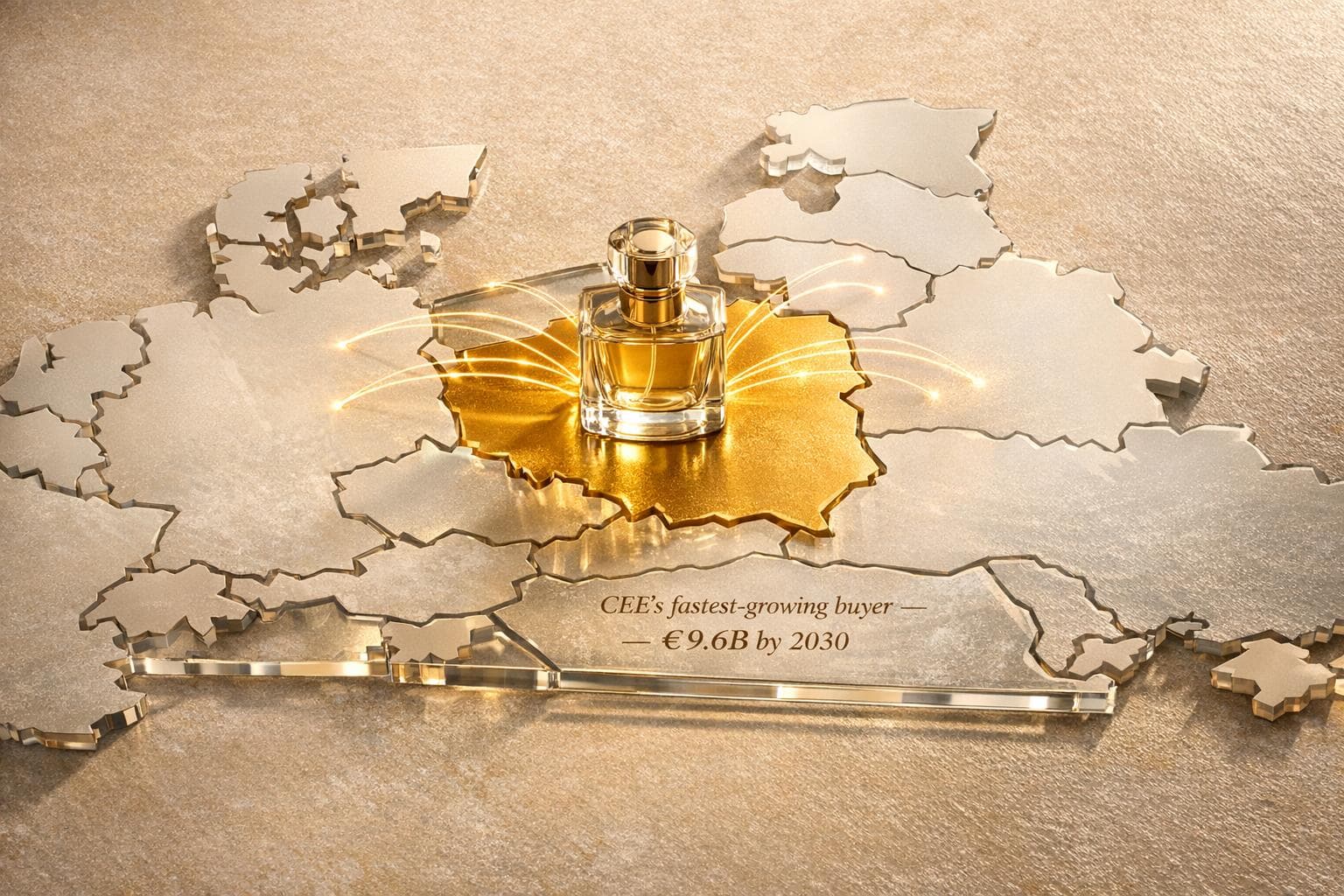
Statystyki polskiego rynku perfum 2026: najszybciej rozwijający się nabywca w Europie Środkowo-Wschodniej

5 min czytania

W skrócie

Polski rynek perfumeryjny 2026: ok. 0,9 mld USD sprzedaży detalicznej, dominacja Allegro i Notino, wzrost segmentu niszowego o 15–20%. Analiza Scento dotycząca motoru wzrostu rynku perfumeryjnego w Europie Środkowo-Wschodniej.

Polish Fragrance Market Statistics 2026: CEE's Fastest-Growing Buyer

Ta analiza opiera się na przeglądzie polskiego rynku perfum przeprowadzonym przez Scento w okresie od października 2025 do kwietnia 2026 roku. Szczegółowa metodologia jest dostępna dla prasy na życzenie pod adresem [email protected].

Frequently asked questions

How big is the Polish fragrance market in 2026?
Scento's analysis places the Polish domestic fragrance market at approximately $0.8 to $1.0 billion in 2025, growing at roughly 3.6 to 4.5% CAGR. Poland is the largest fragrance market in Central and Eastern Europe by absolute revenue and the third-largest population in the EU after Germany and France.
What are the most popular perfume brands in Poland?
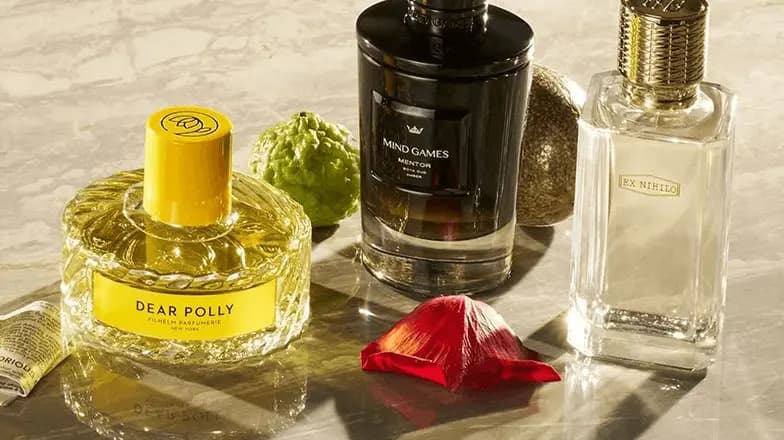
Mass-market leaders include Hugo Boss, Calvin Klein, Lacoste, and Tommy Hilfiger. Designer-mainstream leaders include Carolina Herrera, Rabanne, Jean Paul Gaultier, Yves Saint Laurent, and Dior. The fastest-growing tier is luxury (Tom Ford, Gucci, Dolce & Gabbana) and emerging niche (Byredo, Le Labo, Maison Francis Kurkdjian, Parfums de Marly, Xerjoff).
Where do Poles buy fragrance online?
Allegro is the dominant general marketplace and the leading online channel for cosmetics, perfumes, and hygiene products in Poland. For prestige and niche fragrance specifically, Notino.pl is the structural leader. Poland represents 16% of Notino's total group turnover (FY24), making it Notino's largest single market ahead of Czech Republic (12%) and Italy (9%).
How fast is Polish niche perfumery growing?
Polish niche/artistic perfumery is growing approximately 15 to 20% annually, far faster than the broader fragrance market. Polish niche is following a trajectory roughly six to eight years behind Italy's. The Polish premium-buyer shift is in early-to-mid stage and accelerating, driven by wage convergence, e-commerce maturity, and TikTok/Instagram-led discovery.
How much does Poland export in fragrance?
Poland exports approximately 32,000 tons of perfumes and toilet waters annually at an average $24,020 per ton (2024), the lowest unit price in the EU. Polish cosmetics exports overall reached $18,890 per ton in 2024 (+22% year-on-year). Poland is more important as an EU mid-tier manufacturing hub than as a high-value luxury exporter.
What is Poland's role in CEE fragrance?
Poland is the largest CEE fragrance consumer by absolute revenue and the most e-commerce-mature CEE market. It anchors regional fragrance distribution through Allegro and Notino. European artistic-perfumery operators rank Poland (alongside Romania and Hungary) as the three top emerging-tier markets for niche/luxury fragrance through 2030.
Why are perfume prices lower in Poland than Western Europe?
Three reasons: (1) Polish median wages are 15 to 20% below Western European equivalents, so prestige brands set entry-tier pricing accordingly; (2) Poland's manufacturing role tilts the export price downward; (3) Polish VAT (23%) is among the higher EU rates, but margin compression in mass-market reduces effective shelf prices. Luxury fragrance pricing in Poland is closer to Western European parity than mass-market pricing.
5 min czytania
Podobne artykuły