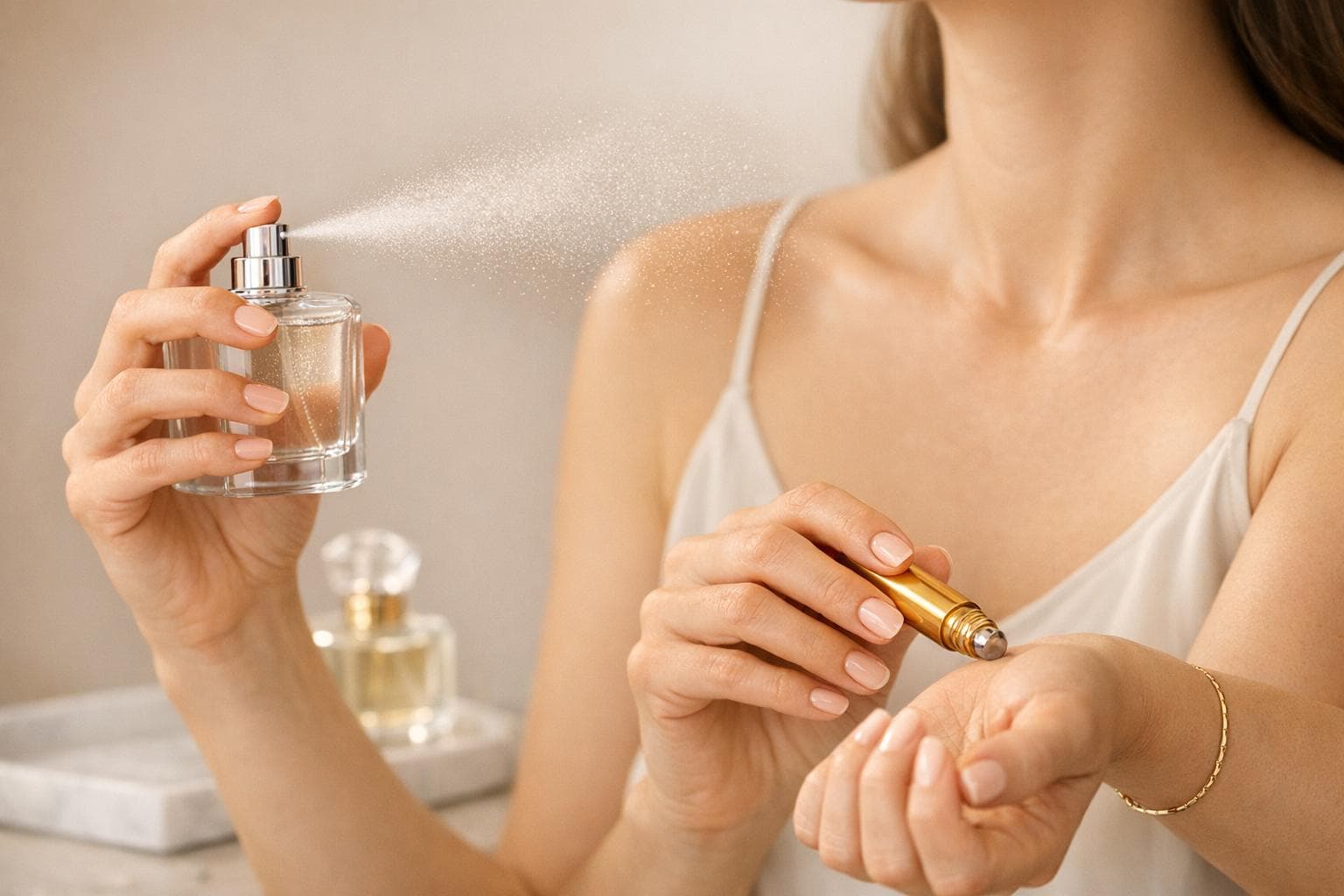
Când vine vorba de aplicarea parfumului, metoda pe care o alegi - pulverizare sau tamponare - poate influența semnificativ felul în care mireasma ta se simte, persistă și se proiectează. Iată pe scurt esențialul:
- Pulverizare: Pulverizează parfumul pentru o acoperire uniformă și o dâră olfactivă remarcabilă. Ideală pentru parfumuri mai ușoare, precum Eau de Toilette sau Eau de Parfum. Perfectă pentru evenimente sau atunci când îți dorești o prezență aromatică mai amplă.
- Tamponare: Aplică parfumul direct pe punctele de puls pentru un miros mai apropiat, mai intim. Perfectă pentru formule concentrate, precum Parfum sau uleiuri de parfum. Excelentă pentru contexte personale sau pentru o purtare subtilă.
Comparație rapidă
| Factor | Pulverizare | Tamponare |
|---|---|---|
| Ușurință în utilizare | Rapidă și fără efort | Necesită precizie |
| Persistență | Moderată | Excelentă pentru uleiuri bogate |
| Proiecție | Amplă și vizibilă | Apropiată și intimă |
| Cea mai potrivită pentru | Zilnic sau evenimente | Cadre intime |
Alegerea metodei potrivite depinde de tipul parfumului tău, de ocazie și de felul în care vrei să se manifeste mireasma. Să explorăm cum poți valorifica la maximum fiecare tehnică.
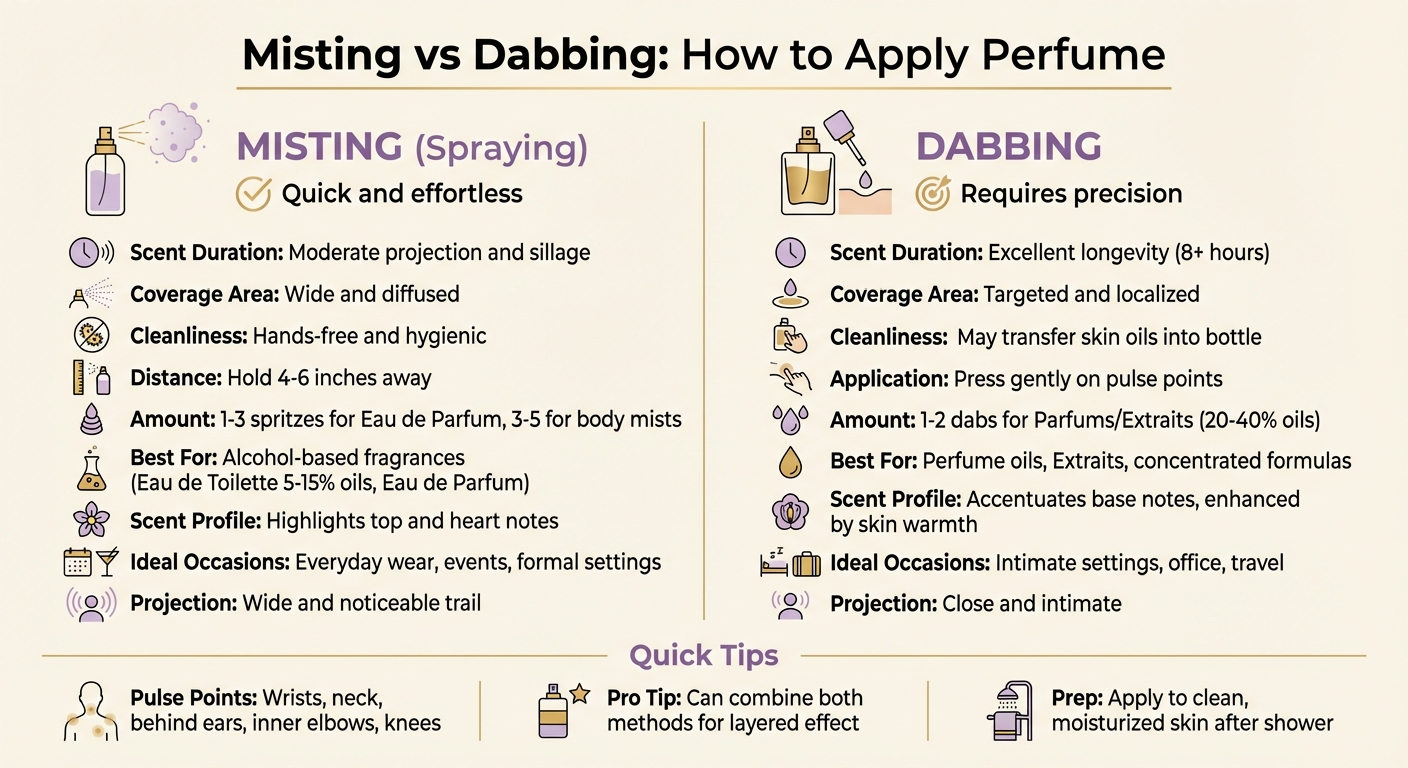
Metode de aplicare a parfumului: grafic comparativ între pulverizare și tamponare
Pulverizare vs. tamponare: care este diferența?
Felul în care îți aplici parfumul - fie prin pulverizare, fie prin tamponare - îi poate influența interacțiunea cu pielea, raza de proiecție și durata de persistență. Alegerea metodei potrivite asigură faptul că parfumul tău se exprimă la cel mai înalt nivel, în funcție de concentrația sa și de impresia pe care dorești să o lași.
Ce este pulverizarea?
Pulverizarea presupune folosirea unui atomizor pentru a dispersa parfumul într-un voal fin, creând un strat uniform pe piele sau pe haine. Această metodă este apreciată pe scară largă pentru confortul și versatilitatea ei, fie că te îndrepți spre birou, fie că participi la un eveniment elegant.
Designul atomizorului asigură răspândirea parfumului pe o suprafață mai mare. Pentru cele mai bune rezultate, ține flaconul la o distanță moderată, pentru a evita suprasaturarea unei singure zone. Această tehnică pune în valoare sillage-ul parfumului - urma aromatică pe care o lași în urma ta pe măsură ce te miști.
Pulverizarea funcționează deosebit de bine pentru evidențierea notelor de vârf și de inimă ale unui parfum. Difuzia fină permite acestor molecule mai ușoare și mai volatile să strălucească. Un alt avantaj? Fiind o abordare fără contact direct al mâinilor, pulverizarea împiedică transferul uleiurilor sau bacteriilor de pe piele în flaconul de parfum.
"Frecarea încheieturilor poate descompune moleculele parfumului și poate altera mirosul, ducând la o experiență olfactivă mai slabă și mai puțin fidelă." — Clement Gavarry, Principal Perfumer, DSM — Firmenich
Dacă pulverizarea pune accent pe difuzie și proiecție, tamponarea urmează o cale mai intimă și mai precisă.
Ce este tamponarea?
Tamponarea presupune aplicarea parfumului direct pe piele folosind un dop de sticlă, o baghetă aplicatoare sau chiar vârful degetului. Această tehnică oferă un control extrem de precis, fiind ideală pentru formule concentrate precum parfumurile pure, attarurile sau uleiurile esențiale.
Această metodă creează un profil olfactiv mai apropiat, mai intim, deoarece parfumul rămâne aproape de corp. Pentru aplicare, întoarce flaconul cu dabber pentru a acoperi aplicatorul, apoi atinge ușor punctele de puls. Această abordare țintită evită risipa și păstrează intensitatea parfumului. Pentru extraits foarte concentrate, cu 20–40% uleiuri parfumate, una sau două atingeri pot dura întreaga zi.
Totuși, tamponarea vine și cu o rezervă. Atingerea aplicatorului de piele poate introduce în flacon uleiuri, transpirație sau impurități, ceea ce poate degrada parfumul în timp. Din acest motiv, tamponarea este cel mai bine rezervată uzului personal, nu flacoanelor folosite în comun.
Aceste metode contrastante evidențiază experiențele distincte pe care le oferă fiecare, pregătind terenul pentru o comparație mai atentă a punctelor lor forte și a limitărilor.
Compararea celor două metode
Pulverizare vs. tamponare: comparație directă
Această comparație evidențiază principalele diferențe dintre pulverizare și tamponare, oferind un ghid rapid care te ajută să îți rafinezi ritualul de aplicare a parfumului. Fiecare metodă are propriile avantaje: pulverizarea oferă un strat fin și uniform care creează o urmă olfactivă mai amplă, în timp ce tamponarea oferă o aplicare mai intimă, mai concentrată, direct pe piele. Cea mai bună alegere depinde de concentrația parfumului, de ocazie și de nivelul de proiecție pe care îl urmărești.
Parfumurile mai lejere beneficiază adesea de pulverizare pentru o difuzie uniformă, în timp ce formulele mai bogate și mai concentrate sunt mai bine puse în valoare de precizia tamponării. Tabelul de mai jos prezintă totul în detaliu:
| Factor | Pulverizare (spray) | Tamponare |
|---|---|---|
| Ușurința aplicării | Ridicată; rapidă și asigură o acoperire uniformă | Moderată; necesită mai multă precizie |
| Durata mirosului | Excelentă pentru proiecție și sillage | Ideală pentru longevitate în cazul parfumurilor cu concentrație ridicată |
| Suprafața acoperită | Amplă și difuză | Țintită și localizată |
| Igienă | Fără contact cu mâinile și igienică | Poate transfera uleiurile pielii în flacon |
| Cea mai potrivită pentru | Parfumuri pe bază de alcool (Eau de Toilette, Eau de Parfum) – perfecte pentru purtarea de zi cu zi și evenimente | Uleiuri de parfum și Extraits – excelente pentru cadre intime, birou sau călătorii |
| Profil olfactiv | Evidențiază notele de vârf și de inimă | Accentuează notele de bază, amplificate de căldura pielii |
Pulverizarea este ideală pentru momentele în care îți dorești o prezență remarcabilă, dar elegantă, în timp ce tamponarea funcționează cel mai bine în contexte mai discrete, mai personale, unde subtilitatea este esențială. În continuare, vom explora pașii exacți pentru ambele tehnici, pentru a te ajuta să profiți din plin de parfumul tău.
Expertul tău personal în parfumuri te așteaptă
Completează testul nostru rapid de parfumuri și descoperă parfumuri designer și de nișă autentice, alese pe gustul tău – explorează-le ca decanturi și mostre de 2, 5, 8 și 30 ml, ca să le poți încerca pe fiecare înainte de a alege un flacon întreg.
Descoperă-ți parfumulCum să aplici parfumul: instrucțiuni pas cu pas
Cum să pulverizezi parfumul
Începe cu pielea proaspăt curățată și hidratată - imediat după un duș cald este ideal, deoarece porii sunt deschiși și pregătiți să rețină parfumul. Pentru a ajuta mireasma să persiste mai mult, aplică o cremă hidratantă fără parfum sau o cantitate mică de vaselină pe punctele de puls înainte de pulverizare. Pielea hidratată reține parfumul mult mai bine decât pielea uscată.
Ține flaconul de parfum la 10–15 cm distanță de piele. Această distanță asigură o dispersie uniformă a voalului parfumat, evitând zonele prea concentrate sau risipirea parfumului în aer. Concentrează-te pe 2–3 puncte de puls, cum ar fi baza gâtului, părțile laterale ale gâtului, interiorul încheieturilor sau partea interioară a coatelor. Pentru Eau de Parfum, limitează-te la 1–3 pulverizări, în timp ce body mist-urile mai lejere suportă 3–5 pulverizări.
Lasă parfumul să se usuce natural la aer pe piele - rezistă tentației de a-ți freca încheieturile, deoarece acest gest creează căldură care poate face ca notele de vârf să se evapore prea repede.
Dacă vrei să pulverizezi parfumul pe haine, fă-o de la distanță, pe fibre naturale precum bumbacul sau inul. Aceste materiale rețin bine parfumul fără a risca pătarea. Pentru o atingere subtilă, pulverizează ușor o perie de păr și trece-o prin păr - această metodă evită potențialul efect de uscare pe care alcoolul îl poate avea asupra părului.
Pulverizarea este excelentă pentru dispersarea uniformă a parfumului, dar tamponarea oferă mai multă precizie.
Cum să tamponezi parfumul
Pentru a face parfumul să dureze mai mult, începe cu pielea curată și aplică un strat fin de cremă hidratantă sau ulei de corp. Un produs fără parfum este cea mai bună alegere, deoarece creează o barieră care împiedică absorbția prea rapidă a parfumului.
Folosește dopul de sticlă, rollerball-ul sau chiar vârful unui deget curat pentru a lua o cantitate mică de parfum. Apasă ușor aplicatorul pe punctele de puls precum încheieturile, gâtul, în spatele urechilor, coatele sau genunchii. Evită să îl întinzi ca pe o loțiune - o simplă atingere și ridicare este suficientă. Pentru Parfumuri sau Extraits cu concentrație ridicată (care conțin 20–40% ulei), sunt necesare doar 1–2 atingeri pentru a rezista peste 8 ore.
Dacă folosești un parfum solid, încălzește puțin balsamul între degete pentru a-l înmuia înainte de tamponare. Curăță întotdeauna aplicatorul sau mâinile înainte și după utilizare pentru a păstra parfumul din flacon cât mai pur - uleiurile pielii pot altera compoziția parfumului în timp.
Ce metodă ar trebui să alegi?
Ce să iei în considerare când alegi
Când decizi cum să îți aplici parfumul, câțiva factori esențiali îți pot ghida alegerea: concentrația, ocazia și clima.
Începe cu concentrația. Parfumurile cu concentrații mai ridicate (precum Parfum și Extraits, care conțin 20–40% uleiuri parfumate) sunt cel mai bine potrivite pentru tamponare. Doar 1–2 atingeri îți pot însoți întreaga zi. Pe de altă parte, concentrațiile mai lejere, precum Eau de Toilette (5–15% uleiuri) și Eau de Cologne (2–5% uleiuri), se potrivesc excelent cu pulverizarea. Câteva pufuri - de obicei 3–4 - vor face parfumul perceptibil fără a deveni copleșitor.
Gândește-te la ocazie. Un eveniment formal poate cere o intrare memorabilă, iar pulverizarea este opțiunea mai potrivită pentru a crea o urmă olfactivă sesizabilă. Așa cum explică Clement Gavarry, Principal Perfumer la DSM — Firmenich:
"Unele parfumuri rămân mai aproape de piele, iar altele sunt mai difuzive pentru a crea o apariție și o declarație pentru cei din jur".
Pentru cadre intime sau medii profesionale, tamponarea este o abordare mai discretă, menținând parfumul mai aproape de piele fără a-i copleși pe cei din apropiere.
Nu uita de climă. Vremea umedă poate influența modul în care se comportă parfumul tău. O pulverizare ușoară pe punctele de puls funcționează excelent pentru purtarea de zi cu zi în astfel de condiții, în timp ce tamponarea uleiurilor mai grele asigură că parfumul rămâne mai aproape de piele pentru mai mult timp. În plus, atunci când călătorești sau ai nevoie de o reîmprospătare rapidă, tamponarea permite precizie fără a elibera un nor de parfum în spații comune.
După ce ai luat în considerare acești factori, gama de decanturi și atomizoare Scento îți permite să îți aplici parfumul cu precizie și stil.
Scento - decanturi și atomizoare
După ce ți-ai clarificat preferințele în funcție de concentrație, ocazie și climă, Scento oferă instrumente care te ajută să aplici eficient parfumul.
Pentru pulverizare, atomizoarele de 8 ml de la Scento sunt o alegere excelentă. Sunt perfecte pentru Eau de Parfum și Eau de Toilette, oferind o proiecție uniformă și un sillage echilibrat. Designul etanș asigură o expunere minimă la aer, păstrând parfumul în timp. Cu aproximativ 120 de pulverizări per atomizor, acest format este versatil - fie că te pregătești pentru un eveniment special, fie că îți dorești o opțiune de încredere pentru fiecare zi.
Dacă tamponarea este mai aproape de stilul tău, decanturile de 2 ml de la Scento sunt ideale. Aceste dimensiuni mai mici îți permit să experimentezi Extraits cu concentrație ridicată sau parfumuri pe bază de ulei fără a te angaja la un flacon întreg. O atingere sau două oferă un parfum subtil, apropiat de piele, perfect pentru cadre intime sau medii discrete precum biroul. Poți chiar combina metodele: tamponează un ulei concentrat dintr-un decant mic pe punctele de puls, apoi pulverizează un parfum mai lejer dintr-un atomizor de 8 ml peste haine sau păr pentru a crea un efect stratificat.
Cu gama Scento, poți explora atât declarații îndrăznețe, cât și șoapte delicate - fără prețul considerabil al unui flacon full-size pe care s-ar putea să nu îl termini.
Metode de aplicare: pulverizare vs. tamponare
Când decizi cum să îți aplici parfumul, totul se reduce la efectul pe care dorești să îl obții. Pulverizarea răspândește mireasma pe o suprafață mai mare, lăsând o urmă perceptibilă, ideală pentru purtarea de zi cu zi sau pentru ocazii în care vrei să impresionezi. Pe de altă parte, tamponarea îți oferă control, concentrând parfumul pe zone specifice pentru o experiență mai personală, mai intimă - perfectă pentru contexte profesionale sau situații de proximitate.
Fiecare metodă funcționează cel mai bine cu anumite tipuri de parfum. Un Eau de Toilette mai lejer (care conține 5–15% uleiuri) se armonizează superb cu pulverizarea, oferind o prezență proaspătă și aerată. În schimb, Extraits-urile mai concentrate (20–40% uleiuri) strălucesc atunci când sunt aplicate prin doar una sau două atingeri, asigurând o purtare rafinată și de lungă durată.
Vrei să experimentezi? Combină cele două abordări. Tamponează câteva picături pe punctele de puls pentru căldură și intimitate, apoi pulverizează ușor peste haine pentru a crea o semnătură olfactivă stratificată, unică, ce evoluează de-a lungul zilei.
Întrebări frecvente
Unde ar trebui să aplic parfumul pentru cele mai bune rezultate?
Pentru cel mai bun rezultat, pulverizează parfumul pe punctele de puls, precum încheieturile, gâtul și chiar în spatele urechilor. Aceste zone, în mod natural mai calde, permit parfumului să se difuzeze mai eficient, sporindu-i atât persistența, cât și proiecția. Pentru ca parfumul tău să dureze și mai mult, aplică-l pe pielea curată și hidratată, deoarece acest lucru ajută mireasma să se dezvolte superb pe parcursul întregii zile.
Pot combina pulverizarea și tamponarea într-o singură rutină?
Da, combinarea pulverizării și tamponării poate rafina modul în care aplici parfumul. Pulverizarea oferă o acoperire delicată și uniformă, în timp ce tamponarea se concentrează pe punctele-cheie de puls pentru a amplifica mireasma în zone specifice. De exemplu, poți începe prin a pulveriza ușor parfumul, apoi poți continua cu o cantitate suplimentară tamponată pe zone precum încheieturile sau gâtul, pentru a adăuga profunzime și persistență.
Cum împiedic degradarea parfumului într-un flacon tip dabber?
Pentru a păstra calitatea parfumului într-un flacon tip dabber, limitează expunerea la oxigen, lumină și umiditate. Închide întotdeauna bine flaconul după utilizare și păstrează-l într-un mediu răcoros, întunecat și uscat. În plus, evită să îl deschizi frecvent și ține flaconul în poziție verticală pentru a-i menține integritatea și a-i prelungi durata de viață.

