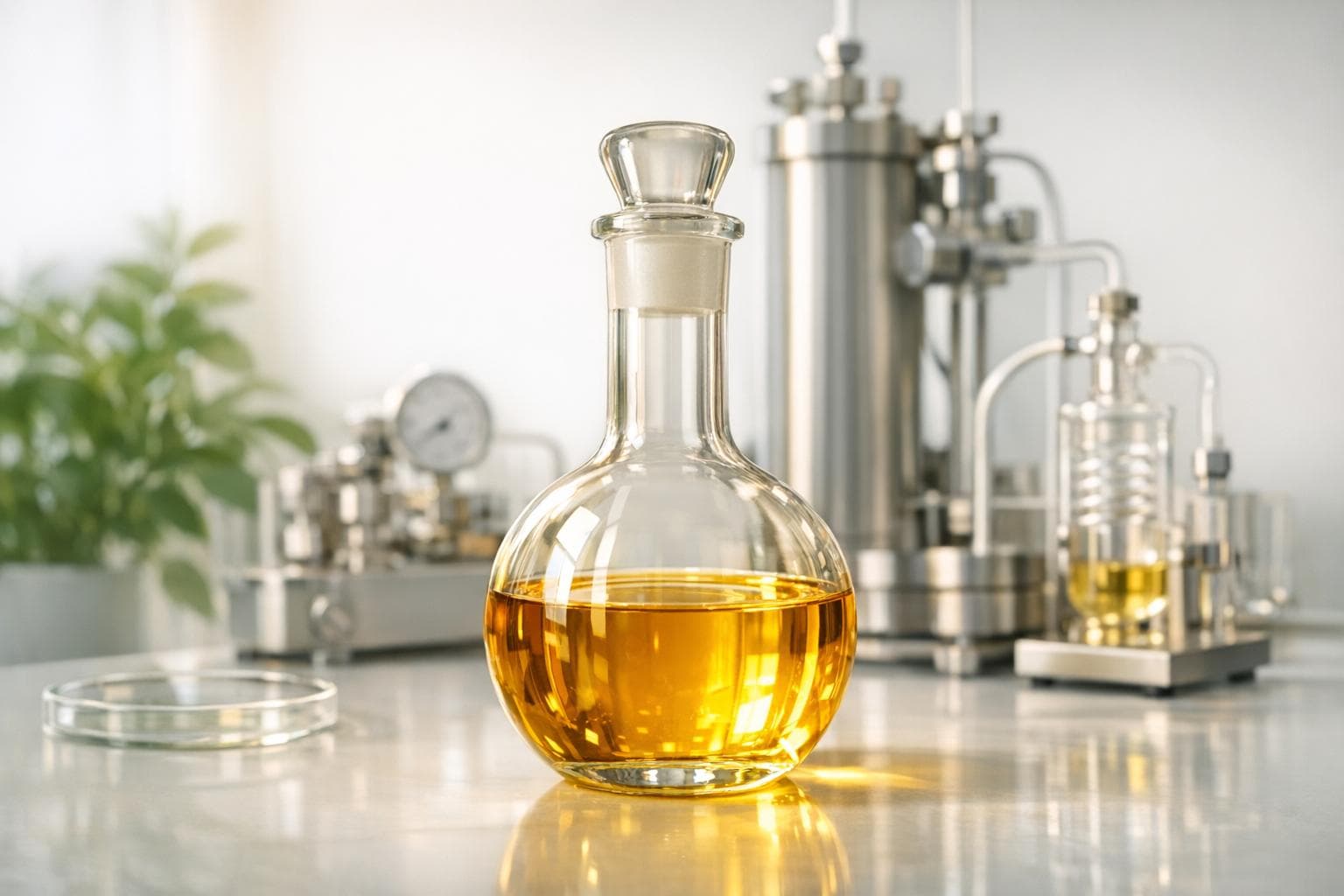
Extractia cu CO₂ supercritic transforma productia de parfumuri, oferind o metoda mai curata si eficienta pentru obtinerea compusilor aromatici, fara substante chimice nocive. Spre deosebire de tehnici mai vechi, precum distilarea cu abur sau extractia cu hexan, acest proces foloseste CO₂ sub presiune pentru a extrage uleiuri aromatice de inalta calitate, pastrand moleculele delicate ale parfumului. Printre beneficiile cheie se numara:
- Puritate: Nu lasa reziduuri chimice, asigurand extracte mai sigure si mai curate.
- Eficienta: Produce cantitati mai mari de ulei (de exemplu, 12,41 % pentru patchouli, fata de 2,8 % prin distilarea cu abur).
- Caracter ecologic: CO₂ poate fi reutilizat, reducand deseurile si dependenta de solventii petrochimici.
- Impact redus al caldurii: Functioneaza la ~31,1°C (88°F), evitand deteriorarea compusilor sensibili la caldura.
Aceasta metoda castiga teren datorita capacitatii sale de a pastra profilurile olfactive autentice, de a procesa plante botanice rare si de a se alinia practicilor ecologice. Pe masura ce echipamentele devin mai accesibile, industria parfumurilor este pregatita sa adopte pe scara larga aceasta tehnica, transformand modul in care sunt create parfumurile.
Ce este extractia cu CO2 supercritic?
Extractia cu CO₂ supercritic transforma dioxidul de carbon intr-un solvent puternic, supunandu-l unor conditii care depasesc punctul sau critic - 31,1°C (≈88°F) si 7.38 MPa (≈73 atmospheres). In aceasta stare, CO₂ capata o natura duala, combinand densitatea unui lichid cu difuzivitatea unui gaz. Aceasta combinatie unica il face deosebit de eficient in productia de parfumuri. Proprietatile sale asemanatoare gazului ii permit sa patrunda adanc in materialele vegetale, ajungand chiar si la cele mai mici structuri celulare, in timp ce densitatea sa asemanatoare lichidului dizolva si transporta eficient compusii aromatici. Acest echilibru face extractia cu CO₂ supercritic atat de eficienta in captarea aromelor delicate.
La eliberarea presiunii, CO₂ revine la forma gazoasa, lasand in urma un extract pur, fara solvent. Acest proces nu numai ca asigura o extractie completa, ci si pastreaza integritatea parfumului, o cerinta esentiala pentru crearea unor parfumuri de inalta calitate.
De ce CO2 este potrivit pentru o extractie curata
CO₂ se remarca drept un solvent ideal pentru pastrarea esentei parfumurilor, datorita proprietatilor sale unice si profilului ecologic. Este netoxic, neinflamabil si inert din punct de vedere chimic, ceea ce inseamna ca nu modifica structura moleculara delicata a compusilor parfumati pe care ii extrage. Recunoscut de U.S. FDA ca "Generally Recognized as Safe" (GRAS), CO₂ este larg acceptat pentru utilizarea in cosmetice si aplicatii alimentare. Aceste calitati l-au transformat in solventul preferat pentru peste 90 % dintre toate extractiile cu fluide supercritice la nivel mondial.
Un alt avantaj al CO₂ este posibilitatea reutilizarii. Sistemele industriale sunt proiectate pentru a capta si recicla CO₂ dupa fiecare ciclu de extractie, ceea ce face procesul mult mai putin generator de deseuri decat metodele traditionale bazate pe solventi petrochimici, care necesita adesea eliminare. Acest sistem cu circuit inchis nu numai ca reduce la minimum deseurile, ci sustine si tranzitia industriei catre sustenabilitate si practici responsabile fata de mediu. Dupa cum explica Fanlin Zhou de la Guangzhou Xinhua University:
"Extractia SC-CO₂ respecta principiile chimiei verzi, indeplinind totodata cerintele industriale privind siguranta, sustenabilitatea si calitatea senzoriala ridicata".
Cum functioneaza extractia cu CO₂ supercritic in parfumerie
Procesul de extractie
Extractia cu CO₂ supercritic este un proces in mai multe etape, care implica comprimarea, extractia, separarea si reciclarea. Procesul incepe prin incalzirea si presurizarea dioxidului de carbon peste punctul sau critic - 31,1°C si 7.38 MPa - unde acesta devine un fluid supercritic. In aceasta stare, CO₂ prezinta proprietati unice, specifice atat unui gaz, cat si unui lichid: poate patrunde in celulele plantelor asemenea unui gaz, dizolvand in acelasi timp uleiurile esentiale si terpenele asemenea unui lichid. CO₂ supercritic este pompat intr-un vas de extractie care contine material vegetal, unde extrage compusii aromatici. Dupa incheierea extractiei, presiunea este redusa intr-un separator, ceea ce determina precipitarea extractului aromatic. CO₂ este apoi reciclat pentru a fi reutilizat, facand procesul eficient si atent la folosirea resurselor.
In septembrie 2022, cercetatorii Syaifullah Muhammad si Abdul Khalil de la Universitas Syiah Kuala si Universiti Sains Malaysia au demonstrat eficienta acestei metode extragand patchouli la 20 MPa si 80°C (176°F). Eforturile lor au produs un impresionant 12,41 % ulei brut - cu mult peste procentul de 1–3 % obtinut de obicei prin distilarea cu abur. In plus, au pastrat concentratii de alcool de patchouli de pana la 53,66 %, fata de doar 22,70 % in extractele obtinute prin distilare cu abur.
Aceasta abordare avansata nu numai ca sporeste randamentul, ci protejeaza si echilibrul delicat al compusilor aromatici, asigurand pastrarea profilurilor olfactive autentice.
Pastrarea profilurilor olfactive naturale
Una dintre caracteristicile remarcabile ale extractiei cu CO₂ supercritic este capacitatea sa de a pastra aroma autentica a plantelor. Procesul se desfasoara la temperaturi relativ scazute — de obicei intre 31°C si 40°C (88°F to 104°F) — si evita degradarea termica ce apare adesea in timpul distilarii cu abur, care necesita temperaturi de peste 100°C (212°F). Aceasta prelucrare delicata protejeaza compusii sensibili la caldura, precum monoterpenele, esentiale pentru notele de varf ale parfumurilor.
Aceasta precizie este deosebit de importanta pentru plantele rare si delicate. De exemplu, smirna contine furanodiene, care sunt foarte instabile la temperaturi ridicate. Distilarea traditionala cu abur poate distruge acesti compusi, insa extractia cu CO₂ supercritic ii pastreaza, mentinand un nivel standardizat de 4 % furanodiene si asigurand atat potenta, cat si integritatea aromatica.
Metoda permite si ajustarea selectivitatii. Prin reglarea presiunii si a temperaturii, extractorii pot izola anumite molecule parfumate, excluzand componentele nedorite, precum cerurile sau lipidele grele. In aprilie 2024, cercetatorii de la Charles University, coordonati de Veronika Pilařová, au dezvoltat un proces in doi pasi care a demonstrat aceasta precizie. Au folosit CO₂ cu un cosolvent de etanol in concentratie minima de 2 % timp de 20 de minute pentru a izola terpenele volatile nepolare, apoi au urmat un al doilea pas pentru a extrage compusii polari. Metoda a fost testata cu succes pe sapte specii diferite de plante, demonstrandu-i versatilitatea si eficienta.
Avantajele CO₂ supercritic fata de metodele conventionale
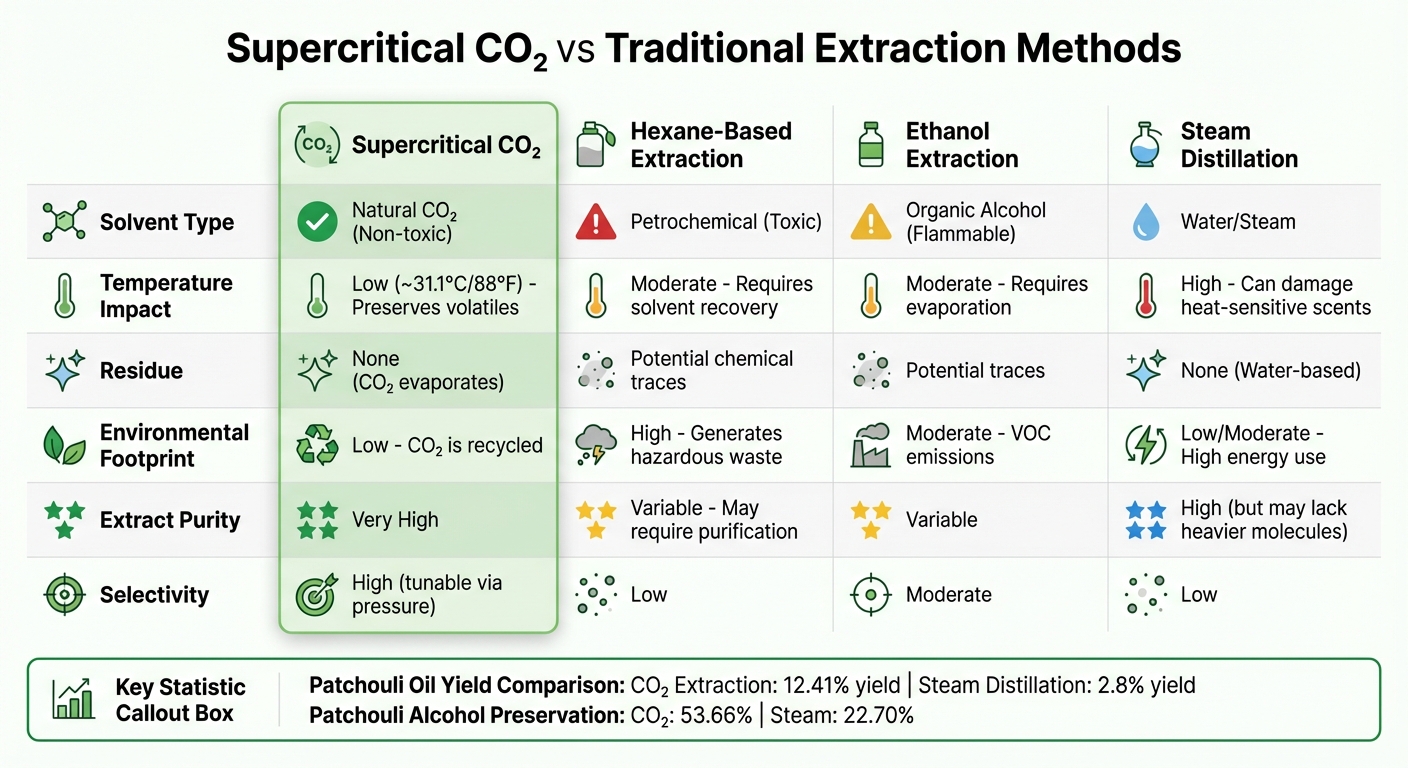
Comparatie intre CO2 si metodele traditionale de extractie a parfumurilor
Impact redus asupra mediului
Extractia cu CO₂ supercritic se remarca prin abordarea sa ecologica, evitand complet solventii petrochimici periculosi precum hexanul, etanolul sau acetona, despre care se stie ca dauneaza atat sanatatii umane, cat si mediului. Metoda functioneaza intr-un sistem cu circuit inchis, care permite recuperarea si reutilizarea continua a CO₂. Interesant este ca CO₂ utilizat provine adesea ca produs secundar din alte activitati industriale, ceea ce il face o optiune mai sustenabila. Spre deosebire de metodele bazate pe solventi, care genereaza deseuri periculoase, acest proces nu produce subproduse toxice sau efluenti.
Un alt avantaj important este consumul redus de energie. Deoarece punctul critic al CO₂ este de aproximativ 31,1°C (88°F), procesul necesita considerabil mai putina energie decat tehnicile la temperaturi ridicate, precum distilarea cu abur. Aceasta eficienta energetica nu doar reduce risipa, ci asigura si un extract final mai curat si mai pur.
Puritate si calitate olfactiva superioare
Una dintre caracteristicile remarcabile ale extractiei cu CO₂ supercritic este capacitatea sa de a produce un extract complet pur, fara urme de substante chimice reziduale. Compara aceasta metoda cu cele pe baza de hexan, in cazul carora trebuie sa se asigure ca nivelurile de solvent rezidual raman sub 1 parte per milion pentru a evita contaminarea.
Procesul creeaza si un mediu delicat, lipsit de oxigen, esential pentru pastrarea aromei naturale a plantelor. Astfel, nu doar intensitatea si autenticitatea parfumului sunt sporite, ci si durata de pastrare a extractului. De exemplu, intr-un studiu asupra patchouli, extractia cu CO₂ supercritic a pastrat o concentratie impresionanta de 38,70 % alcool de patchouli, comparativ cu doar 22,70 % in extractele obtinute prin distilare cu abur. Acest lucru demonstreaza capacitatea metodei de a produce un profil olfactiv mai bogat si mai vibrant.
Tabel comparativ: CO₂ si metodele conventionale
Iata o comparatie intre extractia cu CO₂ supercritic si alte metode conventionale:
| Factor | CO₂ supercritic | Extractie pe baza de hexan | Extractie cu etanol | Distilare cu abur |
|---|---|---|---|---|
| Tipul de solvent | CO₂ natural (netoxic) | Petrochimic (toxic) | Alcool organic (inflamabil) | apa/abur |
| Impactul temperaturii | Scazut (aprox. 31,1°C/88°F); pastreaza compusii volatili | Moderat; necesita recuperarea solventului | Moderat; necesita evaporare | Ridicat; poate deteriora aromele sensibile la caldura |
| Reziduuri | Niciunul (CO₂ se evapora) | Posibile urme de substante chimice | Posibile urme | Niciunul (pe baza de apa) |
| Amprenta asupra mediului | Scazuta; CO₂ este reciclat | Ridicata; genereaza deseuri periculoase | Moderata; emisii de COV | Scazuta/moderata; consum ridicat de energie |
| Puritatea extractului | Foarte ridicata | Variabila; poate necesita purificare suplimentara | Variabila | Ridicata (dar pot lipsi moleculele mai grele) |
| Selectivitate | Ridicata (reglabila prin presiune) | Scazuta | Moderata | Scazuta |
Acest tabel evidentiaza performanta superioara a extractiei cu CO₂ supercritic in mai multe privinte, de la impactul asupra mediului pana la calitatea si puritatea extractului.
Expertul tău personal în parfumuri te așteaptă
Completează testul nostru rapid de parfumuri și descoperă parfumuri designer și de nișă autentice, alese pe gustul tău – explorează-le ca decanturi și mostre de 2, 5, 8 și 30 ml, ca să le poți încerca pe fiecare înainte de a alege un flacon întreg.
Descoperă-ți parfumulCercetare si aplicatii industriale in parfumerie
Studii recente despre extractia cu CO₂
Progresele stiintifice continua sa evidentieze beneficiile extractiei cu CO₂ supercritic in pastrarea esentei autentice a aromelor naturale. De exemplu, un studiu publicat in septembrie 2022 de cercetatori de la Universitas Syiah Kuala si Universiti Sains Malaysia a demonstrat ca extractia cu CO₂ ofera un randament si o puritate mai mari ale uleiului de patchouli comparativ cu distilarea cu abur. In mod deosebit, metoda exceleaza in pastrarea alcoolului de patchouli, compusul care confera patchouli-ului aroma sa pretuita, pamantie.
Intr-o alta evolutie importanta, cercetatorii de la Charles University au prezentat in aprilie 2024 o metoda de extractie cu fluid supercritic (SFE) in doi pasi. Mai intai, aceasta izoleaza terpenele volatile din plante, apoi extrage compusi polari precum flavonoidele. Prin vizarea cu precizie a moleculelor aromatice, metoda demonstreaza eficienta si versatilitatea extractiei cu CO₂, deschizand calea catre aplicatii practice in industrie.
Exemple si aplicatii in industrie
Aceste descoperiri stiintifice isi gasesc aplicatii concrete, pe masura ce liderii din industrie adopta extractia cu CO₂ supercritic. Un exemplu remarcabil este SFE Process, o firma franceza de tehnologie care a dezvoltat un extractor portabil cu CO₂ numit "SIY" (Scent It Yourself). Aceasta unitate mobila le permite specialistilor in achizitia materiilor prime pentru parfumuri sa capteze esenta plantelor proaspete direct pe teren, prevenind degradarea care apare adesea in timpul transportului. Potrivit companiei, aceasta metoda pastreaza calitatile olfactive ale materiilor prime „cat mai aproape posibil de cele ale surselor naturale”.
Aceasta tehnologie se dovedeste deosebit de eficienta pentru plantele delicate precum iasomia, liliacul, florile de soc si galbenelele – flori care sunt renumite pentru dificultatea de a le procesa prin distilarea traditionala cu abur. Extractia cu CO₂ supercritic le pastreaza profilurile olfactive autentice fara a le expune la caldura daunatoare.
Pe langa captarea uleiurilor esentiale, producatorii folosesc extractia cu CO₂ si pentru agenti de fixare precum smirna. Aceste extracte, standardizate la 4 % furanodiene, contribuie la reducerea ratelor de evaporare si la sporirea stabilitatii parfumului. Aceasta schimbare imbunatateste calitatea produselor si se aliniaza totodata tendintei industriei catre practici mai sustenabile, reducand dependenta de solventii petrochimici. Cu peste 150 de instalatii SFE la scara industriala operationale in prezent in intreaga lume, extractia cu CO₂ supercritic nu mai este experimentala – devine un standard in productia moderna de parfumerie.
Dezvoltari viitoare si impactul asupra industriei
Facilitarea accesului la tehnologia CO₂
In mod traditional, extractia cu CO₂ supercritic era rezervata operatiunilor la scara larga, din cauza costurilor ridicate ale echipamentelor. Totusi, situatia incepe sa se schimbe. Producatorii proiecteaza acum sisteme mai eficiente, precum extractorul portabil SIY de la SFE Process. Acest dispozitiv inovator le permite creatorilor de parfumuri sa colecteze esente botanice proaspete direct la fata locului, eliminand nevoia unor instalatii permanente de productie.
Progresele in modelarea matematica ajuta, de asemenea, la eficientizarea procesului. Prin anticiparea randamentelor optime, aceste modele reduc nevoia de teste pilot costisitoare. De exemplu, in octombrie 2025, cercetatorii au folosit Metodologia Suprafetei de Raspuns pentru a regla cu precizie conditiile de extractie – 25 MPa, 50 °C si un debit de 8 L/h – obtinand un randament de 1,12 % de ulei de ceai Phoenix Dancong si reducand in acelasi timp consumul de energie. Aceste descoperiri fac tehnologia mai accesibila si mai eficienta energetic, deschizand calea catre aplicatii de mediu mai ample, care vor fi discutate in continuare in sectiunea urmatoare.
Reducerea utilizarii solventilor petrochimici
Un beneficiu major al extractiei cu CO₂ supercritic este capacitatea sa de a reduce dependenta de solventii petrochimici precum hexanul. Spre deosebire de solventii traditionali, care necesita adesea etape suplimentare de separare si pot lasa reziduuri, CO₂ revine in mod natural la starea gazoasa dupa extractie. Astfel, se elimina deseurile chimice si se reduc necesarul de energie.
Ascensiunea "Chimiei analitice verzi" accelereaza si mai mult adoptarea acestei metode. Noile protocoale optimizeaza acum nivelurile de cosolvent, permitand captarea unei game mai largi de compusi intr-o singura trecere. Astfel, se elimina nevoia unor etape multiple de extractie, economisind timp si resurse. Aceste progrese au un impact deosebit in procesarea plantelor rare si delicate, care necesita o manipulare atenta.
Extractia plantelor rare si delicate
Extractia cu CO₂ supercritic deschide noi posibilitati pentru procesarea plantelor sensibile la caldura. Desfasurata la temperaturi intre 35–55 °C (95–131 °F), aceasta metoda evita degradarea termica asociata distilarii traditionale cu abur, care ajunge adesea la 100 °C (212 °F) sau mai mult. Florile precum iasomia, liliacul, florile de soc si tuberoza, predispuse sa-si piarda profilurile olfactive unice la temperaturi ridicate, pot fi acum pastrate mai eficient. Kershen Teo de la Prosody London explica:
"Diferenta in cazul extractiei cu CO₂ este aproape intotdeauna mai tridimensionala si aproape 100 % fidela florii reale".
Aceasta precizie este deosebit de valoroasa pentru rasinile rare si plantele aromatice cu compusi fragili. De exemplu, producatorii pot obtine acum extracte standardizate de smirna cu profiluri bioactive — precum 4 % furanodiene — care altfel s-ar degrada prin metodele conventionale bazate pe caldura. Pastrand aceste molecule delicate, parfumierii au acces la o gama mai larga si mai autentica de materii prime naturale, ceea ce permite crearea unor parfumuri mai bogate si mai nuantate.
Fiecare dintre aceste progrese subliniaza rolul transformator al extractiei cu CO₂ supercritic in redefinirea parfumeriei ecologice, oferind atat sustenabilitate, cat si posibilitati creative.
Concluzie
Extractia cu CO₂ supercritic redefineste modul in care sunt create parfumurile, oferind o metoda care imbina practicile responsabile fata de mediu cu o calitate exceptionala a parfumului. Aceasta abordare capteaza compusi aromatici delicati pe care tehnicile traditionale i-ar putea altera, rezultand in parfumuri cu mai multa profunzime si autenticitate.
Dincolo de avantajele sale tehnice, aceasta metoda aduce beneficii importante pentru mediu si economie. Eliminand nevoia de solventi petrochimici precum hexanul, aceasta garanteaza ca nu raman reziduuri chimice. Deoarece CO₂ se transforma in mod natural inapoi in gaz dupa procesul de extractie, poate fi reciclat eficient in sistem, reducand la minimum deseurile si consumul de energie. Astfel, metoda joaca un rol important in miscarea clean beauty, in care transparenta si sustenabilitatea sunt foarte apreciate. Din punct de vedere economic, procesul ofera randamente mai mari si extracte mai pure, permitand obtinerea unor rezultate de calitate superioara cu mai putina materie prima — ceea ce sporeste atat eficienta, cat si economiile de costuri.
Pe masura ce sistemele portabile si protocoalele rafinate devin mai accesibile, adoptarea acestei tehnologii este tot mai usoara. Parfumierii pot explora acum plante aromatice rare si sensibile la caldura, descoperind noi posibilitati creative si respectand in acelasi timp practicile sustenabile.
Intrebari frecvente
De ce este extractia cu CO2 supercritic revolutionara pentru productia de parfumuri?
Extractia cu CO₂ supercritic a transformat modul in care sunt create parfumurile, oferind o metoda blanda, dar eficienta, de extragere a uleiurilor parfumate. Folosind temperaturi scazute, acest proces evita lasarea reziduurilor de solvent, asigurand puritatea produsului final. Un aspect deosebit de impresionant este felul in care pastreaza compusii volatili delicati, astfel incat extractele sa ramana fidele mirosului natural al plantei originale.
Dincolo de puritate, aceasta metoda capteaza o gama mai larga de molecule aromatice, rezultand parfumuri cu profiluri mai profunde si mai complexe. Este si o abordare mai responsabila fata de mediu, care imbina sustenabilitatea cu crearea unor parfumuri de calitate premium, ce onoreaza esenta ingredientelor naturale.
De ce este extractia cu CO2 considerata mai ecologica decat metodele traditionale?
Extractia cu CO₂ este adesea considerata o optiune mai curata, deoarece foloseste un sistem cu circuit inchis. Acest sistem recicleaza CO₂, reducand deseurile si eliminand utilizarea solventilor organici nocivi. Astfel, ajuta la limitarea poluarii si evita generarea de subproduse periculoase.
Mai mult, CO₂ utilizat in acest proces este adesea captat din atmosfera. Asta inseamna ca nu contribuie la cresterea nivelului total al gazelor cu efect de sera, fiind o alegere mai sustenabila. Industrii precum cea a productiei de parfumuri beneficiaza de aceasta abordare, deoarece este in acord cu eforturile de reducere a impactului asupra mediului.
Este extractia cu CO₂ supercritic potrivita pentru toate plantele aromatice folosite in parfumerie?
Extractia cu CO₂ supercritic este o tehnica versatila, deosebit de eficienta pentru plantele aromatice cu compusi rezistenti. Totusi, are si dezavantaje. In cazul materiilor prime sensibile la caldura, procesul le poate modifica sau chiar degrada componentele delicate. Prin urmare, nu este cea mai potrivita alegere pentru fiecare ingredient brut folosit in parfumerie.
Cu toate acestea, metoda se remarca prin capacitatea de a crea extracte pure, de inalta calitate, fiind totodata responsabila fata de mediu. Rolul sau in promovarea practicilor sustenabile in productia de parfumuri a transformat-o intr-o evolutie importanta pentru industrie.

