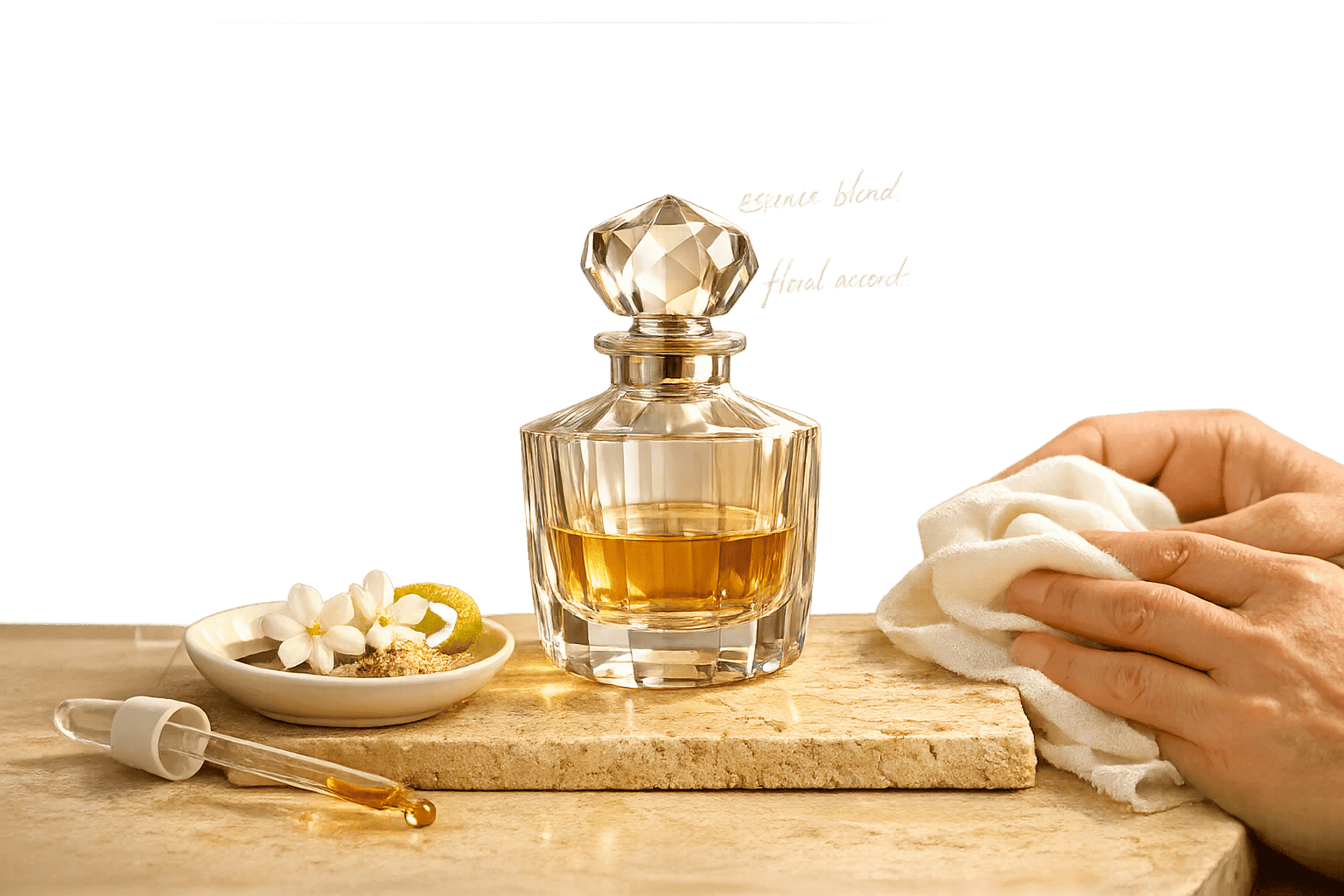
Parfumurile de designer sunt mai mult decat simple arome – sunt povesti create prin colaborarea dintre parfumieri, artizani si producatori de ingrediente. Aceste colaborari imbina maiestria artistica si expertiza pentru a crea parfumuri care reflecta identitatea brandului si trezesc emotii. Iata cum functioneaza:
- Briefuri de parfum: Brandurile incep cu un document care descrie atmosfera, publicul si povestea din spatele parfumului.
- Alegerea parfumierului: Expertii sunt alesi in functie de capacitatea lor de a transpune viziunea intr-o formula, proces care necesita adesea sute de incercari.
- Aprovizionarea cu ingrediente: Materii prime rare, precum neroli din Liguria sau Iris Pallida, sunt procurate de la producatori cu traditie, prin metode pastrate de-a lungul timpului.
- Designul ambalajului: Flacoanele devin opere de arta, prin colaborari cu sticlari, artisti specializati in portelan si chiar arhitecti.
- Evenimente de lansare: Debuturile exclusive pun in valoare maiestria si povestea parfumului si includ adesea servicii personalizate pentru arome create pe masura.
Aceste colaborari pastreaza mestesugurile traditionale, integrand in acelasi timp tehnici moderne, pentru ca fiecare parfum sa fie o capodopera senzoriala.
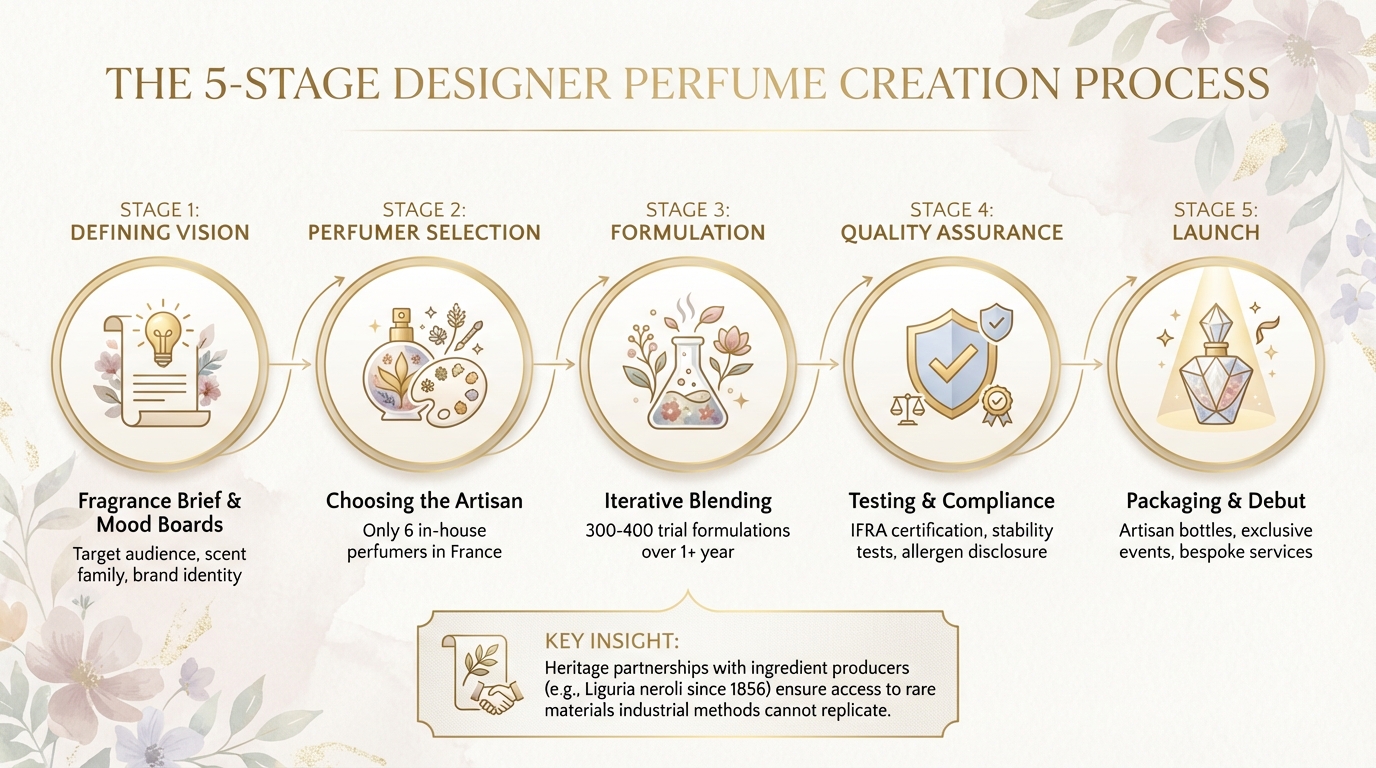
Procesul de creare a unui parfum de designer: de la brief la lansare
Definirea viziunii olfactive
Analiza identitatii si valorilor brandului
Procesul de creare a unui parfum distinctiv incepe cu descoperirea esentei brandului si transformarea valorilor sale abstracte in ceea ce industria numeste "arhitectura olfactiva" – o metoda sistematica de transpunere a identitatii in aroma. Sa luam, de pilda, Gucci. Colectia sa The Alchemist’s Garden se inspira din mostenirea renascentista a Florentei, iar parfumurile sunt construite in jurul celor patru elemente alchimice: Substratum (pamant), Vaporum (aer), Liquidum (apa) si Ignis (foc). Acest concept nu a fost ales la intamplare – reflecta legatura profunda a Gucci cu traditiile florentine si mestesugurile artizanale.
In peisajul actual, multe branduri integreaza in identitatea lor si practici responsabile fata de mediu. Unele au inceput sa foloseasca in formule alcool obtinut din emisii de carbon reciclate, incorporand responsabilitatea fata de mediu chiar in esenta parfumurilor. De la aprovizionarea cu ingrediente la tehnicile de productie, fiecare detaliu este gandit pentru a se alinia cu valorile fundamentale ale brandului. Aceste eforturi pun in evidenta atentia acordata atat mostenirii, cat si sustenabilitatii, astfel incat parfumul sa reflecte traditia si valorile moderne deopotriva.
Odata ce identitatea brandului este bine definita, echipele creative trec la transpunerea viziunii in briefuri detaliate si imagini sugestive.
Crearea moodboardurilor si a briefurilor creative
Dupa ce identitatea brandului este conturata, aceasta este sintetizata intr-un brief de parfum. Documentul prezinta detalii esentiale precum publicul tinta, familia olfactiva, aspectele legate de pret si normele in vigoare. Totusi, faptele si cifrele nu pot transmite singure intentia emotionala a brandului. Aici intervin moodboardurile, care reunesc imagini, muzica si literatura pentru a evoca atmosfera dorita.
Procesul incepe adesea cu o „schita” initiala – un amestec preliminar menit sa verifice daca brandul si parfumierul impartasesc acelasi limbaj creativ. Frédéric Malle, fondatorul Editions de Parfums Frédéric Malle, a introdus o abordare revolutionara la sfarsitul anilor 1990. In loc sa le dea indicatii parfumierilor, le-a oferit libertate creativa deplina, comparandu-si rolul cu cel al unui „editor”. Dupa cum spunea Malle, "Ideea mea era sa creez parfumuri pentru mirosul lor, nu pentru imagine". Astfel, procesul traditional, in care marketingul si recomandarile vedetelor ghidau de obicei dezvoltarea, a fost inversat. In schimb, creativitatea parfumierului a trecut in prim-plan, iar numele acestuia era afisat cu mandrie pe flacon.
Colaborarea dintre brand si parfumier este un proces minutios, de durata, care se intinde adesea pe parcursul unui an. Rafinarea unui parfum, de la conceptul initial la produsul final, poate presupune intre 300 si 400 de formule de test, numite „mods” in industrie. Fiecare varianta este testata atat pe piele, cat si pe benzi de hartie, iar parerile mai multor persoane sunt colectate pentru a tine cont de diferentele dintre chimia pielii si preferintele personale. Pe tot parcursul acestui proces iterativ, brief-ul creativ ramane cadrul de referinta, asigurand fidelitatea parfumului final fata de viziunea initiala a brandului, in ciuda nenumaratelor ajustari.
Alegerea parfumierilor potriviti
Criterii pentru alegerea artizanilor
Brandurile de designer aleg cu grija parfumieri a caror semnatura olfactiva completeaza identitatea brandului. Un exemplu remarcabil este decizia Hermès din 2014 de a o numi pe Christine Nagel parfumier intern, in locul lui Jean-Claude Ellena. Cu studii in chimie si experienta in cromatografie, dobandita in perioada petrecuta la Firmenich, Nagel a fost aleasa pentru abordarea sa „tactila, senzuala, aproape fizica” in crearea parfumurilor. Pierre-Alexis Dumas, directorul artistic al Hermès, considera ca stilul ei reflecta senzatia luxoasa a casmirului si pielii Hermès. Dupa cum explica chiar Nagel:
"Cand vorbesc despre parfum, vorbesc despre textura".
In Franta, prestigiul functiei de parfumier intern este imens: exista doar sase astfel de posturi, iar competitia pentru ele este extrem de acerba.
Un alt factor esential in alegerea parfumierilor este capacitatea lor de a onora parteneriatele bazate pe traditie. Un exemplu recent este extinderea din 2025 a colectiei „The Alchemist’s Garden” de la Gucci. Brandul a colaborat cu ultimul producator de neroli ramas in Liguria, o afacere de familie care dateaza din 1856. Parfumierii Mathieu Nardin si Julie Massé au lucrat cu flori de neroli proaspat distilate cu abur, folosind un alambic, pentru a crea „Fiori di Neroli”, demonstrand importanta aprovizionarii directe de la producatori traditionali cu materii prime rare si de inalta calitate. Acest angajament fata de traditie asigura accesul la ingrediente pe care metodele industriale pur si simplu nu le pot reproduce.
Expertiza tehnica si de reglementare este la fel de indispensabila. Parfumierii trebuie sa asigure respectarea standardelor de siguranta si calitate, inclusiv prin furnizarea de certificate IFRA, fise cu date de securitate si respectarea ISO 22716 sau a ghidurilor GMP. Aceste masuri garanteaza ca pana si cele mai imaginative creatii respecta standardele de siguranta si pot fi produse la scara larga.
Construirea parteneriatului creativ
Odata ales parfumierul, urmatorul pas este construirea unui parteneriat creativ solid. Unele branduri adopta abordari neconventionale in aceasta colaborare. De exemplu, Frédéric Malle, fondatorul Editions de Parfums Frédéric Malle, isi descrie rolul drept cel al unui „editor”, nu al unui director. Le ofera parfumierilor libertate creativa deplina si le afiseaza numele vizibil pe sticle, celebrandu-le maiestria.
Pentru cei care isi doresc o experienta si mai personalizata, serviciile bespoke ofera un nivel de personalizare fara egal. In 2021, maestrul parfumier Louis Vuitton, Jacques Cavallier-Belletrud, a lansat in Grasse un serviciu de parfumuri bespoke. Procesul presupune o consultatie detaliata, cu o durata de doua pana la patru ore, in timpul careia clientii descopera 30 to 35 de materii prime naturale. Dupa cum explica Cavallier-Belletrud:
"Este eleganta suprema sa porti un parfum pe care sa-l porti doar tu, in toata lumea".
Aceste creatii personalizate au un pret pe masura exclusivitatii lor, de la 48.000 € la peste 107.000 €.
Formularea si armonizarea iterativa
Transpunerea viziunii intr-un parfum
Odata ales parfumierul, incepe calatoria creativa: transformarea unei idei abstracte intr-un parfum concret. Procesul incepe de obicei cu o „schita” sau o mostra-concept - o prima versiune care confirma alinierea directiei creative inainte de a trece la dezvoltarea aprofundata.
Parfumierii creeaza „acorduri olfactive”, combinatii complexe de note care interactioneaza chimic pentru a forma profiluri olfactive cu totul noi. De exemplu, un „acord de piele intoarsa” poate combina sofran, iris si castoreum. Un exemplu recent al acestei maiestrii a aparut in ianuarie 2025, cand Gucci si-a extins colectia „The Alchemist’s Garden”. Parfumiera Natalie Lorson a creat „Osmanthus Nectar” captand moleculele parfumate ale florilor in plina inflorire sub sticla, evocand esenta de osmanthus cu note de caise. Intre timp, Véronique Nyberg a creat „Vanilla Firenze” combinand concretul de Iris Pallida italian - uscat in pesteri artizanale - cu trei extracte distincte de vanilie, pentru a obtine ceea ce Gucci descrie drept „chintesenta olfactiva”.
Metoda de extractie joaca un rol esential in pastrarea caracterului fiecarei note. De exemplu, extractia cu CO₂ pastreaza intregul spectru al unei arome - ghimbirul extras cu CO₂ miroase „verde si proaspat”, in timp ce ghimbirul distilat cu abur are un caracter „condimentat”. Chiar si originea unei materii prime ii poate influenta semnificativ mirosul: vetiverul haitian are un profil mai sec si mai curat, in timp ce vetiverul javanez are o nuanta mai afumata, influentata de diferentele dintre sol si precipitatii.
Aceste formule initiale sunt supuse unor teste si ajustari riguroase pentru a ajunge la forma finala.
Testarea si ajustarea amestecurilor
Dupa formularea initiala, parfumul intra intr-o etapa iterativa de testare, menita sa rafineze si sa perfectioneze amestecul. Precizia este esentiala - parfumierii masoara in grame, nu in picaturi, pentru a asigura acuratetea si posibilitatea de productie la scara larga. Adesea folosesc foi de calcul pentru a gestiona formulele, calculand procentele in greutate pentru a respecta standardele de siguranta IFRA. Loturile de testare, de obicei intre 10 si 30 grams, sunt preparate folosind materii prime prediluate, precum aldehide, geosmina sau civet. Astfel, niciun ingredient nu ajunge sa domine amestecul.
Procesul necesita multa rabdare. De exemplu, parfumierului Michel Roudnitska i-au trebuit doi ani si aproximativ 300 de incercari pentru a crea „Bois de Paradis” pentru Delrae. Dupa cum explica Frédéric Malle, scopul acestor rafinari nesfarsite este:
"sa nu-l modifici prea mult, ci sa elimini partile nedorite".
Feedbackul este esential in aceasta etapa. Directorii creativi si clientii evalueaza modificarile atat pe hartie, cat si pe piele, oferind observatii pe care parfumierii le folosesc pentru a ajusta proportiile ingredientelor. Testele pe piele sunt deosebit de importante, deoarece chimia corpului si pH-ul pot schimba radical felul in care evolueaza in timp note precum oudul sau ambra gri. Amestecurile sunt evaluate de obicei pe parcursul unei saptamani, pentru a le verifica stabilitatea si armonia.
Pentru a evita oboseala olfactiva, parfumierii lucreaza adesea la mai multe proiecte in paralel, mentinandu-si simturile alerte. Conteaza si instrumentele - pipetele din sticla sunt preferate celor din plastic pentru manipularea materiilor reactive precum aldehidele, care pot degrada polimerii. Inainte de a definitiva parfumul, parfumierii folosesc „filtrarea la rece”, o tehnica prin care parfumul este racit inainte de filtrare, pentru a elimina particulele din rasinile naturale. Astfel, lichidul ramane limpede chiar si in conditii de temperatura scazuta.
Acest proces meticulos pune in valoare colaborarea dintre viziunea unui brand si expertiza parfumierului, asigurand ca creatia finala este deopotriva artistica si precisa.
Asigurarea calitatii si conformitatea cu reglementarile
Dupa numeroase teste de combinare a ingredientelor, brandurile verifica meticulos daca formula finala a parfumului indeplineste atat asteptarile privind performanta, cat si cerintele de siguranta.
Evaluarea persistentei si a siajului
Dupa ce formula unui parfum este perfectionata, aceasta este supusa unor teste amanuntite pentru a se asigura ca functioneaza eficient in conditii variate. Testele de stabilitate expun formula la lumina si temperaturi extreme, pentru a confirma ca nu se degradeaza in timp. In cazul produselor pe baza de apa, testele microbiologice asigura ca formula ramane stabila si necontaminata. Parfumierii evalueaza si modul in care parfumul interactioneaza cu pielea la diferite temperaturi si niveluri de umiditate, verificand daca profilul olfactiv si persistenta raman constante in diverse situatii.
Pentru a mentine claritatea si calitatea, dupa procesul de maturare se aplica filtrarea la rece. Aceasta etapa indeparteaza particulele insolubile, prevenind tulburarea parfumului atunci cand este expus la temperaturi mai scazute.
Dupa validarea performantelor, atentia se indreapta spre asigurarea conformitatii formulei cu standardele riguroase de siguranta si de aprovizionare etica.
Asigurarea sigurantei si a aprovizionarii responsabile
Siguranta este o prioritate inca din primele etape ale dezvoltarii. Dupa cum remarca expertele Dossier, Ines Guien si Elsa Levy:
"Fiecare parfum este dezvoltat cu respectarea deplina a standardelor IFRA, conformitatea fiind integrata in cadrul de proiectare."
Inainte ca un parfum sa ajunga pe piata, acesta este supus unor evaluari oficiale de siguranta si primeste certificarea de conformitate IFRA. In plus, formulele finale sunt analizate pentru a identifica eventualii alergeni din UE care trebuie mentionati pe ambalaj.
Aprovizionarea responsabila este la fel de importanta. Brandurile cultiva parteneriate pe termen lung cu furnizori si artizani de incredere, pentru a se asigura ca ingredientele sunt autentice, obtinute in mod sustenabil si recoltate etic. Aceasta abordare proactiva nu doar previne reformularile costisitoare ulterioare, ci si aliniaza produsul final la asteptarile etice contemporane. Imbinand protocoalele stricte de siguranta cu aprovizionarea responsabila, brandurile creeaza parfumuri realizate artizanal, care respecta cele mai inalte standarde de calitate si isi cuceresc publicul.
Expertul tău personal în parfumuri te așteaptă
Completează testul nostru rapid de parfumuri și descoperă parfumuri designer și de nișă autentice, alese pe gustul tău – explorează-le ca decanturi și mostre de 2, 5, 8 și 30 ml, ca să le poți încerca pe fiecare înainte de a alege un flacon întreg.
Descoperă-ți parfumulDesignul sticlelor si al ambalajelor
Odata ce un parfum trece verificarile de siguranta si performanta, atentia se indreapta spre designul sticlelor si al ambalajelor, astfel incat acestea sa-i reflecte esenta. Aceasta etapa transforma parfumul intr-o capodopera tangibila, in care maiestria ridica sticla de la simplu recipient la obiect al dorintei, desavarsind experienta senzoriala.
Crearea flacoanelor artizanale
Brandurile de lux colaboreaza adesea cu maestri artizani — sticlari, artisti specializati in portelan si chiar arhitecti — pentru a crea sticle care spun o poveste. De exemplu, in octombrie 2024, Loewe a colaborat cu casa spaniola de portelan Lladró pentru a crea 600 de flacoane in editie limitata pentru colectia "Botanical Rainbow". Fiecare sticla avea un capac decorativ din portelan pictat manual, in forma unei garoafe, floarea nationala a Spaniei. Aceste ornamente au fost pictate cu meticulozitate si arse in cuptorul atelierului Lladró din Valencia. Parfumiera interna a Loewe, Núria Cruelles, si-a impartasit inspiratia din spatele designului:
"Sinestezia este un aspect esential al felului in care percep lumea din jurul meu, iar cand vad florile Lladró, imi pot imagina mirosuri si note olfactive".
Unele branduri duc inovatia si mai departe, comandand lucrari unor arhitecti renumiti. In noiembrie 2022, Louis Vuitton a colaborat cu arhitectul Frank Gehry si maestrul sticlar Simone Cenedese pentru a crea editia artistica Murano "Symphony". Sticla avea un capac sculptural, cu forme fluide de floare, lucrat manual intr-un cuptor incalzit la peste 1.650°F. Fiecare piesa s-a vandut cu $4.500. Aceste colaborari incorporeaza adesea materiale regionale legate de mostenirea brandului, precum sticla de Murano din Italia pentru Zegna sau portelanul spaniol pentru Loewe. Designurile moderne integreaza si tehnologia, cum ar fi certificatele cu NFC de pe baza sticlelor, care permit reumplerea si verifica autenticitatea. Aceste detalii artistice sporesc farmecul parfumului si mentin totodata un echilibru intre exclusivitate si atractivitate pentru un public mai larg.
Echilibrul dintre productia in serii mici si posibilitatea de extindere
Crearea sticlelor artizanale necesita o planificare meticuloasa, pentru a pastra exclusivitatea si a controla costurile. Multe branduri lanseaza editii extrem de limitate pentru a sublinia raritatea. Pentru a imbina maiestria artizanala cu cerintele productiei, se folosesc adesea modele hibride: sticle standardizate din sticla de inalta calitate sunt asociate cu detalii lucrate manual, precum ornamente din portelan sau finisaje pictate manual. Aceasta abordare asigura ca pana si lansarile exclusive raman accesibile colectionarilor.
Strategiile de distributie consolideaza si mai mult exclusivitatea. De exemplu, Zegna a oferit "Il Conte" exclusiv in spatiile "Villa Zegna", accesibile doar pe baza de invitatie, in locul magazinelor traditionale. Pentru a ajunge la un public mai larg, brandurile ofera si decanturi mai mici, precum variantele de 8 ml, permitandu-le pasionatilor sa descopere colaborari rare fara a fi nevoie de productia la scara larga a unor sticle artizanale costisitoare. Dupa cum explica Jonathan Anderson, directorul de creatie al Loewe:
"Maiestria artizanala este esenta Loewe. Aici se afla modernitatea noastra, iar aceasta va fi intotdeauna relevanta".
Cu un ambalaj conceput pentru a reflecta povestea si calitatea parfumului, acesta este gata de lansarea sa exclusiva.
Lansarea parfumului
Dupa ce parfumul este dezvoltat si creat, vine momentul lansarii sale grandioase. Brandurile folosesc lansarile ca ocazii de a spune o poveste, impletind elemente din mostenirea lor cu viziunea personala a creatorului. Aceasta abordare narativa se traduce adesea in evenimente de lansare captivante si de neuitat.
Experientele captivante au devenit o marca distinctiva a lansarilor de parfumuri de lux. De exemplu, Louis Vuitton le ofera unor clienti selecti sansa de a vizita Grasse, Franta - centrul istoric al parfumeriei - pentru consultatii individuale cu maestrul parfumier Jacques Cavallier-Belletrud. Aceste intalniri intime creeaza o legatura personala si intruchipeaza perfect filosofia lui Cavallier-Belletrud despre parfumeria exclusiva. In mod similar, extinderea colectiei "The Alchemist’s Garden" de la Gucci, din ianuarie 2025, a adus trei parfumuri noi - Vanilla Firenze, Fiori di Neroli si Osmanthus Nectar. Povestea lansarii s-a inspirat din istoria renascentista a Florentei si din cele patru etape alchimice: Substratum, Vaporum, Liquidum si Ignis.
Unele branduri duc povestirea mai departe, punand in lumina parfumierul ca artist. Frédéric Malle a fost printre primii care au pus numele parfumierului pe flacon, subliniind esenta artizanala a meseriei. Dupa cum spune Malle:
"Parfumurile sunt putin ca oamenii – cand sunt prea perfecte, nu-ti doresti sa iei cina cu ele".
Povestirea colaborativa este o alta tendinta in ascensiune. In 2022, Henry Jacques a introdus conceptul "All Intimacy", colaborand cu cupluri cunoscute precum Rafael Nadal si Maria Francisca Perello pentru a crea parfumuri personalizate, care le reflectau povestile personale. Aceste creatii au fost ulterior puse la dispozitia publicului. Continuand aceasta abordare, o colaborare cu Heron Preston si Sabrina Albarello a fost lansata in noiembrie 2025. Pe langa parfumurile propriu-zise, brandurile isi extind adesea oferta prin colectii private label, care includ articole precum lumanari parfumate, spray-uri pentru tesaturi si alte accesorii ce completeaza identitatea parfumului.
Pentru a se potrivi acestor povesti creative, brandurile isi pastreaza evenimentele de lansare exclusiviste si rafinate. Cinele private sau pranzurile intime sunt frecvente si intaresc sentimentul de raritate si rafinament. In plus, oferirea de decanturi incepand de la 8 ml le permite brandurilor sa imbine accesibilitatea cu exclusivitatea ceruta de spiritul lor artizanal.
Concluzie
Colaborarile dintre brandurile de designer si artizani imbina maiestria atemporala cu ingeniozitatea moderna. Un exemplu elocvent este parteneriatul lui Kilian Hennessy cu parfumierul Mathieu Nardin de la Mane, care a dus la crearea parfumului "Smoking Hot" in octombrie 2023. Acest parfum contine un absolut de tutun din Kentucky creat special, cu mai putin de 1 % nicotina, gasind o solutie ingenioasa la restrictia de 30 de ani privind ingredientele din tutun in industrie. Kilian Hennessy a rezumat frumos esenta acestei colaborari:
"Caut note mici care se iubesc intre ele".
O asemenea atentie minutioasa la detalii defineste parfumurile artizanale de lux precum "Smoking Hot", al carui pret este de aproximativ $290. Aceasta dedicare fata de arta da forma intregii experiente olfactive.
Pentru multi pasionati de parfumuri, sa se angajeze la cumpararea unui flacon de 290 € fara sa testeze parfumul poate parea un risc. Aici intervin solutii moderne precum Scento, care ofera decanturi atent selectionate, de la 2 ml pana la un decant de 30 ml. Acest serviciu iti permite sa descoperi creatii exclusive de la branduri precum Kilian si Gucci fara pretul piperat.
Scento este un retailer de decanturi si mostre de parfum, iar fiecare produs poate fi cumparat o singura data, fara niciun abonament. Scento+ este abonamentul optional de membru Scento: taxa lunara se intoarce integral sub forma de credit in magazin, pe care il poti folosi pentru orice parfum; membrii beneficiaza de 10 % reducere, o mostra gratuita la fiecare comanda, un parfum gratuit o data la sase luni si un cadou de ziua lor, iar abonamentul poate fi pus pe pauza oricand; pentru anulare, contacteaza echipa noastra. Incercand mai intai decanturi, poti descoperi maiestria din spatele unor creatii precum Iris Pallida artizanal sau extractii de neroli cu traditie, fara sa te angajezi sa cumperi un flacon intreg pe care s-ar putea sa nu-l termini.
Intrebari frecvente
Ce include un brief olfactiv?
Un brief de parfum este un plan pentru crearea unui parfum, care detaliaza atat aspectele creative, cat si pe cele tehnice. Acesta surprinde conceptul, inspiratia si experienta emotionala sau senzoriala pe care parfumul isi propune sa o evoce, identificand totodata publicul tinta. In plus, specifica notele si ingredientele parfumului, precum si asteptarile privind ambalajul. Documentul serveste drept ghid pentru parfumieri si artizani, asigurandu-se ca produsul final reflecta viziunea brandului si indeplineste obiectivele de piata, transformand idei abstracte intr-un parfum exclusiv, realizat cu maiestrie.
De ce sunt necesare atatea versiuni de proba pentru a definitiva un parfum?
Crearea unui parfum presupune nenumarate versiuni de proba, pentru a se asigura ca parfumul final corespunde viziunii initiale. Parfumierii testeaza si ajusteaza cu meticulozitate formulele pentru a armoniza notele parfumului, a obtine persistenta potrivita si a se asigura ca acesta se potriveste diferitelor tipuri de piele si conditii de mediu. Acest proces amanuntit, care necesita adesea sute de ajustari, garanteaza ca parfumul isi respecta promisiunea si raspunde atat standardelor brandului, cat si asteptarilor publicului sau.
Cum pot incerca parfumuri artizanale de designer fara sa cumpar un flacon intreg?
Sa descoperi parfumuri de designer artizanale nu inseamna ca trebuie sa te angajezi de la inceput la un flacon intreg. Variantele mai mici, precum decanturile sau miniaturile - disponibile in optiuni precum fiole de 2 ml, 5 ml si 8 ml, precum si un decant de 30 ml din majoritatea parfumurilor - iti permit sa porti un parfum de mai multe ori, ca sa vezi cum ti se potriveste cu adevarat. Serviciile de abonament care ofera selectii lunare, alese cu grija, sunt o alta modalitate excelenta de a descoperi treptat parfumuri noi. Aceste optiuni iti permit sa gasesti mai usor, si cu mai putina risipa, parfumul tau reprezentativ, fara angajamentul financiar pe care il presupune cumpararea unor flacoane mai mari.

