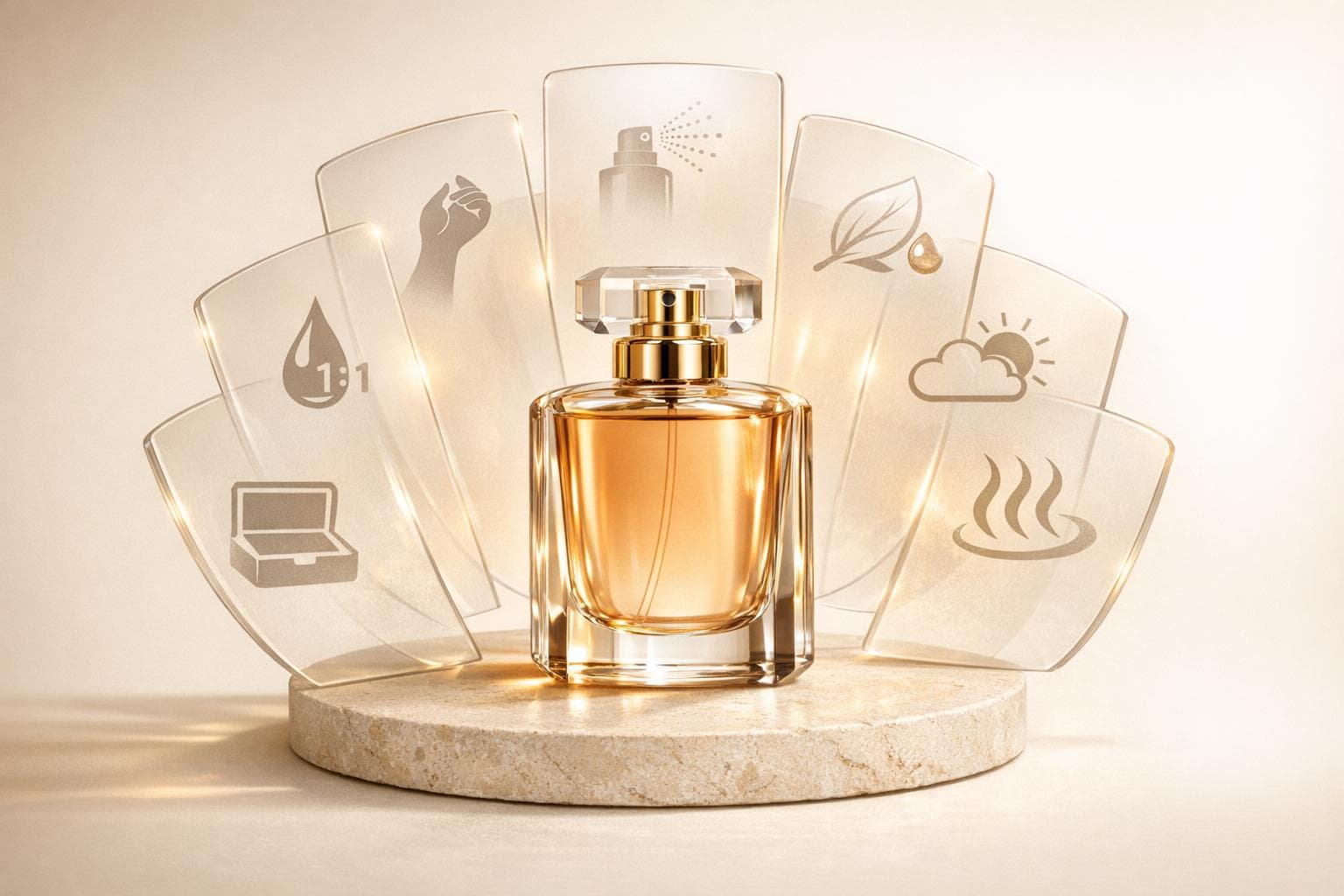
Te-ai intrebat vreodata de ce unele parfumuri rezista toata ziua, in timp ce altele se estompeaza in cateva ore? Persistenta parfumului depinde de mai multi factori, de la tipul de parfum ales pana la felul si locul in care il aplici. Iata o prezentare rapida despre de ce parfumul se estompeaza rapid si cum poti remedia situatia:
- Concentratia parfumului: Un continut mai mare de uleiuri (precum Parfum) rezista mai mult decat variantele mai lejere (precum Eau de Cologne).
- Tipul de piele: Pielea grasa pastreaza mai bine parfumul, in timp ce pielea uscata poate avea nevoie de hidratare suplimentara.
- Metoda de aplicare: Pulverizarea pe punctele de puls si evitarea frecarii pot prelungi persistenta parfumului.
- Ingredientele parfumului: Notele de baza precum moscul si ambra rezista mai mult decat efemerele note citrice de varf.
- Vremea: Caldura accelereaza evaporarea, in timp ce frigul o incetineste.
- Temperatura corpului: Un nivel mai ridicat de activitate sau caldura poate face ca parfumurile sa se estompeze mai repede.
- Pastrarea: Lumina, caldura si aerul degradeaza parfumul, asa ca pastreaza-l intr-un loc racoros si intunecat.
Fie ca folosesti un Eau de Parfum sau un Eau de Toilette mai lejer, mici ajustari precum hidratarea pielii, aplicarea pe punctele de puls si pastrarea corecta te pot ajuta sa te bucuri mai mult timp de parfum.
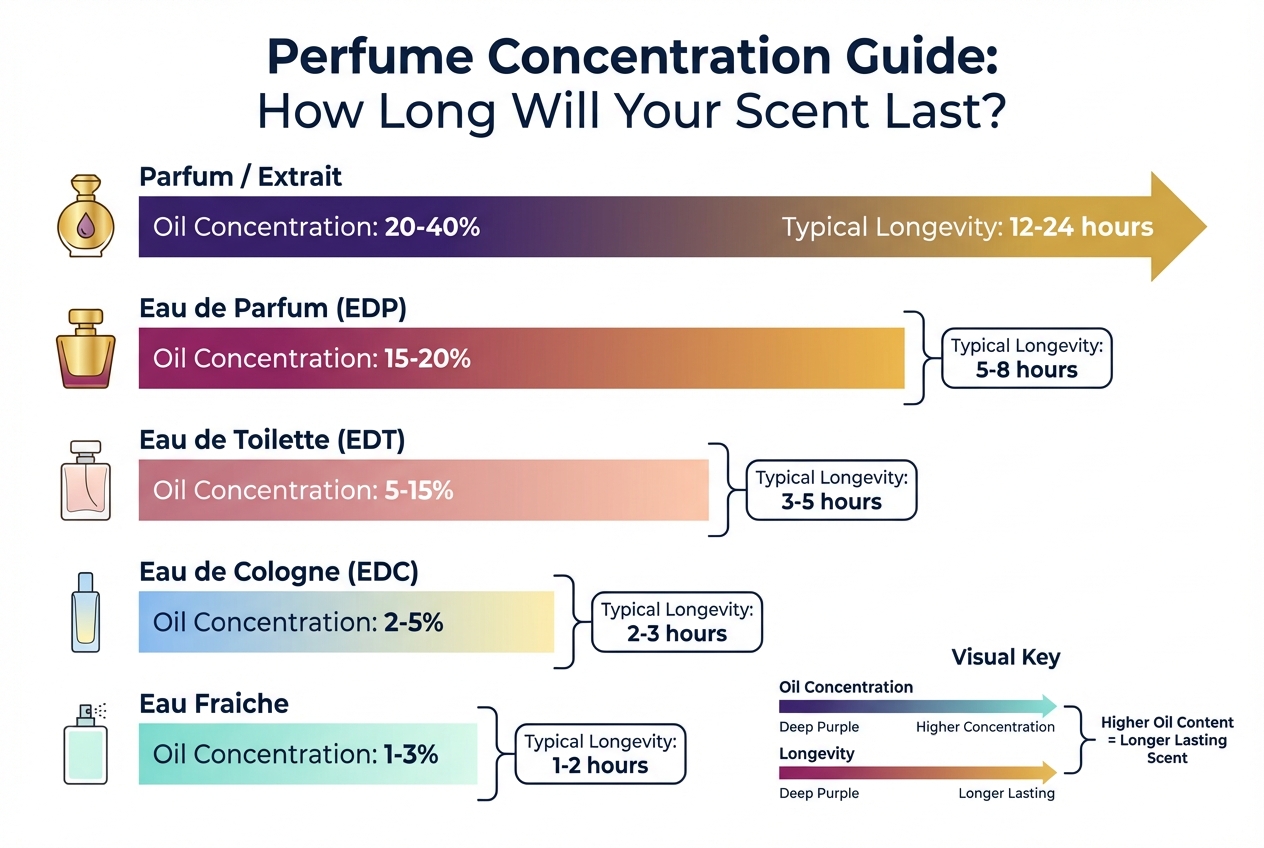
Grafic comparativ al tipurilor de concentratie a parfumului si persistentei
1. Concentratia parfumului
Impactul asupra persistentei parfumului
Concentratia uleiurilor parfumate dintr-un parfum este factorul esential care determina cat timp rezista pe piele. Pe scurt, un procent mai mare de uleiuri si mai putin alcool in formula inseamna un parfum mai persistent. Asta deoarece uleiurile esentiale se evapora mult mai lent decat alcoolul.
Iata o prezentare rapida a diferitelor tipuri de concentratii ale parfumului:
| Tip de parfum | Concentratia de ulei | Persistenta obisnuita |
|---|---|---|
| Parfum / Extrait | 20–40 % | 12–24 de ore |
| Eau de Parfum (EDP) | 15–20 % | 5–8 ore |
| Eau de Toilette (EDT) | 5–15 % | 3–5 ore |
| Eau de Cologne (EDC) | 2–5 % | 2–3 ore |
| Eau Fraiche | 1–3 % | 1–2 ore |
Acest grafic evidentiaza felul in care concentratia de ulei influenteaza direct atat compozitia parfumului, cat si persistenta acestuia. Parfumurile cu un continut mai mare de ulei, precum Parfum sau Extrait, tind sa puna in valoare notele de baza precum lemnul si rasinile, care persista in mod natural mai mult timp. De exemplu, parfumurile lemnoase rezista adesea mai mult decat cele pe baza de citrice, deoarece notele citrice se evapora mult mai repede. In plus, anumiti moscusi sintetici pot ramane pe piele pana la 24 hours, in timp ce multe ingrediente naturale se pot estompa in doar cateva ore.
Sfaturi practice pentru rezultate mai bune
Deoarece concentratia joaca un rol atat de important in persistenta parfumului, exista cateva trucuri care ajuta formulele mai lejere, precum Eau de Toilette, sa reziste mai mult. In primul rand, pregatirea pielii poate face o mare diferenta. Aplicarea unei lotiuni fara parfum sau a putinei vaseline pe punctele de puls inainte de a pulveriza parfumul ajuta uleiurile sa adere mai bine si incetineste evaporarea.
Conteaza si locul in care aplici parfumul. Concentreaza-te pe zonele calde, precum incheieturile mainilor, gatul, partea interioara a coatelor sau zona din spatele genunchilor. Aceste zone genereaza caldura, care ajuta la raspandirea parfumului pe parcursul zilei. Totusi, evita sa-ti freci incheieturile una de alta dupa pulverizare — frecarea poate descompune moleculele parfumului si ii poate perturba aroma. Pentru un plus de persistenta, foloseste parfumul in straturi, alaturi de lotiuni parfumate sau produse de corp asortate, pentru a face parfumul sa reziste la evenimentele de lunga durata.
Expertul tău personal în parfumuri te așteaptă
Completează testul nostru rapid de parfumuri și descoperă parfumuri designer și de nișă autentice, alese pe gustul tău – explorează-le ca decanturi și mostre de 2, 5, 8 și 30 ml, ca să le poți încerca pe fiecare înainte de a alege un flacon întreg.
Descoperă-ți parfumul2. Tipul de piele si chimia acesteia
Impactul asupra persistentei parfumului
Tipul pielii tale influenteaza semnificativ cat timp se mentine parfumul. Daca ai pielea grasa, ai noroc — uleiurile naturale retin moleculele parfumului, eliberandu-le treptat pe parcursul zilei. Pielea uscata, in schimb, poate fi o provocare. Asa cum spune Sylvaine Delacourte:
"Pielea uscata este dusmanul persistentei parfumului".
Fara suficiente uleiuri naturale, parfumul se evapora mult mai repede. Un alt factor este pH-ul pielii, care se situeaza de obicei intre 4,5 si 5.5. Pielea mai acida tinde sa pastreze mai bine parfumurile, facandu-le sa persiste mai mult.
Sfaturi practice pentru rezultate mai bune
Daca ai pielea uscata, nu-ti face griji — exista metode simple prin care poti face parfumul sa reziste mai mult. Incepe prin a-ti hidrata pielea inainte de aplicarea parfumului. Foloseste o lotiune fara parfum, ulei de jojoba sau chiar un strat subtire de vaselina pe punctele de puls, pentru a crea o bariera care ajuta la fixarea parfumului. Uleiul de jojoba, in special, poate adauga 2 to 3 ore in plus persistentei parfumului.
Sa te mentii hidratat este un alt sfat simplu, dar eficient. Consumul a aproximativ 33 fluid ounces de apa pe zi ajuta la mentinerea pielii hidratate, oferind parfumului o suprafata mai buna de care sa se prinda. Pentru un plus de efect, ia in considerare sa-ti suprapui parfumul cu geluri de dus sau lotiuni de corp complementare. Astfel, creezi o baza care impiedica parfumul sa se estompeze prea repede.
Daca pielea ta are atat zone grase, cat si zone uscate, aplica parfumul cu precadere pe zonele mai grase, precum pieptul sau zona T. Aceste zone pastreaza in mod natural parfumurile mai mult timp. Adaptarea rutinei de parfumare la tipul tau de piele poate face o diferenta vizibila in durata parfumului preferat.
3. Metoda de aplicare
Impactul asupra persistentei parfumului
Modul in care aplici parfumul poate face toata diferenta in ceea ce priveste durata lui. O greseala frecventa? Sa-ti freci incheieturile una de cealalta dupa pulverizare. Parfumierul Francis Kurkdjian explica:
"Frecarea incalzeste pielea, ceea ce produce enzime naturale care schimba evolutia parfumului."
Aceasta frecare poate perturba notele de varf delicate - deschiderea luminoasa si proaspata a unui parfum - facandu-le sa se evapore mai repede si sa-si piarda impactul. In loc sa persiste ore intregi, parfumul tau s-ar putea estompa in cateva minute.
Pentru rezultate optime, aplica parfumul pe punctele de puls - zonele in care vasele de sange sunt aproape de suprafata pielii. Acestea includ incheieturile, gatul, zona din spatele urechilor, partea interioara a coatelor si chiar zona din spatele genunchilor. Aceste puncte degaja caldura naturala, care ajuta parfumul sa se difuzeze treptat pe parcursul zilei. Surprinzator, si partea superioara a urechilor este un loc potrivit, deoarece pielea usor mai grasa de acolo ajuta parfumul sa adere mai bine.
Sfaturi practice pentru rezultate mai bune
Folosirea tehnicilor potrivite poate spori semnificativ persistenta parfumului, mai ales in timpul evenimentelor de lunga durata. Tine sticla la aproximativ 5 to 6 inches de piele cand pulverizezi. Aceasta distanta asigura o pulverizare uniforma, nu o concentratie intr-un singur punct. Dupa aplicare, lasa parfumul sa se usuce natural la aer - nu-l freca pe piele.
Pentru o dara parfumata care persista mai mult, pulverizeaza usor pe par sau pe haine. Parul retine eficient moleculele parfumate, iar tesaturile naturale, precum bumbacul sau lana, pastreaza bine uleiurile. Totusi, ai grija cu materialele delicate pentru a evita petele.
Un alt sfat? Suprapunerea parfumurilor. Foloseste un gel de dus si o lotiune de corp complementare din aceeasi gama de parfumuri pentru a construi straturi de aroma. Astfel, nu doar ca sporesti persistenta, ci te bucuri si de o experienta olfactiva mai captivanta.
4. Ingredientele si compozitia parfumului
Cum influenteaza ingredientele persistenta
Ingredientele unui parfum joaca un rol esential in durata aromei. Moleculele mai usoare, prezente adesea in notele de varf citrice si ierboase, tind sa se evapore rapid - de obicei in 15 to 30 minutes. In schimb, moleculele mai grele, precum moscul, ambra si rasinile, se evapora mai lent, ramanand perceptibile pe piele intre 6 and 24 hours sau chiar mai mult. Aceste note de baza constituie fundamentul parfumului si sustin notele de varf si de mijloc, mai efemere. Asa cum spune parfumiera Lauren Sindel:
"Desi notele de varf sunt cele pe care le simti imediat dupa pulverizare, notele de baza sunt cele care dau parfumului profunzime, bogatie si persistenta".
Rolul stiintei si al tehnologiei
Parfumeria moderna a facut progrese semnificative in prelungirea persistentei parfumurilor. Moleculele sintetice, create pentru stabilitate si evaporare treptata, au schimbat regulile jocului. In timp ce parfumurile naturale pot persista doar 1 to 4 hours, cele imbunatatite cu compusi sintetici precum Ambroxan sau Iso E Super pot rezista 6 to 12 hours sau chiar mai mult. Unele parfumuri folosesc chiar si incapsularea moleculara, o tehnica ce permite eliberarea treptata a aromei ca reactie la caldura corpului. Conteaza si familia olfactiva - parfumurile orientale si lemnoase, cu note precum lemnul de santal, vanilia si ambra, persista adesea 8 to 12 hours. In schimb, parfumurile cu note predominant citrice se estompeaza de obicei dupa doar 2 to 3 hours.
Sfaturi pentru a maximiza persistenta
Alegerea parfumului potrivit poate prelungi durata purtarii. Cauta parfumuri care pun in valoare note de baza profunde si bogate, precum lemnul de santal, patchouli, vetiverul, oudul, ambra sau moscul. Aceste ingrediente sunt cunoscute pentru persistenta lor. Daca preferi aromele florale, alege flori albe precum iasomia sau gardenia, care tind sa persiste mai mult decat notele florale mai usoare. Daca alegi compozitii cu ingrediente persistente, te poti bucura de parfumul tau ore in sir.
5. Conditiile meteorologice si climatice
Cum influenteaza vremea persistenta parfumului
Vremea joaca un rol important in cat timp persista un parfum si in felul in care se comporta pe pielea ta. La temperaturi mai ridicate, caldura accelereaza evaporarea moleculelor de parfum. Asta inseamna ca aroma se proiecteaza mai puternic la inceput, dar tinde sa se estompeze mai repede. In schimb, aerul rece incetineste evaporarea, mentinand parfumul mai aproape de piele, cu o difuzie mai discreta.
Umiditatea influenteaza, de asemenea, performanta unui parfum. Umiditatea ridicata poate retine moleculele parfumului pe pielea ta, prelungindu-le potential persistenta. Totusi, in conditii de caldura si umiditate, transpiratia se poate amesteca cu parfumul si ii poate modifica profilul. In schimb, vremea uscata tinde sa extraga umezeala din piele, facand aroma sa se evapore mai repede. Pielea uscata, in special, retine cu dificultate uleiurile parfumate, asa ca hidratarea este esentiala in astfel de conditii.
Dupa cum explica Hala Kaawach de la V Perfumes:
"Pe vreme calda sau fierbinte, moleculele de parfum se evapora mai repede. Acest lucru poate intensifica notele de varf si poate spori proiectia si siajul parfumului. Dezavantajul este insa ca parfumul se poate estompa mai repede."
Sfaturi pentru ca parfumul tau sa persiste mai mult
Pentru vreme calda sau umeda:
- Aplica parfumul pe par sau pe haine, in loc sa il aplici direct pe piele. Astfel, reduci riscul ca transpiratia sa-i modifice aroma si asiguri o eliberare mai lenta si mai constanta.
- Alege concentratii mai mari, precum Eau de Parfum sau Parfum, care rezista mai bine in conditii de caldura.
- Alege note mai usoare si mai proaspete, precum aromele citrice sau acvatice, care raman placute chiar si atunci cand caldura le intensifica.
Pentru vreme rece sau uscata:
- Hidrateaza-ti pielea cu o lotiune fara parfum sau cu un ulei de corp inainte de a aplica parfumul. Astfel, creezi o baza care ajuta parfumul sa adere mai bine.
- Concentreaza-te asupra punctelor de puls, precum incheieturile, gatul si partea interioara a coatelor, unde corpul genereaza mai multa caldura, favorizand difuzia.
- Alege parfumuri cu note de baza mai bogate, precum ambra, vanilia, moscul sau condimentele, deoarece acestea tind sa persiste mai mult la temperaturi mai scazute.
6. Temperatura corpului si nivelul de activitate
Cum influenteaza caldura corpului persistenta parfumului
Corpul tau actioneaza in mod natural ca un difuzor pentru parfum. Cand pielea se incalzeste, evaporarea moleculelor parfumului se accelereaza. Astfel, aroma se proiecteaza mai puternic la inceput, dar parfumul se poate estompa mai repede in timp. Daca ai o rata metabolica mai ridicata, pielea ta tinde sa fie mai calda, ceea ce inseamna ca parfumul se poate evapora mai repede. Acest efect se observa si mai clar in timpul activitatilor fizice.
Exercitiile fizice sau miscarea iti cresc temperatura corpului si declanseaza transpiratia. Transpiratia poate interactiona cu uleiurile parfumate, modificand usor felul in care evolueaza aroma. In acelasi timp, circulatia sporita a aerului in timpul miscarii accelereaza evaporarea, mai ales in punctele de puls, precum incheieturile si gatul. In timpul activitatilor intense, aceste zone devin puncte fierbinti pentru difuzia parfumului.
Sfaturi pentru ca parfumul tau sa persiste mai mult
Pentru a combate evaporarea provocata de caldura, combina tehnici inteligente de aplicare cu strategii de reglare a temperaturii corpului. De exemplu, aplicarea unei creme hidratante fara parfum sau a unui strat subtire de vaselina inainte de a pulveriza parfumul poate crea o bariera care incetineste evaporarea cauzata de caldura. In zilele active sau in timpul antrenamentelor, poti aplica parfumul pe par sau pe haine, in loc sa il aplici direct pe piele. Tesaturile naturale, precum bumbacul sau lana, retin bine aromele si sunt mai putin afectate de transpiratie.
Redu frecarea, deoarece aceasta poate descompune notele de varf delicate. In zilele cu un nivel ridicat de activitate, alege parfumuri cu concentratii mai mari, precum Eau de Parfum (cu o persistenta de 4–8 hours) sau Parfum (cu o persistenta de 6–8+ hours). Acestea tind sa reziste mai mult decat variantele mai usoare, precum Eau de Toilette, care se estompeaza de obicei in 2–5 hours. Adaptarea aplicarii parfumului la caldura corpului si la nivelul tau de activitate poate ajuta aroma sa persiste pe tot parcursul zilei.
7. Pastrarea si oxidarea
Factori stiintifici sau de mediu
Modul in care pastrezi parfumul are un efect direct asupra persistentei si calitatii sale. Cei trei factori principali care duc la deteriorarea parfumului sunt lumina, caldura si aerul. Razele UV ale soarelui pot descompune legaturile chimice din moleculele aromatice, mai ales in cazul notelor citrice si florale delicate. Caldura accelereaza activitatea moleculara, ceea ce duce la o evaporare mai rapida si, in unele cazuri, poate „gati” uleiurile din interiorul sticlei. Expunerea la aer introduce oxigen, care declanseaza oxidarea — o reactie chimica ce modifica structura moleculara a parfumului, ducand adesea la note neplacute, acide sau metalice.
"Caldura, lumina, aerul. Pentru a-ti proteja investitia, trebuie sa o feresti de acesti trei factori care descompun moleculele parfumului." — Lom Glassworks
Baia este unul dintre cele mai nepotrivite locuri pentru pastrarea parfumurilor. Umiditatea ridicata si schimbarile constante de temperatura provocate de dusurile fierbinti pot degrada rapid compozitia parfumului. In plus, sticlele folosite partial se oxideaza mai repede din cauza raportului mai mare dintre aer si lichid din interior.
Impactul asupra persistentei parfumului
Depozitarea necorespunzatoare poate scurta considerabil durata de viata a unui parfum. In timp ce majoritatea parfumurilor rezista intre 3 to 5 years dupa deschidere, ingrijirea corespunzatoare le poate prelungi durata de viata la peste un deceniu. Temperatura ideala de depozitare este intre 59°F and 68°F (15–20°C). Dupa deschidere, uleiurile de parfum sigilate rezista, in general, 2–3 years, in timp ce parfumurile pe baza de alcool pot rezista doar 1–2 years. Printre semnele oxidarii se numara un lichid mai inchis la culoare sau tulbure si un miros dominat de alcool, in locul amestecului original.
Sfaturi practice pentru a le pastra mai bine
Pentru a-ti proteja parfumurile, pastreaza-le intr-un loc racoros si intunecat, cum ar fi un sertar sau un dulap. Pastrarea lor in cutiile originale ofera protectie suplimentara impotriva luminii UV si a schimbarilor de temperatura. Asigura-te intotdeauna ca ai inchis bine capacul, pentru a reduce expunerea la oxigen. Tine sticlele in pozitie verticala pentru a preveni scurgerile sau expunerea suplimentara la aer si incearca sa cumperi doar cat poti folosi in decurs de 1–3 years. Daca preferi varietatea fara sa-ti faci griji cu privire la oxidare, ia in considerare decanturile in cantitati mai mici de la branduri precum Scento (https://scento.com), care iti permit sa te bucuri de parfumuri de designer fara sa te angajezi sa cumperi sticle intregi.
Perfume Longevity: Key Takeaways
Persistenta unui parfum depinde de mai multi factori, printre care concentratia, tipul tau de piele si modul in care il aplici – toate acestea determinand cat timp ramane mirosul pe pielea ta pe parcursul zilei. In plus, compozitia parfumului are un rol important: notele de baza mai intense, precum lemnul de santal si moscul, tind sa persiste mai mult decat notele citrice mai usoare si trecatoare. Factorii externi, precum vremea si depozitarea corespunzatoare, influenteaza si ei daca parfumul persista sau se estompeaza.
Schimbarile mici pot face o diferenta vizibila in cat timp persista parfumul. Incepe prin a-ti hidrata pielea inainte de aplicare si aplica parfumul in punctele de puls, pentru ca mirosul sa adere mai bine. Folosirea parfumului impreuna cu produse de corp complementare si pastrarea lui la temperatura ideala pentru parfumuri vor contribui, de asemenea, la pastrarea caracterului sau intact.
"Persistenta depinde in mare masura de modul in care este aplicat parfumul si de tipul de parfum pe care il alegi." – Michael Edwards, expert in parfumuri
Daca nu esti sigura cat persista un parfum, incearca-l pe piele inainte de a te angaja sa cumperi o sticla intreaga. Servicii precum Scento (https://scento.com) ofera decanturi de parfumuri de designer in fiole de 2 ml, 5 ml si 8 ml, precum si un decant de 30 ml pentru majoritatea parfumurilor, astfel incat sa testezi cum se comporta un parfum in mediul tau de zi cu zi, inainte de a face o investitie mai mare.
Intrebari frecvente
Cum pot face parfumul sa persiste mai mult pe pielea uscata?
Pentru ca parfumul sa persiste mai mult pe pielea uscata, incepe prin a o hidrata corespunzator. Aplicarea in prealabil a unei creme hidratante pe baza de ulei creeaza o suprafata bine hidratata, care ajuta parfumul sa adere mai bine si sa persiste pe parcursul zilei.
Unde ar trebui sa aplic parfumul ca sa persiste toata ziua?
Pentru ca parfumul sa persiste toata ziua, aplica-l pe punctele de puls – zonele in care corpul emana caldura in mod natural, ceea ce ajuta la intensificarea mirosului. Zonele ideale includ gatul, incheieturile mainilor, zona din spatele urechilor, ceafa si decolteul. Aceste zone calde ajuta parfumul sa persiste mai mult si sa se raspandeasca frumos.
Cum pastrez parfumul ca sa nu se altereze?
Pentru ca parfumul sa reziste cat mai mult, pastreaza-l intr-un loc racoros si intunecat, ferit de lumina directa a soarelui, caldura si umiditate. Evita sa-l pastrezi in baie, deoarece aburul si fluctuatiile de temperatura pot accelera degradarea parfumului. Tine sticlele in pozitie verticala, intr-un loc uscat, ideal intre 55°F and 70°F, pentru a-i pastra caracterul intact si a preveni estomparea sau decolorarea in timp.

