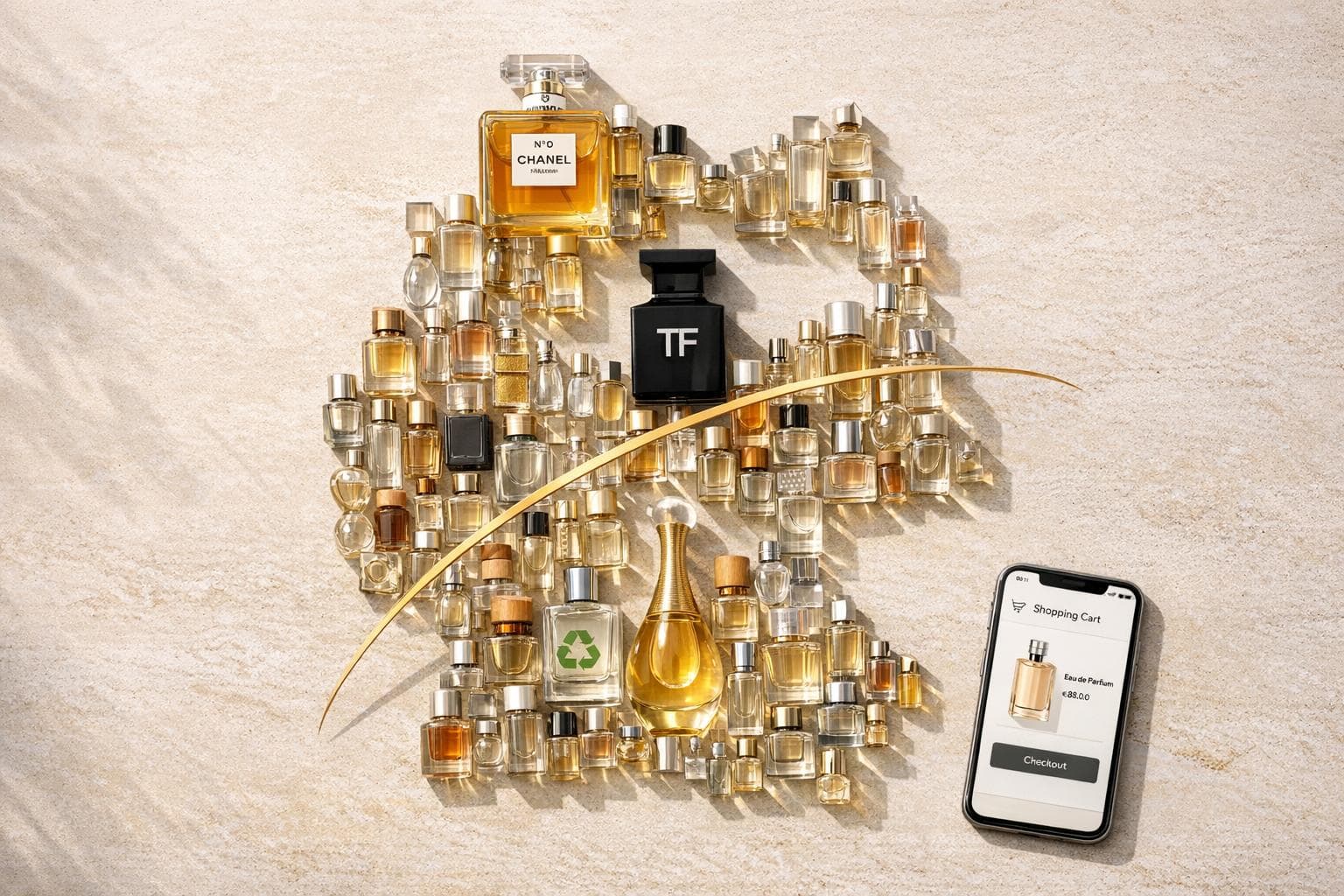
Piața parfumurilor din Germania rămâne una dintre cele mai ample din Europa, cu venituri estimate să ajungă între 3,6 miliarde € și 4,0 miliarde € în 2026. Parfumurile premium domină, reprezentând aproape 70% din veniturile totale, impulsionate de cererea pentru ingrediente de înaltă calitate și formule cu persistență îndelungată. Piața reflectă preferințe diverse, de la esențe artizanale de nișă până la opțiuni de larg consum dedicate cumpărătorilor atenți la buget.
Idei esențiale:
- Creștere: Avans anual între 3,6% și 12,6%, susținut de creșterea veniturilor disponibile și de expansiunea comerțului electronic.
- Tendințe ale cumpărătorilor: Consumatorii mai tineri preferă parfumurile unisex, în timp ce generațiile mai mature rămân fidele brandurilor consacrate.
- Sustenabilitate: Parfumurile naturale și ambalajele reîncărcabile câștigă teren, deși performanța rămâne esențială.
- Canale de vânzare: Vânzările online cresc rapid, însă magazinele fizice își păstrează o prezență puternică, concentrându-se pe experiențe de cumpărare memorabile.
- Branduri de top: Lideri globali precum L’Oréal și Estée Lauder domină, iar branduri germane precum Maurer & Wirtz prosperă, la rândul lor.
Piața germană evoluează, echilibrând tradiția cu preferințele moderne precum personalizarea, parfumurile orientate spre starea de bine și opțiunile prietenoase cu mediul.
Statistici ale pieței parfumurilor din Germania 2026: indicatori-cheie și proiecții de creștere
Dimensiunea pieței parfumurilor din Germania în 2026
Veniturile pieței și creșterea
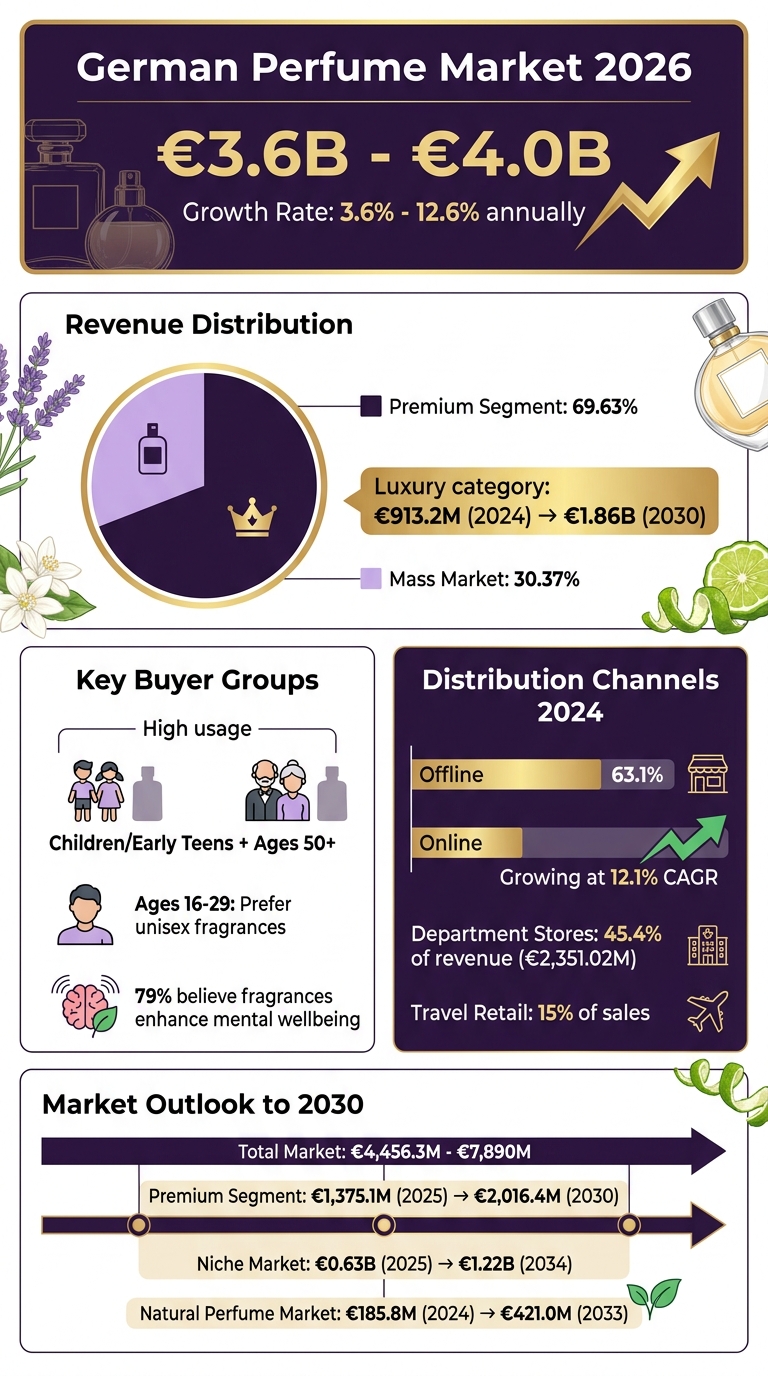
Până în 2026, piața parfumurilor din Germania este estimată să genereze între 3,6 miliarde € și 4,0 miliarde €, în creștere de la 3.613,8 milioane € în 2024. Aceasta reflectă o rată anuală de creștere de 3,6% până la 12,6%, alimentată de creșterea veniturilor disponibile și de accentul tot mai mare pus pe îngrijirea personală. Deși se preconizează stabilizarea inflației, expansiunea sectorului este strâns legată de aceste tendințe economice și sociale.
Industria parfumurilor a cunoscut o creștere remarcabilă, în special datorită popularității tot mai mari a îngrijirii personale și dezvoltării rapide a platformelor de comerț electronic.
Structura pieței pe categorii
Segmentul premium conduce piața cu o cotă din venituri de 69,63%, susținut de cererea consumatorilor pentru ingrediente de înaltă calitate și formule cu persistență îndelungată. În cadrul acestui segment, categoria de lux - evaluată la 913,2 milioane € în 2024 - este proiectată să se dubleze aproape, ajungând la 1,86 miliarde € până în 2030, cu o rată de creștere de 6,6% anual.
Parfumurile de nișă și artizanale, care reprezintă aproximativ 20% din piața globală, sunt deosebit de atrăgătoare pentru consumatorii tineri. Acești cumpărători sunt adesea atrași de arome exclusive, personalizate, și se bucură să își creeze „garderobe olfactive” adaptate diferitelor stări și anotimpuri. Între timp, segmentul mass-market rămâne un reper pentru cumpărătorii atenți la buget, oferind alternative accesibile, inclusiv dupes populare ale parfumurilor.
Aceste tendințe distincte evidențiază diversitatea preferințelor care modelează piața parfumurilor din Germania în rândul diferitelor grupuri de consumatori.
Perspective din datele clienților Scento
Perspectivele provenite de la 2.965 de clienți germani se aliniază cu aceste dinamici de piață, în special în segmentele premium și de nișă. Un procent semnificativ de 79% dintre respondenți consideră că parfumurile pot îmbunătăți starea de bine mentală, ceea ce conduce la o cerere tot mai mare pentru produse care favorizează relaxarea, concentrarea și un somn mai bun.
Datele privind achizițiile arată că consumatorii germani sunt dispuși să cheltuiască mai mult pentru parfumuri care reflectă valori precum autenticitatea, sustenabilitatea și exprimarea de sine - calități strâns legate de categoriile premium și de nișă. Aceste perspective subliniază prioritățile în schimbare ale cumpărătorilor moderni de pe piața în expansiune a parfumurilor din Germania.
Date demografice ale cumpărătorilor din Germania
Distribuția pe vârstă și gen
Piața parfumurilor din Germania în 2026 relevă două grupuri distincte care generează un nivel ridicat de utilizare: copiii și adolescenții foarte tineri, precum și persoanele cu vârsta de 50 de ani și peste. Această dublă orientare creează spațiu pentru branduri fie să îmbrățișeze spiritul experimental al tinereții, fie să răspundă loialității utilizatorilor de parfumuri mai maturi și mai bine ancorați în preferințele lor.
Între timp, consumatorii cu vârste între 16 și 29 de ani remodelează modul în care sunt promovate parfumurile. Acest segment mai tânăr se îndepărtează de etichetele tradiționale bazate pe gen, alegând aromele în funcție de preferințele personale și de anumite note olfactive. Pentru a răspunde acestei schimbări, brandurile își extind colecțiile unisex și se concentrează mai mult pe profilurile olfactive decât pe categorii rigide de gen. Această diversitate de vârstă pregătește terenul pentru obiceiuri de consum variate, analizate mai detaliat în secțiunea următoare.
Niveluri de venit și obiceiuri de cheltuire
Piața parfumurilor din Germania este puternic influențată de consumatorii cu venituri ridicate, produsele premium generând majoritatea veniturilor. Acești cumpărători prioritizează calitatea, orientându-se adesea către branduri cu tradiție și analizând cu atenție ingredientele din perspectiva siguranței și sustenabilității. Deciziile lor de cumpărare sunt deliberate, cu un accent puternic pe transparență, precum verificarea listelor INCI pentru informații detaliate despre ingrediente.
În același timp, creșterea veniturilor disponibile alimentează dezvoltarea atât a segmentelor premium, cât și a celor de nișă. Deși parfumurile de lux domină, piața de masă se extinde, de asemenea, cu o rată anuală compusă estimată de 6,8% în Europa. Consumatorii atenți la valoare caută lux accesibil, optând adesea pentru arome inspirate de designeri care oferă calitate la un preț mai redus. Astfel se conturează o piață dinamică, în care cheltuielile premium coexistă cu alternative accesibile, pregătind scena pentru oferte de produse personalizate și inovatoare.
Preferințele consumatorilor
Modelele de cheltuire din Germania sunt strâns legate de tendințele în evoluție privind funcționalitatea și personalizarea parfumurilor. Din ce în ce mai mult, cumpărătorii sunt atrași de parfumuri funcționale, cu note precum lavandă, iasomie și bergamotă, despre care se crede că îmbunătățesc starea de spirit și reduc stresul. Această orientare către wellness reflectă un interes mai amplu pentru produse de lifestyle care oferă beneficii emoționale și mentale alături de atracția lor tradițională.
Personalizarea câștigă, de asemenea, teren. În 2025, compania olandeză EveryHuman a introdus sistemul său de „parfumerie algoritmică”, care utilizează inteligența artificială pentru a crea formule olfactive personalizate pe baza informațiilor furnizate de utilizatori despre personalitate și stare de spirit. Această abordare se aliniază cu cererea tot mai mare pentru produse care se simt personale și reflectă identitatea individuală, oferind consumatorilor o conexiune mai profundă cu achizițiile lor.
Canale de vânzare: online vs. offline
Creșterea comerțului electronic
Vânzările online de parfumuri în Germania cresc rapid, impulsionate de comoditatea cumpărăturilor de acasă și de posibilitatea de a cerceta temeinic produsele înainte de achiziție. La nivel european, segmentul distribuției online este așteptat să crească cu o rată anuală impresionantă de 12,1% între 2025 și 2033, devenind canalul cu cea mai rapidă expansiune din piața parfumurilor. Deși retailul offline deținea încă o cotă de piață de 63,1% în 2024, diferența dintre cele două canale se reduce pe măsură ce tot mai mulți consumatori se îndreaptă către platformele digitale.
Cumpărătorii germani, în special, apreciază transparența atunci când achiziționează parfumuri online. Ei caută liste detaliate de ingrediente și informații despre aprovizionarea sustenabilă. Platforme precum Flaconi și Douglas s-au adaptat acestor preferințe prin crearea unor funcționalități interactive care evidențiază aprovizionarea etică și transparența ingredientelor. Pentru a răspunde acestei cereri, Scento oferă decanturi curate cu grijă în formate de 2 ml, 5 ml și 8 ml, oferind clienților șansa de a testa parfumuri de designer fără a se angaja la achiziția unui flacon întreg. În plus, instrumentele sale de identificare a parfumurilor simplifică procesul de cumpărare, ajutând utilizatorii să exploreze peste 1.000 de parfumuri adaptate gusturilor lor personale. În ciuda acestor progrese în e-commerce, magazinele fizice continuă să se confrunte cu provocări specifice.
Provocările retailului fizic
În timp ce vânzările online sunt în plină ascensiune, magazinele fizice se confruntă cu un peisaj în schimbare. În 2024, magazinele universale au contribuit cu aproximativ 2.351,02 milioane € la piața parfumurilor din Germania, reprezentând circa 45,4% din veniturile totale. Totuși, creșterea inflației și a prețurilor a mutat unele preferințe ale consumatorilor către opțiuni mai accesibile, precum „fragrance dupes”, care reproduc esența brandurilor de lux la o fracțiune din cost. Chiar și așa, cercetările arată că consumatorii, care văd adesea parfumurile ca pe o extensie a identității lor, sunt mai predispuși să coboare nivelul de preț decât să abandoneze complet categoria.
La aceste provocări se adaugă și noile reglementări UE privind alergenii, care au pus presiune suplimentară asupra retailerilor fizici. Resurse care ar fi putut fi direcționate către inovație sunt acum redirecționate pentru a asigura conformitatea. Pentru a rămâne competitive, multe magazine se concentrează pe crearea unor experiențe captivante în spațiul fizic. Printre strategii se numără evenimente pop-up, quiz-uri interactive despre parfumuri și stații de reumplere a parfumurilor, toate menite să atragă cumpărătorii care apreciază aspectele senzoriale și tangibile ale achiziției unui parfum. Retailul de travel rămâne, de asemenea, un actor important, reprezentând aproximativ 15% din toate vânzările de parfumuri.
Prognoza distribuției canalelor până în 2030
Privind spre 2030, distribuția canalelor de vânzare este așteptată să se schimbe dramatic. Deși magazinele universale vor continua să joace un rol important, creșterea anuală proiectată de 12,1% a vânzărilor online va aduce probabil cele două canale mai aproape de paritate. Această tendință evidențiază importanța combinării confortului digital cu experiențele din magazin pentru a rămâne competitiv pe piața în continuă evoluție a parfumurilor din Germania. Retailerii care vor reuși să atingă acest echilibru vor fi mai bine poziționați pentru a prospera în acest mediu dinamic.
Brandurile de parfum de top din Germania în 2026
Branduri premium de referință
Piața parfumurilor din Germania prosperă prin segmentul său premium, care a reprezentat 69,63% din venituri în 2024 și se așteaptă să rămână categoria cu cea mai rapidă creștere până în 2030. Dominând acest spațiu se află giganți internaționali precum L’Oréal, Coty și Estée Lauder, alături de propriul nume emblematic al Germaniei, Maurer & Wirtz, celebru pentru legendara sa apă de colonie 4711 și Farina, originala Eau de Cologne. Aceste branduri îmbină impecabil tradiția cu modernitatea, asigurându-și farmecul de durată.
Brandurile premium continuă să exceleze prin combinarea istoriei lor bogate cu tendințele contemporane. Parfumurile cu tematică wellness, ce includ ingrediente precum lavanda și bergamota, sunt deosebit de apreciate. În plus, piața se adresează unui spectru larg de consumatori, de la preadolescenți și adolescenți până la segmente de vârstă mai mature, oferind brandurilor premium numeroase oportunități de a-și extinde aria de influență. În timp ce aceste nume consacrate rămân puternice, brandurile de nișă câștigă teren semnificativ pe măsură ce preferințele consumatorilor se schimbă.
Creșterea brandurilor de parfum de nișă
Brandurile de parfum de nișă cunosc o creștere accelerată în Germania, țară care este estimată să devină piața de parfumuri de nișă cu cea mai rapidă creștere din Europa. Până în 2034, segmentul de nișă este așteptat să atingă 1,22 miliarde €, în creștere de la 0,63 miliarde € în 2025. Această evoluție evidențiază cererea tot mai mare pentru parfumuri artizanale și personalizate, care se disting de ofertele mass-market.
Consumatorii germani sunt din ce în ce mai atrași de parfumuri care rezonează cu individualitatea lor, favorizând parfumurile produse în ediții limitate și încărcate de povești unice. Această tendință se aliniază unei dorințe mai ample pentru transparență și conexiuni mai profunde cu originea ingredientelor și filosofia brandurilor. Platforme precum Scento, care oferă peste 1.000 de parfumuri de designer în formate decant mai mici (2 ml, 5 ml și 8 ml), le permit consumatorilor să exploreze opțiuni premium și de nișă fără a se angaja la achiziția unor flacoane complete. Această accesibilitate alimentează curiozitatea și susține expansiunea segmentului de nișă.
Comparația performanței brandurilor
Deși brandurile premium domină în ceea ce privește veniturile, ofertele de nișă câștigă rapid tracțiune. Piața parfumurilor din Germania urmează o traiectorie robustă de creștere, proiecțiile indicând că va atinge 4.456,3 milioane € până în 2030 și 7.890 milioane € până în 2035, cu o rată anuală compusă de creștere de 12,6%. Brandurile premium își mențin poziția dominantă datorită încrederii deja consolidate și rețelelor extinse, însă brandurile de nișă captează atenția prin caracterul lor distinct și ritmurile mai rapide de creștere. Împreună, aceste două segmente creează o piață dinamică, care îmbină fiabilitatea numelor cu tradiție cu farmecul noilor veniți inovatori și proaspeți. Acest echilibru consolidează reputația Germaniei ca una dintre cele mai rafinate și diverse piețe de parfumuri din Europa.
Your Personal Fragrance Expert Awaits
Take our quick scent quiz to discover authentic designer and niche fragrances matched to your taste — explore them as 2–8ml decants and samples, so you can try each one before committing to a full bottle.
Find Your ScentPrețuri și TVA pe piața parfumurilor din Germania
Niveluri medii de preț
Piața parfumurilor din Germania a atins vânzări de 2 miliarde € în 2023, segmentul de lux contribuind singur cu aproximativ 1.375,1 milioane € în 2024. Parfumurile premium au captat o cotă impresionantă de 69,63% din piață în 2024, oferind adesea o persistență de până la 12 ore.
Mihaela Suhalitca, analist de cercetare – Beauty and Personal Care la Mintel, a subliniat:
Categoria parfumurilor din Germania a înregistrat o creștere puternic pozitivă începând din 2022, parțial din cauza inflației și a creșterii accelerate a prețurilor.
Această presiune economică i-a determinat pe consumatori să își ajusteze obiceiurile de cumpărare. În loc să se îndepărteze de parfumuri, mulți s-au orientat către dupes sau au ales dimensiuni mai mici de flacoane, subliniind rolul parfumului ca marcator al identității personale chiar și în perioade de dificultăți financiare.
Flacoanele travel-size au devenit deosebit de populare ca opțiune prietenoasă cu bugetul. Dimensiunile obișnuite includ 10 ml (aproximativ 100 de pulverizări) și 30 ml (aproximativ 300–450 de pulverizări). Flacoanele reîncărcabile câștigă, de asemenea, teren ca alternativă premium, dar atentă la costuri.
Impactul TVA asupra prețurilor
În Germania, parfumurile sunt taxate la cota standard de TVA de 19%, deoarece nu se încadrează în cota redusă de 7% rezervată bunurilor esențiale. Asta înseamnă că un parfum de lux cu preț net de 100 € costă 119 € după TVA. Combinată cu inflația, această cotă de taxare i-a făcut pe consumatori tot mai sensibili la preț. Pentru a răspunde acestei situații, brandurile au promovat afirmații precum „de lungă durată” și „intens” pentru a justifica prețurile cu TVA inclus. Cu toate acestea, doar 18% dintre lansările de parfumuri din 2024 au evidențiat aceste atribute.
Micii parfumieri artizanali, pe de altă parte, beneficiază de un avantaj în materie de prețuri. Conform Kleinunternehmerregelung, afacerile cu venituri anuale sub 25.000 € pot opta să iasă din sistemul TVA, ceea ce le permite să ofere prețuri mai competitive.
Abordarea Scento privind prețurile
Scento și-a adaptat strategia pentru a echilibra atractivitatea luxului cu accesibilitatea, răspunzând nevoilor în schimbare ale consumatorilor. Brandul oferă peste 1.000 de parfumuri de designer în dimensiuni decant de 2 ml, 5 ml și 8 ml. Aceste fiole mai mici le permit clienților să exploreze parfumuri premium fără a se angaja la costul ridicat al flacoanelor complete, care depășesc adesea 300 €. De exemplu, o fiolă de 8 ml oferă aproximativ 120 de pulverizări, fiind o modalitate accesibilă de a încerca mai multe parfumuri sau de a menține varietatea într-o colecție.
Pentru cei interesați de un model pe bază de abonament, Scento oferă un plan lunar flexibil începând de la 12,90 € per parfum. Acesta include recomandări personalizate și libertatea de a anula în orice moment. Printr-o structură de prețuri etapizată, Scento se asigură că consumatorii germani se pot bucura de branduri high-end, navigând în același timp provocările generate de prețurile de bază ridicate și de TVA-ul de 19%.
Sustenabilitatea pe piața parfumurilor
Cererea pentru produse naturale
Sustenabilitatea a devenit o așteptare de bază pe piața de beauty din Germania. Ceea ce odinioară era o preferință de nișă este acum perceput ca o practică standard. Această schimbare este deosebit de evidentă în sectorul parfumurilor, unde piața parfumurilor naturale a atins 185,8 milioane € în 2024 și este așteptată să crească până la 421,0 milioane € până în 2033, cu o rată anuală de creștere de 9,55%.
Cererea tot mai mare pentru parfumuri naturale provine atât din preocupări legate de mediu, cât și dintr-un accent sporit pe bunăstarea personală. Mulți consumatori cred că aromele naturale pot îmbunătăți starea de spirit și reduce stresul. În același timp, există o preferință tot mai mare pentru formule botanice percepute ca fiind mai sigure, în special în rândul celor preocupați de sensibilitatea pielii și de sănătatea generală.
Cu toate acestea, performanța rămâne un factor critic. Un procent impresionant de 94% dintre consumatori au ales produse convenționale în detrimentul opțiunilor sustenabile atunci când acestea din urmă au fost percepute ca fiind mai puțin eficiente. Pentru a concura, parfumurile naturale trebuie să demonstreze că pot egala persistența și intensitatea alternativelor sintetice. Henrike Philipp, analist de cercetare la Mintel, a evidențiat acest echilibru:
Sustenabilitatea a devenit o așteptare a consumatorilor. Pentru a se diferenția, brandurile se pot concentra pe personalizare, eficacitate și facilitarea adoptării ușoare a obiceiurilor eco-friendly.
Reglementările UE privind ingredientele
Orientarea către parfumuri derivate natural a influențat și schimbările de reglementare la nivelul UE, determinând o transformare a modului în care sunt formulate parfumurile. Legislația mai strictă a UE privind alergenii încurajează trecerea către formule cu etichetă curată. În mod tradițional, parfumurile s-au bazat pe componente derivate din petrol sau pe un portofoliu de aproximativ 3.100 de compuși chimici standard. Ca răspuns, branduri precum Abel, Henry Rose, Ormaie și Dedcool se orientează către chimia verde pentru a dezvolta alternative sustenabile aliniate la aceste noi standarde. Uleiurile esențiale au devenit principalul ingredient natural în Germania, evaluate la 101,9 milioane € în 2024.
Transparența a devenit, de asemenea, un punct major de interes. Aproape 48% dintre consumatorii germani preferă produse de beauty cu informații clare și detaliate despre caracterul lor ecologic. Această cerere determină brandurile să simplifice listele de ingrediente și să adopte sisteme clare de etichetare, asemănătoare Nutri — Score-ului folosit pentru produsele alimentare. Multe branduri tratează aceste provocări, generate atât de reglementări, cât și de cerințele consumatorilor, ca oportunități de inovare și de creare a unor produse mai sustenabile.
Oportunități pentru branduri în domeniul sustenabilității
Ambalajele reîncărcabile au devenit o tendință remarcabilă în sustenabilitate. Numărul produselor noi care evidențiază posibilitatea de reumplere a crescut puternic, pe măsură ce consumatorii caută să reducă deșeurile păstrând în același timp senzația de lux. De exemplu, în 2024, dm-drogerie markt a introdus inovații de ambalare menite să reducă utilizarea plasticului și a implementat tehnologii de reciclare a dioxidului de carbon. În mod similar, Gucci a lansat un parfum realizat cu etanol obținut prin captarea carbonului, demonstrând modul în care brandurile high-end adoptă metode de aprovizionare sustenabilă.
Parfumurile solide și formulele fără alcool câștigă, de asemenea, popularitate. Aceste opțiuni se adresează călătorilor eco-conștienți și persoanelor cu piele sensibilă, aliniindu-se mișcării mai ample către wellness și răspunzând totodată unor nevoi practice precum portabilitatea și reducerea iritațiilor.
Construind pe baza acestor tendințe, formatele decant oferite de Scento propun o abordare practică a sustenabilității. Prin dimensiunile de 2 ml, 5 ml și 8 ml, Scento le permite clienților să încerce parfumuri naturale și de nișă fără angajamentul achiziției unor flacoane complete. Această strategie nu doar susține practici eco-friendly, ci face și parfumurile premium sustenabile mai accesibile pentru consumatorii atenți la preț, care continuă totuși să ceară o calitate înaltă.
Perspectivele pieței parfumurilor din Germania până în 2030
Proiecții privind dimensiunea pieței pentru 2030
Piața parfumurilor din Germania se află pe o traiectorie de creștere constantă în anii următori. Estimările sugerează că piața ar putea ajunge la 4.456,3 milioane € până în 2030, cu o rată anuală de creștere de 3,6%. Unele proiecții alternative sunt și mai optimiste, anticipând o creștere până la 7.890 milioane € la o rată anuală mai rapidă de 12,6%.
Veniturile din parfumurile premium sunt așteptate să crească semnificativ, de la 1.375,1 milioane € în 2025 la 2.016,4 milioane € până în 2030, reflectând o rată anuală de creștere de aproximativ 6,6%. Această ascensiune este atribuită în mare parte veniturilor disponibile mai mari, implicării digitale crescute și interesului tot mai mare pentru parfumurile de nișă și artizanale, în special în rândul consumatorilor tineri.
Totuși, Inițiativa UE Clean Scent, introdusă în martie 2025, impune divulgarea completă a substanțelor chimice din parfumuri. Deși această reglementare promovează transparența, ea a crescut și costurile de cercetare și dezvoltare cu peste 30% și a redus marjele de profit cu 5–7%, în principal din cauza costului mai ridicat al ingredientelor pe bază de plante. Aceste schimbări din industrie evidențiază importanța inovației digitale pentru menținerea competitivității pe piața parfumurilor.
Tendințe și oportunități viitoare
Transformarea digitală redefinește modul în care consumatorii germani descoperă și cumpără parfumuri. Instrumentele bazate pe inteligență artificială au revoluționat profilarea personalizată a parfumurilor, crescând ratele de conversie cu peste 15% comparativ cu metodele tradiționale de retail. Acest nivel de personalizare - de la ambalaje adaptate până la recomandări generate algoritmic - pregătește terenul pentru următoarea eră a retailului de parfumuri.
Modelele de abonament și seturile discovery câștigă, de asemenea, popularitate, oferind consumatorilor o modalitate accesibilă de a explora arome noi fără a se angaja la flacoane full-size. Această abordare atrage cumpărătorii sensibili la preț, care preferă să testeze parfumurile înainte de a face un angajament financiar mai mare.
Dincolo de progresele digitale, brandurile se concentrează pe inovația produselor pentru a se alinia cu preferințele în schimbare ale consumatorilor. Parfumurile funcționale, concepute pentru a susține reducerea stresului, un somn mai bun și starea generală de bine, devin din ce în ce mai populare. Între timp, campaniile pe social media conduse de influenceri se dovedesc extrem de eficiente, generând randamente de trei ori mai mari decât metodele tradiționale de publicitate.
Experții din industrie sugerează că îmbinarea parfumeriei artistice cu avansurile științifice va crea experiențe senzoriale rafinate, adaptate stilurilor de viață moderne axate pe wellness.
Rezumat
Piața parfumurilor din Germania intră într-o perioadă de creștere constantă, alimentată de premiumizare, inovație digitală și schimbarea așteptărilor consumatorilor în jurul sustenabilității și personalizării. Deși provocări precum creșterea costurilor ingredientelor și conformitatea cu reglementările persistă, brandurile care adoptă instrumente de descoperire bazate pe AI, modele de abonament și practici transparente sunt bine poziționate pentru a prospera. În această piață aflată în evoluție, ofertele de decant bazate pe date ale Scento le oferă consumatorilor germani o modalitate fluidă de a trece de la explorarea inițială a aromelor la construirea unei garderobe olfactive complete.
TOP 10 cele mai bine vândute parfumuri din Germania — Reacție
Întrebări frecvente
Ce determină creșterea parfumurilor premium în Germania?
Piața parfumurilor premium din Germania prosperă datorită unui apetit tot mai mare pentru lux și arome de înaltă calitate. Această ascensiune este strâns legată de veniturile disponibile mai ridicate, care le permit consumatorilor să se răsfețe cu alegeri mai rafinate. Se observă o orientare evidentă către parfumuri personalizate și de nișă, pe măsură ce oamenii caută experiențe olfactive unice care să le reflecte individualitatea.
Comerțul electronic a jucat, de asemenea, un rol esențial, făcând brandurile cândva exclusive mai accesibile pentru un public mai larg. În același timp, cererea pentru parfumuri naturale și organice este în creștere, aliniindu-se tendinței către produse sustenabile și orientate spre sănătate. Împreună cu interesul sporit pentru îngrijirea personală și ofertele distinctive, high-end, acești factori impulsionează o creștere constantă în sector, iar acest elan este de așteptat să continue până în 2030.
Cum pot alege un parfum online fără să-l miros mai întâi?
Pentru a alege un parfum online, concentrează-te pe descrierile detaliate ale aromei, inclusiv notele-cheie și intensitatea sa. Sugestiile personalizate, adesea bazate pe preferințele tale sau pe achizițiile anterioare, te pot ghida către opțiuni care îți vor plăcea cel mai probabil. Recenziile clienților sunt o altă resursă valoroasă, oferind perspective despre persistența parfumului și despre cât de departe se proiectează acesta (sillage). Mulți retaileri oferă acum mostre sau dimensiuni mai mici, care îți permit să testezi un parfum înainte de a investi într-un flacon full-size. Această abordare face descoperirea următorului tău parfum favorit mult mai ușoară și mai puțin riscantă.
Vor face regulile UE privind ingredientele parfumurile mai scumpe?
Da, reglementările mai stricte ale UE privind anumite ingrediente sunt așteptate să crească costurile de producție, ceea ce poate duce la prețuri mai mari pentru parfumuri. Deși aceste reguli sunt concepute pentru a garanta siguranța și a menține standardele de calitate, ele pot influența și modul în care producătorii își gestionează cheltuielile și își ajustează strategiile de preț.