Mirosul este un instrument puternic de storytelling in marketing. Spre deosebire de vaz si auz, mirosul se conecteaza direct la centrii memoriei si ai emotiilor din creier, fiind o modalitate unica de a crea legaturi de durata cu brandul. De aceea, brandurile folosesc parfumuri-semnatura pentru a evoca emotii, a crea experiente memorabile si chiar a creste vanzarile.
Idei principale:
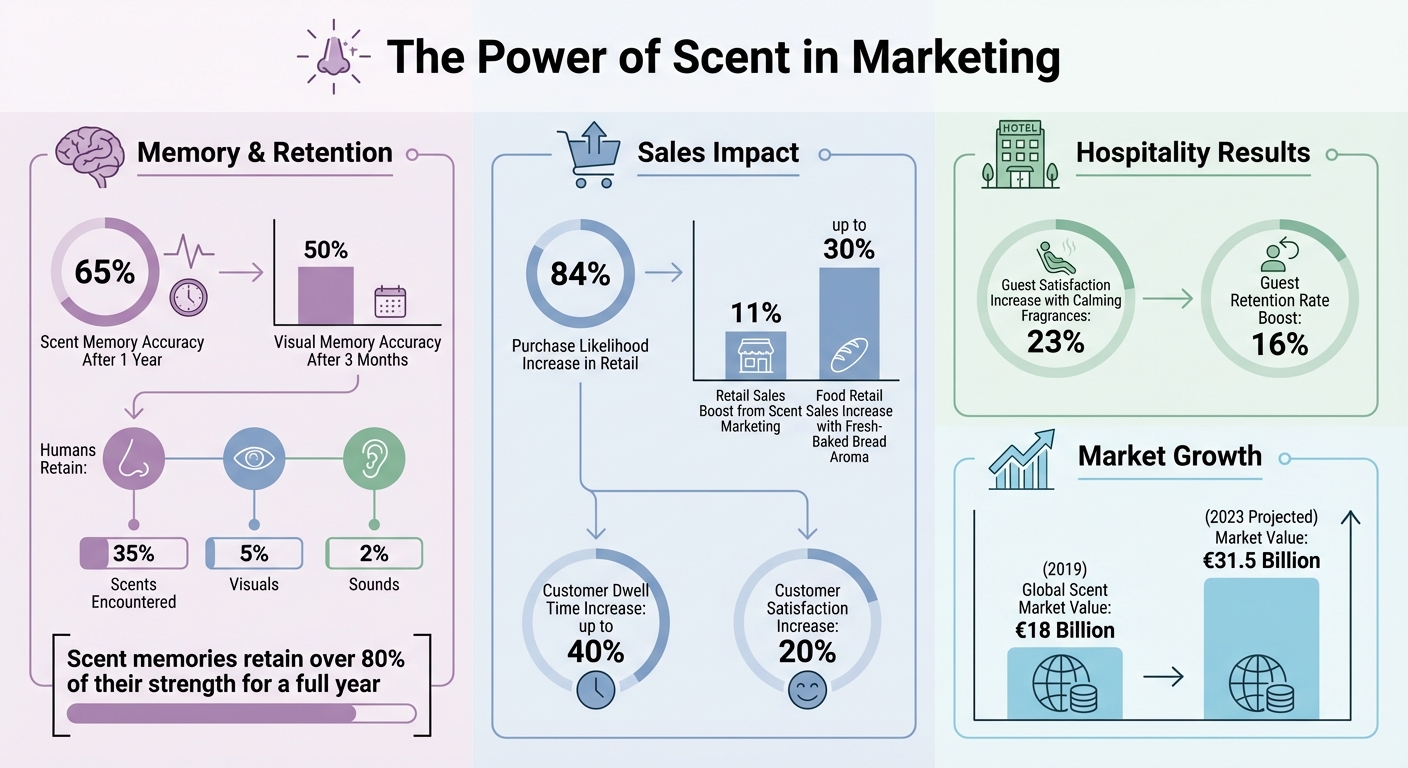
- Impactul asupra memoriei: Oamenii isi amintesc mirosurile cu o acuratete de 65 % dupa un an, comparativ cu imaginile, retinute cu o acuratete de 50 % dupa trei luni.
- Influenta asupra vanzarilor: Adaugarea unui parfum in spatiile comerciale poate creste probabilitatea unei achizitii cu 84 %.
- Exemple de branduri: McDonald’s Netherlands a folosit mirosul cartofilor prajiti pentru recunoastere instantanee, iar Singapore Airlines si-a brevetat parfumul-semnatura pentru cabina.
- Structura parfumului: Parfumurile sunt create asemenea povestilor, cu note de varf, de mijloc si de baza care compun o naratiune in acord cu identitatea brandului.
Marketingul olfactiv nu inseamna doar mirosuri placute, ci crearea unor legaturi emotionale si a loialitatii pe termen lung. Fie ca este vorba despre ambalaje parfumate, campanii captivante sau storytelling digital, parfumul poate imbunatati felul in care clientii traiesc experienta unui brand.
Statistici despre marketingul olfactiv: retentia memoriei si impactul asupra vanzarilor
How Scents Create Emotional Brand Connections
Legatura dintre miros, memorie si emotii este incontestabila, iar brandurile valorifica tot mai mult aceasta putere pentru a crea legaturi emotionale mai puternice cu publicul lor.
Cum influenteaza mirosul memoria si emotiile
Stiai ca oamenii retin 35 % dintre mirosurile pe care le intalnesc, comparativ cu doar 5 % dintre imagini si 2 % dintre sunete? Si mai impresionant, amintirile olfactive isi pastreaza peste 80 % din intensitate timp de un an intreg. Acest lucru se intampla deoarece mirosul ocoleste gandirea constienta, declansand raspunsuri emotionale direct si aproape instantaneu. Spre deosebire de imagini sau sunete, semnalele olfactive sunt procesate inconstient, ceea ce le face profund personale si autentice.
Brandurile inteligente profita de acest lucru, creand parfumuri-semnatura – parfumuri distincte, in acord cu identitatea si valorile lor. Aceste parfumuri actioneaza ca ambasadori invizibili ai brandului, consolidand recunoasterea si increderea la fiecare interactiune. Fie ca este vorba despre parfumul dintr-un magazin, de pe ambalaje sau chiar din materialele de marketing, consecventa face ca parfumul sa devina sinonim cu brandul insusi.
Aceasta legatura neurologica a dat nastere unora dintre cele mai memorabile campanii de marketing bazate pe miros, demonstrand cat de eficienta poate fi aceasta strategie.
Exemple de campanii olfactive de succes
Serialul de televiziune Yellowstone a demonstrat puterea storytellingului olfactiv in 2025, cand a lansat o linie de parfumuri inspirata de peisajele salbatice din serial. Aceasta abordare inovatoare le-a permis fanilor sa „intre” in lumea Yellowstone si sa se conecteze cu aceasta la nivel senzorial, ducand la vanzari cu amanuntul de peste 50 € million. Transformand serialul intr-o experienta olfactiva, brandul a creat o legatura tangibila, care a depasit cu mult ecranul.
Sectoarele hotelier si de retail au descoperit, la randul lor, potentialul mirosurilor. Hotelurile care difuzeaza parfumuri calmante, precum lavanda sau musetelul, au raportat o crestere de 23 % a satisfactiei oaspetilor si o crestere de 16 % a ratei de fidelizare. Aceste parfumuri nu doar miros placut, ci creeaza o senzatie de calm si siguranta, deosebit de pretioasa atunci cand oaspetii sunt departe de casa.
Mediile de retail beneficiaza in mod similar. Adaugarea unui miros placut intr-un magazin poate creste probabilitatea unei achizitii cu 84 %. De exemplu, retailerii din sectorul alimentar au inregistrat cresteri ale vanzarilor de pana la 30 % atunci cand aroma painii proaspat coapte umple aerul. Acest fenomen, numit adesea „efectul de halou”, imbunatateste perceptia clientilor asupra calitatii si chiar a luxului.
Crearea unei povesti cu ajutorul parfumului
In marketingul olfactiv emotional, crearea unui parfum inseamna mai mult decat obtinerea unei arome placute – inseamna teserea unei naratiuni senzoriale care intruchipeaza esenta brandului tau. Cele mai influente branduri abordeaza crearea parfumurilor ca pe un act de storytelling, cu un inceput, un punct median si un final bine definite.
Folosirea notelor parfumului pentru a construi o naratiune
Dezvoltarea unui parfum urmeaza structura unei povesti clasice. Notele de varf sunt scena de deschidere, oferind o prima impresie prin elemente luminoase si proaspete, precum bergamota sau menta. Aceste note efemere dau tonul si atrag atentia. Pe masura ce se estompeaza, notele de mijloc – inima parfumului – trec in prim-plan. Aceste arome mai bogate si mai complexe, adesea florale sau fructate, transmit esenta mesajului brandului tau. In cele din urma, notele de baza lasa o impresie de durata, ancorand povestea in arome mai profunde si persistente, precum cele lemnoase, moscurile sau condimentele.
Clue Perfumery ilustreaza minunat aceasta abordare. Colectia de debut a parfumerei Laura Oberwetter spune povesti distincte prin intermediul parfumurilor. De exemplu, "Morel Map" surprinde esenta unei aventuri de primavara in cautarea ciupercilor, in timp ce "Warm Bulb" evoca nostalgia lecturii la lumina unei lampi prafuite. Fiecare parfum este conceput pentru a purta persoanele care il poarta intr-o calatorie senzoriala completa, folosind structura notelor pentru a dezvalui povestea.
Acest cadru narativ asigura o aliniere armonioasa intre parfum si identitatea si mesajul brandului.
Asocierea parfumului cu identitatea brandului
Pentru a conecta cu adevarat parfumul cu identitatea brandului, este esential sa intelegi in profunzime valorile fundamentale si personalitatea brandului tau. Acest proces presupune transpunerea esentei brandului tau in ceea ce unii experti numesc "emotii lichide". Nu este vorba doar despre parfum in sine, ci si despre modul in care acesta reflecta istoria brandului, materialele, culorile si chiar tipografia.
De exemplu, brandurile axate pe sustenabilitate ar trebui sa opteze pentru ingrediente naturale, obtinute in mod etic, in timp ce brandurile de lux pot prefera compozitii bogate, stratificate, care emana exclusivitate. Pe de alta parte, brandurile minimaliste beneficiaza adesea de parfumuri curate, subtile, in armonie cu estetica lor discreta.
Fendi ofera un studiu de caz fascinant. In colaborare cu parfumiera Olivia Giacobetti, brandul a creat un parfum inspirat de imaginea "unei tinere care deschide dulapul vintage al bunicii sale". Parfumul imbina note de patchouli si piele, evocand mostenirea Fendi in domeniul blanurilor si al velurului, in timp ce untul de stanjenel italian face trimitere la coloanele din marmura travertin din magazinele sale emblematice.
"O identitate olfactiva este transpunerea universului brandului intr-o creatie olfactiva." – Lorenzo Cotti, CEO, Integra Fragrances
Progresele tehnologice au transformat si acest proces creativ. Platformele bazate pe AI pot analiza acum descrieri textuale, imagini sau chiar ritualurile unui brand pentru a genera formule de parfum personalizate in doar cateva zile, facand strategiile olfactive sofisticate accesibile si brandurilor mai mici.
Expertul tău personal în parfumuri te așteaptă
Completează testul nostru rapid de parfumuri și descoperă parfumuri designer și de nișă autentice, alese pe gustul tău – explorează-le ca decanturi și mostre de 2, 5, 8 și 30 ml, ca să le poți încerca pe fiecare înainte de a alege un flacon întreg.
Descoperă-ți parfumulFolosirea parfumului in strategiile de marketing
Dupa ce ai creat o naratiune captivanta in jurul parfumului, urmatorul pas este sa o aduci la viata in diverse canale – in magazin, online sau prin ambalaj. Integrand parfumul intr-o strategie de brand multisenzoriala, poti crea conexiuni mai profunde si mai memorabile cu publicul tau.
Crearea unor experiente de brand multisenzoriale
Experientele de brand cu cel mai mare impact imbina parfumul cu elemente vizuale, sunete si texturi, un concept cunoscut adesea drept congruenta senzoriala. Aceasta presupune alinierea tuturor elementelor senzoriale pentru a spune o poveste coerenta. De exemplu, un parfum cu note citrice vibrante poate fi insotit de tonuri muzicale inalte si imagini in galben intens, pentru a evoca senzatii de prospetime si energie.
Un exemplu remarcabil al acestei strategii este campania Viktor & Rolf pentru "Spicebomb Infrared." In colaborare cu Ircam Amplify, au creat o coloana sonora care reflecta notele calde si condimentate ale parfumului. Aceasta abordare inovatoare a crescut intentia de cumparare pe platformele de comert electronic cu aproape 60 %.
"Colaborand la un sunet care genereaza aceeasi senzatie ca parfumul original, poti elimina obstacolul de a nu putea mirosi literalmente parfumul, pentru ca acum il poti auzi." - Ircam Amplify
Asocierea elementelor senzoriale se bazeaza pe conexiuni naturale. Parfumurile fructate se potrivesc adesea cu sunete inalte si culori vii, in timp ce parfumurile moscate sau cu note de cafea se armonizeaza cu tonuri mai grave si imagini mai intunecate. Iata cum pot functiona asocierile senzoriale:
| Nota parfumului | Asociere sonora | Asociere vizuala | Impact emotional |
|---|---|---|---|
| Fructat/Citric | Melodii inalte | Galben si portocaliu intens | Energie, prospetime |
| Intens dulce | Tonuri delicate de pian | Tonuri pastelate, forme curbe | Confort, placere |
| Mosc/Cafea | Tonuri grave de alama sau bas | Maro inchis, negru | Maturitate, profunzime |
| Condimentat | Sunete ascutite, sacadate | Rosu vibrant, unghiuri | Entuziasm, caldura |
Povestirea universului olfactiv prin canale digitale
Promovarea parfumurilor online prezinta o provocare aparte: clientii nu pot experimenta produsul fizic. Pentru a reduce acest decalaj, brandurile se bazeaza pe elemente vizuale si auditive pentru a transmite povestea parfumului. De exemplu, Armani a folosit imagini indraznete in rosu in reclamele digitale pentru "Si Passione", evocand caracterul seducator si provocator al parfumului.
Retelele sociale joaca, de asemenea, un rol major in storytelling. Brandurile distribuie adesea continut din culise, precum provenienta ingredientelor, procesul creativ sau imagini sugestive, pentru a cufunda publicul in universul parfumului. Unele companii experimenteaza chiar cu "parfumuri sonore" – piese audio concepute pentru a declansa aceleasi raspunsuri emotionale ca anumite note olfactive.
Folosirea ambalajului pentru a imbogati povestea parfumului
In comertul electronic, ambalajul devine un instrument esential de storytelling, mai ales pentru ca clientii nu pot mirosi parfumul inainte de a-l cumpara. Experienta despachetarii ofera prima ocazie de a crea o conexiune senzoriala cu produsul. Incorporarea unui parfum distinctiv in ambalaj – in hartia de matase, cutie sau chiar pe etichetele de expediere – poate avea un impact imediat si emotional.
"Ambalajul este atat de frumos, dar unde este mirosul? Nu i-ar fi fost greu companiei sa integreze parfumul emblematic No 5 in ambalaj si sa creeze o legatura emotionala cu clientul, acasa." - Olivia Jezler, fondatoarea Future of Smell
Dincolo de parfum, elementele de design vizual, precum tipografia si culoarea, contribuie si ele la consolidarea povestii parfumului. Un font serif modern poate sugera eleganta, in timp ce fonturile cursive jucause pot evoca energie si voie buna. In mod similar, culorile alese ar trebui sa reflecte atmosfera parfumului: tonuri pastelate delicate pentru romantism, nuante de albastru proaspete pentru prospetime sau tonuri inchise pentru notele lemnoase si reconfortante.
Ambalajul poate spune si o poveste functionala. In loc sa eticheteze un decant de 2ml drept „format de calatorie”, brandurile il pot prezenta ca parte a unui stil de viata — perfect pentru geanta de sala, valiza sau poseta. Aceasta abordare transforma dimensiunile produselor in capitole ale unei povesti mai ample: decanturile mici simbolizeaza explorarea, in timp ce flacoanele intregi reprezinta un angajament de durata fata de parfum.
Monitorizarea rezultatelor marketingului olfactiv
Dupa ce ai lansat o campanie bazata pe parfum, este esential sa evaluezi daca povestea parfumului rezoneaza cu publicul tau. Spre deosebire de marketingul traditional, marketingul olfactiv necesita o combinatie de date concrete si feedback din partea clientilor pentru a-i intelege influenta asupra comportamentului si loialitatii.
Indicatori pentru evaluarea performantei campaniei
Incepe prin a analiza cresterea vanzarilor si a veniturilor — indicatori clari ai succesului. Studiile arata ca marketingul olfactiv poate creste vanzarile cu 11 %. Compara vanzarile unitare de dinainte si de dupa introducerea parfumului tau emblematic. Daca ai mai multe locatii, compara spatiile parfumate cu cele neparfumate pentru a identifica eventualele diferente de performanta.
Parfumul influenteaza si timpul petrecut de clienti in magazin, prelungindu-l adesea cu pana la 40 %. Cumparatorii din medii tematice olfactive tind sa subestimeze cu 26 % timpul petrecut la cumparaturi si sa exploreze de trei ori mai multe produse. Pentru campaniile online, urmareste timpul petrecut pe paginile produselor care contin povesti, pentru a masura cat de bine reuseste naratiunea ta sa capteze atentia. Indicatori precum satisfactia clientilor (care poate creste cu 20 %) si intentia de cumparare sunt, de asemenea, esentiali — s-a demonstrat ca adaugarea unui parfum placut poate creste intentia de cumparare cu pana la 84 %.
Recunoasterea brandului este un alt indicator esential. Oamenii isi pot aminti mirosurile cu o acuratete de 65 % dupa un an, comparativ cu doar 50 % in cazul imaginilor dupa trei luni. Pentru a testa acest lucru, ai putea intreba clientii, dupa cateva saptamani sau luni, daca iti recunosc brandul atunci cand simt parfumul tau emblematic. Pentru campaniile digitale, urmareste distribuirile, comentariile si sentimentul general de pe retelele de socializare pentru a evalua cat de bine rezoneaza povestea parfumului tau cu publicul.
Acesti indicatori arata cum o campanie de parfum conceputa cu atentie poate atrage clientii si poate genera rezultate concrete. Totusi, pentru a-i intelege pe deplin impactul, va trebui sa analizezi si feedbackul clientilor.
Colectarea feedbackului clientilor despre parfum
Rezultatele cantitative sunt importante, dar feedbackul calitativ adauga profunzime informatiilor obtinute. Retelele de socializare sunt o sursa excelenta de reactii in timp real — urmareste comentariile si mesajele directe si chiar organizeaza sesiuni interactive de tipul „Intreaba-ma orice” pe TikTok sau Instagram, pentru a-ti asculta direct publicul. Nu uita sa urmaresti si mentiunile fara eticheta, pentru a surprinde opinii autentice si spontane.
Instrumentele interactive, precum chestionarele despre parfumuri sau „Instrumentele de gasire a parfumului”, pot oferi si ele date valoroase. Aceste instrumente nu doar ii indruma pe clienti catre produse, ci colecteaza si informatii despre preferinte, precum starile de spirit, amintirile sau destinatiile preferate. Analiza sentimentului in conversatiile online poate dezvalui in continuare daca perceptiile se schimba intr-o directie pozitiva datorita campaniei tale.
In magazinele fizice, instruieste-ti consultantii de vanzari sa foloseasca parfumul ca punct de pornire al unei conversatii. Reactiile imediate ale clientilor — cum ii face sa se simta un miros sau de ce le aminteste — pot oferi informatii valoroase. Inainte sa te angajezi la o lansare completa, ia in considerare distribuirea de benzi de testare parfumate pentru a testa preferintele si reactiile clientilor. Aceasta abordare iti permite sa ajustezi povestea parfumului si profilul olfactiv fara o investitie initiala mare.
Concluzie: Ce urmeaza pentru marketingul olfactiv
Storytellingul olfactiv transforma modul in care brandurile se conecteaza cu publicul lor. Spre deosebire de celelalte simturi, mirosul ocoleste procesarea senzoriala obisnuita si activeaza direct partile creierului responsabile de emotii si memorie. Astfel se creeaza o legatura unica si puternica intre un brand si clientii sai.
Datorita platformelor bazate pe inteligenta artificiala, crearea unor parfumuri personalizate dureaza acum doar cateva zile. Aceasta evolutie creeaza conditii mai echitabile, permitand brandurilor mai mici, de nisa si celor axate in primul rand pe mediul digital sa dezvolte parfumuri emblematice cu un impact narativ comparabil cu cel al caselor de lux consacrate.
"Niciun alt sistem senzorial nu acapareaza sistemul limbic al creierului asa cum o face mirosul. El indeplineste rolul de perceptie, emotie, memorie emotionala, invatare si asociere."
- Rachel Herz, neurocercetatoare, Brown University
Aceasta evolutie a tehnologiei olfactive le deschide brandurilor noi posibilitati de a integra parfumul in strategiile lor, intr-un mod mai firesc. De la armonizarea parfumului cu elementele vizuale si sonore pana la imbogatirea experientei de unboxing cu ambalaje parfumate, posibilitatile sunt numeroase. Retailerii au raportat cresteri ale vanzarilor de pana la 11 % prin integrarea parfumarii strategice in magazinele fizice. Intre timp, brandurile digitale experimenteaza instrumente inovatoare, precum codurile QR care conecteaza parfumurile fizice cu experiente narative online captivante.
Cifrele confirma aceste tendinte. Piata globala a parfumurilor, evaluata la 18 € billion in 2019, este estimata sa ajunga la 31,5 € billion pana in 2023. Aceasta crestere subliniaza importanta tot mai mare a parfumurilor in crearea unor experiente de brand bogate, multisenzoriale. Fie ca introduc un parfum reprezentativ intr-un magazin emblematic, fie ca impregneaza ambalajele comenzilor online cu parfum, brandurile au acum mai multe oportunitati ca niciodata de a crea conexiuni emotionale si de a cultiva loialitatea. Identificarea momentelor emotionale-cheie si integrarea atent gandita a parfumului pot face toata diferenta.
Intrebari frecvente
Cum poate un brand crea un parfum reprezentativ care sa-i reflecte identitatea?
Pentru a crea un parfum reprezentativ, brandurile incep prin a identifica emotiile si valorile pe care vor sa le transmita prin acesta. Parfumul trebuie sa reflecte personalitatea brandului — fie ca este luxos, accesibil, revigorant sau linistitor — si sa evoce sentimentele dorite in cei care il descopera. De exemplu, un brand de lux ar putea prefera note bogate si elegante, precum oudul sau trandafirul, in timp ce un brand axat pe wellness ar putea opta pentru note calmante, precum lavanda sau lemnul de santal.
Un parfum reprezentativ functioneaza asemeni unui logo senzorial — un detaliu memorabil care aprofundeaza legatura dintre brand si publicul sau. Parfumul potrivit poate trezi amintiri, spori recunoasterea brandului si crea o conexiune emotionala de durata, devenind un instrument convingator de storytelling si marketing.
Cum pot brandurile folosi parfumul pentru a-si imbunatati strategiile de marketing digital?
Brandurile au gasit modalitati ingenioase de a integra parfumul in marketingul digital, creand conexiuni emotionale de durata cu publicul lor. O metoda remarcabila implica difuzoare inteligente, care elibereaza anumite parfumuri in timpul evenimentelor sau al experientelor din magazine. Asociate cu campanii online, aceste dispozitive se pot sincroniza cu interactiunile digitale, creand o imbinare armonioasa intre lumea fizica si cea virtuala si sporind totodata memorabilitatea brandului.
O alta tehnica captivanta imbina parfumul cu tehnologii precum codurile QR sau realitatea augmentata (AR). Imagineaza-ti ca scanezi un cod QR pentru a accesa o experienta interactiva legata de parfum sau ca descoperi povestea unui brand printr-o calatorie multisenzoriala. Parfumul poate adauga profunzime si campaniilor de pe retelele sociale sau evenimentelor virtuale, facandu-le mai captivante si mai puternice din punct de vedere emotional. Integrand parfumul in povestile pe care le spun, brandurile pot crea conexiuni mai stranse si pot inspira o loialitate mai profunda in randul publicului lor.
Cum pot brandurile mai mici sa creeze propriul parfum personalizat fara un buget mare?
Brandurile mai mici au posibilitatea de a crea parfumuri personalizate fara a avea nevoie de bugete uriase. O varianta practica este colaborarea cu producatori care ofera servicii de creare a parfumurilor la comanda. Aceste servicii presupun adesea cantitati minime flexibile si costuri initiale reduse, acoperind totul, de la formularea parfumului la ambalare. Astfel, brandurile pot lansa produse finisate fara sa se angajeze in productia la scara larga.
O alta strategie inspirata este sa incepi cu serii limitate sau formate mai mici, precum decanturi in format de esantion. Aceasta abordare minimizeaza riscul financiar, oferind totodata brandurilor ocazia de a evalua interesul clientilor si de a-si rafina oferta. Concentrandu-se pe productia la scara mai mica si explorand optiuni accesibile de marca proprie, brandurile emergente pot crea parfumuri reprezentative care le reflecta identitatea unica — fara sa cheltuiasca prea mult.

