Brandurile de designer folosesc editiile limitate pentru a crea exclusivitate, urgenta si un sentiment de raritate. Aceste lansari sunt planificate cu atentie pentru a testa tendintele pietei, preturile si preferintele consumatorilor. Editiile limitate consolideaza, de asemenea, imaginea unui brand, oferind serii mai mici de productie care reduc riscurile si mentin marje ridicate de profit. Iata o scurta prezentare generala a modului in care se realizeaza acest lucru:
- Lansari ghidate de un scop clar: Fiecare editie limitata porneste de la un obiectiv bine definit, cum ar fi celebrarea unor momente aniversare sau explorarea unor teme sezoniere.
- Valorificarea patrimoniului: Brandurile se inspira adesea din propria istorie pentru a crea o legatura cu clientii fideli, atragand in acelasi timp un public nou.
- Influente sezoniere si culturale: Tendinte precum stilul de viata "cosy" inspira alegerile de design si compozitia olfactiva.
- Design premium: Ambalajele personalizate, optiunile reincarcabile si ingredientele de inalta calitate confera acestor creatii un caracter cu adevarat special.
- Tactici bazate pe raritate: Stocurile limitate, cronometrele cu numaratoare inversa si precomenzile creeaza un sentiment de urgenta si sporesc cererea.
- Strategii de marketing: Teaserele pe retelele sociale, parteneriatele cu influenceri si experientele de realitate augmentata genereaza entuziasm inainte de lansare.
Editiile limitate nu inseamna doar raritate – ele permit caselor sa experimenteze si sa creeze o legatura emotionala cu publicul, oferind colectionarilor o piesa de exceptie. Aceste creatii olfactive se epuizeaza adesea rapid, iar valorile de revanzare cresc spectaculos, transformandu-le in veritabile obiecte ale dorintei.
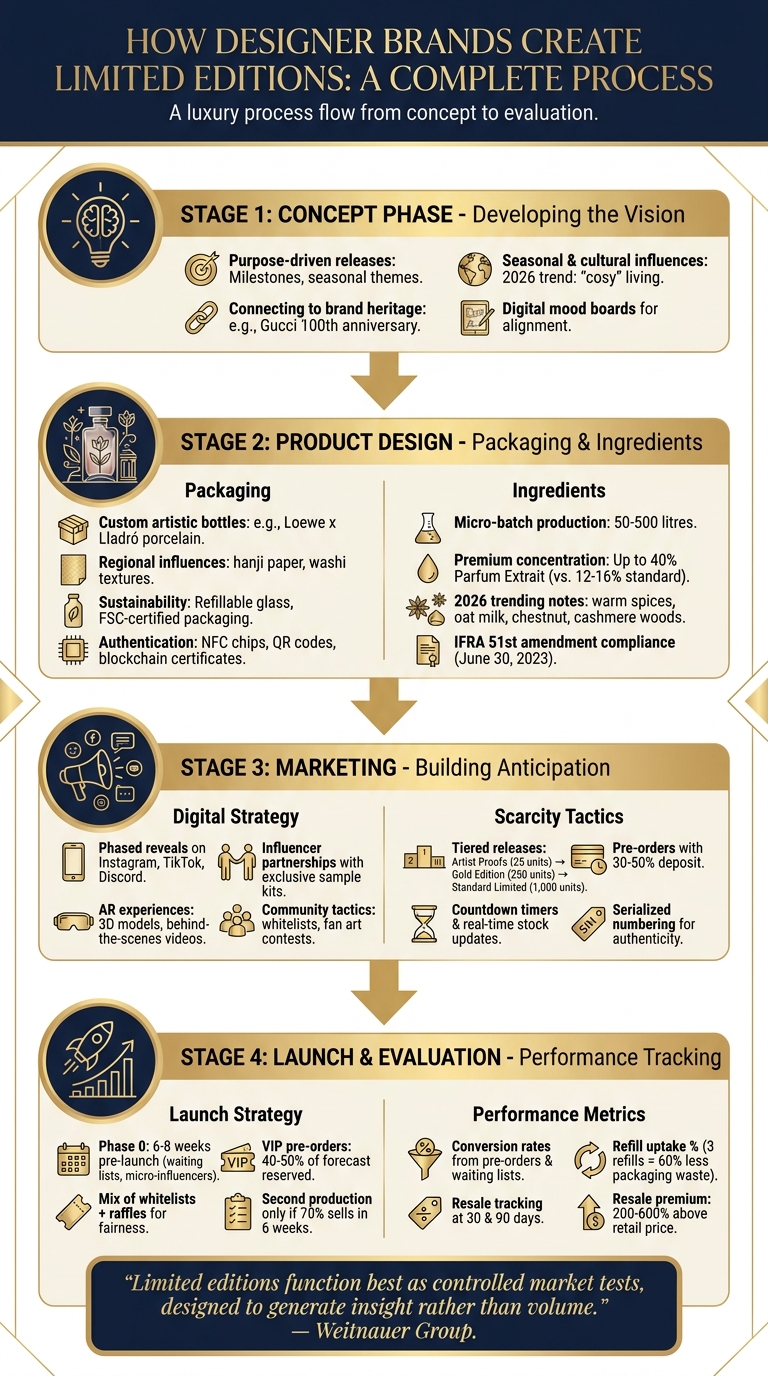
Cum creeaza brandurile de designer parfumurile in editie limitata: un proces in 4 etape
Etapa conceptuala: conturarea viziunii
Inainte de a trece la design sau la selectia notelor, casele de designer se concentreaza pe definirea scopului unei editii limitate. Aceasta faza incipienta stabileste daca lansarea va fi perceputa ca autentica sau doar ca un simplu produs adaugat pe piata. Cele mai fascinante editii limitate pornesc de la o intentie clara – fie ca este vorba despre celebrarea unui moment istoric, reflectarea unor miscari culturale sau explorarea unor directii indepartate de repertoriul lor obisnuit. Aceste surse de inspiratie asigura o rezonanta autentica, punand bazele tuturor deciziilor ulterioare de creatie si promovare.
Conexiunea cu mostenirea brandului
Explorarea istoriei unui brand duce adesea la cele mai memorabile editii limitate. Sa luam, de exemplu, aniversarea de 100 de ani a Gucci. Colectia "Gucci 100" a reinterpretat modele emblematice din arhive, imbinand traditia cu estetica moderna. Aceasta abordare nu doar i-a rasplatit pe fanii fideli, familiarizati cu referintele, ci a facut cunoscuta si istoria bogata a brandului unui public nou.
Nu este vorba doar despre nostalgie. De pilda, tehnica artizanala de impletire "intrecciato", semnatura a casei Bottega Veneta, ii reconfirma statutul in universul luxului discret. In parfumerie, acest lucru se poate traduce prin readucerea la viata a unor metode traditionale de extractie sau reinterpretarea unui acord retras din productie, care a definit candva identitatea casei. Moodboard-urile digitale au devenit indispensabile in aceasta etapa, ajutand echipele de creatie sa armonizeze ideile inovatoare cu ADN-ul original al marcii.
Inspiratia din ritmul naturii si cultura
Schimbarile de sezon si curentele culturale reprezinta surse naturale de inspiratie pentru editiile limitate. In 2026, ascensiunea stilului de viata "cosy" – un raspuns la preocuparea pentru consumul de energie si la popularitatea conceptului hygge – a inspirat casele de parfumuri sa exploreze condimente calde, note lemnoase catifelate si acorduri gurmande cremoase. Aceste compozitii nu sunt intamplatoare; ele raspund direct emotiilor si confortului pe care publicul le cauta in anumite momente ale anului.
Colaborarile artistice pot, de asemenea, sa imbogateasca povestea unui brand. Dupa anumite controverse din spatiul public, Gucci a facut echipa cu celebrul creator din Harlem, Dapper Dan, pentru o colectie-capsula inspirata din arhivele sale, demers ce a culminat cu deschiderea unui atelier exclusivist in Harlem. Intr-o maniera similara, Adidas Originals a unit universul sportiv cu cultura pop printr-o colectie dedicata universului SpongeBob SquarePants, stabilind o conexiune afectiva puternica cu fanii francizei. Astfel de parteneriate depasesc simpla alaturare a unui logo – ele imbina identitati distincte, dand nastere unor creatii cu adevarat autentice. Aceasta viziune ancorata in cultura contemporana ghideaza totodata alegerile privind ambalajul si ingredientele, explorate in etapa urmatoare.
Crearea produsului: ambalajul si ingredientele
Odata ce directia artistica este stabilita, brandurile dau viata viziunii prin elaborarea produsului propriu-zis. Editiile limitate sunt adesea privite ca opere de arta pentru colectionari, fiecare detaliu – de la finisajul capacului pana la concentratia parfumului – fiind gandit pentru a emana exclusivitate si a-si justifica statutul de lux.
Ambalaje personalizate si design vizual
Pentru brandurile de prestigiu, ambalajul unei editii limitate depaseste rolul functional – este o veritabila expresie artistica. Casa Loewe Perfumes, de exemplu, a colaborat cu manufactura spaniola de portelan Lladró pentru a crea capace sculpturale de colectie, transformand fiecare flacon intr-o piesa de arta. Influentele culturale locale isi pun, de asemenea, amprenta asupra designului: brandurile integreaza detalii precum hartia traditionala hanji embosata pentru editiile dedicate Coreei, texturi inspirate de washi pentru Japonia sau finisaje asemanatoare lacului traditional pentru creatiile exclusiviste destinate pietei chineze.
Sustenabilitatea a devenit, totodata, o prioritate esentiala. Pana in 2026, flacoanele din sticla reincarcabile, cu pulverizatoare din aluminiu si ambalaje certificate FSC, vor deveni un standard al industriei. Tehnologia are un rol crucial in garantarea autenticitatii: cipurile NFC, codurile QR si certificatele securizate prin blockchain adauga o protectie suplimentara. Acest aspect este de o importanta deosebita pentru colectionarii care doresc sa revanda aceste piese ulterior. Cu toate acestea, designul exterior este doar o parte a povestii – licoarea in sine trebuie sa reflecte aceeasi natura pretioasa.
Ingrediente pretioase si productie in serii restranse
Pentru a pastra autenticitatea si a onora patrimoniul marcii, compozitiile olfactive sunt elaborate cu o rigurozitate desavarsita. Multe case apeleaza la productia in micro-serii, de regula intre 50 si 500 de litri, ceea ce confera creatiei un caracter artizanal si permite totodata testarea interesului pietei fara riscul unei supraproductii.
Selectia ingredientelor se face cu aceeasi meticulozitate, respectand atat normele din industrie, cat si libertatea artistica. Cel de-al 51-lea amendament emis de International Fragrance Association la 30 iunie 2023 a actualizat standardele pentru peste 50 de concentrate de parfum, pentru a indeplini noile cerinte legate de sanatate si mediu. In cadrul acestor parametri, parfumierii exploreaza tendintele actuale, punand in valoare note precum mirodeniile calde, acordurile de lapte de ovaz, castanele si lemnul de casmir pentru a evoca stari sofisticate.
"Seriile restranse, sursele transparente de aprovizionare si un sistem clar de reincarcare vor deveni elementele distinctive care vor transforma cautatorii de confort in clienti devotati in 2026."
- perfumestore.us
Pentru a obtine acorduri complexe si pline de profunzime, creatorii asociaza adesea molecule de sinteza cu extracte naturale nobile. Aceasta sinergie da viata unor semnaturi olfactive inedite, dificil de atins exclusiv prin compusi naturali. In plus, daca editiile curente sunt formulate in concentratii Eau de Parfum de 12–16 %, creatiile de colectie se prezinta frecvent ca Parfum Extrait, ajungand pana la o concentratie de 40 %. Aceasta intensitate asigura o persistenta remarcabila si o proiectie fastuoasa, justificand pe deplin pretul din gama superioara.
Cultivarea dorintei: strategii de marketing si raritate controlata
Dupa desavarsirea formulei si a ambalajului, urmatorul pas il reprezinta crearea cererii. Obiectivul? Transformarea lansarii unui parfum intr-un adevarat eveniment cultural care fascineaza atat colectionarii, cat si pasionatii de arome rare. Acest lucru implica o orchestrare impecabila a canalelor digitale, a colaborarilor cu formatori de opinie si a strategiilor de raritate calibrate pentru a stimula o reactie imediata.
Campaniile digitale si parteneriatele de prestigiu
Publicitatea traditionala nu mai este de mult suficienta pentru a sustine succesul unei lansari. Astazi, brandurile abordeaza o strategie treptata pentru a cultiva interesul. Totul incepe cu teasere subtile, dezvaluind treptat detalii precum prim-planuri si interviuri exclusive pe platforme ca Instagram, TikTok sau chiar comunitati private de Discord. Aceasta abordare mentine o stare continua de anticipare, fidelizand publicul pasionat.
Creatorii de continut joaca un rol definitoriu in acest proces. Casele distribuie kituri exclusive de mostre unui grup restrans de personalitati – parfumieri, critici de renume sau curatori de arta – sub conditii stricte de confidentialitate pana la lansare. Aceste colaborari nu urmaresc o expunere de masa, ci mizeaza pe precizie si credibilitate. Pana in 2026, marile branduri mizeaza masiv pe implicarea directa a comunitatii, oferind acces prioritar prin inscrieri pe liste de asteptare exclusive sau provocari creative, precum concursuri de arta ori descrierea unor amintiri olfactive personale. Aceste initiative recompenseaza loialitatea si genereaza un continut sincer, creat de adevaratii pasionati.
Lansarile exclusiviste integreaza adesea Realitatea Augmentata (AR) pentru a transforma experienta intr-una multisenzoriala. De exemplu, elementele interactive prezente pe ambalaj pot debloca modele 3D sau secvente video din culisele creatiei, transformand despachetarea intr-o calatorie captivanta. Aceasta conexiune digitala amplifica fascinatia si pregateste perfect terenul pentru tacticile bazate pe stocuri restranse.
Mentinerea urgentei prin tiraje restranse
Raritatea nu este niciodata o intamplare – este minutios calculata. Casele folosesc sisteme ierarhizate de acces pentru a seduce colectionarii, pastrand totusi o legatura cu publicul larg. O lansare poate include "Artist Proofs" (25 de exemplare), o editie "Gold Edition" (250 de exemplare) si o serie "Standard Limited" (1.000 de exemplare). Aceasta structura permite stabilirea unor preturi exclusiviste pentru variantele ultra-rare, oferind concomitent o optiune accesibila unei baze mai mari de pasionati.
"Epuizarea rapida a stocului este o decizie de pozitionare a brandului, nu un inconvenient logistic. Cand clientii vad ca o editie limitata dispare in cateva ore – sau chiar minute –, dorinta si nerabdarea pentru urmatoarele lansari devin coplesitoare."
- Kate Hankinson, Fluer
Elementele precum cronometrele si afisarea stocului in timp real intensifica sentimentul de urgenta, determinand achizitia fara ezitare. Pentru a asigura un echilibru intre exclusivitate si accesibilitate, brandurile imbina accesul preferential pentru clientii fideli cu tombole sau trageri la sorti pentru stocurile ramase. Sistemul de precomenzi cu un avans de 30–50 % devine regula pana in 2026, oferind caselor siguranta financiara si un flux optim de capital.
Pentru a proteja valoarea in timp a pieselor, casele folosesc numerotarea de serie si cipurile NFC. Acestea fac legatura directa cu pagini securizate de autentificare, garantand autenticitatea si sustinand valoarea pe piata de revanzare. O asemenea atentie la detalii nu doar subliniaza exclusivitatea parfumului, dar consolideaza si increderea neconditionata a colectionarilor.
Expertul tău personal în parfumuri te așteaptă
Completează testul nostru rapid de parfumuri și descoperă parfumuri designer și de nișă autentice, alese pe gustul tău – explorează-le ca decanturi și mostre de 2, 5, 8 și 30 ml, ca să le poți încerca pe fiecare înainte de a alege un flacon întreg.
Descoperă-ți parfumulLansarea si evaluarea rezultatelor
Lansari controlate si privilegii pentru clientii VIP
Lansarea unei creatii olfactive nu inseamna doar stabilirea unei date in calendar – presupune o strategie desfasurata in mai multe etape. In 2026, majoritatea caselor opteaza pentru o strategie omnicanal planificata, care debuteaza cu 6–8 saptamani inaintea datei oficiale. Aceasta "Faza 0" are rolul de a stimula curiozitatea: se deschid liste de asteptare si se ofera esantioane unui cerc restrans de creatori de opinie pentru a starni interesul inainte ca primul flacon sa ajunga in magazine.
In momentul lansarii, prioritate au clientii fideli, prin sesiuni speciale de precomenzi VIP. Acestia beneficiaza de privilegii deosebite, precum flacoane cu numere de serie mici sau seturi cadou exclusive. Aceasta abordare genereaza asa-numitul "efect de halou", intarind sentimentul ca marca isi respecta si pretuieste cei mai devotati admiratori. Pentru a mentine aura de inaccesibilitate, primul lot de productie este limitat la 40–50 % din volumul estimat, fiind destinat exclusiv comenzilor anticipate si cercului VIP.
Pentru o experienta echitabila si dinamica, multe branduri folosesc o combinatie de liste prioritare pentru cunoscatori si tombole pentru restul stocului. Segmentul de travel retail reprezinta, de asemenea, un canal de debut de mare succes. Spre exemplu, in 2026, Aeroportul International Manohar din Goa a prezentat seturi de descoperire in editie limitata semnate de Versace, Prada si Valentino, adresandu-se calatorilor pasionati de lux intr-un cadru comercial cosmopolit. Abia in momentul in care prima transa atinge un ritm de vanzare de 70 % in sase saptamani, casele iau in considerare initierea unei a doua etape de productie. Odata ce vanzarea se incheie, atentia se indreapta catre interpretarea performantelor.
Monitorizarea vanzarilor si a reactiei publicului
Dupa incheierea lansarii, datele colectate devin de o importanta capitala. Brandurile analizeaza ratele de conversie din precomenzi, interesul de pe listele de asteptare si feedbackul generat de mostre pentru a intelege impactul real al parfumului asupra cumparatorilor.
"Editiile limitate functioneaza cel mai bine ca studii de piata controlate, menite sa ofere perspective pretioase, nu neaparat volume mari de vanzari."
- Weitnauer Group
Piata secundara ofera, la randul sau, indicii extrem de valoroase. Casele urmaresc tranzactiile de revanzare la 30 si 90 de zile pentru a evalua relevanta pe termen lung. O crestere semnificativa a pretului la revanzare reflecta o apreciere constanta, ghidand deciziile viitoare privind volumele de productie. In plus, este monitorizata cu atentie rata de adoptare a reincarcarii – procentul celor care aleg variantele sustenabile de refill. Acest indicator nu doar ca masoara fidelitatea fata de brand, dar raspunde si cerintelor ecologice din 2026. Dovada ca trei reincarcari reduc risipa de ambalaje cu 60 % s-a dovedit a fi un argument convingator pentru satisfactia clientilor.
Concluziile desprinse din aceste analize conduc deseori la ajustari fine – cum ar fi reglarea persistentei sau a rotunjimii notelor dulci – inainte de urmatoarea colectie de sezon. Iar daca o editie limitata atinge un succes remarcabil – vanzandu-se instantaneu, adunand aprecieri unanime si incurajand achizitii repetate –, ea poate primi un loc definitiv in colectia permanenta a casei.
Concluzie
In universul parfumeriei, editiile limitate reprezinta mult mai mult decat niste piese rare de colectie – sunt instrumente strategice fundamentale. Ele ofera marcilor prilejul de a testa piata, de a experimenta noi paliere de pret si de a stabili legaturi afective autentice cu publicul lor. De la explorarea traditiei istorice pana la flacoane de colectie lucrate manual, fiecare element amplifica prestigiul si fascinatia din jurul marcii. Aceste lansari actioneaza ca veritabile experimente controlate, oferind repere valoroase care perfectioneaza strategiile pe termen lung si creeaza amintiri de neuitat iubitorilor de esente pretioase.
Pentru consumatori, insa, accesul la astfel de creatii poate fi o provocare. Editiile limitate vin adesea cu preturi considerabile, iar pe piata secundara valorile pot creste cu 200 % pana la 600 % fata de pretul initial de retail. Acest context face dificila explorarea unor compozitii exclusive fara investitia unei sume considerabile intr-un flacon intreg care s-ar putea sa nu se potriveasca pe deplin gusturilor personale. Asa cum am aratat, fiecare faza a creatiei adauga valoare – dar si costuri suplimentare – acestor opere olfactive.
Aici intervine viziunea inovatoare oferita de Scento. Punand la dispozitie parfumuri autentice de designer in decanturi elegante, de marimi accesibile – 2 ml, 5 ml si 8 ml, plus un flacon decant de 30 ml la majoritatea parfumurilor –, Scento va ofera ocazia de a experimenta cele mai ravnite editii limitate fara un efort financiar coplesitor. Fie ca doriti sa descoperiti o lansare de sezon sau o compozitie cu ingrediente rare, puteti simti evolutia parfumului pe propria piele, in ritmul vietii de zi cu zi, inainte de a alege un flacon complet. Scento este un retailer de decanturi si mostre de parfum, iar fiecare produs poate fi cumparat printr-o achizitie unica, fara niciun abonament. Scento+ este abonamentul optional oferit de Scento: taxa lunara iti revine integral sub forma de credit in magazin, pe care il poti folosi la orice parfum, membrii au 10 % reducere, o mostra gratuita la fiecare comanda, un parfum gratuit la fiecare sase luni si un cadou de ziua ta, iar tu poti pune pauza sau anula oricand.
Editiile limitate vor continua sa inspire parfumeria mondiala, generand inovatie si pura emotie. Pentru marile case, ele raman un mod cu risc redus de a testa noi directii de creatie. Pentru iubitorii de arome, ele reprezinta sansa de a atinge o piesa cu adevarat rara – mai ales atunci cand platformele de descoperire transforma aceasta calatorie intr-o experienta accesibila si sustenabila.
Intrebari frecvente
Cum pot afla daca un parfum prezentat ca „editie limitata” este intr-adevar rar?
Pentru a evalua autenticitatea unei creatii de colectie, urmariti cateva detalii definitorii. Incepeti cu ingredientele – sunt acestea pretioase, de recolta specifica sau greu de procurat? Tirajele anuntate ca fiind restranse, colaborarile artistice de prestigiu sau lansarile asociate unor evenimente istorice indica intotdeauna o selectie riguroasa. Flacoanele personalizate sau confectionate manual contribuie si ele la unicitatea piesei. Pentru siguranta deplina, verificati anunturile oficiale ale marcii si prezenta produsului pe canalele autorizate. Adevaratele editii limitate se disting prin imbinarea armonioasa a stocului redus, a unei naratiuni artistice autentice si a maiestriei desavarsite, delimitandu-se net de productia de serie.
De ce editiile limitate au un pret mai ridicat decat lansarile obisnuite?
Editiile de colectie presupun preturi mai mari deoarece cultiva principiul stocului restrans si al exclusivitatii, amplificand statutul si dorinta din jurul lor. Adesea, aceste compozitii beneficiaza de flacoane artizanale, ambalaje speciale sau formule de o concentratie superioara, facand parte dintr-o strategie de prestigiu care celebreaza unicitatea si starneste entuziasmul cunoscatorilor.
Care este cea mai sigura modalitate de a testa o editie limitata inainte de achizitionarea flaconului complet?
Achizitionarea unei editii limitate poate parea o decizie dificila, insa exista o cale ideala de a o cunoaste inainte de a investi intr-un flacon mare: esantioanele si decanturile oficiale. Optati pentru formate practice, precum decanturile de 8 ml sau variantele de calatorie. Acestea va ofera libertatea de a purta si intelege compozitia pe propria piele, fara risipa si fara un cost ridicat. In plus, reprezinta formatul perfect pentru deplasari si va ofera timpul necesar pentru a decide daca parfumul merita cu adevarat un loc de cinste in colectia dumneavoastra.

