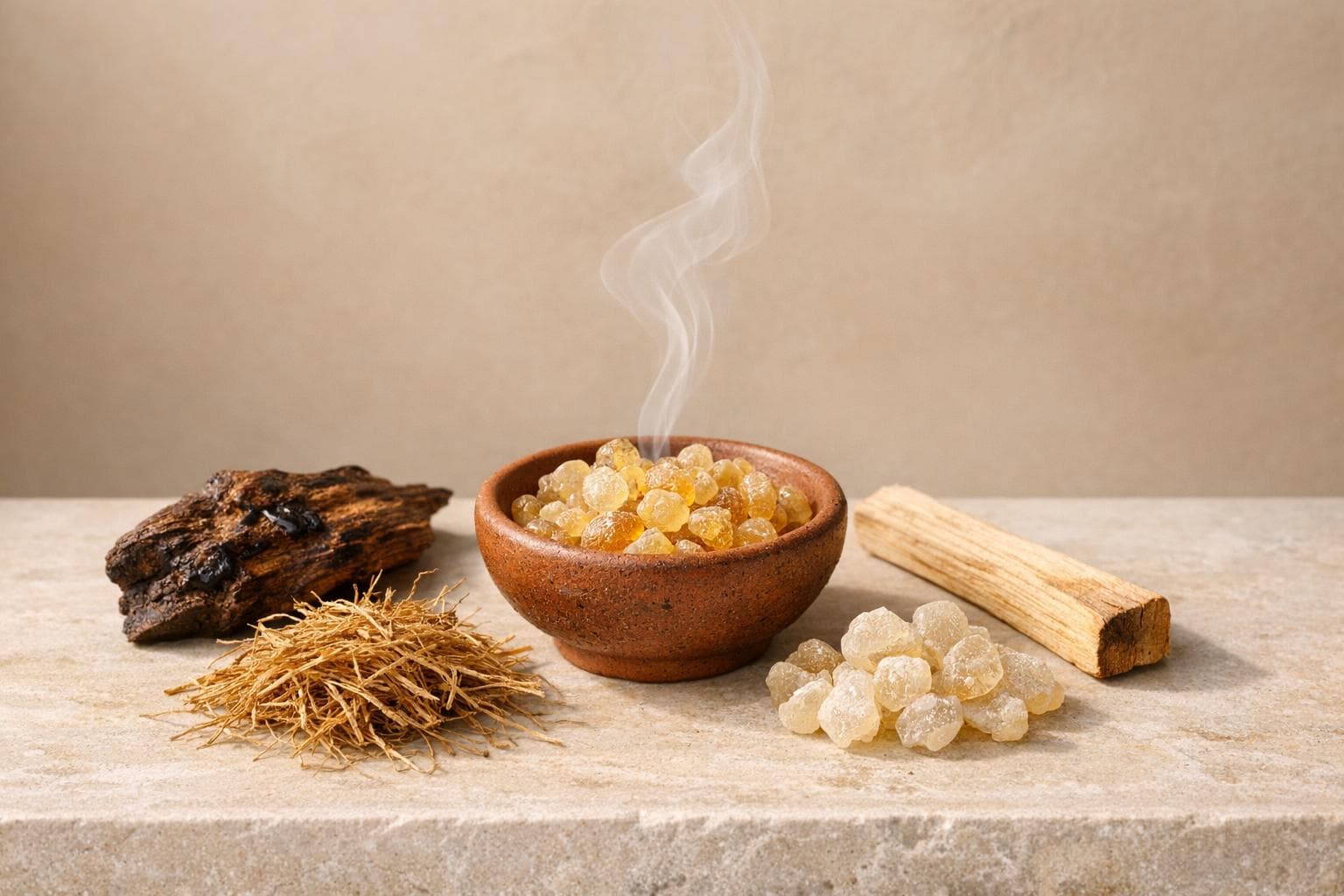
Parfumul a insemnat intotdeauna mult mai mult decat o aroma placuta. Pe tot globul, comunitatile indigene au folosit miresmele in scopuri spirituale, terapeutice si de conectare. Aceste traditii, ancorate in ingrediente naturale precum lemnul de santal, tamaia si ierburile aromatice, au modelat industria mondiala a parfumeriei pe care o cunoastem astazi. Iata o privire de ansamblu asupra a cinci astfel de practici:
- Arderea tamaiei in sudul Africii: Fumul creeaza o punte intre cei vii si stramosi, folosind plante aromatice precum buchu in ritualuri de indrumare si protectie.
- Ritualurile vedice indiene cu lemn de santal: Pasta si tamaia de santal simbolizeaza puritatea si legatura divina, avand radacini in Ayurveda si in ceremoniile religioase.
- Bakhoor si oud in Orientul Mijlociu: Parfumul ca expresie a ospitalitatii si a spiritualitatii, in care bakhoor si oud joaca un rol esential in spatiile comunitare si sacre.
- Baile cu ierburi Botánica din Caraibe: Amestecurile de lemongrass, nucsoara si foi de dafin ofera regenerare spirituala si conexiuni ancestrale.
- Smirna si tamaia africana: Rasinile precum tamaia inalta rugaciunile si purifica spatiile, purtand o istorie de 5.000 de ani in Cornul Africii.
Aceste practici evidentiaza semnificatia culturala si spirituala profunda a parfumului, influentand parfumeria moderna si pastrand, in acelasi timp, o intelepciune straveche.
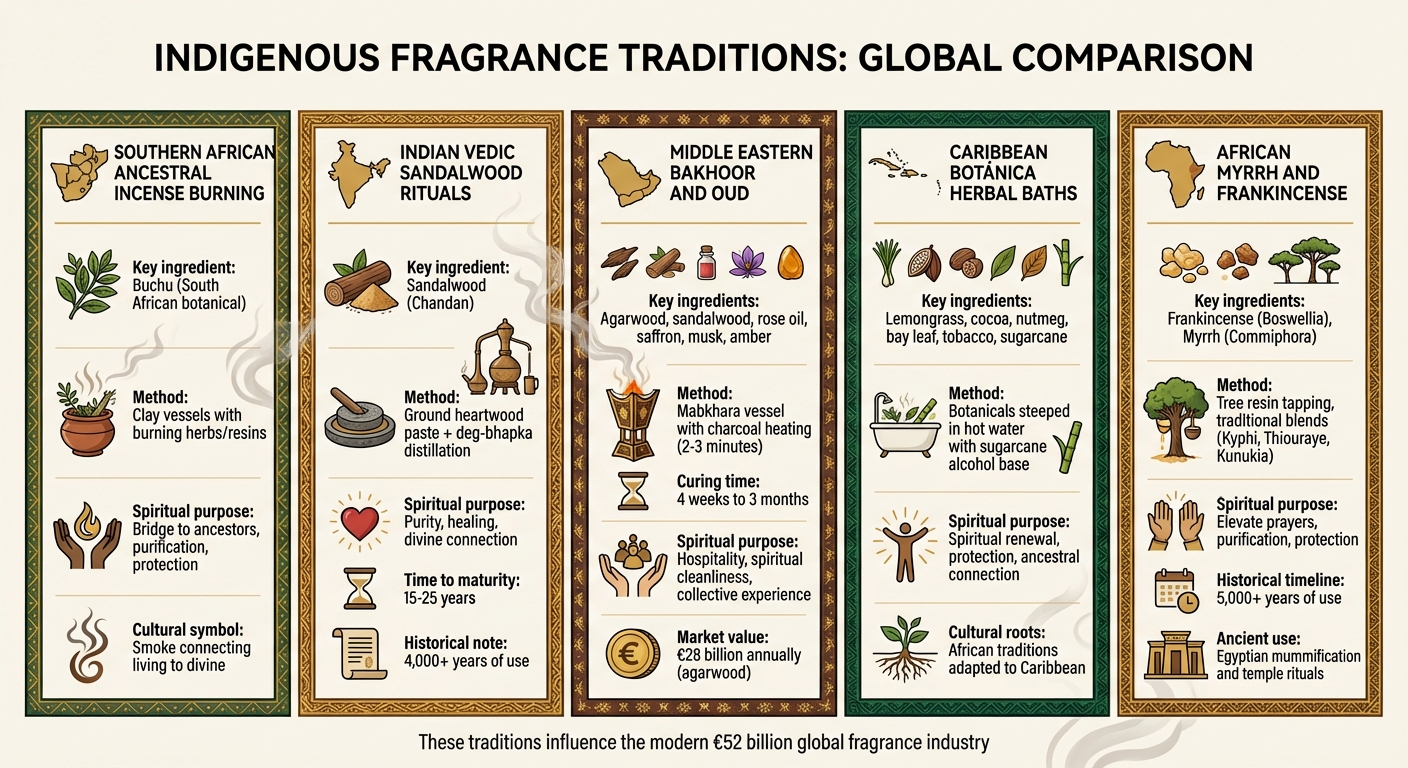
5 traditii indigene de parfumare: origini, ingrediente si semnificatie spirituala
1. Arderea ancestrala de tamaie in sudul Africii
Simbolism si semnificatie
In traditiile din sudul Africii, fumul parfumat inseamna mult mai mult decat raspandirea unei arome placute - este un instrument spiritual profund. Acest fum serveste drept o punte simbolica, legandu-i pe cei vii de stramosii lor si de divinitate. Prin aceasta practica, comunitatile cauta calauzire, ocrotire si binecuvantare din partea celor care au trait inaintea lor.
„Aceste arome sunt mai mult decat simple miresme placute; ele reprezinta o punte catre lumea spirituala si o reflectare a mostenirii culturale, devenind un aspect esential al identitatii comunitare si individuale in societatile africane.” – MicroPerfumes
Arderea ierburilor si a rasinilor este strans legata de ritualuri menite sa purifice spatiile, sa alunge energiile negative si sa marcheze momentele de cotitura ale vietii - nasteri, casatorii si chiar ramas-bunul din timpul inmormantarilor. Dupa cum remarca sugestiv Tobi Efunnowo, „Ii conecta pe cei vii de cei morti, omenescul de divin, individul de comunitatea sa”.
Tehnici si ingrediente utilizate
Procesul este simplu, dar profund incarcat de intentie. Practicantii ard ierburi aromatice si rasini in vase de lut, lasand fumul sa umple si sa purifice incaperea. Un ingredient remarcabil este buchu din Africa de Sud, o planta autohtona celebrata atat in ritualurile traditionale, cat si in parfumeria de lux moderna. Accentul ramane pe conexiunea spirituala, mai degraba decat pe metode elaborate, pastrand practica fidela scopului sau originar.
Context istoric si evolutie
In cea mai mare parte a secolului XX, rolul Africii in industria mondiala a parfumurilor s-a rezumat in mare parte la furnizarea de materii prime pentru casele de parfumuri europene. Naratiunea din jurul acestor ingrediente era adesea controlata de voci exterioare. Cu toate acestea, lucrurile se schimba. Brandurile de parfumuri conduse de creatori africani isi revendica acum povestile, integrand traditiile ancestrale in parfumeria contemporana. Ingrediente indigene precum buchu sunt reinterpretate in creatii olfactive fine, care le onoreaza mostenirea si cuceresc un public international.
In conditiile in care piata parfumurilor din Africa este estimata sa atinga aproape 9 miliarde €, se contureaza o recunoastere tot mai ampla a acestor arome, nu doar ca instrumente ritualice, ci si ca veritabile comori culturale. Aceasta miscare reflecta eforturi similare din alte colturi ale lumii, unde practicile traditionale renasc si sunt celebrate la scara mondiala.
2. Ritualurile vedice indiene cu lemn de santal
Simbolism si semnificatie
Lemnul de santal, sau „chandan”, asa cum este mentionat in textele sacre hinduse antice, ocupa un loc sfant in ritualurile indiene de peste 4.000 de ani. El simbolizeaza puritatea, vindecarea si comuniunea spirituala. O practica traditionala consta in prepararea unei paste obtinute din macinarea duramenului si aplicarea acesteia pe frunte ca semn devotional. Acest gest nu doar racoreste trupul si mintea, ci reprezinta si o legatura cu divinitatea. Arderea lemnului de santal ca tamaie in timpul rugaciunii sau al meditatiei are rolul de a purifica imprejurimile si de a atrage energii benefice. Istoric, a fost folosit de asemenea pentru sculptarea statuetelor religioase si pentru protejarea templelor de influentele negative.
Tehnici si ingrediente utilizate
Prepararea pastei de santal presupune macinarea atenta a duramenului, de cele mai multe ori in scopuri ceremoniale sau meditative. Pentru uleiul esential, se foloseste metoda traditionala deg-bhapka. Acest proces, realizat in vase de cupru, este lent, insa garanteaza ca uleiul isi pastreaza bogatia si calitatea naturala, intrecand tehnicile moderne de extractie la presiune inalta. Arborii de santal au nevoie de 15 pana la 25 de ani pentru a ajunge la maturitate si a dezvolta aroma caracteristica a duramenului. Alaturi de procesul anevoios de extractie, acest lucru transforma uleiul pur de santal intr-unul dintre cele mai scumpe din lume, costand uneori mii de euro per uncie.
Context istoric si evolutie
Lemnul de santal a facut parte integranta din viata indiana inca din perioada vedica, indeplinind roluri multiple. Textele ayurvedice vechi descriu pe larg folosirea sa pentru echilibrarea mintii, trupului si spiritului. Nobilimea indiana aprecia deopotriva lemnul de santal, folosindu-l alaturi de rasini rare pentru a parfuma palatele, ca simbol al luxului si al puterii. Dupa cum descrie elocvent Paché Perfumery:
„Lemnul de santal, cu caldura sa cremoasa si simbolismul sau spiritual, este probabil cea mai emblematica contributie a Indiei la arta universala a parfumului.” – Paché Perfumery
Kannauj, adesea numit capitala parfumurilor din India, pastreaza si astazi aceste metode traditionale de distilare, starnind interesul parfumierilor din toata lumea. Astazi, creatorii contemporani de arome imbina caldura atemporala a santalului indian cu accente occidentale mai proaspete, dand nastere unor parfumuri unisex seducatoare. Aceasta traditie neintrerupta a ritualurilor vedice cu santal ofera o paralela fascinanta cu alte practici pline de mister, cum ar fi ceremoniile de bakhoor din Orientul Mijlociu.
3. Ceremoniile de bakhoor si oud din Orientul Mijlociu
Simbolism si semnificatie
Ceremoniile cu bakhoor si oud din Orientul Mijlociu reflecta profund modul in care parfumul se impleteste cu traditia, spiritualitatea si legaturile dintre oameni. In aceasta regiune, bakhoor si oud nu sunt doar simple arome; sunt simboluri ale ospitalitatii, purificarii spirituale si apropierii. Spre deosebire de viziunea occidentala axata pe siajul individual, bakhoor are prin excelenta o natura colectiva. Cand o gazda foloseste bakhoor pentru a-si primi oaspetii, fumul sau aromat invaluie incaperea, cuprinzandu-i pe toti deopotriva si creand o experienta traita la unison.
Oud-ul, numit adesea „mireasma paradisului” in traditia islamica, are un rol spiritual profund. Se crede ca uneste lumea palpabila de cea divina, intruchipand puritatea si elevatia. Profetul Mahomed incuraja folosirea parfumurilor, mai ales inainte de rugaciunile de vineri, ca modalitate de a inalta sufletul si de a mentine curatenia. Purtarea unui parfum in aceasta traditie transcende simpla infrumusetare personala, devenind o datorie de a cultiva puritatea in plan social si spiritual. Dupa cum remarca Julien Marchetti de la Premiere Peau:
„Bakhoor este o gramatica sociala unica pentru traditiile din Orientul Mijlociu.”
Tehnici si ingrediente utilizate
Arta prepararii de bakhoor presupune o maiestrie desavarsita, fiecare componenta aducandu-si aportul la semnificatia sa culturala si spirituala. Bakhoor-ul contine de regula trei elemente esentiale: o baza lemnoasa (cum ar fi lemnul de agar, santalul sau cedrul), esente aromatice innobilatoare (ulei de trandafir, sofran, mosc sau rasina de chihlimbar) si un agent de legatura (deseori miere sau sirop de zahar). Aschiile de lemn sunt macerate in aceste uleiuri si rasini parfumate, apoi lasate la maturat o perioada ce variaza intre patru saptamani si trei luni.
Spre deosebire de tamaia occidentala, bakhoor-ul nu este ars direct. In schimb, este incalzit lent intr-un vas special numit mabkhara, un bol asezat pe un piedestal. Procesul incepe prin aprinderea unui disc de carbune cu ardere rapida pana devine incandescent, ceea ce dureaza circa 2–3 minute. Bakhoor-ul este asezat apoi pe carbune, eliberandu-si parfumul somptuos printr-o incalzire controlata, fara combustie directa. Gazda poarta vasul mabkhara prin incapere, permitandu-le oaspetilor sa indrepte undele de fum aromat spre chip, par si haine, ca gest de acceptare si respect reciproc.
Context istoric si evolutie
Originile utilizarii de bakhoor dateaza de mii de ani din Peninsula Arabica, o rascruce esentiala pentru vechiul comert cu mirodenii si tamaie. Drumul Tamaiei, activ cel putin din secolul al X-lea i.Hr., a facilitat circulatia unor materii pretioase precum tamaia si smirna pe intreg continentul. In epoca romana, templele si ceremoniile funerare consumau cantitati impresionante de arome - o cifra estimata la 3.000 de tone de tamaie anual. In timp, practica a evoluat, trecand de la arderea simpla a lemnului la realizarea unor amestecuri parfumate sofisticate, preferate de nobilime.
Astazi, piata mondiala a lemnului de agar (oud) este evaluata la aproximativ 28 miliarde € anual. Cu toate acestea, aproape 70 % din comertul cu lemn de agar provine inca din recoltarea salbatica, ceea ce aduce multe specii in pragul disparitiei. In casele moderne, arzatoarele electrice castiga teren datorita confortului si sigurantei, desi vasele traditionale cu carbune isi pastreaza nealterata importanta ceremoniala. De asemenea, amprenta parfumului de oud a depasit de mult hotarele sale originare, marile case de parfumerie occidentale integrand acorduri de oud in creatiile lor. Aceasta traditie seculara a devenit astazi un simbol incontestabil al luxului olfactiv mondial, mostenirea sa continuand sa inspire parfumeria contemporana.
4. Baile cu ierburi Botánica din Caraibe
Simbolism si semnificatie
Baile aromatice Botánica din Caraibe reprezinta o calatorie intima de renastere spirituala si reconectare cu radacinile culturale. Aceste bai nu au doar rolul de a purifica trupul, ci si de a intari spiritul si de a tese un scut de protectie. Ancorate in traditiile africane, ele folosesc parfumul ca vehicul de comuniune intre lumea fizica si cea spirituala, hranind legatura cu intelepciunea strabunilor si energiile divine. Fiecare baie este realizata cu o intentie clara, imbinand purificarea cu simtul apartenentei si oferind o experienta spirituala inaltatoare.
Tehnici si ingrediente utilizate
Sufletul bailor caribiene de plante consta in folosirea vegetatiei locale, strans legata de identitatea regiunii de-a lungul secolelor. Ingrediente precum lemongrass, cacao, nucsoara, frunze de dafin, tutun si trestie de zahar sunt infuzate in apa fierbinte, deseori innobilate cu o baza de alcool organic din trestie de zahar pentru a capta si potenta esenta lor. Aceste elemente, crescute sub soarele Caraibelor si hranite de solul fertil, sunt mai mult decat niste simple materii prime - sunt o oglindire a traditiilor locale. Dupa cum remarca Tamara Gibson, fondatoare si parfumier artizan la Native Caribbean Scents Company Ltd.:
„Ingredientele pe care le evidentiem drept personaje principale in creatiile noastre au fost cultivate pe pamant caribian, prin maini caribiene, sub soarele Caraibelor. Ma refer la elemente precum lemongrass, cacao, nucsoara, dafin, tutun, trestie de zahar. Ingrediente care pentru noi nu sunt simple tendinte in parfumerie, ci traditii adanc inradacinate in caminele din intreaga regiune.”
Aceasta atentie pentru detalii si veneratie pentru traditie arata modul in care aceste practici au fost reinterpretate cu rafinament in parfumeria contemporana din Caraibe.
Context istoric si evolutie
Baile cu ierburi aromatice Botánica, la fel ca alte ritualuri indigene stravechi, evidentiaza felul in care mireasma a definit intotdeauna identitatea culturala. Cu timpul, aceste proceduri s-au transformat din ritualuri spirituale intime intr-o piatra de temelie a parfumeriei artizanale de lux, ramanand loiale originilor lor. Ceea ce a debutat ca o forma de purificare spirituala a devenit o miscare de „afirmare a identitatii culturale”, parfumierii locali conturand un profil olfactiv distinct al Caraibelor. Aceste traditii sunt astazi veritabile arhive vii, pastrand povestile, peisajele si mostenirea oamenilor din aceasta regiune. Fiecare compozitie isi trage seva din lumea concreta - fie ca este vorba despre o materie prima, un loc, un ritual sau o clipa definitorie a vietii caribiene.
Expertul tău personal în parfumuri te așteaptă
Completează testul nostru rapid de parfumuri și descoperă parfumuri designer și de nișă autentice, alese pe gustul tău – explorează-le ca decanturi și mostre de 2, 5, 8 și 30 ml, ca să le poți încerca pe fiecare înainte de a alege un flacon întreg.
Descoperă-ți parfumul5. Ofrandele africane de smirna si tamaie
Simbolism si semnificatie
Daca traditiile legate de tamaie din sudul Africii graviteaza in jurul legaturilor ancestrale, in Cornul Africii atentia se concentreaza pe incarcatura spirituala a smirnei si a tamaiei. Aceste rasini au un loc privilegiat in spiritualitatea africana, simbolizand legatura dintre pamantesc si sacru. Egiptenii antici le considerau sacre, atribuindu-le o esenta de natura divina. Tamaia, cu mireasma ei luminoasa si usor citrica, este considerata menita sa inalte starea de constiinta si sa poarte rugile spre ceruri, in vreme ce smirna, prin parfumul sau profund si terestru, simbolizeaza protectia si reculegerea. Impreuna, ele dau nastere unor spatii sacre dedicate purificarii si legaturii cu stramosii in etape cruciale ale existentei, precum casatoriile sau venirea pe lume a copiilor. Acest simbolism rafinat dicteaza procedeele laborioase prin care aceste arome milenare sunt culese si pretuite.
Tehnici si ingrediente utilizate
Cornul Africii, in special Etiopia si Somalia, reprezinta de peste 5.000 de ani o sursa de baza pentru tamaie si smirna. Culegatorii cresteaza cu grija arborii de Boswellia si Commiphora pentru a recolta rasinile, care se intaresc in contact cu aerul. Aceste lacrimi aromatice sunt apoi integrate in amestecuri traditionale, precum stravechiul Kyphi (o alchimie de rasini, miere, vin si plante aromatice arsa in templele egiptene), amestecul senegalez Thiouraye (compozitii maturate luni sau chiar ani de zile) si ritualul swahili Kunukia, dedicat purificarii incaperilor si intampinarii oaspetilor.
Context istoric si evolutie
Folosirea smirnei si a tamaiei in ritualurile africane s-a impletit inca din vremuri stravechi cu istoria mondiala a parfumului. Vechii egipteni aprindeau tamaie in zori si smirna la amiaza pentru a cinsti calatoria zilnica a soarelui. Calitatile antimicrobiene ale smirnei au transformat-o, de asemenea, intr-un ingredient esential in tehnicile de imbalsamare, stiinta moderna confirmandu-i capacitatea de a incetini degradarea tesuturilor. Regina Hatshepsut (cca. 1479–1458 i.Hr.) a trimis o celebra expeditie navala catre Tinutul Punt – teritoriul Somaliei de astazi – pentru a aduce arbori vii de smirna destinati gradinilor templelor sale.
Vreme de sute de ani, Africa a fost privita in mod simplist doar ca furnizor de materii prime pentru parfumierii europeni. Astazi insa, parfumieri africani precum cei de la Scent of Africa (Ghana) si Catherine Omai (Nigeria) readuc la viata aceste traditii, incorporandu-le in parfumuri de nisa sofisticate. Asa cum formuleaza autorul Tobi Efunnowo:
„Continentul care a hranit simtul olfactiv al intregii lumi timp de secole isi construieste acum propriile case de parfumuri, isi boteaza creatiile si isi spune propriile povesti”.
Aceste ritualuri ancestrale continua sa fie o sursa de inspiratie pentru universul modern al aromelor, ocrotind intelepciunea straveche si redefinind totodata parfumeria de lux contemporana.
Cum modeleaza traditiile stravechi parfumeria moderna
Industria parfumurilor, evaluata la o valoare impresionanta de 52 miliarde €, isi datoreaza nobletea in mare parte practicilor seculare ancorate in mostenirea indigena. Tehnici precum hidro-distilarea, perfectionata in Kannauj, India – supranumit deseori „Grasse-ul Orientului” – raman fundamentale pentru captarea uleiurilor esentiale pure. Aceste procedee traditionale, stalpi de sustinere ai aromaterapiei antice, continua sa reprezinte temelia pe care se cladeste parfumeria de lux moderna. Esentele obtinute prin aceste ritualuri sunt considerate „aurul lichid” al compozitiilor contemporane.
Astazi, casele de parfumuri readuc la viata aceste comori. De pilda, Aranyam Perfumes reinvie Gandhayukti, o alchimie a parfumului descrisa in limba sanscrita datand din secolul al VI-lea d.Hr., celebrand tehnicile transmise peste generatii. In mod similar, Aroma Country a reinterpretat esentele traditionale de trandafir din Orientul Mijlociu prin „Ruh Gulab – Rose Ombré”, infatisandu-le intr-un format elegant si actual. Dupa cum subliniaza Scentoria:
„Casele internationale de parfumuri apeleaza constant la materiile prime din India, tesand notele venerate ale regiunii – precum iasomia si santalul – in compozitii moderne care fascineaza cunoscatorii din lumea intreaga”.
Acest dialog neintrerupt intre traditie si viziune contemporana nu doar ca salveaza mostenirea culturala, ci imbogateste felul in care percepem astazi luxul.
Desi aceste esente legendare au deseori preturi pe masura unicitatii lor, conceptele inovatoare de mostre si decanturi deschid portile acestor creatii de exceptie pentru un public mai larg. De exemplu, o sticla de Louis Vuitton Ombre Nomade sau Amouage Guidance 46 poate depasi suma de 300 €. Formatul de decanturi propus de Scento vine cu o alternativa sofisticata si accesibila, prin fiole de 2 ml, 5 ml si 8 ml, plus un flacon decant de 30 ml la majoritatea parfumurilor, oferindu-le pasionatilor libertatea de a savura creatii exclusiviste inainte de a achizitiona sticla integrala.
O sticluta eleganta de 8 ml ofera in jur de 120 de pulverizari, concentrand esenta unor ceremonii milenare intr-un format perfect adaptat ritmului modern. Fie ca va atrage nobletea linistitoare a santalului indian (Chandan) sau profunzimea sacra a tamaiei africane, selectia curatoriatata de la Scento, ce reuneste peste 1.000 de parfumuri de designer si de nisa, construieste puntea fireasca dintre traditiile milenare si dorinta actuala de explorare olfactiva.
Concluzie
Traditiile indigene de parfumare depasesc simpla desfatare a simturilor – ele impletesc identitatea culturala, credinta si memoria colectiva, creand o mostenire ce strabate mileniile. Tehnicile stravechi de culegere, practicate inca nealterate in locuri precum Cornul Africii, raman repere esentiale ale acestei lumi, modeland felul in care definim luxul olfactiv contemporan.
Asistam astazi la o schimbare de perspectiva binemeritata. Asa cum marturiseste autorul Tobi Efunnowo:
„Continentul care a furnizat esentele lumii timp de atatea veacuri isi deschide acum propriile ateliere, isi denumeste creatiile si isi spune propria poveste. Materia prima a fost intotdeauna africana. A sosit momentul ca si paternitatea artistica sa fie recunoscuta”.
Creatori de parfumuri din regiuni precum Ghana, Nigeria si India isi revendica patrimoniul, avand grija ca atat aprecierea, cat si beneficiile economice sa revina comunitatilor care au vegheat asupra acestor comori.
Pentru iubitorii moderni de parfumuri, aceasta tranzitie ofera prilejul unor alegeri constiente. Sustinand creatorii care respecta tehnicile mestesugaresti si descoperind seturi olfactive cu note ancestrale – precum tamaia etiopiana, santalul indian sau oud-ul oriental –, pasionatii celebreaza aceste traditii si sprijina o conduita sustenabila. Avand in vedere ca piata africana a parfumurilor tinde spre 9 miliarde €, directia este data clar de creatiile de nisa, adanc ancorate in identitatea culturala a locului.
Intrebari frecvente
Cum pot experimenta aceste ritualuri acasa, pastrand un deplin respect fata de traditie?
Pentru a explora ritualurile parfumate traditionale in propriul camin, incepeti prin a le intelege radacinile si contextul cultural. Descoperiti istoria si semnificatia spirituala a acestor ceremonii, abordandu-le cu consideratie si discernamant. Folositi ingrediente autentice, precum uleiuri esentiale pure, ierburi sau petale de flori, si inspirati-va din metode traditionale precum distilarea cu abur pentru a va crea propriile esente.
Implicati-va in acest demers cu atentie si prezenta, transformandu-l intr-o experienta ce depaseste placerea olfactiva. Puteti da o nota de rafinament momentului amenajand un colt dedicat, ornat cu carbuni parfumati, lumanari sau vase ceramice artizanale. Acest gest onoreaza originile traditiei si adanceste conexiunea dumneavoastra cu semnificatia ei spirituala si culturala.
Care este diferenta dintre oud, bakhoor, tamaie si smirna?
Deosebirile esentiale dintre aceste rasini si arome celebre tin de provenienta, destinatie si incarcatura lor culturala:
- Oud: Provine din lemnul nobil si rasinos al arborilor de Aquilaria, fiind adorat pentru aroma sa somptuoasa, profunda si lemnoasa. Este asociat cu rafinamentul absolut si elevatia spirituala.
- Bakhoor: Reprezinta un amestec de aschii de lemn innobilate cu uleiuri aromate si rasini, arse pe carbuni pentru a parfuma incaperile, fiind considerat o emblema a caldurii si a primirii oaspetilor.
- Tamaie: Recoltata din rasina arborilor de Boswellia, tamaia este de mii de ani nelipsita din sanctuare, venerata pentru virtutile ei purificatoare si forta de a sustine meditatia si rugaciunea.
- Smirna: Extrasa din scoarta arborilor de Commiphora, smirna este faimoasa pentru calitatile sale curative si prezenta in ritualurile de reculegere, simbolizand veneratia si sacralitatea.
Cum pot alege lemn de santal sau lemn de agar provenit din surse sustenabile?
Pentru a avea siguranta ca lemnul de santal sau cel de agar sunt obtinute responsabil, alegeti produse recoltate prin metode traditionale, prietenoase cu mediul, care respecta si protejeaza echilibrul ecosistemelor native. Indreptati-va atentia spre marci sau producatori care se implica activ in programe de regenerare a padurilor si care pretuiesc mestesugul sustenabil. Prin aceste optiuni, contribuiti nemijlocit la ocrotirea acestor resurse nepretuite pentru generatiile viitoare.

