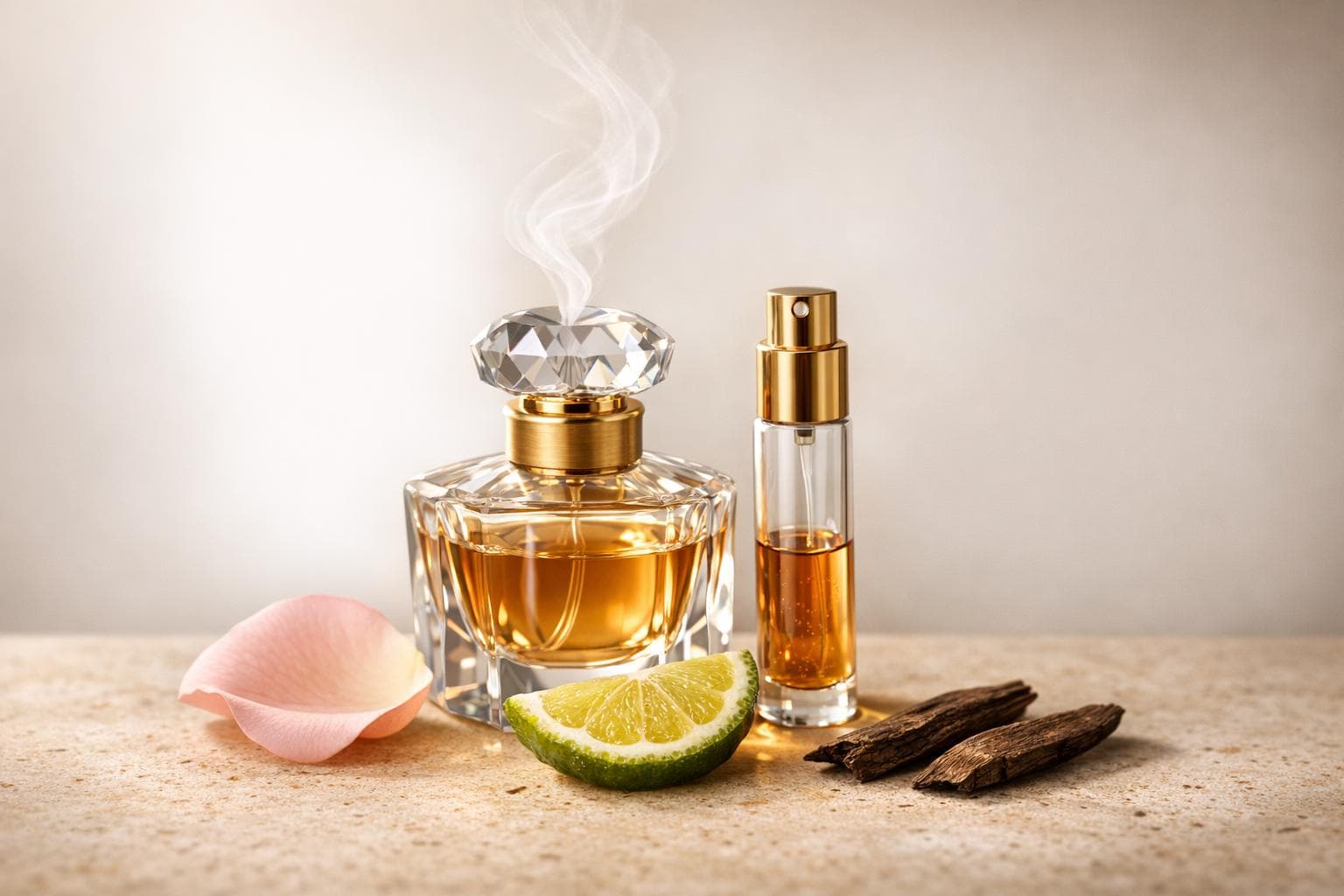
Brandurile de lux folosesc parfumul pentru a trezi emotii si amintiri, lasand impresii puternice si de durata. De la parfumuri create cu grija pana la ambalaje atent gandite, fiecare element spune o poveste in acord cu identitatea brandului. Acest proces presupune:
- Legatura dintre parfum si memorie: Parfumurile trezesc emotii si amintiri printr-o legatura directa cu centrii memoriei din creier, depasind imaginile ca eficienta a rememorarii.
- Construirea unei povesti: Branduri precum Dior si Chanel pastreaza o identitate emotionala consecventa, in timp ce altele, precum Maison Margiela, creeaza colectii tematice care evoca momente sau fantezii specifice.
- Ambalajul, ca introducere: Designul sticlelor, materialele si culorile reflecta personalitatea parfumului, imbogatind experienta senzoriala a clientului.
- Povestirea prin ingrediente: Materiile prime, precum untul de stanjenel italian sau uleiul de trandafir bulgaresc, leaga parfumurile de mostenire, locuri sau inovatie.
Aceasta abordare transforma parfumul dintr-un simplu produs intr-o experienta. Totusi, cumparaturile traditionale de parfumuri limiteaza adesea accesul la aceste povesti din cauza costurilor ridicate. Scento ofera decanturi in cantitati mai mici, iar pretul este afisat pe pagina fiecarui produs, astfel incat clientii sa poata descoperi parfumuri de lux fara sa se angajeze sa cumpere sticle intregi.
Parfumurile de lux nu inseamna doar sa mirosi frumos — inseamna sa creezi o legatura personala si de durata prin parfum.
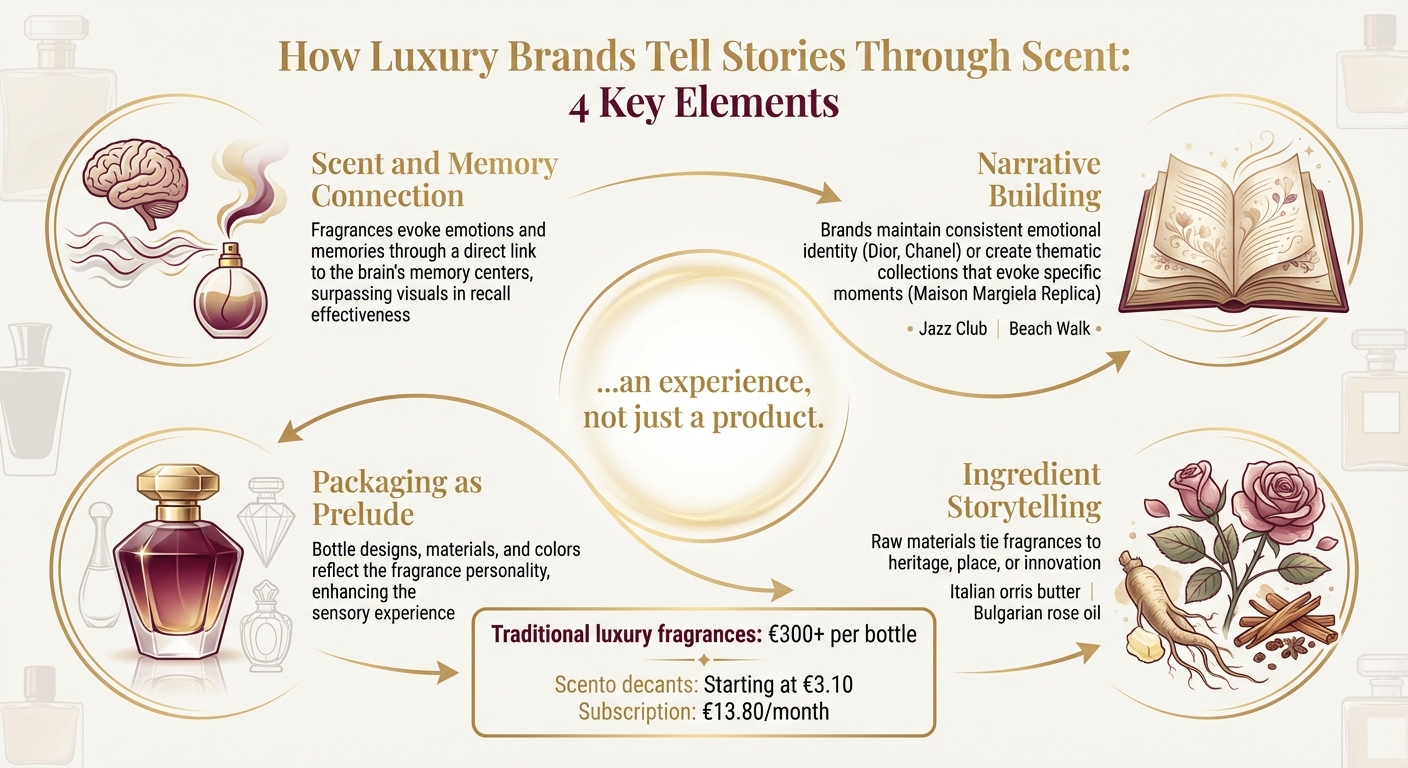
Cum spun brandurile de lux povesti prin parfum: 4 elemente-cheie
How Luxury Brands Build Stories Around Scent
Brandurile de parfumuri de lux nu vand doar parfumuri — creeaza lumi emotionale intregi. Dupa cum remarca Rolling Stone Culture Council, "Luxul nu a fost niciodata despre produs; a fost intotdeauna despre lumea emotionala pe care o creeaza un produs". Ideea rezoneaza fiindca parfumul este legat in mod unic de emotii si amintiri, creand conexiuni instantanee. Branduri emblematice precum Chanel si Dior au perfectionat ceea ce expertii numesc "continuitatea trairii" — pastrarea unei identitati emotionale consecvente timp de decenii. Dior, de exemplu, si-a construit mostenirea in parfumerie in jurul unor teme precum bucuria si feminitatea, de peste un secol.
In loc sa se concentreze pe produse individuale, brandurile de succes creeaza adesea colectii tematice. Aceste colectii sunt precum capitolele unei povesti, unite prin motive precum calatoriile, misterul sau explorarea. Aceasta abordare invita clientii sa descopere o poveste mai ampla. Linia Replica de la Maison Margiela este un exemplu reprezentativ: evoca momente specifice precum "Jazz Club" sau "Beach Walk" prin acorduri olfactive atent selectionate. In continuare, vom vedea cum povestile personale si fictive imbogatesc aceste experiente captivante.
Povestile fondatorilor si parfumierilor
Povestile personale pot da profunzime identitatii unui parfum. Sa o luam pe Tonya Kidd-Beggs, fondatoarea STORIES Parfums. Brandul ei s-a conturat in urma unei descoperiri personale: preferintele ei olfactive erau legate de amintiri refulate, nu doar de preferintele pentru ingrediente. Aceasta revelatie a devenit piatra de temelie a filozofiei sale. In locul denumirilor traditionale sau al listelor de ingrediente, parfumurile ei sunt identificate prin numere, incurajandu-i pe clienti sa-si creeze propriile conexiuni. Dupa cum explica Kidd-Beggs: "Nu mi-am dorit nume sau liste de ingrediente pe sticle. In schimb, am vrut ca oamenii sa se conecteze cu parfumul intr-un mod personal". Eliminand ideile preconcepute, ea ii invita pe cei care poarta parfumurile sa-si creeze propriile povesti emotionale.
Lumi fantastice si povesti fictive
Unele branduri aleg o alta cale, cufundandu-si clientii in lumi complet imaginare. Aceste povesti fictive le permit celor care poarta parfumurile sa evadeze in experiente pe care nu le-au trait niciodata, dar pe care si le pot imagina cu usurinta prin intermediul mirosului. Parfumierii folosesc note specifice pentru a evoca aceste scenarii imaginare: citrice pentru energie, baze lemnoase pentru forta si mirodenii exotice pentru mister. Aceasta abordare transforma parfumul intr-o poarta catre fantezie.
Istorie si cultura in povestile parfumurilor
Brandurile cu traditie isi cauta adesea inspiratie in arhive pentru a-si prezenta parfumurile drept „arta vie”, nu simple bunuri de consum. Aceasta strategie valorifica nostalgia, consolidand totodata mostenirea brandului si justificand preturile premium. Lorenzo Cotti, CEO al Integra Fragrances, explica: „Intri intr-un magazin si, imediat, mirosul tau se conecteaza la istoria brandului”. Branduri precum Balenciaga si Houbigant readuc in prim-plan compozitii din arhiva pentru a-si consolida identitatea, in timp ce case de nisa precum Selvatico si Goldfield & Banks folosesc povesti inspirate de terroir. Aceste povesti leaga parfumurile de anumite regiuni, recolte si colaborari botanice, diferentiindu-le de produsele de masa.
Ambalajul si designul, elemente ale povestii
Ambalajul si designul sunt mai mult decat simple recipiente pentru un parfum - sunt preludiul povestii pe care acesta o spune. Sticla este primul punct de contact fizic cu parfumul. Designerul francez Thierry De Baschmakoff surprinde perfect acest lucru:
Sticla este prima forma de comunicare si primul contact pe care oamenii il au cu un parfum. Asa ca, desigur, trebuie sa rezoneze cu ei.
Aceasta interactiune initiala contureaza asteptarile. Greutatea, textura si finisajul sticlei contribuie la perceptia luxului. O sticla grea din sticla sugereaza autoritate si trainicie, in timp ce detaliile din metal periat transmit o eleganta moderna. Aceste elemente tactile reflecta esenta parfumului.
Designuri de sticle care spun povesti
Designul unei sticle reflectă adesea personalitatea parfumului pe care îl conține. De exemplu, iconicul dop octogonal al Chanel No. 5 este inspirat de Place Vendôme din Paris, ancorându-l în patrimoniul francez. Forma asemănătoare unei amfore a lui Dior Miss Dior amintește de moda "New Look" din 1947, evocând romantism și feminitate. Spicebomb de la Viktor&Rolf, modelat ca o grenadă cu cui detașabil, întruchipează tema sa de putere seducătoare. Le Mâle de la Jean-Paul Gaultier prezintă un design în formă de tors de marinar, simbolizând libertatea și senzualitatea. Între timp, colecția Portraits de la Penhaligon’s folosește capace elaborate în formă de capete de animale pentru a reprezenta personaje aristocratice ficționale.
Culoarea joaca, de asemenea, un rol esential in povestire. Nuantele calde, precum galbenul, portocaliul si rosul, sugereaza intensitate si pasiune, in timp ce tonurile mai reci, precum albastrul, evoca prospetime si liniste. Un studiu din 2014 despre perceptia mirosurilor a evidentiat ca forma, textura si culoarea ambalajului trebuie sa fie in armonie pentru a trezi raspunsul emotional dorit din partea consumatorilor. Designerul Fabien Baron subliniaza:
Chiar daca parfumul este extraordinar, oamenii nu il vor cumpara daca nu il inteleg. Trebuie sa simta o conexiune, altfel pur si simplu nu va functiona.
Dincolo de estetica sticlei, materialele si detaliile prezentarii aprofundeaza povestea.
Materiale si detalii de prezentare
Materialele folosite la ambalaj adauga un nou strat povestii. In 2024, Bottega Veneta a lansat o colectie in editie limitata, cu sticle din sticla reincarcabile, dotate cu capace din lemn certificat FSC si pluta, complet lipsite de plastic. Culorile capacelor — Deep Red pentru "Come With Me" si Walnut pentru "Déjà Minuit" - au fost alese cu grija pentru a reflecta caracterul unic al fiecarui parfum, prezentand sustenabilitatea drept o emblema a luxului.
Detaliile de prezentare, precum captuselile din matase, inchiderile magnetice sau sigiliile din ceara, sporesc experienta generala, creand ceea ce expertii numesc un „ritual de despachetare”. Dior integreaza elemente inspirate de mostenirea sa, precum panglici si motive florale, pentru a evoca haute couture-ul parizian, in timp ce YSL opteaza pentru finisaje metalice indraznete si forme geometrice izbitoare, care transmit rafinament urban. Dupa cum explica Mary Ellen Lapsansky, Vicepresedinta Fragrance Foundation:
Sticla ar trebui sa fie un «objet d’art»; ea este, de fapt, cea care transmite mesajul. Este argumentul de vanzare… Clientii nu platesc doar pentru parfumul din interior, ci si pentru sticla atragatoare.
Expertul tău personal în parfumuri te așteaptă
Completează testul nostru rapid de parfumuri și descoperă parfumuri designer și de nișă autentice, alese pe gustul tău – explorează-le ca decanturi și mostre de 2, 5, 8 și 30 ml, ca să le poți încerca pe fiecare înainte de a alege un flacon întreg.
Descoperă-ți parfumulCompozitia parfumului si coerenta cu povestea
Odata ce elementele vizuale stabilesc tonul, parfumul insusi trebuie sa intruchipeze povestea brandului. Asa cum ambalajul comunica vizual o poveste, parfumul trebuie sa o reflecte si sa o consolideze. Ingredientele alese ar trebui sa se lege firesc de povestea transmisa de ambalaj. Lorenzo Cotti, CEO al Integra Fragrances, subliniaza acest aspect:
Identitatea olfactiva este transpunerea universului brandului intr-o creatie olfactiva... Parfumul trebuie sa se potriveasca tuturor elementelor brandului, altfel nu exista coerenta.
Fie ca un brand se inspira din mostenirea romana, fie ca adopta minimalismul modern, parfumul trebuie sa se ridice la inaltimea acelei promisiuni. Aceasta legatura determina daca oamenii simt ca povestea este autentica - sau daca percep o ruptura intre mesaj si experienta.
Selectarea ingredientelor si legatura cu povestea
Brandurile de lux selecteaza cu grija materiile prime pentru a sustine si amplifica povestile lor. De exemplu, in 2021, parfumiera Olivia Giacobetti a creat un parfum emblematic pentru Fendi, inspirat de „Roman Dolce Vita”. A incorporat patchouli, piele rafinata si unt de iris italian pentru a evoca mostenirea Fendi in domeniul blanurilor, maiestria prelucrarii pielii intoarse si emblematicele coloane de marmura travertin din Roma.
Aici, ingredientele devin instrumente de povestire. Un brand cu radacini in prelucrarea pielii se poate baza pe acorduri de piele, in timp ce unul asociat gradinilor botanice poate pune in valoare flori rare. Chiar si provenienta materiilor prime adauga profunzime - uleiul de trandafir bulgaresc sau oudul din Orientul Mijlociu, de exemplu, poarta cu ele un sentiment al locului si al istoriei pe care inlocuitorii sintetici nu il pot reproduce. Aceste elemente spun discret povesti despre traditie si maiestrie artizanala.
Intr-o abordare moderna, unele branduri de lux adopta biotehnologia si fermentatia pentru a crea parfumuri sustenabile din materiale reziduale. Aceasta abordare nu doar sustine obiectivele de mediu, ci se aliniaza si povestilor despre inovatie si responsabilitate. Fie ca este traditionala sau de avangarda, selectarea ingredientelor asigura ca fiecare nota sustine povestea.
Potrivirea parfumului cu povestea
Cand un parfum se inscrie firesc in povestea brandului, el indeplineste promisiunea facuta clientilor. O nepotrivire, in schimb, creeaza imediat o disonanta. Laurent Le Guernec, parfumier senior la IFF, surprinde bine aceasta idee:
Poti folosi cel mai frumos ingredient, dar daca mediul din jurul lui nu este potrivit, oamenii nici macar nu il vor observa.
Notele de varf, de mijloc si de baza ale parfumului ar trebui sa se dezvaluie intr-un mod care oglindeste evolutia povestii. De exemplu, un brand care promoveaza „feminitatea moderna” nu se poate baza pe un floral greu, demodat, fara sa-si deruteze publicul. In mod similar, un parfum promovat drept „proaspat si minimalist” isi pierde credibilitatea daca debuteaza cu o dulceata greoaie.
Atunci cand parfumul si povestea se completeaza, lasa o impresie de durata. Cand nu se potrivesc, brandul risca sa treaca neobservat — sau, mai rau, sa fie tinut minte din toate motivele gresite.
Cum ii ajuta Scento pe clienti sa descopere povestile parfumurilor
Scento aduce o nota proaspata in lumea parfumeriei de lux, transformand explorarea parfumurilor intr-o calatorie personala — fara preturile piperate ale flacoanelor de dimensiuni standard. Parfumurile de lux de la branduri precum Tom Ford sau Amouage costa adesea peste $300 pentru un flacon, ceea ce transforma experimentarea intr-un pariu costisitor. Scento rezolva aceasta problema oferind decanturi mai mici, autentice, provenite direct din flacoane de retail. Astfel, ai acces la peste 1.000 de parfumuri de designer si de nisa, fara adaosurile traditionale de pret si ambalajele extravagante. Prin decanturi si instrumente personalizate de descoperire, Scento face explorarea povestilor parfumurilor accesibila si practica.
Descoperire prin decanturi
Decanturile Scento sunt disponibile in vialuri de 2 ml, 5 ml si 8 ml, precum si sub forma unui decant de 30 ml pentru majoritatea parfumurilor, astfel incat clientii sa poata testa si sa se bucure pe deplin de un parfum inainte de a se hotari. De exemplu, varianta de 8 ml ofera aproximativ 120 de pulverizari — suficient pentru circa doua luni. Cu un pret stabilit pentru fiecare parfum, aceste decanturi elimina riscul de a regreta o achizitie in format standard. Elena R., o clienta incantata, povesteste: "Obisnuiam sa irosesc bani pe flacoane intregi. Decanturile ma ajuta sa economisesc atat de mult."
Decanturi Scento
Membrii Scento+ isi pot suspenda abonamentul oricand si il pot anula prin echipa Scento, beneficiind de flexibilitate deplina. O carcasa reincarcabila pentru atomizor Scento este oferita gratuit drept cadou de bun venit Scento+. Cu peste 85.000 de membri si un rating remarcabil de 4,8/5, Scento a redefinit modul in care oamenii descopera parfumurile de lux.
Solutia la problema flacoanelor intregi
Cumparaturile traditionale de parfumuri ii obliga adesea pe clienti sa se angajeze la flacoane mari, care pot ramane nefolosite. Scento raspunde acestei ineficiente oferind cantitati mai mici, care pastreaza autenticitatea parfumurilor de designer si reduc risipa. Scent Curator personalizat si chestionarele interactive ii ghideaza pe utilizatori prin catalog, ajutandu-i sa gaseasca parfumuri pe gustul lor, potrivite starii de spirit, ocaziei sau preferintelor. Aceasta abordare atenta nu doar economiseste bani, ci transforma si modul in care oamenii interactioneaza cu piata parfumurilor, evaluata la 56 € billion, facand povestile de lux mai accesibile si mai sustenabile.
Concluzie
Storytellingul transforma parfumurile de lux in experiente profund personale, care continua sa reverbereze mult dupa primul puf. Deoarece mirosul activeaza direct centrele memoriei din creier, el creeaza conexiuni pe care marketingul vizual sau auditiv pur si simplu nu le poate reproduce. Aceasta legatura senzoriala unica ii ofera storytellingului din parfumerie o capacitate aparte de a crea relatii durabile cu clientii.
Brandurile de lux impletesc cu grija aceasta naratiune in fiecare detaliu, de la designul flaconului la selectia ingredientelor. Dupa cum spune Francoise Rapp, consultant in identitate olfactiva:
Un parfum trebuie creat cu atentie pentru a se potrivi personalitatii brandului tau, publicului tinta si experientei clientilor. Un parfum nepotrivit poate dilua perceptia asupra brandului, in loc sa o consolideze.
Atunci cand aceste elemente se armonizeaza, ele dezvaluie ceea ce Lorenzo Cotti, CEO al Integra Fragrances, descrie drept un adevar fundamental:
Experienta nu poate exista fara componenta olfactiva, care este intrinsec legata de memorie.
In ciuda fortei acestor povesti, cumparaturile traditionale de parfumuri le lasa adesea nespuse. De multe ori, clientilor li se cere sa se angajeze la flacoane intregi care costa peste $300, fara sa descopere cu adevarat povestea parfumului. Scento schimba acest lucru oferind decanturi de inalta calitate, care permit explorarea fara un angajament financiar major. Cu variante de la 2 ml pana la un decant de 30 ml, pasionatii de parfumuri pot descoperi fiecare fateta a unui parfum — de la explozia notelor de deschidere pana la persistenta notelor de dupa uscare.
Intrebari frecvente
Cum folosesc brandurile de lux parfumul pentru a crea conexiuni emotionale?
Brandurile de lux folosesc parfumul pentru a impartasi povesti si a trezi emotii. Parfumurile au darul aparte de a starni amintiri si sentimente, purtandu-i pe oameni inapoi in anumite momente sau locuri. Gandeste-te cum un anumit parfum poate readuce in minte un moment pretios — asa ia nastere o conexiune personala si emotionala.
Aceste parfumuri intruchipeaza, de asemenea, rafinamentul, exclusivitatea si increderea in sine. Devin un accesoriu invizibil, care pune in valoare individualitatea celui care le poarta si lasa o impresie de durata. Creand parfumuri care trezesc emotii, brandurile de lux transforma parfumul in ceva mult mai mult decat un produs — intr-o experienta intima, de neuitat.
Cum contribuie ambalajul la povestea parfumurilor de lux?
Ambalajul joaca un rol esential in felul in care parfumurile de lux isi comunica esenta, pregatind terenul pentru o calatorie senzoriala chiar inainte ca aroma sa fie dezvaluita. Fiecare element — fie ca este vorba despre greutatea sticlei, finetea suprafetei sau complexitatea designului — devine o extensie fizica a povestii brandului, reflectand teme precum traditia atemporala, eleganta rafinata sau stilul avangardist.
Insa ambalajul este mai mult decat un simplu invelis protector; el transforma parfumul intr-o experienta completa. Materialele, finisajele si ornamentele sunt alese cu grija pentru a exprima caracterul brandului, transformand simplul gest de a deschide ambalajul intr-un moment de neuitat. Aceasta atentie meticuloasa acordata prezentarii nu doar ajuta brandurile de lux sa-si creeze un loc pe o piata competitiva, ci si consolideaza legatura emotionala cu publicul lor.
Cum face Scento parfumurile de lux mai accesibile?
Scento face parfumurile de lux mai accesibile, oferind decanturi in cantitati mici, atent selectionate — decanturi de 2 ml, 5 ml si 8 ml, precum si un decant de 30 ml pentru majoritatea parfumurilor. Aceste cantitati mai mici le permit clientilor sa descopere parfumuri de designer si de nisa de inalta calitate, fara angajamentul financiar considerabil al sticlelor mari, care pot depasi adesea 300 € si risca sa ramana nefolosite. Este o modalitate practica de a explora si de a te bucura de parfumuri premium fara sa cheltui prea mult.
Scento este un retailer de decanturi si decanturi de parfum, iar fiecare produs poate fi cumparat o singura data, fara abonament. Scento+ este abonamentul optional Scento: taxa lunara se intoarce integral sub forma de credit in magazin, pe care il poti folosi pentru orice parfum; membrii beneficiaza de o reducere de 10 %, un decant gratuit la fiecare comanda, un parfum gratuit la fiecare sase luni si un cadou de ziua de nastere, iar abonamentul poate fi pus pe pauza oricand; pentru anulare, contacteaza echipa noastra. Punand accentul pe flexibilitate si pe nevoile clientilor, Scento transforma experienta parfumurilor de lux intr-una accesibila si placuta pentru toata lumea.

