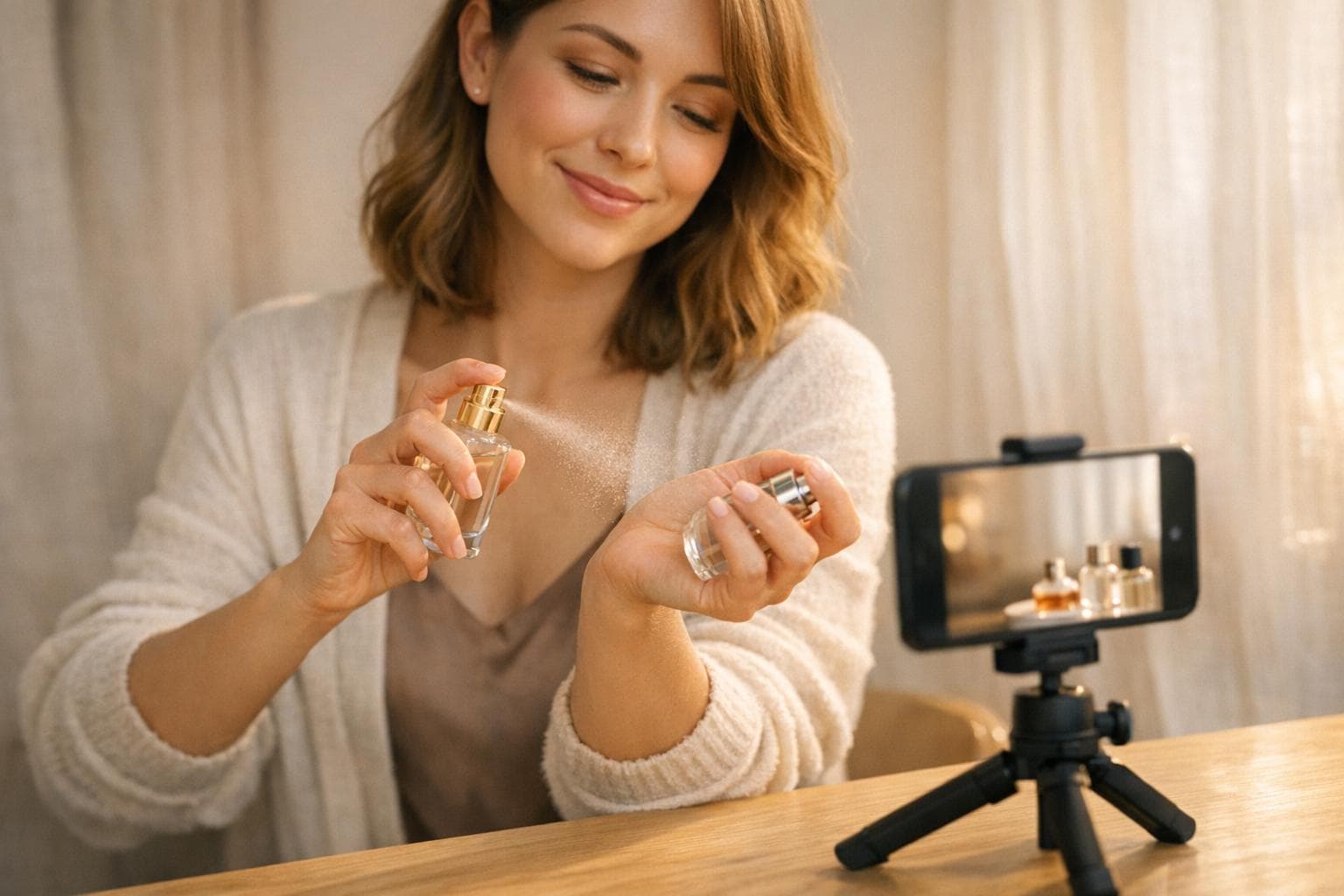
Micro-influencerii transforma industria parfumurilor acordand prioritate recomandarilor personalizate si autentice in detrimentul colaborarilor traditionale cu celebritati. Cu o audienta cuprinsa intre 15.000 si 75.000 de urmaritori, acesti creatori se conecteaza cu comunitati de nisa, oferind perspective detaliate despre arome si rezonanta lor emotionala.
Perspective cheie:
- Schimbare de incredere: 49 % dintre consumatori prefera astazi recenziile influencerilor in locul reclamelor clasice.
- ROI superior: Campaniile cu micro-influenceri ofera un randament cu 35 % mai mare decat parteneriatele cu celebritati.
- Rata de engagement: Micro-influencerii inregistreaza o rata de interactiune de 7,2%, mult peste cea a celebritatilor (1,4%).
- Parfumul ca expresie de sine: 45 % dintre persoanele sub 45 de ani vad parfumul ca pe o declaratie personala, nu ca pe un simbol de statut.
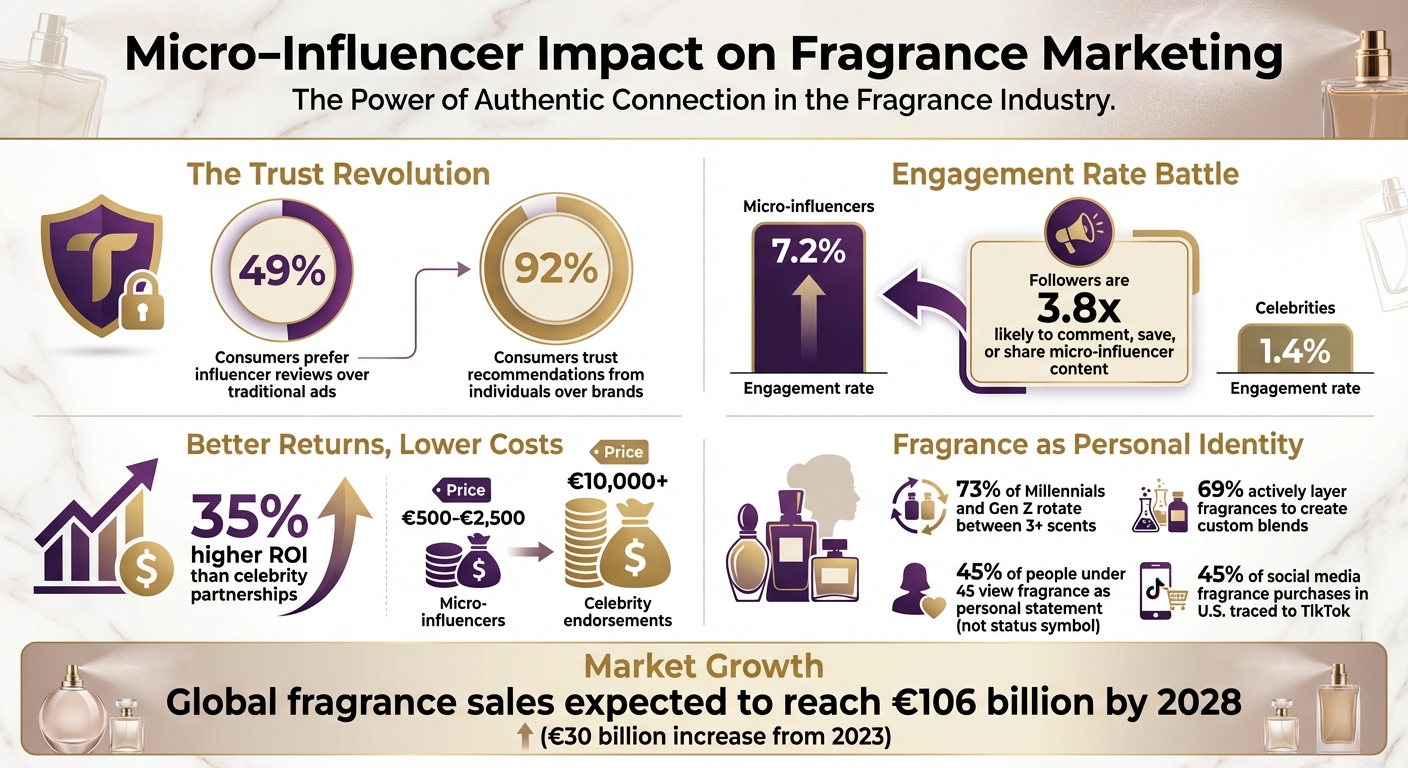
Micro-Influencer Impact on Fragrance Marketing: Key Statistics and Engagement Metrics
Limite ale marketingului traditional de parfumuri
Pe masura ce micro-influencerii redefinesc modul in care publicul descopera esentele, deficientele metodelor traditionale devin tot mai evidente. Timp de decenii, casele s-au bazat masiv pe imagini de vedete si reclame opulente. Totusi, aceasta abordare lasa adesea cumparatorul in incertitudine. Parfumul este una dintre putinele categorii senzoriale ce nu pot fi experimentate direct printr-un ecran, iar reclamele clasice mizeaza pe elogii vagi si generice in loc sa ofere descrieri nuantate, care sa ajute privitorul sa intuiasca evolutia olfactiva pe propria piele.
Parteneriatele cu celebritati isi pierd atractivitatea
Publicul tanar se indeparteaza de campaniile conduse de vedete. Desi 92 % dintre consumatori au mai multa incredere in recomandarile indivizilor decat in cele ale brandurilor, reclamele impecabile cu celebritati par adesea distante si lipsite de acea conexiune emotionala autentica pe care o cauta consumatorul modern. In schimb, micro-influencerii inregistreaza o rata medie de engagement de 7,2%, depasind categoric procentul de 1,4% intalnit la celebritati si macro-influenceri. Totodata, comunitatile lor sunt de 3,8 ori mai predispuse sa comenteze, sa salveze sau sa distribuie continutul.
Strategia traditionala de a promova o lansare unica de tip „blockbuster” asociata unei figuri celebre devine tot mai desueta. 73 % dintre Millennials si Gen Z folosesc alternativ trei sau mai multe arome. In loc sa caute o sticla emblematica recomandata de o vedeta, acestia isi construiesc o garderoba olfactiva si exploreaza arta suprapunerii aromelor (layering). Productiile publicitare cu bugete spectaculoase nu reflecta aceasta schimbare, iar consumatorii le ignora in favoarea unui discurs intim si autentic.
Pe masura ce reclamele de studio isi pierd forta, pasionatii cauta evaluari sincere si credibile.
Consumatorii cauta recomandari autentice
Marketingul clasic adesea erodeaza increderea, in special atunci cand colaborarile platite sterg granita dintre parerea sincera si simpla promovare comerciala. Georg R. Wuchsa, fondatorul Scent Amor, subliniaza aceasta provocare:
„Granita dintre opinie si marketing devine tot mai subtire. Sponsorizarile raman frecvent netransparente... Cand deschiderea este exceptia, fiecare oda devine suspecta”.
Aceasta lipsa de transparenta indeparteaza cumparatorii de publicitatea clasica. In prezent, 49 % dintre consumatori apeleaza la influenceri pentru recomandari inainte de a face o achizitie. Platforme precum TikTok si YouTube au devenit destinatiile principale pentru recenzii nefiltrate. Publicul cauta cunoscatori care decodeaza notele olfactive, siajul si felul in care se transforma un parfum — nu cadre glossy, impersonale.
Casele de parfumuri incep sa se adapteze. Campaniile cu micro-influenceri genereaza un ROI cu 35 % mai mare decat parteneriatele cu celebritati, necesitand bugete accesibile — intre 500 € si 2.500 €, comparativ cu sume de peste 10.000 € pentru celebritati. Este limpede ca povestile autentice si vocile credibile reconfigureaza universul parfumeriei.
De ce micro-influencerii dicteaza noile directii olfactive
Micro-influencerii actioneaza ca traducatori senzoriali, facand legatura dintre o creatie imposibil de testat fizic si emotiile pe care aceasta le trezeste. Intrucat parfumul nu poate fi inhalat prin ecran, creatorii renunta la jargonul tehnic rigid si descriu modul in care o aroma te face sa te simti. Dupa cum explica Elena Vosnaki, consultant in marketing de parfumerie:
„Oamenii nu mai vor sa auda despre note de varf si faza de uscare. Vor sa stie daca un parfum le va oferi o energie de personaj principal sau o atitudine de villain era.”
Aceasta perspectiva emotionala permite urmaritorilor sa vizualizeze experienta purtarii unui parfum, chiar inainte de a-l atinge. Nu este de mirare ca postarile influencerilor retin atentia publicului de 2,2 ori mai mult decat reclamele clasice de brand, iar 49 % dintre consumatori fac achizitii lunare inspirati de aceste recomandari. Transformand notele abstracte in trairi cotidiene, micro-influencerii cladesc legaturi de o remarcabila autenticitate.
Cladirea increderii prin accesibilitate
Micro-influencerii se disting prin capacitatea de a genera o incredere organica. Ei mizeaza pe povesti neregizate si naturale — impresii spontane filmate cu telefonul, reactii instantanee si un ton cald, similar unei conversatii intre prieteni. Publicul distinge imediat continutul regizat si rigid de brand, ceea ce sporeste impactul acestor abordari sincere. Carmen Rodriguez, analist de social media, remarca:
„Ceea ce confera forta acestor creatori nu sunt atestatele profesionale... ci specificitatea si sinceritatea lor. Nu incearca sa placa tuturor, ci creeaza o legatura profunda cu propriul trib.”
Aceasta abordare orientata pe comunitate difera radical de campaniile de masa traditionale. In loc sa vizeze un public generic, micro-influencerii se adreseaza unor cercuri dedicate: admiratori ai acordurilor lemnoase, pasionati care isi construiesc o garderoba de esente sau exploratori de arome de lux la preturi accesibile. Fiind perceputi ca parteneri de discutie, si nu ca agenti de vanzari, castiga negresit fidelitatea urmaritorilor.
Sustinerea parfumeriei de nisa si a brandurilor independente
Un alt merit remarcabil al micro-influencerilor este promovarea parfumeriei de nisa si indie. Fara bugete colosale comparabile cu cele ale marilor case, brandurile artizanale intampina adesea dificultati de vizibilitate. Micro-influencerii echilibreaza balanta, prezentand aceste comori ascunse alaturi de creatii designer celebre si introducandu-si comunitatile in fascinanta lume a creatiilor rare. Ei traduc piramidele olfactive complexe in descrieri intuitive, facand chiar si cele mai avangardiste compozitii usor de inteles.
Acest stil asigura o nastere organica a tendintelor. In loc ca o singura lansare masiva sa domine peisajul, casele artizanale capata recunoastere prin recomandari autentice transmise direct. Pasionatii descopera parfumuri care le reflecta cu adevarat gustul, departe de recomandarile standardizate ale celebritatilor. Intelegand aceasta evolutie, Scento propune experiente curatoriate de decanturi, oferind posibilitatea de a explora atat compozitii designer, cat si esente de nisa, ghidate de analizele pertinente ale micro-influencerilor de incredere.
Cum amplifica platformele digitale impactul micro-influencerilor
Platformele digitale i-au transformat pe micro-influenceri in veritabili ghizi olfactivi virtuali, unde descrierile vii suplinesc absenta mostrelor fizice. Intrucat aromele nu se transmit digital, acesti creatori recurg la un limbaj vizual si senzorial evocator. Ei simplifica acordurile complexe: descriu vanilia ca fiind „calda si reconfortanta”, iar citricele drept „luminoase, ca prospetimea unei dimineti curate”, facand ca parfumurile exclusiviste sa para familiare. Acest discurs redefineste descoperirea esentelor si propulseaza noi curente olfactive, ghidand firesc consumatorul de la stadiul de fascinatie la decizia de cumparare.
Comertul pe retelele sociale si achizitiile directe
Mediul digital a dus aceasta naratiune mai departe, unind descoperirea cu achizitia instantanee. Aplicatii precum Instagram si TikTok permit utilizatorilor sa treaca direct de la vizionarea unei recenzii la cumpararea produsului — fara a parasi interfata. Aceasta experienta fluida a revolutionat achizitia de parfumuri. Aproximativ 45 % dintre vanzarile de parfumuri influentate de retelele sociale din SUA isi au originea pe TikTok, iar 64 % dintre consumatori declara ca au revenit pentru noi achizitii pe baza recomandarilor primite de la creatori.
Transmisiunile live au adaugat o dimensiune si mai apropiata. Creatorii organizeaza unboxing-uri in timp real si sesiuni interactive de intrebari si raspunsuri, imitand o discutie fireasca intre prieteni. Pentru marci precum Scento, ce ofera selectii atent curatoriate de decanturi, fenomenul se potriveste impecabil: consumatorii pot explora parfumurile recomandate fara a fi nevoiti sa investeasca direct intr-o sticla de mari dimensiuni, minimizand orice risc.
Impactul TikTok asupra tendintelor olfactive
TikTok a devenit un veritabil catalizator in descoperirea de parfumuri. Pana in octombrie 2024, comunitatea „FragranceTok” acumulase peste 278 de milioane de postari, recenziile virale generand frecvent epuizarea stocurilor in doar cateva ore. Formatul scurt imbina coloane sonore la moda cu metafore vizuale expresive, facand inteligibila chiar si cea mai sofisticata compozitie in cateva secunde. Antonia Baildam, Head of Beauty la TikTok, puncteaza aceasta particularitate:
„Hashtag-ul prilejuieste acest moment de descoperire ce ofera consumatorului instrumentele de a intelege parfumul la un nivel mai profund, lucru nemaiintalnit pe alte platforme.”
Aceasta dinamica virala a rescris geneza tendintelor. In loc sa astepte lansarile sezoniere ale marilor case de lux, comunitatea descopera zilnic arome noi prin etichete precum #PerfumeCheck si #PerfumeCollection. Universul parfumeriei este astazi conturat de dispozitii de moment, identitate personala si aprecieri intre cunoscatori, mai degraba decat de campanii cu vedete. Schimbarea a deschis perspective extraordinare pentru micro-influenceri si casele de nisa pe care le sustin.
Expertul tău personal în parfumuri te așteaptă
Completează testul nostru rapid de parfumuri și descoperă parfumuri designer și de nișă autentice, alese pe gustul tău – explorează-le ca decanturi și mostre de 2, 5, 8 și 30 ml, ca să le poți încerca pe fiecare înainte de a alege un flacon întreg.
Descoperă-ți parfumulCum sustin micro-influencerii personalizarea parfumurilor
Micro-influencerii au devenit repere esentiale in explorarea olfactiva personalizata. Introducand practici precum „scent styling-ul”, ei au transformat arta de layering intr-o modalitate ludica de a compune arome semnatura unice. Astfel, parfumul nu mai este o simpla achizitie ocazionala, ci o calatorie continua de definire a identitatii.
Arta de layering ca mod de exprimare personala
Micro-influencerii explica tehnicile complexe de suprapunere in pasi facili. De pilda, ei recomanda asezarea initiala a unor note de baza consistente, precum cele lemnoase sau gurmande, completate apoi cu note de varf delicate, florale sau citrice, pentru a atinge o armonie perfecta. Aceste sfaturi sustin tendinta de a construi garderobe olfactive versatile, in care fiecare combinatie reflecta personalitatea purtatorului.
Aceasta abordare se sprijina puternic pe asocieri vizuale si stilistice. Creatorii asociaza combinatiile cu stari de spirit sau estetici particulare, precum „Vamp Romantic” (trandafiri si tamaie) sau „Poetcore” (flori albe si note de celuloza). Unii merg mai departe, explorand combinatii inedite precum notele vegetale gurmande, unde accentele sarate aduc o profunzime aparte acordurilor clasice. Ei educa de asemenea publicul cu privire la piramida olfactiva — explicand cum notele de varf, inima si baza se evapora in ritmuri diferite, de la primele 10 minute pana la ore intregi. Astfel, combinarea devine nu doar o arta, ci o metoda accesibila, incurajata prin intermediul seturilor de descoperire.
Incurajarea explorarii prin seturi de descoperire
Seturile de descoperire (discovery sets) au devenit fundamentul acestei miscari, oferind libertatea de a experimenta fara riscuri financiare majore. In conditiile in care 73 % dintre consumatorii Millennials si Gen Z folosesc constant mai mult de trei parfumuri, iar 69 % practica activ layering-ul pentru creatii personalizate, micro-influencerii propun aceste decanturi mici ca instrumente ideale de testare. Ei isi indruma adesea urmaritorii sa gaseasca un „geaman olfactiv” — un creator cu preferinte similare —, facand alegerea unui set facila si sigura, chiar si fara o testare prealabila pe piele.
Videoclipurile de unboxing si primele impresii sunt metodele preferate prin care influencerii evidentiaza versatilitatea acestor formate. Ei ofera indrumari utile: inceperea cu doar doua arome pentru a intelege fuziunea notelor, dozarea intensitatii pentru a nu estompa creatiile subtile si utilizarea unor baze neutre, cum ar fi moscul alb sau ambra suava. Pentru cei ce exploreaza colectii precum cele oferite de Scento, aceste mici mostre devin primii pasi in cladirea unei semnaturi olfactive rafinate si unice — fara constrangerea de a achizitiona flacoane intregi.
Bune practici in colaborarea cu micro-influencerii
In parteneriatele cu micro-influencerii, cifrele brute nu spun toata povestea. Dincolo de numarul de urmaritori, brandurile ar trebui sa caute creatori capabili sa redea cu finete subtilitatile olfactive. Aceasta atentie este cheia crearii unor campanii ce rezoneaza cu adevarat cu pasionatii de parfumuri de autor.
Evaluarea compatibilitatii cu brandul
Incepeti prin a analiza maiestria creatorului de a descrie notele olfactive. Reuseste acesta sa prezinte compozitia, siajul si tranzitiile aromei intr-un mod captivant si clar? Aceasta finete diferentiaza un fin cunoscator de un creator ocazional si garanteaza ca mesajul va servi direct prestigiului casei dumneavoastra.
Calitatea comunitatii este la fel de relevanta. Urmariti nivelul de interactiune: lasa membrii comentarii pertinente, pun intrebari punctuale sau descriu propriile experiente olfactive? Sau interactiunile par superficiale si automatizate? Totodata, asigurati-va ca profilul demografic corespunde publicului tinta. In cazul parfumurilor de nisa sau de lux, tonul si estetica vizuala ale creatorului trebuie sa emane rafinamentul specific marcii.
Nu in ultimul rand, vizati creatori activi in domenii conexe, precum moda, arta sau stilul de viata. Acestia pot integra parfumul intr-o maniera armonioasa, permitand privitorilor sa vizualizeze modul in care acea esenta poate deveni parte integranta din viata lor de zi cu zi.
Concluzie
Micro-influencerii au schimbat fundamental relatia dintre brandurile de parfumuri si consumatori, rezolvand neajunsurile marketingului clasic prin prezentarea unor impresii autentice si traite, in locul unor reclame formale cu vedete. Capacitatea lor de a reda simfoniile olfactive prin prisma trairilor umane si a stilului de viata suplineste bariera fizica ce a ingreunat intotdeauna marketingul de parfumuri.
Aceasta miscare este confirmata de cifre. Se estimeaza ca vanzarile globale de parfumuri vor atinge 106 miliarde € pana in 2028 — o crestere de 30 de miliarde € fata de 2023 —, evidentiind puterea tot mai mare a acestor creatori. Pe langa prezentarea produselor, micro-influencerii incurajeaza initierea prin seturi de descoperire, educa publicul cu privire la note si asaza layering-ul la rangul de arta a expresiei de sine.
Canalele digitale potenteaza aceasta dinamica. YouTube ofera spatiul ideal pentru analize detaliate si educatie olfactiva aprofundata, cladind incredere in timp. Concomitent, TikTok accelereaza tendintele prin momente virale ce cuceresc instant comunitatile dedicate.
Pentru branduri, drumul de urmat este clar: mizati pe autenticitate inaintea audientelor de masa. Colaborati cu acei creatori care simt si inteleg parfumeria, intretin un dialog sincer cu publicul lor si integreaza notele in naratiuni sofisticate de viata. La Scento, impartasim aceasta filosofie oferind seturi curatoriate de descoperire ce permit fiecarui iubitor de arome sa exploreze si sa isi personalizeze universul senzorial — o abordare in deplina armonie cu cererea actuala de individualizare.
Vremea campaniilor universale a apus. Micro-influencerii ne dovedesc ca audientele de nisa, conexiunile veritabile si perspectiva digitala reprezinta adevarata forta ce modeleaza viitorul parfumeriei.
Intrebari frecvente
Cum castiga micro-influencerii increderea publicului lor?
Micro-influencerii exceleaza la capitolul credibilitate prin legatura apropiata si sincera pe care o mentin cu urmaritorii. Avand audiente cuprinse in mod tipic intre 10.000 si 100.000 de persoane, ei reusesc sa cultive o comunitate unita, in cadrul careia parerile sunt percepute ca fiind oneste si nescriptate. Aceasta apropiere transforma orice recomandare intr-un gest mult mai demn de incredere decat o campanie clasica asociata unei vedete.
Concentrandu-se pe interese specifice — cum ar fi aromele rare sau ingrijirea tenului —, acesti creatori dezvolta materiale dedicate pasiunilor comune. Urmaritorii ii privesc ca pe niste cunoscatori abordabili, nu ca pe niste figuri intangibile, ceea ce consolideaza relatia. Alaturi de ratele superioare de engagement, aceasta naturalete le permite sa creeze legaturi autentice si de durata in randul comunitatilor lor.
De ce sunt micro-influencerii mai eficienti decat celebritatile in definirea tendintelor din parfumerie?
Micro-influencerii intrec frecvent celebritatile in formarea preferintelor olfactive datorita conexiunii autentice si apropierii pe care o au fata de comunitatile de nisa. Daca o celebritate atrage privirile printr-o faima generalizata, sustinerea sa comerciala poate parea distanta sau lipsita de implicare reala. Micro-influencerii, dimpotriva, isi construiesc succesul pe increderea generata in cadrul unui cerc restrans si activ.
Marele lor atu este personalizarea recomandarilor in functie de gusturi particulare. Acest aspect este crucial in universul aromelor, unde cumparatorii cauta sfaturi de incredere pentru a descoperi esente memorabile si sofisticate. Generand un dialog cald si o interactiune profunda, micro-influencerii ajuta casele sa comunice cu sens, trezind interesul atat pentru creatii inedite, cat si pentru marci artizanale.
Cum ajuta platformele digitale micro-influencerii sa impuna tendinte in parfumerie?
Platformele digitale reprezinta infrastructura prin care micro-influencerii impun noile directii olfactive, punandu-le la dispozitie medii interactive de relationare cu audientele pasionate. Retele precum TikTok si Instagram se remarca prin posibilitatea de a transmite un discurs vizual captivant, care atrage in mod special generatiile Millennials si Gen Z. Aceste spatii devin cadrul perfect pentru a prezenta recenzii de parfumuri, a impartasi impresii intime si a lansa curente senzoriale autentice.
Functiile interactive specifice social media sustin increderea si apartenenta la grup. Aceasta comunitate le da mana libera micro-influencerilor sa propuna esente originale si creatii artizanale mai putin cunoscute. Ocolind tiparele rigide ale publicitatii traditionale, creatorii starnesc entuziasm in jurul unor note specifice si cultiva curiozitatea pentru noutate. Astfel, canalele digitale au devenit forta definitorie in modul in care publicul contemporan descopera si adopta parfumurile.

