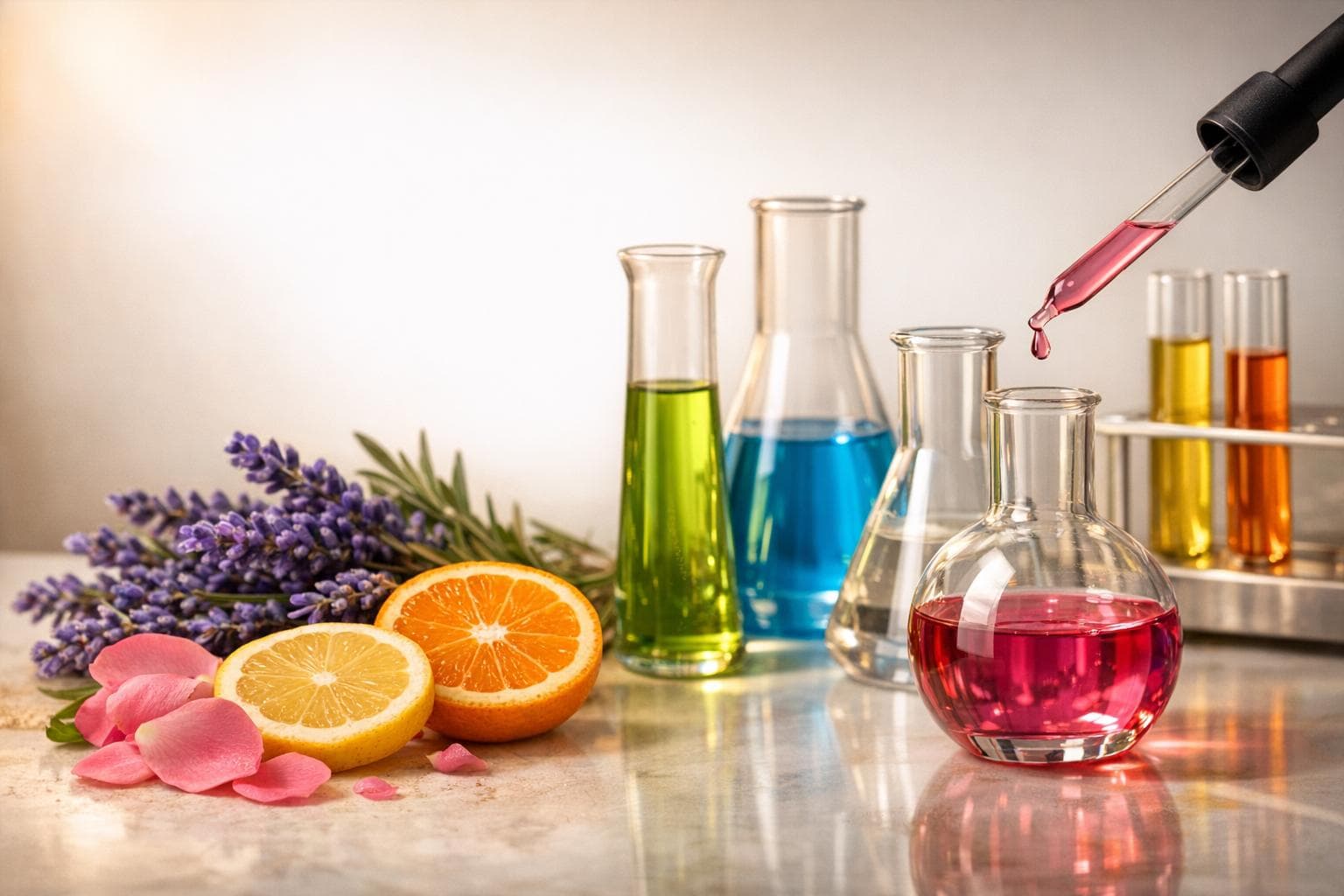
Cand vezi "fragrance" sau "parfum" pe o eticheta, acest termen ascunde un amestec de pana la 3.500 de substante chimice — extracte naturale si ingrediente sintetice deopotriva. Brandurile nu dezvaluie adesea aceste ingrediente, invocand protectia "secretului comercial", iar consumatorii nu afla astfel despre potentialii alergeni sau compusii nocivi. Atat ingredientele naturale, cat si cele sintetice au avantaje si dezavantaje: cele naturale pot provoca alergii si necesita multe resurse, in timp ce cele sintetice ofera consecventa si sustenabilitate, dar adesea nu sunt insotite de transparenta.
Idei principale:
- Riscuri pentru sanatate: Ingredientele naturale precum muschiul de stejar si iasomia pot declansa alergii; ingredientele sintetice pot include perturbatori endocrini precum ftalatii.
- Sustenabilitate: Ingredientele sintetice reduc exploatarea excesiva a resurselor (de exemplu, lemnul de santal), dar se bazeaza pe procese de laborator.
- Reglementari: UE impune declararea alergenilor, spre deosebire de SUA, unde termenul "fragrance" ascunde detaliile.
- Testarea conteaza: Testarea pe o zona mica de piele este esentiala pentru a evita sensibilizarile.
Branduri precum Henry Rose si EWG VERIFIED® militeaza pentru etichete mai clare, iar serviciile de testare precum Scento iti permit sa incerci parfumurile inainte de a investi in ele. Transparenta este tot mai prezenta, dar consumatorii trebuie sa se informeze pentru a face alegeri mai sigure si mai bine gandite.
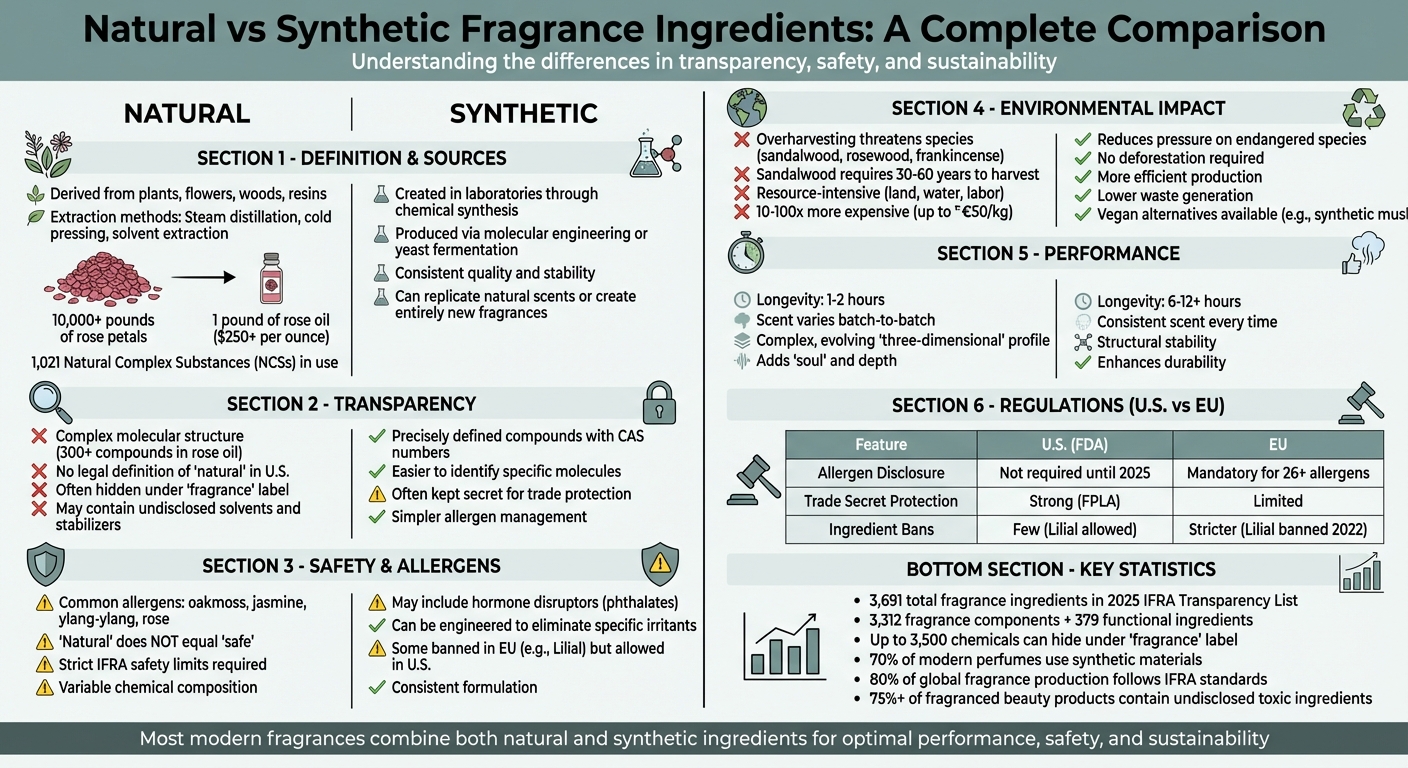
Comparatie intre ingredientele naturale si sintetice din parfumuri: siguranta, transparenta si impact asupra mediului
What Are Natural and Synthetic Fragrance Ingredients?
Diferenta dintre ingredientele naturale si cele sintetice din parfumuri tine de provenienta si de modul in care sunt obtinute. Ingredientele naturale provin direct din natura — de exemplu, din petale de flori, coji de citrice, lemn si rasini. In trecut se foloseau si substante de origine animala, dar in prezent acestea au fost in mare parte inlocuite cu alternative etice. Aceste componente naturale sunt extrase prin procese precum distilarea cu aburi, presarea la rece sau extractia cu solventi. De exemplu, pentru a obtine doar o livra de ulei esential de trandafir sunt necesare peste 10.000 de livre de petale, ceea ce explica pretul ridicat — adesea de peste $250 per uncie. Sa privim mai indeaproape ingredientele naturale si cele sintetice.
Ingrediente naturale pentru parfumuri
Conform definitiei din ISO 9235, ingredientele naturale pentru parfumuri provin din plante si alte surse naturale. Printre metodele uzuale de extractie se numara:
- Distilarea cu aburi: Aburul este folosit pentru a extrage compusii volatili din flori precum lavanda sau trandafirul.
- Presarea la rece: Aceasta metoda presupune presarea mecanica a cojilor de citrice pentru a elibera uleiurile.
- Extractia cu solventi: Solventi precum hexanul sunt folositi pentru a capta aromele delicate ale unor flori precum iasomia sau tuberoza.
Lista de transparenta IFRA din 2025 identifica 1.021 de substante complexe naturale (NCS) utilizate in prezent in industria parfumurilor. Ingredientele naturale se remarca prin complexitatea lor moleculara. De exemplu, uleiul natural de trandafir contine peste 300 de compusi, care ii confera un profil olfactiv "tridimensional", ce evolueaza in contact cu pielea.
Ingrediente sintetice pentru parfumuri
Ingredientele sintetice sunt create in laboratoare prin sinteza chimica sau inginerie moleculara. Ele pot reproduce mirosuri naturale — precum linaloolul sintetic, care imita un compus prezent in natura — sau pot da nastere unor arome complet noi, inexistente in natura. Unele ingrediente sintetice moderne sunt produse chiar si prin fermentatie cu drojdii, care transforma surse regenerabile de carbon in molecule aromatice, reducand dependenta de petrol. Aceasta metoda asigura o calitate constanta si stabilitate, astfel incat fiecare sticla de parfum sa miroasa la fel in timp.
Maestrul parfumier Jean-Claude Ellena descrie posibilitatile creative pe care ingredientele sintetice le aduc parfumeriei:
"Ca parfumier, imi place sa arat si sa conving… Pur si simplu urmez traiectoria unui artist — a cuiva care cauta si, uneori, gaseste".
De ce majoritatea parfumurilor combina ingrediente naturale si sintetice
Parfumurile de astazi combina adesea componente naturale si sintetice pentru a le echilibra calitatile distincte. Ingredientele naturale adauga profunzime si complexitate, fiind adesea numite "sufletul" unui parfum. Ingredientele sintetice, pe de alta parte, ii confera structura, sporesc persistenta si permit crearea unor arome pe care ar fi nepractic — sau chiar lipsit de etica — sa le obtii din surse naturale. In plus, ingredientele sintetice sunt de obicei mai accesibile ca pret decat materiile prime naturale rare, precum vanilia sau lemnul de santal, facand parfumurile de calitate mai accesibile.
Cat de transparenta este industria parfumurilor?
Industria parfumurilor functioneaza sub un val de secretomanie, ascunzand adesea lista completa a substantelor chimice din produse. Desi majoritatea ingredientelor cosmetice trebuie enumerate individual, termenul "parfum" de pe eticheta poate ascunde un amestec de numeroase substante chimice nedezvaluite. Intelegand sistemul si lacunele sale de reglementare, consumatorii pot lua decizii mai bine informate cu privire la parfumurile pe care le aleg.
Ce ascunde eticheta „Fragrance”
Atunci cand pe eticheta unui produs apare "fragrance", "perfume" sau "parfum", lucrurile nu sunt atat de simple pe cat par. Acesti termeni reprezinta o solutie de ocolire prevazuta de lege, care le permite companiilor sa ascunda amestecuri complexe, ce pot include peste 3.500 de substante chimice diferite. Potrivit Administratiei pentru Alimente si Medicamente din SUA:
"Conform reglementarilor din SUA, ingredientele pentru parfumuri si arome pot fi enumerate pur si simplu ca ‘Fragrance’ sau ‘Flavor.’ ... Aceasta lege nu poate fi folosita pentru a obliga o companie sa dezvaluie ‘secrete comerciale.’"
Aceasta protectie, prevazuta de Fair Packaging and Labeling Act, le permite brandurilor sa isi pastreze secrete formulele exacte. De exemplu, lista IFRA Transparency List din 2025 identifica 3.691 de ingrediente active utilizate la nivel global in parfumuri, dintre care 3.312 componente parfumante si 379 de ingrediente functionale, precum stabilizatori si solventi. Cu toate acestea, consumatorii rareori gasesc aceste detalii pe ambalaje. Chiar si produsele etichetate "fara parfum" pot contine agenti de mascare pentru a neutraliza mirosurile de baza neplacute. Aceasta lipsa de transparenta contrasteaza puternic cu cererea tot mai mare pentru etichetare mai clara, pregatind terenul pentru o comparatie intre reglementarile din SUA si UE.
Reglementarile UE si SUA privind parfumurile
Cadrul de reglementare complica si mai mult problema transparentei ingredientelor, existand diferente semnificative intre Uniunea Europeana si Statele Unite. In SUA, protectia secretelor comerciale este solida, iar FDA nu impune in prezent etichetarea alergenilor pentru produsele cosmetice. Desi o lege federala adoptata in decembrie 2022 va impune in cele din urma declararea anumitor alergeni din parfumuri, aceste modificari nu vor intra in vigoare cel mai devreme pana in 2025.
In schimb, UE aplica reglementari mai stricte. Brandurile au obligatia sa declare anumiti alergeni si sa respecte interdictiile preventive privind anumite ingrediente. De exemplu, Butylphenyl Methylpropional, cunoscut in mod obisnuit sub numele de Lilial, a fost interzis in produsele cosmetice din UE in martie 2022. Totusi, utilizarea sa este in continuare permisa in SUA si pe alte piete din afara UE. International Fragrance Association explica:
"Butylphenyl Methylpropional (BMHCA), cunoscut si sub denumirea comerciala Lilial, a fost interzis in produsele cosmetice (atat cele existente, cat si cele noi) in Uniunea Europeana incepand din martie 2022. ... Utilizarea BMHCA ramane permisa pe pietele din afara UE, cu respectarea reglementarilor locale."
Iata o scurta comparatie intre SUA si UE:
| Caracteristica | Statele Unite (FDA) | Uniunea Europeana (UE) |
|---|---|---|
| Etichetarea principala | Permite folosirea termenilor "Fragrance" sau "Parfum" pentru a desemna mai multe ingrediente | Foloseste termenul "Parfum", dar impune declararea anumitor alergeni |
| Protectia secretelor comerciale | Protectie solida in temeiul FPLA | Limitata; alergenii trebuie declarati |
| Declararea alergenilor | Nu este obligatorie pana in 2025 | Obligatorie pentru peste 26 de alergeni |
| Interzicerea ingredientelor | Putine interdictii (de exemplu, Lilial este permis) | Interdictii mai stricte (de exemplu, Lilial este interzis din 2022) |
Aceste diferente de reglementare influenteaza nu doar siguranta consumatorilor, ci si consideratiile etice si practicile de aprovizionare cu ingrediente.
Branduri dedicate transparentei ingredientelor
In ciuda acestor lacune de reglementare, unele branduri contesta status quo-ul, facandu-si publice listele de ingrediente. Un exemplu remarcabil este Henry Rose, fondat de actrita Michelle Pfeiffer, care dezvaluie fiecare componenta a parfumurilor sale. Asa cum explica Pfeiffer:
"Nu ar trebui sa fii nevoit sa faci compromisuri in privinta calitatii pentru siguranta"
In mod similar, Lvnea acorda prioritate transparentei prin parfumurile sale naturale, botanice, toate amestecate si imbuteliate in atelierul propriu, in loturi mici.
Produsele care poarta marca EWG VERIFIED® stabilesc, de asemenea, un standard inalt de transparenta a ingredientelor. Environmental Working Group le cere brandurilor sa declare toate ingredientele si sa respecte criterii stricte de siguranta. Potrivit EWG:
"Produsele care poarta marca EWG VERIFIED® sunt o exceptie. Marca inseamna ca produsul nu contine substante chimice considerate problematice de EWG si respecta cele mai stricte standarde ale noastre in materie de transparenta si sanatate"
Intre timp, membrii IFRA, responsabili pentru aproximativ 80 % din productia globala de parfumuri, publica o "Transparency List" comuna cu ingredientele utilizate in intreaga industrie. Totusi, lista nu include dezvaluiri detaliate, specifice fiecarui brand, pe etichetele produselor.
Parfumuri naturale: transparenta, siguranta si impactul asupra mediului
Probleme de transparenta privind parfumurile naturale
Parfumurile naturale par adesea simple, insa complexitatea lor este frecvent ascunsa. In Statele Unite, de exemplu, termenul "natural" nu este definit prin lege pentru produsele destinate consumatorilor. Astfel, producatorii pot eticheta produsele drept naturale chiar si atunci cand ingredientele isi pastreaza doar 50 % din structura initiala dupa procesare. Sporind confuzia, aceste profiluri complexe de ingrediente sunt adesea ascunse sub termenul generic "parfum" de pe etichetele produselor.
Lista de transparenta IFRA din 2025 identifica 3.691 de ingrediente, dintre care 1.021 sunt clasificate drept Substante Complexe Naturale (NCSs). Chiar si produsele promovate ca naturale pot include aditivi functionali nedeclarati, precum solventi, stabilizatori, antioxidanti si conservanti. Cand consumatorii solicita dezvaluirea completa a ingredientelor, companiile invoca adesea motive de confidentialitate comerciala, ceea ce poate eroda increderea si ridica semne de intrebare privind siguranta. Situatia este complicata si de faptul ca multe extracte naturale - precum muschiul de stejar, iasomia si ylang-ylang - contin alergeni puternici, strict reglementati de IFRA din cauza riscurilor pentru sanatate. In ciuda acestor riscuri, multi consumatori continua sa asocieze "natural" cu "sigur", desi nu este intotdeauna cazul.
Preocupari de mediu si etice
Ingredientele naturale vin si cu un impact considerabil asupra mediului si cu implicatii etice importante. Recoltarea excesiva a unor resurse precum lemnul de santal indian a adus anumite specii in pragul extinctiei, determinand impunerea unor controale stricte la export. In plus, multe ingrediente naturale provin din regiuni fragile din punct de vedere ecologic sau economic. Acest lucru poate duce la dileme etice, deoarece terenurile folosite pentru cultivarea ingredientelor pot intra in competitie cu cele necesare pentru productia de alimente esentiale.
Diferenta de cost dintre ingredientele naturale si cele sintetice scoate la iveala o alta problema. Ingredientele naturale pot costa de 10–100 de ori mai mult decat cele sintetice, preturile ajungand pana la 50 € per kilogram. Acest lucru reflecta resursele importante - teren, apa si munca - necesare pentru productia lor. Recoltarea excesiva a unor specii pe cale de disparitie, precum lemnul de trandafir si tamaia, ameninta si mai mult biodiversitatea si subliniaza fragilitatea acestor practici.
Cum se comporta ingredientele naturale in parfumuri
Provocarile asociate ingredientelor naturale se extind si la performanta parfumurilor. Parfumurile naturale se estompeaza adesea in 1–2 ore, in timp ce alternativele sintetice pot persista intre 6 si 12+ ore. In plus, compozitia chimica a ingredientelor naturale variaza considerabil, fiind influentata de factori precum vremea, calitatea solului si momentul recoltarii. Astfel, un parfum cu aroma de "trandafir natural" poate mirosi usor diferit de la un lot la altul. In timp ce unii consumatori apreciaza aceasta variabilitate organica, altii o pot considera frustranta atunci cand incearca sa cumpere din nou un parfum indragit.
Intelegerea acestor particularitati de performanta este esentiala pentru a face alegeri informate. Brandurile care folosesc ingrediente naturale ar trebui sa fie transparente in privinta acestor limitari si sa-i ajute pe consumatori sa inteleaga ca persistenta mai redusa si micile variatii olfactive sunt caracteristice produselor naturale - nu indicii ale unei calitati inferioare. Aceasta transparenta poate reduce diferenta dintre asteptarile consumatorilor si realitatea utilizarii parfumurilor naturale.
Expertul tău personal în parfumuri te așteaptă
Completează testul nostru rapid de parfumuri și descoperă parfumuri designer și de nișă autentice, alese pe gustul tău – explorează-le ca decanturi și mostre de 2, 5, 8 și 30 ml, ca să le poți încerca pe fiecare înainte de a alege un flacon întreg.
Descoperă-ți parfumulParfumurile sintetice: transparenta, siguranta si impactul asupra mediului
Cum permit ingredientele sintetice o declarare mai clara
Ingredientele sintetice ofera un avantaj distinct in ceea ce priveste transparenta. Compozitia lor precisa permite un nivel de claritate pe care materialele naturale pur si simplu nu il pot atinge. Extractele naturale sunt complexe si contin adesea sute de molecule, dificil de identificat in totalitate. In schimb, ingredientele sintetice sunt compusi definiti cu precizie, fiecare avand un numar unic Chemical Abstracts Service (CAS) si o denumire chimica. Acest nivel de specificitate faciliteaza declararea exacta a componentelor unui parfum, spre deosebire de etichete mai generale precum "Rosa damascena" pentru extractele de trandafir.
Cifrele confirma acest lucru. Lista de transparenta IFRA din 2025 include 3.691 de ingrediente in total, insa doar 1.021 sunt Substante Complexe Naturale (NCSs). Restul sunt molecule izolate sau compusi sintetici care pot fi identificati cu precizie stiintifica. De exemplu, o nota sintetica de trandafir se bazeaza doar pe cateva molecule bine definite, ceea ce simplifica considerabil gestionarea alergenilor. Aceasta precizie nu doar sporeste transparenta, ci ajuta si la abordarea lacunelor de reglementare privind declararea formulelor sintetice.
Cand formulele sintetice raman nedezvaluite
Cu toate acestea, chiar daca au potentialul de a fi transparente, formulele sintetice raman adesea nedezvaluite. Producatorii aleg frecvent sa-si pastreze formulele secrete pentru a proteja amestecurile proprietare, o practica permisa de reglementarile din SUA. Desi moleculele sintetice ar putea fi dezvaluite public, secretele comerciale au adesea prioritate.
Reglementarile privind declararea ingredientelor variaza de la o regiune la alta. In UE, normele mai stricte au dus la interzicerea unor ingrediente, precum Lilial, in timp ce alte regiuni adopta o abordare mai permisiva. Asociatia Internationala a Parfumurilor (IFRA) ofera standarde voluntare care acopera aproximativ 80 % din productia mondiala de parfumuri, insa respectarea acestor standarde este verificata individual de companii. Interesant este ca parfumierii considera adesea ca au mai multa libertate cand lucreaza cu substante sintetice precum habanolide decat cu materiale naturale, care se confrunta cu restrictii de siguranta mai stricte.
Desi practicile de declarare a ingredientelor raman o provocare, ingredientele sintetice aduc si avantaje importante pentru mediu.
Beneficiile de mediu ale ingredientelor sintetice
Ingredientele sintetice joaca un rol esential in reducerea presiunii asupra ecosistemelor fragile, oferind o alternativa mai constanta si mai sustenabila pentru productia de parfumuri. Sa luam, de exemplu, lemnul de santal. Arborii de santal indian natural trebuie sa creasca 30 to 60 years inainte de a putea fi recoltati, un proces care a adus specia in pragul extinctiei. Lemnul de santal sintetic reproduce aroma fara a necesita cicluri lungi de crestere sau defrisari.
Metodele de productie sintetica tind, de asemenea, sa fie mai eficiente. Alternativele la ingrediente rare, precum lemnul de santal si uleiul de trandafir, economisesc resurse si reduc semnificativ deseurile. Tehnici precum fermentatia microbiana deschid chiar calea catre optiuni vegane, precum moscul, care nu se bazeaza pe surse traditionale de origine animala. Kari Arienti, fondatoarea AromaKnowledge, rezuma foarte bine:
"Nu tai paduri; nu transporti sute de tone".
Cum sa faci alegeri informate in materie de parfumuri
Cum sa citesti etichetele parfumurilor
Cand iei in mana un parfum, vei observa adesea termenii "PARFUM" sau "FRAGRANCE" pe eticheta. Acestia nu sunt simple termene generice — sunt folositi pentru a pastra secrete formulele parfumurilor, deoarece compozitiile nu sunt brevetate. Totusi, acel singur cuvant poate desemna un amestec de peste 3.000 de substante chimice diferite, dintre care multe nu sunt dezvaluite.
In UE si pe produsele multor branduri internationale, potentialii alergeni trebuie mentionati individual la finalul listei de ingrediente. Asadar, in loc sa te opresti la "Parfum", cauta pe eticheta denumirile specifice ale substantelor chimice care ar putea provoca sensibilitati. Ca reper, Lista IFRA de Transparenta 2025 include 3.691 de ingrediente, impartite in 3.312 componente parfumante si 379 de aditivi functionali, precum antioxidantii si stabilizatorii.
Din cauza spatiului limitat de pe ambalaje, multe branduri ofera acum online informatii extinse despre ingrediente. Aceste resurse digitale organizeaza adesea ingredientele in functie de familia olfactiva (precum florala, fructata sau lemnoasa) si de provenienta (naturala sau sintetica). Poti gasi si informatii despre concentratiile parfumului — precum Eau de Cologne la 5 %, Eau de Toilette la 10 %, Eau de Parfum la 15 % si Perfume Extract la 20 % — pentru a intelege mai bine cat de intens si persistent poate fi un parfum. In plus, daca verifici daca un brand respecta Standardele IFRA, te poti asigura ca siguranta si riscurile alergene sunt gestionate responsabil.
Intelegerea etichetelor este primul pas catre o experienta parfumata sigura si placuta.
De ce este important testul cutanat
Chiar si cu toata transparenta de pe etichete, testul cutanat ramane un pas esential. Ingredientele — fie naturale, fie sintetice — pot provoca in continuare reactii alergice. Exista o conceptie gresita frecventa potrivit careia "natural" inseamna "sigur", dar, dupa cum explica experta in parfumuri Karen Gilbert:
"Exista tendinta de a crede ca ingredientele naturale sunt mai sigure decat cele sintetice si, oricat mi-as dori sa fie adevarat, pur si simplu nu este."
Extractele naturale precum muschiul de stejar, iasomia si trandafirul necesita adesea limite stricte de siguranta, deoarece pot fi puternic alergene. Chiar si uleiurile esentiale, precum Ylang Ylang, pot include componente precum izoeugenolul, care este reglementat din motive de siguranta. Un studiu din 2018 a aratat ca peste 75 % dintre produsele de infrumusetare parfumate contineau ingrediente toxice nedeclarate.
Aici intervine testul cutanat. Aplica o cantitate mica de parfum pe partea interioara a incheieturii si asteapta 24 hours pentru a vedea daca apare roseata, mancarime sau iritatie. Aceasta masura simpla te poate feri de reactii adverse precum dermatita sau disconfortul respirator, inainte sa te hotarasti sa porti parfumul in mod regulat.
Cum sa folosesti Scento pentru a testa parfumuri inainte de a le cumpara
Dupa ce ai identificat potentialii alergeni si ai facut testul cutanat, decanturile de la Scento te pot ajuta sa gasesti un parfum potrivit pentru chimia unica a pielii tale. Moleculele parfumate interactioneaza diferit cu fiecare persoana, asa ca este esential sa incerci un parfum inainte de a te hotari, pentru a vedea cum evolueaza de la notele de varf pana la cele de baza.
Scento ofera decanturi in vialuri de 2 ml, 5 ml si 8 ml, precum si decanturi de 30 ml in sticla pentru majoritatea parfumurilor, astfel incat sa poti testa parfumuri fara angajamentul financiar al cumpararii unui flacon intreg. De exemplu, un decant de 8 ml iti ofera aproximativ 120 de pulverizari — suficiente pentru a evalua persistenta si siajul parfumului, precum si felul in care interactioneaza cu pielea ta.
In timp ce testezi, revizuieste politicile de transparenta ale brandului si efectueaza teste cutanate. Daca descoperi un parfum care se armonizeaza cu chimia corpului tau si nu provoaca sensibilitati, planurile de viitor ale Scento — precum oferirea unor sticle designer mai mari, de 30 oz+ — te pot ajuta sa treci de la testare la crearea unei colectii de parfumuri atent alese si fara risipa.
Concluzie
Transparenta in parfumerie este mai mult decat un cuvant la moda — este o necesitate. Termenul "fragrance" de pe o eticheta poate ascunde un amestec de sute, chiar mii de substante chimice. Este important de retinut ca nici ingredientele naturale, nici cele sintetice nu sunt in mod inerent mai sigure. De exemplu, extractele naturale precum iasomia si muschiul de stejar necesita adesea reglementari stricte de siguranta, din cauza potentialului ridicat de a provoca alergii. Pe de alta parte, ingredientele sintetice pot fi create astfel incat sa elimine anumiti iritanti. Dupa cum explica experta in parfumuri Karen Gilbert:
"Exista tendinta de a crede ca ingredientele naturale sunt mai sigure decat cele sintetice si, oricat mi-as dori sa fie adevarat, pur si simplu nu este."
Impactul asupra mediului al ingredientelor din parfumuri adauga un alt nivel de complexitate. Desi materialele naturale pot parea alegerea prietenoasa cu mediul, exploatarea excesiva a resurselor precum lemnul de santal indian evidentiaza nevoia de alternative sintetice. Aceste ingrediente create in laborator ajuta la protejarea resurselor amenintate si sustin eforturile de sustenabilitate. De fapt, majoritatea parfumurilor moderne se bazeaza pe o compozitie formata din aproximativ 70 % materiale sintetice, care ofera o persistenta si o performanta pe care formulele exclusiv naturale nu le pot atinge adesea.
Etichetarea clara este un pas catre responsabilizare. Brandurile care respecta Standardele IFRA si dezvaluie pe etichete mai mult decat doar "parfum" stabilesc un standard mai inalt de transparenta. Lista de transparenta IFRA, care include mii de ingrediente dezvaluite, le ofera consumatorilor o intelegere mai clara a ceea ce cumpara de fapt. Acest nivel de deschidere este esential pentru a construi incredere si a incuraja practici responsabile in intreaga industrie a parfumurilor.
Intrebari frecvente
Ce riscuri pentru sanatate sunt asociate ingredientelor naturale si sintetice din parfumuri?
Atat ingredientele naturale, cat si cele sintetice din parfumuri pot comporta riscuri pentru sanatate, deoarece siguranta unei molecule este determinata de structura sa chimica, nu de originea sa. Printre problemele frecvente se numara alergiile cutanate, iritatia cailor respiratorii si perturbarile hormonale. Pentru unele persoane, expunerea la anumite parfumuri poate declansa si dureri de cap, ameteli sau simptome asemanatoare astmului.
Expunerea prelungita sau la niveluri ridicate la anumite ingrediente a fost asociata cu probleme mai grave, precum probleme de reproducere si de dezvoltare, fertilitate redusa si chiar cancer. Dincolo de sanatatea personala, unele componente ale parfumurilor pot avea si un impact negativ asupra mediului, persistand in ecosisteme si acumulandu-se in timp.
Este esential sa cunosti ingredientele parfumurilor tale pentru a lua decizii in cunostinta de cauza si a minimiza riscurile. Etichetarea clara si transparenta le permit consumatorilor sa se bucure mai in siguranta de aromele preferate.
Care sunt principalele diferente dintre reglementarile UE si cele din SUA privind transparenta ingredientelor din parfumuri?
In Europa, producatorii de parfumuri sunt supusi unor standarde de transparenta mai stricte decat cei din SUA. Acestia trebuie sa dezvaluie ingredientele specifice din formulele lor si sa mentioneze oricare dintre cei 26 de alergeni recunoscuti daca depasesc anumite limite de concentratie. Aceasta abordare le ofera consumatorilor o intelegere mai clara a componentelor naturale si sintetice din produsele pe care le folosesc.
In schimb, reglementarile din SUA sunt mai putin stricte. Ingredientele din parfumuri pot fi grupate sub denumirea generala de "fragrance" sau "parfum", fara enumerarea componentelor individuale. Declararea alergenilor este obligatorie doar daca nivelul concentratiei poate prezenta un risc pentru siguranta. Prin urmare, consumatorii europeni primesc de obicei informatii mult mai detaliate despre ingredientele parfumurilor lor decat omologii lor americani.
De ce nu dezvaluie brandurile toate ingredientele parfumurilor lor?
Brandurile de parfumuri depun eforturi considerabile pentru a-si pastra formulele secrete, tratandu-le ca pe secrete comerciale bine pazite. Spre deosebire de alte industrii, retetele parfumurilor nu sunt brevetate si nu exista nicio obligatie legala de a enumera fiecare ingredient in parte. Aceasta discretie ajuta brandurile sa-si protejeze creatiile impotriva copierii si sa se asigure ca aromele lor raman exclusive.
Intr-o piata in care diferentierea este esentiala, aceasta strategie este indispensabila. Totusi, pe masura ce cererea de transparenta creste, industria se confrunta cu sarcina dificila de a echilibra deschiderea cu protejarea proprietatii intelectuale.

