Parfumurile sunt mai mult decat simple arome - sunt expresii ale emotiilor, amintirilor si conexiunii interumane. Pe intreg globul, oferirea unui parfum poarta semnificatii unice, modelate de istorie, traditii si preferinte personale. Fie ca este vorba de oud-ul indraznet din Orientul Mijlociu, de delicatetea constienta a traditiei japoneze Kodo sau de maiestria artistica a parfumeriei franceze, alegerea unei esente poate transmite respect, afectiune sau individualitate.
Idei principale:
- Orientul Mijlociu: Parfumul simbolizeaza ospitalitatea si respectul. Alegerile populare includ oud si mosc, ambalate sofisticat.
- Japonia: Aromele subtile si echilibrate reflecta constienta si armonia. Este preferata o prezentare minimalista.
- Franta: Daruirea unui parfum este un gest personal si intim, necesitand intelegerea personalitatii si a gusturilor destinatarului.
- Tendinte moderne: Seturile de tip discovery castiga popularitate, oferind flexibilitate si personalizare fara angajamentul unei sticle mari.
Atunci cand alegeti un parfum drept cadou, intelegerea preferintelor si a originilor culturale ale persoanei dragi asigura un gest cu adevarat apreciat si plin de sens.
Perspective istorice si regionale asupra parfumului oferit cadou
Parfumurile in Egiptul si Roma Antica
In Egiptul antic, parfumul era mult mai mult decat o aroma placuta - avea o profunda semnificatie spirituala. Egiptenii credeau ca aromele serveau ca punte de legatura cu divinitatea. De exemplu, tamaia simboliza puritatea si era asociata zeului soare Ra, in timp ce smirna era legata de moarte si viata de apoi. In acest context, daruirea unui parfum purta o importanta spirituala imensa, fiind adesea rezervata elitei sau oferita ca un gest sacru catre zei.
„Pentru egipteni, aromele nu erau simple podoabe, ci serveau ca mijloc esential de comunicare cu zeii.”
– Muhammad Arshad, scriitor
Un exemplu elocvent al valorii parfumului este expeditia reginei Hatshepsut in Tinutul Punt, realizata special pentru a obtine rasini precum tamaia si smirna. Aceste materii prime erau pretuite pentru proprietatile lor spirituale si medicinale. Egiptenii au creat, de asemenea, compozitii complexe precum Kyphi, un parfum realizat din peste 12 ingrediente - miere, stafide, scortisoara si boabe de ienupar, printre altele. Kyphi era folosit in ritualurile din temple si chiar ca remediu curativ. In timpul procesului de mumificare, uleiurile si rasinile erau oferite ca dar defunctului pentru a garanta ca sufletul sau va „mirosi divin” in viata de apoi.
Daca egiptenii priveau parfumul ca pe o punte spirituala, romanii l-au imbratisat ca pe un simbol absolut al luxului si al statutului social. Emperor Nero, spre exemplu, isi etala opulenta revarsand petale de trandafir din tavan peste oaspetii banchetelor. Romanii importau esente exotice precum scortisoara si tamaia din India si Arabia, oferindu-le in dar pentru a onora oaspetii la festinuri si in baile publice. Se credea ca parfumurile intineresc atat trupul, cat si sufletul, devenind indispensabile in context social si politic. In mod similar, in Orientul Mijlociu, esentele au devenit strans impletite cu ritualurile zilnice si cu arta ospitalitatii.
Traditii din Orientul Mijlociu: aromele ca semn de ospitalitate si respect
In cultura din Orientul Mijlociu, arderea de bakhoor - aschii de lemn parfumate - in timpul intalnirilor a fost dintotdeauna o modalitate nobila de a intampina oaspetii. Aceasta practica isi are radacinile adanc infipte in traditie si religie. Insusi Profetul Muhammad (PBUH) aprecia parfumul, ceea ce a inaltat gestul de a oferi esente la rangul de act cu profunda rezonanta spirituala si sociala.
In aceasta regiune, daruirea parfumurilor simbolizeaza bunavointa, generozitatea si respectul. Este un obicei frecvent si in mediul profesional, parfumurile fiind schimbate adesea dupa finalizarea unor parteneriate de afaceri sau in cadrul evenimentelor corporate. Traditia olfactiva a Orientului Mijlociu numara mii de ani, vechile civilizatii arabe fiind pioniere in tehnicile de distilare pentru ingrediente valoroase precum oud, mosc, ambra si rasini florale. Avand in vedere clima specifica, aromele concentrate precum Eau de Parfum sau attar-urile pe baza de ulei sunt preferate pentru persistenta lor remarcabila. Prezentarea conteaza la fel de mult ca parfumul in sine, cutiile somptuoase reflectand consideratia pe care cel care daruieste o are pentru destinatar. Eticheta traditionala impune adesea oferirea de cadouri intre persoane de acelasi gen, iar oud-ul - numit „regele parfumurilor din Orientul Mijlociu” - ramane o alegere venerata atat pentru ocazii formale, cat si personale. Privind mai spre est, Asia aduce propria sa armonie intre simbolism si rafinament cand vine vorba de arta parfumului.
Perspective asiatice: intalnirea dintre lux si simbolism
Culturile asiatice impletesc luxul cu intelesurile simbolice atunci cand vine vorba despre arta parfumului. In India, traditia de a oferi attar - uleiuri parfumate pure - dateaza de la curtile regale, unde acestea erau daruite in semn de onoare, respect si afectiune, ramanand pana astazi o amprenta a opulentei regale.
In China, aromele poarta adesea un rol protector si simbolic. Saculetingii parfumati, cunoscuti sub numele de xiangbao sau hebao, sunt oferiti ca simboluri ale iubirii intre indragostiti si ca amulete aducatoare de noroc. In timpul Festivalului Dragon Boat, saculetii umpluti cu pelin sunt folositi pentru a alunga „Cele cinci otravuri”. Din punct de vedere istoric, aceste mici amulete parfumate au jucat roluri importante in ceremonii de seama, precum procesul de selectie a imparatesei in timpul dinastiei Qing, unde un xiangbao era asezat pe vesmantul alesei. In Yunnan, miresele cos saculeti cu nuci de ginkgo si arahide pentru a simboliza fertilitatea si dorinta de a avea urmasi. Tinerii purtau, de asemenea, pungi parfumate in semn de adanca pretuire la intalnirea cu parintii sau socrii.
Japonia abordeaza universul aromelor cu o finete profund spirituala. Seturile pretioase de tamaie traditionala, adesea pe baza de lemn de santal, sunt privite ca embleme ale spiritualitatii si conexiunii, in timp ce floarea de cires evoca frumusetea efemera a vietii. Astazi, oferirea tamaiei a devenit un mod elegant de a exprima emotii pe care cuvintele nu le pot cuprinde pe deplin.
„A darui parfumuri inseamna mai mult decat un simplu schimb de obiecte materiale; este un gest plin de consideratie si rezonanta culturala.”
– Kanishka Perfumery
In timp ce Asia imbina esentele cu traditia si simbolistica ancestrala, Europa Occidentala a conturat o perspectiva mult mai personala si artistica asupra parfumului ca dar.
Europa Occidentala: parfumul ca arta si expresie personala
In Europa Occidentala, si in mod special in Franta, parfumul a fost ridicat la rangul de arta, celebrand individualitatea si gustul desavarsit. Oferirea unei creatii olfactive este considerata un gest intim si rafinat, care dezvaluie modul in care cel care daruieste percepe personalitatea destinatarului.
Abordarea franceza este comparabila cu alegerea unei opere de arta. Aceasta presupune o cunoastere atenta a gusturilor celuilalt, transformand procesul intr-unul profund intim. O aroma bine aleasa pune in lumina nu doar discernamantul celui care o ofera, ci si unicitatea celui care o primeste. In timp, traditia parfumului oferit cadou a migrat dinspre marile ceremonii spre momente de conexiune personala, ghidate de stil si libertatea exprimarii de sine.
Abordari moderne in alegerea parfumului cadou
Personalizarea: armonia dintre parfum si destinatar
Incepeti prin a observa notele olfactive preferate de persoana draga. Acest lucru poate deschide o conversatie placuta despre universul aromelor si va ajuta sa intelegeti daca inclina spre creatii proaspete, florale, lemnoase sau orientale.
Puteti lasa chiar personalitatea sa va ghideze alegerea. Spre exemplu, spiritele romantice sunt atrase adesea de acorduri florale diafane, personalitatile aventuroase prefera notele condimentate, caracterele echilibrate cauta adancimea aromelor lemnoase, iar infuziile citrice rezoneaza perfect cu un temperament optimist. Pentru cei pasionati de calatorii si minimalism, profilurile acvatice si curate reprezinta intotdeauna o certitudine eleganta.
„Procesul de selectare a unei arome cere o intelegere a gusturilor si personalitatii celuilalt, ceea ce transforma cadoul intr-un gest profund personalizat.”
– Ganesh Bommanaveni, fondator, Afterthought
A oferi un parfum inseamna mai mult decat a alege o simpla aroma - inseamna a crea o punte emotionala. O creatie care evoca o calatorie de neuitat sau o clipa pretuita aduce o nota de nostalgie calda gestului dumneavoastra. Impartasirea povestii din spatele formulei, a raritatii ingredientelor sau a viziunii parfumierului confera o valoare aparte cadoului. Daca nu sunteti pe deplin sigur de gusturile persoanei, un sfat discret primit de la cineva apropiat acesteia poate fi un ghid excelent. Nu uitati sa luati in considerare eventualele sensibilitati la esente puternice.
Pe langa personalizare, cunoasterea normelor specifice fiecarei culturi este esentiala pentru o alegere impecabila.
Respectarea cutumelor si a diferentelor culturale
Contextul cultural joaca un rol decisiv in modul in care un parfum este perceput. Gesturile moderne sunt influentate de o multitudine de traditii, iar atentia acordata acestor nuante fine garanteaza ca darul dumneavoastra va aduce o bucurie autentica.
In mediul profesional, este mai sigur sa optati pentru creatii curate, fresh, unanim apreciate. De asemenea, parfumurile unisex castiga tot mai mult teren, depasind granitele interpretarilor traditionale de gen.
Prezentarea ramane la fel de importanta. O ambalare realizata impecabil, insotita de un mesaj caligrafiat personal ce descrie alegerea facuta, innobileaza darul si il transforma intr-o amintire pretioasa.
„In spatiul occidental, parfumul este un cadou minunat pentru parteneri si prieteni foarte apropiati, dar necesita diplomatie in relatiile profesionale, unde poate parea usor prea intim.”
– Adam Aziz, autor
Ascensiunea seturilor discovery in lumea parfumurilor
O tendinta contemporana tot mai apreciata este aceea a seturilor de explorare sau discovery sets. Acestea imbina armonios dorinta de personalizare si respectul pentru preferintele celuilalt, oferind flexibilitate - solutia ideala pentru libertatea de alegere din ziua de azi.
Daca oferirea unei sticle clasice presupune cunoasterea exacta a preferintelor si a modului in care notele interactioneaza cu pH-ul pielii, seturile discovery inlatura orice ezitare. Ele permit destinatarului sa descopere cum evolueaza parfumul - de la notele de varf, pana la inima si baza compozitiei - inainte de a alege o sticla mare. Acest concept este deosebit de util in mediul corporate, unde un parfum intreg ar putea fi perceput ca un gest exagerat de apropiat.
Scento este un retailer de decanturi si mostre de parfum, iar fiecare produs poate fi cumparat printr-o achizitie unica, fara niciun abonament. Scento+ este abonamentul optional oferit de Scento: taxa lunara iti revine integral sub forma de credit in magazin, pe care il poti folosi la orice parfum, membrii au 10% reducere, o mostra gratuita la fiecare comanda, un parfum gratuit la fiecare sase luni si un cadou de ziua ta, iar tu poti pune pauza sau anula oricand. Avand acces la peste 1.000 de parfumuri, pasionatii pot explora capodopere olfactive fara a fi nevoiti sa investeasca direct intr-o sticla de peste 300 €. Fiecare sticluta de 8 ml ofera aproximativ 120 de pulverizari, fiind ideala atat pentru calatorii, cat si pentru folosirea zilnica. Aceasta abordare transforma arta cadoului intr-o experienta captivanta a descoperirii, fara riscul unei alegeri nepotrivite.
Seturile discovery sunt deosebit de versatile, perfecte pentru recunoasterea meritelor in echipa sau pentru marcarea unor parteneriate proaspete de business. Ele pastreaza echilibrul perfect intre rafinament si discretie, ramanand memorabile fara a invada spatiul personal. Iar printr-un ambalaj elegant, chiar si aceste dimensiuni compacte emana distinctie si prestigiu.
Breezes of Heaven on Earth: The Different Uses and Meanings of Perfumes in Early Islam
Expertul tău personal în parfumuri te așteaptă
Completează testul nostru rapid de parfumuri și descoperă parfumuri designer și de nișă autentice, alese pe gustul tău – explorează-le ca decanturi și mostre de 2, 5, 8 și 30 ml, ca să le poți încerca pe fiecare înainte de a alege un flacon întreg.
Descoperă-ți parfumulOferirea parfumului in diferite culturi: o comparatie
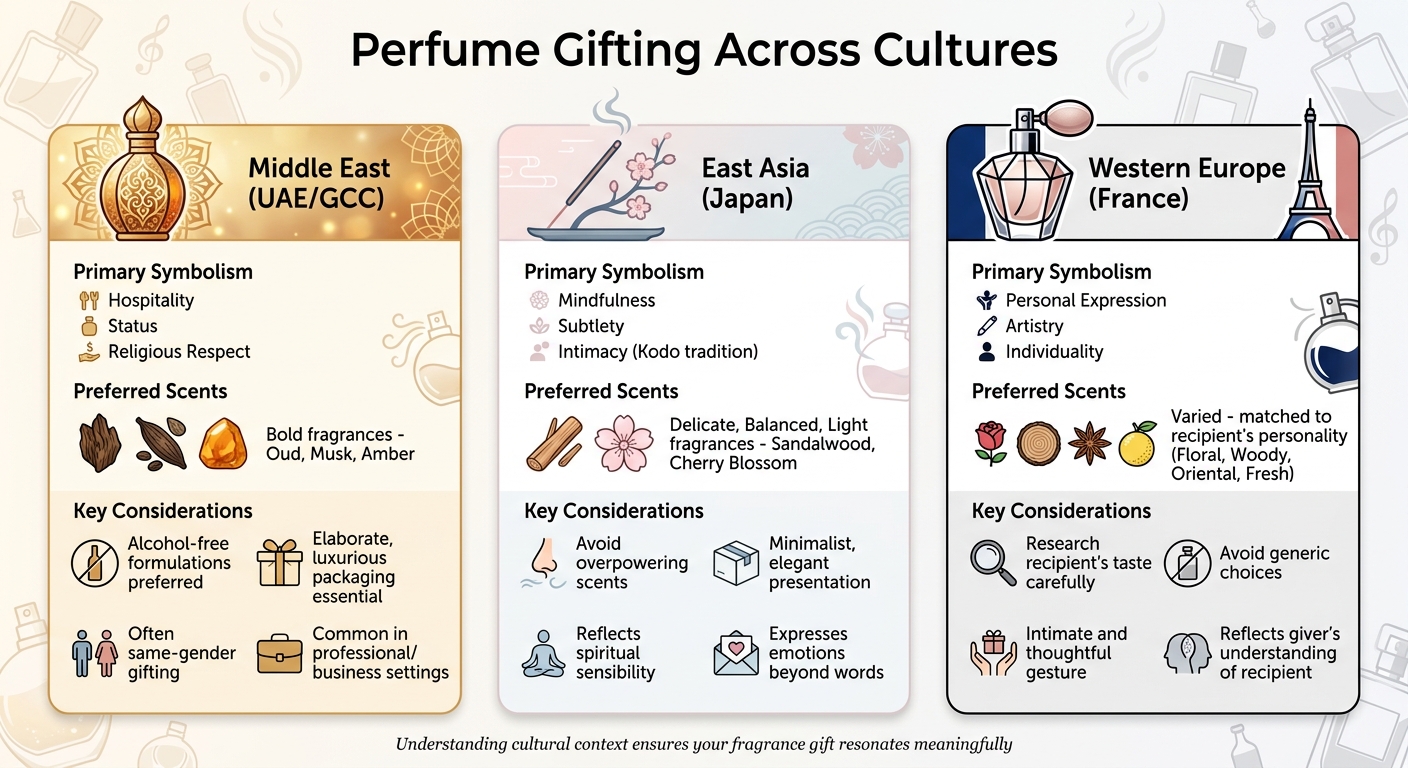
Diferente culturale in alegerea parfumului cadou: Orientul Mijlociu, Japonia si Europa Occidentala
Daruirea unui parfum poarta conotatii variate in functie de spatiul geografic, fiind esential sa tineti cont de cultura destinatarului. Iata o perspectiva asupra modului in care diferite regiuni definesc acest gest rafinat.
In Orientul Mijlociu, parfumul este strans asociat cu ospitalitatea, prestigiul social si evlavia religioasa. Cadourile alese graviteaza adesea in jurul esentelor opulente, cum ar fi oud-ul, moscul si ambra. Prezentarea are o valoare deosebita - o cutie luxoasa si sofisticata este la fel de apreciata precum compozitia olfactiva insasi.
In Japonia, traditia „Kodo” pune accentul pe constienta si contemplarea pura a aromelor. Parfumurile delicate, luminoase si subtil calibrate raspund predilectiei culturale pentru retinere si discretie. Se prefera intotdeauna o prezentare minimalista, care evoca atentia pura indreptata catre celalalt.
In Europa Occidentala, in special in Franta, parfumul daruit este un gest intim de profunda expresie artistica. Nu este vorba doar despre a oferi o compozitie frumoasa, ci despre a gasi acordul perfect care rezoneaza cu individualitatea destinatarului. O alegere generica sau impersonala poate fi interpretata ca o lipsa de consideratie.
Tabelul urmator rezuma aceste particularitati culturale, oferind un ghid practic pentru eticheta din universul aromelor:
| Regiune | Simbolistica principala | Arome preferate | Recomandari de eticheta |
|---|---|---|---|
| Orientul Mijlociu (UAE/GCC) | Ospitalitate, Statut, Respect Religios | Opulente (Oud, Mosc, Ambra) | Formule fara alcool; ambalaje somptuoase |
| Asia de Est (Japonia) | Constienta, Subtilitate, Intimitate | Delicate, Echilibrate, Aeriene | Evitati esentele coplesitoare; alegeti o prezentare minimalista |
| Europa Occidentala (Franta) | Expresie personala, Maiestrie artistica | Variate (In acord cu personalitatea) | Cercetati gusturile destinatarului; evitati esentele comerciale banale |
Constientizarea acestor subtilitati asigura faptul ca parfumul ales devine o punte de apreciere veritabila, cu o rezonanta durabila pentru cel care il primeste.
Concluzie
Parfumul oferit in dar ramane un liant minunat intre oameni, depasind barierele geografice si reflectand bogatia traditiilor universale. De la caldura aromelor dense de oud din Orientul Mijlociu, pana la spiritul contemplativ al ceremoniei japoneze Kodo, fiecare creatie olfactiva tese povesti care trec dincolo de conturul sticlei.
Selectarea aromei potrivite cere intotdeauna atentie si empatie - atat fata de persoana iubita, cat si fata de radacinile sale culturale. Fie ca optati pentru un attar pretios fara alcool pentru un moment de sarbatoare, o formula florala suava pentru un stil minimalist sau o prezentare somptuoasa pentru un partener din Orientul Mijlociu, gestul comunica o admiratie profunda. Dupa cum remarca atat de gratios Audrey Hepburn:
Eleganta este singura frumusete care nu se estompeaza niciodata.
Un parfum ales cu migala transpune tocmai aceasta eleganta atemporala. Inceteaza sa mai fie un simplu obiect si devine o amintire vie. Gratie legaturii sale directe cu sistemul limbic - centrul cerebral al emotiilor noastre -, parfumul are darul rar de a crea conexiuni de neuitat, readucand in memorie prezenta dumneavoastra mult timp dupa momentul intalnirii.
In lumea contemporana, unde modalitatile de a darui evolueaza constant, esentele raman o alegere de exceptie atunci cand sunt oferite cu discernamant. Intelegerea contextului cultural, observarea gusturilor individuale si adaptarea formulei la mediul specific sunt pasi esentiali. De pilda, o concentratie Eau de Parfum ramane alegerea ideala in climatele calde, cum sunt cele din UAE, datorita persistentei indelungate, in vreme ce apele de toaleta discrete si diafane flateaza culturile ce pretuiesc moderatia. Iar cand preferintele raman incerte, seturile discovery se dovedesc a fi o solutie desavarsita si plina de rafinament.
Purtat de intentia corecta, darul unui parfum depaseste caracterul conventional al unui gest - devine o celebrare a traditiilor, o dovada de inalta pretuire si o promisiune a apropierii. Unind constiinta culturala cu intuitia personala, acest gest nobil va ramane mereu o declaratie sublima de afectiune si armonie.
Intrebari frecvente
Este parfumul un cadou adecvat in cultura destinatarului meu?
Adecvarea unui parfum drept cadou depinde in mare masura de contextul cultural. In UAE si in celelalte tari arabe, acesta este considerat o expresie de inalt respect, noblete sufleteasca si afectiune, fiind o alegere predilecta pentru evenimentele majore. In lumea occidentala, parfumul sugereaza apropiere sau este oferit ca o atentie personala, reflectand o cunoastere atenta a celuilalt. Cu toate acestea, dincolo de cutume, este bine de retinut ca in anumite situatii profesionale parfumul poate parea mult prea intim. Acordarea unui moment pentru a intelege contextul cultural si preferintele destinatarului va asigura intotdeauna o primire calda si lipsita de ezitari a cadoului dumneavoastra.
Ce tip de aroma este cea mai sigura atunci cand nu ii cunosc gusturile?
Daca nu sunteti pe deplin sigur de preferintele olfactive ale unei persoane, orientarea catre creatii discrete si luminoase este intotdeauna alegerea inteleapta. Compozitiile florale diafane, acordurile de mosc curat sau notele citrice vibrante sunt reconfortante, elegante si universal indragite, fiind potrivite pentru aproape orice moment sau aniversare.
Ar trebui sa ofer o sticla intreaga sau un set de tip discovery?
Alegerea intre o sticla de marime normala si un set discovery tine de relatia cu destinatarul si de specificul ocaziei. O sticla clasica reprezinta o declaratie clara - este un cadou increzator si durabil, ideal atunci cand cunoasteti cu precizie parfumul preferat al celuilalt. In schimb, un set discovery deschide usa catre o calatorie olfactiva interactiva, oferindu-i libertatea de a explora si de a-si alege propria semnatura. Este optiunea perfecta pentru spiritele curioase sau pentru cei aflati inca in cautarea parfumului definitoriu.

