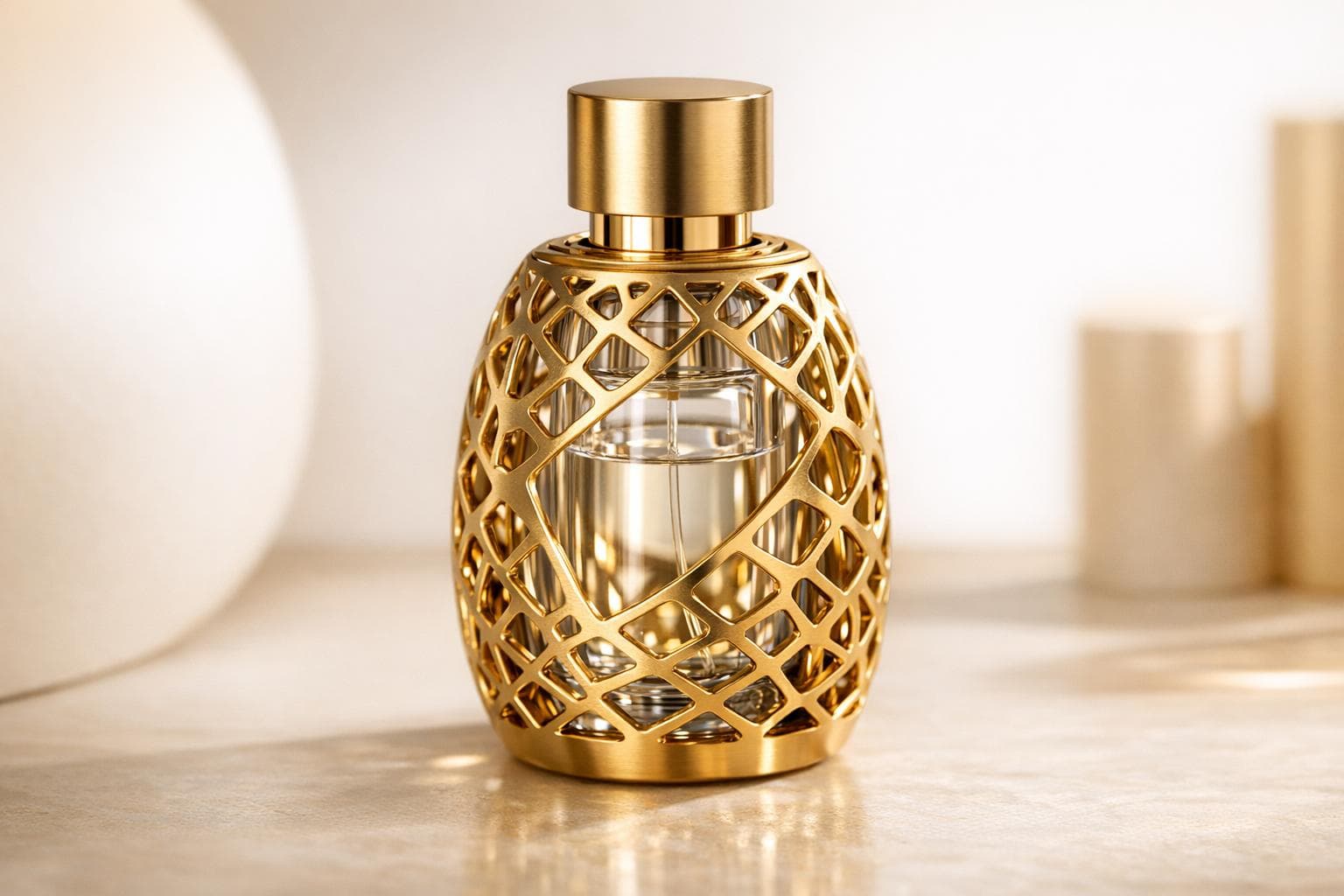
Imprimarea 3D transforma ambalajele de parfum, oferind prototipuri mai rapide, reducand deseurile si deschizand noi posibilitati de design indraznet. Aceasta tehnologie le permite brandurilor sa creeze modele detaliate, reutilizabile si ecologice, reducand in acelasi timp costurile si timpul de productie. De exemplu, L’Oréal a redus dezvoltarea prototipurilor de la cateva saptamani la doar 12 ore cu ajutorul imprimarii 3D. Colectii de lux precum Formula 1 Fragrances si Flowerbomb de la Viktor&Rolf au folosit, de asemenea, imprimarea 3D pentru a produce ambalaje in editii limitate si cu valoare ridicata.
Aspecte esentiale:
- Rapiditate: Prototipurile sunt gata in cateva ore, nu in cateva saptamani.
- Eficienta costurilor: Elimina matritele costisitoare si materialele in exces.
- Posibilitati de design: Permite crearea unor forme si texturi complexe.
- Sustenabilitate: Sustine sistemele reincarcabile si reduce deseurile.
- Personalizare: Permite editii extrem de limitate pentru pietele de nisa.
Aceasta schimbare nu tine doar de eficienta, ci si de redefinirea aspectului si functionalitatii ambalajelor de parfum, pentru a le alinia mai bine preferintelor consumatorilor moderni.
3D Printing for Prototyping and Design Efficiency
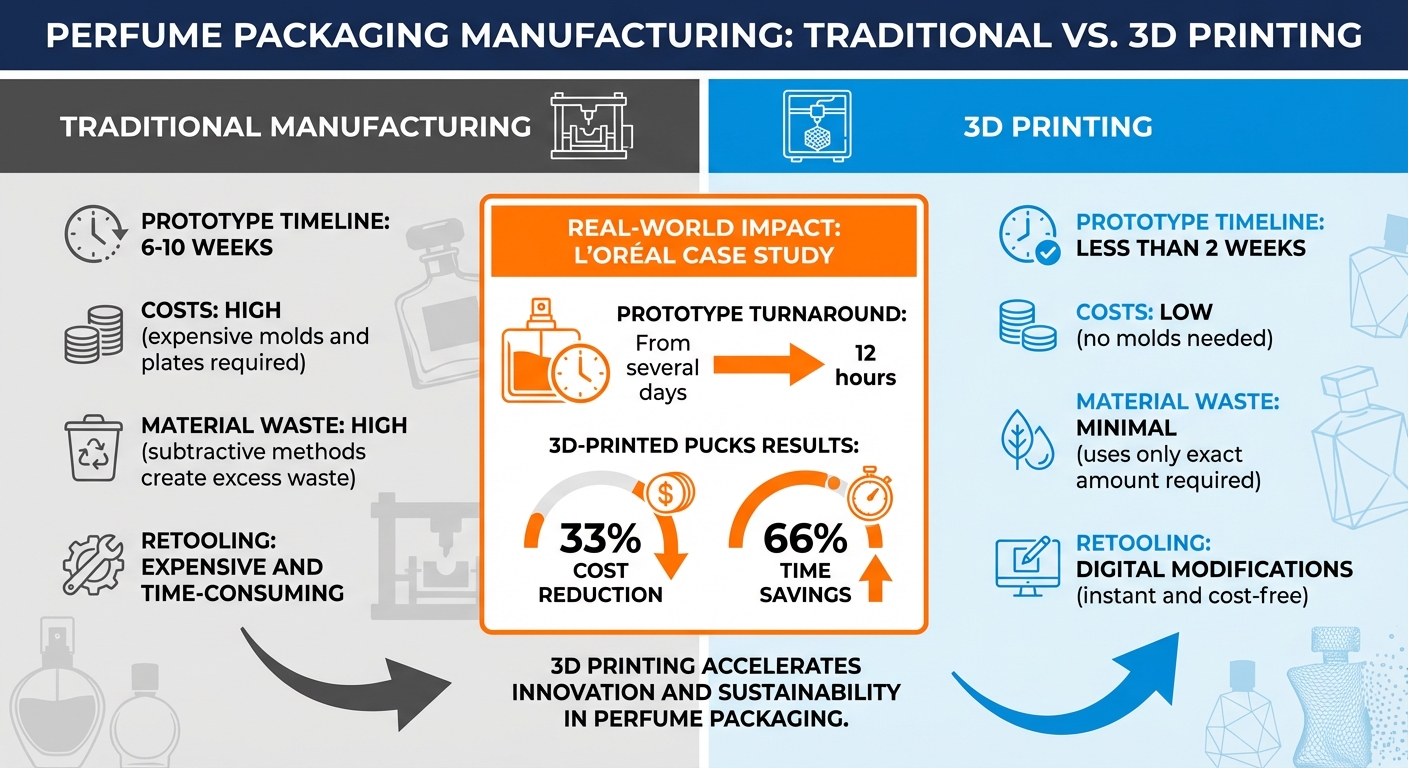
Imprimarea 3D vs productia traditionala de ambalaje de parfum: comparatie intre timp si costuri
Realizarea unui prototip de sticla de parfum era candva un proces indelungat, care dura adesea intre 6 si 10 weeks prin metode traditionale precum turnarea prin injectie. Cu imprimarea 3D, acest interval se reduce drastic, ajungand la mai putin de 2 weeks. Designerii pot lucra direct cu fisiere digitale si pot face modificari instantanee, fara a fi nevoie de reconfigurari costisitoare ale utilajelor. Acest proces simplificat nu doar economiseste timp, ci reduce semnificativ si costurile.
Economii de timp si costuri comparativ cu metodele traditionale
Metodele traditionale de productie se bazeaza pe matrite si placi costisitoare, necesare inainte chiar de realizarea unui prototip. In schimb, imprimarea 3D elimina costurile de reconfigurare a utilajelor si foloseste doar cantitatea exacta de material necesara, evitand deseurile in exces caracteristice metodelor subtractive. L’Oréal este un exemplu remarcabil al acestei transformari. Pana in 2020, compania isi dotase toate centrele de design cu imprimante 3D, reducand timpul de realizare a prototipurilor de la cateva zile la doar 12 ore.
Colaborarea L’Oréal cu HP pentru dezvoltarea unor „puck-uri” reglabile, imprimate 3D — folosite pentru a sustine sticlele de parfum in timpul umplerii — a dus la o reducere a costurilor de 33 % si a timpului de productie de 66 %. Aceasta eficienta nu doar economiseste bani, ci accelereaza si procesul de design, permitand iteratii si imbunatatiri mai rapide.
Testarea si rafinarea rapida a designurilor
Imprimarea 3D faciliteaza si testarea si rafinarea prototipurilor in timp real. La scurt timp dupa finalizarea unui design digital, designerii pot evalua imediat cum se simte sticla in mana, ii pot verifica distributia greutatii si pot testa caracteristici functionale precum potrivirea capacului. Nick Sicilian de la Anomatic subliniaza impactul:
„O folosim pentru a testa potrivirea, senzatia si functionalitatea unui ambalaj, astfel incat sa putem face apoi ajustari. Cand un prototip este imprimat 3D, ofera o aproximare excelenta a distributiei greutatii”.
Acest ciclu rapid de testare le permite brandurilor sa experimenteze cu mai multe variante de design si sa identifice din timp potentialele probleme, evitand reviziile costisitoare ulterioare. Dincolo de economiile de costuri, aceasta abordare sustine inovatiile de design creative si ecologice, facand din imprimarea 3D o tehnologie revolutionara pentru industrie.
Libertate de design si optiuni de personalizare
Imprimarea 3D a transformat complet modul in care designerii isi abordeaza munca, eliberandu-i de limitarile impuse de productia traditionala. Metodele conventionale se bazeaza pe matrite care nu permit realizarea unor detalii complexe, precum decupaje adanci, structuri impletite sau forme organice. In schimb, fabricarea aditiva ofera o lume de posibilitati: exoschelete goale, structuri reticulare programabile si designuri sculpturale care odinioara erau imposibil de produs. Acest salt in capacitatea de design deschide calea catre texturi de suprafata elaborate si solutii de ambalare personalizate.
Forme complexe si texturi de suprafata
Sa luam, de exemplu, tehnologii precum Digital Light Synthesis (DLS) de la Carbon. Prin construirea obiectelor strat cu strat, cu ajutorul procesarii digitale a luminii si al opticii permeabile la oxigen, DLS atinge un nivel impresionant de detaliu. Astfel, brandurile pot crea acum componente integrate — designuri extrem de complexe, care in mod traditional ar necesita mai multe componente si etape de asamblare — realizate ca o singura piesa, fara imbinari.
Precizia tehnologiei DLS permite, de asemenea, redarea unor detalii de suprafata incredibil de fine. Fie ca este vorba despre ramuri spinoase sau motive florale, aceste texturi elaborate necesita foarte putine finisaje pentru a capata un aspect finisat. L’Oréal a remarcat chiar ca "imprimarea 3D extinde limitele mestesugului, permitand crearea unor piese de o precizie, finete si complexitate atat de mari, incat sunt dificil de realizat manual". Aceasta flexibilitate de design este deosebit de valoroasa pentru crearea unor editii personalizate, adaptate diferitelor piete.
Ambalaje personalizate pentru piete specifice
Imprimarea 3D le permite, de asemenea, brandurilor sa produca editii extrem de limitate fara costuri excesive, ajutandu-le sa se diferentieze pe piete competitive. Un exemplu foarte bun este colaborarea dintre Designer Parfums si Formula 1, care au lansat modele inspirate de aerodinamica, atat in versiuni premium din metal, cat si in versiuni mai accesibile din rasina. Aceasta abordare ingenioasa le-a permis sa se adreseze simultan atat colectionarilor de lux, cat si consumatorilor de zi cu zi.
Dupa cum a spus Parag Vidyarthi, Managing Director al Designer Parfums: "Procesul ne permite sa cream forme spectaculoase, imposibil de obtinut prin orice alta metoda". Aceasta adaptabilitate le da brandurilor libertatea de a experimenta cu modele indraznete si neconventionale, pastrand in acelasi timp functionalitatea. De asemenea, le permite sa raspunda preferintelor variate ale consumatorilor de pe diferite piete, fara sa fie nevoite sa-si revizuiasca complet procesele de design.
Expertul tău personal în parfumuri te așteaptă
Completează testul nostru rapid de parfumuri și descoperă parfumuri designer și de nișă autentice, alese pe gustul tău – explorează-le ca decanturi și mostre de 2, 5, 8 și 30 ml, ca să le poți încerca pe fiecare înainte de a alege un flacon întreg.
Descoperă-ți parfumulBeneficiile imprimarii 3D pentru mediu in domeniul ambalajelor
Imprimarea 3D ofera o modalitate mai eficienta de a produce ambalaje, folosind doar materialele necesare. Spre deosebire de metodele traditionale, care implica adesea indepartarea materialului in exces sau utilizarea unor stocuri suplimentare pentru matrite, aceasta tehnologie construieste obiectele strat cu strat, eliminand risipa inutila.
Reducerea risipei prin fabricatie precisa
Trecerea de la fabricatia subtractiva la cea aditiva aduce avantaje evidente. Designerul industrial Ross Lovegrove subliniaza eficienta acestei metode:
"Utilizarea imprimarii 3D este extrem de eficienta si nu genereaza deseuri; se produc doar formele necesare, la fel ca in cazul unei masini F1".
Stéphane Beauchemin, Vice President of Sales & Marketing la Plastube, impartaseste aceeasi parere:
"Imprimarea digitala inseamna si «imprimare la cerere», asa ca se genereaza mai putine deseuri".
L’Oréal ofera un exemplu convingator in acest sens. Prin integrarea unor suporturi universale imprimate 3D - suporturi reglabile, cu lame retractabile, concepute pentru a se potrivi diferitelor forme de sticle - compania a obtinut o reducere a costurilor de 33 % si o economie de timp de 66 %. Aceasta inovatie a eliminat si nevoia de a folosi piese diferite pentru fiecare tip de sticla, demonstrand cum imprimarea 3D poate reduce semnificativ consumul de materiale si timpul de productie.
Utilizarea materialelor biodegradabile si reciclabile
Alegerea materialelor joaca un rol esential in crearea unor ambalaje sustenabile. Imprimarea 3D permite utilizarea unor optiuni avansate, precum titanul, otelul inoxidabil si materialele plastice biodegradabile, care respecta reglementari stricte. De asemenea, permite crearea unor modele monomateriale - ambalaje realizate integral dintr-un singur material - ceea ce simplifica mult reciclarea, eliminand nevoia de a separa componentele . Aceasta abordare simplificata se potriveste perfect conceptelor de design reincarcabil, sporind si mai mult sustenabilitatea.
Sisteme de ambalare reincarcabile si modulare
Imprimarea 3D revolutioneaza ambalajele, facand modelele reincarcabile si modulare mai accesibile. Un exemplu remarcabil este "Engineered Collection" de la Formula 1, lansata in noiembrie 2020 de Designer Parfums si Ross Lovegrove. Colectia include exoschelete din rasina de tehnopolimer, imprimate 3D si inspirate de designul sasiurilor F1. Aceste carcase rezistente gazduiesc recipiente de parfum de 75 ml, pe care utilizatorii le pot inlocui si reutiliza . Aceasta abordare nu doar prelungeste durata de viata a ambalajului, ci reduce si deseurile de unica folosinta.
Pe masura ce piata globala a ambalajelor pentru parfumuri se dezvolta - de la $706,8 million in 2023 la o valoare estimata de $890,5 million pana in 2032 - astfel de inovatii vor juca probabil un rol esential in conturarea unui viitor mai sustenabil.
Ce urmeaza pentru imprimarea 3D in ambalajele pentru parfumuri
Progresele rapide in domeniul imprimarii 3D deschid noi posibilitati pentru ambalajele de parfum, combinand designul de ultima generatie cu functionalitatea imbunatatita. Pentru brandurile de parfumuri, aceasta inseamna ocazia de a adopta modele elaborate, solutii de ambalare mai inteligente si oportunitati de inovare pentru companii de toate dimensiunile. Aceste evolutii redefineste modul de utilizare a materialelor si introduc functionalitati de inalta tehnologie in ambalaje.
Imprimarea cu mai multe materiale si functionalitati avansate
Imprimantele 3D moderne pot lucra simultan cu mai multe materiale, permitand crearea unor componente de ambalaj care combina proprietati diferite intr-un singur obiect. De exemplu, tehnologii precum Digital Light Synthesis (DLS) de la Carbon folosesc rasini programabile, care produc piese cu rezistenta ridicata si finisaje detaliate. Aceste rasini pot include chiar si proprietati activate de caldura, pentru a rezolva probleme precum fragilitatea observata la versiunile anterioare.
Asta inseamna ca designerii pot crea acum structuri complexe care anterior necesitau mai multe componente si asamblare. De exemplu, structurile reticulare integrate sau „exoscheletele” elaborate pot proteja sticlele delicate de parfum, oferind in acelasi timp un aspect indraznet si captivant. Ross Lovegrove, designerul din spatele Formula 1 Fragrances Engineered Collection, descrie potentialul transformator al acestor inovatii:
„In viitor, va trebui sa ne obisnuim cu idei care ne transforma vietile — mai organice, mai dinamice si semnificativ diferite de ceea ce cunoastem astazi”.
Aceste progrese deschid, de asemenea, calea integrarii componentelor electronice direct in ambalaj, astfel incat sticlele sa fie nu doar frumoase, ci si interactive si functionale.
Imbinarea imprimarii 3D cu ambalajele inteligente
Combinatia dintre imprimarea 3D si tehnologia inteligenta reprezinta un pas important inainte. Producatorii pot proiecta acum sticle cu canale interne elaborate, in care sa integreze cerneluri conductoare, creand circuite electrice. De asemenea, pot opri temporar procesul de imprimare pentru a insera in ambalaj componente precum etichete NFC, LED-uri sau microcontrolere. Aceasta abordare hibrida permite crearea unor ambalaje inteligente care pot face totul, de la monitorizarea nivelului parfumului pana la detectarea conditiilor ambientale, precum temperatura sau umiditatea. Unele modele ar putea chiar declansa experiente de realitate augmentata atunci cand sunt scanate cu un smartphone.
Tehnologia NFC (Near Field Communication) este deja lider in domeniul ambalajelor interactive, detinand aproximativ 60 % din piata datorita gestionarii securizate si de mare capacitate a datelor. Gratie imprimarii 3D, aceste cipuri pot fi acum integrate perfect in sticlele de parfum, fara a le compromite aspectul vizual. Asta inseamna ca este probabil sa vedem tot mai multe ambalaje care se conecteaza direct cu consumatorii, oferind atat functionalitate, cat si o experienta personalizata.
Sustinerea brandurilor mici si de nisa
Unul dintre cele mai captivante aspecte ale imprimarii 3D in ambalajele pentru parfumuri este potentialul sau de a sustine brandurile mai mici. Fabricarea traditionala presupune costuri ridicate pentru scule si perioade lungi de productie, insa imprimarea 3D reduce considerabil atat cheltuielile, cat si timpii de livrare. Astfel, prototipurile pot fi realizate mai rapid, iar modelele in editie limitata pot fi produse la scara redusa. Parag Vidyarthi, Managing Director la Designer Parfums, subliniaza acest avantaj:
„Procesul ne permite sa cream forme si structuri spectaculoase, imposibil de obtinut prin orice alta metoda”.
Pentru brandurile de nisa, aceasta tehnologie le permite sa concureze cu giganti de lux. Acum pot produce editii ultraexclusive in cantitati de doar 15 pana la 100 de unitati, conferind produselor lor un caracter rar. Un exemplu remarcabil este colectia Formula 1 Fragrances, care a inclus sticle din rasina tehnopolimerica, cu preturi cuprinse intre 250 € si 333 €, alaturi de variante din titan placat cu aur, care au ajuns la 10.000 €. Pentru jucatorii mai mici, imprimarea 3D transforma ambalajele personalizate dintr-un vis indepartat intr-un obiectiv realizabil.
Concluzie: cum schimba imprimarea 3D ambalajele pentru parfumuri
Imprimarea 3D revolutioneaza ambalajele pentru parfumuri, facandu-le mai sustenabile, adaptabile si potrivite preferintelor individuale. Spre deosebire de metodele traditionale de fabricatie, care presupun taiere si turnare si duc adesea la risipa de materiale, imprimarea 3D foloseste doar cantitatea exacta necesara, reducand considerabil deseurile. De asemenea, accelereaza realizarea prototipurilor si reduce costurile, sporind eficienta productiei.
O inovatie remarcabila este crearea sistemelor de ambalaje reincarcabile. De exemplu, Formula 1 Fragrances a introdus exoschelete elaborate, imprimate 3D, concepute pentru a gazdui flacoane de parfum inlocuibile. Astfel, clientii pot pastra invelisul exterior cu design elegant si pot inlocui pur si simplu sticla interioara. Acest concept se aliniaza tendintei tot mai raspandite de reducere a deseurilor, asemenea preferintei Scento pentru decanturi mai mici in locul sticlelor intregi. Astfel de evolutii reflecta orientarea catre solutii de ambalare ecologice si personalizabile.
Posibilitatile creative oferite de imprimarea 3D se extind, de asemenea. Aceasta tehnologie le permite brandurilor sa produca modele elaborate si editii limitate fara costurile ridicate ale sculelor traditionale. Chiar si brandurile mai mici pot crea acum serii exclusive de numai 15 pana la 50 de unitati.
In plus, imprimarea 3D raspunde cererii tot mai mari pentru produse personalizate. Flexibilitatea procesului le permite brandurilor sa testeze, sa perfectioneze si sa adapteze rapid modelele in functie de preferintele consumatorilor. Dincolo de imbunatatirea esteticii ambalajelor, aceste progrese deschid calea catre o abordare mai eficienta si sustenabila a testarii parfumurilor.
Pentru platformele axate pe descoperirea parfumurilor, aceste inovatii sustin o abordare mai ecologica a testarii si a alcatuirii unei colectii. Tehnicile de fabricatie de precizie folosite pentru sticlele de lux reincarcabile pot inspira, de asemenea, crearea unor atomizoare reutilizabile si a unor sisteme de ambalare modulare, reducand deseurile si pastrand in acelasi timp o calitate exceptionala.
Intrebari frecvente
Cum contribuie imprimarea 3D la reducerea deseurilor in ambalajele pentru parfumuri?
Imprimarea 3D le permite brandurilor de parfumuri sa realizeze prototipuri precise, la cerere, facilitand ajustarea modelelor inainte de inceperea productiei la scara larga. Acest proces ajuta la economisirea materialelor si evita risipa, impiedicand fabricarea modelelor cu defecte.
Cu ajutorul acestei tehnologii, brandurile pot explora forme indraznete si neconventionale, tinand totodata cont de sustenabilitate. Toata lumea are de castigat: se reduc deseurile de ambalaje si se promoveaza practici responsabile fata de mediu in industria parfumurilor.
De ce este imprimarea 3D avantajoasa pentru brandurile mici si de nisa de parfumuri?
Imprimarea 3D deschide posibilitati captivante pentru brandurile mici si de nisa de parfumuri, care pot crea ambalaje complexe, personalizate, ce ies cu adevarat in evidenta. Spre deosebire de metodele traditionale de turnare, aceasta tehnologie permite crearea unor forme, texturi si finisaje unice, oferind brandurilor posibilitatea de a spune o poveste vizuala care rezoneaza cu colectionarii si pasionatii. In plus, elimina costurile ridicate asociate matritelor din otel, fiind o optiune practica pentru ambalajele in editie limitata sau unicat.
Pentru brandurile noi, imprimarea 3D simplifica procesul de prototipare, oferind o modalitate mai rapida si mai eficienta de a perfectiona designul sticlelor inainte de a trece la productia la scara larga. Aceasta abordare nu doar economiseste timp, ci reduce si riscurile financiare, mai ales cand se experimenteaza cu parfumuri noi. Precizia imprimarii 3D asigura componente de inalta calitate — precum capacele si pulverizatoarele — iar modelul de productie la cerere contribuie la reducerea deseurilor, in acord cu valorile ecologice. Aceste beneficii fac din imprimarea 3D o alegere inteligenta pentru brandurile care vor sa creeze ambalaje exclusive, de inalta calitate, ce reflecta viziunea lor unica.
Cum transforma imprimarea 3D ambalajele personalizate si exclusive pentru parfumuri?
Imprimarea 3D a deschis posibilitati captivante pentru brandurile de parfumuri, permitandu-le sa creeze modele complexe si personalizate, dificil — sau prohibitiv de costisitor — de realizat prin metode traditionale precum suflarea sticlei sau turnarea prin injectie. Construind obiecte strat cu strat pornind de la un proiect digital, brandurile pot experimenta cu forme, texturi si detalii fine unice, fara sa depinda de instrumente de productie la scara larga. Aceasta metoda faciliteaza si producerea la cerere a ambalajelor personalizate sau in editie limitata.
Brandurile de lux au adoptat deja aceasta tehnologie in moduri spectaculoase. De exemplu, Viktor & Rolf a sarbatorit cea de-a 15-a aniversare a Flowerbomb cu sticle „spin si floare” din aur roz, fiecare lucrata manual cu meticulozitate si avand pretul de $2.500. In mod similar, Formula 1 a lansat sticle de parfum cu exoschelet din titan placat cu aur, combinand designul de ultima generatie cu exclusivitatea. La o scara mai mica, retailerii de nisa precum Scento folosesc imprimarea 3D pentru a crea atomizoare cu design unic pentru colectii in editie limitata. Aceasta abordare permite crearea unor modele remarcabile si contribuie, totodata, la reducerea deseurilor prin evitarea problemelor productiei de masa.

