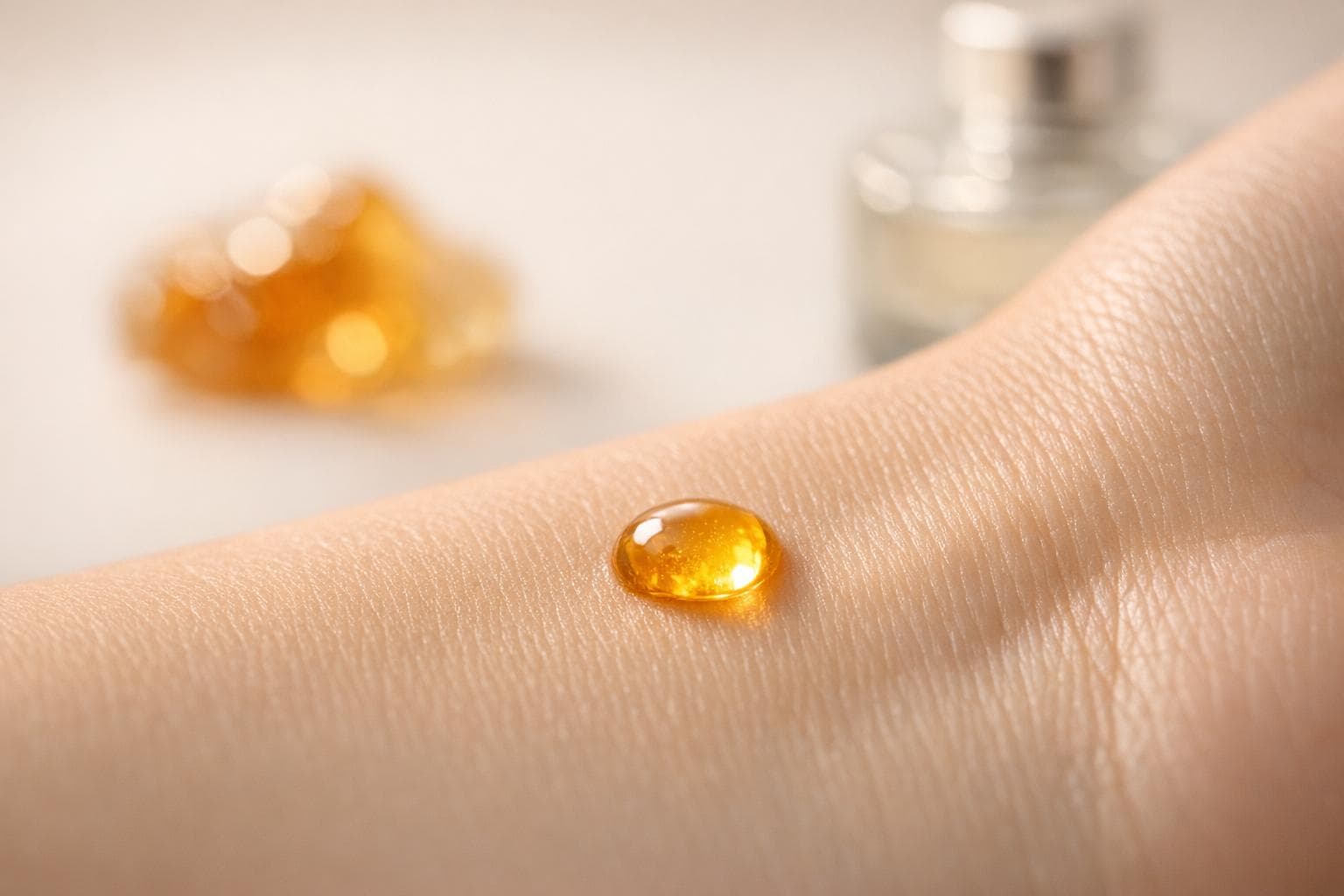
Ambra in parfumerie nu este un ingredient singular, ci un amestec de labdanum, benzoina, vanilie si alte elemente care creeaza o aroma calda si de lunga durata. Actioneaza ca un fixator, ajutand parfumurile sa persiste intre 6 si 12 ore, si face trecerea armonioasa intre notele de varf si cele de baza pentru un echilibru perfect. In 2026, parfumurile de ambra mai usoare, intime, care raman aproape de piele, domina piata, punand accentul pe subtilitate mai degraba decat pe o proiectie puternica. Moleculele sintetice precum Ambroxan au inlocuit ambergris-ul natural din cauza costurilor si a preocuparilor etice, aliniindu-se la preferintele moderne pentru optiuni sustenabile.
Puncte-cheie:
- Bazele ambrei: Un acord creat, nu un material natural, care ofera caldura si profunzime.
- Tendinte actuale: Aromele de ambra mai usoare si mai intime sunt la mare cautare, optiunile unisex si sustenabile conducand piata.
- Cum sa alegi: Potriveste stilurile de ambra (de exemplu, clasica, alba, lemnoasa) cu chimia pielii tale, sezonul si ocazia.
- Sustenabilitate: Alternativele sintetice pentru ambra au devenit un standard datorita costului (€50–€200/kg) si consideratiilor etice.
Versatilitatea ambrei o transforma intr-un pilon al parfumeriei moderne, fie pentru purtarea zilnica, fie pentru ocazii speciale. Testarea prin decanturi inainte de a cumpara o sticla intreaga iti garanteaza ca vei gasi alegerea ideala pentru stilul tau.
Analiza aprofundata a parfumurilor cu ambra | Lansari noi vs. capodopere clasice
Intelegerea notelor de ambra si a caldurii lor in parfumuri
Ambra nu este un ingredient unic, ci un acord atent elaborat din mai multe componente, menit sa evoce o senzatie de caldura si intimitate. Dupa cum explica parfumierul Kamila Aubre:
"Ambra este adesea una dintre primele structuri de baza pe care parfumierii invata sa le construiasca, dar ramane una dintre cele mai neintelese. Mai degraba decat o formula fixa, ambra exista ca o idee: calda, rasinoasa si invaluitoare..."
Haideti sa detaliem elementele care contribuie la profilul emblematic al ambrei.
Ingredientele-cheie ale ambrei
Magia unui acord de ambra consta in componentele sale individuale, fiecare aducand o nota distincta. Labdanum, obtinut din arbustii mediteraneeni de cistus, serveste drept baza, oferind o profunzime siropoasa, usor afumata. Benzoina, extrasa din scoarta arborilor de styrax, adauga o bogatie dulce, asemanatoare vaniliei, cu un accent discret de mirodenii. Impreuna, acestea doua formeaza inima rasinoasa a ambrei.
La aceasta se adauga vanilia si boabele de tonka, care confera o finete catifelata, mierata, facand amestecul fluid si invaluitor. Paciuli ofera o nota pamantie si echilibrata, care tempereaza dulceata, in timp ce ambroxan, o molecula sintetica derivata din salvie, leaga totul armonios printr-un finisaj cremos, lemnos si o stabilitate de lunga durata.
| Ingredient | Origine | Contributie olfactiva |
|---|---|---|
| Labdanum | Arbust mediteranean de Cistus | Siropoasa, afumata, cu note de piele |
| Benzoina | Scoarta de arbore Styrax | Dulce, vanilata, cu accente condimentate |
| Ambroxan | Salvie (Sintetic) | Lemnoasa, cremoasa, persistenta |
| Vanilie | Origine vegetala | Textura mierata, catifelata |
| Paciuli | Origine vegetala | Pamantie, afumata, ancoranta |
| Boabe de tonka | Origine vegetala | Dulceata cremoasa, de migdale |
Aceste ingrediente actioneaza in armonie deplina pentru a crea caldura bogata si invaluitoare care defineste ambra in parfumerie.
Cum functioneaza ambra in structura unui parfum
Ambra este folosita de obicei ca nota de baza in parfumuri. Moleculele sale mai grele se evapora lent, permitand aromelor centrate pe ambra sa persiste pe piele intre 6 si 12 ore, sau chiar mai mult pe materiale textile. Dincolo de longevitatea sa, ambra defineste si personalitatea generala a compozitiei.
Atunci cand este alaturata unor note florale, ambra le amplifica delicatetea, creand un buchet mai cald si mai primitor. Combinata cu condimente precum sofranul sau scortisoara, tempereaza accentele ascutite cu o dulceata ca de miere. Cand este asociata cu note lemnoase, adauga o profunzime cremoasa care desavarseste compozitia. Pe masura ce pielea se incalzeste de-a lungul zilei, rasinile de ambra se activeaza, facand ca parfumul sa para si mai intim si personal.
"Cele mai remarcabile [acorduri de ambra] sunt un contrapunct intre dulceata si accente pamantii, o complexitate care continua sa se dezvolte pe parcursul multor ore." - Fragrance London
Acordurile de ambra, care reprezinta de obicei 5–20% dintr-un parfum, influenteaza totul, de la notele de inima pana la dry-down-ul persistent, lasand o amprenta memorabila care evolueaza spectaculos in timp.
Tendintele ambrei in parfumurile de lux in 2026
In 2026, ambra a facut trecerea de la prezenta sa traditionala, densa si grea, la un rol mai versatil si mai discret, oferind o caldura subtila, aproape de piele.
De la ambra opulenta la ambra aerata
In 2026, accentul cade pe caldura intima, la nivelul pielii, mai degraba decat pe o proiectie coplesitoare care umple incaperea. In Germania si in intreaga Europa, pasionatii de parfumuri se indreapta acum catre arome care par personale si retinute.
"Parfumeria intra intr-o era mai constienta, definita nu prin volum sau proiectie, ci prin nuanta, textura si o intimitate discreta." - Miller Harris
Aceasta schimbare i-a inspirat pe parfumieri sa creeze "ambre catifelate", combinand note delicate de mosc si esente lemnoase luminoase pentru a obtine un efect radiant si rafinat. Un exemplu remarcabil este Melody de la Miller Harris, lansat in 2026, care combina acorduri florale subtile si mosc discret pentru a crea o aroma ce ramane aproape de piele, evoluand bland pe parcursul intregii zile. Aceasta abordare redefineste ambra ca o nota versatila, permitandu-i sa se adapteze cu usurinta diverselor familii olfactive.
Ambra in diferite familii olfactive
Noua subtilitate a ambrei a transformat-o intr-o componenta esentiala in diverse familii olfactive, de la gourmand la parfumuri lemnoase si florale, cu un accent din ce in ce mai mare pe creatiile unisex.
In ianuarie 2026, Tom Ford a lansat Figue Érotique, un parfum ambrat-fructat centrat pe smochine, care imbina profunzimea ambrei cu prospetimea smochinei mediteraneene, creand o compozitie indrazneata, dar plina de finete. Aceasta creatie demonstreaza modul in care ambra poate adauga o complexitate senzuala unor ingrediente clasice, dandu-le o alura moderna si bine stratificata.
"Distinctia dintre parfumurile ‘pentru el’ si ‘pentru ea’ continua sa dispara. In 2026, parfumurile gender-neutral nu mai sunt doar o tendinta; au devenit o normalitate." - Johnny Webber, Head of E-commerce, Perfume Direct
In spatiul de limba germana, unde calitatea si discretia au intotdeauna prioritate in fata noutatilor trecatoare, abilitatea ambrei de a uni finetea florala, bogatia lemnoasa si caldura gourmand se potriveste perfect cu preferintele rafinate ale pietei.
Ambra sintetica si sustenabilitatea
Preocuparile legate de sustenabilitate au dus la o renuntare vizibila la ambergris-ul natural in favoarea alternativelor de sinteza. Ambergris-ul natural, evaluat la peste €20.000 per kilogram, lipseste tot mai mult din lansarile de lux din cauza pretului prohibitiv si a reglementarilor stricte impuse de CITES si IFRA. In locul sau, molecule precum Ambroxan, derivate din salvie, au devenit alegerea principala. Cu preturi intre €50 si €200 per kilogram, aceste ingrediente sintetice ofera un profil lemnos-ambrat constant, etic si de inalta calitate.
Parfumierii apeleaza tot mai des si la analiza headspace, o tehnica de laborator care recreeaza structura moleculara a materialelor rare fara a le recolta, oferind o solutie sustenabila care respecta valorile consumatorilor contemporani.
"Considerentele legate de sustenabilitate incurajeaza folosirea rasinilor vegetale si a moleculelor de sinteza in detrimentul ambergris-ului de origine animala." - CA Perfume Editorial
Un exemplu elocvent al acestei directii este parfumul Remain lansat de Amouage in mai 2026, ca parte a colectiei "The Essences: Act II". Creat de Pierre Negrin, parfumul mentioneaza ambergris-ul ca nota de baza, dar utilizeaza stabilizatori sintetici precum Iso E Super si vanilina pentru a-si contura amprenta lemnoasa, picanta si ambrata. Cu un pret de €475 pentru 100 ml, acesta ilustreaza modul in care casele de lux imbina maiestria traditionala cu chimia de avangarda pentru a atinge standarde etice si calitative desavarsite.
Aceste directii subliniaza evolutia ambrei in parfumeria de lux, pastrandu-i farmecul atemporal si integrandu-l intr-un context definit de sustenabilitate si eleganta subtila.
Expertul tău personal în parfumuri te așteaptă
Completează testul nostru rapid de parfumuri și descoperă parfumuri designer și de nișă autentice, alese pe gustul tău – explorează-le ca decanturi și mostre de 2–8ml, ca să le poți încerca pe fiecare înainte de a alege un flacon întreg.
Descoperă-ți parfumulCum sa alegi parfumul ambrat potrivit pentru tine
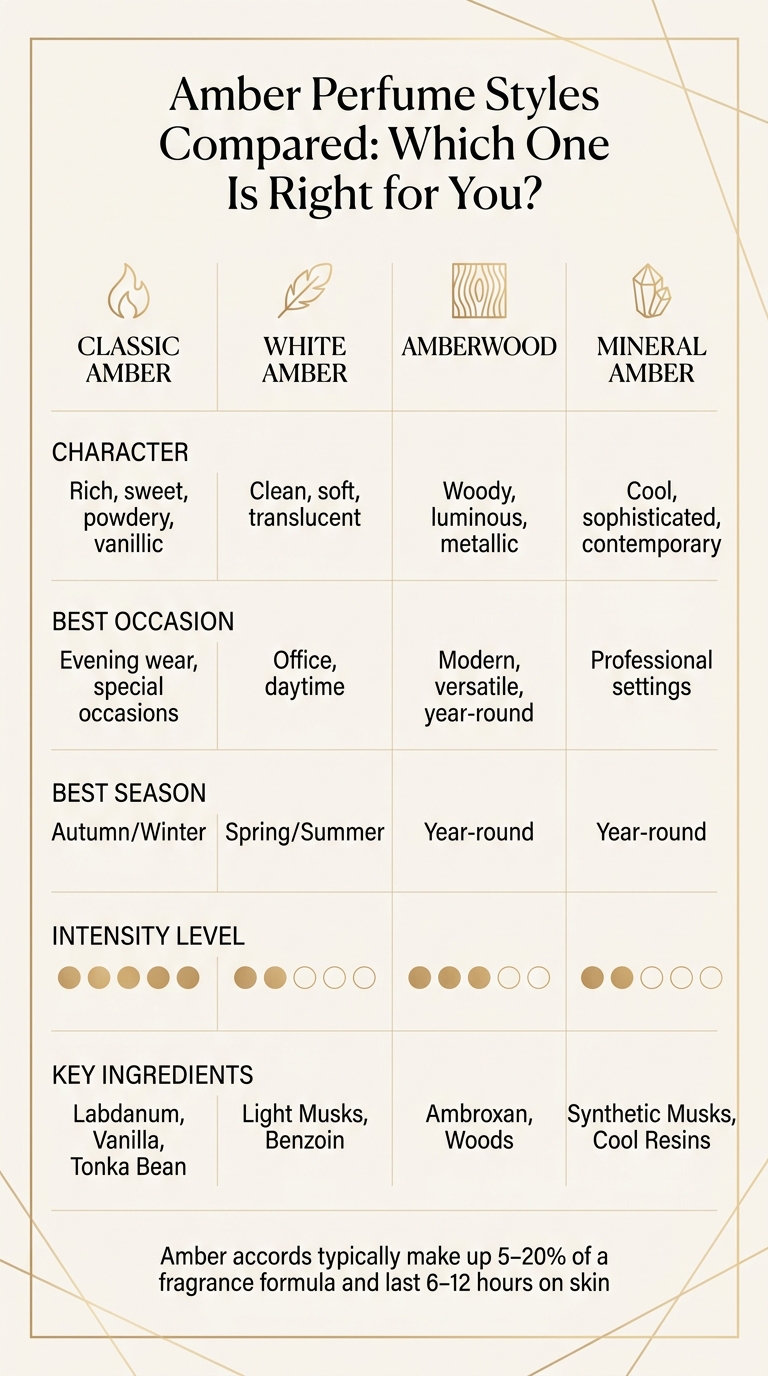
Stiluri de parfumuri ambrate comparate: Care este potrivit pentru tine?
Descoperirea propriului stil de ambra
Caldura si complexitatea ambrei o transforma intr-o familie olfactiva extrem de versatila, insa caracterul sau variaza semnificativ in functie de notele alese. De pilda, formulele bogate in labdanum confera o profunzime rasinoasa, cu tente de piele, in timp ce cele axate pe benzoina si vanilie dezvolta un profil mai catifelat si mai dulce. Variatiunile moderne de ambra lemnoasa (amberwood), precum cele din Baccarat Rouge 540, adauga o tusa radianta si usor metalica.
Pentru a identifica ambra perfecta pentru tine, incepe prin a defini ceea ce iti atrage atentia. Daca aromele clasice ti se par prea dulci, un stil mineral sau lemnos-ambrat s-ar putea sa fie mult mai potrivit. Pe de alta parte, daca preferi o opulenta seducatoare, o ambra traditionala imbogatita cu vanilie si boabe de tonka va fi alegerea ideala.
| Stil de ambra | Caracter | Punct de plecare recomandat |
|---|---|---|
| Ambra clasica | Bogata, dulce, pudrata, vanilata | Purtare de seara, sezon rece |
| Ambra alba | Curata, delicata, translucida | Birou, zi, primavara |
| Amberwood (Ambra lemnoasa) | Lemnoasa, luminoasa, metalica | Moderna, versatila, pe tot parcursul anului |
| Ambra minerala | Proaspata, sofisticata, contemporana | Medii profesionale |
Pentru a explora aceste directii, apeleaza la decanturile Scento pentru a vedea cum se transforma parfumul pe pielea ta.
Testarea parfumurilor ambrate cu decanturi Scento

Parfumurile ambrate sunt renumite pentru interactiunea lor dinamica cu chimia pielii. Caldura corporala activeaza rasinile, permitand parfumului sa infloreasca pe parcursul a 20–60 de minute. Din acest motiv, testarea atenta inainte de achizitionarea unei sticle mari este intotdeauna o decizie inspirata.
Scento pune la dispozitie decanturi in variante de 2 ml, 5 ml si 8 ml, facand facila explorarea acestei complexitati. O monstra de 2 ml este perfecta pentru primele impresii, in timp ce varianta de 8 ml (aproximativ 120 de pulverizari) iti ofera timpul necesar pentru o evaluare aprofundata. Abonamentul lunar Scento porneste de la €12,90, oferindu-ti libertatea de a descoperi compozitii exclusiviste fara o investitie majora.
"O ambra autentica radiaza caldura si profunzime. Intelegerea acestei diferente schimba radical felul in care iti alegi parfumurile." - Parfums de Famille
Odata ce ai identificat compozitia ambrata preferata, pasul urmator este integrarea acesteia in garderoba ta olfactiva, in armonie cu anotimpurile si contextul in care o porti.
Asocierea aromelor de ambra cu anotimpul si ocazia
Intensitatea ambrei ar trebui aleasa intotdeauna in acord cu ocazia si spatiul in care te afli. Variatiile mai fluide, cum sunt White Amber sau acordurile de amberwood, sunt optiuni desavarsite pentru diminetile de primavara, la birou sau ori de cate ori iti doresti o caldura subtila, fara a fi incarcata. In schimb, ambrele opulente, asociate frecvent cu oud, smirna sau mirodenii pretioase, stralucesc iarna sau la evenimentele nocturne, unde temperaturile scazute le potenteaza misterul si proiectia.
O abordare inteligenta este sa incepi cu o varianta discreta, precum White Amber sau amberwood, pentru tinutele zilnice. Ulterior, completeaza-ti selectia cu o ambra clasica pentru zilele reci sau ocaziile de gala. Poti chiar sa combini parfumurile ambrate prin layering cu note complementare, adaptandu-le la diverse momente si stari de spirit.
Cum sa porti si sa pastrezi parfumurile ambrate
Recomandari pentru aplicare
Parfumurile ambrate infloresc cu adevarat atunci cand sunt aplicate in zonele corpului unde caldura naturala le amplifica notele. De exemplu, pulverizarea parfumului pe piept permite caldurii corporale sa difuzeze rasinile aromatice pe tot parcursul zilei.
"Parfumurile cu ambra proiecteaza exceptional prin caldura corpului. Aplicarea pe piept functioneaza remarcabil, deoarece temperatura pielii ajuta compozitia sa se difuzeze continuu." - Parfums de Famille
In lunile mai reci (din octombrie pana in februarie), cand pielea este in mod natural mai uscata, aplicarea unei lotiuni hidratante fara parfum inainte de pulverizare ajuta notele de ambra sa adere mai bine si sa reziste mult mai mult. Pentru primavara si vara, alegerile ideale sunt variantele luminoase, precum White Amber sau Mineral Amber. In aceste cazuri, 2–3 pulverizari dintr-o apa de parfum sunt suficiente pentru o proiectie echilibrata.
Cand stabilesti cantitatea aplicata, tine cont de concentratia parfumului tau:
- Eau de Cologne: 4–5 pulverizari
- Eau de Toilette: 3–4 pulverizari
- Eau de Parfum: 2–3 pulverizari
- Extrait de Parfum: O singura pulverizare este suficienta
Pastrarea corecta a decanturilor dupa utilizare iti va asigura o experienta olfactiva impecabila de fiecare data.
Cum sa folosesti la maximum decanturile Scento
Un decant Scento de 8 ml asigura in jur de 120 de pulverizari, fiind ideal pentru o evaluare de durata. Pentru a intelege cu adevarat cum se comporta un parfum ambrat, incearca aceasta metoda: poarta un parfum timp de trei zile, alege altul pentru urmatoarele trei zile, iar in a saptea zi compara-le in diferite conditii de temperatura si mediu. Aceasta tehnica te ajuta sa observi cum evolueaza pe piele si cum reactioneaza la schimbarile de sezon.
Pentru a proteja calitatea decanturilor tale, depoziteaza-le intr-un sertar racoros, ferit de lumina directa a soarelui. Evita fluctuatiile bruste de temperatura, deoarece rasinile delicate de ambra se pot degrada in astfel de conditii.
Reimprospatarea colectiei de parfumuri ambrate in functie de sezon
Odata cu ascensiunea creatiilor ambrate versatile in 2026, adaptarea colectiei tale in functie de anotimp iti permite sa te bucuri din plin de farmecul lor versatil. Aproximativ 60% dintre pasionatii de arome prefera astazi sa alterneze parfumurile in loc sa ramana fideli unei singure semnaturi olfactive tot anul.
Folosind decanturile de testare drept ghid, reimprospateaza-ti colectia in acord cu schimbarile sezoniere. Variantele de 2 ml sau 5 ml de la Scento sunt optiunea perfecta pentru a explora lansari recente sau noi interpretari de ambra, fara a fi nevoie sa achizitionezi un flacon intreg. Cu timpul, iti poti compune o colectie impecabila si armonioasa, precum:
- O ambra lemnoasa curata pentru purtarea de zi cu zi in timpul primaverii
- O ambra florala pentru serile calde de vara
- O ambra densa, rasinoasa pentru lunile friguroase de iarna
Cand explorezi noi parfumuri, cauta termeni precum "luminos" sau "translucid" pentru perioadele calde si "rasinos" sau "licoros" pentru compozitiile hibernale. Aceasta rotatie sezoniera garanteaza ca alegerile tale raman mereu actuale si perfect sincronizate cu momentul.
De ce ambra merita un loc in colectia ta de parfumuri in 2026
Ambra poseda calitatea rara de a innobila o creatie olfactiva, ancorand notele volatile si oferind o longevitate exceptionala – persistand frecvent intre 6 si 12 ore. Reactioneaza intim la caldura corpului, lasand in urma o amprenta olfactiva profund personala si inconfundabila.
In 2026, ambra continua sa isi etaleze spectrul amplu de expresie, de la caldura atemporala a formulelor rasinoase pana la gratia pura a compozitiilor de tip White Amber. Aceasta versatilitate o face ideala pentru orice gust, sezon sau ocazie speciala. Parfumierul Kamila Aubre surprinde acest lucru magistral:
"Ambra exista ca o idee – calda, rasinoasa si invaluitoare – reinterpretata distinct de fiecare parfumier."
Avand in vedere aceasta bogatie de optiuni, testarea devine un pas esential pentru a descoperi acea ambra care se armonizeaza desavarsit cu stilul tau. Explorarea parfumurilor inainte de achizitionarea sticlei mari te fereste de alegeri neinspirate. Cu decanturile Scento, poti explora multiplele fatete ale ambrei fara niciun risc. Incepand de la doar €12,90 pe luna, abonamentul include o garantie de satisfactie de 30 de zile, deschizandu-ti o cale eleganta de a patrunde in universul fascinant al ambrei.
Intrebari frecvente
Cum pot afla ce stil de ambra se potriveste cu pielea mea?
Pentru a alege parfumul ambrat care te pune cel mai bine in valoare, gandeste-te la nivelul de caldura, dulceata si profunzime pe care il cauti, precum si la modul in care se imbina ambra cu chimia pielii tale. Pentru zi sau sezoane calde, alegerile usoare precum ambra aerata sau ambra curata sunt excelente. Pe de alta parte, structurile mai dense si rasinoase, cum ar fi ambra condimentata, stralucesc in lunile reci sau la tinutele de seara. Experimenteaza cu diverse profile olfactive pentru a gasi varianta care ti se potriveste perfect.
De ce parfumurile ambrate miros diferit dupa 30–60 de minute?
Parfumurile ambrate trec printr-o metamorfoza fascinanta in primele 30–60 de minute de la pulverizare. Moleculele lor mai dense se evapora lent, ceea ce creeaza o evolutie treptata a compozitiei. La inceput vei simti o deschidere mai proaspata si mai vibranta, insa pe masura ce parfumul se asaza, el capata un dry-down mult mai profund si mai elaborat. Aceasta faza dezvaluie note cremoase, calde si moscate, evidentiind acea complexitate somptuoasa care face din ambra o nota legendara in parfumerie.
Este ambra acelasi lucru cu ambergris-ul sau cu Ambroxan-ul?
In arta parfumeriei, termenul ambra nu se refera la un ingredient de sine statator, ci mai degraba la un acord – un mariaj armonios intre rasini, vanilie si accente balsamice. Aceasta fuziune da nastere unei arome calde, senzuale si protectoare, asociata frecvent cu opulenta si rafinamentul.
Pe de alta parte, ambergris-ul (chihlimbarul cenusiu) este cu totul diferit. Este o substanta rara, de origine animala marina, cu un profil inconfundabil ce imbina nuante oceanice, sarate si moscate. Pretuit istoric pentru provenienta sa naturala si caracterul olfactiv inimitabil, ambergris-ul a fost mereu un element de mare pret in inalta parfumerie.
In fine, Ambroxan este o molecula de sinteza creata special pentru a reda esenta si calitatile ambergris-ului. Are un caracter lemnos si moscat, oferind o alternativa moderna, etica si sustenabila fata de materia prima naturala. Toti acesti termeni desemneaza elemente distincte in creatia olfactiva, aducand fiecare propria contributie valoroasa la paleta parfumierului.

