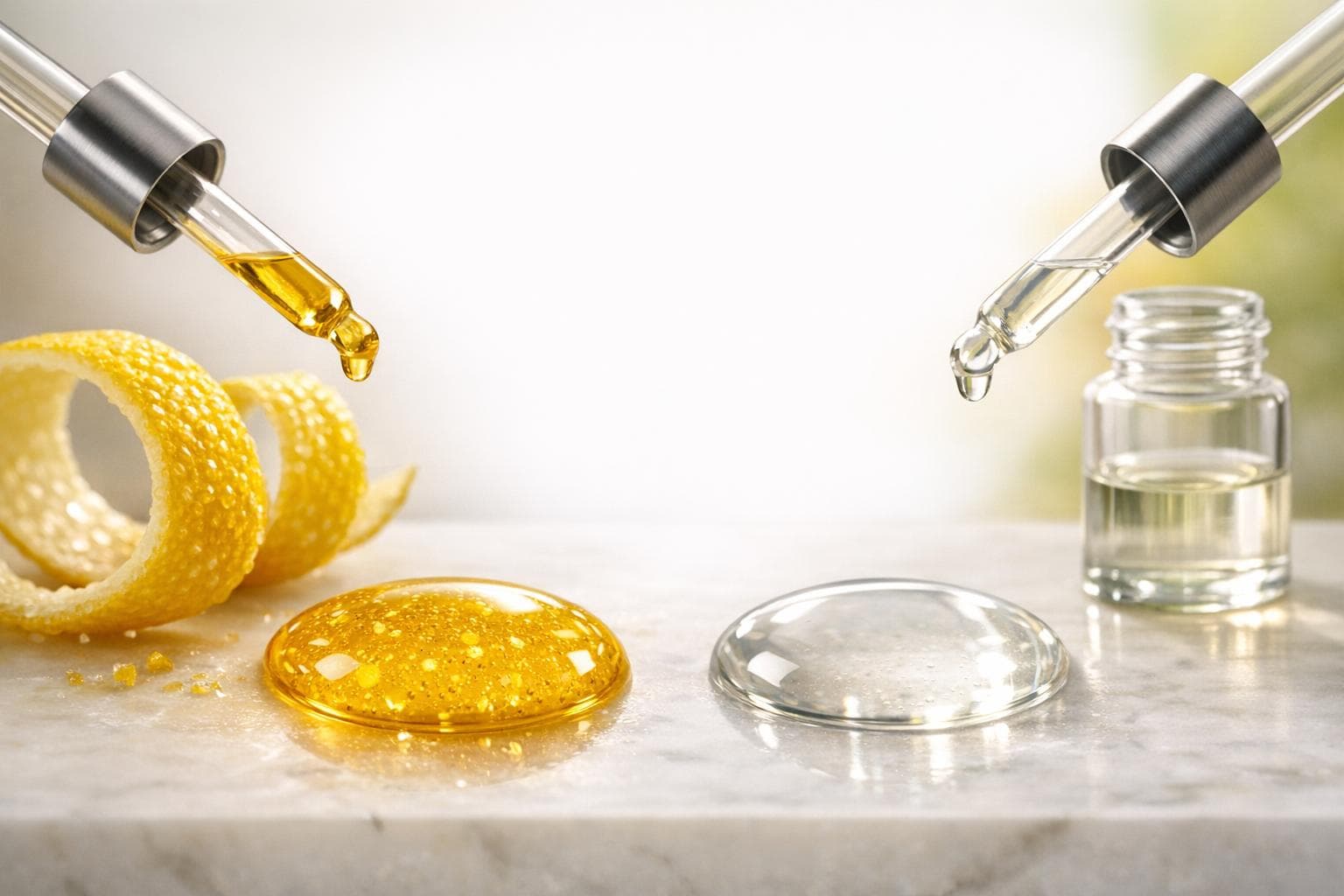
Citrusové oleje jsou základním kamenem vytříbené parfumerie, avšak metoda extrakce – lisování za studena nebo parní destilace – může zásadně ovlivnit jejich vůni, složení i využití.
- Lisování za studena: Mechanický proces bez použití tepla, který zachovává přirozenou vůni citrusových plodů. Extrahuje těkavé i netěkavé sloučeniny, výsledkem je zářivá vůně, ale kratší trvanlivost. Tyto oleje mohou obsahovat také těžší složky, jako jsou vosky a furanokumariny, které mohou způsobovat fototoxicitu.
- Parní destilace: Využívá teplo (96–100 °C) k odpaření a zachycení těkavých sloučenin. Tato metoda vytváří čistší oleje s delší trvanlivostí a bez fototoxických složek, avšak mění aroma, které je pak méně jiskřivé.
Stručný přehled:
- Lisování za studena: Vůně věrná ovoci, kratší trvanlivost, obsahuje těžší sloučeniny.
- Parní destilace: Čistší olej, delší trvanlivost, bezpečnější pro pokožku, ale méně zářivá vůně.
Každá metoda vyhovuje jiným potřebám: lisování za studena pro jasné svrchní tóny v luxusních parfémech, parní destilace pro stabilní výrobu ve velkém měřítku.
Jak funguje extrakce lisováním za studena
Proces lisování za studena
Proces začíná důkladným omytím citrusových plodů, aby se odstranily veškeré povrchové nečistoty. Každý plod je poté umístěn do specializované nádoby navržené tak, aby narušila olejové váčky – drobné kapsy těsně pod slupkou, které obsahují vysoce koncentrované esenciální oleje.
Jakmile jsou váčky narušeny, plod se lisuje, aby se uvolnila směs esenciálního oleje a šťávy. Tato kapalina je následně převedena do vysokorychlostní odstředivky, která oddělí hustší dužinu a šťávu od lehčího esenciálního oleje. Výsledkem je čistě získaný citrusový olej bez těžších složek.
"Citrusové plody obsahují své esenciální oleje ve váčcích pod slupkou plodu... Tato metoda je ideální pro extrakci citrusových esenciálních olejů." – Mariana Dutka, Fragrance Engineer, Lèlior
Protože je tento proces zcela mechanický a vyhýbá se teplu, chrání jemné sloučeniny citlivé na teplotu, které dodávají citrusovým olejům jejich zářivou vůni. Tato pečlivá technika zajišťuje, že si olej zachová svou svěží, autentickou vůni, čemuž se budeme dále věnovat v následující části.
Charakteristika citrusových olejů lisovaných za studena
Povaha lisování za studena bez použití tepla zachovává přirozené aroma oleje a udržuje jasnou, svěží vůni věrnou původnímu ovoci. Tato metoda zajišťuje, že těkavé sloučeniny zodpovědné za svěží vůni připomínající citrusovou kůru zůstávají neporušené, díky čemuž jsou tyto oleje v parfumerii obzvlášť ceněné.
Lisování za studena však ve srovnání s parní destilací extrahuje i širší spektrum sloučenin, včetně těžších molekul, jako jsou vosky a furanokumariny. Ačkoli tyto sloučeniny posilují charakteristický profil oleje, mohou zároveň přinášet i nečistoty. Výsledkem je, že oleje lisované za studena mají často kratší trvanlivost a vyžadují pečlivé skladování, aby se zabránilo oxidaci. Některé oleje, například grapefruit lisovaný za studena, mohou navíc kvůli přítomnosti furanokumarinů způsobovat fototoxicitu.
Jak funguje parní destilace
Proces parní destilace
Parní destilace nabízí ve srovnání s lisováním za studena zcela odlišný způsob extrakce citrusových olejů. Místo spoléhání na mechanickou sílu využívá tato metoda teplo a páru k uvolnění aromatických sloučenin.
Funguje to takto: citrusové slupky nebo listy se umístí na perforovanou desku uvnitř komory. Tato deska se nachází nad vstupem páry, což zajišťuje, že materiál není vystaven přímému teplu. Poté je přiváděna pára, obvykle o teplotě mezi 96–100 °C a při 1,1 atm, přibližně po dobu tří hodin.
"Parní destilace využívá páru k odpaření těkavých složek. Ty stoupají spolu s párou k horní části nádoby a poté putují do chladicí nádoby." – Mariana Dutka, Fragrance Engineer, Lélior
Jak pára prochází citrusovým materiálem, způsobuje odpaření těkavých sloučenin. Tyto páry, nyní směs páry a esenciálního oleje, putují do kondenzátoru obklopeného studenou vodou. Náhlé ochlazení přemění páry zpět na kapalinu. Tato kapalina pak proudí do separátoru, kde esenciální olej – jelikož je lehčí než voda – vyplave na povrch a je shromážděn jako samostatná vrstva.
Tato metoda zajišťuje efektivní získávání olejů při zachování rovnováhy mezi odpařováním a kondenzací. Zároveň vytváří základ pro srovnání jejích výsledků s lisováním za studena.
Charakteristika citrusových olejů získaných parní destilací
Použití tepla při parní destilaci mění složení oleje způsobem, který jej odlišuje od olejů lisovaných za studena. Vysoké teploty mohou narušit sloučeniny citlivé na teplo a mohou dokonce vést k částečné hydroxylaci.
Jednou z hlavních výhod citrusových olejů získaných parní destilací je absence furanokumarinů – sloučenin přítomných v olejích lisovaných za studena, které mohou při vystavení slunečnímu záření vyvolat fototoxické reakce. Díky tomu jsou oleje získané parní destilací bezpečnější pro produkty péče o pleť používané za slunečných podmínek. Tyto oleje jsou navíc často čistší, protože těžší vosky a nečistoty zůstávají během procesu oddělené.
Tato metoda však přináší i určité kompromisy. Teplo může způsobit oxidaci, která mění svěží aroma oleje, snižuje jeho terapeutické vlastnosti a může dokonce zvýšit toxicitu. Parní destilace navíc zachycuje pouze lehčí těkavé sloučeniny, zatímco těžší molekuly, které se nevypařují, zůstávají stranou.
Zajímavé je, že výzkum ukazuje, že předehřátí rostlinného materiálu může výrazně zvýšit výtěžnost oleje. Například u sladkého pomeranče (C. sinensis) zvýšilo předehřátí výtěžnost z 2,48 % na 4,24 %. To ukazuje, jak mohou i drobné úpravy procesu přinést lepší výsledky.
Extrakce citrusového oleje a šťávy
Váš osobní odborník na parfémy už čeká
Vyplňte náš rychlý vonný kvíz a objevte autentické designové a nišové parfémy vybrané podle vašeho vkusu – prozkoumejte je jako 2–8ml dekanty a vzorky, abyste si každý mohli vyzkoušet, než se rozhodnete pro celou lahvičku.
Najděte svou vůniLisování za studena vs. parní destilace: přímé srovnání
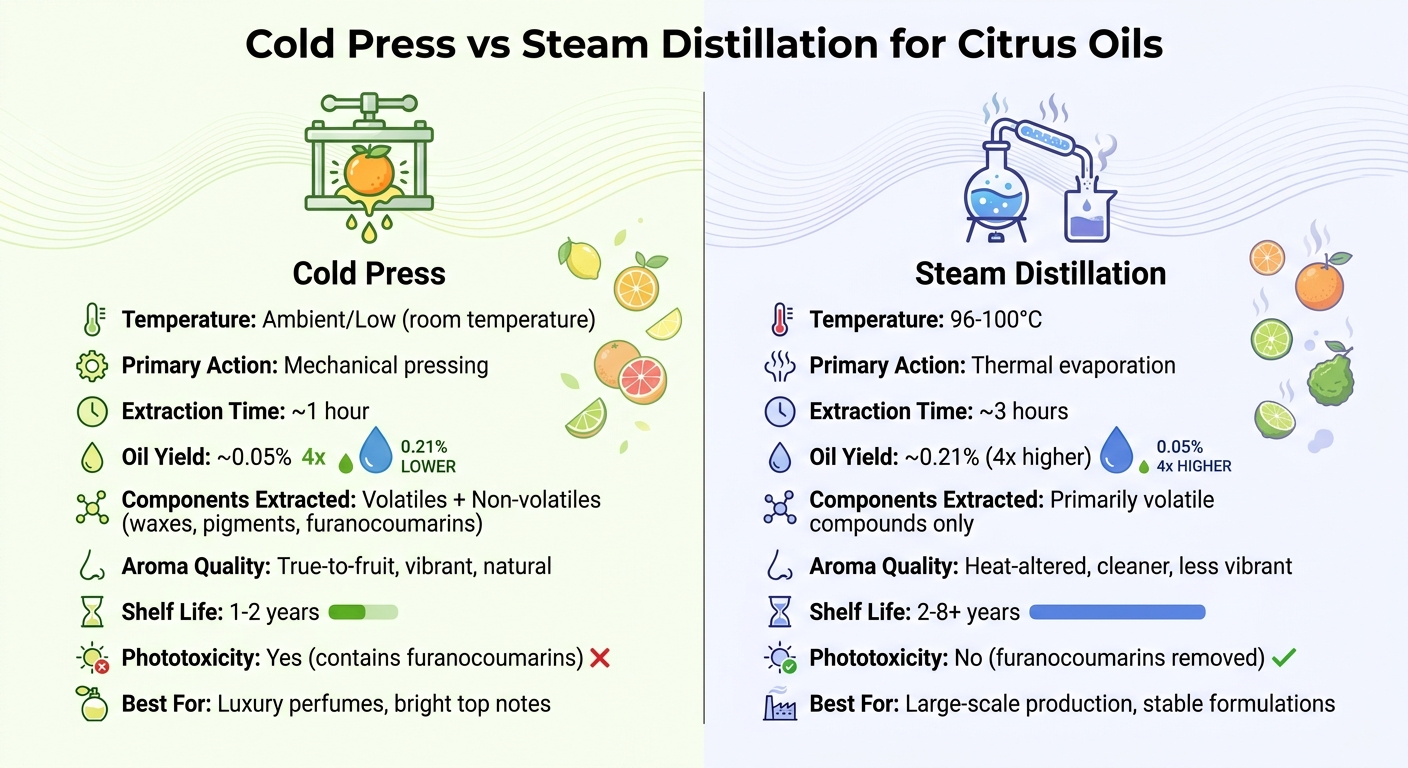
Lisování za studena vs. parní destilace: srovnání metod extrakce citrusových olejů
Proces a výsledky: klíčové rozdíly
Hlavní rozdíl mezi těmito dvěma metodami spočívá v tom, jak extrahují esenciální oleje. Lisování za studena využívá mechanickou sílu za okolních podmínek, zatímco parní destilace spoléhá na teplo (96–100 °C) k odpaření a zachycení těkavých sloučenin.
Při porovnání výtěžnosti parní destilace výrazně překonává lisování za studena. Například lisování citrusových slupek za studena dosahuje výtěžnosti přibližně 0,05 % oleje za zhruba 1 hodinu. Naproti tomu parní destilace vyprodukuje kolem 0,21 % oleje – více než čtyřnásobek – ale dokončení trvá až 3 hodiny.
| Aspekt | Lisování za studena | Parní destilace |
|---|---|---|
| Teplota | Okolní/nízká | 96–100 °C |
| Primární působení | Mechanické lisování | Tepelné odpařování |
| Výtěžnost | ~0.05% | ~0.21% |
| Doba extrakce | ~1 hodina | ~3 hodiny |
| Složky | Těkavé + netěkavé | Především těkavé složky |
| Kvalita aroma | Věrná ovoci, přirozená | Teplem pozměněná, čistší |
Oleje lisované za studena vynikají tím, že obsahují těkavé i netěkavé prvky, jako jsou vosky a pigmenty, které přispívají k živé a přirozené vůni. Tyto oleje však mohou vyžadovat další čištění. Naproti tomu oleje získané parní destilací se zaměřují výhradně na těkavé sloučeniny, a nabízejí tak čistší, ale někdy méně vrstevnatý aromatický profil.
Tyto rozdíly v metodách extrakce a výsledném složení mají přímý dopad na aromatické profily olejů, což je ve světě parfumerie obzvlášť důležité.
Využití v parfumerii
Volba metody extrakce je při tvorbě vůní zásadní, protože přímo ovlivňuje vonný profil použitých olejů. Citrusové oleje lisované za studena jsou ceněny pro svůj jasný, jiskřivý charakter věrný ovoci, což je činí ideálními pro svrchní tóny parfémů. Schopnost této metody zachovat přirozenou podstatu citrusových plodů je důvodem, proč bývá často první volbou pro vůně s tóny citronu, bergamotu nebo pomeranče.
Citrusové oleje získané parní destilací, ačkoli jsou čistší, nabízejí jemnější aroma. Díky tomu se lépe hodí do kompozic, kde je žádoucí vyvážený a decentní citrusový tón. Obě metody mají své přednosti a jejich využití závisí na požadovaném výsledku ve vonné formuli.
Která metoda funguje nejlépe pro citrusové parfémy
Metoda použitá k extrakci citrusových olejů má zásadní vliv na celkový výkon vůně, její aroma i výdrž. Každá technika nabízí odlišné přednosti, a volba proto výrazně závisí na zamýšleném použití parfému.
Lisování za studena: zachycení esence citrusů
Pokud jde o zachování čisté, přirozené vůně citrusů, lisování za studena nemá konkurenci. Tato technika se vyhýbá teplu, čímž zajišťuje, že těkavé sloučeniny odpovědné za zářivou vůni „věrnou ovoci“ zůstávají neporušené. Lisování za studena extrahuje olej přímo z olejových žlázek ve slupce plodu a přináší jiskřivé a autentické citrusové aroma, které parfuméři tolik oceňují.
Například oleje z bergamotu, citronu a pomeranče lisované za studena se často používají k vytvoření svěžích svrchních tónů, které povyšují luxusní vůně. Jak vysvětluje Wyndmere Naturals:
"Oleje lisované za studena... odrážejí přirozenou vůni slupky ovoce".
Tato výjimečnost má však i svou cenu. Tyto oleje jsou jemné a náchylné k oxidaci, s trvanlivostí pouhých 1–2 let. Pro zachování jejich kvality je nezbytné správné skladování v chladném a tmavém prostředí.
Parní destilace: praktická volba pro delší trvanlivost
Parní destilace naopak nabízí odolnost a stabilitu, díky čemuž je ideální pro dlouhotrvající parfémové směsi. Tento proces odstraňuje netěkavé složky, jako jsou vosky a pigmenty, a výsledkem je čistší olej, který lépe odolává oxidaci. Citrusové oleje získané parní destilací mohou vydržet 2–8 let i déle, což z nich činí praktickou volbu pro komerční výrobu.
Dalším klíčovým přínosem je nižší fototoxicita. Například bergamot lisovaný za studena obsahuje furanokumariny, jako je bergapten, které mohou při vystavení slunečnímu záření způsobit podráždění pokožky. Parní destilace tyto sloučeniny odstraňuje, a olej je tak bezpečnější pro parfémy aplikované přímo na pokožku. Aroma olejů získaných parní destilací je však hlubší a méně jiskřivé, postrádá svěží jas jejich protějšků lisovaných za studena.
Volba správné metody pro designérské vůně
Volba mezi lisováním za studena a parní destilací závisí na zamýšleném účelu vůně:
- Pro autentický citrusový charakter: Oleje lisované za studena jsou jasnou volbou. Dodávají jasné, jiskřivé svrchní tóny, které definují vysoce kvalitní citrusové parfémy. Dbejte na to, aby byly tyto oleje použity do jednoho roku a správně skladovány, aby si zachovaly svou kvalitu.
- Pro stabilitu a praktičnost: Oleje získané parní destilací jsou ideální pro směsi vyžadující delší trvanlivost nebo tam, kde je fototoxicita předmětem obav. Tyto oleje jsou obzvlášť vhodné do kompozic, kde citrus slouží spíše jako doplňkový tón než jako hlavní akord. Navíc jejich vyšší výtěžnost – 0,21 % oproti 0,05 % při lisování za studena – z nich činí nákladově efektivní volbu pro velkovýrobu.
Destilace role metod extrakce v parfumerii
Lisování za studena i parní destilace hrají ve světě extrakce citrusových olejů svou jedinečnou roli, zejména pokud jde o tvorbu vůní. Lisování za studena je oslavováno pro svou schopnost zachytit živou, svěží esenci citrusových plodů. Tím, že se vyhýbá vysokému teplu, zachovává jemné těkavé sloučeniny, které by jinak byly ztraceny, a výsledkem je ona nezaměnitelná vůně „právě vymačkaného“ ovoce. Tato metoda však přináší i určitý kompromis: nižší výtěžnost oleje ve srovnání s parní destilací.
Na druhé straně parní destilace nabízí praktické výhody pro výrobu ve velkém měřítku. Je ceněna zejména pro svou schopnost produkovat větší množství oleje, což z ní činí preferovanou volbu pro komerční potřeby. Jak vysvětluje odbornice na vůně Mariana Dutka:
"Fragrance engineers choose the extraction method depending on the plant that serves as a host".
To zdůrazňuje základní pravdu: volba metody extrakce nespočívá v tom, že by jedna byla nadřazená druhé. Jde spíše o sladění techniky se specifickými cíli parfuméra.
Pro ty, kdo hledají zářivý a autentický citrusový svrchní tón, je lisování za studena metodou první volby. Když jsou však prioritou konzistence a prodloužená trvanlivost, nastupuje parní destilace jako spolehlivá možnost. Ve světě prémiové parfumerie zůstává lisování za studena klasickým přístupem k tvorbě vysoce kvalitních citrusových olejů, zatímco parní destilace zajišťuje praktičnost pro širší využití.
Metoda extrakce neovlivňuje pouze vonný profil – určuje také roli oleje ve výsledné vůni a jeho místo v širším světě luxusní parfumerie.
Často kladené otázky
Jak zjistím, zda citrusový tón v parfému využívá olej lisovaný za studena, nebo získaný parní destilací?
Chcete-li určit, zda citrusový tón pochází z oleje lisovaného za studena nebo získaného parní destilací, pečlivě si prohlédněte etiketu nebo popis produktu. Oleje lisované za studena vznikají mechanickým lisováním slupky, což jim propůjčuje živou vůni věrnou ovoci. Naproti tomu oleje získané parní destilací se vytvářejí pomocí páry, výsledkem je stabilnější vůně, ale s menší intenzitou. Protože proces extrakce ovlivňuje jak vůni, tak čistotu, bývá použitá metoda na etiketách často výslovně uvedena.
Jaký je nejlepší způsob skladování citrusových vůní, aby se zpomalila oxidace olejů lisovaných za studena?
Chcete-li zachovat svěžest citrusových olejů lisovaných za studena, skladujte je v tmavých, vzduchotěsných nádobách a uchovávejte je na chladném a tmavém místě. Tím se oleje chrání před světlem a vzduchem, které urychlují oxidaci a snižují jejich kvalitu.
Jsou citrusové oleje získané parní destilací vždy bezpečnější pro pokožku za slunečného počasí?
Citrusové oleje získané parní destilací nejsou automaticky bezpečnější pro pokožku za slunečných podmínek. Jejich bezpečnost závisí na chemickém složení oleje a na tom, jak reaguje se slunečním zářením. Citrusové oleje lisované za studena obvykle obsahují vyšší hladiny furokumarinů, které mohou zvyšovat fotosenzitivitu. Ačkoli parní destilace může množství těchto sloučenin snížit, nezaručuje úplnou bezpečnost. Abyste předešli kožním reakcím, je nejlepší vyhnout se aplikaci citrusových olejů před vystavením slunci, pokud nebyly speciálně upraveny k odstranění fotosenzibilizujících látek.