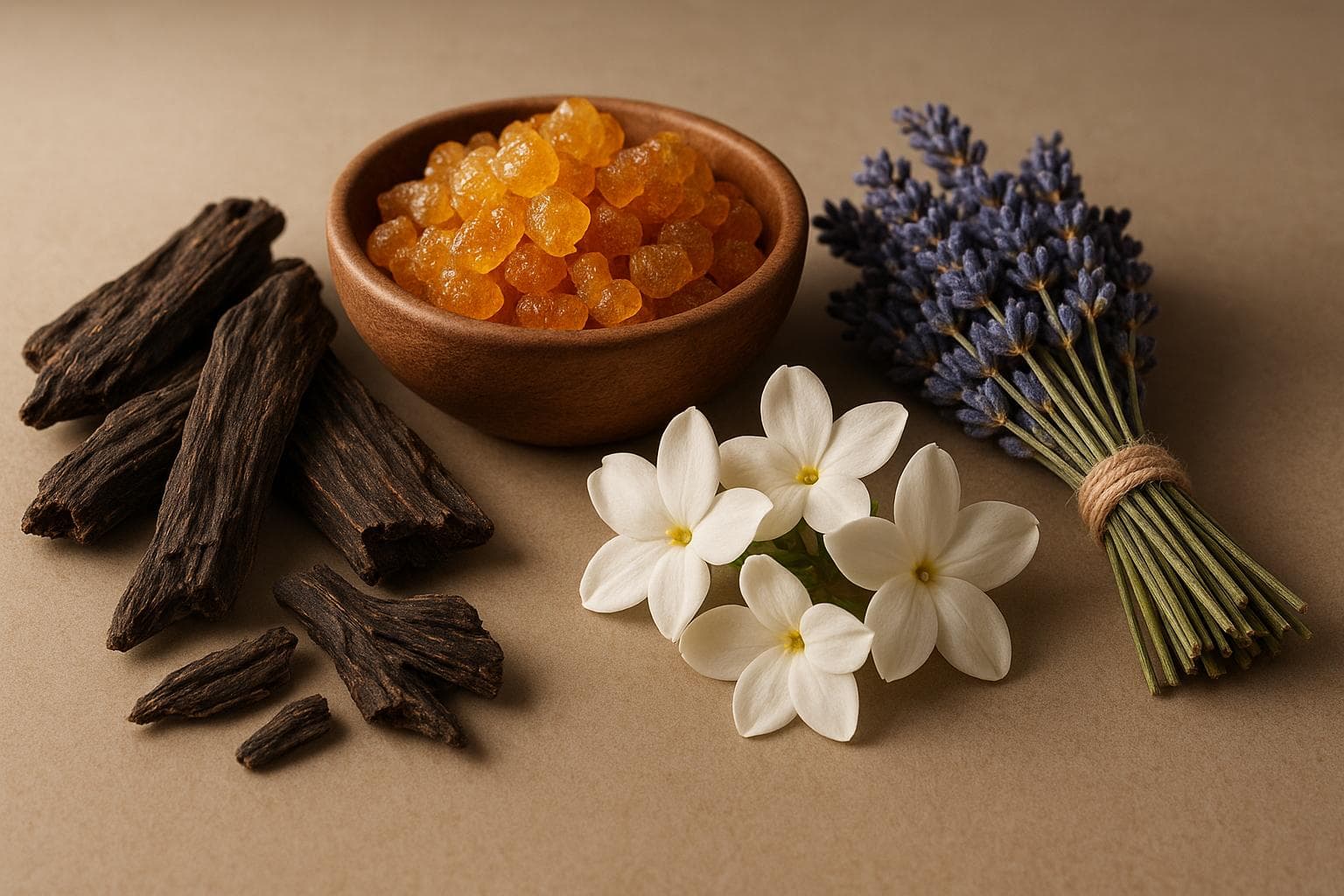
Fragrances have been an important part of human history, shaping rituals, identities, and even industries. From ancient Egyptian temples filled with the aromas of myrrh and frankincense to the Middle East’s oud and bakhoor traditions, scents have always carried meaning across cultures. In India, jasmine and attars are tied to ceremonies, while East Asia celebrates incense and osmanthus in spiritual and seasonal practices. Europe, inspired by these ancient methods, developed its own fragrance legacy, with Provence’s lavender harvests and Mediterranean citrus shaping modern perfumery.
Today, many luxury perfumes still use ingredients and techniques rooted in these histories. Whether it’s oud, jasmine, or citrus, the scents we wear connect us to thousands of years of tradition. If you’re building a collection, consider starting small with decants to explore fragrances inspired by these rich legacies — Middle Eastern oud, Indian jasmine, or European lavender blends. Platforms like Scento offer options to try historical scents without committing to full bottles, making it easier to find what suits your style.
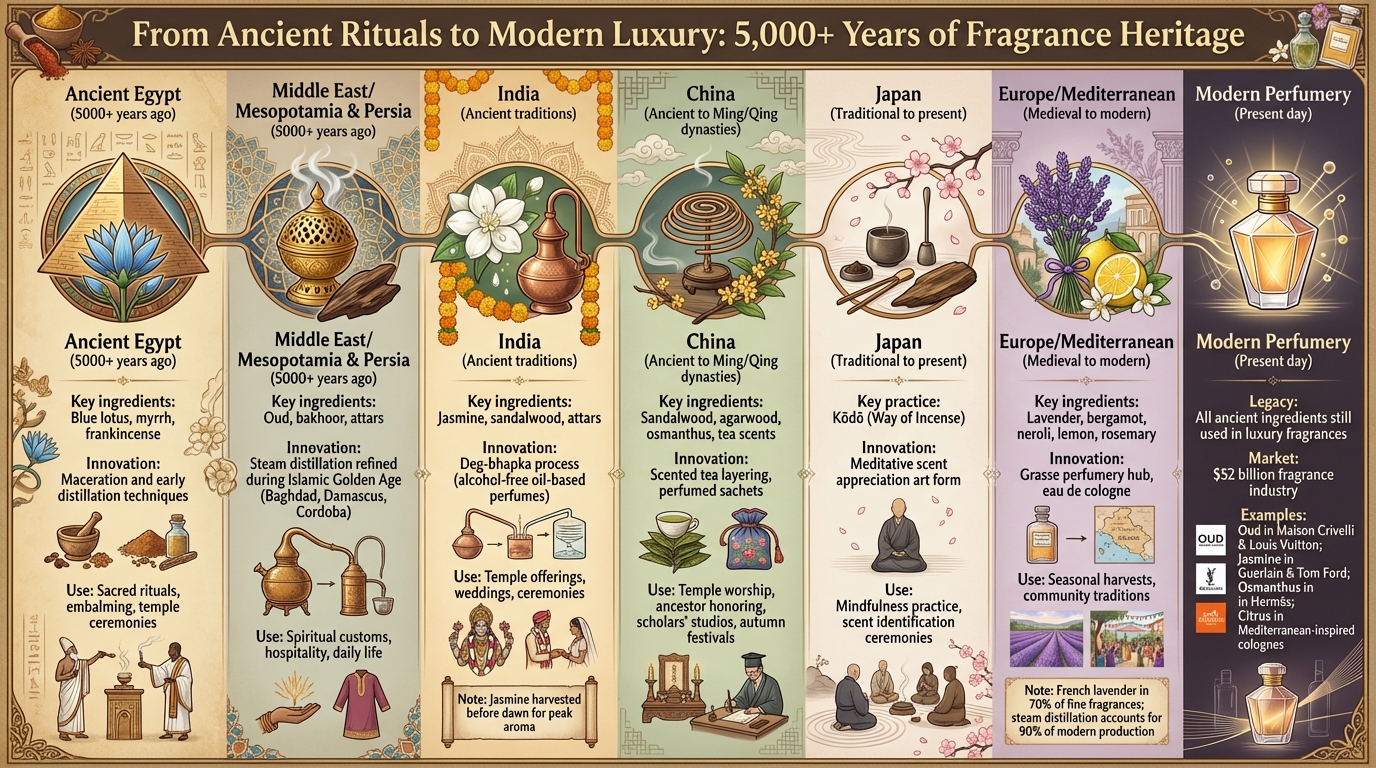
Evolution of Fragrance Traditions Across Civilizations
Ancient Fragrance Practices and Their Legacy
Egypt: Perfumes of the Pharaohs
In ancient Egypt, perfume was more than a luxury - it was a sacred connection to the divine. Ingredients like blue lotus, myrrh, and frankincense were sourced both locally and from distant lands. These treasured materials played a central role in rituals: they filled temples with fragrant smoke, were blended into embalming balms to preserve and protect the dead, and crafted into oils symbolizing divine favor.
Egyptian perfumers pioneered techniques that still influence modern practices. They used maceration - soaking botanicals and resins in oils or fats - boiled aromatics with water and oil, and even employed basic distillation tools to capture fragrant vapors. These methods, innovative for their time, became the foundation for future advancements in fragrance creation.
This inventive approach spread eastward, where it evolved further in neighboring regions.
The Middle East: Oud and Bakhoor
Perfume traditions in the Middle East date back over 5,000 years, flourishing in Mesopotamia and Persia. Here, ingredients like oud, bakhoor, and attars became deeply woven into daily life and spiritual customs. Oud, prized for its rich and complex aroma, is burned or worn as a symbol of luxury and devotion. Bakhoor, on the other hand, is commonly used to scent homes, clothing, and hair - a gesture of hospitality and blessing.
During the Islamic Golden Age, cities like Baghdad, Damascus, and Cordoba became hubs of innovation. Scientists refined steam distillation, a technique documented in manuscripts preserved in Baghdad and Cairo. This advancement allowed for the precise extraction of delicate fragrances and became a cornerstone for European distillation methods in later centuries. Today, modern essential oil production still relies on the principles developed during this period.
Moving southward, India’s fragrant history adds another layer of artistry.
India: Jasmine and Attars
In India, jasmine holds a special place in cultural and spiritual traditions. It is a key element in temple offerings, wedding garlands, and hair adornments, symbolizing purity and good fortune. To preserve their fragrance, jasmine flowers are harvested before dawn, ensuring their scent is at its peak for garlands or attar-making.
The traditional Indian method of crafting attars, known as the deg-bhapka process, involves gently heating botanicals in a copper still with water. The resulting aromatic vapors condense into a blend enriched with sandalwood oil, which acts as both a fixative and carrier. This meticulous, hours-long process produces alcohol-free, oil-based perfumes with a rich, lasting depth. Even today, niche perfumers draw inspiration from these ancient techniques, creating attar-style fragrances and seasonal blends like mitti attar, which captures the nostalgic scent of rain-soaked earth.
These enduring practices not only enriched rituals but continue to shape the art of modern perfumery.
Fragrance Practices in East Asia
Drawing from the ancient rituals of Egypt and the Middle East, East Asia developed its own distinct and intricate traditions around fragrance.
China: Incense, Osmanthus, and Tea Scents
In China, the use of fragrance has long been rooted in spiritual and ceremonial practices. Incense burning played a central role in temple worship, honoring ancestors, and even private study. The rising smoke was believed to carry prayers and intentions to the heavens. Sandalwood, agarwood, herbs, and resins were carefully blended into sticks, coils, or cones and burned in beautifully crafted bronze or ceramic censers. In the serene atmosphere of scholars’ studios, incense also served a practical purpose - marking time and aiding focus during deep concentration.
Osmanthus, with its honeyed, apricot-like scent, holds a special place in Chinese culture, particularly during autumn. This delicate floral aroma is closely tied to the Mid-Autumn season, symbolizing reunion, nostalgia, and intellectual refinement. Osmanthus flowers were traditionally infused into wines, teas, and desserts, subtly scenting courtyards and garden pavilions during poetry readings and moon-viewing gatherings. This seasonal ritual created an enduring connection between the flower’s fragrance and the emotions of the season, a link that still inspires modern perfumers aiming to capture the essence of autumn.
The Ming and Qing dynasties saw further innovation, blending perfumery with tea culture and the aesthetics of the literati. Tea leaves and blossoms were carefully scented by layering them with fragrant flowers, creating aromatic teas that elevated the tasting ritual. Similarly, delicate fragrances were crafted from flower petals, woods, and herbs, often distilled or infused into oils. Perfumed sachets, hair oils, and garments lightly scented with aromatic smoke were designed to release their fragrance subtly, enhancing close, intimate moments during conversation or artistic pursuits like calligraphy.
While China perfected its incense and tea traditions, Japan developed its own unique approach to fragrance, encapsulated in the refined art of Kōdō.
Japan: The Art of Kōdō
Kōdō, meaning the "Way of Incense", is a deeply meditative Japanese art form centered on the mindful appreciation of incense. Much like the tea ceremony or flower arranging, Kōdō follows a structured etiquette, employs carefully chosen tools, and unfolds through a precise sequence of actions meant to focus the mind and heighten the senses. At its core, Kōdō transforms the act of smelling into an immersive experience of quiet reflection.
Unlike incense burning, Kōdō relies on gently heating fragrant woods - particularly high-quality agarwood - so their aroma evolves gradually rather than being consumed by flame. During a traditional Kōdō gathering, the host meticulously arranges ash and charcoal in a specific pattern, places a mica plate on top, and then sets a small chip of incense on the plate. Each guest is invited to inhale the aroma in a deliberate, measured manner, fully absorbing its subtle nuances. Often, participants engage in scent-identification games, which deepen their understanding and appreciation of the intricate differences between fragrances.
The entire process is conducted in hushed tones, with minimal movements, creating an atmosphere of calm and focus. This quiet, meditative approach is a hallmark of Kōdō, elevating it beyond a sensory experience to an art form that embodies mindfulness and tranquility.
sbb-itb-fb213bc
European Fragrance Practices and Their Influence
Europe has a long history of transforming scent-making into an art and industry, rooted in seasonal harvests, collective effort, and meticulous extraction methods. Drawing inspiration from ancient and Eastern traditions, European practices developed into a blend of ritualistic heritage and practical, community-focused techniques. This unique combination laid the groundwork for the modern fragrance industry.
Lavender Harvests in Provence
In Provence, lavender harvesting is more than just an agricultural activity - it’s a seasonal tradition that connects people to the land. Every July, communities come together to gather lavender at its peak, ensuring the essential oils retain their full potency. Timing is everything: harvesting too early leaves the oils underdeveloped, while waiting too long risks losing their aromatic intensity. This delicate balance not only marks the rhythm of the season but also strengthens community ties.
Once harvested, the lavender is immediately processed using traditional distillation methods. These extracts are the cornerstone of French perfumery, particularly in Grasse, where lavender absolute is highly valued. Today, French lavender essential oil is a key ingredient in 70% of fine fragrances. Its enduring presence in perfumery reflects the rich traditions of Provence and its influence on the global fragrance scene.
Mediterranean Citrus Practices
The Mediterranean coast has long been synonymous with citrus cultivation, which plays a central role in shaping Europe’s cologne heritage. During the summer months, bergamot, neroli (orange blossom), and lemon are harvested at the height of their ripeness to capture their fleeting yet vibrant aromas. These citrus extracts were traditionally prized not only for their refreshing qualities but also for their cooling and antiseptic properties.
This citrus legacy significantly influenced the rise of Grasse as a perfumery hub. By combining citrus essences with local herbs like rosemary, the region helped popularize the light and invigorating eau de cologne. This style of fragrance remains a staple in modern perfumery. A prime example of this Mediterranean inspiration is the bestselling perfume "Lira", available on Scento.com as of December 2025, which continues to celebrate the enduring appeal of citrus-based scents.
How Historical Practices Shape Modern Perfumery
Ancient Ingredients in Modern Perfumes
The ingredients that define today’s luxury fragrances have roots stretching back to ancient civilizations. Take oud, for instance. Once treasured in the Middle East, it now serves as a cornerstone in high-end perfumes, often paired with sandalwood and cardamom for a smoky, opulent effect. By December 2025, fragrances like Maison Crivelli‘s Oud Maracujá and Louis Vuitton‘s Ombre Nomade have become standout favorites in this category.
Similarly, myrrh and frankincense - materials historically used in temple rituals and embalming - continue to influence modern "incense" and "amber" accords. For example, Byredo’s La Myrrhe captures the warm, balsamic qualities that made myrrh so revered, while Creed‘s Aventus incorporates frankincense for a distinctive, church-like depth. Interestingly, the steam distillation techniques that dominate today’s production - accounting for 90% of methods - were refined centuries ago in medieval Baghdad and Cairo.
Osmanthus, a flower celebrated during Chinese autumn festivals for its sweet, apricot-like aroma, has also found new life in modern perfumery. Hermès‘ Osmanthe Yunnan highlights tea-like nuances reminiscent of traditional Chinese infusions, while Jo Malone‘s Osmanthus Blossom offers a contemporary twist with fresh green notes. Another timeless ingredient, jasmine, remains a staple in Indian perfumery, harvested before dawn to capture its peak aroma. This traditional approach is evident in creations like Guerlain‘s Samsara and Tom Ford‘s Jasmine Rouge, where hydro-distillation brings out the flower’s complex, long-lasting essence.
These examples illustrate how modern perfumery continues to draw inspiration from ancient traditions, blending historical practices with contemporary techniques.
Building a Fragrance Collection Inspired by History
Creating a fragrance collection rooted in historical traditions doesn’t have to break the bank. Start small with 8ml decants to explore these timeless scents without committing to full-sized bottles, which can often exceed $200. A thoughtful collection might include a variety of influences: a resinous, Egyptian-inspired scent featuring frankincense or myrrh; a Middle Eastern oud composition; an Indian jasmine attar; a Chinese tea or osmanthus fragrance; and a classic European citrus cologne or lavender blend.
Platforms like Scento make this journey more accessible by offering decants in sizes like 2 ml, 5 ml and 8 ml vials, and a 30 ml bottle decant on most perfumes, spanning designer and niche fragrances. This approach helps solve a common problem in the fragrance world - spending on full bottles that may go unused. Sampling historically rooted compositions, from oud-based perfumes to Mediterranean citrus scents, allows you to discover which traditions align with your personal preferences before investing in larger bottles. With over 1,000 authentic perfumes, including designs like Limone di Capri, you can build a collection that celebrates the rich legacy of perfumery while complementing your modern lifestyle.
Conclusion
Understanding the origins of a scent adds a new layer of meaning to wearing perfume. Knowing that the myrrh or frankincense in your fragrance, or the oud in your signature scent, is tied to traditions that stretch back thousands of years brings a sense of connection and depth to your daily rituals.
Today’s perfumery builds on these ancient practices with techniques refined over centuries. For example, jasmine harvesting in India still relies on age-old methods to capture its peak aroma, influencing how modern fragrances are crafted. Similarly, traditions like Japan’s serene kōdō incense ceremonies or the lavender harvests of Provence infuse emotional richness into the scents we wear today.
Starting a collection inspired by this heritage doesn’t have to be overwhelming. Sampling smaller 8ml decants offers a chance to explore without committing to full bottles, a practical way to navigate the $52 billion fragrance market while reducing waste. This approach opens the door to personal discovery, letting you find what truly resonates with you.
With over 1,000 authentic perfumes rooted in diverse traditions - from Middle Eastern attars to European lavender blends - exploring historically inspired scents can help you uncover which stories and origins align with your style. Each fragrance serves as a bridge between the past and present, adding depth and meaning to your routine.
FAQs
How have traditional fragrance practices shaped modern perfumery?
Traditional fragrance practices have shaped modern perfumery in profound ways, introducing enduring ingredients like frankincense, myrrh, and rose - elements that remain staples in the industry. Techniques such as distillation and infusion, pioneered centuries ago, have provided the groundwork for the advanced methods used in scent creation today.
But it’s not just about the materials or methods. These age-old practices carry layers of meaning, drawing from rituals, ceremonies, and traditions. Many modern fragrances channel this heritage, blending historical influences with contemporary tastes to craft scents that feel both timeless and relevant.
What are the signature ingredients in traditional Middle Eastern fragrances?
Traditional Middle Eastern fragrances are celebrated for their deep, luxurious compositions, crafted from some of the most exquisite ingredients. Commonly featured are saffron, amber, frankincense, rose, and musk - each bringing its own distinctive character. These elements are artfully combined to produce scents that are warm, indulgent, and remarkably enduring, leaving a lasting impact on the world of modern perfumery.
What makes jasmine important in Indian fragrance traditions?
Jasmine plays a deeply meaningful role in Indian fragrance traditions, symbolizing purity, spirituality, and divine beauty. Its sweet, floral scent is a staple in religious ceremonies, weddings, and festivals, where it is used to foster a sense of positivity and good fortune.
Apart from its symbolic importance, jasmine is cherished for its soothing and mood-enhancing qualities. These attributes have made it a sought-after ingredient in perfumes and essential oils that draw inspiration from India’s rich heritage.

