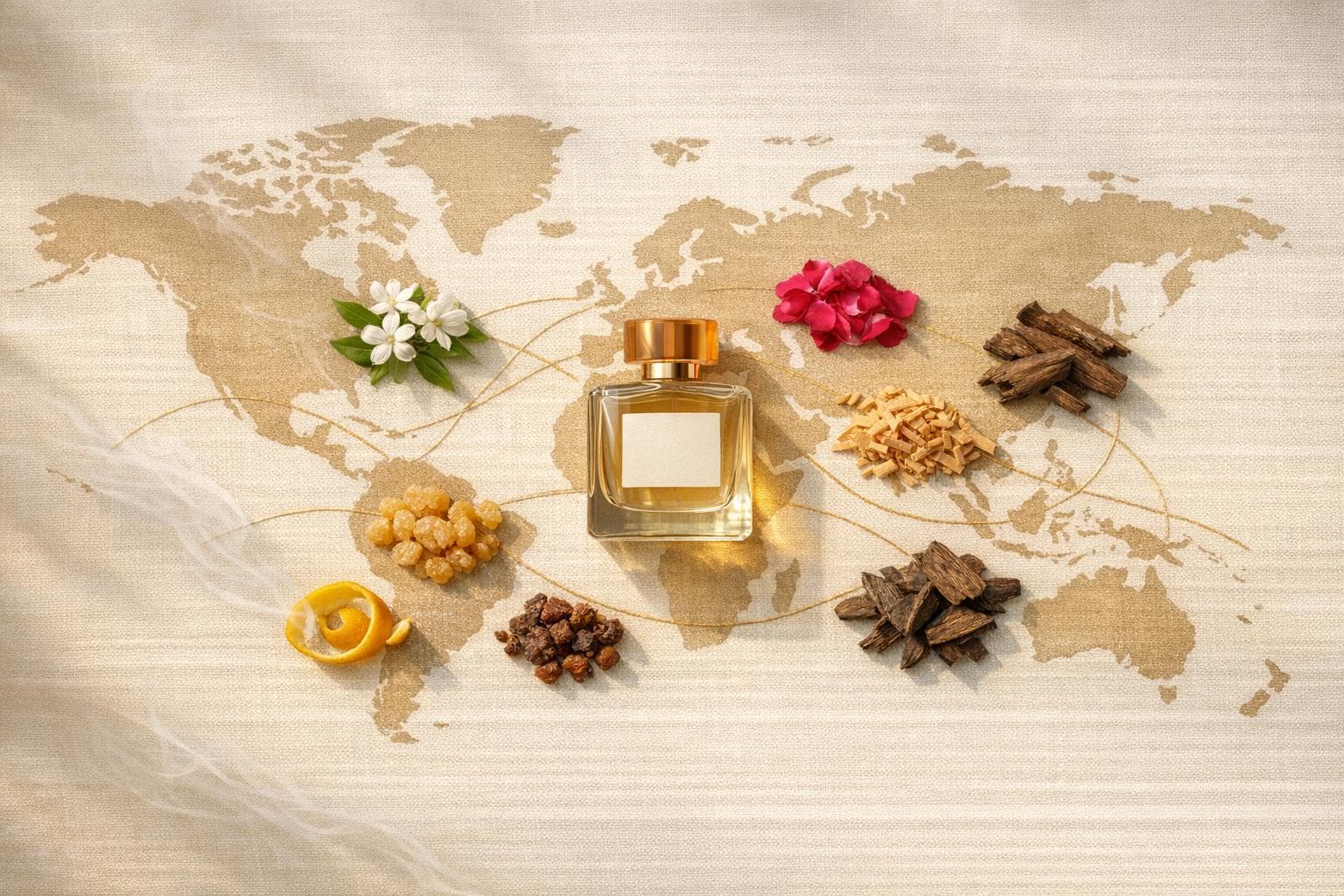
Il profumo accompagna la vita umana da oltre 5.000 anni, evolvendosi da rito sacro a lusso personale. Antiche civiltà come Egitto, Mesopotamia, India e Cina utilizzavano le fragranze per cerimonie religiose, pratiche curative e vita quotidiana. Greci e Romani ne ampliarono l’uso, integrando i profumi negli spazi pubblici e privati. Più tardi, durante l’Età dell’Oro islamica, innovazioni come la distillazione a vapore rivoluzionarono la profumeria, rendendo possibile la creazione di fragranze più leggere e persistenti. La Francia emerse poi come leader mondiale, con Grasse divenuta il cuore della coltivazione floreale e della moderna produzione di profumi.
Punti salienti:
- Antico Egitto: fragranze come il Kyphi erano centrali nei rituali e nella mummificazione.
- India: venivano impiegate tecniche avanzate di distillazione e materie come sandalo e oud nelle pratiche sacre.
- Era islamica: innovatori come Avicenna perfezionarono l’estrazione degli oli essenziali.
- Francia: Grasse divenne sinonimo di profumi di lusso, unendo ingredienti naturali e sintetici.
Oggi la profumeria moderna riflette queste pratiche storiche, fondendo metodi antichi e nuove tecnologie per creare fragranze che ci legano al passato, definendo al contempo l’identità personale.
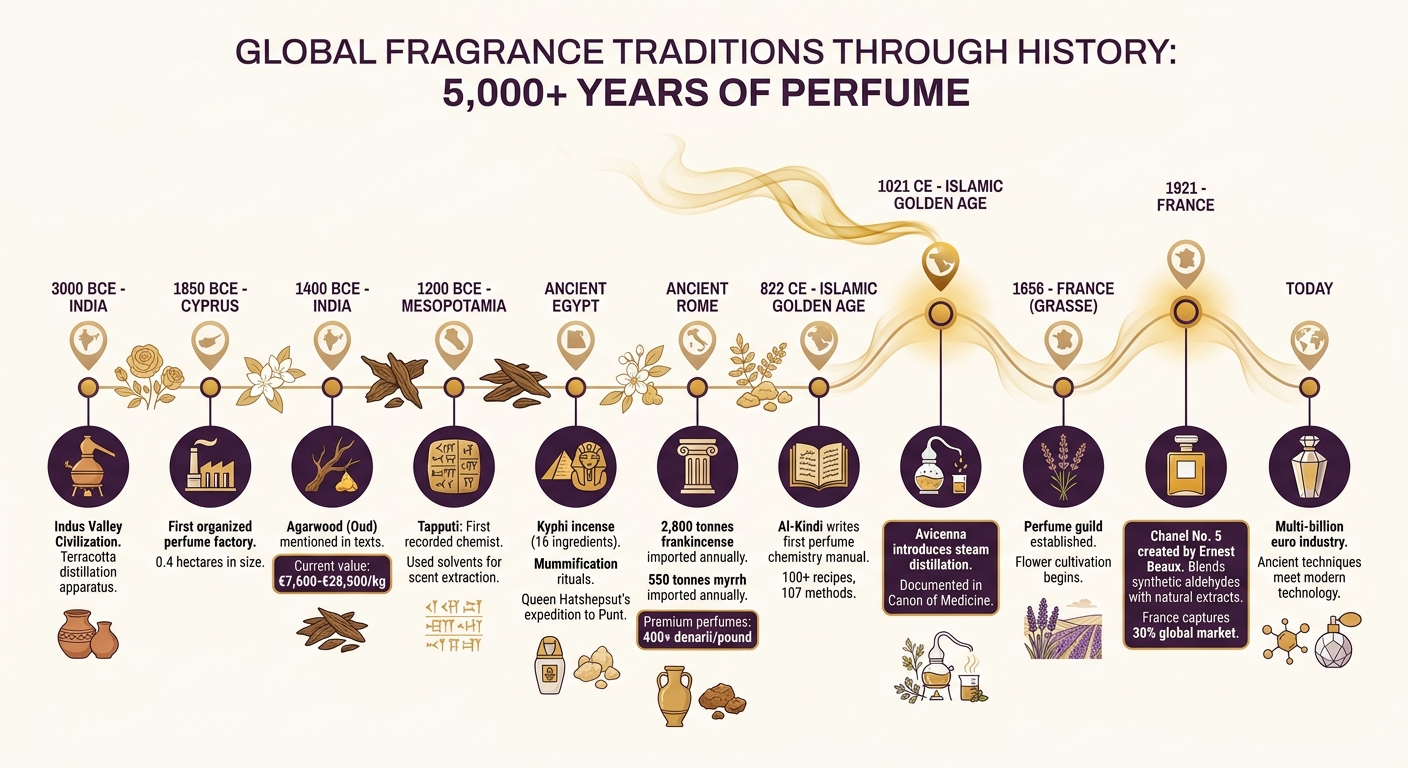
5000 anni di storia del profumo: dall’antico Egitto alla Francia moderna
La storia del profumo: dagli antichi rituali all’era moderna | Sleep Story & Documentario #perfume #history
Le prime civiltà e le origini della profumeria
La produzione organizzata di profumi risale a circa il 1850 a.C., con una fabbrica dell’Età del Bronzo a Cipro estesa su 0,4 ettari. Questa scoperta dimostra quanto fosse già avanzata la profumeria in quell’epoca.
In Mesopotamia, la prima chimica di cui si abbia testimonianza, Tapputi, emerse intorno al 1200 a.C. Nel suo ruolo di sovrintendente in un palazzo reale, utilizzava solventi per estrarre essenze, come documentato su tavolette cuneiformi. Le sue creazioni, spesso composte da ingredienti come cedro del Libano, mirra e calamo, erano realizzate per finalità religiose e regali. Questi primi progressi plasmarono i diversi approcci alla fragranza sviluppatisi nelle varie regioni.
Ogni area sviluppò tecniche e finalità distinte per le proprie fragranze. Egitto e Mesopotamia privilegiavano oli profumati per rituali religiosi e mummificazione. Nel frattempo, l’antica Cina si concentrava sulla profumazione degli ambienti, bruciando incenso durante la dinastia Shang per il culto degli antenati e per purificare gli spazi, nella convinzione che potesse allontanare le malattie. In India, testi ayurvedici come il Charaka Samhita descrivevano tecniche di distillazione, impiegando fragranze in rituali tantrici sacri e a fini medicinali. Questi usi e metodi variegati influenzarono le tradizioni olfattive delle culture successive.
La scala dell’uso delle fragranze a Roma era immensa: l’impero importava ogni anno circa 2.800 tonnellate di franchincenso e 550 tonnellate di mirra per scopi religiosi e pubblici. Queste materie erano estremamente pregiate, con profumi di alta gamma che costavano oltre 400 denari per libbra.
Oli sacri e balsami nell’antico Egitto
Nell’antico Egitto, le resine aromatiche erano parte integrante delle pratiche religiose. Come spiega The Perfume Society:
"I primi profumieri, i sacerdoti egizi, utilizzavano resine aromatiche per addolcire l’odore delle offerte sacrificali. Si credeva che bruciare incenso mettesse in contatto gli esseri umani con gli Dei – e compiacesse le divinità".
Uno dei più celebri incensi egizi, il Kyphi, era composto da 16 ingredienti, tra cui mirra, vino, miele e uvetta. I sacerdoti lo bruciavano ogni notte per assicurare il ritorno sicuro di Ra, il dio del sole.
La regina Hatshepsut organizzò persino una spedizione nella Terra di Punt per procurarsi alberi di franchincenso e mirra specificamente per il suo tempio. Le fragranze erano profondamente radicate nella vita egizia: oggetti di lusso, elementi essenziali della mummificazione e strumenti per garantire un sereno viaggio nell’aldilà. Sorprendentemente, quando le tombe furono aperte nel 1897, i profumi sepolti con faraoni e sacerdoti conservavano ancora i loro dolci aromi dopo millenni.
| Civiltà | Ingredienti chiave | Principale uso cerimoniale |
|---|---|---|
| Egitto | Mirra, Franchincenso, Kyphi, Loto | Mummificazione, rituali notturni per Ra, offerte alle divinità |
| Mesopotamia | Cedro del Libano, Mirra, Calamo | Purificazione del palazzo, cerimonie religiose |
| India | Sandalo, Legno di aloe, Muschio, Nardo | Rituali tantrici sacri, culto nei templi, guarigione ayurvedica |
| Cina | Gelsomino, Chiodo di garofano, Erbe, Spezie | Culto degli antenati, purificazione spirituale, disinfezione |
Gli Egizi dimostrarono anche competenza tecnica utilizzando l’olio di balanos come base per i loro profumi. La sua fragranza neutra lo rendeva ideale da mescolare con altre essenze. Questa meticolosa attenzione al dettaglio - la scelta della base giusta, l’affinamento dei processi di estrazione e la creazione di miscele complesse - divenne la pietra angolare della profumeria moderna.
Incenso e aromatici in India e Cina
In India, la tradizione della profumeria risale alla civiltà della Valle dell’Indo, con un apparecchio di distillazione in terracotta datato 3000 a.C. Testi successivi, come il Brihat — Samhita di Varāhamihira, includevano versi in sanscrito che descrivevano tecniche di creazione dei profumi per la regalità. Le fragranze non erano semplici simboli di status, ma elementi centrali del culto nei templi e dei rituali sacri.
Una delle materie profumate più preziose dell’India, il legno di agar (oud), compare in testi già nel 1400 a.C. Oggi, la sua rarità e il suo prestigio si riflettono nel prezzo, che varia da 7.600 € a 28.500 € al chilogrammo.
In Cina, le pratiche olfattive presero una direzione sensibilmente diversa. Piuttosto che concentrarsi sull’ornamento personale, i cinesi infondevano fragranze nel loro ambiente e negli oggetti d’uso quotidiano. Case, cancelleria e perfino l’inchiostro venivano profumati con gelsomino, chiodi di garofano ed erbe. Questo approccio rifletteva la convinzione che l’aroma potesse purificare gli spazi e proteggere dalle malattie, estendendone l’uso oltre le funzioni spirituali o sociali.
Pur integrando entrambe la fragranza nelle pratiche spirituali, le tradizioni indiana e cinese differivano nei metodi. L’India sviluppò avanzate tecniche di distillazione per oli concentrati, mentre la Cina enfatizzò la combustione dell’incenso e una delicata profumazione ambientale. Queste innovazioni posero le basi per gli sviluppi successivi nella profumeria, influenzando regioni come Grecia e Roma e arricchendo la storia globale delle fragranze.
La fragranza nell’antica Grecia e a Roma
Nell’antica Grecia e a Roma, la fragranza era profondamente intrecciata alla vita quotidiana, con funzioni che spaziavano dallo spirituale al pratico. Bruciare incenso era un rituale comune, ritenuto capace di portare le preghiere ai cieli, purificare gli spazi sacri e placare le divinità. Ma l’uso del profumo andava ben oltre le cerimonie religiose.
Atleti e guerrieri greci utilizzavano oli profumati non solo per il loro aroma, ma anche per ragioni pratiche come proteggere la pelle dal sole, mascherare gli odori corporei e persino trattare le ferite. Dopo il bagno, uomini e donne applicavano oli aromatici sulla pelle, spesso concentrandosi sui punti di pulsazione come i polsi, poiché avevano scoperto che queste zone aiutavano la fragranza a durare più a lungo. Se i Greci si concentravano principalmente sull’uso personale, i Romani ampliarono il ruolo del profumo fino a includere spazi pubblici e sacri.
I Romani portarono il profumo a un livello superiore, profumando quasi ogni aspetto del loro ambiente. Case, terme pubbliche, abiti e perfino le pareti dei templi venivano impregnati di fragranze. Per esempio, si diceva che nel tempio di Atena a Elide lo zafferano fosse mescolato all’intonaco delle pareti, mantenendolo profumato per ben 500 anni. Anche l’ospitalità era intrisa di profumo: gli ospiti dei banchetti venivano accolti con pediluvi profumati o vino infuso di fiori.
È interessante notare che le preferenze olfattive dell’antichità differivano dalle norme moderne. Note floreali leggere come rosa e giglio erano considerate maschili, mentre le donne prediligevano fragranze più ricche e persistenti come mirra e nardo. Un profumo celebre, il "Megaleion", univa preziosa cannella ed era apprezzato non solo per la sua fragranza ma anche per le sue proprietà medicinali, come il trattamento di infiammazioni e ferite. Tuttavia, non tutti ammiravano il lusso dei profumi: Plinio il Vecchio li liquidò notoriamente come "i beni più superflui".
Greci e Romani prestavano attenzione anche alla qualità delle basi dei loro profumi. Prediligevano oli quasi inodori come l’olio di balanos egiziano o l’olio d’oliva grossolano. Per conservare queste preziose miscele, le riponevano in contenitori di piombo, vetro o alabastro, collocati in stanze superiori ombreggiate per prevenire l’evaporazione. Queste pratiche attente e queste innovazioni hanno lasciato un’influenza duratura sulle moderne tradizioni olfattive, continuando ancora oggi a riecheggiare nel mondo delle fragranze di lusso.
L’Età dell’Oro islamica e i progressi della profumeria
Tra l’VIII e il XIII secolo, gli studiosi islamici elevarono la profumeria da arte fondata sulla tradizione orale a disciplina scientifica di grande precisione. Un momento cruciale arrivò con Avicenna (Ibn Sina), che introdusse la distillazione a vapore intorno al 1021, come documentato nel suo Canone della Medicina. Prima di questa tecnica, i profumi erano principalmente miscele a base oleosa ottenute da petali ed erbe pestati. La distillazione a vapore trasformò il processo, consentendo l’estrazione di delicati oli essenziali e limpide acque floreali. I risultati non erano solo più leggeri e raffinati, ma anche più durevoli, aprendo la strada a ulteriori sviluppi nella profumeria.
Un altro importante protagonista, Al — Kindi, scrisse intorno all’822 il Kitāb Kīmiyāʾ al-ʿIṭr wa al — Taṣʿīd, considerato il primo manuale scientifico sulla chimica del profumo. La sua opera comprendeva oltre 100 ricette dettagliate e 107 metodi, completi di misurazioni precise e controlli della temperatura. Nel X secolo, gli studiosi avevano perfezionato l’alambicco aggiungendo camicie di raffreddamento e migliorando la tenuta delle giunture, rendendo possibile la distillazione ripetuta e la produzione su larga scala. Città come Damasco e Fustat divennero centri d’innovazione, arrivando persino a costruire distillerie dedicate alla produzione di massa di acqua di rose. Questi progressi tecnici non solo affinarono l’arte, ma sostennero anche un commercio crescente che diffuse tali pratiche ben oltre il mondo islamico.
I mercanti islamici ebbero un ruolo chiave nell’espansione delle reti commerciali per approvvigionarsi di ingredienti rari ed esotici. Il legno di agar (oud) proveniva dal Sud-est asiatico, il muschio dal Tibet e l’ambra grigia dall’Oceano Indiano. Queste materie servivano tanto agli usi quotidiani quanto a quelli più sontuosi. L’uso del profumo occupava un posto di rilievo nella vita quotidiana e nelle pratiche religiose, con fonti storiche che ne evidenziano il ruolo come parte dei doveri religiosi. Questa enfasi su pulizia e fragranza alimentò la domanda, portando allo sviluppo di tecniche produttive più efficienti e formulazioni innovative.
La fragranza era profondamente integrata in vari aspetti della vita, inclusi fede, medicina e architettura. Medici come Ibn Sina raccomandavano trattamenti aromatici, come fumigazioni e impacchi all’acqua di rose, per le loro proprietà curative. Alcune moschee incorporavano persino estratti aromatici nel cemento per creare profumazioni persistenti. Entro il XII secolo, la Pepperers Guild di Londra commerciava con mercanti musulmani, a testimonianza di come queste innovazioni si fossero diffuse su scala globale.
Il tuo esperto di profumi personale ti aspetta
Fai il nostro veloce quiz olfattivo per scoprire autentici profumi di design e di nicchia scelti in base ai tuoi gusti: esplorali in decant e campioni da 2–8ml, così puoi provarne ognuno prima di scegliere il flacone intero.
Trova il tuo profumoLa Francia e lo sviluppo della profumeria moderna
Il percorso della Francia verso il ruolo di leader mondiale della profumeria ebbe inizio nel XVI secolo, quando Caterina de’ Medici introdusse il suo profumiere italiano, René le Florentin, alla corte francese. Fu l’avvio di una trasformazione destinata a elevare il profumo francese a simbolo di lusso e raffinatezza.
La corte reale francese svolse un ruolo decisivo in questa evoluzione. Luigi XIV, celebre come il "Re Sole", consacrò la fragranza come emblema dell’opulenza aristocratica. Il suo successore, Luigi XV, spinse questa passione ancora oltre. Pretendeva che nei suoi appartamenti venisse usata ogni giorno una nuova fragranza, guadagnando alla sua residenza il soprannome di "la cour parfumée" – la corte profumata. I profumi venivano applicati non solo sulla pelle, ma anche su abiti, arredi e persino ventagli. Questo entusiasmo regale influenzò direttamente la nascita delle prime grandi maison di profumeria a Grasse nel XVII secolo.
Grasse e la sua coltivazione floreale
Grasse, spesso definita la "capitale mondiale del profumo", raggiunse la notorietà grazie al suo clima ideale e alla sua competenza nella coltivazione di fiori di altissima qualità. Originariamente nota per i guanti profumati nel XVI secolo, l’industria del profumo di Grasse ebbe inizio ufficialmente con la fondazione di una corporazione nel 1656. Nel XVIII secolo, la città divenne un importante polo industriale, producendo materie prime essenziali come rose, gelsomino e lavanda, che alimentarono il fiorente commercio francese dei profumi.
La domanda proveniente dalle corti reali creò un mercato prospero per gli estratti floreali di Grasse. Nel 1914, la maison Rallet aveva raggiunto vendite impressionanti pari a 50 milioni di franchi, dimostrando l’impatto economico della coltivazione floreale di Grasse. Questa maestria nell’estrazione naturale preparò il terreno ai progressi sintetici del XIX secolo.
Lo sviluppo delle fragranze sintetiche nel XIX secolo
Il XIX secolo segnò una svolta, quando i profumieri iniziarono a combinare le essenze naturali di Grasse con composti sintetici per creare formule più costanti e accessibili. Uno dei momenti più iconici arrivò nel 1921, quando Ernest Beaux creò Chanel N° 5 a Grasse. Tra 24 formule diverse, Coco Chanel scelse la quinta, regalando al profumo il suo nome iconico. Chanel N° 5 divenne un pioniere, fondendo aldeidi sintetiche ed estratti naturali, e trasformò la creazione del profumo in un sofisticato connubio di arte e chimica.
La stessa Coco Chanel osservò notoriamente:
Nessuna eleganza è possibile senza profumo. È l’accessorio invisibile, indimenticabile, definitivo.
Questa innovazione non solo ridefinì il settore, ma aiutò anche la Francia a conquistare circa il 30% del mercato mondiale dei profumi.
Come le tradizioni storiche plasmano la profumeria moderna
La profumeria moderna, pur proiettata verso il futuro, affonda profondamente le proprie radici in tecniche e pratiche che hanno superato la prova del tempo. Per esempio, la distillazione a vapore, un metodo risalente a secoli fa, resta ancora oggi una pietra miliare per l’estrazione degli oli essenziali. Allo stesso modo, l’estrazione con solventi, praticata per la prima volta nell’antica Mesopotamia, si è evoluta in metodi avanzati come l’estrazione con CO2, fondendo sapienza antica e tecnologia d’avanguardia.
Questi progressi hanno permesso agli ingredienti classici di mantenere intatta la loro rilevanza. Si pensi, ad esempio, a franchincenso e mirra - materie un tempo utilizzate nelle cerimonie religiose e nell’imbalsamazione nell’antico Egitto. Oggi sono componenti essenziali di molte fragranze orientali e unisex. Un altro esempio è l’oud, o legno di agar, che affonda le sue radici nelle tradizioni indiane e islamiche. Oggi è una nota distintiva nelle sontuose fragranze d’ispirazione mediorientale e nei profumi dal carattere deciso. Queste resine e questi legni non solo donano profondità alle composizioni, ma agiscono anche come fissativi naturali, esaltandone la persistenza.
Le tecniche tradizionali occupano anche un posto speciale nella profumeria di nicchia e artigianale. Metodi come l’enfleurage, che cattura l’essenza dei fiori delicati attraverso i grassi, furono perfezionati durante l’Età dell’Oro islamica e sono ancora impiegati da alcuni profumieri alla ricerca di estratti naturali e autentici. Inoltre, il passaggio dalle formule a base oleosa alle soluzioni a base alcolica, iniziato nel 1370 con l’"Acqua d’Ungheria", pose le basi della struttura del profumo moderno.
Oltre alla produzione, le pratiche antiche hanno plasmato anche il modo in cui i profumi vengono presentati e vissuti oggi. Il ruolo spirituale e simbolico della fragranza nelle culture antiche - che si tratti delle terme pubbliche o dei templi dell’antica Roma - ha ispirato il moderno "olfactory branding". Questo approccio crea esperienze immersive e sensoriali capaci di connettersi con i consumatori a un livello più profondo. Anche le tecniche di applicazione affondano le loro radici nella storia: l’antica consapevolezza che i punti di pulsazione amplificano la diffusione del profumo continua ancora oggi a guidare il nostro modo di applicare le fragranze.
Esplorare fragranze storiche con Scento
Scento propone decant selezionati di fragranze firmate e di nicchia in formati da 2 ml, 5 ml e 8 ml, permettendoti di esplorare la profumeria mondiale senza impegnarti nell’acquisto di un flacone intero. A partire da soli 12,90 € al mese per un’eventuale sottoscrizione da 8 ml, questo modello ti consente di vivere fragranze ispirate a tradizioni ricchissime - dalle profondità resinose dell’antico Egitto alla delicata arte floreale di Grasse - a una frazione del costo di un flacone da oltre 300 €.
La collezione colma il divario tra profumeria moderna e radici storiche. Si prenda Baccarat Rouge 540 di Maison Francis Kurkdjian, che richiama l’eredità egizia delle fragranze a base di resine, oppure Santal 33 di Le Labo, intriso delle tradizioni del sandalo proprie delle pratiche ayurvediche indiane. E poi c’è Chanel N° 5, un capolavoro senza tempo che incarna l’eleganza floreale di Grasse. Ogni fragranza della selezione Scento riflette il modo in cui le pratiche storiche continuano a plasmare i profumi di lusso contemporanei.
Come afferma con eleganza Kanopé Fragrances:
"Il profumo è una porta aperta sulle diverse culture, tradizioni e storie di ogni continente."
Un decant da 8 ml contiene circa 120 vaporizzazioni - perfetto per l’uso quotidiano mentre scopri quali influenze storiche si accordano con il tuo stile personale. Che si tratti della grandiosità dell’oud mediorientale in Tom Ford Oud Wood o dell’eleganza discreta degli accordi chypre francesi, il sistema di decant di Scento elimina l’ostacolo economico che un tempo rendeva queste fragranze di lusso appannaggio esclusivo della regalità.
Conclusione
La fragranza è sempre stata molto più di un semplice profumo gradevole - è un filo che attraversa la storia umana, collegandoci nel tempo e tra le culture. Dagli oli sacri usati nei templi egizi alle tecniche di distillazione a vapore sviluppate dal chimico persiano Ibn Sina, ogni epoca e ogni regione ha lasciato la propria impronta sull’arte della profumeria.
Come afferma efficacemente Scento:
La storia della fragranza rivela una narrazione affascinante di scambio culturale, innovazione umana e del potere duraturo del profumo di connetterci al passato, al presente e al futuro.
Questo legame prende vita ogni volta che applichi una fragranza. Ad esempio, tamponare il profumo sui polsi interni - una tecnica risalente all’antica Grecia - sfrutta il calore del corpo per amplificare la fragranza, una pratica radicata in secoli di conoscenza.
Oggi l’industria del profumo è cresciuta fino a diventare un mercato da miliardi di euro, ma l’essenza resta la stessa: il desiderio di esprimere la propria identità attraverso il profumo. Che si tratti delle tradizioni dell’oud in Medio Oriente, della maestria floreale di Grasse o delle ricche cerimonie d’incenso dell’India, queste tradizioni continuano a plasmare la profumeria contemporanea. Fungono da ponte, unendo antichi rituali e innovazioni odierne.
L’approccio di Scento dà vita a questa eredità in modo accessibile. Con abbonamenti a partire da 12,90 € al mese per una fiala da 8 ml - che offre circa 120 vaporizzazioni - puoi esplorare l’evoluzione della profumeria senza affrontare il costo importante di un flacone full-size. Questo modello ti permette di sperimentare di tutto, dalle antiche miscele resinose alle creazioni sintetiche più all’avanguardia, rendendo la ricca storia della fragranza parte della tua quotidianità.
La fragranza racconta una storia di connessione - ci connette alla nostra storia, alle nostre culture e perfino a noi stessi. Esplorando questa eredità, trasformi tradizioni secolari in un rituale personale e quotidiano.
FAQ
In che modo la distillazione a vapore ha cambiato la profumeria?
La distillazione a vapore ha rivoluzionato l’industria del profumo rendendo più semplice l’estrazione dei composti aromatici dalle piante. Questo metodo ha reso possibile la produzione di oli essenziali puri, divenuti ingredienti chiave nella creazione delle fragranze. Ha introdotto un nuovo livello di precisione e costanza nella composizione olfattiva, plasmando il panorama moderno della profumeria.
Perché l’oud è così raro e costoso?
L’oud gode dello status di una delle materie più pregiate della profumeria per via della sua rarità e del modo unico in cui si forma. Proviene dagli alberi di agarwood, che devono avere almeno 100 anni per produrre la resina che diventa oud. Tuttavia, questa resina si sviluppa solo quando l’albero è sottoposto a specifici stress ambientali, rendendo il processo tanto imprevedibile quanto limitato. Di conseguenza, l’oud non è soltanto raro, ma anche estremamente ricercato nel mondo delle fragranze.
Come posso provare fragranze ispirate alla storia senza acquistare un flacone intero?
Se sei incuriosito dalle fragranze ispirate alla storia ma esiti a investire in un flacone intero, i campioni di profumo o i decant sono la soluzione perfetta. Queste quantità ridotte ti permettono di esplorare fragranze radicate nelle tradizioni di culture antiche, come l’Egitto o l’India, senza un grande impegno. Piattaforme come Scento offrono decant in pratici formati come 0,75 ml, 2 ml o 8 ml, dandoti l’opportunità di provare diversi profumi. È un modo eccellente per immergerti nella ricca eredità della profumeria storica prima di decidere un acquisto full-size.

