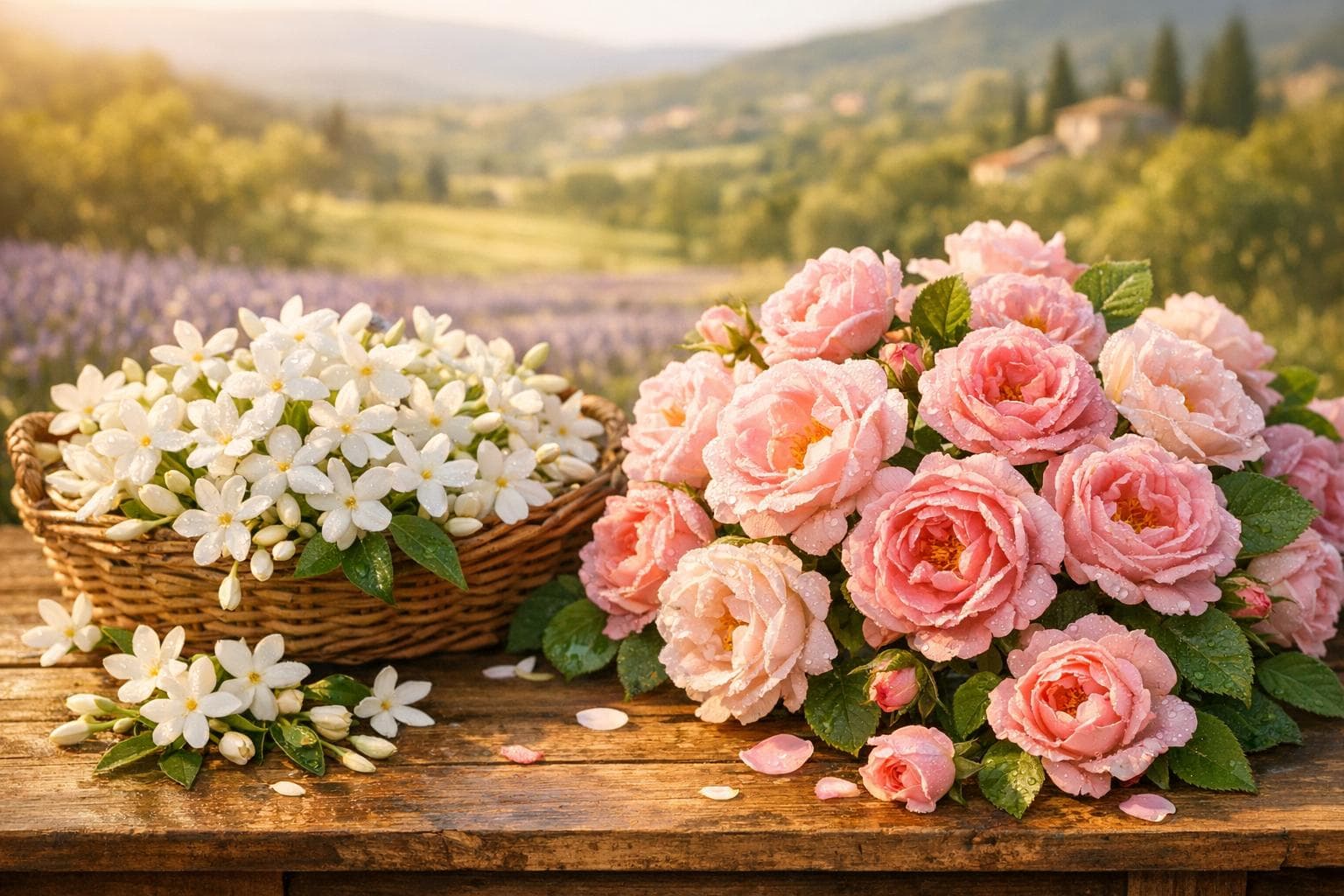
Grasse, a small city in southeastern France, is the heart of modern perfumery. Known for over 400 years as the global leader in fragrance creation, its journey began with scented leather gloves in the 16th century, an innovation that transformed its leather-tanning industry into a perfume powerhouse. Today, Grasse produces some of the most prized fragrance ingredients, including jasmine and May rose, with jasmine absolute fetching over €59,000 per kilogram.
Key highlights:
- Origins: Transitioned from leather tanning to perfumery in the late 18th century.
- Natural Advantage: Unique climate and soil produce flowers with unmatched scent profiles.
- Legacy: Recognized by UNESCO in 2018 for its perfume-making expertise.
- Modern Role: Supplies luxury brands like Chanel and Dior, maintaining global influence.
Grasse’s blend of heritage and modern techniques ensures its continued dominance in the fragrance world.
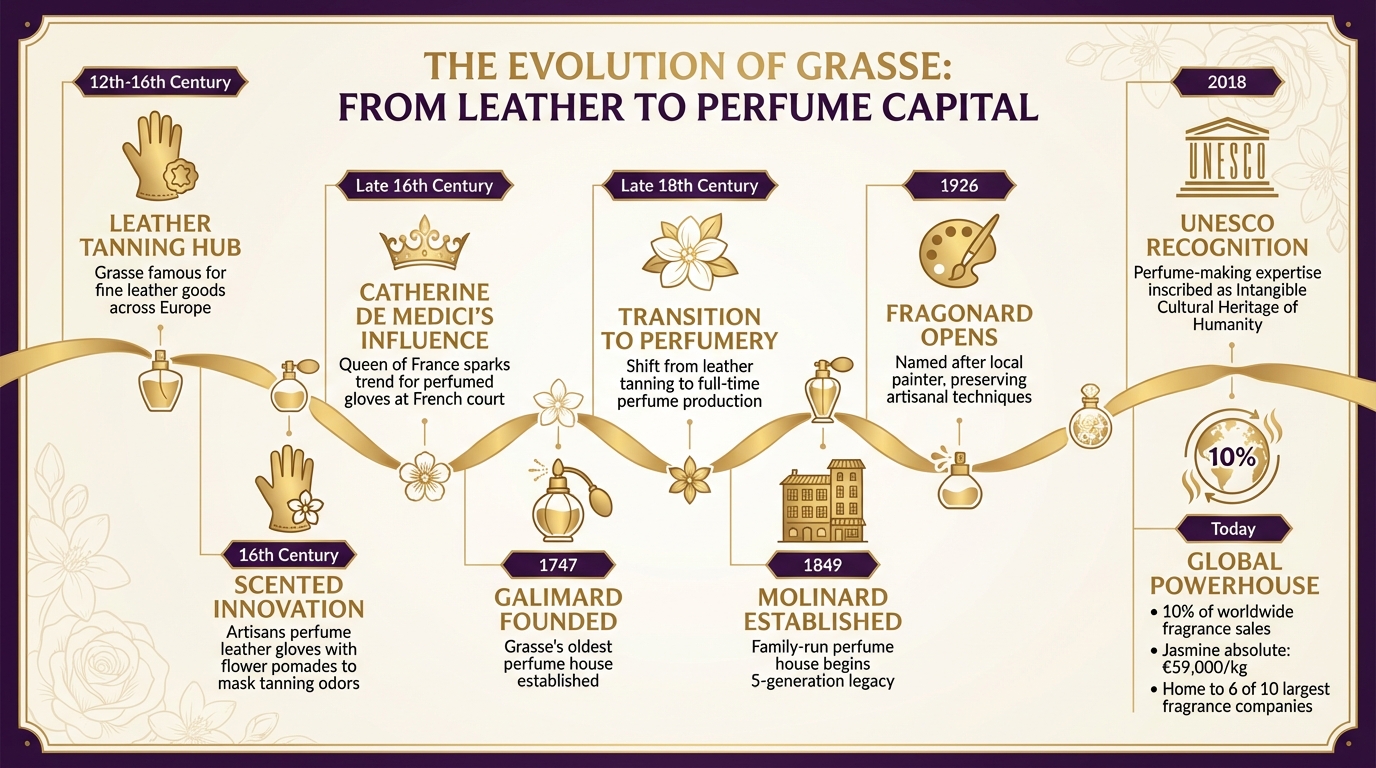
Grasse Perfume History Timeline: From Leather Tanning to UNESCO Heritage
From Leather Tanning to Perfume Production
The Leather Tanning Industry
Grasse’s celebrated perfume heritage has its roots in a rather unexpected place: the leather tanning industry. Between the 12th and 16th centuries, Grasse gained fame across Europe as a hub for producing fine leather goods, particularly gloves adored by European nobility. The region’s natural resources, including abundant rivers and hillside springs, provided the perfect environment for processing raw hides into finished leather.
However, tanning was far from glamorous. The process relied on lye, animal excrement, and decomposing hides, creating a stench that clung to the leather. To counter this unpleasant smell and appeal to their aristocratic clientele, local artisans devised a clever solution. They began macerating flowers in animal fat for months, creating a scented pomade to perfume the leather gloves.
"They are going to perfume the leather gloves with this perfume pomade." – Laurent Pouppeville, Director of Grasse’s Perfume Museum
This innovation elevated leather gloves from practical accessories to luxurious, scented fashion statements. Over time, the same hillside springs that supported leather tanning were used to distill floral essences and irrigate fields of jasmine and roses. This marked a pivotal shift in Grasse’s identity, laying the groundwork for its rise as a perfume capital.
Catherine de Medici’s Influence
The story took a dramatic turn with Catherine de Medici, the Italian-born Queen of France. A local tanner named Galimard presented her with a pair of perfumed gloves, a gesture that proved transformative. Catherine, captivated by the scented gloves, helped spark a trend at the French court. Perfumed gloves became a must-have accessory, driving demand for Grasse’s floral creations and solidifying the town’s reputation as a center for fragrance innovation.
The Flower Fields of Grasse
Jasmine and Roses: Core Ingredients
Grasse’s sunlit hillsides and clay-rich soil create the perfect environment for cultivating some of the world’s most prized flowers. The soil’s ability to retain moisture, paired with the region’s unique sun exposure and geographic location, forms what growers refer to as an "extreme zone." This combination allows jasmine and roses to reach their peak aromatic potential.
The concept of terroir plays a crucial role here, much like in winemaking. Christophe Mège, Head Gardener at the International Perfume Museum, explains:
"The same rose or the same jasmine grown in Egypt or Morocco, it will be different from the rose grown in Grasse. It’s like wine, you can have the same type of grape, but you won’t have the same wine because of the sun, because of the soil, because of the terroir".
Among the flowers cultivated in Grasse, Jasmine Grandiflorum and Rosa Centifolia (commonly known as the May Rose) have become iconic. Their value is reflected in the sheer quantity needed for production: between 7,000 and 10,000 jasmine flowers are required to produce just 1 kilogram of blossoms, and it takes roughly one ton of flowers to create 1 kilogram of jasmine absolute. Recognizing the unmatched quality of these flowers, major perfume houses like Chanel have forged exclusive partnerships with local growers to secure Grasse-grown ingredients for legendary fragrances like Chanel No. 5. This high demand underscores the importance of precise and careful cultivation.
Flower Cultivation Practices
The fragility of jasmine and roses dictates a meticulous harvesting process. Both flowers must be hand-picked at dawn when their scent is at its most intense. Jasmine, in particular, is so delicate that it must be rushed to nearby extraction facilities - often less than a mile away - immediately after picking to preserve its fragrance.
However, this centuries-old tradition faces new challenges due to climate change. Pierre Chiarla, a local perfume flower grower, voices the growing concerns:
"We are worried because we are seeing, for example, freezing temperatures and hail in the spring much more frequently... Previously occurring once every 50 to 100 years, such events now recur annually".
To combat these unpredictable weather conditions, some growers have borrowed techniques from winemakers, such as lighting candles between plants during late-season frosts to shield their crops.
Despite these obstacles, Grasse continues to cultivate approximately 120 acres of roses and 12 acres of jasmine today. The region’s perfume industry remains a global powerhouse, contributing 10% of worldwide sales of scents and flavors. In recognition of its rich heritage, UNESCO designated Grasse’s perfume-making expertise as Intangible Cultural Heritage of Humanity in 2018. Additionally, the Geographic Indication "Absolue Pays de Grasse" now protects nine specific natural ingredients grown in the area, guaranteeing their quality and authenticity.
Historic Perfume Houses of Grasse
Grasse, often regarded as the birthplace of perfumery, owes much of its legacy to the historic perfume houses that have shaped its reputation. These houses have masterfully turned local floral traditions into globally admired craftsmanship.
Fragonard: A Tribute to Artisanal Craftsmanship
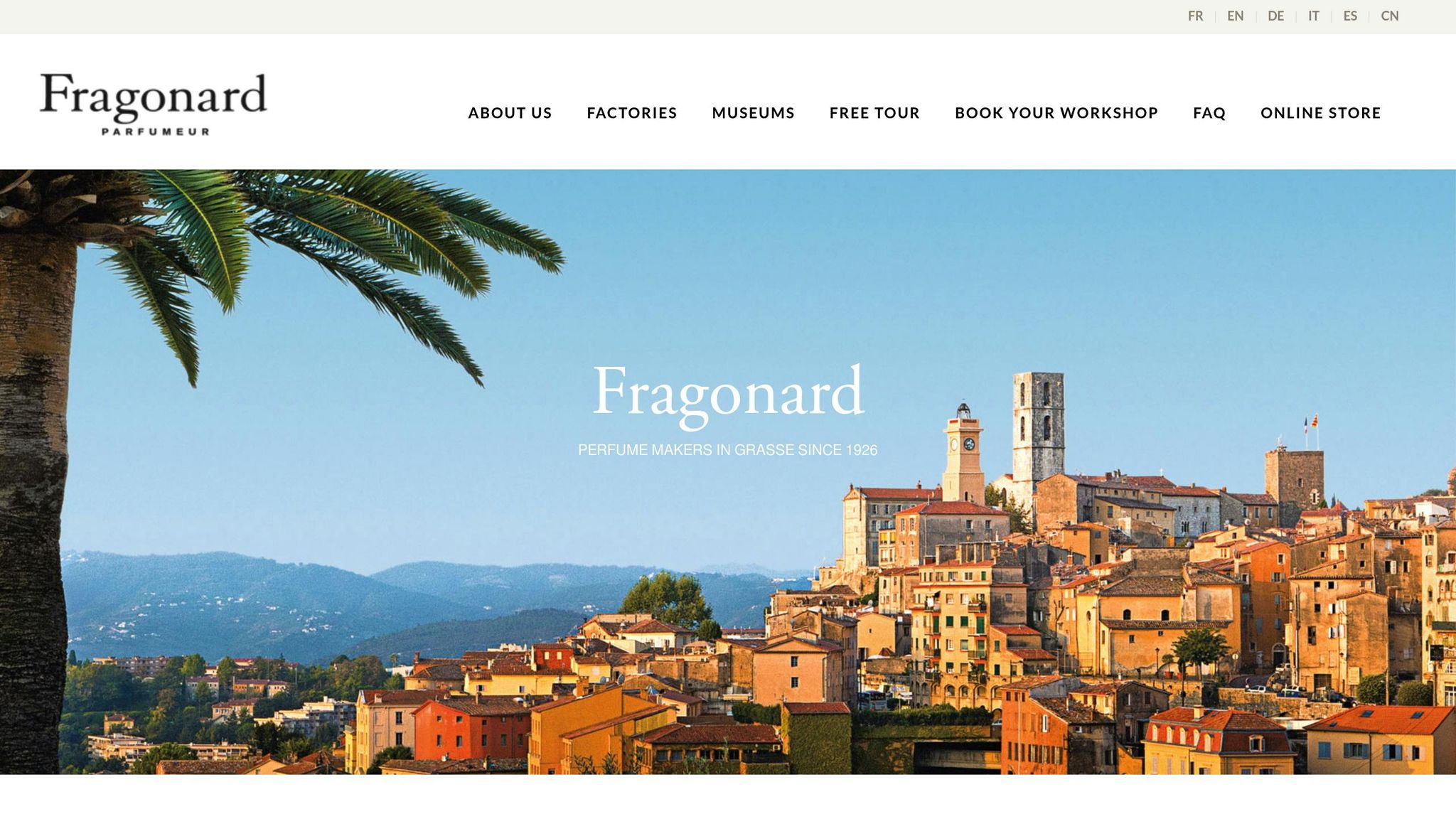
Established in 1926 by Eugène Fuchs, Fragonard pays homage to Jean-Honoré Fragonard, a celebrated painter and native of Grasse. The house operates out of a historic factory dating back to 1782, deeply rooted in the town’s perfumery traditions. Fragonard is renowned for preserving time-honored techniques in creating perfumes and soaps, ensuring that the artistry of past generations remains alive today.
Fragonard also offers a glimpse into the world of scent through its private museum, which chronicles 3,000 years of perfumery history. Visitors can take free guided tours of the factory, witnessing the meticulous traditional production processes. For those seeking a more immersive experience, the "Perfumer’s Apprentice" workshop provides the unique opportunity to craft a 12ml eau de toilette, blending education with creativity.
Galimard and Molinard: Where Heritage Meets Modern Engagement
Galimard, founded in 1747, holds the title of Grasse’s oldest perfume house. Its founder, Jean de Galimard, revolutionized the region by scenting leather gloves with jasmine and lavender in the 16th century, a practice that helped transform Grasse from a leather-tanning hub into a global perfume capital. Today, Galimard continues its legacy with the "Studio des Fragrances", where visitors can create custom scents using traditional methods.
Molinard, established in 1849, has remained a family-run business for five generations. Operating from a historic 19th-century mansion, the house has embraced modern interactive experiences with its "Atelier de Tarinologie." This workshop offers a hands-on exploration of the science behind fragrance creation, allowing participants to craft their own personalized perfumes. By blending its rich history with contemporary approaches, Molinard ensures that the art of perfumery remains both accessible and enduring.
Your Personal Fragrance Expert Awaits
Take our quick scent quiz to discover authentic designer and niche fragrances matched to your taste — explore them as 2ml, 5ml, 8ml & 30ml decants and samples, so you can try each one before committing to a full bottle.
Find Your ScentGrasse in Modern Perfumery
UNESCO Recognition
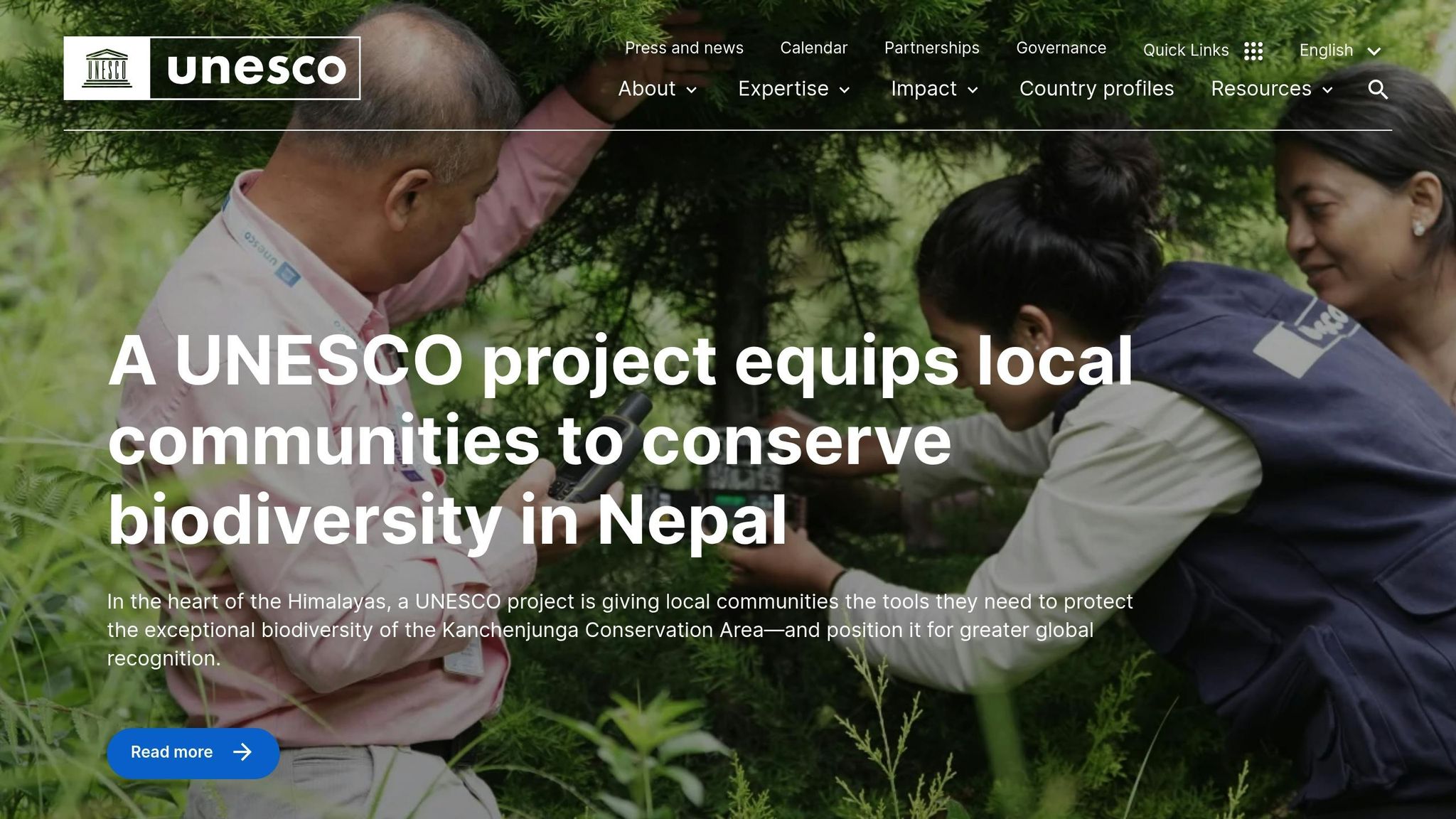
On November 28, 2018, UNESCO officially inscribed Grasse’s perfume-making expertise on the Representative List of the Intangible Cultural Heritage of Humanity. This acknowledgment celebrates the town’s deep-rooted traditions, including the cultivation of perfume plants, processing raw materials, and crafting fragrances.
But this recognition wasn’t just a ceremonial gesture - it sparked real, impactful action to safeguard Grasse’s legacy. For decades, the region had been grappling with a steep decline in flower cultivation, shrinking from about 4,942 acres in the 20th century to a mere 74 acres by 2018. In a bold move to reverse this trend, the Grasse city council reclassified 173 acres of land, previously set aside for urban development, back into agricultural zones.
"We will not let our fabulous legacy, handed down by dozens of generations, disappear from human history." – Jérôme Viaud, Mayor of Grasse
The UNESCO designation also formalized the passing of traditional skills. Where perfume-making knowledge was once shared informally within families, institutions like the Grasse Institute of Perfumery now provide structured training for aspiring perfumers, ensuring these age-old techniques endure.
These efforts have not only preserved the town’s heritage but also solidified its role as a cornerstone of modern perfumery.
Grasse’s Role in Today’s Perfume Market
Even with its smaller agricultural footprint, Grasse continues to play a pivotal role in the global fragrance industry. The town is home to six of the ten largest fragrance companies, drawn by its unique ecosystem that integrates raw material production, biotechnology, and research and development.
Grasse’s terroir remains highly prized. For instance, jasmine absolute from the region commands a staggering price of over $59,000 per kilogram. Luxury brands like Chanel and Dior have taken notice, securing exclusive contracts with local farmers to source May rose and jasmine, ensuring the highest quality for their fragrances.
While honoring its traditions, Grasse has also embraced modern techniques. Eco-extraction methods now complement the classic hydraulic distillation process, blending innovation with heritage. This balance has contributed to a modest revival in flower production, which has climbed from 30 tons annually in the early 2000s to around 40 tons today. The growing global demand for natural ingredients in cosmetics has fueled this resurgence.
Grasse’s ability to merge its historic roots with modern advancements ensures its continued influence in the fragrance world.
Exploring Grasse-Inspired Fragrances with Scento
8ml Decants for Fragrance Discovery
Grasse, often referred to as the perfume capital of the world, is synonymous with luxury fragrances that can cost upwards of $300 per bottle. Scento’s 8ml decants offer a more accessible way to experience these artisanal creations. Instead of investing in a full-sized bottle, you can delve into the craftsmanship of historic perfume houses in a format designed for sampling. Each 8ml vial provides around 120 sprays - enough to wear the fragrance multiple times and fully appreciate its evolution from vibrant top notes to deep, lingering base notes. This modern approach honors Grasse’s centuries-old dedication to quality and artistry.
Scento’s decants are particularly suited for exploring scents built around Grasse’s signature ingredients, like jasmine, May rose, tuberose, orange blossom, and lavender. For instance, Chanel has worked closely with local growers since 1987, sourcing flowers from 75,000 organically cultivated rose bushes spanning 74 acres. With Scento’s curated selection, you can sample these luxurious compositions without committing to a full bottle - offering a sustainable and practical way to discover high-end fragrances.
Flexible Scent Exploration
Scento’s decants, available in 2 ml, 5 ml and 8 ml vials, and a 30 ml bottle decant on most perfumes, address the common dilemma of splurging on full bottles that often go unfinished. Scento is a perfume decant and sample retailer, and every product is available for one-time purchase without any subscription. Scento+ is Scento’s optional membership: the monthly fee comes back in full as store credit to spend on any perfume, members get 10% off, a free sample with every order, a free perfume every six months and a birthday gift, and you can pause anytime; to cancel, contact our team.
This flexibility is particularly ideal for exploring the unique terroir-driven scents of Grasse. As Christophe Mège, Head Gardener at the International Perfume Museum, explains:
"The same rose or the same jasmine grown in Egypt or Morocco, it will be different from the rose grown in Grasse... because of the sun, because of the soil, because of the terroir".
Through Scento, you can embrace the essence of Grasse’s iconic fragrances in a way that’s both flexible and approachable, making the world of luxury perfumery more accessible than ever.
Conclusion
Grasse’s journey from a medieval hub of leather tanning to the perfume capital of the world is nothing short of extraordinary. It all began with scented leather gloves created for Catherine de Medici, a clever way to mask the unpleasant odors of tanning - a small innovation that led to a complete transformation into full-time perfume production.
By the 18th and 19th centuries, Grasse had become a trailblazer in extraction techniques that still form the backbone of modern perfumery. Today, its expertise, recognized by UNESCO, encompasses everything from flower cultivation to the delicate art of scent creation. Iconic blooms like jasmine and May rose, grown locally, are so prized that they can command prices exceeding $59,000 per kilogram. These exquisite ingredients have inspired legendary perfume houses like Chanel and Dior .
While Grasse’s heritage is steeped in exclusivity, modern innovations have made its artistry more accessible. Scento, for example, offers an 8ml decant model, allowing fragrance lovers to explore Grasse-inspired creations without the need for full-sized bottles.
This seamless blend of centuries-old craftsmanship with contemporary discovery platforms ensures that Grasse’s legacy continues to enchant, bringing its timeless artistry to enthusiasts around the globe.
FAQs
How did Grasse evolve from leather tanning to becoming the perfume capital of the world?
Grasse’s rise as the world’s perfume capital traces back to the 15th and 16th centuries, when it was renowned for its leather tanning industry. Tanning, however, came with its fair share of unpleasant smells. To counter this, tanners began infusing leather goods with fragrant extracts from local flowers such as lavender, jasmine, and rose. This practice gained traction, especially after Catherine de Medici introduced scented gloves to the French court in 1533, creating a surge in demand for fragranced items.
By the early 1600s, perfume-making had become an established trade in Grasse. In 1616, the French king officially recognized the “glover-perfumers” guild, cementing the town’s reputation in the craft. The Industrial Revolution later brought modern factories and spurred the large-scale cultivation of flowers, further boosting the industry. Today, Grasse’s unparalleled expertise in perfumery is celebrated as a UNESCO intangible cultural heritage, solidifying its status as a global epicenter for fragrance creation.
Why are the jasmine and roses from Grasse considered so special in perfumery?
The jasmine and roses grown in Grasse are celebrated worldwide for their extraordinary quality. This reputation stems from the region’s distinct Mediterranean microclimate and limestone-rich soil, which together nurture flowers with a higher concentration of aromatic oils. The result? Blooms that deliver deeper, more layered scent profiles - a treasure for perfumers seeking complexity and richness in their creations.
Grasse is also a guardian of time-honored techniques like enfleurage, an artisanal process where fresh petals are carefully pressed into fat to extract their essence. These age-old methods help preserve the intricate and delicate aromas of jasmine and rose, solidifying their status as some of the most coveted ingredients in luxury perfumery.
How is climate change affecting flower farming in Grasse?
Climate change is leaving a noticeable mark on flower cultivation in Grasse, known as the birthplace of modern perfumery. The summer of 2022 brought severe drought conditions, leading to substantial disruptions. Flower growers in the region reported harvest losses reaching as high as 50%, with tuberose yields alone plummeting by 40% in some areas. These extreme weather patterns are pushing farmers to rethink their practices, incorporating more irrigation and adjusting planting schedules - steps that can influence the intricate fragrance profiles of iconic blooms like roses, jasmine, and tuberose.
In response to these challenges, some growers are turning to drought-resistant flower varieties and adopting advanced water conservation techniques. While these strategies offer potential solutions, they come with hefty costs, and the looming threat of future heatwaves adds to the uncertainty. The combination of rising temperatures and erratic rainfall is not only shrinking crop yields but also altering the aromatic essence of Grasse’s famed perfume flowers, posing a serious challenge to its storied reputation in the global fragrance world.

