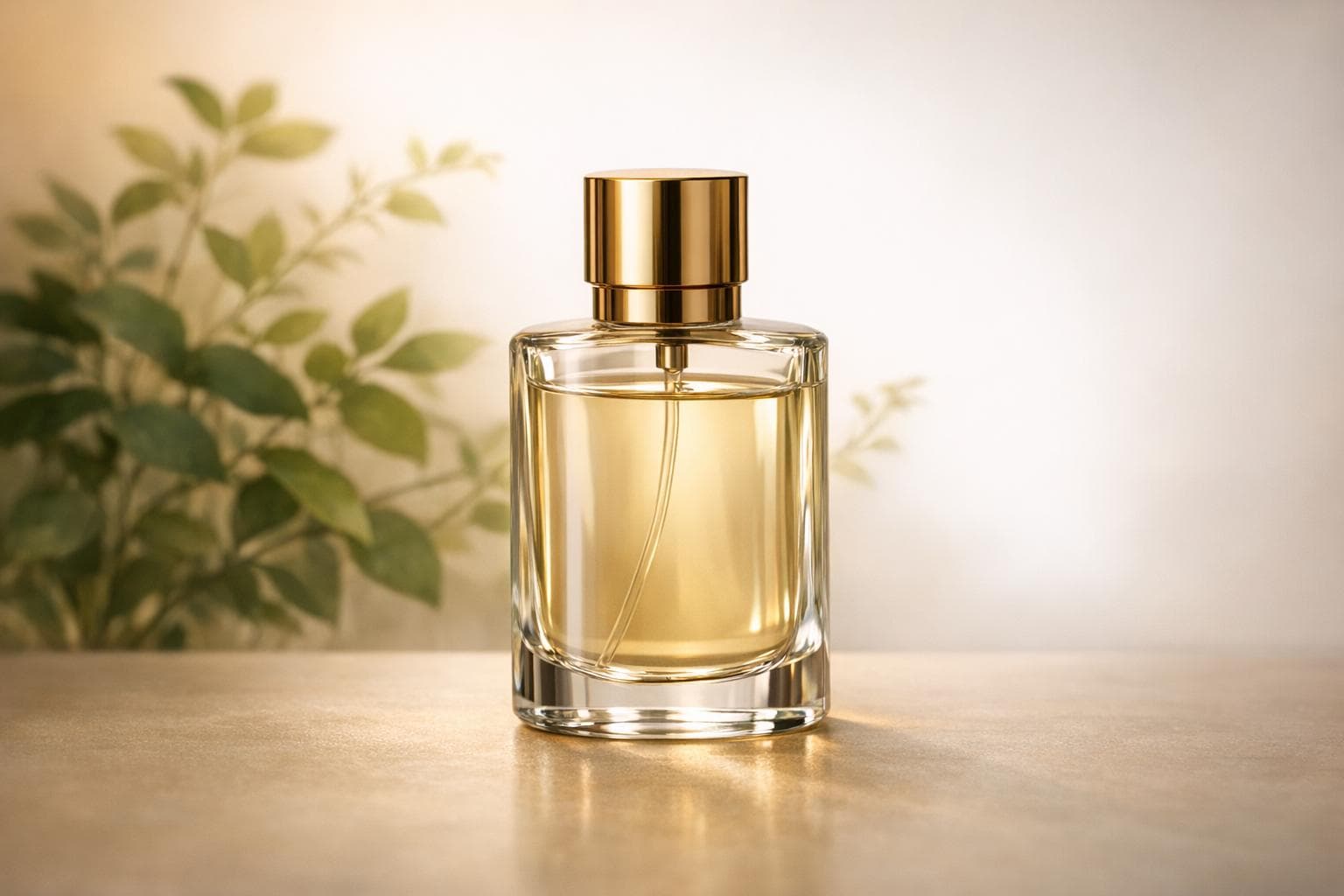
Gucci is reshaping luxury fragrances with its carbon-neutral perfume, "Where My Heart Beats", launched in April 2023. This scent is the first globally available fragrance made with 100% ethanol derived from recycled industrial emissions, eliminating the need for agricultural crops like sugarcane. Traditional alcohol production for perfumes often consumes large amounts of water and land, contributing to deforestation in areas like Brazil’s Atlantic Forest. Gucci’s approach avoids these environmental impacts while maintaining the quality expected from high-end fragrances.
Key points:
- Alcohol Source: Made from industrial carbon emissions via LanzaTech’s CarbonSmart™ technology.
- Environmental Impact: Reduces land and water use, protects ecosystems, and repurposes emissions.
- Fragrance Quality: Master perfumer Alberto Morillas ensures the scent retains its luxurious profile, blending floral rose, white peony, violet leaves, and white musk.
- Price: €330 for 100 mL.
Gucci’s fully segregated supply chain ensures no mixing with conventional alcohol, setting a new benchmark in fragrance production. While some experts note that recycled ethanol eventually releases CO2 when it evaporates, this method still represents a step toward reducing resource-intensive practices in the perfume industry.
Gucci‘s Carbon-Neutral Fragrance Program

Since March 2021, Gucci has collaborated with Coty and LanzaTech to incorporate CarbonSmart™ alcohol into their fragrance production. This alcohol is produced by capturing industrial carbon emissions - like those from steel mills - and converting them into high-purity alcohol through a natural fermentation process developed by LanzaTech. By January 2022, the first fragrances using this innovative method had entered production.
This approach marked a major step forward in luxury perfumery. On April 1, 2023, Gucci introduced "Where My Heart Beats" Eau de Parfum as part of The Alchemist’s Garden collection. Priced at €330 for 3.4 fl oz (100 mL), it became the first globally distributed fragrance made entirely with alcohol derived from captured carbon emissions. Master perfumer Alberto Morillas crafted its floral rose profile, blending white peony, violet leaves, and white musk.
What makes this initiative stand out is its fully segregated supply chain. Unlike "mass balance" methods, which mix recycled and traditional alcohol, this process exclusively uses alcohol sourced from recycled carbon emissions, eliminating the need for agricultural inputs entirely.
The environmental benefits of this method are significant. Traditional alcohol production often relies on land and water-intensive resources, contributing to issues like deforestation in regions such as Brazil’s Atlantic Forest. In contrast, carbon-captured alcohol not only avoids these impacts but also repurposes industrial emissions. Gucci eloquently captures this transformation:
Like alchemists transforming everything they touch into new and glorious wonders, carbon emissions are transformed into alcohol pure enough for use in an enchanting fragrance.
1. Gucci’s Carbon-Neutral Fragrances
Production Emissions
Gucci has taken a bold step toward sustainability with its carbon-neutral fragrances, utilizing emissions from industrial facilities like steel mills to create high-purity alcohol. Through CarbonSmart™ technology, these emissions are transformed via natural fermentation, eliminating the need for traditional sugarcane or sugar beet farming. This approach not only reduces emissions but also helps protect delicate ecosystems, such as Brazil’s Atlantic Forest, from deforestation. By rethinking how raw materials are sourced, Gucci is setting a new standard in eco-conscious production.
Raw Material Sources
Gucci’s commitment to sustainability extends to its raw material sourcing. The alcohol used in its fragrances comes entirely from carbon-captured emissions, ensuring both purity and consistency. LanzaTech’s advanced fermentation process guarantees that this alcohol meets the stringent requirements of luxury perfumery. Supporting this innovation, Dr. Shimei Fan, Coty’s Chief Scientific and Sustainability Officer, remarked:
Our analysis shows that the new alcohol has very low impurities - it meets and exceeds our strict specifications used in perfumery and is in line with other high-quality alcohols found on the market.
Scent Profiles
Despite the shift to carbon-captured alcohol, Gucci’s fragrances retain the luxurious scent profiles expected from a high-end brand. Master perfumer Alberto Morillas has seamlessly adapted traditional techniques to this sustainable carrier, ensuring the fragrances deliver the same olfactory richness without compromising on quality. This proves that environmental responsibility and luxury can go hand in hand.
Sustainability Certifications
Coty’s sustainability efforts have received validation from the Science Based Targets initiative (SBTi), offering independent assurance of their emissions reduction goals. Additionally, lifecycle assessments conducted by Quantis, a BCG company, highlight the environmental advantages of using carbon-captured alcohol over naturally derived ethanols. These certifications underscore the tangible impact of Gucci’s innovative approach to fragrance production.
Your Personal Fragrance Expert Awaits
Take our quick scent quiz to discover authentic designer and niche fragrances matched to your taste — explore them as 2ml, 5ml, 8ml & 30ml decants and samples, so you can try each one before committing to a full bottle.
Find Your Scent2. Conventional Luxury Fragrances
Production Emissions
Traditional luxury fragrances are deeply tied to agricultural practices for producing ethanol, the key ingredient that carries the scent onto the skin. Unlike Gucci’s innovative carbon-captured ethanol model, these conventional methods rely heavily on resource-intensive farming. This includes significant use of water and land, alongside notable carbon emissions during both the cultivation and processing stages. While these methods maintain the familiar luxury scent experience, they come with a steep environmental price.
The environmental strain becomes even more apparent when examining the sourcing of raw materials.
Raw Material Sources
The alcohol used in most conventional luxury fragrances is typically derived from sugarcane and sugar beets. These crops require vast amounts of land and water for irrigation and processing, creating a ripple effect of environmental challenges. This agricultural dependency not only competes with food production but also contributes to biodiversity loss as natural habitats are cleared for cultivation. As a result, traditional sourcing methods are less efficient and more taxing on the environment.
Before the industry began shifting toward 100% carbon-captured alcohol, some brands adopted a "mass balance" approach. This method involved blending traditional agricultural ethanol with smaller amounts of carbon-captured alternatives. For instance, Coty started using carbon-captured ethanol in its globally distributed fragrances in January 2022. However, this approach still leaned partially on conventional agricultural sources, limiting its environmental benefits.
Despite these hurdles, traditional methods have continued to uphold the luxury fragrance experience.
Scent Profiles
The hallmark of conventional luxury fragrances lies in their ability to preserve iconic scent profiles. Traditional ethanol carriers have long been the backbone of these complex formulations, ensuring that the fragrances deliver the rich, layered experiences consumers expect. While this method excels in maintaining the quality and depth of scents, it does so at an environmental cost. Carbon-neutral alternatives are emerging as a way to retain this quality while addressing the ecological impact, but traditional practices remain the standard for now.
Advantages and Disadvantages
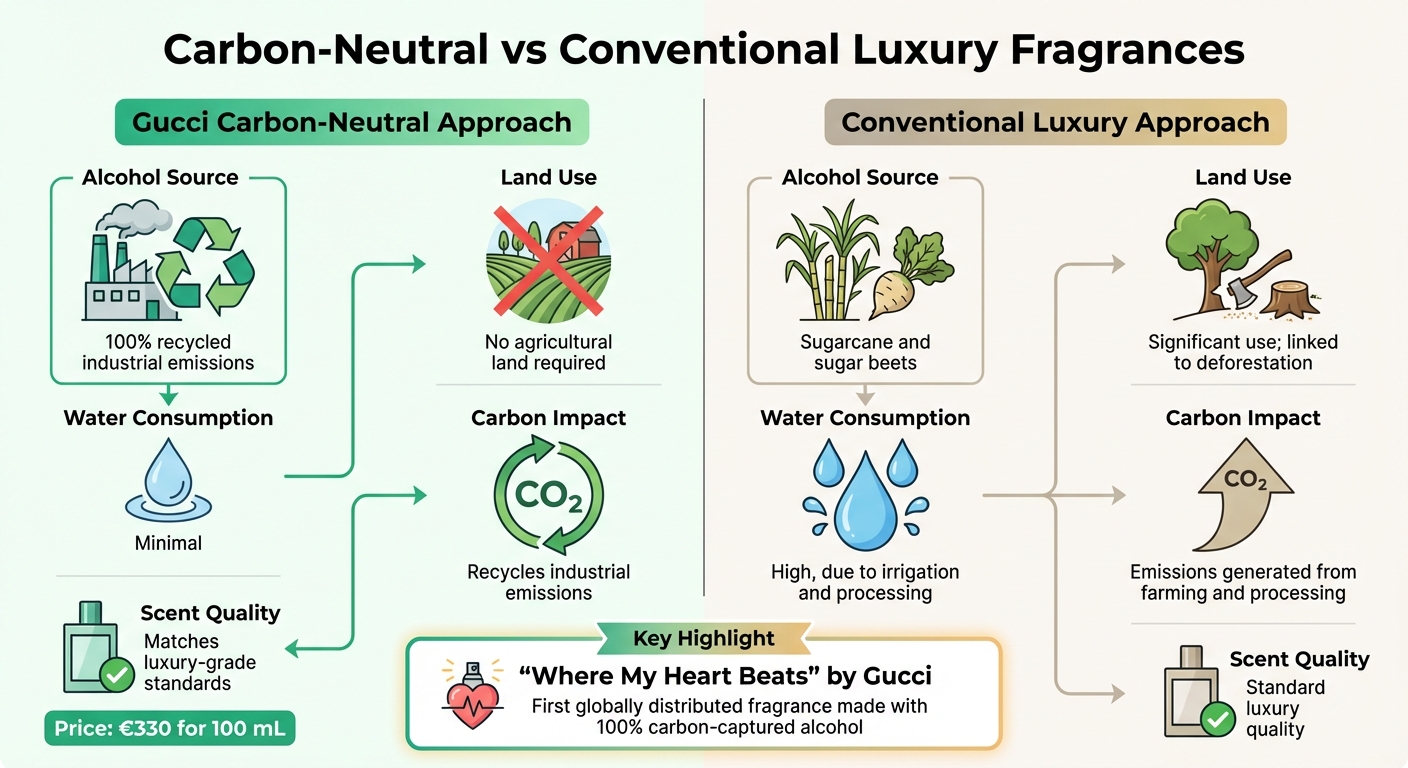
Gucci Carbon-Neutral vs Conventional Luxury Fragrances Comparison
Gucci’s carbon-neutral fragrances and traditional luxury scents each offer their own unique benefits and challenges. One of the standout features of Gucci’s approach is its efficient use of resources. The 100% carbon-captured alcohol in "Where My Heart Beats" avoids the need for agricultural land and uses significantly less water compared to the traditional ethanol derived from sugarcane or sugar beets. This approach alleviates the strain on vulnerable ecosystems, such as Brazil’s Atlantic Forest, which has been negatively impacted by deforestation tied to conventional ethanol farming. The table below highlights a side-by-side comparison of these two approaches.
That said, carbon-captured alcohol does have its limitations. As Professor Emily A. Carter explains, if the alcohol is derived from fossil fuel emissions, it doesn’t eliminate carbon emissions entirely - it simply postpones them. Once the alcohol evaporates, it eventually returns to the atmosphere as CO2, meaning it doesn’t provide permanent carbon storage. Despite this, Dr. Shimei Fan points out:
Beyond the science, there is something magical in upcycling industrial emissions into alcohol pure enough for use in fine fragrances.
When it comes to quality, carbon-captured alcohol has proven itself capable of meeting the rigorous standards required for luxury fragrances. Gucci’s "Where My Heart Beats" delivers the sophistication expected of high-end scents and is priced at €330 for 100 mL.
| Feature | Gucci Carbon-Neutral | Conventional Luxury |
|---|---|---|
| Alcohol Source | 100% recycled industrial emissions | Sugarcane and sugar beets |
| Land Use | No agricultural land required | Significant use; linked to deforestation |
| Water Consumption | Minimal | High, due to irrigation and processing |
| Carbon Impact | Recycles industrial emissions | Emissions generated from farming and processing |
| Scent Quality | Matches luxury-grade standards | Standard luxury quality |
Conclusion
Gucci’s carbon-neutral fragrance initiative signals a meaningful step toward redefining luxury with a focus on environmental responsibility. By creating "Where My Heart Beats" using 100% recycled carbon emissions, the brand proves that cutting-edge approaches can coexist with the elegance and refinement expected in high-end perfumery. This breakthrough eliminates the need for agricultural land and significantly reduces water consumption, all while maintaining the sophistication synonymous with luxury fragrances.
However, the technology isn’t without its challenges. Experts point out that it delays carbon emissions rather than permanently capturing them. Martin Mulvihill, Co-founder and Managing Partner at Safer Made, highlights this limitation:
It’s not necessarily a long-term carbon mitigation strategy.
Despite this, the initiative lays essential groundwork for integrating broader sustainable practices into the fragrance industry.
Gucci’s efforts are already inspiring change across the luxury sector. Coty, for instance, plans to expand the use of carbon-captured ethanol throughout its product lines. This ripple effect underscores Gucci’s role as a trailblazer in sustainable innovation. Notably, the brand achieved a 44% reduction in its environmental footprint by 2021, reaching its target four years ahead of schedule.
FAQs
What makes Gucci’s carbon-neutral fragrance more environmentally friendly than traditional perfumes?
Gucci’s fragrance Where My Heart Beats takes a bold step toward sustainability by incorporating CarbonSmart alcohol, crafted entirely from recycled carbon emissions. This method sets it apart from traditional ethanol production, which often relies on crops like sugarcane or sugar beets. By skipping agricultural land use, it cuts down on water consumption and avoids contributing to deforestation.
By transforming industrial CO₂ into alcohol, Gucci has managed to create a luxury scent that aligns with eco-conscious values while still delivering the quality and prestige expected from a high-end fragrance. It’s a compelling example of how luxury and sustainability can blend seamlessly.
How does Gucci create the alcohol used in its carbon-neutral fragrances?
Gucci incorporates LanzaTech’s CarbonSmart™ technology to create the alcohol used in its carbon-neutral fragrances. This cutting-edge method captures carbon emissions from industrial operations and converts them into premium-quality alcohol suitable for perfumes.
By giving new purpose to carbon emissions that would otherwise pollute the environment, Gucci is making meaningful progress in reducing its environmental impact within the fragrance industry.
Does using carbon-captured alcohol impact the quality of Gucci fragrances?
Gucci’s use of carbon-captured alcohol maintains the exceptional quality of their fragrances. This alcohol adheres to the strict purity standards essential for fine perfumes, ensuring it enhances and preserves the scent as intended. By embracing this sustainable approach, Gucci continues to deliver the luxurious fragrance experience their customers expect, without any trade-offs.

