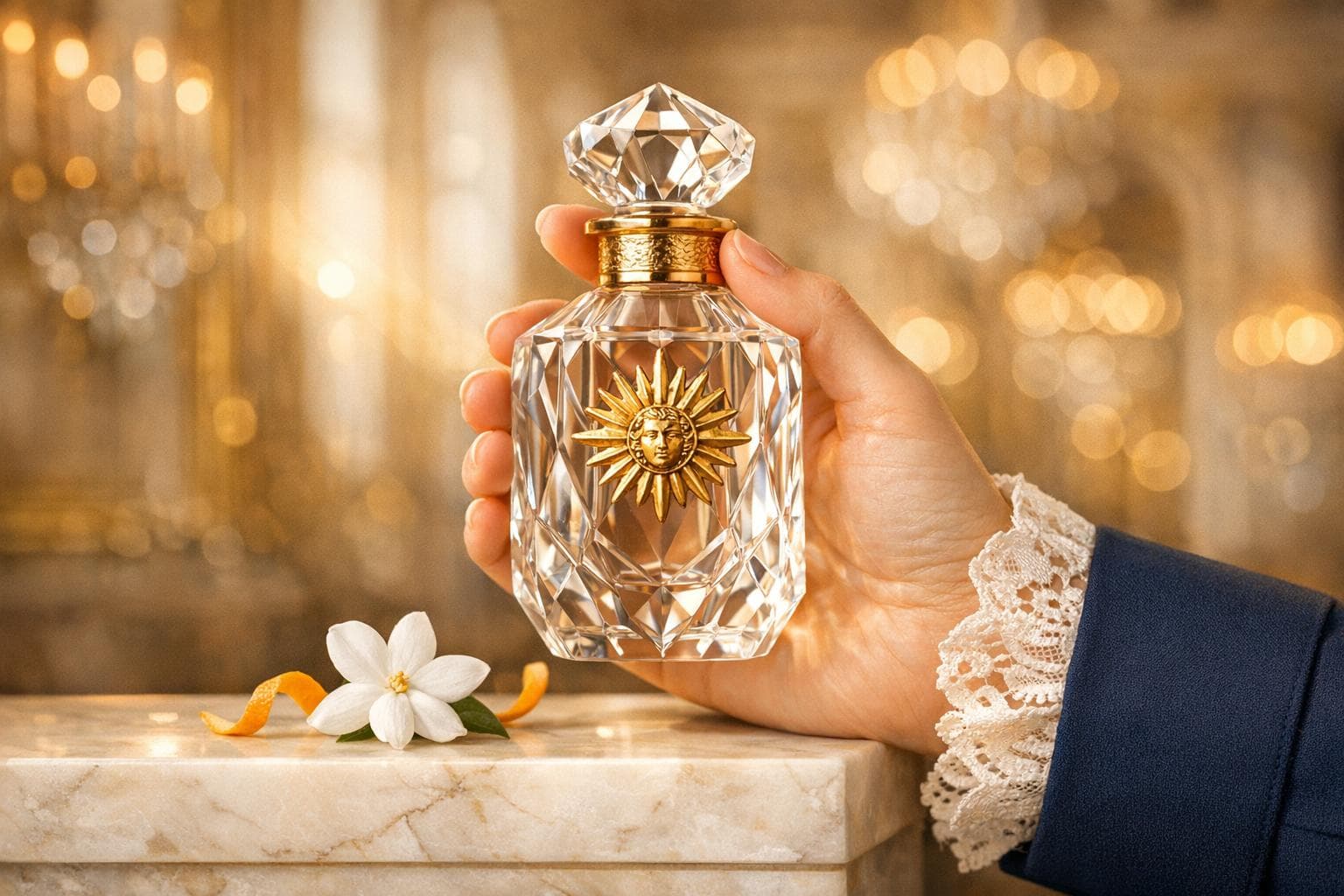
Ludvík XIV., známý jako „Král Slunce“, proměnil vůni z luxusu v každodenní nezbytnost na francouzském dvoře. S hlubokou vášní pro vůně si nechával vytvářet vlastní parfémy na každý den v týdnu a provoněl své okolí – od oděvů až po fontány ve Versailles. Parfém se stal na dvoře nezbytností, maskoval zápach špatné hygieny a symbolizoval bohatství i postavení. Podporou parfumérů a botanických inovací pomohl Ludvík XIV. upevnit pozici Francie jako světového lídra v parfumérství – dědictví, které přetrvává dodnes.
Klíčové body:
- Ludvík XIV. se za celý život vykoupal pouze třikrát a na udržení čistoty spoléhal na parfémy.
- Jeho dvůr, přezdívaný „Parfémovaný dvůr“, využíval vůně hojně pro lidi, předměty i domácí mazlíčky.
- Králova oblíbená vůně, květ pomerančovníku, vyžadovala 2 000 beden pomerančovníků ve Versailles.
- Parfém ve Versailles řešil hygienické problémy a zároveň ukazoval moc a vytříbenost.
- Dominance Francie v parfumérství začala za Ludvíka XIV., přičemž Grasse se stal klíčovým výrobním centrem.
Obsesivní záliba Ludvíka XIV. ve vůních ovlivnila nejen život na dvoře, ale i moderní parfumérství – od zakázkových směsí až po celosvětovou reputaci Francie v tomto odvětví.
Ludvík XIV. a jeho osobní používání vůní
Denní rituály s vůněmi
Život Ludvíka XIV. byl prodchnut uměním vůní, které se prolínaly téměř každým aspektem jeho denní rutiny. Jeho osobní parfumér Martial vytvářel unikátní vůni na každý den v týdnu, čímž posiloval králův obraz Krále Slunce a jeho posedlost okázalostí i kontrolou. Ludvík však nezůstal jen u osobního použití – jeho paruky, oděvy, nábytek i fontány ve Versailles byly napuštěny parfémem, takže každý, kdo vstoupil do jeho blízkosti, pocítil jeho charakteristickou olfaktorickou přítomnost.
Jedním z jeho nejzajímavějších zvyků bylo používání „Aqua Angeli“, vonné lázně na textilie. Tato směs spojovala agarové dřevo, muškátový oříšek, storax, hřebíček a benzoe vařené v růžové vodě, později obohacené o jasmín, pomerančový květ a špetku pižma. Šlo o ranou verzi toho, co bychom dnes nazvali luxusní aviváží.
Pokud šlo o osobní hygienu, Ludvík XIV. zvolil poněkud nekonvenční cestu. Místo pravidelného koupání se uchyloval k „vnitřní očistě“, přidával kapky parfému do nápojů a používal alkoholové roztoky v kombinaci s těžkými vůněmi. Martial dokonce krále učil parfumérství a Ludvík sám experimentoval s tvorbou vlastních směsí.
Během své 72leté vlády se jeho preference vůní měnily. V mládí tíhl k výrazným, živočišným vůním jako pižmo a cibet, které nejenže vyjadřovaly moc, ale také účinně maskovaly pachy. S přibývajícím věkem a zvýšenou citlivostí na silné vůně však přešel k lehké, svěží vůni květu pomerančovníku. Jeho vášeň pro tuto vůni byla tak intenzivní, že udržoval téměř 2 000 beden pomerančovníků v Oranžerii ve Versailles. Tyto praktiky nebyly jen osobními výstřelky – nastavily standard královského přístupu k vůním, kde se luxus snoubil s precizností a smyslem pro detail.
Běžné ingredience v královských parfémech
Králova oddanost vůním se odrážela ve pečlivě vybraných ingrediencích, které jeho parfémy definovaly. Tyto složky byly směsí exotických importů a pokladů pěstovaných v jeho vlastních zahradách, což symbolizovalo jeho vytříbený vkus i bohatství království.
| Kategorie | Ingredience používané Ludvíkem XIV. |
|---|---|
| Květinové tóny | Květ pomerančovníku (jeho oblíbený), jasmín, tuberóza, hyacint, růžová voda, fiala |
| Koření & dřeva | Agarové dřevo, muškátový oříšek, hřebíček, kardamom |
| Živočišné/těžké | Pižmo, cibet, ambra, storax |
| Gurmánské/exotické | Čokoláda (v mládí), vanilka, benzoe |
Každá ingredience nesla svůj specifický symbolický význam. Vzácné koření a exotické suroviny jako vanilka a čokoláda ukazovaly schopnost Francie financovat botanické expedice, zatímco květinové tóny jako květ pomerančovníku zdůrazňovaly královy osobní preference. Tyto prvky společně povýšily umění parfumérství na projev královské sofistikovanosti a moci a nastavily precedent pro evropskou aristokracii.
Hygiena ve Versailles – Jak špinavé bylo skutečně sídlo moci Ludvíka XIV.?
Parfém jako odpověď na hygienické problémy Versailles
Versailles Ludvíka XIV.: Statistiky parfémů a hygienická fakta
Hygienické podmínky na dvoře
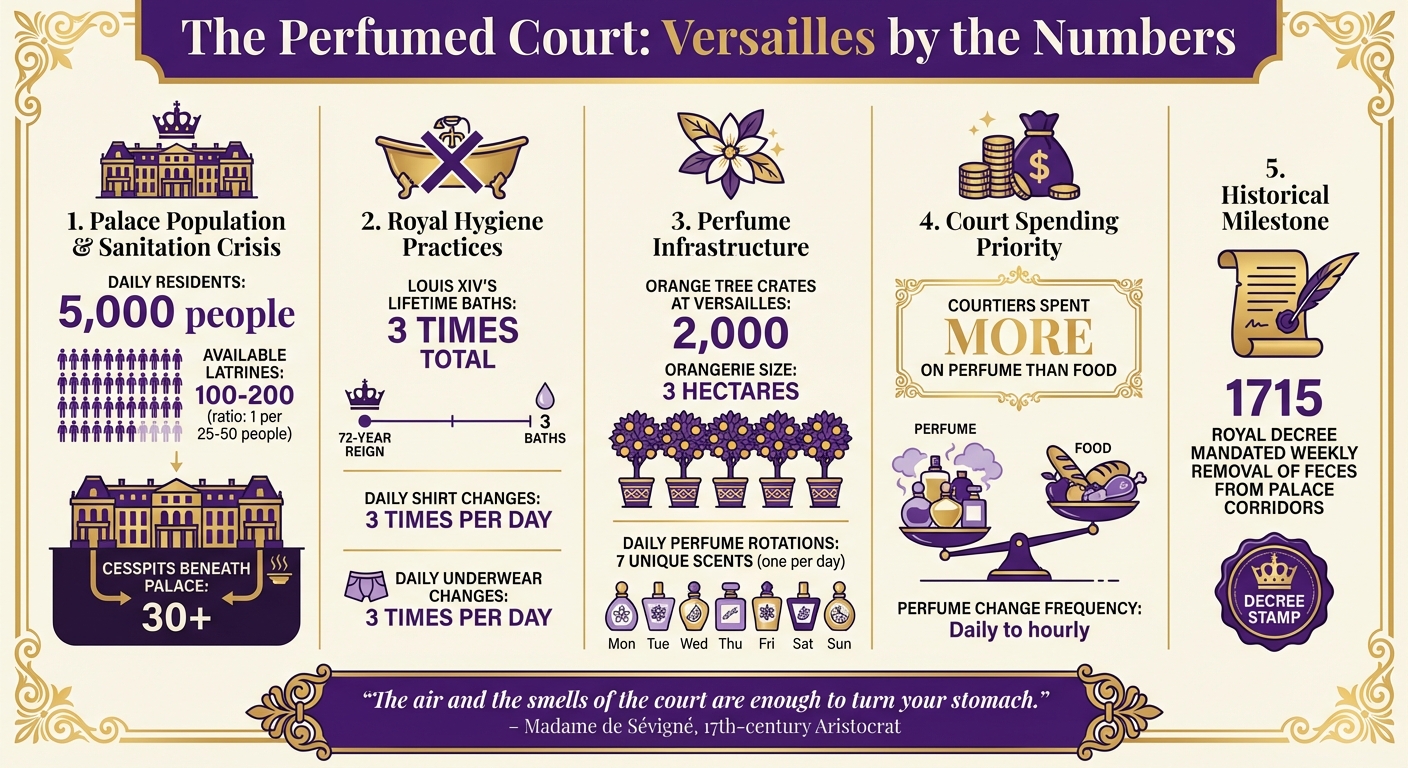
Okázalost Versailles byla nepopiratelná, ale pod její honosnou fasádou se skrývaly šokující hygienické problémy. Denně zde pobývalo až 5 000 obyvatel, přičemž sanitární podmínky byly žalostné. K dispozici bylo pouze 100–200 latrín, takže většina dvořanů byla odkázána na nočníky. Ty byly buď vylévány do více než 30 žump pod palácem, nebo – což je alarmující – přímo do chodeb.
V té době se věřilo, že voda šíří nemoci, a proto bylo koupání vzácné. Sám Ludvík XIV. se údajně za celý život vykoupal jen třikrát, zatímco dvořané se uchylovali k „suchému mytí“ lněnými hadříky nebo alkoholovými roztoky. Králova hygiena zahrnovala i několikerou denní výměnu košile a spodního prádla – až třikrát denně – jako alternativu koupání.
„Vzduch a pachy na dvoře vám dokážou obrátit žaludek.“ – Madame de Sévigné, aristokratka 17. století
Do roku 1715 byla situace natolik kritická, že královský dekret nařídil týdenní odstraňování výkalů z palácových chodeb. S hromaděním odpadu, minimálním koupáním a tisíci neumytých těl byl zápach ohromující. V tomto prostředí se parfém stal více než luxusem – byl nezbytností pro přežití.
Parfémy jako praktické nástroje
Uprostřed těchto nehygienických podmínek si francouzský dvůr vysloužil přezdívku „la cour parfumée“. Parfém se vyvinul ze symbolu rozmařilosti v praktické řešení pro maskování odporných pachů, které Versailles prostupovaly. Sloužil jako ochranná bariéra proti zápachu i jako znak postavení, spojující užitečnost s prestiží.
Těžké, živočišné vůně jako pižmo a cibet byly obzvláště ceněny pro svou schopnost přebít zápach neumytých těl a odpadu. Parfém však nebyl omezen jen na osobní použití. Stříkal se na nábytek, paruky, vějíře i domácí mazlíčky, čímž vytvářel voňavý štít v urážlivé atmosféře paláce.
Protože textilie byly prané jen zřídka, i ty byly vydatně provoněny. Dvořané nosili pomandery – malé kuličky plněné aromatickými bylinami – aby si k nim mohli přivonět, když byly přeplněné místnosti nesnesitelné. „Toaletní octy“ s levandulí a rozmarýnem byly dalším oblíbeným prostředkem, používaným k osvěžení smyslů a očištění okolního vzduchu.
To, co začalo jako zoufalý pokus čelit hygienické krizi Versailles, nakonec předefinovalo roli parfému. Stal se nedílnou součástí dvorského života a položil základy trvalého vlivu Francie v parfumérském průmyslu. Tyto vynalézavé způsoby využití vůní nejen řešily okamžité potřeby, ale také formovaly budoucnost parfumérství napříč Evropou.
Váš osobní odborník na parfémy už čeká
Vyplňte náš rychlý vonný kvíz a objevte autentické designové a nišové parfémy vybrané podle vašeho vkusu – prozkoumejte je jako 2–8ml dekanty a vzorky, abyste si každý mohli vyzkoušet, než se rozhodnete pro celou lahvičku.
Najděte svou vůniVývoj zakázkových parfémů na dvoře
Královští parfuméři a jejich práce
Ludvík XIV. povýšil parfumérství na umění tím, že se aktivně podílel na tvorbě vůní. Jeho osobní parfumér Martial nejenže vytvářel vůně pro krále, ale také ho učil umění míchání aromatických kompozic. Tato spolupráce povznesla parfumérství z řemesla na sofistikované umění, neboť Ludvík XIV. podporoval experimenty se vzácnými a exotickými rostlinami z celého světa.
Historik Simon Barbe označil Ludvíka XIV. za „nejvoňavějšího krále“. Jeho oddanost nošení unikátních, na míru vytvořených vůní inspirovala šlechtu, aby si také nechávala vytvářet vlastní parfémy a dohlížela na jejich vývoj. Roku 1614 bylo sloučení rukavičkářů a parfumérů do profese parfumer-gantiers – formalizované královskými patenty – dalším krokem k legitimizaci tohoto povolání a jeho významu na dvoře.
Tento důraz na zakázkový design vůní neobohatil jen osobní styl; stal se součástí samotné struktury dvorského života.
Provonění předmětů a textilií
Ve Versailles se vůně neomezovala jen na osobní ozdobu. Košile Ludvíka XIV. byly proslulé tím, že byly máčeny v „Aqua Angeli“, luxusní směsi agarového dřeva, muškátového oříšku, storaxu, hřebíčku a benzoe vařených v růžové vodě, s jasmínem a pomerančovou květovou vodou na závěr. I jeho prádlo tak neslo nádech královské výjimečnosti.
Parfumer-gantiers zavedli také zvyk provonění koženého zboží, jako jsou rukavice, pásky a boty, aby zamaskovali nepříjemný pach činěné kůže. Ale využití vůní zde nekončilo. Nábytek se stříkal parfémem, salony byly zdobeny miskami s vonnými květy a fontány v paláci byly údajně napouštěny pomerančovým květem. Louis — Antoine Caraccioli vystihl podstatu tohoto voňavého světa slovy:
Všechno je provoněné, od obložení stěn až po myšlenky.
Dvořané šli ještě dál – provoněli paruky, tabák, vějíře, papírnictví i své mazlíčky. Přísná dvorská etiketa vyžadovala nejen používání vůní, ale i časté změny – někdy denně, jindy dokonce každou hodinu. Některé zprávy dokonce uvádějí, že dvořané ve Versailles utráceli za parfémy více než za jídlo.
Tyto praktiky nejen osvěžovaly atmosféru paláce, ale také položily základy trendů, které se rozšířily po celé Evropě.
Vliv na evropské parfumérské trendy
Preference Ludvíka XIV. formovaly evropské parfumérské trendy na desítky let. Zpočátku byl okouzlen těžkými, živočišnými vůněmi jako pižmo a cibet, později však upřednostňoval lehčí, květinové parfémy, zejména květ pomerančovníku. Aby měl tohoto ceněného aroma dostatek, pěstovalo se ve versailleské Oranžerii téměř 2 000 beden pomerančovníků na třech hektarech.
Tento posun od těžkých k lehčím vůním se brzy stal módou i na evropských dvorech, které často napodobovaly francouzské trendy. Inovace ve Versailles podnítily soutěž v parfumérství mezi Montpellier a Grasse. Nakonec se Grasse díky pěstování vonných rostlin, jako je bigaradier (druh citrusovníku), stal hlavním centrem výroby parfémů.
Díky těmto změnám dvůr Ludvíka XIV. nejen redefinoval osobní vůni, ale také proměnil celé odvětví a zanechal trvalý odkaz v evropském parfumérství.
Dopad Ludvíka XIV. na moderní parfumérství
Postavení Francie ve světové výrobě parfémů
Láska Ludvíka XIV. k vůním sehrála klíčovou roli v tom, že Francie se stala světovým lídrem v parfumérství. Jeho neukojitelná poptávka po zakázkových vůních vyvolala rivalitu mezi Montpellier a Grasse, což vedlo Grasse k masivnímu pěstování jasmínu, růží a tuberózy v Provence. Král Slunce nejen získával vůně, ale také podporoval parfuméry v experimentování s exotickými ingrediencemi. V únoru 1614 znamenalo sloučení rukavičkářů a parfumérů do cechu maîtres gantiers-parfumeurs zásadní obrat, profesionalizaci řemesla a upevnění francouzského vlivu ve světě vůní. I dnes je Grasse oslavováno jako „Hlavní město parfémů světa“, jehož dědictví je hluboce zakořeněno v těchto raných inovacích.
Od královských zakázkových směsí k moderním niche parfémům
Zakázkové vůně vytvářené pro Ludvíka XIV. a jeho dvůr ve Versailles položily základy trhu s niche parfémy, jak jej známe dnes. Šlechtici jako princ z Condé a vévodkyně d’Aumont si často nechávali vytvářet osobní vůně, což je trend, který se odráží i v současném parfumérství. Tato tradice personalizace se vyvinula do dnešní nabídky niche parfémů, kde značky jako Scento nabízejí designérské a niche vůně v menších, cestovních dekantech. Tento přístup umožňuje milovníkům parfémů objevovat různé vůně bez nutnosti kupovat celé flakony a udržuje ducha personalizace naživu.
Parfém jako umění a kultura
Během vlády Ludvíka XIV. se parfumérství povzneslo nad svou utilitární funkci a stalo se uměním. Králův vliv povýšil vůni z hygienické pomůcky na symbol vytříbenosti a elegance. Simon Barbe, autor Le Parfumeur françois, označil Ludvíka XIV. za „nejvoňavějšího krále všech dob“. Jeho preference pro lehčí květinové tóny, jako je květ pomerančovníku, před těžšími živočišnými vůněmi, jako je pižmo a cibet, znamenala zásadní posun v evropských parfumérských trendech. Tento příklon k jemným, elegantním kompozicím rezonuje i v moderním parfumérství.
V květnu 2023 uctil palác Versailles toto dědictví otevřením „Zahrady parfuméra“ v oranžerii Châteauneuf pod patronací Maison Francis Kurkdjian. Zahrada s více než 300 druhy rostlin znovu vytváří olfaktorickou nádheru dvora Ludvíka XIV. a nabízí hmatatelné spojení s tehdejšími inovacemi ve světě vůní.
Závěr
Ludvík XIV. povznesl parfumérství z pouhé hygienické alternativy na sofistikované umění. Tím, že pověřil svého osobního parfuméra Martialea tvorbou unikátních denních vůní, vytvořil „voňavý šatník“, jenž symbolizoval královskou autoritu a exkluzivitu. Tato proměna vynesla jeho dvoru přezdívku „Parfémovaný dvůr“, kde se vůně stala znakem moci.
Jeho neochvějná poptávka po parfémech podnítila regionální soutěž a položila základy francouzské dominance v globálním parfumérském průmyslu. Financováním botanických expedic a formalizací řemesla prostřednictvím cechu maîtres gantiers-parfumeurs učinil z Grasse „Hlavní město parfémů světa“. Toto dědictví nejen proměnilo odvětví, ale také položilo základy moderních parfumérských praktik.
Preference Krále Slunce pro lehčí květinové vůně, jako je květ pomerančovníku, před těžšími živočišnými parfémy nastavily trend, který ovlivňuje vkus i dnes. Jeho denní rotace vůní se odráží v dnešním přístupu k objevování parfémů. Platformy jako Scento tuto tradici ctí nabídkou kurátorských výběrů designérských a niche parfémů v malých, vzorkových dekantech, které umožňují nadšencům objevovat různé vůně bez závazku k plné lahvi.
Vliv „Parfémovaného dvora“ Ludvíka XIV. rezonuje v moderní parfumérské kultuře. V roce 2023 oslavil palác Versailles toto dědictví otevřením „Zahrady parfuméra“ v oranžerii Châteauneuf, kde je k vidění více než 300 druhů rostlin, které se používaly v parfumérství 17. století. Botanické inovace a zakázkové směsi Krále Slunce nadále inspirují dnešní důraz na personalizované a objevné zážitky s vůněmi. Jeho přínos parfumérství je stejně významný dnes jako před více než 300 lety.
Často kladené otázky
Proč byl parfém ve Versailles tak důležitý?
Parfém měl ve Versailles ústřední roli jako symbol moci, postavení a vytříbenosti. V době, kdy byly hygienické standardy zcela odlišné a koupání ve vodě nebylo běžné, se vůně staly nepostradatelnými pro maskování nepříjemných pachů. Nad rámec praktického využití symbolizovaly bohatství a okázalost dvora a byly nedílnou součástí propracovaných rituálů, které definovaly život ve Versailles. Za vlády Ludvíka XIV. nebyly vůně jen doplňkem, ale klíčovým prvkem, který umocňoval okázalost dvora i autoritu krále.
Jak vlastně voněly parfémy Ludvíka XIV.?
Ludvík XIV. měl zálibu v parfémech, které kombinovaly květinové a kořeněné tóny a vytvářely dojem elegance a okázalosti. Mezi jeho oblíbené vůně patřily květ pomerančovníku, hyacint, tuberóza, jasmín a růžová voda, které nabízely jemný, květinový půvab. Tyto složky byly často kombinovány s bohatšími, teplejšími prvky, jako je agarové dřevo, muškátový oříšek, storax, hřebíček a benzoe, což vytvářelo vonný profil, který dokonale ladil s velkolepostí Versailles.
Jak Ludvík XIV. pomohl učinit z Francie parfumérskou velmoc?
Ludvík XIV. sehrál klíčovou roli v tom, že Francie se stala světovým lídrem v parfumérství. Vytvořením parfémovaného dvora ve Versailles učinil z vůní symbol moci, vytříbenosti a dokonce i čistoty. Jeho rozhodnutí objednávat zakázkové vůně nejen zvýšilo přitažlivost dvora, ale také posílilo mezinárodní postavení Francie ve světě parfémů. Tyto iniciativy položily základy trvalého dědictví Francie jako dominantní síly v parfumérském průmyslu.