Ceny luxusních parfémů mezi lety 2020 a 2025 prudce vzrostly; ikonické vůně jako Chanel No. 5 zdražily ze 110 € na 172 €. Do roku 2026 dosáhl globální trh luxusních vůní hodnoty 57,28 miliardy €, což odráží rostoucí poptávku poháněnou vzácnými ingrediencemi, úsilím o udržitelnost a pokročilými technologiemi, jako jsou AI a blockchain. Vysoká cla, nedostatek ingrediencí a marketingové náklady však způsobily, že parfémy jsou o 30 % dražší než před pandemií.
Klíčová zjištění:
- Vzácné suroviny jako oud dnes stojí 50 000–80 000 € za litr.
- Marketing a obaly často tvoří 80–90 % maloobchodní ceny.
- Spotřebitelé stále častěji upřednostňují niche značky a znovu plnitelné varianty.
Pochopení těchto faktorů pomáhá vysvětlit, proč luxusní vůně stojí tolik, kolik stojí – a jak v roce 2026 nakupovat promyšleněji.
Rozklad cen luxusních parfémů 2026: tržní statistiky a nákladové faktory
Velikost a růst trhu luxusních vůní v roce 2026
Globální hodnota trhu a míry růstu
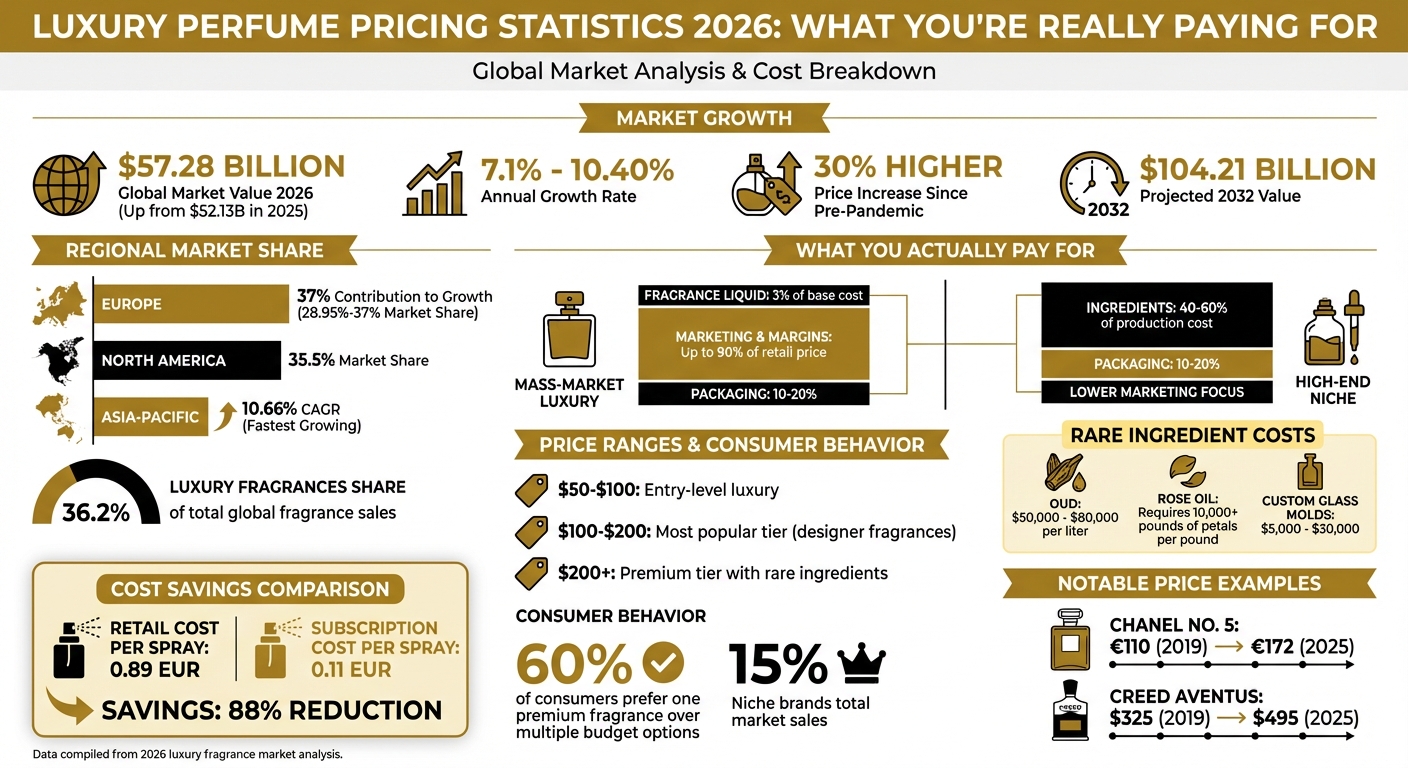
Trh luxusních vůní dosáhl v roce 2026 hodnoty 57,28 miliardy $, oproti 52,13 miliardy $ v roce 2025. Analytici předpokládají, že tento vzestupný trend bude pokračovat a trh by měl do roku 2032 dosáhnout 104,21 miliardy $, s ročním růstem mezi 7,1 % a 10,40 % po celé desetiletí.
Evropa zůstává dominantním regionálním trhem a přispívá 28,95 % až 37 % globálních prodejů, zatímco oblast Asie a Tichomoří je označována za nejrychleji rostoucí, s očekávanou mírou růstu 10,66 % v letech 2026 až 2031. Tato čísla ukazují, jak se v jednotlivých regionech vyvíjejí preference spotřebitelů i jejich nákupní zvyklosti.
Luxusní vůně nyní představují 36,2 % celkových globálních prodejů vůní, což dokládá rostoucí oblibu prémiových produktů. Dámské vůně trhu vévodí s 78,47% podílem, avšak pánské luxusní vůně nabírají na síle a rostou ročním tempem 9,86 %. Tento růst odráží proměňující se priority spotřebitelů a širší přitažlivost prémiových vůní.
Změny ve spotřebitelské poptávce a výdajích
Preference spotřebitelů se posouvají směrem k „čichové identitě“, kde se individualita a transparentnost ingrediencí stávají stejně důležitými jako prestiž značky. Tento trend podpořil vzestup niche a řemeslných značek, jako jsou Byredo, Le Labo a Diptyque, které se dnes podílejí na téměř 15 % celkových tržních prodejů díky důrazu na původ surovin a malosériovou výrobu.
„Masový a prestižní trh se sbližují; značky s prémiovými cenami v masovém retailu a prestižní značky s výhodnější cenou překonávají své protějšky.“
- Larissa Jensen, SVP a globální poradkyně pro krásu, Circana
Technologie také hraje zásadní roli v proměně způsobu, jakým spotřebitelé vůně objevují a nakupují. Personalizační nástroje poháněné AI zvýšily míru zapojení až o 40 %, zatímco 95 % významných luxusních domů nyní využívá blockchain k zajištění dohledatelnosti ingrediencí. Navzdory těmto digitálním pokrokům zůstává smyslový zážitek zásadní: specializované prodejny drží 48,21 % tržního podílu.
Výdajové vzorce ukazují, že dominuje cenové rozpětí 100–200 $, které spotřebitelům s vyšším disponibilním příjmem nabízí rovnováhu mezi luxusem a dostupností. Tyto trendy přetvářejí trh luxusních vůní a otevírají prostor pro hlubší pohled na spotřebitelské chování v tomto segmentu.
Cenová rozpětí luxusních parfémů a výdajové vzorce
Cenové úrovně a kde spotřebitelé utrácejí nejvíce
Luxusní parfémy se obvykle dělí do tří cenových kategorií, z nichž každá odráží jiné nákupní zvyklosti spotřebitelů.
Rozpětí 50–100 $ představuje vstupní úroveň luxusu a nabízí dostupné možnosti, které oslovují široké publikum. Tento segment historicky vedl z hlediska objemu prodejů i zákaznické loajality.
V pásmu 100–200 $ najdete designérské vůně s propracovanějšími kompozicemi, určené pro zákazníky s vyšším disponibilním příjmem. Výrazným příkladem je uvedení Burberry Goddess společností Coty Inc. v srpnu 2023, které dosáhlo rekordních prodejů na několika trzích.
Pro ty, kdo jsou ochotni utratit více než 200 $, parfémy v této úrovni často obsahují vzácné ingredience, například oud, jehož cena se může pohybovat mezi 50 000 a 80 000 $ za litr. Tyto vůně také zdůrazňují řemeslné mistrovství a tradici. Výjimečným uvedením v této kategorii byl Crystal Edition Parfum Dolly Parton v prosinci 2024, limitovaný na 1 946 číslovaných flakonů s uzávěry zdobenými kamínky, zaměřený na niche sběratele. Zajímavé je, že více než 60 % spotřebitelů na vyspělých trzích dnes raději investuje do jediné prémiové vůně než do několika cenově dostupnějších možností.
Tato odstupňovaná cenová struktura zároveň podpořila vznik alternativních způsobů, jak učinit luxusní vůně dostupnějšími.
Dostupné luxusní možnosti: odstřiky a předplatné
Odstřiky a menší formáty se staly praktickým řešením pro ty, kteří chtějí zažít luxusní vůně bez závazku koupě plného flakonu. Například značka Orebella Belly Hadid představila v květnu 2024 u Selfridges cestovní 10ml flakony za 32 £, čímž učinila špičkové vůně dostupnějšími. Podobně Guerlain rozšířil kolekci La Petite Robe Noire o 20ml znovu plnitelný flakon Le Flacon Coeur.
Plné flakony nesou dodatečné náklady kvůli zakázkovým skleněným formám, které se mohou pohybovat od 5 000 do 30 000 $, stejně jako kvůli propracovanému balení a maržím prodejců. Významnou roli hrají také marketing a reklama, které často tvoří až 80 % maloobchodní ceny luxusního parfému. Samotná vůně přitom obvykle představuje méně než 1 % celkových nákladů. Odstřiky a předplatné obcházejí tyto marketingem tažené výdaje a nabízejí tytéž luxusní vůně za zlomek ceny.
Členové Scento například platí v průměru pouhých 0,11 EUR za střik oproti 0,89 EUR za střik v maloobchodě – výrazné snížení nákladů na jedno nošení o 88 %.
Jak se ceny luxusních parfémů liší podle regionu
Průměrné ceny na hlavních trzích
Ceny luxusních parfémů se celosvětově liší v důsledku kombinace ekonomických faktorů, regulací a spotřebitelských preferencí. Severní Amerika, která drží 35,5% podíl na trhu, se vyznačuje vysokými výdaji na obyvatele a zavedenou maloobchodní sítí. Cla USA zavedená v roce 2025 na prémiové vůně dovážené z Evropy a Blízkého východu však ceny zvýšila, protože výrobci čelí vyšším nákladům na výrobu i distribuci.
Evropa se podílí 37 % na růstu trhu luxusních parfémů, přičemž v čele stojí Francie, která ročně vyváží vůně za více než 10 miliard $. Regulační změny, například přísnější pravidla Evropské agentury pro chemické látky pro syntetické pižmo, zvýšily náklady na výzkum a vývoj o 15–20 %. Tyto dodatečné náklady se často promítají do cen pro spotřebitele.
Asie a Tichomoří je nejrychleji rostoucím regionem s předpokládanou složenou roční mírou růstu (CAGR) 7,9 % do roku 2030. Rostoucí disponibilní příjmy v zemích jako Čína a Indie činí z luxusních parfémů symbol statusu. Například indický trh by měl do roku 2032 překonat 3,1 miliardy $. Blízký východ mezitím vyniká vysokými výdaji na obyvatele, poháněnými preferencí bohatých, vysoce koncentrovaných vůní, zejména těch s oudem.
Tyto regionální dynamiky ukazují, jak ekonomické a kulturní faktory formují ceny luxusních parfémů.
| Region | Charakteristika trhu | Hnací faktor cen |
|---|---|---|
| Severní Amerika | 35,5% podíl na trhu | Cla USA z roku 2025 na evropské a blízkovýchodní dovozy |
| Evropa | 37% příspěvek k růstu | Přísnější regulace ECHA zvyšující náklady na R&D |
| Asie a Tichomoří | Nejrychlejší růst, 7,9% CAGR | Rostoucí disponibilní příjmy v Číně a Indii |
| Blízký východ | Vysoké výdaje na obyvatele | Preference oudu a opulentních vůní |
Jak kultura a ekonomika ovlivňují ceny
Kulturní preference a místní ekonomické podmínky hrají významnou roli při formování cen parfémů. Na Blízkém východě spotřebitelé často preferují výrazné, pryskyřičné vůně s oudem jako klíčovou ingrediencí. Tato preference zvyšuje náklady, protože oud patří k nejdražším surovinám v parfumerii. Evropští kupující naopak oceňují tradici, řemeslné zpracování a udržitelnost, což ovlivňuje jak vývoj produktů, tak marketingové investice.
Cla USA z roku 2025 rovněž donutila mnoho značek luxusních vůní přehodnotit své dodavatelské řetězce. Aby zmírnily finanční dopad, některé společnosti přesunuly výrobu na domácí trh nebo využívají strategie překládky výhodnější z hlediska cel. Tyto úpravy však vedly k patrným cenovým rozdílům mezi regiony.
Cestovní maloobchod, zejména duty-free obchody na letištích, přidává další vrstvu cenových odchylek. Tyto prodejny se často vyhýbají místním spotřebním daním, a mohou tak nabízet konkurenceschopnější ceny. Flakon parfému může například stát méně na mezinárodním letišti v Dubaji než v luxusním obchodním domě na Manhattanu, a to ještě před započtením měnových kurzů.
Za co u luxusních parfémů skutečně platíte
Hlavní nákladové faktory: ingredience, obal a značka
Když si kupujete luxusní parfém, platíte za mnohem víc než jen za vůni uvnitř flakonu. U masovějších luxusních značek tvoří samotná tekutina – často označovaná jako „juice“ – pouze zhruba 3 % základních nákladů produktu. Zbývající náklady se dělí mezi obal, marketing, distribuci a ziskové marže.
Niche a high-end značky však postupují jinak. 40–60 % svých výrobních nákladů věnují kvalitním ingrediencím a pečlivému řemeslnému zpracování. To vysvětluje, proč cena 100ml flakonu Creed Aventus vzrostla z přibližně 325 $ v roce 2019 na 495 $ v roce 2025. Vzácné ingredience, často získávané pracnými a klimaticky citlivými procesy, zvyšují náklady a přispívají k cenovým výkyvům.
Dalším významným výdajem je obal, který tvoří 10–20 % celkových nákladů. Marketing a režie mezitím mohou spotřebovat až 90 % maloobchodní ceny. Luxusní značky výrazně investují do ambasadorů z řad celebrit a globálních kampaní, aby udržely svou prestiž. Například divize Perfumes & Cosmetics společnosti LVMH zaznamenala za prvních devět měsíců roku 2024 5% nárůst tržeb, mimo jiné díky kampaním s Rihannou jako tváří Dior J’adore.
Luxusní parfémy se obvykle prodávají za 3 až 7násobek výrobních nákladů. U flakonu za 100 $ může rozklad vypadat takto: 10 $ za výrobu, 10 $ za marketing, 5 $ za obal a 3 $ za distribuci, přičemž 72 $ připadá na zisk značky a marži prodejce.
| Složka | Masový luxus | High-end niche / na míru |
|---|---|---|
| Ingredience (juice) | ~3 % základních nákladů | 40–60 % výrobních nákladů |
| Obal | Standardizovaný luxus | 10–20 % nákladů; zakázkové sklo |
| Marketing & marže | Až 90 % maloobchodní ceny | Nižší marketing, vyšší důraz na ingredience |
Úsilí o udržitelnost se rovněž stává klíčovým faktorem cenotvorby a přidává další vrstvu do nákladové struktury.
Udržitelnost a etické postupy v cenotvorbě
Rostoucí poptávka po udržitelných a etických postupech přetváří trh luxusních parfémů. V lednu 2025 Evropská agentura pro chemické látky omezila dvě běžně používané syntetické pižmové složky, což vedlo k reformulacím, které zvýšily náklady na výzkum a vývoj odhadem o 15–20 %. Mnoho značek nyní investuje do „zelené chemie“, aby vytvořily ekologičtější syntetické alternativy odpovídající hodnotám moderních spotřebitelů.
Tyto změny mají hmatatelný dopad na ceny. Například cena Chanel No. 5 vzrostla z přibližně 110 $ v roce 2019 na 172 $ v roce 2025, částečně kvůli přísnějším požadavkům na původ ingrediencí a transparentnost. Protože 65 % spotřebitelů luxusu je ochotno zaplatit více za produkty vyrobené udržitelně a eticky, značky se zaměřují na upcyklované materiály a transparentní dodavatelské řetězce.
Přírodní ingredience přinášejí vlastní výzvy. Vzácné suroviny, jako je jasmínový absolut, který se sklízí ručně v noci, aby zachytil vrchol své vůně, nebo oud, který se ve specifických stromech tvoří desítky let, jsou při odpovědném získávání nákladné. Tyto pracné a časově citlivé procesy zvyšují konečnou cenu. I proces macerace, kdy parfémy odpočívají v nerezových tancích, aby se jejich vůně rozvinula, přispívá k nákladům, protože vyžaduje čas – skrytou, ale zásadní „ingredienci“.
Svou roli hraje také doprava. Přeprava nebezpečných kapalin a orientace v mezinárodních clech mohou přidat 10–20 % ke konečné maloobchodní ceně. Spolu s investicemi do udržitelnosti tyto faktory vysvětlují, proč jsou ceny luxusních vůní v letech 2025–2026 zhruba o 30 % vyšší než před pandemií.
Přestože v rozkladu nákladů dominují obaly a marketing, ekologické reformulace a etické postupy jsou stále důležitější. Spotřebitelé ukazují, že jsou ochotni za udržitelnost zaplatit prémii, avšak předplatné modely, jako je Scento, nabízejí dostupnější alternativu. Členové platí v průměru pouhých 0,11 EUR za střik oproti 0,89 EUR v maloobchodě, což dokazuje, že odstranění tradičních marží může luxusní vůně výrazně zpřístupnit.
Váš osobní odborník na parfémy už čeká
Vyplňte náš rychlý vonný kvíz a objevte autentické designové a nišové parfémy vybrané podle vašeho vkusu – prozkoumejte je jako 2–8ml dekanty a vzorky, abyste si každý mohli vyzkoušet, než se rozhodnete pro celou lahvičku.
Najděte svou vůniNiche a personalizované vůně: rostoucí trh
Niche značky vůní a jejich cenotvorba
Niche parfumerie proměnila trh luxusních vůní a soustředí se na řemeslné mistrovství a vzácné ingredience. Globální trh luxusních niche parfémů, oceněný v roce 2024 na 3,8 miliardy $, by měl do roku 2032 vzrůst na 7,6 miliardy $, s roční mírou růstu 13,2 %.
Tyto značky zdůrazňují exkluzivitu a kvalitu, čímž se odlišují od tradičních luxusních jmen, jako jsou Chanel nebo Dior, které své nabídky obvykle oceňují mezi 100 a 200 $. Niche parfémy však často začínají na 200 $ a mohou stoupat výrazně výše. Například limitovaná edice „Royal Service“ domu Creed se prodávala za 1 750 $ za flakon, zatímco „Haute Luxe“ od Roja Parfums stojí 4 000 $ za flakon, což odráží pracné procesy a vzácné materiály, jako je kosatcové máslo. Na samotném vrcholu byl „No.1 Imperial Majesty“ od Clive Christian oceněn na ohromujících 215 000 $ za flakon, s límcem osazeným pětikarátovým diamantem a limitovanou výrobou pouhých deseti kusů.
Rozdíl mezi cenami niche a mainstreamového luxusu se nadále prohlubuje. Jak říká Thomas Saujet, CEO Saujet Fragrances Group:
„Ve vůních super luxe je výrazný trend cen výrazně převyšujících standardní úroveň 250 až 350 $. Na trhu se prohlubuje propast mezi super exkluzivními niche domy a luxusními vůněmi v nižší cenové hladině. Neexistuje žádný střed.“
Tato kategorie „Super Luxe“ dnes často zahrnuje vůně v ceně mezi 350 a 460+ $ za standardní velikosti.
Niche značky tyto ceny ospravedlňují důrazem na kvalitu ingrediencí. V niche parfumerii mohou ingredience tvořit 40 % až 60 % celkových nákladů, oproti méně než 1 % u masovějších luxusních parfémů. Například vysoce kvalitní oudový olej stojí mezi 50 000 a 80 000 $ za litr a k výrobě jedné libry růžového oleje je potřeba přes 10 000 liber okvětních lístků růží. Niche vůně navíc často obsahují vyšší koncentrace, například Extrait de Parfum s 20–40 % vonného oleje, nabízející 8+ hodin výdrže, oproti 2–4 hodinám typickým pro masové varianty.
Parfémy na míru a jejich náklady
Vzestup niche parfumerie otevřel cestu personalizovaným vůním, které jsou dnes vnímány jako vrchol luxusu. Parfémy na míru, přizpůsobené individuálním preferencím, se obvykle pohybují od 500 $ až po více než 5 000 $, v závislosti na složitosti formule. Technologický pokrok, například AI doporučovací nástroje pro vůně a digitální profilovací nástroje, učinil personalizaci dostupnější a umožnil spotřebitelům spoluvytvářet vlastní signaturní vůně.
Tento trend odráží rostoucí touhu po individualitě. Jak vysvětluje Daniel Patrick Giles, CEO Perfumehead:
„Individualita je nový luxus... Zákazníci mi neustále říkají: ‚Nechci vonět jako všichni ostatní.‘“
Tento způsob uvažování pohání odklon od myšlenky jediné „signaturní vůně“ směrem k „vůňovému šatníku“ – střídání 10–15 vůní podle nálady, příležitosti nebo outfitu. Lynn King, zakladatelka Fleurit Parfums, tuto změnu zdůrazňuje:
„Éra signaturní vůně, jednoho parfému věrně nošeného celý život, mizí. Sledujeme masivní posun k vůňovému šatníku, kdy spotřebitelé zacházejí s vůní jako s módou.“
Technologie personalizaci dále pozvedá. V roce 2025 navázala společnost Estée Lauder Companies partnerství se společností Exuud Inc. za účelem integrace chytrého vonného hardwaru Soliqaire™ do svých luxusních nabídek, což umožňuje přizpůsobitelné vůňové zážitky s využitím biologicky odbouratelných rostlinných polymerů. Významné parfumérské domy navíc využívají blockchainovou technologii k dosažení až 95% dohledatelnosti ingrediencí, čímž posilují prémiovou přitažlivost personalizovaných produktů.
Značky se přizpůsobují kreativními cenovými strategiemi. Zatímco ultra-luxusní služby na míru zůstávají v řádu tisíců, některé značky zavádějí možnosti vstupní personalizace, například 10ml cestovní flakony za 32 $, aby oslovily mladší zákazníky. Patrný je také posun k menším velikostem flakonů, přičemž 50 ml se stává novým standardem. Tento trend „chytrého sizingu“ oslovuje spotřebitele, kteří chtějí budovat rozmanité vůňové šatníky a zároveň zachovat prémiový dojem, jenž ospravedlňuje vyšší cenu za mililitr.
ZDRAŽENÍ luxusních parfémů podrobně vysvětlené pro rok 2025
Jak hodnotit náklady na luxusní parfémy v roce 2026
Pochopení cen parfémů v roce 2026 vyžaduje podívat se jak na samotnou formuli, tak na dodatečné náklady spojené s luxusními vůněmi. S rostoucími cenami vám znalost toho, co je pohání, pomůže volit promyšleněji.
U high-end parfémů představuje tekutina uvnitř flakonu často jen malý zlomek celkových nákladů – pouze asi 3 % základní ceny. Obal naopak může tvořit 10–20 %. Zbytek? Často směřuje do marketingu, celebritních ambasadorství a samotného půvabu značky. Ve skutečnosti platíte za odbornost, vzácné ingredience a pečlivé řemeslo, které stojí za vytvořením vůně.
Dalším klíčovým faktorem je koncentrace. Místo zaměření na velikost flakonu sledujte typ formulace. Například Extrait de Parfum nebo Eau de Parfum obsahují 15–40 % vonného oleje a mohou vydržet 8–24 hodin. To znamená méně střiků na jedno použití a lepší využití investice. Srovnejte to s Eau de Toilette, která obsahuje pouze 5–15 % vonného oleje a vydrží 2–6 hodin. Flakon Creed Aventus za 495 $ (oproti 325 $ v roce 2019) se může zdát drahý, ale jeho výdrž z něj činí nákladově efektivnější volbu na jedno nošení ve srovnání s vůněmi, které je třeba často obnovovat.
Znovu plnitelné obaly jsou dalším způsobem, jak dlouhodobě ušetřit. Značky nabízející refill programy nejen snižují náklady, ale také oslovují zákazníky hledající udržitelné možnosti. To je stále důležitější, protože 41 % spotřebitelů dotazovaných Vogue Business má pocit, že současné luxusní ceny ne vždy odpovídají nabízené hodnotě. Upřednostňujte značky, které spojují prémiové ingredience s možností doplnění, abyste z nákupu získali maximum.
Nakonec nikdy nepřeskakujte testování před koupí plného flakonu. Více než 60 % nakupujících preferuje u hodnotných vůní testování v prodejně. To vám umožní zažít fázi „dry down“ – jak se vůně vyvíjí hodiny po aplikaci – která často odhaluje její skutečný charakter. Pokud si nejste jistí, začněte s menšími odstřiky a zhodnoťte výdrž i výkon. To je zvláště užitečné, protože trh niche vůní nadále roste ročním tempem 13,2 %.
Časté dotazy
Proč ceny luxusních parfémů od roku 2020 tolik vzrostly?
Ceny luxusních parfémů od roku 2020 prudce vzrostly vlivem kombinace ekonomických faktorů a specifik odvětví. Jedním z hlavních důvodů je rostoucí cena surovin, včetně vzácných květinových extraktů a přírodních olejů, které jsou pro tvorbu high-end vůní zásadní. Inflace a přetrvávající problémy v dodavatelských řetězcích dále zvýšily náklady na výrobu a distribuci.
Kromě toho luxusní značky často zdražují záměrně. Tím nejen chrání své ziskové marže, ale také posilují obraz exkluzivity. Společně tyto prvky způsobily, že luxusní vůně jsou dražší než kdy dříve.
Proč vzácné ingredience jako oud činí luxusní parfémy tak drahými?
Vzácné ingredience, jako je oud, výrazně zvyšují cenu luxusních parfémů. Je to dáno především jejich omezenou dostupností a složitými metodami extrakce. Čistý oudový olej, často nazývaný „tekuté zlato“, může dosahovat cen až 1 000 $ za gram, což jej řadí mezi nejdražší materiály v odvětví vůní.
Stejně náročný je i proces získávání oudu. Pochází ze stromů agarového dřeva, které jsou přirozeně vzácné a často vyžadují pečlivé, udržitelné pěstování. Kombinace jeho vzácnosti a umění spojeného s jeho zapracováním do vůní povyšuje parfémy s touto ingrediencí na skutečný symbol luxusu.
Jak technologie formuje budoucnost luxusních vůní?
Technologie přetváří svět luxusních vůní a činí jej osobnějším, efektivnějším a šetrnějším k životnímu prostředí. Personalizace vůní poháněná AI mění způsob, jakým spotřebitelé vůně objevují, a nabízí možnosti odpovídající jejich individuálnímu vkusu, čímž vytváří pohlcující nákupní zážitek. Zároveň prvky jako chytré obaly a ověřené dodavatelské řetězce pomáhají značkám ukazovat závazek k udržitelnosti a reagovat na rostoucí poptávku po ekologicky uvědomělých volbách.
Na provozní úrovni pokroky v AI a strojovém učení optimalizují dodavatelské řetězce a urychlují vývoj produktů. Tyto nástroje umožňují značkám inovovat rychleji a efektivněji. S rostoucími investicemi do digitální parfumerie a personalizovaných vůní se budoucnost luxusních vůní chystá plynule propojit špičkové technologie s individuálním životním stylem a hodnotami.
Cena parfému za mililitr: Jak poctivě porovnávat vůně
Cena flakonu zakrývá skutečnou ekonomiku. Spočítejte cenu za mililitr a trh vůní se rozdělí do tří poctivých úrovní — masový segment za 0,60–2 $/ml, prémiový designer za 2–5 $/ml, luxus a niche za 5–20 $/ml. Odstřiky Scento se pohybují na 0,75–4 $/ml, čímž náklady na zkoušení niche domů staví přímo do ekonomického pásma masových vůní.
Masová a drogerijní úroveň se pohybuje na 0,60–2,00 $/ml: Demeter za 0,40 $/ml, tělový sprej Replica za 0,20 $/ml, vstupní Calvin Klein za 1–2 $/ml. Typické flakony stojí 40–80 $ za 100 ml. Prémiová designer úroveň zahrnuje 2,00–5,00 $/ml: Dior Sauvage zhruba 2,80 $/ml při 100 ml, Tom Ford Black Orchid 3,20 $/ml při 100 ml, YSL Libre 2,90 $/ml při 90 ml. Typické flakony: 80–200 $ za 100 ml. Luxusní a niche úroveň se pohybuje na 5,00–20,00 $/ml: Creed Aventus 5,20 $/ml, Maison Francis Kurkdjian Baccarat Rouge 540 5,90 $/ml, Roja Elysium 8 $/ml, Clive Christian No. 1 15–20 $/ml. Typické flakony: 300–1 000+ $ za 50–100 ml. Ultra-luxusní a bespoke úroveň začíná na 20,00 $/ml: zakázkové komise Henry Jacques, Roja Haute Luxe za 30+ $/ml. Typické flakony: 1 500–5 000+ $ za 50 ml.
Úroveň odstřiků Scento v této mapě funguje jako klínový produkt. 2ml odstřik stojí 5–8 $, tedy 2,50–4,00 $/ml. 5ml odstřik stojí 12–25 $, neboli 2,40–5,00 $/ml. 8ml odstřik stojí 18–32 $, tedy 2,25–4,00 $/ml. Strukturální aritmetika: koupě 2ml odstřiku niche flakonu za 400 $ stojí 1–2 % ceny plného flakonu — nejlevnější informované nákupní rozhodnutí v luxusních vůních. Stejná ekonomika za ml, díky níž je Creed Aventus 100 ml drahý za 520 $, dělá z Aventus 2 ml kávu za 7 $.
2ml, 5ml a 8ml odstřiky Scento pokrývají každý dům v každé cenové úrovni. Kvíz pro nalezení vůně přiřadí váš rozpočet k úrovni za 90 sekund. Creed za 5 $/ml je kanonický vstup do luxusu — nejprve vyzkoušejte 2 ml. MFK Baccarat Rouge 540 ve 2 ml ověří jeden z nejdoporučovanějších flakonů moderní niche parfumerie před tím, než se zavážete. Tom Ford Private Blend stojí na vrcholu ekonomiky prémiového designer segmentu za ml. Evropští kupující objednávají znovu v předvídatelných rozpětích za ml; seznam bestsellerů odhaluje, kde leží skutečná hodnota.
Jak cla přetvářejí ceny luxusních parfémů 2025–2026
Luxusní parfémy v letech 2025–2026 zasáhly dva celní šoky — reciproční clo EU–USA ve výši 15 % a 10% příplatek podle Section 122. Přesměrování dodavatelských řetězců se již promítá do cen. Očekávejte 5–12% nárůst maloobchodních cen u vůní vyrobených v EU, které se v roce 2026 dostanou na americké regály; očekávejte 10–20% logistickou prémii u botanických extraktů globálně.
Reciproční clo EU–USA ve výši 15 % bylo potvrzeno v srpnu 2025 a vztahuje se na veškeré kosmetické, parfémové, módní a kožené zboží vyrobené v EU. Clo USA podle Section 122 přidává 10 %, účinné od 24. února 2026, s platností přibližně do 24. července 2026. Cla USA podle Section 301 na zboží čínského původu se pohybují od 7,5 do 100 % podle klasifikace — ovlivňují gerániový, eukalyptový, klasnatý mátový a peprnomátový olej pocházející z Číny. Průměrná základní sazba MFN kapitoly HTS 33 je 2,8 %; parfémy (HTS 3303) byly historicky MFN-free, ale Section 122 a reciproční cla se vrství nad stávající klasifikaci.
Vrstva botanických extraktů je místem, kde se náklady dodavatelského řetězce koncentrují. Růžový olej z Maroka a Bulharska se pohybuje na 2 000–50 000 $ za libru výrobních nákladů; oudový olej z Kambodže a Laosu je ve stejném rozmezí; jasmínový absolut z Egypta podobně. Každé 1% clo na vstupní vrstvě přidává 20–500 $/lb k nákladům po proclení. Logistická prémie pro roky 2024–2026 dosahuje 10–20 % u niche domů závislých na dálkové letecké přepravě malosériových ingrediencí.
Analýza Scento odhaduje 5–12% maloobchodní nárůst u toku luxusních vůní z EU do USA v roce 2026, přičemž 8–15 % je pravděpodobných u niche domů s dodavatelskými řetězci založenými na jediném zdroji ingrediencí — flakon MFK tažený bulharskou růží čelí strukturálně vyšší celní expozici než designer flanker založený na syntetice. Domy reagují třemi způsoby: reshoring výroby do EU u amerických značek, diverzifikace ingrediencí se záložními dodávkami pro cla zatížené vstupy a znovu plnitelné formáty s cartridgemi vyráběnými v celně příznivých jurisdikcích za účelem snížení exponované plochy. Kupující mohou celní expozici zajistit vzorkováním zásob před zdražením prostřednictvím 2ml odstřiků stejné vůně ze stejného dodavatelského řetězce. Heritage botanické složky Creed čelí přímé expozici na vrstvách růže a ambry; kvíz pro nalezení vůně dokáže izolovat cenově stabilnější volby napříč kompozicemi s vysokým podílem syntetiky.
Odstřik vs plný flakon: Skutečná nákladová matematika
Odstřik je nejracionálnější finanční rozhodnutí v luxusních vůních — a zároveň nejméně využívané. Matematika je jednoznačná.
Koupit naslepo 100 ml niche flakonu za 300 $ stojí 300 $ při 3,00 $/ml — 100% závazek u vůně, kterou jste jednou cítili u pultu. Koupit nejprve 2ml odstřik a poté 100 ml, pokud ji milujete, stojí celkem 305–308 $ — marginální prémie +1,7–2,7 % za plné ověření. Koupit nejprve 2ml odstřik a odejít stojí 5–8 $ při 2,50–4 $/ml — méně než 3 % ceny plného flakonu ztracené za informované odmítnutí. Koupit pět 2ml odstřiků z pěti domů a rozhodnout se pro svého favorita stojí 25–40 $ za odstřiky plus 250–400 $ za vybraný flakon — méně než 12 % ceny celého portfolia za objevování na úrovni portfolia.
Rámec 60denního okna činí přínos konkrétním. Oborový výzkum ukazuje, že přibližně 60 % nákupů plných flakonů je do 60 dnů litováno — preference vůní se mění rychleji než objem flakonu. 2ml odstřik vydrží 30–60 nošení při 2 střicích na použití — dost dlouho na to, abyste s vůní žili v různém počasí, prostředích a náladách. Závazek k plnému flakonu bez vyzkoušení znamená přibližně 180 $ průměrně vyhozených výdajů na jedno litování v mid-niche úrovni za 300 $ — oproti 5–8 $ za litování na úrovni odstřiků. Náklady na vyzkoušení jako procento ceny plného flakonu: 1–4 %. Nejlevnější ověřovací krok v ekonomice luxusních vůní.
Každý odstřik Scento — 2 ml, 5 ml, 8 ml je primární obchodní cestou pro tuto matematiku. Kvíz, který vybere vašich prvních 5 odstřiků, automatizuje sekvenci portfoliového objevování. Odstřiky, které evropští kupující objednávají znovu, odhalují skutečné preference napříč katalogem. Odstřiky Byredo za 7 $ za 2 ml, Le Labo Santal 33 ve 2 ml a Diptyque od Do Son po Philosykos všechny spadají do stejného pásma nákladů na vyzkoušení. Strukturální argument: v kategorii, kde je litováno 60 % nákupů naslepo, je 2ml odstřik jedinou formou vlastnictví vůně, u níž matematika vždy vychází.
Koncentrace vs cena: Proč Parfum stojí více
Vyšší koncentrace znamená více aromatických sloučenin a delší výdrž — a cena za ml to přesně odráží. Spočítejte náklady na jedno nošení a zdánlivě drahá etiketa se promění.
Eau Fraiche a Eau de Cologne s 2–5% aromatickou náloží se prodávají za 15–40 £ za 50 ml, vydrží 8–10 hodin při 1–2 nošeních na střik a náklady na jedno nošení činí 0,30–0,80 $. Eau de Toilette (EDT) s 5–15 % stojí 30–120 £ za 50 ml, vydrží 4–6 hodin na nošení a vychází na 0,50–2,00 $ za nošení. Eau de Parfum (EDP) s 15–20 % stojí 80–300 £ za 50 ml, vydrží 6–10 hodin a vychází na 1,00–4,00 $ za nošení. Parfum a Extrait s 20–40 % stojí 150–1 000+ £ za 50 ml, vydrží 10–14 hodin a vychází na 2,00–15,00 $ za nošení.
50ml Parfum může stát dvakrát tolik co 50ml EDP téže vůně — přímo kvůli množství aromatických sloučenin. Náklady na nošení mění zdánlivě drahou cenovku: EDP za 200 £, která vydrží 8 hodin během 30 nošení, vychází na 6,67 £ za nošení; Parfum za 400 £, který vydrží 12 hodin během 50 nošení, vychází na 8 £ za nošení — jen o 20 % více za nošení, přestože maloobchodní prémie činí 100 %. Eau de Cologne a Eau Fraiche směřují k aromaticky svěžím a citrusově kódovaným každodenním vůním, s nejnižšími náklady na nošení a nejnižší siláží. Niche domy se přiklánějí k Parfumům; designer domy k EDT — což vysvětluje titulkový cenový rozdíl mezi ekvivalentními flakony u niche a designer pultů.
Kupující mohou intenzitu koncentrace otestovat přímo prostřednictvím 2ml odstřiků napříč všemi čtyřmi úrovněmi koncentrace. Citrusové kompozice Eau Fraiche zůstávají nejoblíbenějším vstupem pro každodenní nošení, zatímco parfémové dědictví Guerlain představuje vysoce koncentrovaný konec mainstreamového luxusu. Strukturální poznatek: koncentrace je rozhodnutí o výdrži, nikoli rozhodnutí o signalizaci luxusu. Vyšší cena za ml často odráží více „šťávy“ v každém střiku, nejen lepší marketing.
Tracker zdražení: 10 ikonických parfémů 2020 vs 2026
Signaturní vůně evropských šatníků se posunuly rychle. Osm z deseti sledovaných ikonických dámských vůní vzrostlo od roku 2019 o 20–32 %. Inflace vysvětluje část, ale skutečným hnacím faktorem je luxusní repozicioning samotného parfému.
Chanel No. 5 EDP 100 ml vzrostl ze 110 € na 172 € — +56 %. Miss Dior EDP 100 ml ze 105 € na 135 € — +29 %. La Vie est Belle 100 ml z 98 € na 118 € — +20 %. Coco Mademoiselle 100 ml ze 115 € na 160 € — +39 %. J'adore EDP 100 ml ze 110 € na 152 € — +38 %. Light Blue Pour Femme 100 ml ze 78 € na 108 € — +38 %. Black Opium 90 ml z 95 € na 132 € — +39 %. Hypnotic Poison EDT 100 ml z 82 € na 115 € — +40 %. Daisy 100 ml z 95 € na 120 € — +26 %. Tom Ford Black Orchid 100 ml ze 130 € na 186 € — +43 %.
Průměrné zvýšení ceny napříč těmito 10 ikonickými flakony: ~37 %, v rozmezí +20 % až +56 % — výrazně nad kumulativním francouzským CPI přibližně 13 % ve stejném období. Průměrná cena parfému prodaného ve Francii se posunula z 63 € v roce 2019 na 70 € v roce 2025 — 10% drift masového trhu oproti 20–56 % u luxusních ikon. Hnací faktory se vrství: klimatický stres na sklizně květin v oblasti Grasse; náklady na reformulace kvůli novým pravidlům EU pro alergeny; záměrné luxusní repozicionování domů; obrana marží po pandemii v letech 2021–2023; harmonizace směnných kurzů mezi maloobchodem EU a USA.
Konkrétně Chanel No. 5 se stále prodává v tempu jeden flakon každých 30 sekund globálně — zhruba 10 milionů flakonů ročně, kumulativně stovky milionů. Cena od roku 2019 rostla složeně zhruba 5 % ročně — téměř dvojnásobek obecné francouzské inflace. Adaptace spotřebitelů zůstává silná: 80 % spotřebitelů říká, že jsou ochotni zaplatit více za vůni, do které se zamilují — jde spíše o efekt cenového pásma než o destrukci poptávky. Dior J'adore, Miss Dior a Hypnotic Poison stojí v srdci tohoto trackeru; Tom Ford Black Orchid představuje heritage-niche konec. Všech deset ikon ve 2 ml umožňuje kupujícím otestovat ekonomiku před cly před jakýmkoli zdražením v roce 2026. Kvíz pro nalezení vůně dokáže najít volby na úrovni ikon v jakémkoli rozpočtu.
Znovu plnitelné flakony parfémů: Jsou skutečně levnější?
Refilly šetří peníze — ale úspory nejsou lineární a liší se podle značky. Cenová výhoda je skutečná; náklad na pohodlí také.
Prada Paradoxe počáteční flakon (1,7 fl oz / 50 ml): 112 $. Refill (5 fl oz / 150 ml): 138 $. Dlouhodobá úspora při celkem 200 ml: ~48 %. Dior Sauvage počátečních 100 ml: 107 $. Refill 300 ml: 228 $. Úspora při 400 ml: ~21 %. Armani Code počátečních 50 ml: 77 $. Refill 150 ml: 123 $. Úspora při 200 ml: ~35 %. Hugo Boss The Scent počátečních 50 ml: 101 $. Refill 150 ml: 138 $. Úspora při 200 ml: ~33 %. Mugler Angel 100ml refill (v obchodě): zhruba 95 $ oproti 155 $ za nový — úspora ~39 % oproti novému flakonu.
Refilly jsou obvykle o 30–50 % levnější za ml než koupě nového flakonu — platíte za vůni, ne za obal. Znovu plnitelné obaly snižují odpad z balení až o 70 %. Refill program Mugler Angel uvádí při doplnění oproti novému flakonu úsporu 100 % kovu, 83 % plastu, 68 % kartonu, 74 % skla. Náklad na pohodlí je skutečný: doplňování vyžaduje návštěvu fontány (ve stylu Mugler) nebo pečlivé domácí přelití — přidává tření. Niche refill možnosti zůstávají omezené. Guerlain nabízí refilly u vybraných moderních flakonů; Hermes, Maison Margiela, Mugler, Rabanne a YSL provozují znovu plnitelné řady. Většina niche domů refilly zatím nenabízí — etikety Le Labo jsou vázané na flakon, Byredo nikoli.
Ekonomika bodu zvratu začíná vyhrávat po druhém refillu — prémiová cena prvního flakonu vyrovnává slevu prvního doplnění. Celní odolnost je další úhel roku 2026: refill cartridge vyráběné v celně příznivých jurisdikcích snižují exponovanou nákladovou plochu, což má pro spotřebitele hodnotu zhruba 5–10 %. Znovu plnitelná pouzdra atomizérů Scento — 5ml refillables fungují s jakýmkoli odstřikem a přinášejí ekonomiku doplňování až na úroveň vzorků. Znovu plnitelná La Petite Robe Noire od Guerlain zůstává vstupem heritage domu. Znovu plnitelné řady MFK přinášejí refill ekonomiku do mid-niche segmentu. Pro kontext globální velikosti trhu za těmito cenami viz analýza trhu vůní od Scento; pro ekonomiku podílu niche značek viz niche analýza Scento.
Tato analýza vychází z přehledu evropských dat odvětví vůní společností Scento, říjen 2025 – duben 2026. Podrobná metodika je pro tisk k dispozici na vyžádání na [email protected].
Frequently asked questions
- Why are perfumes so expensive in 2026?
- Five drivers explain why iconic luxury fragrances have climbed 20–56% since 2019 — well above general inflation. Climate stress on Grasse-region flower harvests has reduced rose, jasmine, and tuberose yields. EU regulatory reformulation for allergen compliance forces costly bottle-by-bottle re-engineering. Deliberate luxury-repositioning by houses has pushed perfume into accessory-level pricing. Post-pandemic margin defense added 5–8% across most luxury houses 2021–2023. EU-US tariff exposure is adding 5–12% on EU-produced fragrance reaching U.S. shelves in 2026. A €110 Chanel No. 5 in 2019 retails at €172 today.
- How much does a 100ml luxury perfume cost?
- Scento's analysis splits luxury 100ml fragrance into three honest tiers. Premium designer 100ml runs $80–$200 ($0.80–$2/ml) — Dior Sauvage, Tom Ford Black Orchid, YSL Libre. Luxury and niche 100ml runs $200–$500 ($2–$5/ml) — Creed Aventus, Maison Francis Kurkdjian Baccarat Rouge 540, Le Labo Santal 33. Ultra-luxury and bespoke 50–100ml runs $500–$5,000+ ($5–$50+/ml) — Clive Christian, Roja Dove, Henry Jacques. Calculate per-ml; bottle price hides the real economics.
- Is Chanel No. 5 worth the price at €172?
- By per-ml economics, Chanel No. 5 EDP 100ml at €172 lands at €1.72/ml — squarely in the premium-designer tier despite its luxury reputation. Per wear (8–10 hours, 1 wear per 2 sprays, ~50 wears per 100ml bottle), that's roughly €3.44 per wear. Whether it's worth the price depends on how often you reach for it. The economics fail when a bottle sits unused — a 2ml decant at $5–$8 (roughly €5–€7) is the rational way to test before committing. A bottle every 30 seconds is sold globally — a strong revealed-preference signal that, for many, the answer is yes.
- What's the cheapest niche perfume in 2026?
- The entry niche tier sits at $80–$200 per 50ml. Brands at this tier include Diptyque (Do Son, Philosykos at ~$110/50ml), Jo Malone London (Wood Sage and Sea Salt at ~$80/30ml), early-tier Maison Margiela Replica ($85/30ml), and Frederic Malle's smaller-format offerings. Per-ml, that's $1.60–$4/ml — affordable by niche standards. Scento's 2ml decants from these houses run $5–$8 — the cheapest possible niche entry, with validated try cost at under 2% of full-bottle price.
- Why did perfume prices go up in 2025?
- Three converging shocks hit perfume pricing in 2025. The EU-US 15% reciprocal tariff confirmed in August 2025 — applies to all EU-produced perfume reaching U.S. shelves. The U.S. Section 122 10% add-on (effective February 2026, expiring around July 2026) stacks on top. Botanical extract sourcing pressure — Bulgarian rose, Cambodian oud, Moroccan jasmine — facing climate stress and supply constraints. Net consumer-side impact: 5–12% retail uplift on luxury fragrance EU-to-US flow, 8–15% on single-source niche houses. Most houses absorbed margin in 2024 and started passing through in 2025–2026.
- Is a refillable perfume bottle cheaper?
- Refills are typically 30–50% cheaper per ml than buying a new bottle — you're paying for the juice, not the packaging. Prada Paradoxe shows roughly 48% savings over 200ml total. Dior Sauvage shows 21% over 400ml. Armani Code: 35%. Hugo Boss The Scent: 33%. Refillables cut packaging waste up to 70%, with Mugler Angel reporting 100% metal, 83% plastic, 68% cardboard, and 74% glass saved on refill versus new. Break-even economics start winning after the second refill — first bottle's premium pricing offsets refill 1's discount.
- How does decant pricing compare to full-bottle pricing?
- A 2ml decant of a $400 niche bottle costs $5–$8 — roughly 1–2% of the full-bottle price, the cheapest informed buy-decision in luxury fragrance. The same per-ml economics that make a Creed Aventus 100ml expensive at $520 make the Aventus 2ml a coffee at $7. Scento's decant tier runs $2.25–$5/ml across 2ml, 5ml, and 8ml sizes. Industry research suggests roughly 60% of full-bottle blind purchases are regretted within 60 days; a 2ml decant lasts 30–60 wears — long enough to live with the scent through changing weather, settings, and moods.
- What is the price per ml of Creed Aventus?
- Creed Aventus retails at roughly $520 per 100ml, which is approximately $5.20 per ml — placing it in the luxury and niche tier ($5–$20/ml). Among Creed's range, Royal Oud reaches roughly $5/ml, with Royal Exclusives climbing higher. For context, Maison Francis Kurkdjian's Baccarat Rouge 540 lands near $5.90/ml; Roja Elysium at $8/ml; Clive Christian No. 1 at $15–$20/ml. Try Aventus in a 2ml decant at $5–$8 — under 2% of full-bottle cost — before committing to the bottle. The decant economics make blind-buying an avoidable error in 2026.

