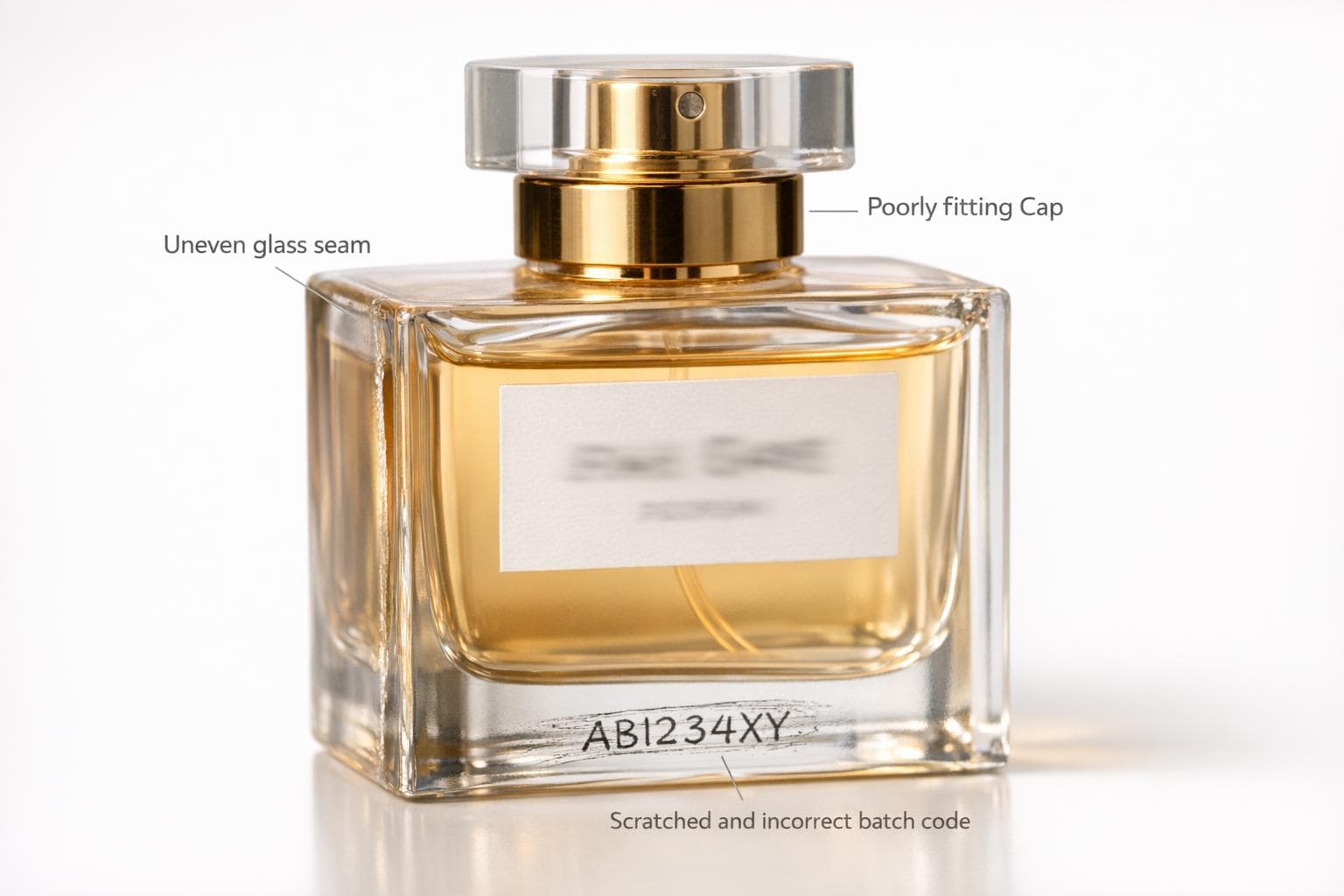
Buying fake perfumes can waste your money and pose health risks due to harmful chemicals. Counterfeit bottles often mimic real ones with advanced techniques, making them harder to spot. Here’s a quick guide to identify fake perfume bottles:
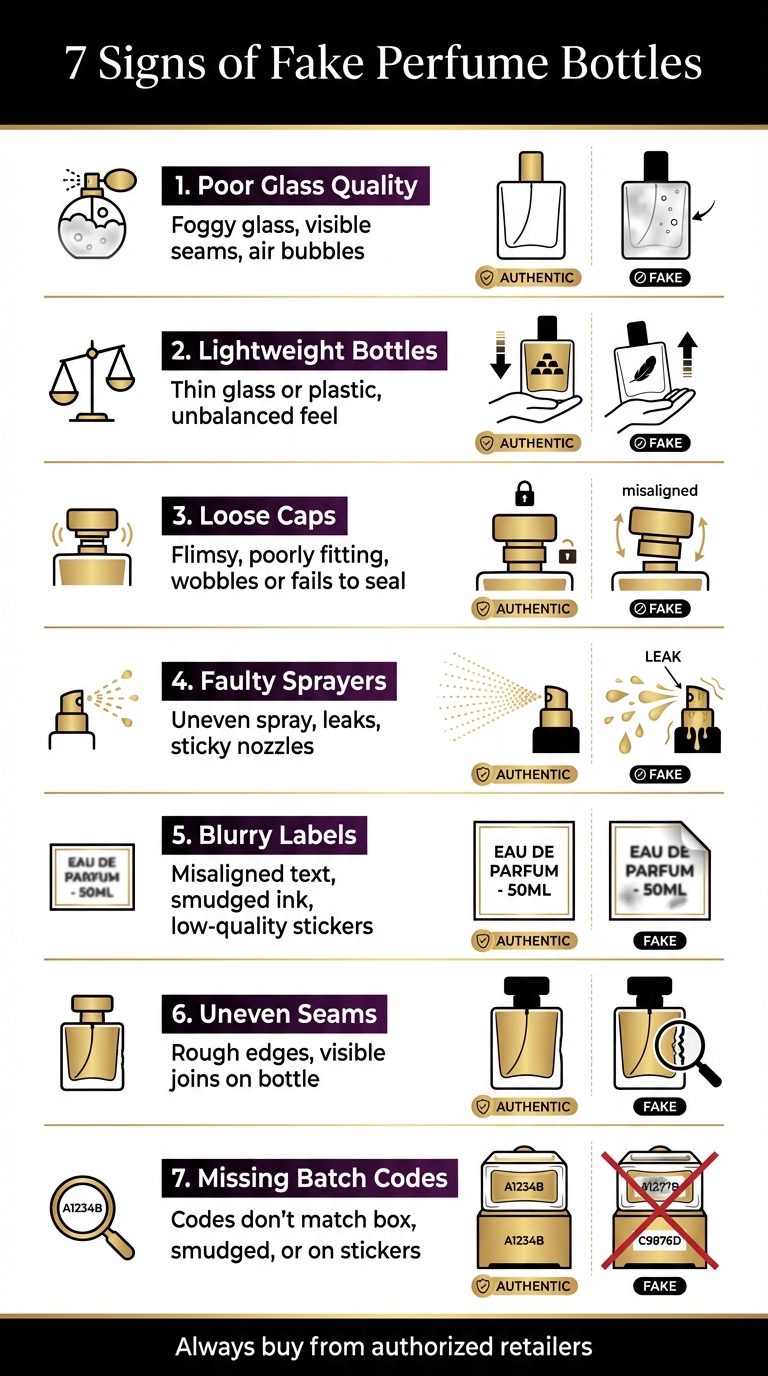
- Poor Glass Quality: Cheap, foggy glass with visible seams or air bubbles.
- Lightweight Bottles: Thinner glass or plastic results in a lighter, unbalanced feel.
- Loose Caps: Flimsy, poorly fitting caps that may wobble or fail to seal properly.
- Faulty Sprayers: Uneven spray patterns, leaks, or sticky nozzles.
- Blurry Labels: Misaligned text, smudged ink, or low-quality stickers.
- Uneven Seams: Rough edges or visible joins on the bottle.
- Missing Batch Codes: Codes that don’t match the box, appear smudged, or are printed on stickers.
Pro Tip: Always purchase perfumes from trusted retailers to avoid fakes. Counterfeit fragrances fade quickly, lack depth, and may contain unsafe chemicals. Stick to verified sellers for quality and safety.
7 Visual Signs to Identify Fake Perfume Bottles
1. Poor Glass Quality and Imperfections
Material Quality
Authentic perfume bottles are crafted from high-grade materials like soda lime or leaded crystal, giving them a smooth, weighty feel and a radiant clarity when held up to light. This pristine quality is a hallmark of luxury brands. On the other hand, counterfeit bottles often rely on cheaper alternatives, such as low-quality glass or even plastic, resulting in a foggy or dull appearance.
"Authentic perfume bottles consist of high-quality glass that casts a radiant glow and feels heavy in your hand." – Pairfum London
This premium material not only enhances the look but also adds to the bottle’s overall weight, a key indicator of authenticity.
Weight and Balance
Genuine perfume bottles are designed to feel substantial in your hand. Their weight immediately conveys a sense of luxury. Counterfeit bottles, however, are often much lighter due to thinner glass or the use of plastic, which compromises the premium feel.
Fit and Finish
Run your fingers over the surface of the bottle - it should feel completely smooth and seamless, free from any rough edges or imperfections. When held up to the light, authentic bottles will be crystal clear, without any air bubbles or cloudiness, which are common in low-cost production. Pay close attention to the seams where the glass halves meet. High-quality bottles have nearly invisible, even seams, while fake ones often show thick, uneven joins.
"The glass should feel utterly smooth and seamless - you shouldn’t feel any rough edges, visible seams from a cheap mold, or tiny air bubbles trapped inside the glass." – Databazaar.com
Lastly, check the base of the bottle for engravings or etched serial numbers. Luxury brands typically etch these details directly into the glass, whereas counterfeit versions often rely on stickers, which are a clear red flag.
2. Lightweight or Unbalanced Weight
Weight and Balance
When you hold a perfume bottle, it should feel like a luxury item - solid and well-balanced. That weightiness isn’t just for show; it’s a hallmark of authenticity. Genuine bottles are crafted with thick glass and solid caps, ensuring they feel substantial in your hand. On the other hand, a bottle that feels unusually light or awkwardly balanced is often a red flag for a counterfeit.
The materials used make all the difference. High-end brands invest in durable, weighty glass and sturdy caps, while counterfeiters cut costs with thinner glass or plastic. Authentic caps are designed to add weight and are made from high-quality materials, whereas fake caps are often hollow and cheap to the touch.
"Originals will have smooth glass, weighty feel, and tight-fitting caps. Fakes tend to cut corners: lighter bottles, uneven seams, cheap plastic caps." – GQ India
Functionality of Components
Pay attention to how the spray mechanism works. A genuine bottle will produce a smooth, even mist, signaling precision and quality. The dip tube inside is another clue - it should be thin and neatly cut. In counterfeit bottles, the dip tube is often thicker, too long, or oddly bent, betraying its poor craftsmanship.
Finally, inspect the cap’s fit. Authentic caps snap on snugly and securely, while fakes often have loose or poorly fitting caps, further hinting at their lack of quality.
3. Loose or Poorly Fitting Cap
Material Quality
The materials used in authentic perfume caps are a clear indicator of quality. Genuine caps are crafted from sturdy materials like heavy-duty resins, metals, or high-grade plastics. When you hold one, it should feel solid and well-made. On the other hand, counterfeit caps often rely on cheaper, lightweight, or even hollow plastics to cut costs. If the cap feels unusually light or flimsy when detached from the bottle, that’s a warning sign. These premium materials also ensure a precise fit on the bottle, a detail often overlooked in fakes.
Fit and Finish
A genuine cap doesn’t just look good - it fits perfectly. Authentic caps are symmetrically designed to align seamlessly with the atomizer, sliding into place without any gaps. If the cap feels loose, wobbles, or sits unevenly, it’s likely a counterfeit. Beyond aesthetics, real caps are designed to create a spill-proof seal, ensuring the fragrance stays secure during transport and storage. Counterfeit caps, however, often fail to meet these standards, leading to potential leaks or poor bottle security.
Functionality of Components
The way a cap functions can also reveal its authenticity. High-quality caps are engineered to lock into place with precision, often producing a distinct, crisp "click" or a smooth, secure twist. This isn’t just about looks - it’s about protecting your fragrance investment. To test this, try securing the cap and listen carefully. A proper cap will lock firmly with a satisfying click. If it feels unstable, slides on too easily, or lacks that reassuring sound, it’s likely a fake.
"Luxury perfume caps feature precise engineering with smooth operation and secure closure. Counterfeit caps frequently fit poorly, feel loose or overly tight, or lack the satisfying ‘click’ associated with quality mechanical design." – Beautinow
4. Faulty Spray Mechanism
Material Quality
One of the key differences between authentic and counterfeit sprayers lies in the materials used. Genuine sprayers are made from high-quality, durable materials that feel sturdy and well-made when you press the nozzle. Whether it’s plastic or metal, the components in an authentic perfume bottle are designed to last. In contrast, counterfeit bottles often rely on cheap, brittle plastics that are prone to cracking or breaking. This attention to material quality is what ensures the sprayer’s components align seamlessly.
Fit and Finish
The way a sprayer fits into the bottle is another telltale sign of authenticity. Genuine spray mechanisms are precisely constructed, with the nozzle securely attached to the bottle - no wobbling, no visible glue marks. Luxury brands are meticulous about creating an airtight seal where the sprayer meets the bottle. On the other hand, counterfeit bottles often show signs of poor craftsmanship, such as leaking around the sprayer base, which can leave behind an oily residue. Another detail to check is the dip tube. Authentic bottles feature a thin, nearly invisible tube that’s cut to exact specifications, while counterfeits often use thicker tubes that bend awkwardly at the base.
Functionality of Components
How the sprayer functions can reveal a lot about its authenticity. A genuine sprayer delivers a consistent, fine mist with every use. In contrast, counterfeit sprayers often produce uneven sprays, large droplets, or even misfires. Issues like loose attachments, clogging, or a rough, sticky feel when pressing the nozzle are common in fake bottles.
"Authentic perfume sprayers deliver a consistent, fine mist with smooth operation. Fake sprayers may produce uneven spray patterns, drip, or feel rough when operated." – Beautinow
Your Personal Fragrance Expert Awaits
Take our quick scent quiz to discover authentic designer and niche fragrances matched to your taste — explore them as 2ml, 5ml, 8ml & 30ml decants and samples, so you can try each one before committing to a full bottle.
Find Your Scent5. Blurry or Low-Quality Engravings and Labels
Just like the bottle’s construction can hint at authenticity, the quality of the label provides equally important clues.
Material Quality
Genuine labels are crafted with waterproof, scratch-resistant ink and premium materials that adhere seamlessly to the bottle. These labels feel like an integral part of the design. On the other hand, counterfeit labels often betray themselves with cheap materials that don’t sit smoothly against the glass. You might notice peeling edges or ink that smudges when touched - a clear sign of inferior craftsmanship.
Fit and Finish
The precision of a label’s design speaks volumes about its authenticity. On authentic products, every detail is flawless - text alignment, logo placement, and font consistency are all spot-on. Counterfeiters, however, often fall short in replicating this level of detail. You may spot uneven spacing, misaligned logos, or fonts that look just slightly "off" compared to the brand’s usual style.
One more thing to check: the batch code. On authentic bottles, the batch code on the label will always match the one on the outer packaging. If the numbers don’t align, it’s a strong indicator that separate, mismatched components were used to piece together a fake. Paying attention to these details, much like inspecting the bottle’s construction, can help confirm whether you’re holding the real deal or a knockoff.
6. Uneven Seams and Cheap Construction
A genuine perfume bottle should feel flawlessly smooth, with no rough edges or imperfections. Luxury brands use high-quality glass and seamless designs, ensuring a polished finish. Counterfeit bottles, on the other hand, often reveal their flaws through rough, visible seams where the glass halves meet. If you run your fingers over the bottle and feel sharp ridges or uneven edges, chances are you’re dealing with a fake. Beyond the seams, examining the material quality, weight, and overall craftsmanship can help spot counterfeits.
Material Quality
Authentic perfume bottles are made from thick, high-grade glass that feels substantial and has a crystal-clear appearance. When you hold a genuine bottle up to the light, it should look radiant and free of imperfections. Counterfeit bottles usually cut corners with thinner glass or even plastic, which can appear foggy, dull, or riddled with air bubbles.
Weight and Balance
The weight of a perfume bottle can be a telltale sign of its authenticity. Genuine bottles are designed to feel solid and well-balanced in your hand, giving a sense of luxury. Counterfeiters often use lightweight materials to save costs, resulting in bottles and caps that feel flimsy or insubstantial. An authentic cap will also feel sturdy and secure when handled.
Fit and Finish
"The devil is in the details... Counterfeiters may copy the shape, but they almost never get the craftsmanship right." – GQ India
Pay close attention to how the bottle’s components fit together. Authentic caps are engineered with precision, clicking or twisting into place securely. They should align perfectly with the bottle’s neck. In contrast, fake caps often feel loose, jiggle when handled, or sit slightly crooked. Even small misalignments in the fit and finish can reveal a counterfeit.
7. Missing or Incorrect Batch Codes
Every genuine perfume bottle includes a unique batch code - typically a combination of 3 to 11 letters and numbers - that reveals its manufacturing date and origin. These codes are either etched or laser-printed directly onto the glass and must match perfectly between the bottle and its box. If they don’t, it’s a surefire indicator of a counterfeit.
"If the code on the box and the code on the bottle don’t match, you’re looking at a fake. No exceptions. This is one of the clearest red flags you can find." – Databazaar
Counterfeiters often skimp on printing quality, leading to smudged ink, blurry characters, or codes printed on cheap stickers that can easily peel off or scratch away. To spot the difference, check the bottom of both the bottle and the box. Genuine codes will look professionally applied, with clean, precise alignment alongside barcodes and other production details.
For extra assurance, you can verify batch codes through free online tools like CheckFresh.com or CheckCosmetic.net. Enter the code, and these platforms will confirm the manufacturing date and whether it matches the brand’s production records. If the result says "invalid" or "not found", you’ve likely uncovered a fake. Here’s a closer look at what to examine in batch codes.
Material Quality
Start by inspecting the physical quality of the batch code. Genuine codes are applied with precision using laser printing or direct etching. They should appear sharp, permanent, and impossible to smudge. Counterfeit codes, on the other hand, are often printed with low-grade ink that may look pixelated, fade quickly, or come off with a damp cloth.
Fit and Finish
Authentic batch codes are perfectly aligned with the barcode and other packaging elements. Counterfeiters, who often source mismatched bottles and boxes from different suppliers, tend to overlook these details. This results in codes that appear crooked, poorly aligned, or printed in inconsistent fonts. Even minor misalignments or irregularities in font style can be a telltale sign of a fake.
Where to Buy Real Perfumes
The best way to ensure you’re getting authentic perfumes is to stick to authorized retailers. Think brand boutiques, major department stores like Nordstrom, Sephora, and Macy’s, or trusted online platforms. These sellers work directly with fragrance houses, offering authenticity guarantees, receipts, clear return policies, and consumer protection - advantages you won’t get from street vendors or unverified social media sellers. Shopping this way not only secures your investment but also shields you from potential health risks.
Counterfeit perfumes can be more than just disappointing - they can be dangerous. They often contain harmful chemicals that exceed safe limits and may cause skin irritation or other health issues. In fact, studies have shown that counterfeit samples can far surpass acceptable chemical thresholds. By purchasing from trusted sources, you avoid poor-quality bottles, imbalanced weight, and other warning signs discussed earlier.
"When it comes to fragrance, provenance is everything." – GQ India
For a hassle-free way to explore authentic scents, check out Scento. They specialize in curated decants and offer a monthly subscription featuring genuine designer fragrances. With options like 2 ml, 5 ml and 8 ml vials, and a 30 ml bottle decant on most perfumes, you can properly test how a fragrance evolves - experiencing its top, heart, and base notes over time - without committing to a full bottle.
Lastly, be wary of deals that seem too good to be true. If you see a luxury fragrance advertised at 70–80% off, it’s almost certainly a fake. Premium brands like Dior, Chanel, or Tom Ford simply don’t sell at a fraction of their standard price. As Hervé Mathieu from Scentissime wisely puts it: "If it’s too good to be true, then it usually isn’t".
Conclusion
Spotting fake perfume bottles often comes down to examining the details: look out for poor glass quality, uneven weight distribution, loose caps, faulty sprays, blurry or misaligned labels, uneven seams, and missing batch codes.
Counterfeit fragrances pose serious health risks. They can contain harmful substances like arsenic, beryllium, cadmium, and DEHP, which may trigger severe skin reactions or respiratory problems. Genuine perfumes, on the other hand, typically last 6–12+ hours on the skin and retain their complex scent profiles for up to 18 months. In contrast, fake versions often fade within 1–2 hours and deteriorate in just a few months. Additionally, purchasing counterfeit goods inadvertently funds organized crime.
The best way to protect yourself is to buy from trusted sources. Authorized retailers and reputable platforms like Scento ensure authenticity, offer clear return policies, and help you avoid exposure to harmful chemicals. Scento also provides curated decants in 2 ml, 5 ml and 8 ml vials, and a 30 ml bottle decant on most perfumes, allowing you to experience genuine designer fragrances without committing to a full bottle.
FAQs
What are the potential health risks of using counterfeit perfumes?
Using counterfeit perfumes can expose you to a range of problems, starting with skin irritation - think rashes, burns, or even allergic reactions. These knockoff products often contain questionable or harmful chemicals, which can also trigger respiratory problems when inhaled.
On top of that, fake fragrances are notorious for including impurities or cheap ingredients. These can not only jeopardize your health but might also stain your clothes or harm your skin. Sticking to genuine products is the safest way to steer clear of these risks.
How can I check if a perfume’s batch code is authentic?
To confirm if a perfume is genuine, start by finding the batch code - usually a combination of numbers and letters - on the bottle or packaging. Use the brand’s official batch-code lookup tool or a trusted online database to verify it. Check that the code aligns with the brand’s typical format and confirms the fragrance’s production date. Taking this precaution can help you steer clear of counterfeit items and ensure you’re buying an authentic product.
Why do fake perfumes lose their scent so quickly?
Fake perfumes tend to lose their scent quickly because they rely on cheap, low-quality ingredients that simply don’t have the lasting power of authentic fragrances. These knockoffs often use synthetic materials that evaporate faster or degrade more easily, leaving you with a scent that fades in no time.
In contrast, authentic perfumes are crafted with care, using premium ingredients and undergoing strict quality checks. This attention to detail ensures a well-balanced fragrance that lingers much longer, making it a clear standout compared to counterfeit alternatives.

