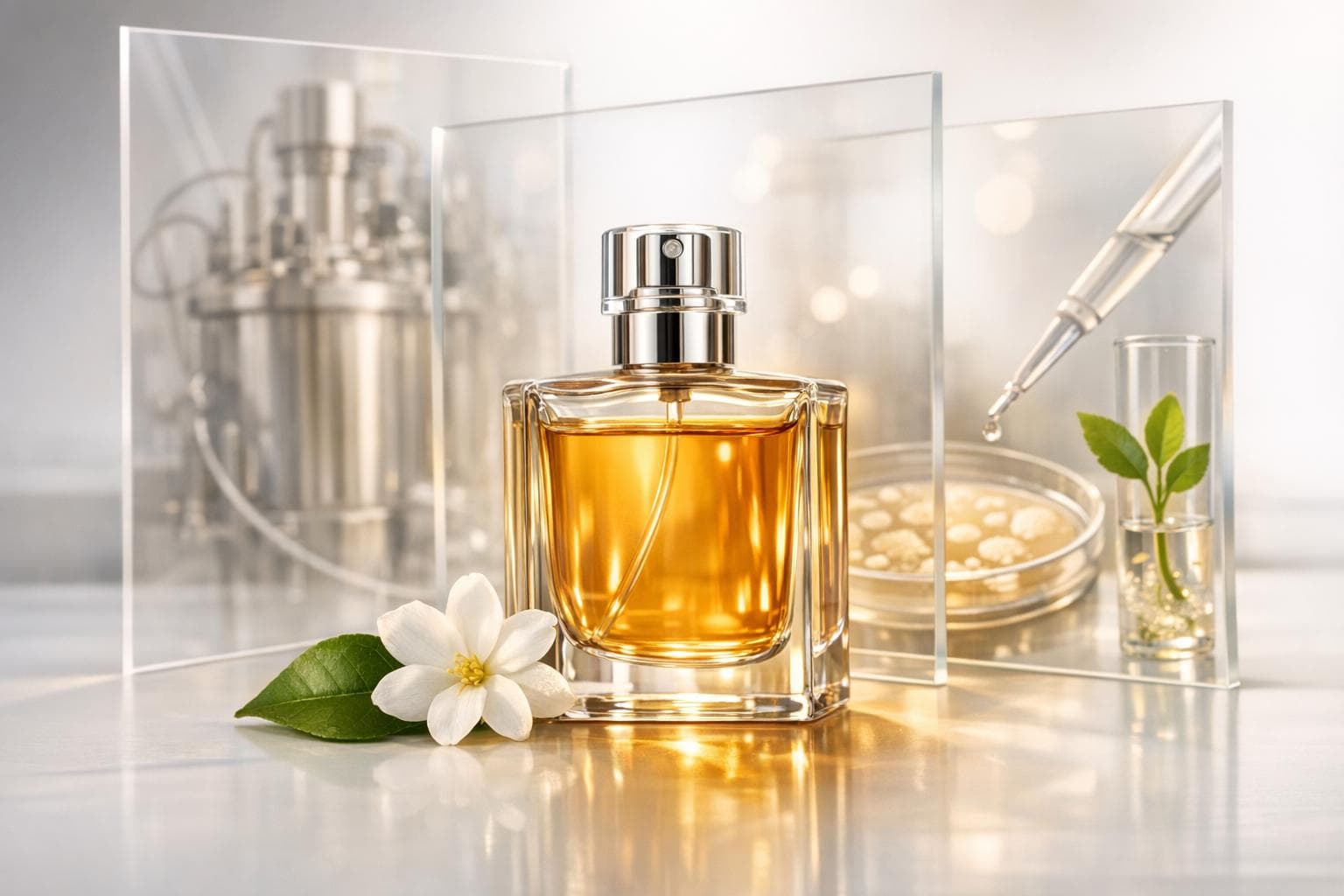
Biotechnologie proměňuje parfumérský průmysl tím, že nahrazuje zemědělství náročné na zdroje a syntetické chemikálie laboratorními metodami. Díky technikám, jako jsou fermentace, kultury rostlinných buněk a procesy řízené enzymy, mohou dnes společnosti vyrábět vonné molekuly totožné s přírodními, a zároveň snižovat využití půdy, množství odpadu i ekologickou zátěž. Zde je to nejdůležitější, co byste měli vědět:
- Precizní fermentace: Vyrábí molekuly identické s přírodními, například Akigalawood™ z upcyklovaných materiálů, čímž omezuje využití půdy a zajišťuje celoroční produkci.
- Biotechnologie rostlinných buněk: V laboratořích replikuje vzácné ingredience, jako je kořen kosatce, obchází dlouhé růstové cykly a chrání biodiverzitu.
- Parfumérství poháněné AI: Využívá strojové učení k navrhování vůní cílených na konkrétní čichové receptory, čímž omezuje pokusy a omyly i rizika alergenů.
- Design řízený enzymy: Vytváří přesné, vysoce kvalitní molekuly, například alternativy santalového dřeva, s minimální spotřebou energie a odpadem.
- Biosyntetické ingredience: Kombinují laboratorní metody k výrobě dlouhotrvajících a konzistentních vůní bez závislosti na zranitelných plodinách.
- Mikrobiální továrny: Geneticky upravují mikroorganismy tak, aby produkovaly vzácné botanické látky, například nootkaton, a zajišťovaly stabilní dodavatelské řetězce.
- Hybridní biotechnologie: Snižuje alergeny izolací čistých vonných molekul, zatímco zachovává komplexní vůňové profily.
Tyto pokroky řeší výzvy, jako je nadměrný sběr, sezónní výkyvy a regulatorní tlak, a nabízejí škálovatelná, efektivní a ekologicky uvědomělá řešení pro výrobu vůní.
Jak biotechnologie umožňuje udržitelnou výrobu vůní
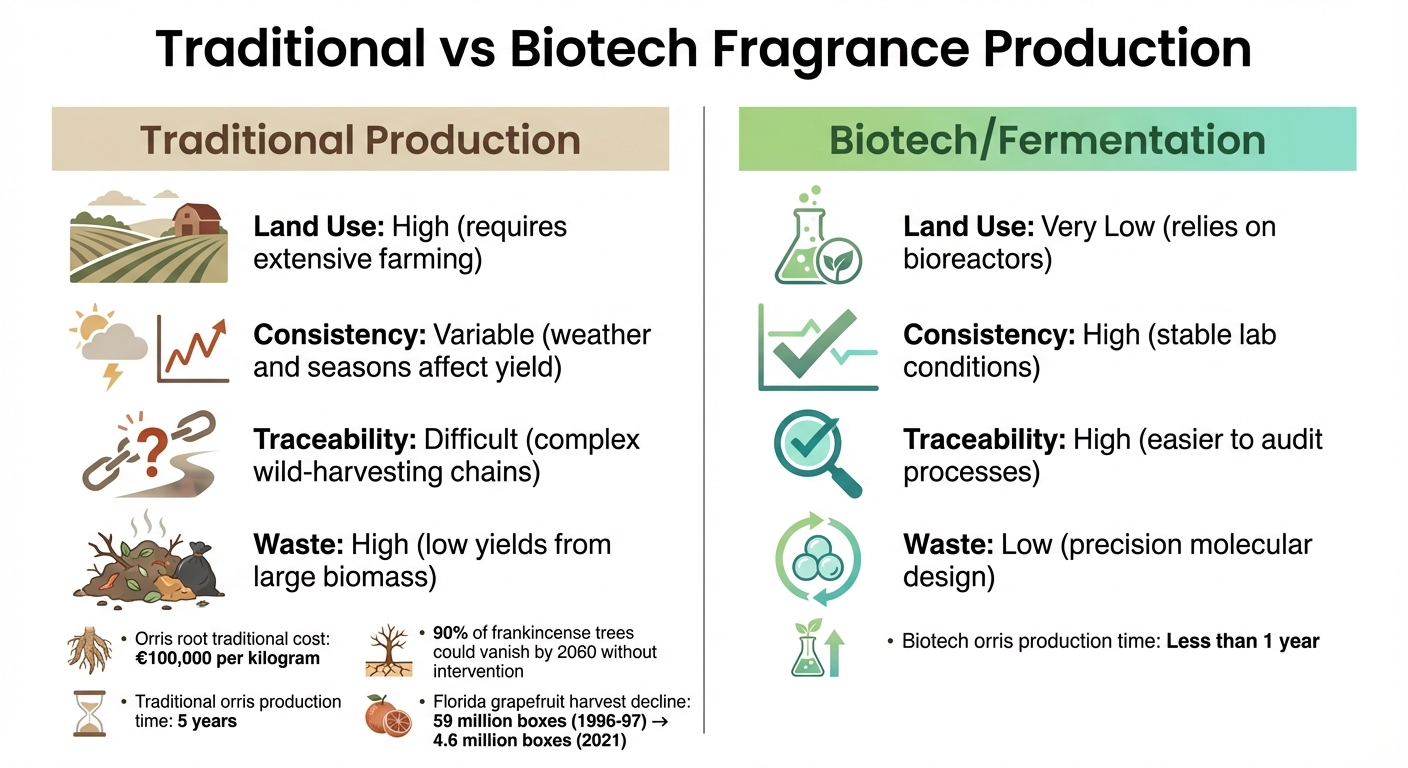
Tradiční vs. biotechnologická výroba vůní: srovnání dopadu na životní prostředí
Biotechnologie proměňuje výrobu vůní tím, že nahrazuje tradiční metody náročné na zdroje inovativními přístupy. Díky využití živých organismů, jako jsou kvasinky, bakterie a enzymy, mohou vědci vytvářet aromatické molekuly identické s přírodními v kontrolovaném laboratorním prostředí. Tato technika, známá jako precizní fermentace, využívá základní vstupní suroviny, například cukr, k výrobě komplexních vonných molekul, které jsou chemicky totožné se svými přírodními protějšky.
Vezměme si jako příklad Akigalawood™ od společnosti Givaudan. Tato vonná ingredience vzniká fermentací za použití upcyklovaného pačuliového oleje. Výsledkem je kořenitá, dřevitá vůně, která je nejen 100% přírodního původu, ale také biologicky odbouratelná. Podobně Givaudan’s Sensityl™, vytvořený prostřednictvím mořské biotechnologie, využívá mikrořasy pěstované se slunečním světlem a mořskou vodou, čímž zcela eliminuje potřebu zemědělské půdy.
Dalším fascinujícím pokrokem je design řízený receptory, který se zaměřuje na cílení konkrétních čichových receptorů. To vědcům umožňuje vytvářet sloučeniny, jež dosahují požadovaných vonných efektů při nižších koncentracích. Mezi lety 2024 a 2026 hlásily pilotní programy využívající tento přístup snížení nákladů na získávání botanických surovin ohrožených nadměrným sběrem o 20–60 %. Akvizice společnosti Chemosensoryx skupinou Mane Group na konci roku 2025 dále podtrhuje odhodlání odvětví k inovacím založeným na receptorech.
Zde je srovnání tradiční výroby vůní a biotechnologických metod:
| Vlastnost | Tradiční výroba | Biotechnologie/fermentace |
|---|---|---|
| Využití půdy | Vysoké (vyžaduje rozsáhlé pěstování) | Velmi nízké (spoléhá na bioreaktory) |
| Konzistence | Proměnlivá (počasí a roční období ovlivňují výnos) | Vysoká (stabilní laboratorní podmínky) |
| Sledovatelnost | Obtížná (komplexní řetězce divokého sběru) | Vysoká (procesy se snáze auditují) |
| Odpad | Vysoký (nízké výnosy z velké biomasy) | Nízký (precizní molekulární design) |
Biotechnologické metody také řeší výzvy dodavatelských řetězců. Laboratorně pěstované ingredience jsou imunní vůči problémům, jako jsou sucha, choroby plodin či geopolitická nestabilita. S tím, jak se do roku 2026 zpřísňují regulace týkající se komodit spojených s odlesňováním, nabízejí sledovatelné a auditovatelné biotechnologické procesy značkám vůní spolehlivý způsob, jak splnit požadavky na soulad s předpisy.
1. Biotechnologie rostlinných buněk pro kosatec a vetiver
Biotechnologie rostlinných buněk začíná kultivací stabilních buněčných kultur ze semene, které jsou následně fermentovány za účelem produkce vonných molekul. Tato metoda zrcadlí kompletní molekulární strukturu složitých ingrediencí, jako jsou kosatec a vetiver, a eliminuje potřebu velkoplošného zemědělství. V červenci 2025 to biotechnologická společnost Debut demonstrovala na kosatci, když za méně než rok replikovala komplexní molekulární složení kořene kosatce. Pod vedením CEO Joshuy Brittona, PhD, se platforma rozšiřuje o vetiver a další botanické ingredience. Tento průlom ukazuje, jak může biotechnologie proměnit procesy náročné na zdroje v efektivní, kontrolovaná řešení, výrazně snižující ekologickou zátěž při zachování aromatické komplexity.
Environmentální přínosy
Tento přístup eliminuje použití pesticidů a ve srovnání s tradičním zemědělstvím vytváří minimum odpadu. Protože probíhá v laboratoři, vyžaduje výrazně méně půdy, vody a energie. Jelikož se rostliny nesklízejí, je chráněna biodiverzita a zabraňuje se nadměrnému sběru zranitelných druhů.
Snížená závislost na přírodních zdrojích
Kosatec, získávaný z kořene kosatce, patří mezi nejdražší parfumérské ingredience, s hodnotou až 100 000 € za kilogram. Tradičně trvá pět let, než kořeny dozrají ke zpracování, což činí dodavatelský řetězec zranitelným vůči klimatickým a geopolitickým výkyvům. Biotechnologie rostlinných buněk tuto prodlouženou časovou osu obchází a dosahuje stejné molekulární struktury za méně než rok. Tento model "vůně bez zemědělství" zmírňuje tlak na botanické suroviny z divokého sběru a zajišťuje stabilnější zásobování. Studie například předpovídají, že do roku 2060 by v důsledku neudržitelných praktik sběru mohlo vymizet 90 % stromů Boswellia produkujících kadidlo.
Konzistence výroby a škálování
Na rozdíl od tradičního zemědělství, které ovlivňují počasí, půdní podmínky a choroby rostlin, probíhá biotechnologická výroba v přísně kontrolovaném laboratorním prostředí. To zajišťuje spolehlivý dodavatelský řetězec bez ohledu na vnější faktory. Jak vysvětluje Joshua Britton:
"Komplexní vonné ingredience lze replikovat rychle, udržitelně a nákladově efektivně v kontrolovaných podmínkách s minimální spotřebou energie."
Laboratorně pěstované buňky také eliminují kvalitativní výkyvy způsobené regionálními či sezónními rozdíly a poskytují čisté, konzistentní výsledky po celý rok. Tato metoda podtrhuje posun směrem ke spolehlivé a udržitelné výrobě vůní.
Nové možnosti vůní
Schopnost udržet konzistentní kvalitu otevírá dveře inovativním vonným kreacím. Kromě replikace přírodních ingrediencí umožňuje biotechnologie rostlinných buněk přístup ke vzácným botanickým surovinám i vývoj zcela nových vonných profilů. Přesným nastavováním molekulárních poměrů mohou parfuméři vytvářet neurovůně – vůně navržené tak, aby vyvolávaly konkrétní emocionální nebo fyziologické reakce. Společnost Givaudan zdůrazňuje tento potenciál prohlášením, že biotechnologie "odemyká nekonečné možnosti... umožňuje našim parfumérům nejen vytvářet mimořádné nové vůně, ale také zdokonalovat a obohacovat milované klasiky".
2. Precizní fermentace molekul identických s přírodními
Precizní fermentace je špičková technika, která využívá upravené mikroorganismy – například bakterie, houby nebo kvasinky – k přeměně rostlinných cukrů na konkrétní vonné molekuly. Naprogramováním těchto mikroorganismů metabolickými drahami, jako je mevalonátová nebo MEP dráha, mohou vědci vyrábět sloučeniny, například terpeny a terpenoidy. Konečný výsledek? Molekuly, které jsou chemicky totožné s těmi, jež se nacházejí v přírodě, ale vznikají v kontrolovaném laboratorním prostředí. Tento škálovatelný proces představuje zásadní krok vpřed ve výrobě vůní, které jsou efektivní i udržitelné. Například v roce 2014 uvedla společnost Firmenich Clearwood, první biotechnologickou parfumérskou ingredienci nabízející aroma podobné pačuli. V září 2020 společnost své úsilí rozšířila pilotním závodem v Ženevě ve Švýcarsku, zaměřeným na výzkum a vývoj a malosériovou výrobu biotechnologických ingrediencí.
Environmentální přínosy
Jednou z výrazných výhod precizní fermentace je, jak minimalizuje využití půdy ve srovnání s tradičními metodami. Společnost Givaudan například vyrábí Akigalawood™ pomocí bílé biotechnologie, procesu, který přeměňuje upcyklovaný pačuliový olej na 100% přírodní vonnou ingredienci. To nejen snižuje odpad, ale také podporuje cirkulární ekonomiku tím, že vytváří cenné vonné molekuly z materiálů, které by jinak byly vyřazeny. Frances Shoemack, zakladatelka značky Abel, vystihuje význam tohoto posunu:
"Biotechnologie je pro vůně tím, čím jsou elektromobily pro automobilový průmysl – obnovitelným řešením, které eliminuje potřebu fosilních paliv."
Snížená závislost na přírodních zdrojích
Tato technologie také řeší výzvy dodavatelských řetězců. Například sklizeň grapefruitů na Floridě se propadla z 59 milionů beden v sezóně 1996–97 na pouhých 4,6 milionu v roce 2021, zejména kvůli chorobě citrus greening a dopadům klimatu. Tento pokles urychlil vývoj biotechnologických alternativ, jako je fermentovaný nootkaton. Precizní fermentace také nahrazuje obtížně získatelné či ohrožené materiály, jako je indické santalové dřevo (Santalum album), agarové dřevo (oud) a přírodní pižmo. Díky škálovatelnému a opakovatelnému dodavatelskému řetězci tento proces snižuje zranitelnost vůči zemědělským změnám, klimatické změně a geopolitickým výkyvům. Skupina Mane Group na konci roku 2025 získala belgickou biotechnologickou firmu ChemoSensoryx, čímž do svého vývojového řetězce vůní začlenila receptorový screening a prediktivní modelování – jasný důkaz závazku odvětví k inovacím. Tyto pokroky zajišťují stabilní dodavatelský řetězec při zachování konzistentní kvality.
Konzistence výroby a škálování
Na rozdíl od tradičního pěstování probíhá fermentace v kontrolovaných bioreaktorech, což nabízí kompaktní půdorys a rychlejší výrobní cykly. Tato metoda poskytuje vysoce čisté, jednoizomerní molekuly za mírných podmínek. S globálním trhem chutí a vůní přesahujícím 40 miliard € ročně a rostoucím tempem 3,5 % ročně je poptávka po škálovatelných a konzistentních výrobních metodách zřejmá. Agnes, vedoucí výzkumu ingrediencí ve společnosti Givaudan, vysvětluje přístup společnosti:
"Ve společnosti Givaudan přistupujeme k biotechnologickým inovacím kolaborativně. Naši vědci úzce spolupracují s našimi parfuméry na vývoji půvabných vonných ingrediencí, které jsou dobré pro planetu a zároveň inspirativní na kreativní úrovni."
Nové možnosti vůní
Biotechnologie přírodu pouze nenapodobuje – otevírá dveře zcela novým možnostem. Vědci mohou vytvářet nové, nepřírodní molekuly s jedinečnými vonnými profily a zvýšenou stabilitou. Pomocí designu informovaného receptory výzkumníci určují, které čichové receptory molekula aktivuje, což parfumérům umožňuje vytvářet biosyntetické alternativy vyvolávající specifické emocionální reakce bez spoléhání na vzácné rostlinné materiály. Tento přístup dává parfumérům nástroje k navrhování osobitých vůní při zachování udržitelnosti v popředí.
3. Biosyntetické ingredience pro dlouhotrvající aromata
Pokroky v biosyntetické výrobě, navazující na fermentační technologie a technologie rostlinných buněk, mění způsob, jakým se vůně vytvářejí. Tyto metody produkují konzistentní, dlouhotrvající vůně a zároveň vyžadují méně zdrojů a snižují ekologickou zátěž. Využitím upravených mikroorganismů nebo kultur rostlinných buněk v kompaktních bioreaktorech poskytují biosyntetické procesy vysoce čisté aromatické sloučeniny. To zajišťuje spolehlivé vonné profily a odpovídá rostoucí poptávce po udržitelné výrobě vůní.
Environmentální přínosy
Biosyntetická výroba vůní nabízí čistší alternativu k tradičním metodám, snižuje použití pesticidů, odpad i uhlíkové emise. Výrazně také omezuje spotřebu půdy a vody. Výjimečným příkladem je Clearwood® Prisma od společnosti dsm-firmenich, představený v roce 2025. Tato biotechnologicky odvozená ingredience přináší bohatou dřevitě-pačuliovou vůni, přičemž splňuje normy ISO 9235 pro přírodní ingredience a má mnohem menší ekologickou stopu. Tyto pokroky jsou zásadní zejména při pohledu na ingredience, jako je kořen kosatce, který může stát až 100 000 $ za kilogram a vyžaduje roky pěstování i intenzivní zavlažování.
Snížená závislost na přírodních zdrojích
Díky využití biotechnologie se výrazně snižuje potřeba sklízet ohrožené nebo pomalu rostoucí rostliny. Nedávné studie ukazují, jak lze komplexní vonné ingredience rychle replikovat a obejít dlouhá období zrání. Joshua Britton, PhD, zakladatel a CEO společnosti Debut, zdůrazňuje tento průlom:
"Komplexní vonné ingredience lze replikovat rychle, udržitelně a nákladově efektivně v bezpečných a vysoce kontrolovaných podmínkách, které spotřebovávají minimum energie."
Tento přístup zajišťuje, že vzácné a cenné materiály mohou být chráněny při zachování kvality vůně.
Konzistence výroby a škálování
Biosyntetické metody také řeší výzvy spojené s produkcí přírodních ingrediencí, jako jsou sezónní proměnlivost, klimatické dopady a choroby plodin. Bioreaktory poskytují kontrolovaná prostředí, která zaručují vysoce čisté výstupy a konzistentní výsledky. Tyto techniky navíc umožňují tvorbu molekul cílených na receptory, které jsou účinné při nižších koncentracích, čímž snižují celkovou potřebu surovin. Mezi lety 2024 a 2026 hlásily pilotní programy využívající biosyntetické alternativy pro zranitelné botanické suroviny snížení nákladů o 20 % až 60 %.
Nové možnosti vůní
Kromě udržitelnosti a efektivity otevírají biosyntetické metody dveře zcela novým čichovým zážitkům. Design řízený receptory umožňuje parfumérům vytvářet molekuly, které vyvolávají specifické emocionální nebo smyslové reakce, a dávají tak vzniknout "neurovůním". Například Firsantol® od dsm-firmenich, biosyntetická molekula santalového dřeva, nabízí udržitelnou náhradu přírodního santalového dřeva a zároveň poskytuje lepší stabilitu a výdrž. Tyto inovace umožňují parfumérům vytvářet osobité vůně, které si zachovávají svou komplexitu a charakter od prvního rozprašování až po závěrečné doznívání.
Váš osobní odborník na parfémy už čeká
Vyplňte náš rychlý vonný kvíz a objevte autentické designové a nišové parfémy vybrané podle vašeho vkusu – prozkoumejte je jako 2, 5, 8 a 30 ml dekanty a vzorky, abyste si každý mohli vyzkoušet, než se rozhodnete pro celou lahvičku.
Najděte svou vůni4. Molekulární parfumérství poháněné AI
Umělá inteligence proměňuje umění tvorby vůní v precizní vědu. Využitím vysokokapacitních testů mohou modely AI analyzovat tisíce interakcí receptor–ligand a identifikovat přesné molekuly odpovědné za vjemy, jako je svěžest, kořenitost nebo chladivost. Toto mapování založené na receptorech umožňuje parfumérům navrhovat vůně s cílenými emocionálními či fyziologickými účinky a odklonit se od tradiční metody pokusů a omylů. Výsledek? Větší přesnost při tvorbě molekul v souladu s cíli udržitelnější výroby.
Environmentální přínosy
Molekulární parfumérství řízené AI nabízí cestu, jak snížit ekologickou stopu tvorby vůní. Identifikací účinných, jednodušších molekul, které replikují kvality komplexních přírodních extraktů, může AI nahradit nadměrně sbírané nebo ohrožené ingredience, jako jsou santalové dřevo a oud. Tyto molekuly navržené AI jsou účinné při nižších koncentracích, čímž snižují potřebu nadměrného množství surovin. Vzhledem k tomu, že přibližně 95 % konvenčních vonných molekul pochází z petrochemických zdrojů, je biosyntéza vedená AI zásadní změnou. Umožňuje vytvářet identické vonné molekuly z rostlinných cukrů prostřednictvím fermentace a poskytuje tak obnovitelnou alternativu. Frances Shoemack, zakladatelka značky Abel, tento posun zdůrazňuje:
"Biotechnologie poskytuje obnovitelnou alternativu tím, že vytváří ‚stejné‘ vonné molekuly (chemickou strukturu) z rostlinných cukrů namísto fosilních paliv, což představuje zásadní proměnu způsobu, jakým lze vůně vyrábět."
Tento přístup nejen snižuje ekologickou zátěž, ale také zajišťuje konzistentní, vysoce kvalitní výrobu vůní.
Konzistence výroby a škálování
Tradičně se vývoj vůní opíral o lidské senzorické panely a zdlouhavý proces pokusů a omylů, jehož zdokonalení často trvalo roky. AI to mění pomocí prediktivních modelů, které předpovídají, jak budou molekuly vnímány, a zkracují vývojové cykly z let na měsíce. Strojové učení dokáže dokonce předpovědět, jak dlouho molekula vydrží a jak se bude chovat ve formuli – ještě před fyzickým testováním. Kombinací receptorového screeningu s prediktivním modelováním mohou parfuméři vytvářet udržitelné alternativy vzácných ingrediencí rychleji a s větší přesností .
Nové možnosti vůní
AI pouze nezdokonaluje stávající procesy; otevírá dveře zcela novým čichovým zážitkům. Prediktivní design umožňuje tvorbu nových molekul – takových, které v přírodě neexistují nebo jsou příliš vzácné na získávání. Tyto nové molekuly často nabízejí jedinečné vonné profily a zlepšenou stabilitu . Fascinujícím příkladem je rekonstrukce vůní vyhynulých botanických druhů. V roce 2023 se značka vůní Future Society spojila s parfuméry společnosti Givaudan, aby pomocí sekvenování DNA ze zachovaných exemplářů v herbářích Harvardovy univerzity znovu vytvořila vonné profily vyhynulých květin. Tato spolupráce vedla ke komerčním parfémům, jako je "Haunted Rose".
AI také posouvá funkční vůně navržené tak, aby vyvolávaly konkrétní emocionální nebo fyziologické účinky. Cílením na čichové a trigeminální receptory mohou parfuméři vytvářet vůně podporující bdělost, relaxaci či pocit komfortu. Tento vývoj znamená, že vůně mohou překročit hranici pouhé příjemné vůně – mohou aktivně podporovat pohodu.
5. Design aromatických molekul řízený enzymy
Enzymy mění způsob, jakým se vytvářejí vonné molekuly, tím, že umožňují přesnou kontrolu nad jejich molekulární strukturou. Na rozdíl od tradičních chemických procesů, které často produkují směs izomerů, mohou metody řízené enzymy selektivně vytvářet požadovaný izomer. Tato přesnost je zásadní, protože i drobné rozdíly ve struktuře izomerů mohou významně ovlivnit kvalitu vůně. Tyto pokroky zároveň otevírají cestu k ekologičtějším výrobním technikám.
Environmentální výhody
Jednou z výrazných předností výroby založené na enzymech je její nižší dopad na životní prostředí. Tyto metody probíhají při mnohem nižších teplotách – přibližně 86°F – a standardním atmosférickém tlaku, používají vodu jako rozpouštědlo a produkují biologicky odbouratelný odpad. Pro srovnání, tradiční metody vyžadují vyšší teploty (přibližně 176°F) a tlaky (48 atmosfér), což je náročnější na zdroje.
V dubnu 2024 vědci z Politecnico di Milano demonstrovali potenciál enzymů, jako jsou OYE2 a alkoholdehydrogenázy, při výrobě čtyř vůní santalového dřeva: Brahmanol®, Firsantol®, Sandalore® a Ebanol®. Jejich enzymově řízený proces dosáhl skóre EcoScale 82 a více než 99% chemoselektivity. To výrazně překonalo tradiční metody, které dosáhly skóre 46 při 97% chemoselektivitě. Taková přesnost nejen snižuje ekologickou zátěž, ale také podporuje tvorbu inovativních vonných profilů.
Rozšiřování horizontů vůní
Kromě environmentálních přínosů odemyká enzymově řízený design zcela nové možnosti vůní. Vezměme si například Sandalore®. Jeho (2S,3R,S’)-izomer dosahuje hodnocení výdrže 9 z 10 a přináší bohatý, krémový tón santalového dřeva. Podobně Brahmanol® těží z bioredukčního procesu, který dosahuje stereoselektivity 99(S):1(R), což je významné zlepšení oproti poměru 88(S):12(R) dosahovanému tradičními hydrogenačními metodami.
Tato úroveň přesnosti nejen zvyšuje kvalitu vůně – podporuje také úsilí o udržitelnost. Indické santalové dřevo (Santalum album) je od roku 1998 ohroženo v důsledku nadměrného sběru. Techniky řízené enzymy nyní umožňují vytvářet molekuly santalového dřeva identické s přírodními z obnovitelných zdrojů, jako je α-pinen nebo kukuřičný škrob. Tato inovace snižuje závislost na přírodním santalovém dřevě a pomáhá chránit tento ohrožený zdroj.
6. Mikrobiální továrny pro vzácné botanické suroviny
Pokroky v precizní fermentaci a technikách založených na enzymech proměňují způsob výroby vzácných botanických vůní. Namísto spoléhání na rozsáhlé zemědělské plochy pro plodiny, jako je santalové dřevo nebo kosatec, vědci upravují mikroorganismy, například E. coli a S. cerevisiae, aby přeměňovaly rostlinné cukry na komplexní vonné molekuly. Tato metoda nejen zajišťuje konzistentní kvalitu po celý rok, ale také pomáhá chránit citlivé ekosystémy tím, že snižuje ekologickou zátěž tradičního zemědělství.
Snížená závislost na přírodních zdrojích
Tradiční výroba vůní často zatěžovala přírodní zdroje a posouvala některé botanické druhy směrem k nedostatku. Výrazným příkladem je grapefruitový průmysl na Floridě, kde kvůli chorobě citrus greening došlo k dramatickému poklesu sklizní – z 59 milionů beden v sezóně 1996–97 na pouhých 4,6 milionu v sezóně 2020–21. Mikrobiální výroba nabízí způsob, jak uspokojit poptávku bez nadměrného sběru. Například akvizice společnosti Isobionics společností BASF v roce 2019 jí umožnila vyrábět nootkaton odvozený z fermentace a devět dalších aromatických molekul, čímž zajistila stabilní dodávky citrusových vůní bez závislosti na křehkých plodinách.
Konzistence výroby a škálování
Mikrobiální továrny odstraňují nepředvídatelnost spojenou s tradičním pěstováním. Faktory jako počasí, škůdci a kvalita půdy již neurčují produkci. Například upravený kmen Saccharomyces cerevisiae dosáhl produkčních hodnot 130 g/l β-farnesenu ve 200 000litrovém fermentoru rychlostí 2,24 g/l za hodinu. Taková průmyslová škálovatelnost umožňuje výrobcům vůní uspokojit globální poptávku bez sezónních výpadků.
"Vývoj a využívání ekologicky efektivních bioprocesů k dosažení nových ingrediencí nám umožňuje snižovat dopad naší výroby na životní prostředí... Zajišťuje také stabilní a spolehlivé dodávky udržitelných ingrediencí po celý rok, se stabilitou kvality i ceny." - Givaudan
V roce 2020 otevřela společnost Firmenich pilotní závod ve Švýcarsku zaměřený na vývoj biotechnologických ingrediencí. Toto zařízení využívá malosériové fermentační systémy a centrifugy k testování procesů z hlediska čistoty a nákladové efektivity před přechodem na plnou výrobu. Kromě zajištění konzistence nabízejí tyto metody významné environmentální výhody.
Environmentální přínosy
Mikrobiální techniky výrazně snižují spotřebu zdrojů tím, že využívají rostlinné cukry a zemědělský odpad a vytvářejí obnovitelný výrobní cyklus. Tyto metody také minimalizují závislost na petrochemických látkách, které v současnosti představují 95 % tradičních vonných molekul. Snižováním využití půdy a odpadu představují mikrobiální továrny udržitelnou cestu vpřed pro parfumérský průmysl.
7. Hybridní biotechnologie pro formulace se sníženým obsahem alergenů
Pokroky v hybridní biotechnologii proměňují způsob, jakým se vůně komponují, se zaměřením na snižování alergenů při zachování jemné rovnováhy vonných profilů. Kombinací enzymatických procesů s chemickou syntézou tento přístup produkuje vysoce čisté vonné molekuly, které minimalizují alergenní sloučeniny často přítomné v přírodních extraktech. Tradiční rostlinné materiály se skládají z mnoha sloučenin, z nichž některé mohou vyvolávat alergické reakce. Hybridní metody izolují požadované vonné molekuly a vytvářejí čistší a bezpečnější vůně bez obětování komplexity. Tato technika je v souladu s pokračujícím úsilím upřednostňovat bezpečnost, udržitelnost a konzistenci ve vývoji vůní.
Nové možnosti vůní
Na konci roku 2025 učinila skupina Mane Group významný krok akvizicí belgické biotechnologické firmy ChemoSensoryx a začlenila do svého designu vůní screening založený na receptorech. Tato špičková technologie identifikuje, jak konkrétní molekuly interagují s lidskými čichovými receptory, což parfumérům umožňuje replikovat emocionální reakce pomocí náhrad identických s přírodními namísto alergenních botanických extraktů. Tato inovace vedla k vývoji "neurovůní" – vůní navržených tak, aby vyvolávaly konkrétní fyziologické a emocionální reakce.
Dosažením této úrovně molekulární přesnosti mohou parfuméři vytvářet vůně, které zachovávají dědictví a hloubku, zatímco výrazně snižují expozici alergenům. Cílení na konkrétní čichové receptory zajišťuje, že smyslový zážitek zůstává nedotčený, i když jsou alergenní složky nahrazeny bezpečnějšími alternativami.
Tyto pokroky nejen otevírají nové kreativní horizonty, ale také nabízejí cestu k bezpečnějším vůním se sníženým obsahem alergenů.
Konzistence výroby a škálování
Hybridní biotechnologie také řeší výzvy související s proměnlivostí výroby. Tyto systémy nejsou ovlivněny sezónními ani geopolitickými výkyvy a dodávají enantiomerně čisté sloučeniny, které zajišťují konzistentní kvalitu a minimalizují rizika alergenů. Na rozdíl od tradičních extrakčních metod, které závisí na kvalitě plodin a mohou vést k nevyrovnaným výsledkům, nabízejí laboratorně pěstované molekuly stabilní spolehlivost mezi šaržemi a cenovou stabilitu.
Značky mohou navíc strategicky kombinovat malé množství eticky získaných přírodních extraktů s biosyntetizovanými molekulami. Tento přístup jim umožňuje zachovat pocit autenticity a zároveň snížit dopad na životní prostředí. Hybridní biotechnologie tak nejen zaručuje konzistenci, ale také podporuje ekologicky uvědomělé postupy ve výrobě vůní.
Závěr
Sedm výše popsaných biotechnologických pokroků přetváří způsob výroby vůní. Tyto inovace řeší klíčové problémy, jako jsou nadměrný sběr, nadměrná spotřeba vody a půdy a závislost na ingrediencích živočišného původu. Například tradiční kořen kosatce, který zraje až pět let a může stát až 100 000 $ za kilogram, lze nyní prostřednictvím biotechnologických platforem replikovat za méně než rok. Tento proces využívá minimum vody a zcela se obejde bez pesticidů. Bez zásahu by do roku 2060 mohlo vymizet až 90 % stromů Boswellia produkujících kadidlo.
"Biotechnologie dává parfumérství nástroje, aby mohlo být kreativní i ohleduplné k ochraně přírody." - Kureorganic.Com
Dnešní spotřebitelé požadují víc než vágní tvrzení o přírodních ingrediencích – očekávají měřitelné environmentální přínosy, například doložené snížení emisí a ochranu půdy. Biotechnologie tato očekávání naplňuje tím, že nabízí bezkonkurenční sledovatelnost ve srovnání s tradičními metodami divokého sběru. Zároveň zjednodušuje dodržování přísnějších regulací transparentnosti dodavatelských řetězců. Rané testy molekul řízených receptory ukázaly slibné výsledky a snížily náklady na získávání ohrožených botanických surovin o 20–60 %.
Trh se jednoznačně posouvá směrem k transparentnosti a měřitelné udržitelnosti. Kombinací laboratorně pěstovaných molekul s odpovědně získanými přírodními extrakty parfumérský průmysl reaguje na požadavky spotřebitelů po produktech bez krutosti a zároveň zajišťuje konzistentní a udržitelnou výrobu. Tento dvojí přístup nejen chrání kulturní tradice, ale také snižuje ekologickou zátěž a eliminuje potřebu kontroverzních ingrediencí živočišného původu, jako jsou pižma a ambra.
Časté dotazy
Jsou vonné molekuly vyrobené biotechnologicky stejné jako přírodní?
Vonné molekuly odvozené z biotechnologie se vytvářejí v laboratořích pomocí fermentačního procesu zahrnujícího rostlinné cukry. Tyto laboratorně vytvořené molekuly jsou navrženy tak, aby napodobovaly přesnou strukturu přírodních molekul, nabízely podobné vonné profily a často zlepšovaly vlastnosti, jako je výkon a výdrž. Od přirozeně extrahovaných molekul se však liší způsobem výroby, i když jejich funkce a aroma se mohou jejich přírodním protějškům velmi podobat.
Mohou biotechnologické ingredience učinit vůně bezpečnějšími pro citlivou pokožku?
Biotechnologické ingredience nabízejí způsob, jak učinit vůně šetrnějšími k citlivé pokožce. Prostřednictvím fermentace a dalších biologických metod umožňují výrobu přírodních vonných molekul s přesnou kontrolou. Tento přístup snižuje potřebu syntetických sloučenin, které jsou často spojovány s podrážděním pokožky, a zároveň snižuje zátěž životního prostředí.
Jak poznám, zda parfém používá ingredience odvozené z biotechnologie?
V popisech produktů nebo na etiketách sledujte výrazy jako laboratorně pěstované, biosyntetické nebo vonné molekuly řízené receptory. Tyto formulace signalizují využití biotechnologických pokroků zaměřených na snížení závislosti na vzácných nebo obtížně získatelných přírodních ingrediencích.

