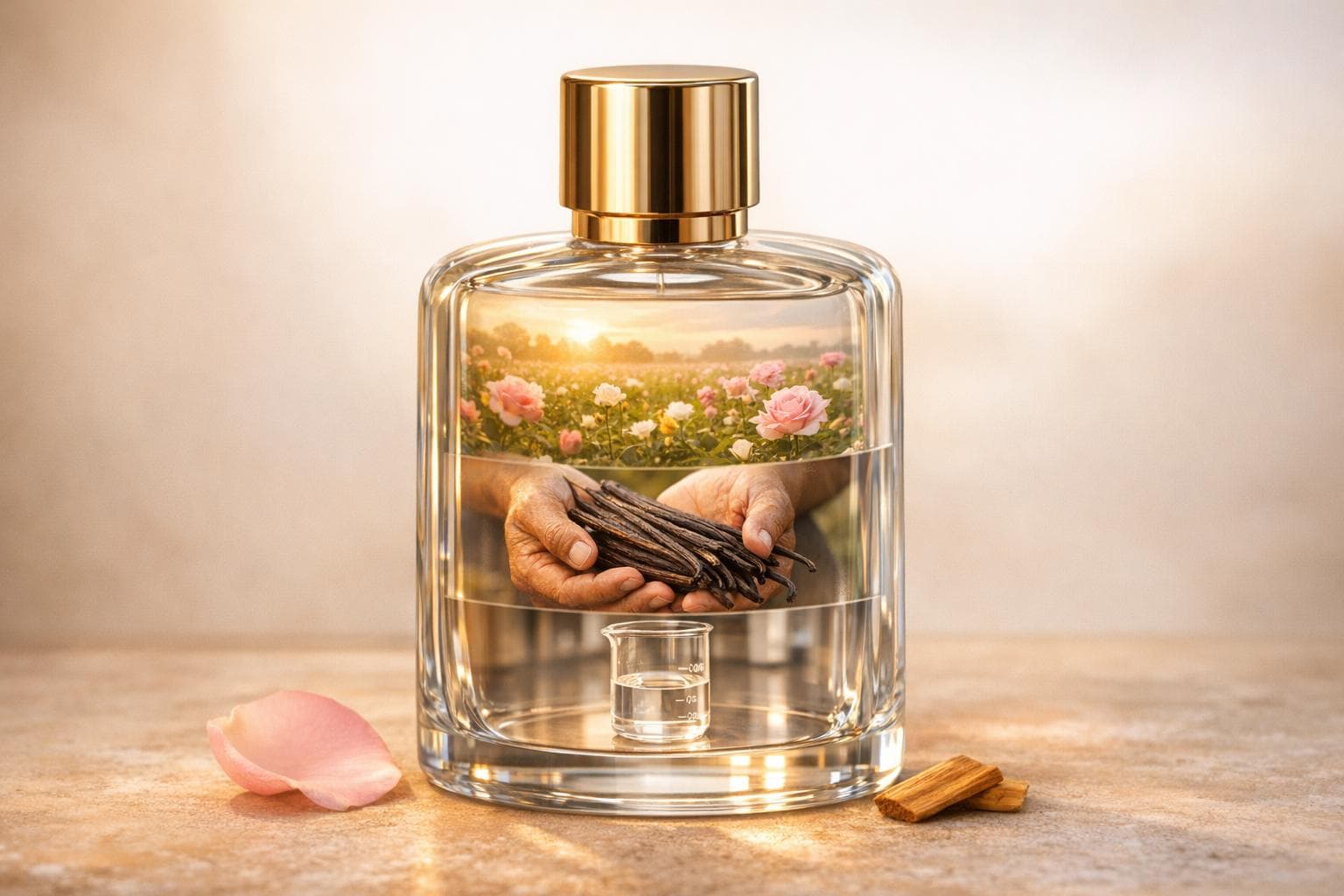
Parfémový průmysl čelí rostoucímu tlaku, aby řešil etické otázky spojené se získáváním surovin. Spotřebitelé, zejména mileniálové a generace Z, požadují transparentnost ohledně původu ingrediencí, pracovních podmínek i ekologických dopadů. Vzhledem k tomu, že se očekává růst trhu z 34,86 miliardy eur v roce 2024 na 36,55 miliardy eur v roce 2025, musí značky vyvažovat poptávku po luxusu s odpovědností. Mezi klíčové výzvy patří:
- Dohledatelnost: Více než 4 000 ingrediencí se získává po celém světě, často prostřednictvím složitých dodavatelských řetězců zahrnujících drobné producenty a zprostředkovatele. Blockchain a nástroje jako GREEN MOTION™ se objevují jako možná řešení, stále však zůstávají nákladné.
- Pracovní otázky: Mnoho sběračů vzácných ingrediencí, jako je santalové dřevo či růžový olej, dostává nízké mzdy, přičemž v regionech původu bývá slabé vymáhání pracovního práva. Iniciativy jako "Harvesting the Future – Jasmine in Egypt" usilují o zlepšení podmínek.
- Environmentální zátěž: Nadměrná těžba vzácných materiálů, například indického santalu, vede k odlesňování a úbytku biologické rozmanitosti. Udržitelné zemědělství a laboratorně pěstované alternativy nabízejí slibná řešení.
- Debata přírodní vs. syntetické: Přestože přírodní ingredience spotřebitele přitahují, často vyžadují značné zdroje (např. 3 000 kg růžových okvětních lístků na 1 kg růžového absolutu). Biotechnologie vytváří syntetické alternativy, které napodobují přírodní vůně bez vyčerpávání zdrojů.
Značky reagují partnerstvími fair trade, technologiemi dohledatelnosti a biotechnologiemi, aby se sladily s etickými standardy. Společnosti jako Scento zároveň snižují odpad prostřednictvím menších, znovu plnitelných balení a transparentních postupů při získávání surovin. Etické získávání ingrediencí již není volitelné - je nezbytné pro budoucnost parfumerie.
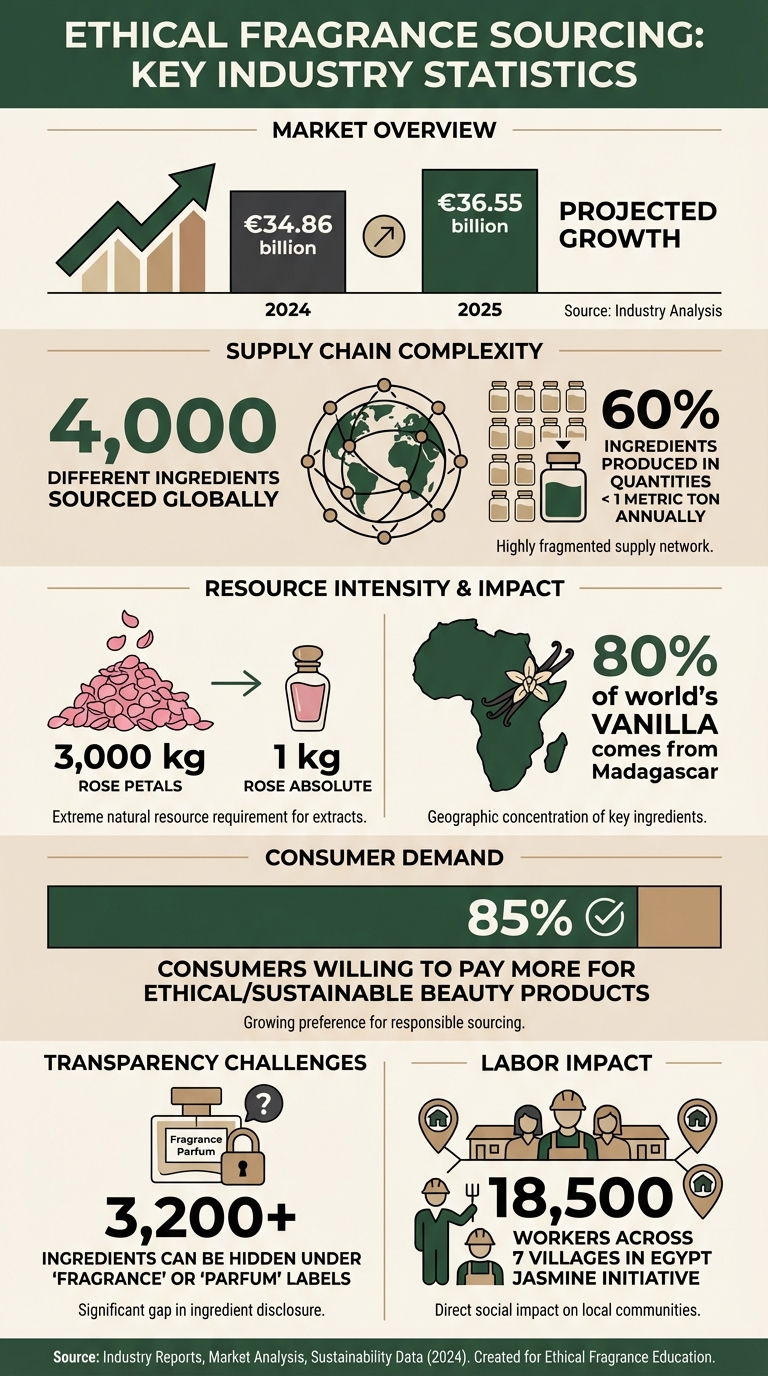
Výzvy etického získávání vonných ingrediencí: klíčové statistiky a oborová data
Složitost dodavatelského řetězce a dohledatelnost
Víceúrovňové dodavatelské řetězce
Parfémový průmysl spoléhá na 4 000 různých ingrediencí, získávaných prostřednictvím spletitých sítí drobných producentů a zprostředkovatelů. Tato komplikovaná síť téměř znemožňuje přesně určit původ jednotlivých materiálů. Problém je ještě náročnější, když 60 % těchto ingrediencí se ročně vyrábí v množství menším než 1 metrická tuna. Takto malovýrobní produkce často uniká tradičním monitorovacím systémům.
Cesta od "pole až na pokožku" obvykle začíná ve venkovských oblastech s omezenou infrastrukturou. Tyto komunity pěstují botanické suroviny, které tvoří páteř luxusních parfémů. Zapojení mnoha zprostředkovatelů však často zatemňuje zásadní informace o pracovních podmínkách a sklizňových postupech. Jak upozorňují Kayla Messier Jones a Haley Harrison z RTI International:
Výzva je zde zřejmá: informace, které společnosti dále v řetězci a spotřebitelé potřebují pro informovaná rozhodnutí, nejsou vždy dostupné a často vůbec neexistují.
Geografická rizika přidávají další vrstvu obtížnosti. Mnoho klíčových ingrediencí pochází z regionů se slabým vymáháním pracovních a environmentálních zákonů. Tento nedostatek dohledu zvyšuje pravděpodobnost porušování lidských práv a neudržitelných sklizňových praktik. I když společnosti zavádějí audity třetích stran, bez robustních systémů umožňujících sledovat materiály od původu až po finální produkt tyto snahy často nestačí.
Právě tyto výzvy posouvají odvětví k zavádění pokročilých řešení dohledatelnosti.
Technologie dohledatelnosti
Nově se prosazující technologie pomáhají řešit neprůhlednost dodavatelských řetězců. Blockchainové platformy, jako jsou IBM a Provenance, nabízejí řešení vytvářením záznamů odolných proti manipulaci, které dokumentují každou fázi dodavatelského řetězce. Od okamžiku sklizně ingredience až po její naplnění do flakonu je každá transakce bezpečně zaznamenána, což značkám i spotřebitelům poskytuje ověřitelný důkaz etického původu.
Parfémové společnosti také vyvíjejí vlastní nástroje pro hodnocení a zlepšování svých dodavatelských řetězců. Například Mane et fils představila GREEN MOTION™, hodnoticí systém, který posuzuje ingredience na škále 0–100 podle dopadu na zdraví, bezpečnost a životní prostředí. Podobně Firmenich uvedla v roce 2020 EcoIngredient Compass, po němž v roce 2023 následoval zdokonalený EcoScent Compass Next Generation. Tyto nástroje hodnotí molekuly podle kritérií, jako je obsah obnovitelného uhlíku a principy zelené chemie, a nabízejí okamžitý vhled do udržitelnosti a transparentnosti.
Vysoké náklady na zavádění těchto technologií však zůstávají překážkou, zejména pro menší podniky. Přesto poptávka po transparentnosti roste. Vzhledem k tomu, že 85 % spotřebitelů je ochotno zaplatit více za kosmetické produkty, které prokazují etické a udržitelné postupy, sílí tlak na značky, aby investovaly do infrastruktury dohledatelnosti.
Labor Exploitation and Fair Wages
Ačkoli sledování původu ingrediencí představuje krok vpřed, zajištění spravedlivých mezd pro ty, kdo tyto materiály sklízejí, zůstává významnou výzvou.
Nízké mzdy ve sklizňových komunitách
Ti, kteří sklízejí vysoce ceněné vonné ingredience, často získávají jen nepatrný podíl z hodnoty vytvořené finálními luxusními produkty. Ingredience jako santalové dřevo a růžový olej dosahují prémiových cen, přesto pracovníci v odlehlých oblastech často pobírají mzdy hluboko pod úrovní odpovídající této hodnotě.
Situace se zhoršuje v regionech se slabými nebo nedostatečně vymáhanými pracovními zákony. V mnoha případech existují předpisy pouze teoreticky, což umožňuje rozkvět nelegálních praktik, jako je pytláctví a nadměrná těžba. Například sklizeň indického santalu vedla nejen k rozsáhlému odlesňování, ale také zanechala místní komunity potýkat se s environmentálními škodami i ekonomickými obtížemi.
Problém dále prohlubuje složitost dodavatelského řetězce. Materiály často procházejí mnoha zprostředkovateli, než se dostanou k parfémovým společnostem, což ztěžuje ověření, zda jsou sběrači spravedlivě odměňováni. Každá vrstva řetězce si bere svůj podíl, takže pracovníkům u zdroje zbývá jen málo. Tyto systémové problémy zdůrazňují propast mezi očekáváním spotřebitelů ohledně transparentnosti a realitou, jíž čelí lidé na samém začátku dodavatelského řetězce.
Zlepšování pracovních podmínek
V roce 2024 byla společností L’Oréal, egyptskou vládou, parfémovými domy, Fair Labor Association (FLA) a Mezinárodní organizací práce (ILO) zahájena společná iniciativa nazvaná "Harvesting the Future – Jasmine in Egypt". Program si klade za cíl zlepšit život 18 500 pracovníků v sedmi klíčových vesnicích. Kromě úprav mezd iniciativa poskytuje ochranné pomůcky, zdravotní služby, programy gramotnosti a kompenzační rámec, který zohledňuje místní životní náklady a pracovní nároky.
Koalice také podnikla kroky proti dětské práci, zejména během vrcholných období sklizně, a to zavedením monitoringu v terénu ve dne i v noci. Jak vysvětlila společnost L’Oréal:
Na základě posledních výsledků našeho průběžného monitorovacího procesu v roce 2023 a s cílem podpořit systémovou změnu ve prospěch místních komunit jsme sehráli klíčovou roli při vytvoření koalice... vedené Fair Labor Association a Mezinárodní organizací práce
Tyto cílené snahy jsou zásadní pro vytvoření etičtějšího a transparentnějšího parfémového průmyslu.
Environmentální dopad postupů získávání surovin
Závislost parfémového průmyslu na vzácných přírodních ingrediencích neovlivňuje pouze lidi - zatěžuje také ekosystémy. Řešení těchto environmentálních výzev je nezbytné pro vytvoření etičtějšího procesu získávání surovin a odpovídá širšímu tlaku na větší transparentnost a odpovědnost v celém odvětví.
Nadměrná sklizeň vzácných ingrediencí
Když poptávka po přírodních materiálech, jako je santalové dřevo nebo růžový olej, převýší udržitelnou nabídku, ekosystémy čelí vážným následkům. Vezměme si jako příklad indický santal: jeho popularita vedla k odlesňování a nelegálnímu pytláctví. Stromy jsou často těženy předčasně, což brání přirozené obnově a vyčerpává původní lesy.
Tato nadměrná těžba nevede jen k odlesňování - ničí také stanoviště a snižuje biologickou rozmanitost. Takové ekologické škody přiměly producenty přehodnotit svůj přístup a přijmout udržitelnější metody získávání surovin.
Iniciativy udržitelného zemědělství
V reakci na tyto tlaky se mnoho producentů obrací k odpovědným zemědělským a sklizňovým technikám. Například pěstováním květin a rostlin bez pesticidů mohou zabránit kontaminaci vodních zdrojů a degradaci půdy, čímž chrání místní ekosystémy i komunity.
Regulované sklizňové postupy a spolupráce fair trade rovněž pomáhají zmírňovat environmentální zátěž. Tyto snahy často zahrnují stanovení limitů sklizně, které dávají ekosystémům čas na obnovu a zároveň podporují místní komunity. Další zásadní změnu přináší biotechnologie. Laboratorně pěstované ingredience dnes umožňují znovu vytvořit vonné profily ohrožených materiálů, jako je santalové dřevo, aniž by docházelo k vyčerpávání přírodních zdrojů. Některé tradiční parfémové značky dokonce propojují své postupy získávání surovin s ochranářskými projekty, například iniciativami na zachování populací včel.
Váš osobní odborník na parfémy už čeká
Vyplňte náš rychlý vonný kvíz a objevte autentické designové a nišové parfémy vybrané podle vašeho vkusu – prozkoumejte je jako 2, 5, 8 a 30 ml dekanty a vzorky, abyste si každý mohli vyzkoušet, než se rozhodnete pro celou lahvičku.
Najděte svou vůniPřírodní vs. syntetické ingredience
Debata o přírodních a syntetických ingrediencích stojí v samém středu diskusí o etickém získávání surovin, avšak téma je mnohem složitější, než se může zdát. Přírodní ingredience sice často působí mimořádně přitažlivě, nejsou však ze své podstaty vždy udržitelné nebo etické.
Vnímání přírodních a syntetických ingrediencí spotřebiteli
Je rozšířeným přesvědčením, že přírodní ingredience jsou lepší. Tento předpoklad však často vede k dilematu udržitelnosti. Vezměme si například růžový absolut: výroba pouhého 1 kilogramu vyžaduje ohromujících 3 000 kilogramů růžových okvětních lístků a spotřebovává obrovské množství půdy i vody. Podobně přibližně 80 % světové vanilky pochází z Madagaskaru, kde farmáři často čelí vykořisťujícím praktikám a nespravedlivým mzdám.
Přírodní ingredience, jako jsou esenciální oleje, s sebou nesou také další výzvy. Mnohé obsahují alergeny, například limonen a linalool, které vyžadují pečlivou regulaci.
"Příroda neupřednostňuje vaši kožní bariéru; mnoho rostlin vytváří chemické sloučeniny jako obranné mechanismy navržené právě tak, aby dráždily." — Layermor Fragrance
Tyto výzvy zdůrazňují rostoucí roli syntetických alternativ, které mohou nabídnout jak environmentální přínosy, tak konzistentní kvalitu.
Transparentnost u syntetických alternativ
Syntetické ingredience jsou na rozdíl od svých přírodních protějšků méně ovlivněny klimatickou proměnlivostí a nabízejí stálou kvalitu. Pokroky v biotechnologiích dnes umožňují vytvářet komplexní vonné profily bez vyčerpávání přírodních zdrojů. Stejně jako se v přírodním získávání surovin prosadila dohledatelnost, vyvíjí se i syntetická výroba směrem k ověřené udržitelnosti.
Transparentnost je v tomto prostředí zásadní. Skutečný problém nespočívá ve volbě mezi přírodním a syntetickým, ale v požadavku na jasnost ze strany značek. V současnosti může být více než 3 200 ingrediencí legálně skryto pod obecnými označeními "Fragrance" nebo "Parfum". Tento nedostatek transparentnosti umožňuje společnostem zastírat zastaralé syntetické sloučeniny, jako je diethylftalát (DEP), a perzistentní polycyklické pižmové látky.
"Pokud vám značka nedokáže říct, jaké procento formule je přírodní, slovo ‘přírodní’ je pouze dekorací." — NYC.PH
Biotechnologie nabízí inovativní střední cestu. Pomocí fermentace a enzymů mohou společnosti vyrábět molekuly totožné s těmi, které se vyskytují v přírodě, avšak obnovitelným a biologicky rozložitelným způsobem - bez spoléhání na petrochemii nebo nadměrnou sklizeň. Upřednostněním úplného zveřejňování ingrediencí a vyhýbáním se vágním tvrzením typu "inspirováno botanikou" mohou značky budovat důvěru a zajistit, aby přírodní i syntetické složky splňovaly přísné standardy bezpečnosti a udržitelnosti. Tento tlak na transparentnost je klíčový pro budoucí směřování odvětví.
Řešení pro etické získávání vonných ingrediencí
Odvětví se obrací k přímým partnerstvím, pokročilým systémům dohledatelnosti a biotechnologiím, aby zajistilo, že postupy získávání surovin budou odpovídat etickým standardům.
Fair trade a přímá partnerství
Budování přímých vztahů s místními družstvy je klíčovým přístupem k zajištění spravedlivého zacházení a etických postupů. Například společnosti získávající vetiver na Haiti úzce spolupracují se zemědělskými družstvy, aby garantovaly spravedlivé mzdy a bezpečné pracovní prostředí. Tato partnerství často přesahují samotnou odměnu a podporují komunity financováním škol, zlepšováním přístupu ke zdravotní péči a zajišťováním čisté vody. Certifikace od organizací jako Fairtrade International, UEBT a FairWild tyto snahy dále potvrzují a posilují důvěru spotřebitelů i zainteresovaných stran.
Tato úroveň odpovědnosti otevírá cestu k začlenění inovativních technologií do dodavatelského řetězce.
Technologie pro dohledatelnost
Blockchainová technologie se využívá k vytváření bezpečných, proti manipulaci odolných záznamů, které sledují ingredience od jejich zdroje až po finální produkt. QR kódy umožňují spotřebitelům dohledat původ ingrediencí a nabízejí transparentnost. Umělá inteligence mezitím pomáhá identifikovat alternativní vonné molekuly, čímž snižuje závislost na nadměrně vytěžovaných zdrojích. Někteří výrobci navíc využívají obnovitelnou energii k napájení destilačních jednotek, čímž snižují svůj environmentální dopad.
Tyto technologické pokroky fungují ruku v ruce s iniciativami fair trade a zajišťují dodržování etických postupů v celém procesu získávání surovin.
Biotechnologie a laboratorně pěstované ingredience
Biotechnologie nabízí způsob, jak řešit výzvy, jako je nedostatek zdrojů a ekologické škody. Laboratorně pěstované ingredience, vyvinuté prostřednictvím genetického inženýrství, poskytují udržitelné alternativy ke vzácným přírodním botanickým surovinám. Například upravené kmeny kvasinek mohou produkovat vonné sloučeniny, které napodobují vůni růží. Tyto inovace pomáhají chránit ekosystémy a předcházet nadměrné těžbě rostlin, jako je indický santal.
Biotechnologie také umožňuje cruelty-free náhrady ingrediencí živočišného původu, jako je ambra a cibetkové pižmo. Na rozdíl od tradičních petrochemických syntetik jsou laboratorně pěstované molekuly obnovitelné a poskytují konzistentnější i ekologičtější řešení.
"Vůně úspěchu v budoucnosti parfumerie je taková, která harmonizuje půvab luxusu s ctnostmi udržitelnosti." — FasterCapital
Závazek značky Scento k etickým postupům
Scento přehodnocuje způsob, jakým se luxusní vůně spotřebovávají, a řeší dva zásadní problémy odvětví: odpad a etické získávání surovin. Běžným problémem je tendence spotřebitelů utrácet stovky dolarů za plnohodnotné flakony, které jen zřídka dopotřebují. Scento na to reaguje nabídkou kurátorovaných 8ml odstřiků spolu s menší objevnou velikostí 2 ml. Tyto možnosti podporují uvědomělé nakupování a zároveň snižují obalový odpad typicky spojený s tradičními luxusními vůněmi.
Na rozdíl od obvyklého okázalého luxusního balení, které často zahrnuje nerecyklovatelné plasty a nadměrné obaly, volí Scento minimalistický a funkční design. Jejich kolekce atomizérů - s variantami jako Limone di Capri a Rosso Fiore - přináší autentické designérské vůně v kompaktních formátech připravených na cesty. Tím, že se Scento vyhýbá nerecyklovatelným materiálům a zbytečným prezentačním krabičkám, výrazně snižuje obalový odpad.
Transparentnost stojí v samém srdci fungování Scento. Každá vůně je vybírána s důrazem na čistotu, ohleduplnost k životnímu prostředí a etické zpracování. Otevřeným poskytováním informací o svých produktech dává Scento spotřebitelům možnost činit rozhodnutí v souladu s jejich hodnotami udržitelnosti a odpovědnosti.
Formát 8ml odstřiku nejen snižuje odpad, ale také otevírá dveře k více než 1 000 designérským a niche vůním. Scento je prodejce parfémových dekantů a vzorků a každý produkt si můžete koupit jednorázově, bez jakéhokoli předplatného. Spojením etického získávání surovin s odpovědnou spotřebou pomáhá Scento posouvat parfémový průmysl k větší transparentnosti a udržitelnosti.
Závěr
Parfémový průmysl čelí závažným etickým výzvám, od skrytých problémů v dodavatelských řetězcích a pracovního vykořisťování až po vyčerpávání zdrojů a poškozování životního prostředí. Tyto problémy ohrožují schopnost odvětví dlouhodobě prosperovat. Jak zdůrazňuje FasterCapital:
Začlenění etického získávání surovin do samotné podstaty parfumerie není jen o konání dobra; jde o zajištění dlouhověkosti a prosperity parfémového průmyslu.
V reakci na tyto výzvy odvětví přichází s inovativními přístupy. Partnerství fair trade zajišťují spravedlivé mzdy a rozvoj komunit. Blockchainová technologie se využívá k vytváření bezpečných, dohledatelných záznamů o ingrediencích, zatímco biotechnologie nabízí laboratorně pěstované alternativy ke vzácným nebo ohroženým přírodním materiálům. Současně iniciativy oběhového hospodářství - jako znovu plnitelné flakony a biologicky rozložitelné obaly - řeší snižování odpadu. Společně tyto snahy podtrhují rostoucí závazek k etickému získávání surovin jako základní hodnotě moderní parfumerie.
Spotřebitelé hrají v této změně klíčovou roli. Volbou značek, které upřednostňují certifikace třetích stran (jako Fair Trade, Ecocert a UEBT), transparentní původ ingrediencí a udržitelné postupy, pomáháte posouvat odvětví k větší odpovědnosti. Podpora společností, které otevřeně sdílejí původ svých ingrediencí, minimalizují obaly a investují do ekologicky šetrné chemie, vysílá silný signál.
Etické postupy v parfumerii již nejsou volitelné - jsou klíčem k budoucnosti odvětví. Jak výstižně poznamenává VAUCLUSE:
Udržitelnost a luxus se u parfémů již vzájemně nevylučují.
Časté dotazy
Jak mohu ověřit, že ingredience parfému pocházejí z etických zdrojů?
Abyste se ujistili, že ingredience parfému pocházejí odpovědně, hledejte certifikace jako Fair Trade nebo ekoznačky, které označují spravedlivé a udržitelné postupy. Značky, které upřednostňují transparentnost, často poskytují údaje o dohledatelnosti a ukazují, odkud jejich ingredience pocházejí. Některé dokonce volí syntetické alternativy, aby snížily tlak na křehké přírodní zdroje. Pokud si nejste jisti, obraťte se přímo na značku a zeptejte se na její metody získávání surovin - obvykle se rádi podělí.
Jsou přírodní vůně vždy udržitelnější než syntetické?
Sklizeň přírodních ingrediencí pro vůně často vyžaduje značné množství půdy, vody a dalších zdrojů. Tento proces může někdy vést k odlesňování nebo nadměrné sklizni planě rostoucích rostlin, což ovlivňuje ekosystémy. Na druhé straně mohou syntetické ingredience někdy představovat zdrojově efektivnější a etičtější alternativu v závislosti na tom, jak jsou vyráběny.
Jaké certifikace podporují spravedlivé mzdy a ochranu přírody?
Při zkoumání parfémového průmyslu stojí za pozornost certifikace, jako je IFRA — IOFI Sustainability Charter. Tato certifikace zdůrazňuje snahy o zajištění spravedlivých mezd pro pracovníky a podporuje ochranářské iniciativy, čímž odráží závazek k etickým a environmentálně odpovědným postupům.

