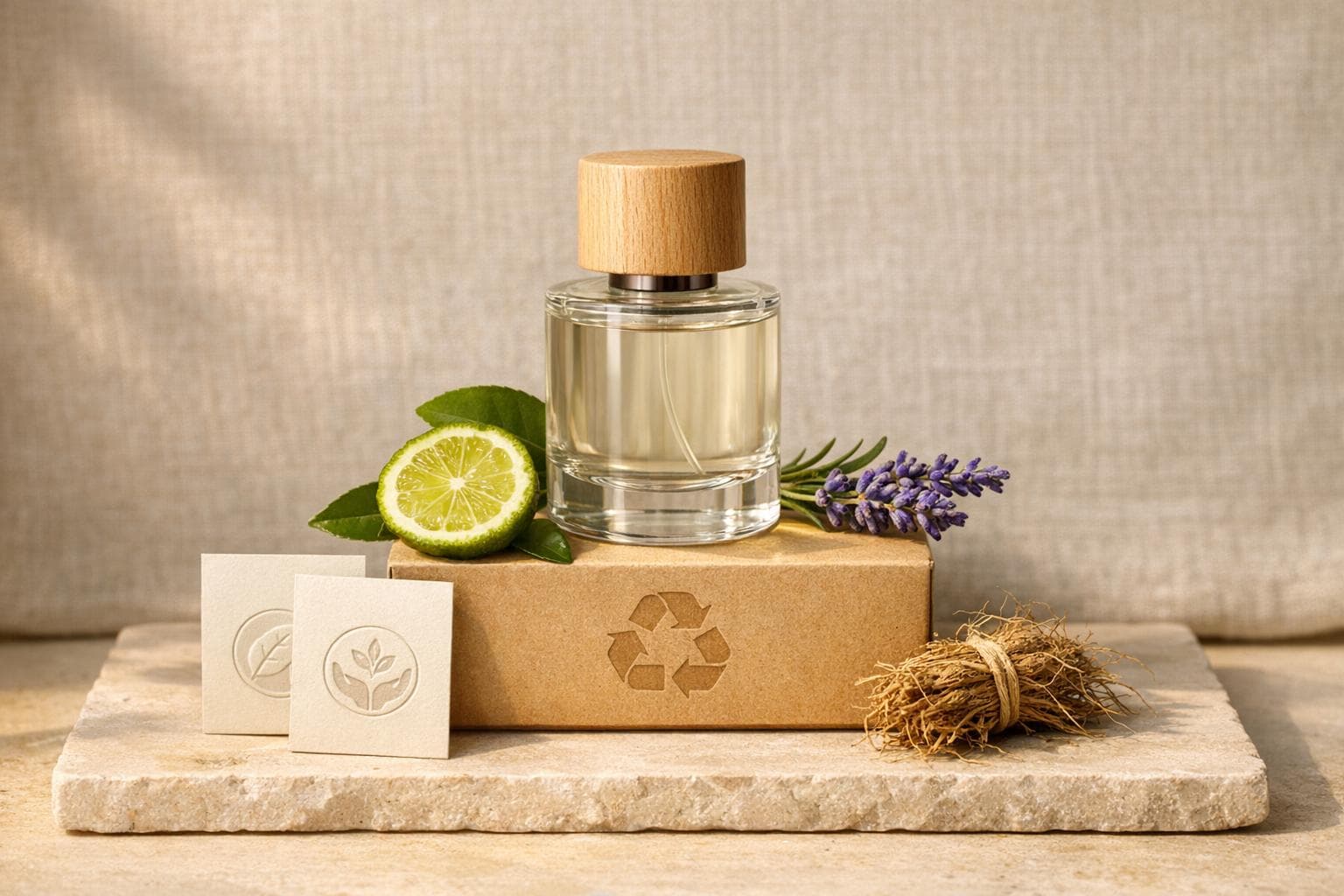
Ekologické parfémy kladou důraz na přírodní ingredience, etické získávání surovin a udržitelné postupy. Zde je stručný průvodce, který vám pomůže vybrat ten pravý:
- Ingredience: Volte botanické esenciální oleje a organický alkohol. Vyhněte se syntetickým přísadám, jako jsou ftaláty a parabeny.
- Získávání surovin: Hledejte certifikace Fair Trade, postupy regenerativního zemědělství a transparentní dodavatelské řetězce.
- Balení: Znovu plnitelné flakony, recyklovatelné materiály a design s minimem odpadu snižují dopad na životní prostředí.
- Certifikace: Důvěřujte označením jako USDA Organic, Leaping Bunny (netestováno na zvířatech) a Ecocert pro ověřená tvrzení.
- Transparentnost: Značky by měly jasně uvádět složení a vyhýbat se vágním výrazům, jako jsou "fragrance" nebo "parfum."
Check for Natural and Organic Ingredients
Přírodní a organické ingredience tvoří základ ekologicky uvědomělých parfémů a přinášejí výhody, jako je obnovitelnost, biologická rozložitelnost a šetrnost k citlivé pokožce. Zejména botanické extrakty nabízejí bohaté a proměnlivé vonné profily. Například k výrobě jediného kilogramu Rose Absolute je třeba zpracovat tisíce kilogramů okvětních lístků, zatímco Orris (kořen kosatce) musí před destilací zrát 3–5 let. Tyto pracné postupy jsou součástí toho, co dává přírodním parfémům jejich osobité kouzlo. Chcete-li si ověřit autenticitu, zkoumejte etikety produktů a hledejte jasně uvedené botanické názvy, které mohou potvrdit skutečný přírodní původ.
Hledejte botanické zdroje
Při kontrole seznamu ingrediencí se zaměřte na konkrétní názvy rostlin namísto vágních výrazů jako "fragrance" nebo "parfum." Ingredience, jako jsou esenciální oleje – získávané parní destilací nebo lisováním za studena – signalizují přírodní složení. Příklady zahrnují bergamot, levanduli, santalové dřevo, růži damašskou, vetiver a neroli. Podobně absolue, jako Jasmine Grandiflorum nebo Orange Flower, přinášejí koncentrované květinové aroma, zatímco CO₂ extrakty uchovávají původní vůni suroviny prostřednictvím extrakce superkritickým oxidem uhličitým. Dalším znakem přírodní integrity je použití organického alkoholu z cukrové třtiny jako nosné kapaliny, což je ekologičtější alternativa k variantám na bázi ropy. Latinské botanické názvy, jako Lavandula angustifolia pro levanduli, dále naznačují skutečné rostlinné zdroje a odrážejí transparentnost značky.
Vyhýbejte se škodlivým chemikáliím
Buďte obezřetní vůči syntetickým přísadám, které mohou představovat riziko jak pro zdraví, tak pro životní prostředí. Ftaláty, běžná rozpouštědla ve vůních, jsou podezřelé endokrinní disruptory, zatímco parabeny, používané jako konzervanty, jsou spojovány s podrážděním pokožky. Syntetické pižmo, jako například polycyklická pižma, může vyvolávat alergické reakce a přetrvávat v životním prostředí dlouho po použití. Mnoho běžných parfémů také spoléhá na petrochemikálie, které přispívají ke znečištění, a na nekvalitní syntetické aromatické látky, jež mohou vyvolat bolesti hlavy, záněty pokožky nebo alergie. I některé přírodní ingredience vyžadují opatrné zacházení – bergamot může způsobit fototoxické reakce a vysoké koncentrace hřebíčkového nebo skořicového oleje mohou dráždit pokožku.
Upřednostňujte upcyklované ingredience
Upcyklované ingredience jsou udržitelnou volbou, protože dávají odpadům z jiných odvětví nový život v podobě nových materiálů. Značky mohou například využívat ovocnou dužinu zbylou po výrobě šťáv, dřevěné hobliny z nábytkářské výroby nebo květinové okvětní lístky vyřazené po extrakci esenciálních olejů. Tento přístup snižuje ekologickou zátěž spojenou se sklizní surovin a pomáhá odklánět odpad ze skládek. Přestože upcyklované ingredience nemusí být vždy uvedeny výslovně, vyplatí se sledovat značky, které na svých webových stránkách zdůrazňují postupy "zero waste" nebo "minimal waste". Tyto snahy odrážejí širší závazek k udržitelnosti v celém výrobním procesu.
Prověřte etické a odpovědné získávání surovin
Etické získávání surovin hraje zásadní roli při ochraně ekosystémů a zajištění férového zacházení s pracovníky zapojenými do sklizně vonných ingrediencí. Když značky upřednostňují odpovědné postupy, zajišťují, že materiály jako pryskyřice, květiny a stromové extrakty jsou sbírány způsobem, který chrání přirozená stanoviště a respektuje pracovní práva. To je v kontrastu se syntetickými výrobními metodami, které se často používají v průmyslové produkci. Udržitelné a uvážlivé metody sklizně přírodních ingrediencí jsou obecně lépe v souladu s etickými a environmentálními hledisky. Tyto principy tvoří páteř transparentních a odpovědných postupů, jak je uvedeno níže.
Hledejte certifikace Fair Trade
Certifikace Fair Trade jsou spolehlivým způsobem, jak potvrdit, že dodavatelé a farmáři dodržují etické pracovní standardy. Tyto certifikace zajišťují, že pracovníci jsou spravedlivě odměňováni a pracují v bezpečných podmínkách, a zároveň chrání místní komunity před vykořisťováním během výroby ingrediencí. Chcete-li to ověřit, zkontrolujte na obalu produktu certifikace jako FairTrade, USDA Organic nebo COSMOS Organic. Tato označení znamenají dodržování přísných standardů jak v oblasti pracovních podmínek, tak odpovědného získávání surovin. Pokud tyto logotypy chybí, webové stránky značky často nabízejí prohlášení o transparentnosti s detaily o partnerstvích s farmáři nebo palírnami.
Podporujte regenerativní zemědělství
Etické získávání surovin přesahuje rámec fair trade, pokud zahrnuje regenerativní zemědělství. Tento přístup půdu nejen udržuje – aktivně ji obnovuje. Zlepšováním zdraví půdy, podporou biodiverzity a zachováním dlouhodobé produktivity zajišťuje regenerativní hospodaření zdravější ekosystém. Značky, které ve svých zásadách získávání surovin zdůrazňují regenerativní zemědělství nebo spolupracují s malými farmáři využívajícími tyto metody, stojí za podporu. To je obzvlášť důležité u prémiových přírodních parfémů, které závisejí na vysoce kvalitních ingrediencích, jako jsou listy, kořeny, plody a semena.
Vybírejte transparentní značky
Transparentnost je klíčovým ukazatelem etického získávání surovin. Značky oddané odpovědným postupům otevřeně zveřejňují informace o původu svých surovin, fungování dodavatelského řetězce a výrobních procesech. Přední společnosti často poskytují podrobné glosáře ingrediencí nebo dokonce GC/MS zprávy k potvrzení čistoty surovin. Buďte opatrní u značek, které na etiketách uvádějí pouze "fragrance" nebo "parfum", protože tyto výrazy mohou skrývat řadu nezveřejněných chemikálií. Jak zdůrazňuje Orbasics:
"Na skutečně přírodním parfému byste nikdy neměli vidět pouze ‘fragrance’ nebo ‘parfum’."
| Certifikace/Označení | Co označuje |
|---|---|
| Fair Trade | Zajišťuje etické pracovní postupy, spravedlivé mzdy a odpovědné získávání surovin |
| Leaping Bunny | Ověřuje, že v žádné fázi výroby neprobíhá testování na zvířatech |
| Vegan | Potvrzuje absenci složek živočišného původu, jako jsou pižmo, med nebo včelí vosk |
| Organic/Natural | Odráží dodržování standardů pro přírodní ingredience a podporu udržitelného nebo regenerativního zemědělství |
Posuďte ekologické balení a výrobu
Balení a výrobní procesy hrají zásadní roli při určování environmentálního dopadu parfému. Vzhledem k tomu, že 62 % dnešních zákazníků dává přednost udržitelným značkám, je pochopení toho, co činí balení a výrobu ekologickými, důležitější než kdy dřív. Kromě samotných ingrediencí tyto aspekty ukazují hlubší závazek značky k udržitelnosti.
Volte znovu plnitelné a recyklovatelné obaly
Systémy opakovaného plnění a recyklovatelné materiály jsou skvělým způsobem, jak omezit jednorázový odpad. Například znovu plnitelné obaly a kompostovatelné materiály se stávají oblíbenou volbou v udržitelném designu. Při posuzování obalu hledejte prvky, jako jsou vložky z lisované celulózy (které nahrazují plast nebo pěnu), krabice z kraftového papíru nebo bioplasty rostlinného původu označené jako "bio-based" nebo "PEF". Některé značky dokonce zkoumají možnosti recyklovatelných bioplastů, aby dále snížily svou ekologickou stopu.
Další ekologické detaily, kterých si všímat, zahrnují QR kódy s pokyny k recyklaci, flakony s odnímatelnými pumpičkami nebo štítky pro doplnění a také vnější obaly potištěné inkousty na bázi sóji nebo vody namísto alternativ na bázi ropy.
Prověřte čisté výrobní postupy
Metody výroby přímo ovlivňují spotřebu vody, energie a množství chemického odpadu. International Fragrance Association (IFRA) podporuje odpovědnou výrobu s cílem chránit lidi i planetu. Mnoho značek dnes využívá zelenou chemii k vytváření čistších procesů, které spotřebovávají méně vody, energie a nebezpečných chemikálií.
Vezměme si například moderní extrakční techniky, jako je superkritická extrakce CO₂. Tato metoda využívá kapalný oxid uhličitý k zachycení vůní bez tradičních rozpouštědel a zachovává přirozené aroma. Tradiční metody, jako je parní destilace a lisování za studena, také zůstávají účinné a bez rozpouštědel. Některé společnosti navíc přijaly cirkulární systémy, které znovu využívají zdroje a napájejí své laboratoře obnovitelnou energií.
"Udržitelné parfumérské domy se obracejí k zelené chemii, což znamená čistší výrobní procesy, které využívají méně vody, energie a škodlivých chemikálií." – So Avant Garde
Hermetica Paris je výjimečným příkladem: vyrábí bezalkoholové, veganské parfémy za pomoci zelené chemie. Jejich balení je 100% bez plastů, vyrobené z recyklovatelného papíru a lokálně získávaných materiálů, aby se snížila uhlíková stopa. Transparentnost ohledně extrakčních metod a dodržování standardů IFRA jsou klíčové při hodnocení snah značky o udržitelnost.
Potvrďte veganské standardy a standardy cruelty-free
Veganské parfémy neobsahují žádné ingredience živočišného původu, jako je jelení pižmo, ambra vorvaně, včelí vosk nebo med. Mějte však na paměti, že "přírodní" neznamená vždy veganské – některé přírodní parfémy mohou stále obsahovat živočišné extrakty. Vždy zkontrolujte etiketu, abyste měli jistotu, že je produkt zcela rostlinného původu.
Certifikace cruelty-free zaručují, že během výroby neproběhlo žádné testování na zvířatech. Hledejte loga jako Leaping Bunny, PETA’s Beauty Without Bunnies nebo Cruelty Free International namísto toho, abyste spoléhali pouze na tvrzení značky. Mnoho značek také používá udržitelné materiály pro součásti flakonů, například korková nebo dřevěná víčka místo plastových. Pokud jsou součástí receptury syntetické molekuly, ověřte si ekologické certifikace, které naznačují, že byly navrženy s ohledem na bezpečnost, stabilitu a nižší uhlíkovou stopu.
Společně tyto ekologické postupy a transparentní označování pomáhají vytvořit úplný obraz o profilu udržitelnosti dané vůně.
Váš osobní odborník na parfémy už čeká
Vyplňte náš rychlý vonný kvíz a objevte autentické designové a nišové parfémy vybrané podle vašeho vkusu – prozkoumejte je jako 2, 5, 8 a 30 ml dekanty a vzorky, abyste si každý mohli vyzkoušet, než se rozhodnete pro celou lahvičku.
Najděte svou vůniPečlivě čtěte etikety a certifikace
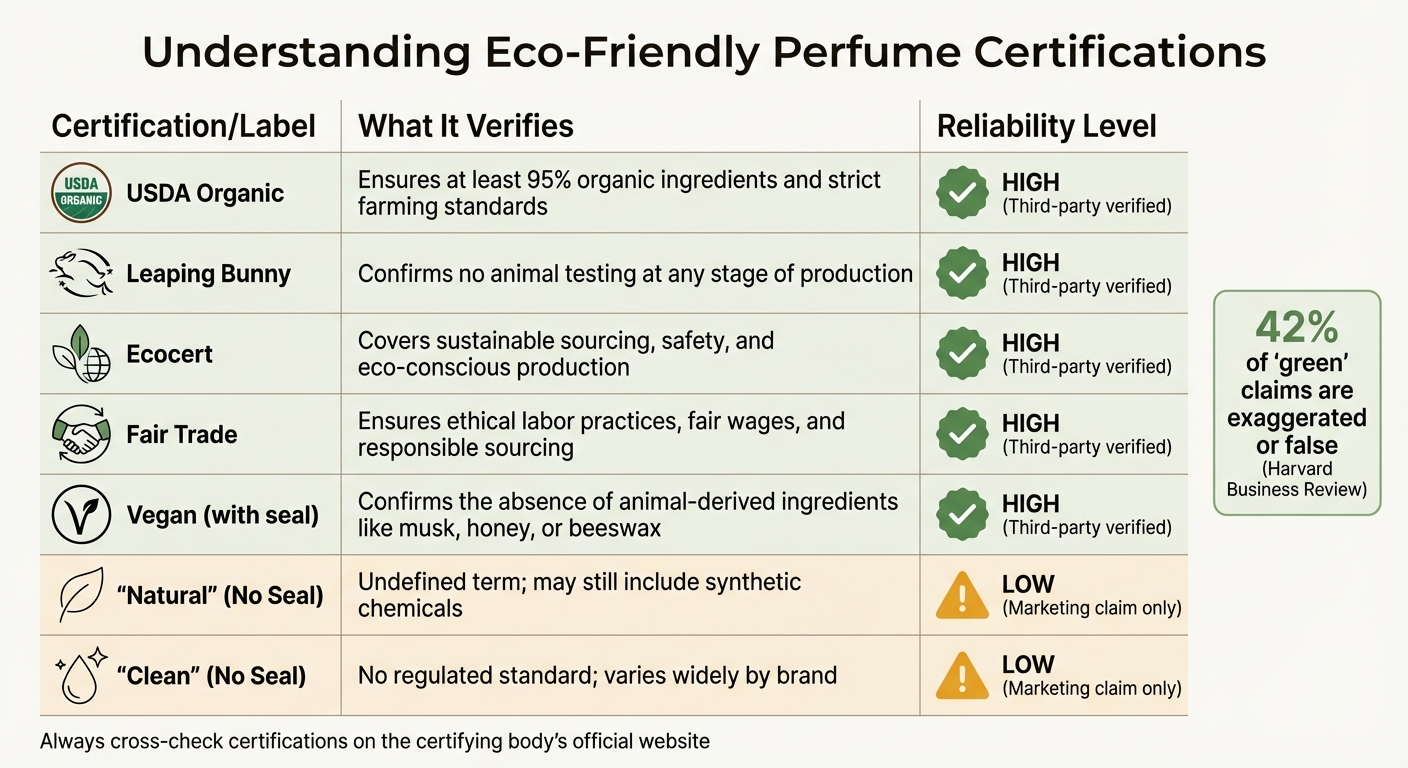
Průvodce certifikacemi ekologických parfémů: Co jednotlivá označení znamenají
Pochopit, jak rozluštit etikety a ověřit certifikace, je při výběru vůní, které odpovídají udržitelným a etickým hodnotám, zásadní. Mnoho značek používá výrazy jako "natural", "clean" nebo "eco-friendly", ale bez regulačního dohledu mohou být tato tvrzení často zavádějící. Podle analýzy Harvard Business Review bylo 42 % "zelených" tvrzení buď zveličených, nebo zcela nepravdivých. O to důležitější je přistupovat k etiketám kriticky.
Požadujte úplnou transparentnost složení
Buďte obezřetní vůči etiketám, které jednoduše uvádějí "fragrance" nebo "parfum." Tyto obecné výrazy mohou sloužit jako zástěrka pro škodlivé chemikálie. Značky skutečně oddané ekologicky uvědomělým postupům poskytnou úplný rozpis ingrediencí. Hledejte podrobná označení jako "Frankincense Extract" nebo "Jasmine Absolute", která naznačují konkrétní, vysoce kvalitní přírodní zdroje. Při zkoumání seznamu ingrediencí si všímejte i složek, které by mohly být v rozporu s tvrzením značky o ekologičnosti.
Rozpoznejte varovné signály
Nespokojte se jen s marketingem na přední straně flakonu a zkontrolujte zadní etiketu kvůli skrytým syntetickým ingrediencím. Výrazy jako "phthalates" nebo "parabens" by měly vzbudit obavy, protože tyto látky byly spojovány s potenciálními zdravotními riziky. Vyhněte se vůním, které výslovně neuvádějí, že jsou "phthalate-free", a nenechte se zlákat tvrzeními jako "CFC-free", protože to už jsou v odvětví standardní postupy. Rychlý test "otočte flakon" vám může pomoci obejít líbivý marketing a soustředit se na to, na čem skutečně záleží – co je uvnitř.
Porovnávejte certifikace
Certifikace třetích stran mohou přinést jasno a nezávislé ověření tvrzení značky o udržitelnosti, ale ne všechna označení mají stejnou váhu. Některé certifikace zahrnují přísné audity, zatímco jiné jsou jen marketingovým nástrojem. Zde je přehled běžných certifikací, který vám pomůže se zorientovat:
| Certifikace | Co ověřuje | Spolehlivost |
|---|---|---|
| USDA Organic | Zajišťuje alespoň 95 % organických ingrediencí a přísné zemědělské standardy | Vysoká (třetí strana) |
| Leaping Bunny | Potvrzuje, že v žádné fázi výroby neproběhlo testování na zvířatech | Vysoká (třetí strana) |
| Ecocert | Zahrnuje udržitelné získávání surovin, bezpečnost a ekologicky uvědomělou výrobu | Vysoká (třetí strana) |
| "Natural" (bez pečeti) | Nedefinovaný pojem; stále může zahrnovat syntetické chemikálie | Nízká (marketingové tvrzení) |
| "Clean" (bez pečeti) | Bez regulovaného standardu; značně se liší podle značky | Nízká (marketingové tvrzení) |
Abyste si ověřili legitimitu loga, porovnejte ho s oficiálními stránkami certifikačního orgánu. Kromě toho mohou aplikace a nástroje jako Think Dirty, Good On You nebo databáze EWG Skin Deep nabídnout hlubší vhled do bezpečnosti ingrediencí a jejich dopadu na životní prostředí. Tyto zdroje vám mohou pomoci činit informovaná rozhodnutí a nenechat se nachytat na nepodložená tvrzení.
Objevte designérské parfémy se Scento
Scento nově definuje, jak prožíváme luxusní vůně, s důrazem na ekologicky uvědomělé postupy a promyšlený design. Nabídkou menších formátů vhodných na cesty Scento minimalizuje odpad a zároveň zušlechťuje způsob, jakým objevujeme a užíváme si designérské i niche vůně.
Díky přístupu k více než 1 000 pečlivě vybraným vůním nabízí Scento lahvičky 2 ml, 5 ml a 8 ml a u většiny parfémů i dekant o objemu 30 ml. Tyto menší formáty řeší běžný problém: plnohodnotné flakony často zůstávají nevyužité, což vede k odpadu a možnému zhoršení vůně během 6–12 měsíců v důsledku oxidace. Volbou menších vialek se tomuto problému můžete vyhnout a přesto si dopřát vysoce kvalitní vůně.
Možnost vyzkoušet vůni před rozhodnutím pro plný flakon je u udržitelných parfémů obzvlášť důležitá. Přírodní a botanické ingredience reagují jedinečně s chemií pokožky každého člověka, což může změnit způsob, jakým se vůně v čase rozvíjí. Menší vialky od Scento vám umožní zažít kompletní evoluci vůně – od hlavy až po dlouhotrvající základ – ještě předtím, než se rozhodnete, zda je pro vás ta pravá.
Plnohodnotné flakony s sebou nesou také značné environmentální náklady a často přicházejí v nadměrném balení s vysokým podílem plastu. Vialky Scento o objemu 8 ml představují chytřejší alternativu. Jsou navrženy s minimalistickými materiály a vejdou se do příručního zavazadla podle pravidla EU pro 100 ml tekutin, takže jsou ideální na cesty. Na rozdíl od objemných skleněných flakonů snižují riziko rozlití a rozbití. Navíc jsou perfektní pro opětovnou aplikaci během dne – což je u přírodních vůní nezbytné, protože citrusové tóny obvykle vydrží 2–4 hodiny, zatímco vůně s výrazným podílem dřeva nebo pryskyřic mohou přetrvávat 6–8 hodin i déle.
Scento je prodejce parfémových dekantů a vzorků a každý produkt si můžete koupit jednorázově, bez jakéhokoli předplatného. Scento+ je volitelné členství Scento: měsíční poplatek se vám v plné výši vrací jako kredit do obchodu, který utratíte za jakýkoli parfém, členové mají 10 % slevu, vzorek zdarma ke každé objednávce, parfém zdarma každých šest měsíců a dárek k narozeninám a členství můžete kdykoli pozastavit nebo zrušit. Jejich kurátorský přístup podporuje vědomou spotřebu a rostoucí poptávku po "clean luxury". Se Scento si můžete vychutnat autentické designérské vůně, otestovat jejich kompatibilitu s pokožkou a udržovat udržitelnou sbírku – bez zátěže napůl prázdných flakonů.
Závěr
Vybrat ekologicky uvědomělý parfém nemusí být složité. Začněte kontrolou etiket a hledejte ingredience, jako jsou esenciální oleje, absolue a CO₂ extrakty, které pocházejí z přírodních zdrojů, namísto syntetických aromatických sloučenin. Vyhněte se škodlivým přísadám, jako jsou ftaláty a parabeny, a hledejte složení využívající organický alkohol nebo přírodní nosné oleje.
Transparentnost je klíčová. Kvalitní značky čistých vůní otevřeně sdílejí úplné seznamy ingrediencí, často s podrobným botanickým původem. Certifikace jako USDA Organic, Fair Trade a Leaping Bunny vám mohou pomoci identifikovat produkty, které odpovídají etickým, udržitelným standardům a zásadám cruelty-free.
Nepřehlížejte ani balení. Hledejte značky, které upřednostňují udržitelné materiály. Kromě toho může volba menších velikostí flakonů pomoci snížit odpad a zároveň vám umožní užívat si své oblíbené vůně, aniž by přebytečný produkt zůstával nevyužit.
Každá část procesu – od ingrediencí a získávání surovin až po balení – společně vytváří parfém, který je zároveň ekologicky odpovědný i luxusní. Budete-li se řídit těmito kroky, můžete si dopřát etický vonný zážitek bez kompromisů v kvalitě.
"Volba přírodního parfému vám může přinést zdravější a udržitelnější zážitek z vůně."
– METHRA
Často kladené dotazy
Jak poznám, zda ‘fragrance/parfum’ obsahuje syntetické chemikálie?
Chcete-li zjistit, zda produkt označený jako ‘fragrance’ nebo ‘parfum’ obsahuje syntetické chemikálie, pečlivě si prohlédněte seznam ingrediencí. Výrazy jako acetals, aldehydes nebo jiné konkrétní chemické názvy mohou naznačovat laboratorně vytvořené složky. Syntetické ingredience mohou být také uvedeny pod svými chemickými názvy nebo čísly CAS (Chemical Abstract Service).
Pokud chcete přirozenější variantu, hledejte označení, která zdůrazňují přírodní, organické nebo eticky získávané ingredience – ty s menší pravděpodobností obsahují skryté syntetické látky. Přírodní parfémy obvykle spoléhají na rostlinné složky, jako jsou listy, kořeny, plody nebo semena, často jen s minimem přísad.
Které ekologické certifikace jsou u parfémů důležité?
Při výběru produktů si všímejte certifikací, které zdůrazňují odpovědné ingredience, etické získávání surovin a ekologicky šetrné výrobní postupy. Označení, jako jsou fair-trade certifikace nebo pečeti zaměřené na ekologii, mohou signalizovat volby, které jsou odpovědné jak vůči životnímu prostředí, tak společnosti.
Jsou přírodní parfémy bezpečné pro citlivou pokožku a při vystavení slunci?
Přírodní parfémy jsou často lepší volbou pro citlivou pokožku, zejména pokud používají organické nebo odpovědně získávané ingredience. Přesto se kožní reakce mohou u každého lišit. Některé přírodní složky mohou stále způsobit podráždění nebo zvýšit citlivost na sluneční záření. Pro jistotu si vždy zkontrolujte seznam ingrediencí a před širší aplikací proveďte test na malé ploše pokožky.

