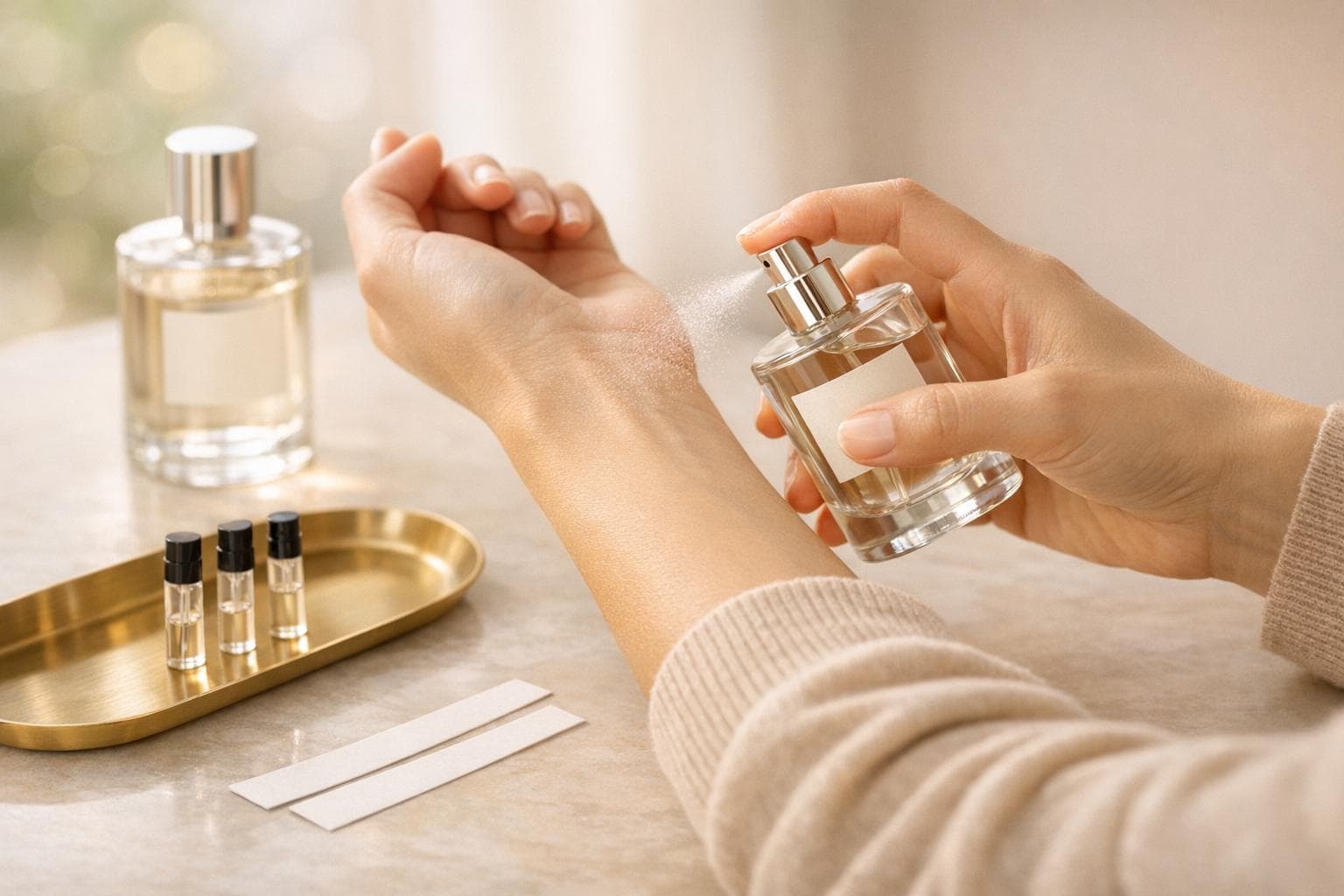
Vaše každodenní vůně je jako neviditelný doplněk – utváří to, jak vás vnímají ostatní, i to, jak se během dne cítíte vy sami. Zvolit tu pravou znamená zohlednit váš životní styl, prostředí i výdrž samotné vůně. Zde je stručný průvodce, jak začít:
- Typy vůní: Parfum vydrží nejdéle (8–12+ hodin), zatímco Eau de Toilette nabízí lehčí přítomnost (4–6 hodin). Pro každodenní nošení představuje Eau de Parfum vyvážený poměr mezi výdrží a jemností.
- Klíčové vlastnosti: Hledejte umírněnou projekci a měkkou siláž, aby vůně v sdílených prostorech, například v kanceláři, nepůsobila příliš intenzivně.
- Chemie pokožky: Vůně vždy testujte na vlastní kůži, protože tělesné oleje a pH mohou změnit to, jak se vůně rozvíjí i jak dlouho vydrží.
- Sezónní volby: Lehké citrusy nebo květinové tóny skvěle fungují v létě, zatímco hřejivé koření či dřevité vůně vyniknou v zimě.
- Tipy pro testování: Použijte malé vzorky nebo odstřiky, abyste zjistili, jak se vůně vyvíjí během celého dne, než investujete do plného flakonu.
Začněte tím, že porozumíte tomu, jak vůně reagují s vaší pokožkou a životním stylem. Testování vzorků je chytrý způsob, jak najít dokonalou shodu bez zbytečných výdajů.
Fragrance Concentration and How Long Scents Last
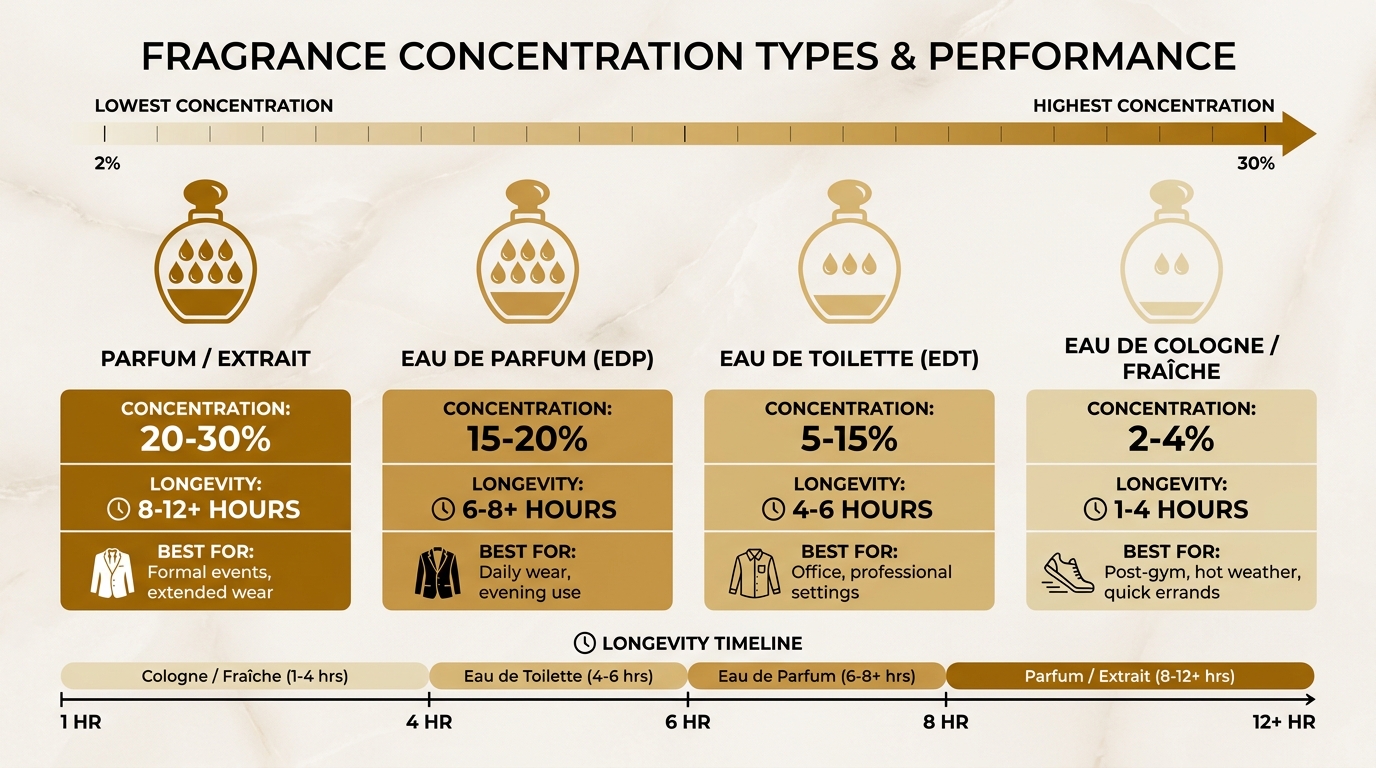
Typy koncentrace vůní: porovnání výdrže a nejvhodnějšího použití
Koncentrace vůně označuje poměr parfémového oleje k alkoholu ve vonné kompozici. Tento poměr určuje nejen to, jak se vůně v čase vyvíjí, ale také jak dlouho vydrží. Alkohol pomáhá vůni rozptýlit, takže je zřetelnější, zatímco oleje jí dodávají hloubku a setrvačnost. Vyšší koncentrace olejů má tendenci držet se blíže u pokožky, zatímco vyšší podíl alkoholu podporuje projekci.
Porozumění těmto rozdílům vám pomůže vybrat vůni, která ladí s vaším denním rytmem. Například Eau de Toilette může v první hodině působit živěji díky vyššímu obsahu alkoholu, zatímco Parfum přetrvává déle, ale s jemnějším dosahem. Roli hraje i typ pokožky: mastnější pokožka zadržuje vonné molekuly a uvolňuje je pomaleji, zatímco suchá pokožka může způsobit rychlejší odpařování vůně. To tvoří základ pro pochopení různých typů vůní a jejich jedinečných vlastností.
Různé typy vůní a jejich výdrž
Vůně se obvykle dělí do čtyř hlavních úrovní koncentrace, z nichž každá slouží jinému účelu. Výběr té správné závisí na vašem programu a prostředí. Parfum (nebo Extrait) s koncentrací olejů 20–30 % může vydržet 8–12+ hodin, což z něj činí ideální volbu pro formální příležitosti či dlouhé dny. Eau de Parfum (EDP) s koncentrací 15–20 % nabízí 6–8+ hodin nošení a často bývá oblíbenou volbou pro každodenní použití.
Eau de Toilette (EDT) s koncentrací 5–15 % působí svěžeji, obvykle však vydrží 4–6 hodin a často vyžaduje po poledni malé osvěžení. Nakonec Eau de Cologne a Eau Fraîche, které obsahují pouze 2–4 % aromatických složek, jsou lehké a prchavé, s výdrží jen 1–4 hodiny – ideální pro rychlé osvěžení nebo horké letní dny.
| Typ vůně | Koncentrace | Obvyklá výdrž | Nejvhodnější použití |
|---|---|---|---|
| Parfum / Extrait | 20–30 % | 8–12+ hodin | Formální události; dlouhé nošení |
| Eau de Parfum (EDP) | 15–20 % | 6–8+ hodin | Každodenní nošení; večerní použití |
| Eau de Toilette (EDT) | 5–15 % | 4–6 hodin | Kancelář; profesionální prostředí |
| Eau de Cologne / Fraîche | 2–4 % | 1–4 hodiny | Po cvičení; horké počasí; rychlé pochůzky |
Volba správné koncentrace pro váš každodenní režim
Díky těmto znalostem můžete zvolit koncentraci, která odpovídá vašim běžným denním aktivitám. Pro kancelářské prostředí se dobře hodí Eau de Toilette – nabízí lehkou přítomnost, která nepřebije sdílené prostory, jako jsou zasedací místnosti či veřejná doprava. Pokud potřebujete vůni, která vydrží celý den bez opakované aplikace, Eau de Parfum představuje dobrý kompromis mezi výdrží a projekcí.
Pro večerní akce nebo formální příležitosti poskytují Parfumy s bohatými základními tóny dlouhotrvající, elegantní vůni, která se postupně rozvíjí. Pokud máte suchou pokožku, aplikace tělového oleje nebo neparfémovaného krému před nanesením vůně pomůže vůni ukotvit a prodloužit její výdrž. Pochopením těchto úrovní koncentrace si můžete vytvořit vonný šatník, který doplní váš životní styl a povýší váš každodenní rituál.
Klíčové vlastnosti vůně pro každodenní nošení
Výběr vůně pro každý den spočívá v nalezení něčeho, co se přirozeně přizpůsobí různým situacím, aniž by na sebe strhávalo přílišnou pozornost. Ať už jste na schůzkách, dojíždíte nebo pracujete v open-space kanceláři, cílem je vůně, která podtrhne vaši přítomnost, aniž by přehlušila okolí. Jde o dokonalou rovnováhu – vůni, která vás doplňuje, ale nepůsobí vtíravě.
Skvělá každodenní vůně nabízí jemnou projekci a umírněnou siláž, čímž vytváří subtilní přítomnost spíše než výraznou stopu. Odborníci zdůrazňují, že ačkoli je výkon důležitý, měl by zůstat kultivovaný a nenápadný. Ideálně by vaše vůně měla být patrná jen v blízkosti, nikoli přes celou místnost.
Dalším klíčovým faktorem je dlouhotrvající nošení. Denní vůně by s vámi měla zůstat po celý den a vytrácet se elegantně, bez ostrého či nepříjemného doznívání. K tomu se obzvlášť hodí čisté a univerzální tóny, jako jsou svěží dřeva, jemné pižmo, něžné květiny a hladké citrusy. Tyto prvky splývají s pokožkou a přirozeně se rozvíjejí s postupem dne, takže zajišťují uhlazenou přítomnost od rána do večera.
Hlava, srdce a základ: jak se vůně během dne mění
Vůně jsou komponovány ve vrstvách, z nichž každá se postupně odhaluje. Představte si je jako příběh s jednotlivými kapitolami:
- Vrchní tóny jsou úvodním aktem – jasné a živé akordy, jako citron, bergamot nebo máta, které upoutají pozornost, ale rychle odezní.
- Srdce vůně se objevuje po 15–30 minutách a ukazuje hlavní osobnost kompozice prostřednictvím prvků, jako jsou květiny, koření nebo čaj.
- Základní tóny tvoří fundament a přetrvávají celé hodiny v hlubších odstínech, jako je cedrové dřevo, santalové dřevo, bílé pižmo nebo ambra.
Způsob, jakým se tyto vrstvy na vaší pokožce vyvíjejí, určuje, jak bude vůně skutečně působit během dne. Jak říká Amelia Thornton, Senior Fragrance Editor:
"Ohromující úvod nestačí, pokud se doznívání do druhé hodiny stane ostrým, příliš pudrovým nebo příliš přímočarým".
Pro každodenní nošení volte vůně, které plynule přecházejí od vrchních tónů k základu. Vyhněte se příliš sladkým nebo intenzivně kořenitým vůním, které mohou být zpočátku lákavé, ale později začnou působit přehnaně či těžce. Místo toho sáhněte po vyvážených profilech s jemnými květinami, čistým pižmem nebo subtilními dřevy, které si při rozvoji zachovávají své kouzlo. Jakmile je vývoj vůně harmonický, dalším krokem je pochopit, jak její síla a dosah zapadají do sdílených prostor.
Síla a dosah vůně ve sdílených prostorech
Vyvážená struktura tónů je jen částí rovnice; stejně důležité je zvládnout projekci a siláž vůně. Projekce označuje, jak daleko se vůně šíří od vašeho těla, zatímco siláž (francouzsky sillage) popisuje stopu, kterou za sebou zanechává. Pro každodenní použití, zejména ve sdílených prostorech, jako jsou kanceláře, je ideální umírněná projekce i siláž – dostatečná, aby si jí všiml někdo poblíž, ale ne tak silná, aby ovládla místnost.
Vůně s vysokou intenzitou, často označované jako "beast mode", mohou v uzavřených prostorech časem působit přemrštěně. To, co začíná příjemně, se může odpoledne změnit v přehlušující přítomnost, zejména ve špatně větraných místnostech. Z tohoto důvodu jsou v profesionálním prostředí často vhodnější a ohleduplnější vůně, které se drží blízko pokožky a mají nízkou siláž.
Chcete-li si v těsné blízkosti zachovat vytříbenost, naneste na čistou pokožku pouze jedno stříknutí. Tím zajistíte, že se vůně bude rozvíjet přirozeně a nebude se vrstvit do přílišné intenzity. Budete-li se těchto principů držet, budete dobře připraveni zvolit vůni, která působí nenuceně a vhodně pro každý den.
Chemie těla a testování na pokožce
Po nahlédnutí do kompozice a projekce vůní je zásadní zvážit, jak chemie vaší pokožky vůni personalizuje. Stejná vůně může na každém člověku vonět zcela odlišně. Faktory jako typ pokožky, pH, přirozené oleje, strava a tělesná teplota ovlivňují, jak vonné molekuly reagují s vaší kůží. Právě proto je testování vůně na vlastní pokožce nezbytným krokem před nákupem.
Jak chemie těla ovlivňuje vůni
Jedinečná chemie vaší pokožky vůni nejen drží – ona ji proměňuje. Některé tóny mohou vystoupit výrazněji, zatímco jiné ustoupí do pozadí. Například mastnější pokožka má tendenci udržet vůni déle a může zvýraznit živé vrchní tóny, jako jsou citrusy nebo zelené akordy. Naopak suchá pokožka parfémové oleje vstřebává rychleji, což často vede k rychlejšímu vyprchání. Bohatší základní tóny – dřevité, ambrové, vanilkové či kořenité – jsou pro suchou pokožku vhodnější, protože poskytují hloubku potřebnou pro výdrž. Smíšená pokožka představuje kombinaci: mastnější místa, například pulzní body, mohou vůni držet déle, zatímco sušší oblasti ji nechají rychleji odeznít. U citlivé pokožky může být problémem podráždění alkoholem nebo syntetickými složkami, a proto stojí za zvážení hypoalergenní možnosti nebo alternativní způsoby aplikace, například na oblečení či vlasy.
Jak správně testovat vůně
Pochopení vlivu tělesné chemie na vůni podtrhuje důležitost správného testování. Papírové proužky vám ukážou profil vůně, ale teprve nošení odhalí, jak reaguje s vaší pokožkou. Abyste plně poznali její vývoj, noste vůni během celého dne a sledujte, jak reaguje na tělesné teplo, pohyb a okolní faktory, jako je vlhkost.
Začněte vytvořením neutrálního základu: místo, kde budete vůni testovat, omyjte neparfémovaným mýdlem, abyste odstranili přetrvávající pachy. Pokud máte suchou pokožku, naneste tenkou vrstvu neparfémovaného hydratačního krému nebo vazelíny, aby se vůně lépe zachytila. Nastříkejte vůni na pulzní body, jako jsou zápěstí nebo vnitřní strany loktů, kde tělesné teplo pomáhá přirozenému rozvoji vůně. Vyhněte se tření zápěstí o sebe, protože tím můžete narušit vonné molekuly a změnit vývoj vůně.
Testujte najednou maximálně 2–3 vůně, abyste nepřetížili své smysly. Pokud se váš nos unaví, osvěžte jej přivoněním ke kávovým zrnům nebo vyjděte ven na čerstvý vzduch. Všímejte si, jak se vůně v čase mění – zhodnoťte její charakter po 30 minutách a znovu po několika hodinách.
Používání vzorků nebo odstřiků je chytrý způsob, jak objevovat vůně bez nutnosti kupovat celý flakon. Tyto menší formáty, často dostupné ve velikostech 2 ml, 5 ml a 8 ml, a u většiny parfémů i jako dekant o objemu 30 ml, vám umožní zažít vůni během několika dní. Platformy jako Scento nabízejí autentické vzorky designových vůní, díky čemuž je snazší rozhodnout, zda je plný flakon tou správnou volbou právě pro vás.
Váš osobní odborník na parfémy už čeká
Vyplňte náš rychlý vonný kvíz a objevte autentické designové a nišové parfémy vybrané podle vašeho vkusu – prozkoumejte je jako 2, 5, 8 a 30 ml dekanty a vzorky, abyste si každý mohli vyzkoušet, než se rozhodnete pro celou lahvičku.
Najděte svou vůniSladění stylů vůní s vašimi preferencemi a životním stylem
Vaše okolí i osobní styl mohou mnoho napovědět o vůních, které s vámi budou rezonovat. Pokud například váš šatník směřuje k čistému, minimalistickému designu, možná vás budou přitahovat svěží citrusové nebo aldehydické vůně. Naopak bohémská estetika často krásně ladí se zemitými tóny, jako je pačuli nebo hřejivé santalové dřevo. Zamyslete se nad vůněmi, ke kterým přirozeně tíhnete – tyto preference vám mohou pomoci objevit vonné rodiny, které budou působit instinktivně, nikoli nepatřičně. Toto propojení slouží jako základ pro objevování ustálených kategorií vůní.
Vonné rodiny: najděte to, co vám sedí
Vůně se obvykle řadí do dvou širokých skupin: svěží (včetně citrusových, květinových a aromatických tónů) a hřejivé (například fougère, orientální a kožené), přičemž dřevité a chyprové rodiny často tvoří most mezi těmito styly. Joan Tanis, National Training Director ve společnosti Maison Francis Kurkdjian, vysvětluje:
"Ve světě vůní jsou olfaktorické rodiny způsobem, jak rozdělit a klasifikovat, jak parfém voní, nikoli co obsahuje".
Vaše každodenní rutina může rovněž vést vaše volby. Profesionální prostředí si například často žádá subtilní vůně držící se blízko pokožky, jako je vetiver nebo čisté pižmo, které nepřebijí sdílené prostory. Naopak kreativní či venkovní prostředí může lépe snést jasnější, dynamičtější profily s mátou nebo zelenými tóny. Jakmile pochopíte, která vonná rodina odpovídá vašim preferencím, můžete výběr zpřesnit podle toho, jak vůně funguje v různých situacích.
Vonné profily, které fungují v různých prostředích
Jakmile určíte své preference, zaměřte se na vůně, které plynule přecházejí mezi různými situacemi. Univerzální vůně mají často společné klíčové vlastnosti: jsou lehké, svěží a drží se spíše blízko pokožky. Profily jako citrusově-dřevitý nebo aromaticky-svěží vyvažují jas s ukotvenou, hřejivou přítomností.
Například citrusově-dřevité kombinace – s tóny bergamotu, citronu, cedrového a santalového dřeva – nabízejí čistou, povzbuzující energii, která funguje skvěle ráno a zároveň si během dne udržuje stabilní přítomnost. Jemné květiny spojené s čistým pižmem dodávají uhlazený, nenápadný dojem vhodný pro profesionální prostředí. Aromaticky-svěží vůně s levandulí, šalvějí či mátou zase evokují svěžest "právě po sprše", díky čemuž se hodí téměř pro každou příležitost.
Volbu může ovlivnit i denní doba. Jasné citrusy nebo lehké dřevité tóny dokážou dodat energii ránu; neutrální čajové tóny či jemné koření jsou ideální pro polední soustředění, zatímco hřejivé ambry nebo krémové pižmo vytvoří uklidňující závěr dne. Pokud mezi vůněmi přecházíte, neparfémovaný ubrousek nebo vlhký hadřík pomůže odstranit zbytky vůní a zabránit jejich nežádoucímu střetu.
Testování je klíčové – použití discovery setů nebo odstřiků vám umožní zažít vůni během několika dní. Získáte tak možnost zjistit, jak se prolíná s vaším denním režimem, než se rozhodnete pro plný flakon.
Sezónní změny a rotace vůní
Sezónní proměny teploty a vlhkosti mohou výrazně ovlivnit to, jak se vůně na vaší pokožce chovají. Teplé počasí urychluje odpařování vonných molekul, což vede k intenzivnějšímu úvodu, ale kratší životnosti vůně. Naopak nižší teploty tento proces zpomalují, takže vrchní a střední tóny přetrvávají déle, i když vůně nemusí projektovat tak daleko. Suchý zimní vzduch může navíc pokožce odebírat přirozenou vlhkost, což způsobuje rychlejší vyprchání vůně, pokud ji nevrstvíte přes kvalitní hydratační krém. Pochopení těchto dynamik pomáhá vybírat vůně, které doplní každé roční období.
Sladění vůní s jednotlivými ročními obdobími
V létě vynikají lehčí vůně, jako jsou citrusy, neroli nebo vzdušné květiny, protože působí osvěžujícím dojmem a v horku nejsou příliš intenzivní. Tóny bergamotu a citronu jsou v teple obzvlášť povzbuzující. Naopak chladnější měsíce jsou ideální pro bohatší a intenzivnější profily. Představte si hřejivé koření, jako je skořice, hluboké pryskyřice typu ambra nebo gurmánské tóny, například vanilka a čokoláda, které se v chladném vzduchu krásně prosadí. Vysoká vlhkost může zesílit rozptyl vůně, ale těžší tóny mohou v letní dusnosti působit ulpívavě.
Roli hraje také koncentrace vůně. Eau de Toilette (EDT) se dobře hodí na léto, protože nabízí lehčí siláž, která nepřebíjí, zatímco Eau de Parfum (EDP) nebo Extrait de Parfum fungují lépe v sušších zimních podmínkách. Některé tóny, jako pižmo, ambra, levandule a cedrové dřevo, jsou natolik univerzální, že dokážou přecházet mezi sezónami, a stávají se tak skvělými pilíři celoroční kolekce.
Budování malé kolekce vůní
S ohledem na tyto sezónní nuance dává smysl vytvořit kompaktní, obměňovanou kolekci vůní. Výběr 4–6 vůní stačí k pokrytí celého roku bez nadměrného nakupování nebo plýtvání produkty. Sezónní rotace vůní také předchází olfaktorické únavě, kdy dlouhodobé vystavení snižuje vaši schopnost vůni vnímat. Discovery sety jsou skvělým způsobem, jak vůně otestovat a zhodnotit jejich výkon před nákupem celého flakonu. Odstřiky o objemu 2 ml nebo 8 ml vám umožní zjistit, jak vůně reaguje na konkrétní počasí. Například "test lednice" může pomoci simulovat zimní výkon – jednoduše nastříkejte vůni na blotter a na krátkou dobu jej vložte do lednice, abyste sledovali, jak se vůně vyvíjí v chladnějších podmínkách.
V zimě může aplikace vůně na vlněné šály nebo svetry pomoci, aby vůně vydržela déle. Chcete-li svou kolekci chránit, skladujte flakony nastojato na chladném, tmavém místě mimo vlhkost. Odstřiky od Scento, zakoupené postupně po jednotlivých parfémech, vám umožní zažít, jak se vůně chová napříč sezónami, a pomohou rozhodnout, zda si zaslouží stálé místo ve vaší rotaci.
Vyzkoušení vůní před nákupem plných flakonů
U vůní hraje chemie vaší pokožky obrovskou roli v tom, jak se vůně projeví. Proto je testování vůně na kůži před koupí plného flakonu tak důležité – zejména když celé flakony mohou stát stovky eur. Vzorkování vám dává možnost zažít, jak vůně reaguje s vaší pokožkou, místo abyste se spoléhali na rychlé přivonění k papírovému proužku. Jakmile se vůně na pokožce zahřeje a propojí s vašimi přirozenými oleji, může se výrazně proměnit. To, co ve flakonu voní jasně a svěže, se může po několika hodinách vyvinout v něco zcela jiného.
Testování vám také umožní zažít celou cestu vůně: vrchní tóny, které vystoupí během prvních 5–10 minut, tóny srdce, které se rozvinou po 15–20 minutách, a základní tóny, které se na pokožce usadí po 1–2 hodinách. Tento vývoj odhalí skutečný charakter vůně i to, jak se v čase nosí.
Proč dávají vzorky a odstřiky smysl
Menší formáty, jako jsou 2ml, 5ml nebo 8ml odstřiky, představují praktický a cenově vstřícný způsob, jak vůně vyzkoušet. Tyto velikosti poskytují dostatek produktu na několik dní testování bez vysoké ceny plného flakonu. Například 8ml odstřik nabízí přibližně 120 stříknutí – dost na to, abyste vůni vyzkoušeli v různých prostředích a situacích. Toto delší zkušební období vám pomůže zjistit, zda vůně vydrží náročný den, nebo zda mizí příliš rychle na to, aby stála za investici.
"Skutečná síla vzorkování spočívá v pochopení toho, jak vůně v čase reaguje s vaší jedinečnou tělesnou chemií, nikoli jen v zachycení prvního stříknutí." — Be Frsh
Odstřiky vám také pomáhají vyhnout se smyslové únavě, protože vám dávají čas vůni správně zhodnotit. Můžete ji testovat při různých příležitostech a určit, zda zapadá do vašeho životního stylu, nebo zda její počáteční kouzlo po opakovaném nošení slábne. Platformy jako Scento nabízejí odstřiky v různých velikostech – 2 ml, 5 ml a 8 ml, a u většiny parfémů i dekant o objemu 30 ml – z více než 1 000 designových vůní. Díky tomu je snadné prozkoumat širokou paletu vůní bez finančního rizika spojeného s nákupem plného flakonu. Discovery sety jsou dalším skvělým způsobem, jak zpřesnit své preference a získat jistotu při výběru.
Discovery sety: nástroj pro nalezení vašeho stylu
Discovery sety jsou ideální pro objevování více vůní najednou a pomáhají vám rozpoznat tóny a profily, které vám sedí nejlépe. Místo toho, abyste zůstávali u podobných vůní, zvolte rozmanitou kombinaci zastupující různé vonné rodiny – například svěží citrusovou, hřejivě dřevitou a květinovou. Omezení testování na tři nebo čtyři vůně najednou pomůže zabránit zahlcení smyslů.
Abyste z testování vytěžili maximum, dělejte si poznámky v intervalech, například po 30 minutách, 2 hodinách a 6 hodinách. Používejte jednoduchá označení jako "kořenitá", "pudrová" nebo "čistá", abyste popsali, jak se vůně vyvíjí. Tato metoda usnadňuje sledování toho, které tóny přetrvávají, které mizí příliš rychle a které s vámi skutečně rezonují. Testování v neutrálním, dobře větraném prostoru – bez rušivých vlivů, jako jsou vůně jídla nebo svíček – zajistí, že hodnotíte vůni samu o sobě.
Ve dnech testování připravte pokožku omytím neparfémovaným mýdlem a vynechejte parfémované tělové krémy či deodoranty, které by mohly vůni ovlivnit. Odstřiky Scento vám umožní vybudovat vonný šatník sladěný s vaším stylem, každodenními potřebami i sezónními preferencemi, parfém po parfému.
Závěr
Výběr vůně pro každý den je jednoduchý, jakmile porozumíte základům. Faktory jako koncentrace, chemie vaší pokožky a správné testování ovlivňují, jak se vůně bude projevovat. Pamatujte, že parfém se odvíjí ve vrstvách, takže první stříknutí je teprve začátkem jeho příběhu.
Při výběru vůně přemýšlejte o svém životním stylu a prostředích, v nichž trávíte čas. Možná tíhnete k čistým citrusovým tónům do práce, bohatým dřevitým akordům na večer nebo přizpůsobivým unisex variantám, které vás s lehkostí provedou od rána do noci. Nakonec je tou pravou vůní ta, která působí jako vy.
Vzorkování je chytrý způsob, jak experimentovat, než se rozhodnete pro plný flakon. Odstřiky jsou skvělou možností, jak vyzkoušet, jak se vůně nosí v různých situacích. Platformy jako Scento nabízejí přístup k více než 1 000 designovým vůním, takže je snazší a dostupnější vybudovat si ideální vonný šatník bez nutnosti hned investovat do flakonu za 300+ €.
Dopřejte si čas. Otestujte několik možností, sledujte, jak se na vaší pokožce vyvíjejí, a všímejte si těch, po kterých instinktivně saháte znovu a znovu. Postupem času získáte jistotu ve svých volbách a jasnější představu o tom, co vám sedí nejlépe. Užijte si cestu za vůní, která dokonale doplní váš každodenní život.
Často kladené otázky
Kolik stříknutí je „bezpečných do kanceláře“?
Vůně "bezpečná do kanceláře" je především o jemnosti a ohleduplnosti k lidem kolem vás. Obvykle postačí 2 až 4 stříknutí, v závislosti na síle vůně a její koncentraci. Cílem je vytvořit osobní auru, která podpoří vaše sebevědomí, ale zůstane diskrétní a nevtíravá. Vaše vůně tak podtrhne vaši přítomnost, aniž by ovládla sdílené prostory nebo přehlušila kolegy v těsné blízkosti.
Kam parfém nanášet, aby vydržel déle?
Aby parfém přetrval po celý den, naneste jej na místa těla, která přirozeně vyzařují teplo. Ideální jsou klíčové pulzní body, jako jsou zápěstí, krk a oblast za ušima. Tato místa uvolňují teplo, které pomáhá zesílit a udržet přítomnost vůně.
Jak poznám, zda je vůně skutečně „moje“, než koupím celý flakon?
Chcete-li zjistit, zda vám vůně sedí, začněte malým vzorkem a naneste jej přímo na pokožku. Dejte jí 15–30 minut, aby se plně rozvinula, protože právě tehdy se odhalují její vrstvy: vrchní tóny vytvářejí první dojem, tóny srdce ukazují hlavní osobnost vůně a základní tóny přinášejí dlouhotrvající závěr. Díky tomuto procesu můžete posoudit, zda vůně odpovídá vašemu stylu, ještě před investicí do plného flakonu.

