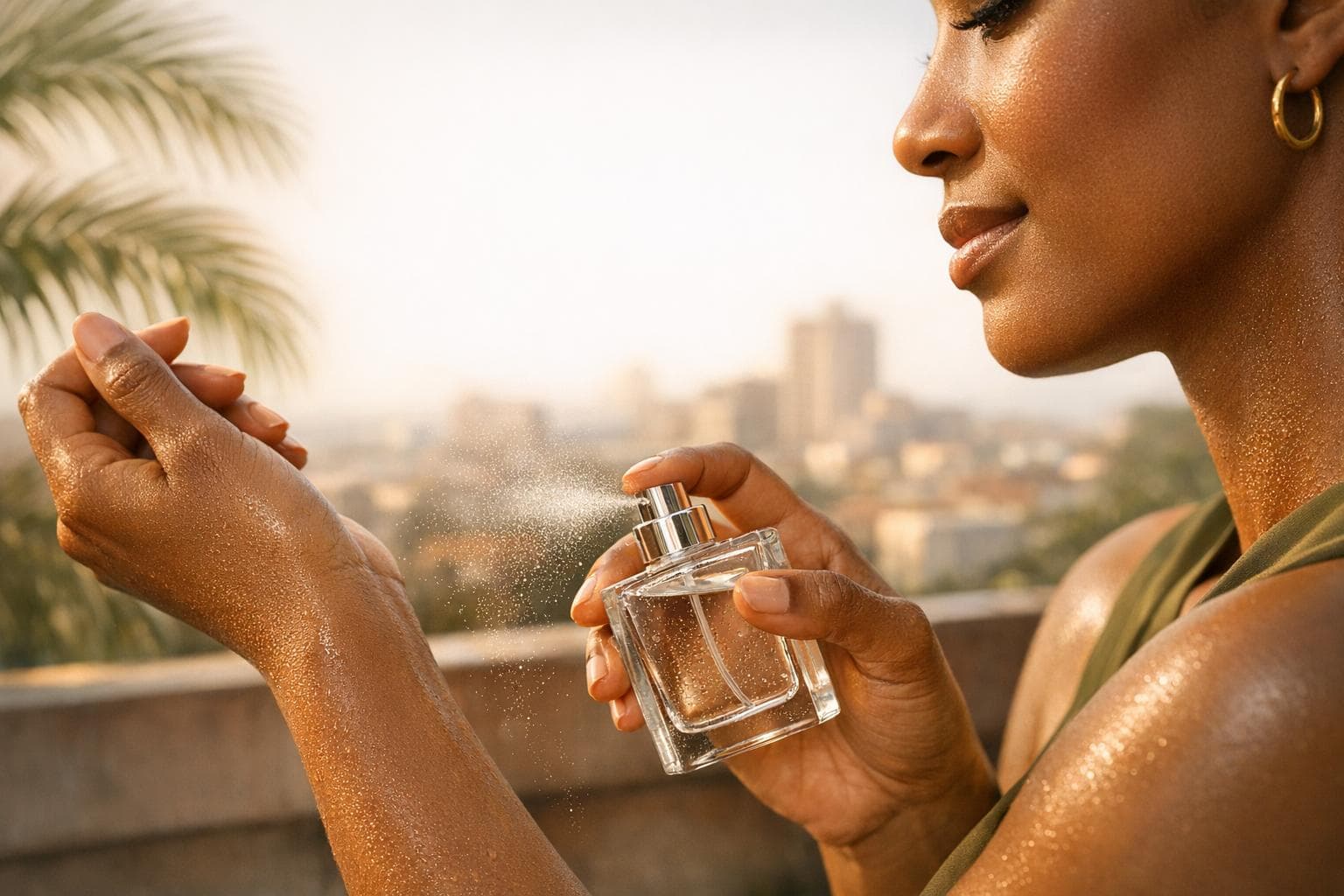
Rozmanité africké klima - od suchých pouští po vlhké tropické oblasti - výrazně ovlivňuje, jak vůně působí. Horko, vlhkost i individuální chemie pokožky mají vliv na to, jak se vůně odpařují, vyzařují a jak dlouho přetrvávají. Zde je to, co byste měli vědět:
- Horké, suché klima (např. Sahara): Vůně se odpařují rychleji. Sáhněte po olejových parfémech nebo po variantách s vyšší koncentrací, jako je Eau de Parfum (15–20 %) nebo Extrait de Parfum (20–40 %). Těžké základní tóny, například santalové dřevo, vetiver nebo oud, vydrží v aridních podmínkách déle.
- Vlhké, tropické klima (např. západní Afrika): Vlhký vzduch zesiluje intenzitu vůně, takže vhodnější jsou lehčí, osvěžující tóny, jako citrusy, akvatické akordy nebo zelené květiny. Aplikace vůně na oděv může pomoci vyvážit její projekci.
- Chemie pokožky: Teplejší oblasti často vedou ke zvýšenému pocení, což mění způsob, jakým se vůně rozvíjí. Olejové vůně jsou oblíbené pro svou delší výdrž.
Testování vůní ve vašem místním klimatu před nákupem plných flakonů zajistí, že se vůně bude chovat podle očekávání. Přizpůsobení výběru vůně vašemu prostředí zvyšuje její výdrž i požitek z nošení.
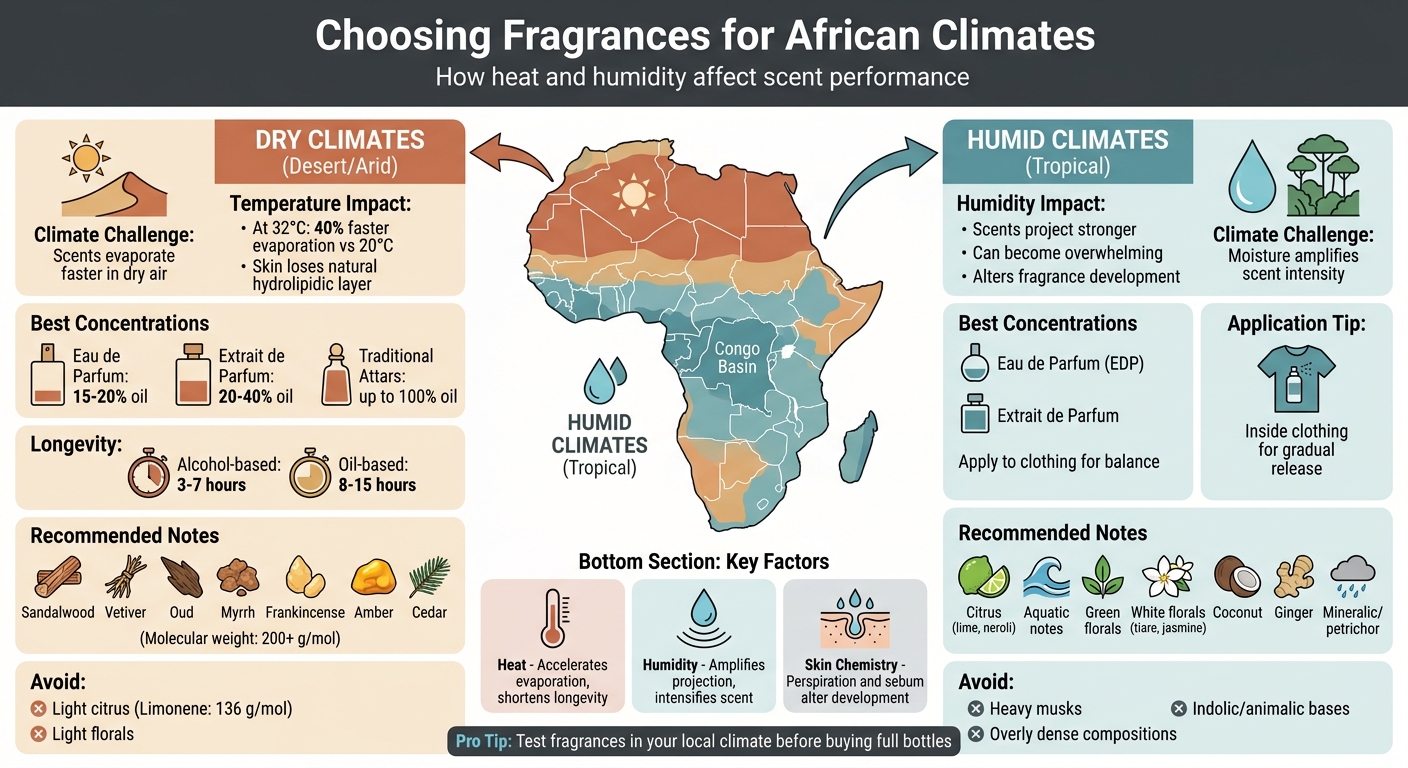
Průvodce výběrem vůní pro africké klima: suché vs. vlhké oblasti
Jak africké klima ovlivňuje výkon vůní
Rozmanité africké klima představuje pro působení vůní jedinečné výzvy. Faktory jako horko, vlhkost a individuální chemie pokožky výrazně ovlivňují, jak se vůně během dne vyvíjí, jak se šíří a jak dlouho přetrvává. Porozumění těmto environmentálním i osobním dynamikám je zásadní při výběru vůní, které odpovídají místním podmínkám. Pojďme si rozebrat, jak tyto prvky ovlivňují výkon vůně.
Horko a odpařování: vliv vysokých teplot
V teplejším klimatu mají vůně tendenci odpařovat se rychleji. Vysoké teploty urychlují molekulární odpařování, což může zkrátit dobu nošení vůně a snížit její výdrž. Některé značky na to reagují tím, že do svých formulací začaly začleňovat chladivé složky, například mentol, s cílem zpomalit míru odpařování.
"Vysoká teplota a vlhkost znamenají v osobní i domácí péči, že dlouhá výdrž vůně je žádoucí a zároveň představuje významnou výzvu." — Cosmetics Business
Tato výzva je obzvlášť relevantní v Africe, kde přibližně 93 % prodejů vůní pochází z neluxusního segmentu. Cenově dostupné možnosti s dlouhotrvajícím výkonem jsou velmi žádané, zejména v regionech, kde horko představuje stálou výzvu.
Horko však není jediným faktorem - významný vliv má také vlhkost.
Role vlhkosti při zesilování vůní
V tropickém klimatu může vlhkost zesílit projekci vůně. Vlhkost ve vzduchu pomáhá nést molekuly vůně, díky čemuž se vůně často jeví silnější a výraznější. Výsledkem může být nápadnější aroma, zejména u vrchních a srdečních tónů. Kombinované účinky horka a vlhkosti však někdy mohou změnit způsob, jakým se vůně v čase rozvíjí. Pro zachování rovnováhy mnoho spotřebitelů v těchto regionech preferuje formulace navržené tak, aby tuto zesílenou intenzitu umírnily. Testování vůní v místních podmínkách je praktický způsob, jak zajistit, že si vůně zachová zamýšlený profil.
Environmentální faktory, jako je horko a vlhkost, jsou jen částí celého příběhu. Významnou roli ve výkonu vůně hraje také chemie pokožky.
Chemie pokožky a regionální rozdíly
Chemie pokožky se napříč klimaty výrazně liší a tyto rozdíly mohou ovlivnit, jak vůně interaguje s pokožkou. V teplejších regionech může zvýšené pocení a vyšší produkce kožního mazu změnit způsob, jakým se vůně rozvíjí a jak dlouho vydrží. To vedlo k rostoucí oblibě olejových vůní, o nichž se mnozí spotřebitelé domnívají, že nabízejí lepší výdrž ve srovnání s tradičními spreji na bázi alkoholu.
Místní parfuméři navíc vytvářejí vůně, které odrážejí regionální vlivy. Začleňováním původních ingrediencí, jako je nigerijský zázvor a černý pepř z Pobřeží slonoviny, tvoří vůně, které nejen dobře fungují v místním klimatu, ale také rezonují s kulturní identitou a preferencemi.
Každý z těchto faktorů - horko, vlhkost a chemie pokožky - hraje zásadní roli při utváření výkonu vůní napříč rozmanitými klimaty Afriky.
Výběr vůní pro suché klima: severní Afrika a aridní zóny
Suché, aridní oblasti, jako je Sahara, představují pro milovníky vůní jedinečné výzvy. Intenzivní horko a nízká vlhkost v těchto oblastech mění chování vůní a vyžadují pečlivé zvážení při výběru parfému. Když porozumíte tomu, jak tyto podmínky ovlivňují výkon vůní, můžete si vybrat formulace a tóny, které v takovém klimatu skutečně vyniknou.
Proč vůně v suchém vzduchu mizí rychleji
Hlavním důvodem, proč vůně v aridním klimatu nevydrží dlouho, je nedostatek vlhkosti. V suchém vzduchu pokožka ztrácí svou přirozenou hydrolipidickou vrstvu, která slouží jako bariéra uzamykající vlhkost - a také vůni. Bez této vrstvy se molekuly vůně odpařují mnohem rychleji.
Velkou roli hraje také teplota. Při 32 °C se molekuly parfému odpařují přibližně o 40 % rychleji než při 20 °C. Toto rychlé odpařování nejvíce dopadá na lehčí molekuly, například citrusové tóny. Například limonen, klíčová složka citrusových vůní, má molekulovou hmotnost pouhých 136 g/mol a odpařuje se podstatně rychleji než těžší molekuly, jaké najdeme například v santalovém dřevě. Zatímco horko zpočátku zesílí projekci vůně, zkracuje její celkovou výdrž.
Nejlepší koncentrace a tóny pro aridní klima
Abyste těmto výzvám čelili, volte vůně s vyšší koncentrací olejů a těžší molekulární strukturou. Eau de Parfum (15–20 % oleje) a Extrait de Parfum (20–40 % oleje) si v suchém horku vedou lépe než lehčí formulace, jako je Eau de Toilette. Vyšší obsah oleje lépe přilne k pokožce a zpomaluje odpařování.
Tradiční arabské attary, které mohou obsahovat až 100 % oleje, jsou vynikající volbou. Na rozdíl od parfémů na bázi alkoholu se tyto olejové vůně odpařují 2–3krát pomaleji. Spojují se s přirozenými oleji pokožky a postupně uvolňují své aroma po dobu 8–15 hodin, ve srovnání s 3–7 hodinami typickými pro vůně na bázi alkoholu.
Při výběru tónů se zaměřte na základní tóny s vysokou molekulovou hmotností (nad 200 g/mol). Obzvlášť účinné jsou ingredience jako vetiver, cedr, santalové dřevo a pryskyřice, například myrha a kadidlo. Tyto těžší tóny odolávají rychlému odpařování a udržují svou přítomnost i v extrémním horku, zatímco lehčí květiny a citrusy rychle mizí.
Severoafrické preference vůní
Vonné tradice severní Afriky se již dlouho přizpůsobují drsnému klimatu regionu. Ingredience jako myrha, kadidlo, oud, ambra a koření patří k základům nejen díky svému kulturnímu významu, ale také díky schopnosti vydržet intenzivní suché horko. Tyto pryskyřičné a kořenité tóny mají molekulární hustotu potřebnou k tomu, aby obstály tam, kde by lehčí květinové vůně evropského stylu selhaly.
Charakteristické vůně regionu často obsahují šafrán, kmín, oud a jantarovou pryskyřici, někdy doplněné osvěžující mátou. V severní Nigérii vytváří humrah - směs vyzrálých olejů, jako je santalové dřevo, pižmo, ambra a hřebíček - dlouhotrvající vůně dokonale vhodné pro aridní podmínky. Tyto tradiční formulace ukazují, jak se místní odbornost potkává s moderní vědou o vůních, a dokazují, že těžší, pryskyřičné tóny jsou klíčem k výdrži při stoupajících teplotách a nízké vlhkosti.
Výběr vůní pro vlhké a tropické oblasti
Výběr správné vůně pro vlhké klima, jaké panuje například v západní a střední Africe, vyžaduje citlivé porozumění tomu, jak horko a vlhkost ovlivňují výkon vůně. Vysoká vlhkost může zesilovat určité tóny, zejména ty těžší, takže na pokožce působí výrazněji - a někdy až přehnaně. Když tyto faktory zohledníte, můžete najít vůně, které v tropickém počasí zůstávají vyvážené a příjemné.
Jak zabránit příliš dominantním vůním ve vlhkém klimatu
Victoria, zakladatelka a parfémová kritička z Bois de Jasmin, se podělila o svou zkušenost s výkonem vůní v teplém počasí:
"Seville a l’aube... její indolický, animální základ na mé pokožce v teple exploduje".
Ve vlhkých podmínkách se vůně s indolickým nebo animálním základem mohou rychle stát příliš intenzivními. Těžké, pižmové kompozice bývají pro takové klima často příliš výrazné, a proto jsou ideální lehčí, osvěžující prvky. Vůně s bílými květinami, jako je tiare, ibišek nebo jasmín, se nádherně snoubí s chladivými akcenty, například zázvorem, limetkou, kokosem nebo akvatickými tóny. Zelené a minerální doteky, evokující například "dešťovou vodu" nebo "petrichor", také dobře fungují při vytváření tropické atmosféry.
Nejlepší koncentrace vůní pro vlhké regiony
Pokud jde o koncentraci, vyšší varianty, jako je Eau de Parfum (EDP) nebo Extrait de Parfum, často v tropickém klimatu fungují lépe. Tyto bohatší formulace přetrvávají déle i ve vlhkých podmínkách. Aplikace vůně na vnitřní stranu oděvu, například na živůtek, může pomoci s postupným rozvojem a zabránit příliš rychlému vyprchání vůně. Jeden uživatel Bois de Jasmin sdílel:
"La Chasse [aux Papillons] se v horku nosí nádherně... Krásně rozkvétá, aniž by byla kdy zahlcující, a parfém na látce drží vůni, takže jen tak nezmizí".
Volba správné koncentrace a metody aplikace zajistí, že vůně zůstane znatelná, ale nikdy nebude přehnaná.
Místní ingredience a regionální vonné zvyklosti
Subsaharská Afrika má bohatou tradici používání místních ingrediencí při tvorbě vůní. Přírodní nosiče, jako je bambucké máslo a kokosový olej, se často kombinují s aromatickými pryskyřicemi, aby vznikly vůně, které ve vlhkých podmínkách dobře fungují. Tento přístup modernizují současní afričtí parfuméři, kteří propojují původní ingredience s nejmodernějšími technikami.
Například nigerijský luxusní prodejce Seinde Signature, založený Seinde Olusholou, se rozšířil na sedm prodejen po celé zemi a v hotelu Oriental v Lagosu představuje archiv více než 1 300 vůní od více než 35 značek. Olushola zdůraznil osobité preference nigerijských spotřebitelů:
"Afričané, zejména Nigerijci, se rádi hodně ukazují. Jsme bujarý národ a to se promítá do našeho oblékání, účesů i toho, jak voníme".
V Botswaně začleňuje White Label Fragrances zimbabwský tabák do svých vonných olejů a vytváří tak jedinečné regionální profily. Zakladatel Thamani Thothe poznamenal:
"Byznys i zákazníci tu jsou a pro niche vůně, jako jsou ty naše, existuje skutečný trh, zejména v rámci kontinentu".
Tyto příklady ilustrují, jak místní ingredience a kulturní preference formují svět vůní v tropických regionech a nabízejí vůně, které hluboce rezonují se svým prostředím i dědictvím.
Váš osobní odborník na parfémy už čeká
Vyplňte náš rychlý vonný kvíz a objevte autentické designové a nišové parfémy vybrané podle vašeho vkusu – prozkoumejte je jako 2–8ml dekanty a vzorky, abyste si každý mohli vyzkoušet, než se rozhodnete pro celou lahvičku.
Najděte svou vůniJak vybrat správnou vůni pro vaše klima
Pochopení toho, jak klima ovlivňuje výkon vůně, vám pomůže činit promyšlenější rozhodnutí při výběru vůní pro místní podmínky.
Vyhodnocení vašeho klimatu a potřeb vůně
Klima hraje zásadní roli v tom, jak se vůně chová. Například horko urychluje odpařování, což může oslabit intenzitu vůně. To platí zejména pro vůně vyrobené z přírodních ingrediencí. Výrazný příklad přichází od sběračů jasmínu v egyptské Shubra Balula. V červenci 2025 pracovníci jako Wael al — Sayed zaznamenali prudký pokles denní sklizně - ze šesti kilogramů na pouhé dva nebo tři - v důsledku extrémního horka. Badr Atef, manažer společnosti A Fakhry & Co, upozornil na znepokojivý trend: rostoucí teploty (zvyšující se o 0,38 °C za desetiletí) snižují koncentraci oleje a intenzitu vůně jasmínu používaného špičkovými parfémovými značkami.
Vlhkost přidává další vrstvu, kterou je třeba zohlednit. V pobřežních nebo tropických oblastech vlhkost ve vzduchu zesiluje intenzitu vůně, takže vhodnější jsou lehčí kompozice. Naopak v suchém, aridním klimatu vůně rychleji mizí, což často vyžaduje bohatší koncentrace nebo častější aplikaci.
Vyhodnocením místního klimatu můžete lépe přizpůsobit svůj výběr vůní tak, aby působily tak, jak bylo zamýšleno.
Sladění koncentrací a tónů s vaším klimatem
Jakmile porozumíte svému klimatu, můžete doladit jak intenzitu, tak kompozici svých vůní. Pro vlhké, tropické oblasti volte Eau de Parfum (EDP) nebo Extrait de Parfum. Tyto vyšší koncentrace obsahují více oleje, což jim pomáhá vydržet déle i v prostředí s vysokou vlhkostí.
Záleží také na tónech, které si vyberete. Ve vlhkých pobřežních oblastech sáhněte po vůních s minerálními nebo citrusovými prvky, jako je mořská sůl, limetka, neroli nebo fíkový list. Tyto tóny harmonicky spolupracují s vánkem a vlhkostí a nabízejí rafinovanou, avšak subtilní přítomnost. Lehké květinové tóny, například ylang-ylang nebo neroli, v těchto podmínkách také vyniknou, aniž by zahltily smysly.
Testování vůní před nákupem plných flakonů
Protože klima může dramaticky změnit způsob, jakým se vůně chová, je rozumné ji před nákupem plného flakonu otestovat. Vůně, které se daří v mírném evropském klimatu, se může v horku Lagosu nebo v suchu Káhiry chovat nepředvídatelně.
Abyste se vyhnuli nákladným omylům, zvažte nejprve menší velikosti. Scento nabízí 8ml decanty, které vám umožní otestovat autentické designérské vůně ve vašem konkrétním prostředí. Tyto menší formáty - dostupné ve velikostech 0,75 ml, 2 ml nebo 8 ml - vám umožní během několika dnů či týdnů zažít, jak vůně interaguje s vaším klimatem, chemií pokožky a životním stylem. Namísto investice 300 € do plného flakonu, který vám nemusí sedět, vám tento přístup pomůže vybudovat kolekci vůní dokonale vyladěnou podle vašich potřeb.
Jak klima formuje regionální vonné praktiky
Rozmanité africké klima hluboce ovlivnilo pestré vonné tradice kontinentu. Jedinečné prostředí každého regionu určuje, kterým ingrediencím se daří a jak jsou začleňovány do místních vonných zvyklostí.
Severní Afrika: výrazná a dlouhotrvající aromata
Severní Afrika, dominovaná spalující Saharou, zažívá jedny z nejteplejších a nejsušších podmínek na světě. Toto náročné klima vedlo k preferenci vůní s robustními, vytrvalými ingrediencemi, které dokážou odolat intenzivnímu horku a rychlému odpařování.
Vonné tradice se zde často soustředí na bohaté pryskyřičné materiály, jako je myrha, kadidlo, oud, ambra a pižmo. Tyto těžší sloučeniny si ve vysokých teplotách vedou dobře díky pomalejšímu odpařování ve srovnání s lehčími tóny, jako jsou citrusy nebo květiny. Vrstvení těchto opulentních vůní je běžnou praxí a zajišťuje, že jejich přítomnost přetrvává po celý den, i když ji suchý a horký vzduch regionu zesiluje. To je v ostrém kontrastu s vonnými praktikami tropických oblastí, které spoléhají na zcela odlišné původní ingredience.
Subsaharská Afrika: spojení s místní botanikou
Ve střední a západní Africe převládá tropické a rovníkové klima, zejména v oblastech jako Konžská pánev a vlhká západní rovníková zóna - nejdeštivější oblasti kontinentu. Tato bujná prostředí dala vzniknout vonným tradicím zakořeněným v používání původních rostlin a botanických složek.
Vysoká vlhkost a hustá vegetace těchto regionů podporují širokou škálu flóry, kterou komunity již dlouho začleňují do svých vonných praktik. Vzhledem k tomu, že zemědělství zaměstnává 55 % až 62 % pracovní síly v subsaharské Africe, hluboké spojení s rostlinným světem se přirozeně promítá i do parfumerie. Tradiční vůně zde často vyzdvihují lokálně získané ingredience namísto spoléhání na dovážené pryskyřice či materiály.
Moderní vůně odrážející regionální vlivy
Jak se tradiční metody setkávají s moderní inovací, parfémové domy stále častěji čerpají z afrických surovin při tvorbě svých kompozic. Zejména egyptský jasmín hraje klíčovou roli v globální parfumerii. Egypt zajišťuje téměř 50 % světové produkce jasmínového concrète, jehož hodnota dosahuje až 5 700 € za kilogram. Klimatická změna však začala toto zásadní odvětví ovlivňovat. Produkce, která v 70. letech činila 11 tun ročně, klesla do roku 2025 na pouhých 6,5 tuny.
"Vyšší teploty mohou narušit kvetení, oslabit koncentraci oleje a vyvolat stres, který snižuje výnos." - Karim Elgendy, Carboun Institute
Rostoucí teploty v Egyptě - mezi lety 2000 a 2020 vyšší o 0,38 °C za desetiletí - snižují aromatickou sílu tradičních jasmínových plodin. Alexandre Levet, CEO francouzského parfémového domu, zaznamenal, že "v důsledku měnícího se klimatu se objevily nové zdrojové regiony". Tento posun nutí tvůrce parfémů hledat alternativní zdroje a zároveň usilovat o zachování charakteristických kvalit, díky nimž jsou africké ingredience na globálním trhu vůní tak vyhledávané.
Tyto příklady zdůrazňují spletitý vztah mezi klimatem a vonnými tradicemi napříč Afrikou a ukazují, jak environmentální faktory formují jak dědictví, tak současnou praxi.
Shrnutí: výběr vůní, které ladí s vaším klimatem
Vaše místní klima hraje velkou roli v tom, jak vaše vůně působí. Faktory jako teplota, vlhkost a proudění vzduchu ovlivňují výdrž vůně, její projekci i celkový charakter. Například horko urychluje odpařování a vytváří intenzivní úvod, který rychle vyprchá. Naopak vysoká vlhkost může vůni zesílit a dodat jí bohatší dojem, zatímco chladnější počasí zachovává molekuly vůně, ale může omezit, jak daleko se vůně šíří.
Když těmto environmentálním vlivům porozumíte, můžete činit promyšlenější volby. V horkém, suchém klimatu může pomoci udržovat pokožku hydratovanou a volit vyšší koncentrace, jako je Eau de Parfum, aby vůně vydržela déle. Ve vlhkých regionech udržují lehčí možnosti, jako je Eau de Toilette nebo kolínské vody, svěžest a zabraňují přílišné těžkosti. Aplikace parfému na místa překrytá oděvem může také zpomalit odpařování a prodloužit výdrž.
"Prostředí a klima hrají hlubokou, často podceňovanou roli v tom, jak váš parfém působí." - Sophie, Creative Force, WhatScent
Toto porozumění je základem moderních strategií ve světě vůní. Scento nabízí decanty ve velikostech 2 ml, 5 ml a 8 ml, takže je snadné otestovat, jak vůně interaguje s vaším konkrétním klimatem, než investujete do plného flakonu. Další skvělou taktikou je budování sezónního vonného šatníku - představte si lehké citrusové nebo akvatické tóny pro teplé měsíce a hlubší dřeva či ambry pro chladnější období. Je to praktický způsob, jak si užít pestrost bez nadměrných výdajů.
Ať už se pohybujete ve spalujícím horku nebo těžké vlhkosti, přizpůsobení vůně vašemu klimatu obohacuje jak váš osobní zážitek, tak způsob, jakým vaši vůni vnímají ostatní. Tyto tipy propojují širší strategie představené v tomto průvodci.
Často kladené otázky
Jak poznám, zda je moje klima pro parfém „suché“ nebo „vlhké“?
Abyste zjistili, zda se vaše klima v souvislosti s parfémem přiklání spíše k "suchému" nebo "vlhkému", všímejte si, jak vůně interagují s vaší pokožkou a prostředím. V suchém klimatu mají vůně tendenci vyprchávat rychleji, takže používání hydratačních produktů může pomoci vůni udržet. Naopak vlhké klima vůně zesiluje a prodlužuje jejich přítomnost. V takových podmínkách fungují nejlépe lehčí a svěžejší vůně, které zachovají rovnováhu a nepřetíží smysly.
Jaký je nejjednodušší způsob, jak prodloužit výdrž parfému v horku?
Aby váš parfém v teplém počasí vydržel déle, volte vůně s trvalými tóny, jako je ambra nebo vanilka, protože ve vyšších teplotách fungují dobře. Při aplikaci se zaměřte na pulzní body - například zápěstí, krk nebo oblast za ušima - a nanášejte vůni na hydratovanou pokožku, protože hydratace pomáhá vůni udržet. Dávejte pozor, abyste nepřestříkali, protože horko urychluje odpařování. Pro dodatečné posílení zvažte vrstvení s odpovídajícími parfémovanými tělovými produkty nebo primerem na vůni, který prodlouží její nošení po celý den.
Jak správně otestovat vůni před nákupem plného flakonu?
Chcete-li si vůni vyzkoušet před nákupem plného flakonu, naneste ji přímo na pokožku, abyste pochopili, jak interaguje s chemií vašeho těla. Testujte ji v podmínkách, které odpovídají vašemu běžnému klimatu - ať už je horké, vlhké nebo chladné - abyste získali představu, jak se během dne chová. Věnujte pozornost její výdrži a siláži po několik hodin. Je také dobré vyzkoušet několik různých vůní a dát každé čas, aby se plně rozvinula, než se rozhodnete.

