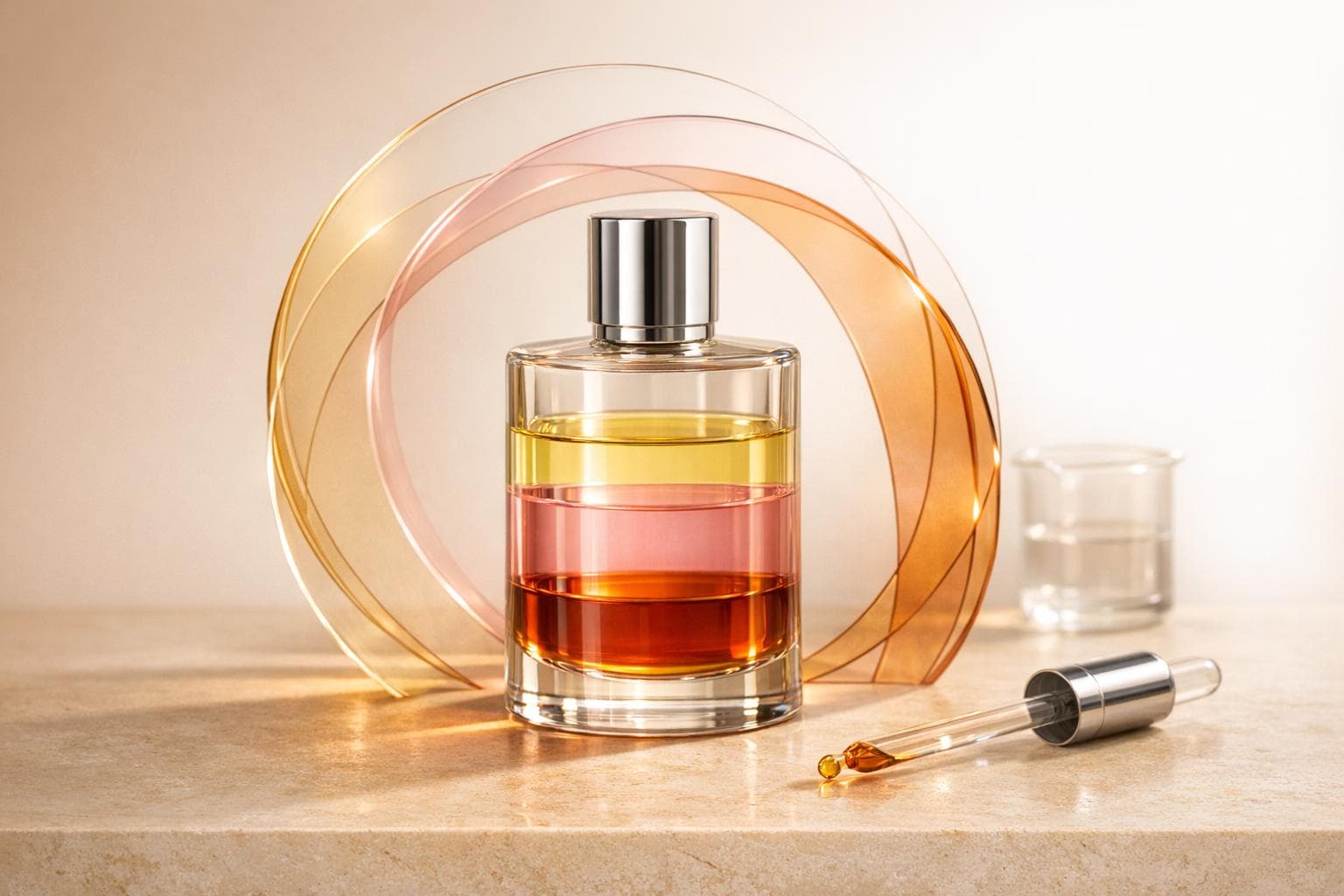
Vytvoření dlouhotrvající vůně spočívá v porozumění tomu, jak se jednotlivé vonné vrstvy – hlava, srdce a základ – vzájemně ovlivňují a postupně odpařují. Základní tóny, jako je santalové dřevo nebo pižmo, ukotvují lehčí svrchní tóny, například citrusy, a vytvářejí tak vyváženou, elegantně se rozvíjející kompozici. Fixátory, jako je benzoin nebo syntetické sloučeniny typu Ambroxan, zpomalují odpařování a zajišťují, že vaše směs vydrží déle. Správná příprava pokožky, například nanesení neparfémovaného hydratačního krému, zlepšuje přilnavost vůně a prodlužuje její nošení.
Chcete-li experimentovat dostupně, využijte odstřiky (např. lahvičky 2 ml, 5 ml a 8 ml a u většiny parfémů i dekant o objemu 30 ml) z platforem, jako je Scento, které nabízejí široký výběr designérských vůní. Zkoušejte techniky vrstvení – začněte těžšími základními tóny a zakončete lehčími. Poměry upravujte podle výdrže a nechte směsi několik týdnů odpočívat (macerovat), aby se prohloubila jejich komplexnost a trvanlivost. S trpělivostí a testováním můžete vytvořit osobitý podpisový parfém, který se bude během dne nádherně proměňovat.
How Fragrance Notes Affect Longevity
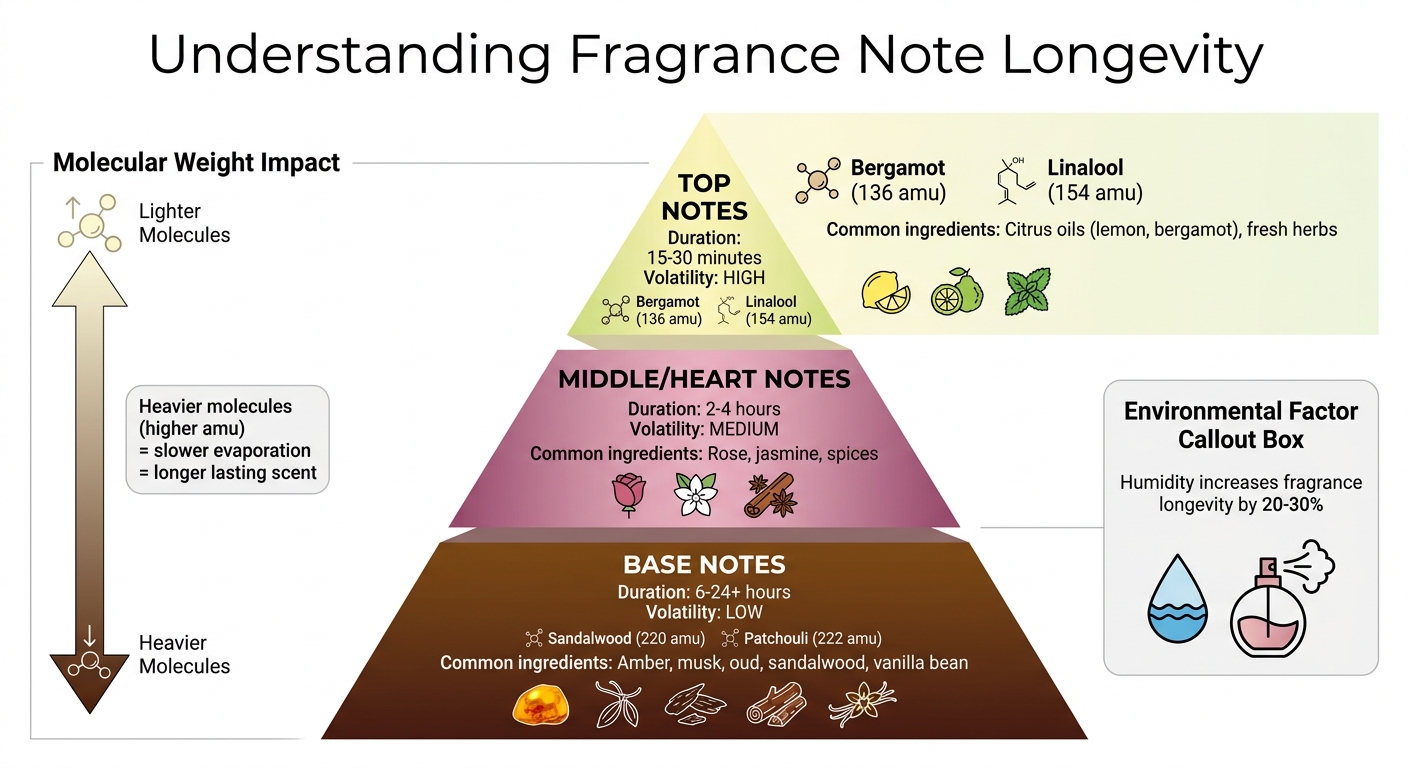
Srovnávací graf výdrže vonných tónů a molekulové hmotnosti
Vůně jsou komponovány ve vrstvách, z nichž každá má svou roli i životnost. Svrchní tóny jsou první, které osloví vaše smysly, ale rychle mizí – obvykle během 15 až 30 minut. Poté přicházejí střední tóny, neboli srdce vůně, které vydrží přibližně 2 až 4 hodiny. Nakonec základní tóny vytvářejí trvalý dojem a přetrvávají 6 až 24 hodin, někdy i déle. Pochopení toho, jak tyto vrstvy spolupracují, pomáhá vybírat směsi, které zůstávají zřetelné, a kombinovat tóny pro maximální výdrž.
Vysvětlení svrchních, středních a základních tónů
Svrchní tóny tvoří nejlehčí a nejvíce těkavé molekuly. Často sem patří ingredience jako citrusové oleje – například citron a bergamot – a svěží byliny. Tyto tóny se rychle odpařují a poskytují první jiskřivý závan svěžesti. Střední tóny, včetně růže, jasmínu a koření, představují jádro vůně a propojují prchavé svrchní tóny s hlubším základem. Základní tóny, jako jantar, pižmo, oud, santalové dřevo a vanilkový lusk, jsou těžší a působí jako fixátory – zpomalují odpařování a ukotvují vůni.
Výdrž těchto vrstev závisí na molekulové hmotnosti. Například molekuly santalového dřeva váží přibližně 220 atomových hmotnostních jednotek (amu), zatímco linalool – běžný svrchní tón – má molekulovou hmotnost přibližně 154 amu. Těžší molekuly se odpařují pomaleji, a proto základní tóny vydrží déle.
"Tóny nebo akordy označované jako spodní, základní či doznívající tóny mají nejtěžší molekuly a nejnižší těkavost, což jim umožňuje odpařovat se nejpomaleji a zanechávat nejdéle trvající vonný dojem." — Phlur
Tato odlišnost v molekulární struktuře přímo ovlivňuje, jak těkavost formuje celkový výkon vůně.
Jak těkavost ovlivňuje výkon vůně
Rychlost, s jakou se vonné molekuly odpařují – známá jako těkavost – hraje klíčovou roli v tom, jak dlouho vůně vydrží. Molekuly s vysokou těkavostí, například bergamot (136 amu), se odpařují rychle, často během 15 až 30 minut. Naproti tomu molekuly s nízkou těkavostí, jako pačuli (222 amu), mohou přetrvávat 12 až 24 hodin. To vysvětluje, proč vůně bohaté na citrusy mizí rychleji, zatímco dřevité nebo pryskyřičné kompozice zůstávají výrazné po celý den.
Výdrž vůně ovlivňují také okolní podmínky. Například ve vlhkém prostředí mohou vůně vydržet o 20 % až 30 % déle, protože vlhkost ve vzduchu zpomaluje odpařování. Při tvorbě směsi vytváří kombinace těkavých svrchních tónů s těžšími základními tóny fixační efekt. Základní tóny ukotvují lehčí molekuly a brání jim v příliš rychlém vyprchání. Ingredience jako santalové dřevo, dubový mech nebo vanilkový lusk jsou pro tento účel vynikající volbou, protože zvyšují celkovou výdrž vůně. Tento princip tvoří základ pokročilých technik míchání, kterým se věnují další části.
Použití fixátorů pro delší výdrž vůní
Fixátory hrají zásadní roli při prodlužování doby, po kterou vůně přetrvává – ukotvují lehčí, těkavější molekuly a zpomalují jejich odpařování. V podstatě fungují jako molekulární lepidlo, které udržuje jemné citrusové a květinové tóny na místě pro déletrvající požitek.
Vědecký princip je poměrně přímočarý: fixátory mají nízkou těkavost a jejich molekulová hmotnost se obvykle pohybuje mezi 250–400 g/mol, což znamená, že se odpařují mnohem pomaleji než svrchní tóny. Při správném použití vytvářejí stabilní základ, který podporuje celkovou strukturu vůně. Například zatímco Eau de Cologne s minimálním množstvím fixátorů může vyprchat po 1–3 hodinách, Extrait de Parfum s pečlivě vyváženou směsí fixátorů může vydržet déle než 8 hodin.
"Fixátory fungují tak, že interagují s jemnějšími vonnými molekulami a ukotvují je, čímž zabraňují jejich příliš rychlému rozptýlení." – Mariana Akopian
Fixátory nejen prodlužují výdrž; dodávají vůni také hloubku a charakter. Přírodní pryskyřice, jako benzoin a myrha, propůjčují hřejivé balzamické podtóny, zatímco dřevité fixátory, například santalové dřevo a vetiver, vytvářejí krémový, ukotvený základ. Tato dvojí funkce přispěla k rostoucí poptávce po fixátorech – světový trh dosáhl v roce 2022 hodnoty 1,75 miliardy eur a do roku 2030 se očekává roční růst o 4,3 %.
Přírodní a syntetické fixátory
Fixátory se dělí do dvou hlavních kategorií: přírodní a syntetické. Každá nabízí odlišné přednosti a charakteristiky podle požadovaného efektu.
Přírodní fixátory pocházejí z pryskyřic, dřev a kořenů. Tyto materiály nejen prodlužují výdrž, ale také přinášejí jedinečné vonné profily:
- Benzoin: Dodává vanilkovou sladkost s jemnými skořicovými tóny, ideální pro ukotvení citrusových kompozic.
- Labdanum: Přináší lepkavé, jantarově hřejivé vyznění, ideální pro orientální a chyprové vůně.
- Kořen kosatce: Známý svou pudrovou, květinovou kvalitou, pomáhá uchovat jemné svrchní tóny.
- Pačuli, dubový mech a oud: Tyto zemité prvky vytvářejí pižmové, kouřové základy, zvláště vhodné pro chyprové a svěží kompozice.
Syntetické fixátory naopak proměnily moderní parfumerii. Molekuly vytvořené v laboratoři, jako Ambroxan, Iso E Super a Galaxolide, nabízejí konzistentní výkon a etické alternativy k tradičním fixátorům živočišného původu, jako jsou pižmo a ambra. Tyto syntetické sloučeniny bývají často navrženy tak, aby byly téměř bez zápachu, a prodlužovaly tak výdrž vůně, aniž by měnily její zamýšlený vonný profil.
| Typ fixátoru | Běžné příklady | Vonný profil | Nejvhodnější pro |
|---|---|---|---|
| Přírodní pryskyřice | Benzoin, myrha, kadidlo | Hřejivý, balzamický, sladký | Ukotvení citrusů a květin |
| Přírodní dřeva | Santalové dřevo, cedr, oud | Krémový, dřevitý, hluboký | Dřevité a orientální směsi |
| Přírodní zemité tóny | Pačuli, vetiver, dubový mech | Pižmový, zemitý, kouřový | Chyprové a svěží vůně |
| Syntetické | Ambroxan, Iso E Super, Galaxolide | Jantarový, sametový, jemně pižmový | Moderní, konzistentní výkon |
Jak přidávat fixátory do směsí
Při tvorbě vůně je ideální stavět kompozici kolem fixátoru, nikoli jej přidávat až dodatečně. Fixátory obvykle tvoří 3–5 % základních tónů, některé však, například semena ambretty, jsou natolik intenzivní, že by se měly používat střídmě – v koncentracích 0,5 % nebo nižších.
Pro dosažení nejlepších výsledků slaďte těkavost jednotlivých ingrediencí. Například vysoce těkavé prvky, jako citrusové oleje, kombinujte s fixátory s nízkým tlakem par, například benzoinem nebo labdanem. Tato rovnováha zajistí, že fixátor dokáže účinně "zachytit" lehčí molekuly a prodloužit jejich přítomnost. Výkon fixátorů navíc zlepší aplikace vůně na hydratovanou pokožku – ideálně po použití neparfémovaného hydratačního krému. Po aplikaci se vyhněte tření zápěstí o sebe, protože tím narušujete molekulární strukturu a snižujete ukotvující účinek fixátoru.
Výkon směsi posuzujte v intervalech – například po 1, 4 a 8 hodinách – na pokožce i na látce. Pokud používáte pryskyřičné fixátory, jako je storax, v alkoholové směsi, nezapomeňte odfiltrovat případné usazeniny, aby si vůně zachovala čirost. Pamatujte také, že roli hraje chemie pokožky: mastnější pokožka má tendenci držet vonné molekuly déle než pokožka suchá.
Jakmile jsou fixátory na svém místě, můžete pro další zvýraznění a vyvážení výdrže vůně zkoumat techniky vrstvení.
Techniky vrstvení pro dlouhotrvající vůně
Fixátory mohou stabilizovat těkavé molekuly, ale techniky vrstvení dokážou posunout výdrž vůně na ještě vyšší úroveň. Pro efektivní vrstvení začínejte těžkými základními tóny a zakončujte lehčími svrchními tóny. Tento přístup zajišťuje, že se jemné svrchní tóny usadí přirozeně, aniž by je potlačily silnější akordy pod nimi.
Vonné molekuly lépe přilnou k hydratované pokožce, čímž se jejich životnost prodlužuje až o 30–40 %. Po sprše, když je pokožka ještě vlhká, naneste neparfémovaný hydratační krém nebo lehký podkladový olej, například jojobový. Tím vytvoříte lipidově bohatý povrch, který vůni "drží". Po nanesení parfému se vyhněte tření zápěstí o sebe, protože tření může rozkládat molekuly svrchních tónů a zkracovat životnost vůně. Správná příprava pokožky je klíčem k účinnému ukotvení každé vrstvy.
Vyvažování lehkých a těžkých tónů
Jakmile je základ připraven, zaměřte se na vyvážení vah jednotlivých tónů, aby se vůně rozvíjela plynule. Dobře zde funguje pravidlo 80/20: použijte 80 % neutrálních nebo jemnějších základních tónů (prostřednictvím krémů či tělových mlék) a 20 % výrazné akcentní vůně, čímž vytvoříte harmonickou vonnou stopu. Svrchní tóny, jako citrusy, se na suché pokožce obvykle rozptýlí během 15–30 minut, ale na hydratované pokožce mohou přetrvat až 2 hodiny.
Svou roli hraje také umístění. Aplikace parfému na zadní část krku, těsně pod linií vlasů, vytváří jemnou, avšak vytrvalou vonnou stopu při pohybu. Pulzní body – například zápěstí, krk, oblast za ušima, vnitřní strana loktů a oblast za koleny – pomáhají vůni přirozeně rozptylovat tělesným teplem. Oblečení a vlasy mezitím fungují jako vonné rezervoáry, které vůni uvolňují pozvolněji, protože neprodukují oleje rozkládající molekuly.
Metody aplikace pro maximální výdrž
Různé povrchy drží vůni odlišně. Pokožka umožňuje vůni přirozeně se vyvíjet díky teplu a tělesné chemii, zatímco látka ji drží statičtěji, ale po delší dobu. Pro jemný, dlouhotrvající efekt nastříkejte parfém na méně exponovaná místa, například na podšívku saka nebo šálu. Vždy nejprve vyzkoušejte aplikaci na skrytém místě, abyste předešli skvrnám.
Pro vlasy zvolte speciální vlasové misty s nižším obsahem alkoholu, aby nedocházelo k vysušování. Případně nastříkejte lehký oblak vůně a projděte jím – vlasová vlákna výborně zachycují vůni. Před oblékáním nechte vůni asi 30 sekund usadit, aby přilnula k pokožce a neotřela se o oděv. Pro polední osvěžení mějte u sebe cestovní odstřiky (2 ml nebo 8 ml), které obnoví hlavu a srdce vůně, aniž by přehlušily základ.
Srovnání dlouhotrvajících a krátce působících tónů
Zde je stručný průvodce, který vám pomůže vybrat tóny odpovídající vaší strategii vrstvení:
| Kategorie tónů | Příklady | Těkavost | Přilnavost k pokožce / výdrž |
|---|---|---|---|
| Svrchní tóny | Citrusy, bergamot, liči | Vysoká (rychlé odpařování) | 15–30 minut |
| Střední tóny (srdce) | Květiny, jasmín, koření | Střední | 2–4 hodiny |
| Základní tóny | Oud, pačuli, jantar, pižmo, vanilka | Nízká (pomalé odpařování) | 8–12+ hodin |
Důležitá je také koncentrace. Eau de Toilette (5–15 % olejů) vydrží 3–5 hodin, Eau de Parfum (15–20 % olejů) 6–8 hodin a Parfum nebo Extrait (20–40 % olejů) může přetrvávat 8–12+ hodin. Zvolte koncentraci odpovídající vašim potřebám a vrstvěte uvážlivě, abyste vytvořili vyváženou, trvalou vůni bez přetížení kompozice.
Váš osobní odborník na parfémy už čeká
Vyplňte náš rychlý vonný kvíz a objevte autentické designové a nišové parfémy vybrané podle vašeho vkusu – prozkoumejte je jako 2, 5, 8 a 30 ml dekanty a vzorky, abyste si každý mohli vyzkoušet, než se rozhodnete pro celou lahvičku.
Najděte svou vůniProces macerace u vlastních směsí
Když se vonné oleje smíchají s alkoholem, právě fáze macerace umožňuje směsi skutečně se propojit. Tento krok je nezbytný pro vytvoření harmonického vonného profilu. Bez něj může vůně působit neuhlazeně – ostře, nevyrovnaně a bez hloubky či výdrže, po které toužíte. Představte si to jako zrání vína: čím déle odpočívá, tím vytříbenější a vyváženější se stává.
Během macerace probíhají pomalé chemické reakce. Aldehydy se přeměňují na acetaly, aromatické sloučeniny se plně rozpouštějí a oxidace zjemňuje ostré hrany. Tento proces proměňuje syrovou směs v uhlazenou vůni, v níž hlava, srdce a základ plynule přecházejí jeden do druhého. Výsledek? Vůně s lepší projekcí, delší výdrží a přirozeným vývojem v čase, nikoli kompozice, která náhle vyprchá. Je to jako dopřát vůni čas, aby rozvinula svou osobnost a hloubku.
"Macerace je proces, při němž se vůně po smíchání nechává odpočívat. Během této doby se parfémové oleje, alkohol a fixátory přirozeně propojí, což umožní vůni vyvíjet se a zrát. Představte si to jako zrání ušlechtilého vína – čím déle odpočívá, tím lepší se stává." – Muhammad Ahtisham Ul haq, The Perfume Stash
Kroky macerace vůní
Jakmile vůni namícháte a zapracujete fixátory, macerace je závěrečným krokem, který sjednotí všechny složky. Začněte tím, že směs uložíte do tmavé skleněné lahvičky – ideální je jantarová nebo kobaltově modrá – aby byla chráněna před UV zářením. Ujistěte se, že je lahvička pevně uzavřená a obsahuje minimum vzduchu, protože příliš mnoho kyslíku může poškodit jemné svrchní tóny. Uchovávejte ji na chladném, stabilním místě, ideálně mezi 15–20 °C, mimo teplo a vlhkost.
Ve velkovýrobě trvá macerace obvykle 2–3 týdny v uzavřených nádržích, než se vůně plní do flakonů. U domácích nebo řemeslných kompozic nechte jednodušší směsi odpočívat 4–6 týdnů a složitější formule s pryskyřicemi, dřevy či pižmy 8–12 týdnů. Každých několik dní lahvičkou jemně zakružte, aby se oleje a alkohol lépe spojily. Nenechávejte uzávěr otevřený, aby parfém "vyvětral" – tím se urychluje oxidace a vůně se může poškodit.
Po období odpočinku směs přefiltrujte přes mušelínovou tkaninu nebo kávový filtr, abyste odstranili případný sediment a dosáhli čirosti. Jako další krok můžete směs na 24 hodin až týden uložit do chladničky (nikoli zmrazit). Nerozpustné látky se tak usadí a můžete je znovu odfiltrovat pro čistší výsledek. Vůně je připravena, když působí vyváženě a ostrost alkoholu se zjemnila.
| Fáze macerace | Doporučená doba | Účel |
|---|---|---|
| Tovární / velkoobjemová výroba | 2–3 týdny | Stabilizace a zátěžové testování před plněním |
| Jednoduché řemeslné směsi | 4–6 týdnů | Základní propojení olejů a alkoholu |
| Komplexní / luxusní směsi | 8–12 týdnů | Plný rozvoj pryskyřičných a těžkých základních tónů |
Macerované vůně vynikají lepší výdrží a projekcí, protože molekuly dosahují stabilní rovnováhy. Trpělivost se zde skutečně vyplácí – vynechání nebo uspěchání této fáze znehodnocuje veškerou péči, kterou jste věnovali výběru tónů a použití fixátorů. Odměnou je vůně, která na pokožce krásně funguje a přirozeně se vyvíjí.
Míchání vůní pomocí odstřiků Scento

Tato část posouvá principy macerace a vrstvení o krok dál a věnuje se praktickému míchání pomocí odstřiků. 2ml, 5ml a 8ml odstřiky a u většiny parfémů i dekant o objemu 30 ml od Scento představují dostupný a praktický způsob, jak experimentovat s kombinacemi vůní. Tyto malé flakonky naplněné autentickými designérskými vůněmi vám umožní objevovat různé směsi bez nutnosti investovat do plných balení. Díky kompaktní velikosti snadno otestujete poměry, doladíte kombinace a zdokonalíte svou techniku – bez obav z plýtvání drahým parfémem.
Výběr doplňujících se tónů
Klíč k úspěšné směsi spočívá ve správném výběru odstřiků. Představte si vůni jako tříúrovňovou strukturu: svrchní tóny, například citrusy nebo jemné květiny, rychle mizí, střední tóny, jako hřebíček či zářivé květiny, tvoří srdce a základní tóny, například santalové dřevo nebo pižmo, dodávají dlouhotrvající hloubku. Pro vytvoření harmonické směsi vybírejte odstřiky, které zahrnují všechny tři vrstvy.
Začněte tím, že mezi vůněmi najdete společný tón, například jasmín, a tím zvýrazníte konkrétní prvek. Případně experimentujte s doplňujícími se dvojicemi – například kombinací kořenitých a květinových vůní pro zajímavý kontrast. Pokud preferujete soudržnější výsledek, zvolte příbuzné tóny, jako jsou dřevité a jantarové akordy, které spolu přirozeně harmonizují.
Než směs nanesete na pokožku, použijte pro rychlý náhled testovací papírky. Každý papírek ponořte do vybraných odstřiků a měňte hloubku ponoření, abyste otestovali různé poměry (např. 50/50 nebo dominantní vůni). Po zaschnutí papírky společně ovívejte pod nosem, abyste získali představu o kombinaci. Držte se dvou nebo tří odstřiků, abyste nevytvořili směs, která působí nejasně nebo příliš intenzivně. Po zúžení výběru otestujte směs na pokožce a dále ji dolaďte.
Testování a úprava poměrů
Jakmile vyberete odstřiky, připravte pokožku podle dříve popsaných kroků. Naneste nejprve základní tóny – těžší vůně jako oud nebo vanilka – a poté lehčí květinové či citrusové tóny. Toto pořadí vrstvení zajišťuje, že jemné svrchní tóny nebudou zastíněny.
Směs aplikujte na pulzní body, například na zápěstí, krk nebo vnitřní stranu loktů. Tato místa vytvářejí teplo, které zlepšuje difuzi vůně. Vyhněte se tření zápěstí o sebe, protože tření může narušit strukturu vůně a zkrátit její výdrž. Nechte směs přibližně 30 minut usadit, aby mohla reagovat s chemií vaší pokožky a odhalit svůj skutečný charakter.
Pokud směs působí příliš silně nebo příliš slabě, upravte poměry. Přidejte více lehčí vůně pro projasnění profilu nebo posilte základ dalšími střiky těžšího tónu. 2ml odstřiky od Scento jsou ideální pro první zkoušky, zatímco 8ml flakonky vám poskytnou dostatek produktu k doladění a pravidelnému nošení oblíbených směsí.
Sledování výdrže a výkonu
Po doladění směsi vyhodnocujte její výkon v čase. Všímejte si, jak se vůně vyvíjí – svrchní a střední tóny vyprchají jako první a základní tóny zůstanou přetrvávat. Během dne kontrolujte pulzní body, abyste zjistili, zda směs vydrží podle vašich představ. Pokud mizí příliš rychle, zvažte zapojení většího množství fixátorů nebo úpravu rovnováhy mezi svrchními, středními a základními tóny.
Pro úplný obraz testujte směs jak na pokožce, tak na látce. Zatímco pokožka dodává vůni teplo a komplexnost, látka ji drží déle a uvolňuje ji rovnoměrněji. Tento dvojí přístup vám pomůže pochopit, jak si vaše směs vede v různých situacích – ať už potřebujete, aby vydržela na večerní událost, nebo po celý den.
Mějte své 2ml, 5ml a 8ml cestovní odstřiky a u většiny parfémů i dekant o objemu 30 ml po ruce pro osvěžení. Rychlé přestříknutí obnoví hlavu a srdce vůně a zároveň posílí základ, čímž směsi vdechne nový život. Díky rozsáhlé knihovně Scento s více než 1 000 designérskými vůněmi jsou možnosti tvorby a zdokonalování vlastních kompozic prakticky nekonečné.
Závěr
Tvorba vůně, která se v čase nádherně rozvíjí, začíná důkladným pochopením chování jednotlivých tónů. Směsi, které začínají hlubokými, ukotvujícími základními tóny – jako dřeva, jantar nebo pižmo – a postupně přidávají lehčí svrchní tóny, umožňují každému prvku zazářit vlastním tempem. Tajemství spočívá v poznání, jak se každý tón přirozeně odpařuje.
Fixátory v tomto procesu hrají zásadní roli. Přírodní možnosti, jako santalové dřevo nebo pryskyřice, společně s moderními syntetickými látkami, například Ambroxanem, pomáhají upevnit lehčí, těkavější ingredience a dodávají celé kompozici výdrž. Pro posílení tohoto efektu je nezbytná příprava pokožky. Nanesení neparfémovaného hydratačního krému nebo neutrálních olejů, například jojobového, na pulzní body vytváří ideální základ, k němuž se vonné molekuly mohou přichytit.
Tyto znalosti nejsou pouze teoretické – jsou prakticky využitelné. 2ml, 5ml a 8ml odstřiky Scento a u většiny parfémů i dekant o objemu 30 ml usnadňují a zpřístupňují experimentování se směsmi. Díky knihovně více než 1 000 designérských vůní můžete testovat kombinace, upravovat poměry a dolaďovat své kompozice, aniž byste se zavazovali k plným flakonům. Dobrý výchozí bod? Vyzkoušejte poměr 2:1:1 pro základ, srdce a hlavu a zapisujte si úpravy, abyste zjistili, co nejlépe ladí s chemií vaší pokožky.
Ať už svou směs nosíte přímo na pokožce pro větší teplo a hloubku, nebo ji aplikujete na látku pro prodlouženou výdrž, klíčem je proces testování, úprav a pozorování. Mějte své cestovní odstřiky nablízku pro osvěžení i další experimenty. Dodržením těchto kroků budete na nejlepší cestě k vytvoření podpisové vůně, která skutečně vydrží.
Často kladené otázky
Jak zabráním tomu, aby citrusové svrchní tóny mizely tak rychle?
Citrusové svrchní tóny, jako citron a grapefruit, mají tendenci rychle se odpařovat kvůli své vysoké těkavosti. Aby tyto jiskřivé tóny vydržely déle, kombinujte je se stabilnějšími středními a základními tóny, které působí jako kotvy vůně. Dalším trikem je vrstvení vůní nebo jejich aplikace na dobře hydratovanou pokožku a pulzní body, protože tato místa vůni lépe udrží. Se správným přístupem můžete zachovat živou svěžest citrusových vůní po delší dobu.
Který fixátor mám použít pro svou směs (benzoin vs. Ambroxan)?
Benzoin i Ambroxan slouží jako účinné fixátory a pomáhají vůním přetrvávat déle, každý však přináší do kompozice odlišné kvality. Benzoin, získávaný z přírodní pryskyřice, dodává útulnou, sladkou vůni připomínající vanilku, a je tak ideálním společníkem pro tóny, jako je santalové dřevo nebo kadidlo. Ambroxan, syntetická molekula, naopak poskytuje dřevitou, jantarovou bohatost s působivou výdrží a difuzí. Zvolte benzoin pro zvýraznění hřejivých, uklidňujících profilů, zatímco Ambroxan se hodí pro moderní, přizpůsobivé kompozice vyžadující silnou a dlouhotrvající přítomnost.
Jak dlouho mám vrstvenou směs macerovat, než ji začnu nosit?
Pro dosažení vyvážené vrstvené vůně nechte spojené vůně odpočívat 24 až 48 hodin. Tato čekací doba umožní tónům plynule se propojit. Pro ještě vytříbenější směs někteří doporučují prodloužit maceraci na několik dní. Trpělivost nejen prohlubuje charakter vůně, ale také pomáhá zlepšit její výdrž.

