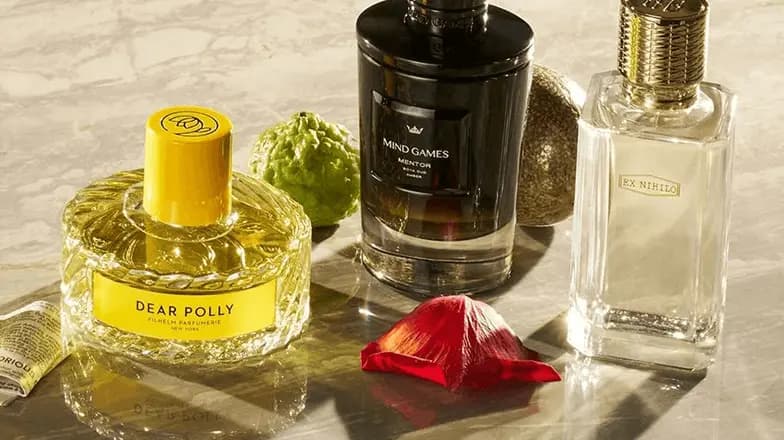
Koncentrace vůně přímo ovlivňuje sillage – vonnou stopu, kterou za sebou zanecháváte při pohybu. Zatímco vyšší koncentrace olejů, jako je Extrait de Parfum (20–40 %), nabízejí hloubku a výdrž, často zůstávají blíže u pokožky. Nižší koncentrace, například Eau de Toilette (5–15 %), vytvářejí jasnější a výrazněji vnímatelné stopy díky vyššímu obsahu alkoholu, který pomáhá rozptýlit vůni do vzduchu.
Klíčové poznatky:
- Sillage vs. projekce: Sillage je vonná stopa, zatímco projekce vyjadřuje, jak daleko se vůně šíří od vaší pokožky.
- Role alkoholu: Více alkoholu znamená lepší difuzi, ale kratší dobu nošení.
- Na příležitosti záleží: Pro denní nošení nebo práci volte lehčí koncentrace (např. EDT), pro formální či intimní situace bohatší varianty (např. Extrait).
- Testování je klíčové: Chemie pokožky i prostředí ovlivňují výkon vůně; decanty (např. 2 ml nebo 8 ml) vám umožní experimentovat bez nutnosti investovat do plného flakonu.
Pochopení těchto faktorů vám pomůže najít tu správnou vůni pro každý okamžik – ať už pro jemné každodenní nošení, nebo elegantní večerní prohlášení.
Co je sillage a proč na něm záleží?
Co znamená sillage
Sillage označuje vonnou stopu, kterou vůně zanechává, když procházíte prostorem. Termín pochází z francouzštiny, kde popisoval brázdu zanechanou lodí. Ve světě parfémů vystihuje myšlenku přetrvávající přítomnosti, která vás následuje.
Tato stopa vzniká odpařováním vonných molekul. Těžší základní tóny, jako je ambra, pižmo a dřevo, se odpařují pomaleji, a vytvářejí tak trvalejší stopu. Naproti tomu lehčí tóny, například citrusy, rychle mizí a zanechávají mnohem subtilnější dojem.
Pochopení pojmu sillage je zásadní pro jeho odlišení od projekce a výdrže. Způsob, jakým se jednotlivé vonné tóny odpařují, se podílí na utváření sillage i projekce.
Sillage, projekce a výdrž: rozdíly
Ačkoli se tyto pojmy často používají zaměnitelně, popisují různé aspekty výkonu vůně. Projekce měří, jak daleko vůně vyzařuje od vaší pokožky, když stojíte na místě, a vytváří jakousi vonnou bublinu. Výdrž pak označuje, jak dlouho zůstává vůně na pokožce postřehnutelná.
Sillage se však týká vonné stopy, kterou za sebou zanecháváte při pohybu. Například vůně s vyšší koncentrací olejů (20–40 %) mají často nižší projekci (přibližně 0,3–0,5 m), protože bohatší obsah oleje drží vůni blíže u pokožky. Jejich hluboké, bohaté základní tóny však stále mohou vytvořit trvalou a výraznou stopu.
Znalost těchto rozdílů vám pomůže vybrat správnou vůni pro různé příležitosti. Vůně s výrazným sillage jsou ideální pro odvážný dojem na večerních událostech, zatímco varianty s nižším sillage se lépe hodí do subtilnějšího, profesionálního prostředí. Koncentrace vůně navíc může její sillage významně ovlivnit a nabídnout tak ještě více možností, jak přizpůsobit svůj vonný podpis danému okamžiku.
Jak koncentrace vůně VE SKUTEČNOSTI funguje – odhaluje parfumér (rozhodně NE tak, jak si myslíte!)
Jak koncentrace vůně ovlivňuje sillage
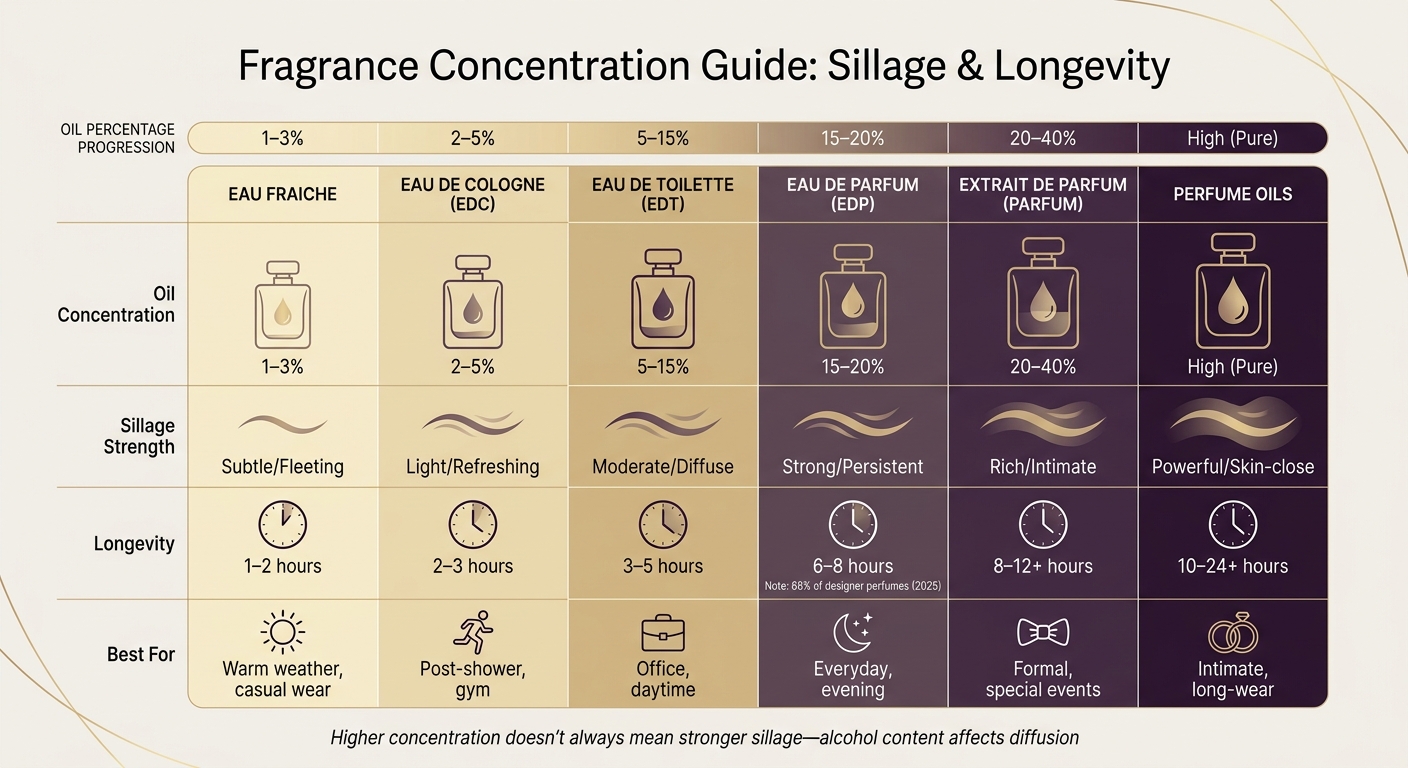
Typy koncentrací vůní: srovnání síly sillage a výdrže
Pochopení souvislosti mezi koncentrací vůně a sillage je klíčové pro předvídání toho, jak se vůně bude po aplikaci chovat.
Vysvětlení typů koncentrací vůní
Vůně se kategorizují podle procenta aromatických sloučenin, které obsahují. Na nejlehčím konci spektra stojí Eau Fraiche s pouhými 1–3 % vonných olejů, zatímco Eau de Cologne nabízí o něco vyšší koncentraci 2–5 %. Eau de Toilette obsahuje 5–15 %, což z ní činí oblíbenou volbu pro každodenní nošení. Eau de Parfum s 15–20 % poskytuje bohatší a déle trvající vůni. Na vrcholu škály se nachází Extrait de Parfum s obsahem olejů 20–40 %, který přináší intenzivní hloubku a výdrž. Existují také parfémové oleje, které jsou čisté a bez alkoholu a nabízejí odlišný typ projevu na pokožce.
Souvislost mezi koncentrací a sillage
Zajímavé je, že vyšší koncentrace oleje neznamená vždy výraznější vonnou stopu. Vůně s nižším obsahem oleje, jako je Eau de Toilette, často obsahují více alkoholu, který se rychle odpařuje a vynáší vůni do vzduchu. Tím vzniká jasnější a nápadnější stopa. Naproti tomu vysoce koncentrované vůně, například Extrait de Parfum, jsou hladší a hutnější. Ty mají tendenci zůstávat blíže u pokožky, protože jim chybí alkohol potřebný pro širokou difuzi.
"Třicetiprocentní extrait nabitý těžkými základními tóny může projektovat méně než dvanáctiprocentní eau de toilette navržená s difuzními srdečními tóny." — Carlos Benaim, Master Perfumer
To zdůrazňuje, že sillage není pouze otázkou koncentrace oleje; stejně důležitou roli hraje kompozice vůně a způsob, jakým její molekuly interagují se vzduchem.
Srovnání koncentrace a sillage
Níže uvedená tabulka přináší přehled toho, jak různé koncentrace vůní ovlivňují sillage a výdrž.
| Koncentrace | % oleje | Síla sillage | Výdrž | Příklad použití |
|---|---|---|---|---|
| Eau Fraiche | 1–3% | Subtilní/pomíjivá | 1–2 hodiny | Teplé počasí, neformální nošení |
| Eau de Cologne | 2–5% | Lehká/osvěžující | 2–3 hodiny | Po sprše, posilovna |
| Eau de Toilette | 5–15% | Střední/difuzní | 3–5 hodin | Kancelář, denní nošení |
| Eau de Parfum | 15–20% | Silná/přetrvávající | 6–8 hodin | Každodenní nošení, večer |
| Extrait de Parfum | 20–40% | Bohatá/intimní | 8–12+ hodin | Formální a výjimečné události |
| Perfume Oils | Vysoký | Výrazná/blízko u pokožky | 10–24+ hodin | Intimní situace, dlouhé nošení |
Ačkoli vyšší koncentrace obecně nabízejí delší výdrž, ne vždy vytvářejí silnější vonnou stopu. Například Extrait de Parfum často přináší intimnější zážitek, setrvává blízko pokožky a postupně odhaluje svou komplexnost.
Váš osobní odborník na parfémy už čeká
Vyplňte náš rychlý vonný kvíz a objevte autentické designové a nišové parfémy vybrané podle vašeho vkusu – prozkoumejte je jako 2–8ml dekanty a vzorky, abyste si každý mohli vyzkoušet, než se rozhodnete pro celou lahvičku.
Najděte svou vůniDalší faktory, které ovlivňují sillage
Kromě koncentrace hraje klíčovou roli při utváření sillage také složení vůně a způsob její aplikace.
Základní tóny a molekulová hmotnost
Těžší základní tóny, jako je ambra, pižmo, oud, pačuli a pryskyřice, jsou zásadní pro vytvoření trvalé a postupně se vyvíjející vonné stopy. Tyto tóny se odpařují pomaleji, a tvoří tak základ výdrže vůně. Jejich vysoká molekulová hmotnost je zároveň činí ideálními pro začlenění syntetických sloučenin, které podporují difuzi.
"Těžší základní tóny – jako ambra, pižmo nebo pryskyřice – ukotvují sillage parfému a umožňují mu přetrvávat déle." — Buchart Colbert
Syntetické sloučeniny jako Hedione (methyl dihydrojasmonate), Iso — E Super a syntetická pižma, například Cashmeran, se často přidávají pro zesílení difuze a projekce. Tyto ingredience působí v harmonii s přírodními základními tóny a vytvářejí výraznější a trvalejší vůni.
Typ pokožky a způsob aplikace vůně
Typ vaší pokožky může výrazně ovlivnit, jak se vůně projeví. Například mastná pokožka udrží vůni déle, protože její přirozené lipidy pomáhají zachytit vonné molekuly. Suchá pokožka naproti tomu ztrácí vůni rychleji kvůli nedostatku těchto olejů.
Chcete-li maximalizovat výkon vůně, naneste před aplikací na pulzní body – například zápěstí, krk, vnitřní strany loktů nebo podkolenní jamky – neparfémovaný hydratační krém nebo malé množství vazelíny. Vytvoříte tak podklad, ke kterému se vůně může lépe přichytit. Po aplikaci se vyhněte tření zápěstí o sebe, protože tím můžete narušit vonné molekuly a pozměnit vůni. Pro dodatečné zvýraznění zkuste lehce provonět vlasy nebo oblečení, což může podpořit difuzi a vytvořit zřetelnější sillage.
Celkový zážitek ze sillage nakonec formuje souhra základních tónů, syntetických zesilovačů a promyšlených metod aplikace – tak, aby působil osobně i působivě.
Volba správné koncentrace pro různé příležitosti
Sladit koncentraci vůně s příležitostí je umění, které dokáže povznést celý vonný zážitek. Tentýž parfém v různých intenzitách se může chovat odlišně a ovlivnit, jak doplní váš den či večer.
Denní nošení a kancelář
Do pracovního prostředí je často ideální volbou Eau de Toilette (EDT). S 5–15 % aromatických sloučenin nabízí rovnováhu mezi postřehnutelností a decentností, díky čemuž se hodí do profesionálního prostředí. Naneste 4–6 střiků na pulzní body a užijete si vůni, která vydrží 3–5 hodin, aniž by působila přehnaně.
Pokud je váš pracovní den delší, Eau de Parfum (EDP) nabídne prodlouženou výdrž 6–8 hodin při pouhých 2–4 střicích. Zajímavé je, že k roku 2025 se 68 % designových parfémů prodává ve formě EDP, což odráží jeho oblibu pro každodenní nošení. Pro konzervativnější pracoviště, kde je zásadní jemnost, vytváří Eau de Cologne (EDC) se svou koncentrací 2–5 % delikátní a intimní stopu. Mějte však na paměti, že EDC může vyžadovat opětovnou aplikaci každých několik hodin.
"Někdy dávám přednost formulacím EDT, protože lépe dýchají a jasněji vyjadřují určité tóny." — Francis Kurkdjian, Master Perfumer
Svou roli hrají také okolní faktory, například teplo – lehčí formulace jako EDT často fungují nejlépe v teplejších podmínkách a pomáhají udržet vůni vytříbenou po celý den.
Večerní a formální události
Večerní příležitosti často vyžadují vůni, která působí nenápadně, a přesto zůstává v paměti. Eau de Parfum je zde spolehlivou volbou, nabízí silnou projekci během prvních 2–3 hodin a přetrvávající přítomnost po dobu 6–8 hodin. Naneste 2–4 střiky na pulzní body a nechte vůni krásně se rozvíjet s postupujícím večerem.
Pro skutečně výjimečné události – svatby nebo gala večery v black-tie dress code – je Parfum (Extrait de Parfum) nepřekonatelný. S 20–40 % vonného oleje přináší bohaté, intimní sillage, které může vydržet 8–24 hodin. Navzdory své intenzitě má Parfum tendenci držet se blíže u pokožky a vytvářet sofistikovanou auru, aniž by zahltil celou místnost.
"Správně nanesený Parfum by měl na pokožce šeptat 24 hodin." — Roja Dove, Master Perfumer
Díky tomu je Parfum volbou pro okamžiky, kdy se elegance a jemnost dostávají do středu pozornosti.
Blízká setkání a osobní okamžiky
Pro intimní příležitosti – jako jsou večeře ve dvou, komorní setkání nebo tiché osobní chvíle – nabízí Parfum jedinečnou hloubku a intimitu. Pouhé 1–2 doteky na pulzní body vytvoří luxusní aroma, které se postupně rozvíjí, když se někdo přiblíží. Podobně parfémové oleje zůstávají blízko u pokožky a přinášejí bohatost bez nadměrné projekce. Tento přístup „šeptat spíše než křičet“ zajišťuje, že vaše vůně působí osobně a exkluzivně a umocňuje atmosféru výjimečných okamžiků.
Testování různých koncentrací pomocí decantů
Nejlepší způsob, jak zjistit, jak různé koncentrace fungují právě u vás, je praktické testování. Než se rozhodnete pro plný flakon – často v ceně mezi €200–€1,000 za Parfum nebo €80–€300 za EDP – vyzkoušejte experimentování s decanty. Decanty Scento o objemu 2 ml a 8 ml představují pohodlný způsob, jak sledovat, jak se vůně chová na vaší pokožce v reálných situacích.
Například 5ml atomizér poskytne přibližně 77 střiků, což stačí k testování vůně po celý týden. Díky tomu uvidíte, jak koncentrace interaguje s chemií vaší pokožky a životním stylem, a vyhnete se obávané „lítosti nad plným flakonem“. Můžete dokonce testovat vedle sebe – naneste EDT na jedno zápěstí a EDP na druhé a porovnejte jejich vývoj.
Decanty jsou také vhodné na cesty a splňují pravidlo TSA 3-1-1 pro tekutiny v příručním zavazadle. Díky tomu jsou praktickou volbou pro testování vůní během cestování nebo pracovních cest.
Koncentrace vůně a sillage
Koncentrace vůně hraje klíčovou roli v tom, jak se vůně projevuje a jak dlouho přetrvává. Vyšší koncentrace, například 15–20 % typicky obsažených v Eau de Parfum nebo 20–40 % v Parfum, nabízejí trvalejší vonnou stopu neboli sillage, která vydrží od 6 do 24 hodin v závislosti na formulaci. Naproti tomu lehčí varianty, jako je Eau de Toilette s 5–15% koncentrací vonných složek, mají tendenci se kvůli vyššímu obsahu alkoholu odpařovat rychleji a obvykle vydrží přibližně 3–5 hodin.
Nalezení ideálního sillage pro vaše preference často vyžaduje praktické zkoušení. Nástroje jako decanty Scento usnadňují testování různých koncentrací přímo na pokožce ještě předtím, než se zavážete k nákupu plného flakonu. Tento praktický přístup vám umožní překlenout rozdíl mezi teoretickými znalostmi a osobní zkušeností.
"Sillage je o přítomnosti. Je to způsob, jakým se vůně nese za hranice pokožky – jemně, atmosféricky a často nezapomenutelně." — Buchart Colbert
Tento pohled vystihuje podstatu sillage: křehkou rovnováhu mezi působivostí a jemností. Chcete-li zjistit, co vám vyhovuje nejlépe, vyzkoušejte srovnání vedle sebe – naneste Eau de Toilette na jedno zápěstí a Eau de Parfum na druhé. Tento jednoduchý test vám pomůže pochopit, jak různé koncentrace reagují s vaší pokožkou a jak ladí s vaším osobním stylem či konkrétními příležitostmi.
Často kladené otázky
Proč může Eau de Toilette zanechat větší stopu než Extrait?
Eau de Toilette často vytváří výraznější stopu díky nižší koncentraci vonných olejů, což pomáhá vůni šířit se vzduchem do většího prostoru. Naproti tomu Extrait se pyšní vyšší koncentrací, která přináší bohatší a osobnější vonný zážitek, avšak má tendenci zůstávat blíže u pokožky místo široké difuze.
Jak mohu zvýšit sillage, aniž bych použil/a příliš mnoho střiků?
Chcete-li dosáhnout postřehnutelného sillage bez přehánění, volte vůně s vyšší koncentrací, jako je Eau de Parfum nebo parfémový extrakt. Tyto formulace jsou navrženy tak, aby poskytly bohatší a déle trvající vonný zážitek.
Aplikujte vůni na pulzní body, jako jsou zápěstí, krk a oblast za ušima. Tato místa vyzařují teplo, které pomáhá vůni přirozeně difundovat. Zaměříte-li se na přesnou aplikaci místo nadměrného množství, můžete si užít vyváženou a účinnou projekci vůně.
Jak zvolit správnou koncentraci pro práci oproti večerním příležitostem?
Koncentrace vůně hraje klíčovou roli při rozhodování, pro jaké příležitosti je vhodná. Pro práci nebo denní prostředí dobře fungují lehčí koncentrace, jako je Eau de Toilette (EDT), díky své svěží a decentní přítomnosti. Naopak pro večery nebo společenská setkání jsou lepší volbou vyšší koncentrace, například Eau de Parfum (EDP) nebo Parfum. Ty poskytují bohatší vůni, silnější projekci a delší výdrž – ideální pro zanechání nezapomenutelného dojmu.