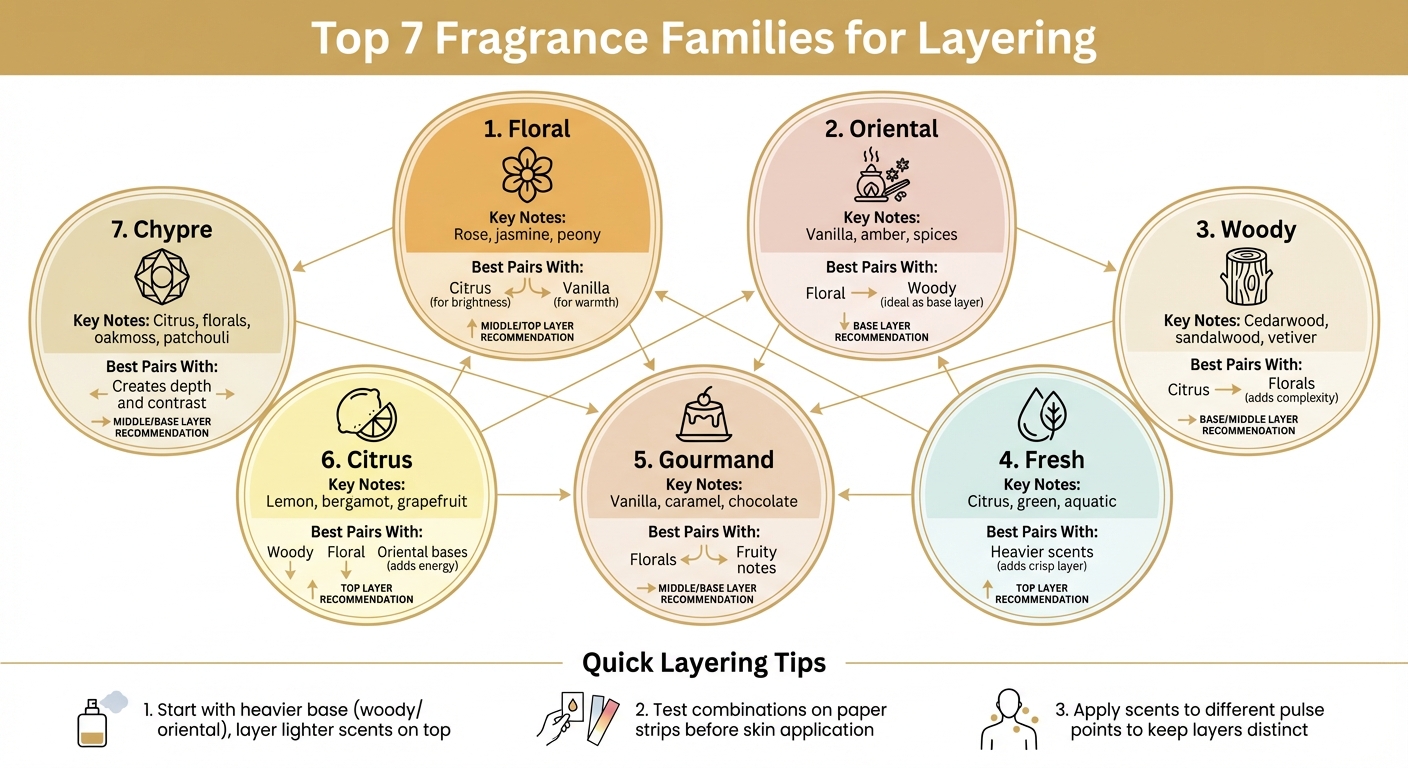
Vrstvení vůní vám umožní vytvořit si osobitý parfém spojením různých vonných rodin. Každá rodina nabízí jedinečné charakteristiky, které se mohou vzájemně doplňovat nebo kontrastovat, a dávají vám tak nekonečné možnosti, jak sladit vůni s náladou, ročním obdobím či příležitostí. Zde je stručný přehled nejlepších vonných rodin pro vrstvení:
- Květinová: Staví na květech, jako jsou růže, jasmín a pivoňka. Skvěle se snoubí s citrusy pro jas a svěžest nebo s vanilkou pro hřejivost.
- Orientální: Hřejivá a bohatá, s tóny vanilky, ambry a koření. Ideální jako základ pro květinové či dřevité vůně.
- Dřevitá: Ukotvená cedrovým dřevem, santalem a vetiverem. Výborně se vyvažuje s citrusy nebo květinami pro větší hloubku.
- Svěží: Čistá a lehká, s citrusovými, zelenými nebo akvatickými tóny. Perfektní pro přidání křehké svěží vrstvy k těžším vůním.
- Gurmánská: Sladká a dezertní, s vanilkou, karamelem a čokoládou. Nádherně funguje s květinovými i ovocnými tóny.
- Citrusová: Jiskřivá a energická, s citronem, bergamotem a grepem. Dodává energii dřevitým, květinovým i orientálním základům.
- Chypre: Směs citrusů, květin a zemitých základů, jako jsou dubový mech a pačuli. Skvělá pro vytvoření hloubky a kontrastu.
Rychlé tipy pro vrstvení
- Začněte s výraznějším základem (např. dřevitým nebo orientálním) a navrch vrstvíte lehčí vůně (např. citrusové nebo květinové).
- Před aplikací na pokožku otestujte kombinace na papírových blotterech.
- Nanášejte vůně na různé pulzní body, aby jednotlivé vrstvy zůstaly odlišitelné.
Vrstvení vůní je především o experimentování a hledání kombinací, které odpovídají vašemu stylu. Ať už dáváte přednost hřejivé, útulné kompozici, nebo něčemu lehkému a povznášejícímu, tyto rodiny nabízejí nepřeberné množství možností k objevování.
Průvodce vrstvením vonných rodin: nejlepší párování a kombinace
ULTIMÁTNÍ PRŮVODCE vrstvením vůní | míchejte JAKO PROFÍK
1. Květinová rodina
Květinové vůně se točí kolem květů, jako jsou růže, jasmín, pivoňka, tuberóza, konvalinka, pomerančový květ a gardénie. Tyto tóny tvoří srdce mnoha parfémů a při promyšleném vrstvení nabízejí nesmírně elegantní možnosti.
Struktura tónů
Květinové vůně obvykle spadají do tří kategorií:
- Klasické květinové: Představte si růži a jasmín. Tyto tóny se nádherně pojí s citrusy, jako je citron nebo bergamot, a vytvářejí jasnou a povznášející atmosféru.
- Bílé květiny: Tuberóza a pomerančový květ zazáří při vrstvení s kořením nebo dřevy, což vede k bohatšímu a komplexnějšímu profilu.
- Jemné květiny: Lotos a konvalinka nejlépe fungují s pižmem nebo lehčími dřevitými tóny a přinášejí delikátní, vzdušné zakončení.
Pochopení těchto skupin vám pomůže činit lepší rozhodnutí při párování a vrstvení vůní.
Nejlepší kombinace
Citrusové tóny vnášejí do květinových vůní svěžest a energii. Například Jo Malone ve vůni "Red Roses" (duben 2025) spojil růži s citronem a vytvořil svěží, orosený efekt. Pokud hledáte hřejivost a hloubku, zkuste vrstvit květinové tóny s vanilkou, ambrou nebo santalovým dřevem. Tyto základní tóny nejen ukotví květinové prvky, ale také prodlouží jejich výdrž. Výrazným příkladem je Yves Saint Laurent "Libre Absolu Platine", který propojuje akord bílé levandule s pomerančovým květem do smyslné a vyvážené vůně.
Možnosti vrstvení
Pro efektivní vrstvení začněte základem, například vanilkou nebo pižmem, přidejte květinové srdce a zakončete citrusovým vrchním tónem. Mezi jednotlivými vrstvami nechte 2–3 minuty odstup, aby se vůně neslily do nečitelné směsi. Kombinaci vyzkoušejte na vnitřní straně předloktí a počkejte asi 30 minut, abyste viděli, jak s kompozicí pracuje chemie vaší pokožky. Chcete-li zachovat jemnou povahu subtilnějších květin, vyhněte se těžkým zemitým tónům, které by je mohly přehlušit.
2. Orientální rodina
Orientální vůně jsou proslulé svými bohatými, hřejivými a intenzivními tóny, které vytvářejí luxusní a podmanivý vonný profil. Klasický orientální akord obvykle spojuje ingredience jako tonka fazole, vanilka, vanilin, kumarin, labdanum a pačuli. Tyto vůně jsou pro vrstvení ideální díky své hloubce, která jim umožňuje harmonizovat s dalšími vonnými rodinami a zároveň si zachovat svou jedinečnou identitu.
Struktura tónů
Struktura tónů orientálních vůní je klíčem k jejich přitažlivosti i všestrannosti při vrstvení. Tyto kompozice často začínají kořenitými vrchními tóny, jako jsou kardamom, skořice a hřebíček, někdy podtrženými dotekem citrusů pro větší jas. Srdce tvoří květinové nebo pryskyřičné tóny, například růže, jasmín, myrha či kadidlo. Základní tóny, které zajišťují dlouhou výdrž, zahrnují ambru, vanilku, pižmo, oud, santalové dřevo a tonka fazoli. Toto propracované vrstvení tónů vytváří čtyři výrazné podrodiny:
- Kořenitě orientální: Odvážné kombinace skořice a pepře.
- Dřevitě orientální: Ukotvené santalem a pačuli.
- Květinově orientální: Jemnější směsi s jasmínem a hřejivými pryskyřicemi.
- Jemně orientální: Hebké profily s ambrou a sladkým kadidlem.
Nejlepší kombinace
Při párování orientálních vůní některé kombinace obzvlášť zvýrazňují jejich bohatost a komplexnost:
- Květinové kombinace: Spojte růži s vanilkou, jasmín s ambrou nebo pomerančový květ s pryskyřicemi pro romantický a hřejivý efekt.
- Dřevité kombinace: Propojte santalové dřevo s ambrou nebo cedrové dřevo s kořením pro sofistikovaný, ukotvený dojem.
- Citrusové kombinace: Dodejte jas spojením bergamotu s kardamomem nebo citronu s pižmem pro povznášející úvod.
- Gurmánské kombinace: Vytvořte uklidňující závěr smícháním oudu se sladkými tóny nebo tonka fazole s vanilkou.
Pro vrstvení použijte orientální vůni jako základ a naneste ji na pulzní body, kde tělesné teplo podpoří její rozvinutí. Navrch přidejte lehčí květinovou nebo svěží vůni a vytvořte vyvážené, mnohovrstevnaté aroma.
Možnosti vrstvení
Chcete-li dosáhnout harmonické kompozice, začněte lehčími vůněmi a postupně budujte intenzitu. Pokud orientální vůně působí příliš ostře, zjemněte ji tóny, jako jsou vanilka, tonka fazole, santalové dřevo nebo pudrové pižmo. Vyhněte se vrstvení dvou vysoce intenzivních orientálních vůní, protože výsledkem může být přehnaně dominantní dojem. Postupem od lehčích k hlubším tónům si zachováte vyváženou a kultivovanou kompozici.
3. Dřevitá rodina
Dřevité vůně jsou vystavěny na prvcích, jako jsou stromy, pryskyřice, mech, kůra a kořeny, a vytvářejí vůně, které působí hřejivě, bohatě a vytříbeně. Tyto tóny často tvoří základ mnoha parfémů a poskytují dlouhotrvající bázi, která nádherně nese další vrstvy.
Struktura tónů
Dřevité vůně obvykle začínají jasnými, aromatickými nebo citrusovými vrchními tóny, které rychle přecházejí do suchého, čistého srdce kompozice. Právě v základu dřevité tóny skutečně zazáří: cedrové dřevo přináší suchý a pryskyřičný charakter, santalové dřevo dodává krémovou, hladkou hloubku a vetiver chladivou, kouřově zemitou noblesu. Oud neboli agarové dřevo vyniká svou hořkosladkou komplexností s tóny kůže a kadidla. Díky této přizpůsobivosti se dřevité vůně rozvětvují do podkategorií, jako jsou květinové, orientální, kožené a kořenité, což otevírá nekonečné možnosti párování.
Nejlepší kombinace
Dřevité vůně se přirozeně párují s řadou vonných rodin a každá kombinace zvýrazňuje základ jedinečným způsobem:
- Citrusové: Dodávají jas a energii a vyvažují bohatost dřevitých tónů.
- Květinové: Zjemňují dřevo a vnášejí romantický nádech. Jak vysvětluje Clive Christian, "Dřevitý tón může zchladit a prohloubit příliš dominantní květinové vrchní tóny".
- Orientální: Přinášejí hřejivost a hloubku s pryskyřičnými akcenty.
- Gurmánské: Zjemňují kompozici nádechem vanilky nebo kakaa a vyvažují její suchost.
Chcete-li odvážnější výsledek, zkuste dřevité tóny kontrastovat s nečekanými prvky namísto vrstvení podobně dřevitých akordů.
| Partner pro párování | Efekt na dřevitý základ | Doporučené tóny |
|---|---|---|
| Kořenité | Dodávají hřejivost a intenzitu | Skořice, hřebíček, pepř |
| Pižmové | Vytvářejí elegantní, intimní zakončení | Bílé pižmo, ambra |
| Oud | Zvýrazňuje bohatost a sílu | Oud, agarové dřevo |
Tyto kombinace vytahují z dřevitých vůní to nejlepší a povyšují jejich komplexnost i přitažlivost.
Možnosti vrstvení
Chcete-li vytvořit hloubku a rozměr, začněte dřevitou vůní jako základní vrstvou a naneste ji na pulzní body. Poté přidejte lehčí vůni, například citrusové nebo akvatické tóny, které kompozici projasní. Pokud dáváte přednost sladšímu profilu, gurmánské tóny mohou dodat jemnou bohatost, je však vhodné vyhnout se příliš cukrovým akordům, jako je těžká vanilka nebo karamel, které mohou přehlušit eleganci dřevitého základu.
Dřevité vůně se navíc nádherně pojí s přírodními vlákny, jako je vlna či hedvábí. Nastříkání na šály, kabáty nebo pleteniny umožní vůni během dne krásně se rozvíjet. Právě tato všestrannost činí dřevité vůně dokonalou volbou pro vrstvení i experimentování s různými kombinacemi.
4. Svěží rodina
Svěží vůně evokují čistý vzduch, jasná rána a pocit jiskřivé energie. Jsou komponovány z lehkých, zářivých tónů, které vyzařují vitalitu a vzdušnost, díky čemuž jsou mimořádně přizpůsobivé pro vrstvení. Tato rodina se dělí do čtyř odlišných podkategorií – citrusová, zelená, vodní (akvatická) a ovocná – z nichž každá přináší do svěžího profilu svůj vlastní osobitý akcent.
Struktura tónů
Svěží vůně jsou známé svou kompozicí postavenou především na vrchních tónech, tedy na malých, těkavých molekulách, které přinášejí okamžitý záblesk jasu, i když mají tendenci rychleji vyprchat. Úvod často zdůrazňuje citrusové tóny, jako jsou citron, bergamot, grapefruit nebo pomeranč, získávané z ovocných slupek pro jiskřivý a osvěžující efekt. Zelené tóny přidávají křehkou listovou kvalitu připomínající čerstvě posekanou trávu nebo rozemnuté listy, zatímco akvatické akordy umocňují čistý a vodní charakter. V srdci těchto vůní se mohou objevit jemnější prvky, jako je neroli, lipový květ nebo delikátní koření, například zázvor a růžový pepř. Tyto vůně se obvykle formulují v nižších koncentracích – jako Eau de Cologne (2–4 %) nebo Eau Fraîche (1–3 %) – a jsou ideální pro častější obnovení či jako lehký závěrečný závoj.
Nejlepší kombinace
Svěží vůně excelují jako "rozjasňovače", které dodávají živou jiskru hlubším a intenzivnějším kompozicím. Například spojení citrusových tónů s dřevitými základy vytváří sladce kořenitý kontrast, který působí zároveň ukotveně i povzbudivě. V kombinaci s květinami mohou svěží prvky pozvednout bílé květy, jako je jasmín nebo neroli, a vytvořit mladistvou, vzdušnou kytici. Přidání ovocných akcentů, jako je liči či mango, vnese šumivou, tropickou atmosféru. Dokonce i orientální vůně těží z citrusového zvratu, který prořízne těžší kadidlové tóny a přinese do směsi překvapivou lehkost.
"Vždy začněte tou ‚těžší‘ ze dvou vůní – vůně s dřevitými, pižmovými nebo ovocnými facety by se měly nanášet jako první." — Brittan Bates, Global Brand Storytelling, Fresh
Možnosti vrstvení
Při vrstvení svěžích vůní můžete zvolit několik přístupů. Jednou z nejjednodušších metod je držet se v rámci stejné rodiny – spojit dvě svěží vůně a zesílit tak jejich celkový jas. Například v říjnu 2023 Brittan Bates, Fresh Global Brand Storyteller, doporučila kombinaci Hesperides Grapefruit Eau de Parfum s Fresh Life Eau de Parfum, která obsahuje lipový květ a amalfský citron, pro ještě intenzivnější osvěžující zážitek. Pokud toužíte po komplexnějším výsledku, naneste nejprve těžší základní vůni – například dřevitou, pižmovou nebo orientální – nechte ji usadit a poté lehce přestříkněte svěží vůni navrch. Aby si vůně zachovaly svou odlišnost, zvažte nanesení těžší vůně na krk a klíční kosti, zatímco svěží vrstvu vyhradíte zápěstím nebo ramenům. Tato technika může prodloužit výdrž o 3–4 hodiny, zejména při vrstvení svěží Eau de Toilette přes bohatší tělové mléko nebo Eau de Parfum.
5. Gurmánská rodina
Gurmánské vůně evokují lahodné dezerty a nesou tóny jako vanilka, čokoláda či karamel. Tyto kompozice jsou smyslné a útulné, zahalují vás do hřejivé, přitažlivé aury, která působí jedinečně osobně a konejšivě.
Struktura tónů
Základ gurmánských vůní spočívá ve sladkých tónech inspirovaných dezerty. Vanilka zde hraje hlavní roli v různých podobách – infuze, kaviár i absolut – jak ukazuje Burberry Goddess, která staví na vrstvené vanilkové kompozici. Mezi další oblíbené tóny patří čokoláda ve spojení s pomerančem (jak je patrné u L’Artisan Parfumeur Mon Numéro 10), karamel, med, tonka fazole a skořice. Tyto ingredience vytvářejí typické dezertní kouzlo, díky němuž jsou gurmánské vůně ideální pro vrstvení – při citlivém spojení přinášejí jak bohatost, tak výdrž.
Nejlepší kombinace
Gurmánské vůně, podobně jako květinové a orientální, rozkvétají při promyšleném párování, které vede k harmonické rovnováze. Spojení těchto sladkých kompozic s květinami, ovocem, dřevitými tóny nebo citrusy může zvýraznit jejich hloubku. Vanilka si nádherně rozumí s růží, jasmínem nebo pivoňkou a dodává jim svůdný nádech. Ovocné tóny, jako je hruška nebo lesní plody, umocňují jedlý charakter v kombinaci s karamelem či medem a vytvářejí hravou atmosféru připomínající milkshake. Dřevité základy, jako santalové nebo cedrové dřevo, ukotvují sladkost a propůjčují jí hřejivost i sofistikovanost. Čokoláda v kombinaci s pomerančem pak přináší elegantní a vytříbenou směs. Naopak těžké zemité tóny, jako pačuli nebo výrazná pižma, je vhodné používat střídmě, protože mohou kompozici přehlušit a dodat jí přílišnou hutnost.
"Vanilka a tonka fazole dokážou parfém ‚zaoblit‘, takže na vaší pokožce doslova omamně zjemní (a stanou se návykovými k přivonění)... přidávají vrstvu hebkého komfortu k ostřejším ingrediencím." — Suzy Nightingale
Tyto tipy pro párování mohou elegantně obohatit vaši rutinu vrstvení a zajistit, že každý tón bude ten další doplňovat i povyšovat.
Možnosti vrstvení
Chcete-li vytvořit vyváženou a dlouhotrvající vůni, naneste gurmánsky výrazný základ na místa, jako je krk a klíční kosti, a poté přidejte lehčí, doplňkovou vůni na zápěstí nebo ramena. Pro hravou, dezertně laděnou kombinaci zůstaňte v rámci gurmánské rodiny – spojení Lush Sticky Dates s Let the Good Times Roll evokuje uklidňující aroma skořicového šneka. Pokud gurmánská vůně působí příliš sladce, vyvažte ji zelenými tóny, jako je list fialky, nebo zábleskem bergamotu pro osvěžující obrat. Začlenění těchto technik vrstvení do vaší rutiny zajistí osobitý vonný profil, který zůstane příjemný po celý den a zároveň pomáhá předcházet únavě nosu.
Váš osobní odborník na parfémy už čeká
Vyplňte náš rychlý vonný kvíz a objevte autentické designové a nišové parfémy vybrané podle vašeho vkusu – prozkoumejte je jako 2–8ml dekanty a vzorky, abyste si každý mohli vyzkoušet, než se rozhodnete pro celou lahvičku.
Najděte svou vůni6. Citrusová rodina
Citrusové vůně přinášejí živý výbuch svěžesti a energie. Jsou vystavěny na tónech, jako jsou citron, bergamot, pomeranč, grapefruit, mandarinka a yuzu, a nabízejí čistý a osvěžující dojem. Tyto vůně mohou zazářit samostatně nebo dodat složitějším kompozicím jasný, svěží akcent. Přestože citrusové tóny často dominují úvodu, jejich všestrannost z nich činí ideální volbu pro vrstvení.
Struktura tónů
Citrusové oleje, získávané lisováním ovocných slupek za studena, jsou známé svou těkavou povahou a přinášejí okamžitý pocit svěžesti. Jejich přítomnost je však často ukotvena bohatšími základními tóny, které prodlužují jejich výdrž. Bergamot propůjčuje elegantní, lehce květinový dotek, citron přináší křehkou, čistou ostrost a grapefruit dodává hořce trpký rozměr, který působí moderně a svěže.
Nejlepší kombinace
Citrusy se bez námahy pojí téměř s každou vonnou rodinou, což z nich činí bezpečnou a všestrannou volbu pro vrstvení. Zde je několik výrazných kombinací:
- Dřevité tóny: Spojení citrusů se santalovým nebo cedrovým dřevem vytváří ukotvené, sluncem prohřáté aroma připomínající naplavené dřevo.
- Květiny: Mísení s neroli, jasmínem nebo růží přidává sluncem zalitý jas a zvýrazňuje lehkost kytice.
- Gurmánské tóny: Citrus dokáže proříznout sladkost vanilky či karamelu a dodat bohatším vůním jiskřivou rovnováhu.
- Akvatické akordy: Pro vzdušný, čistý pocit kombinujte citrusy s tóny inspirovanými mořem.
- Koření: Černý pepř nebo zázvor přinášejí živou, exotickou energii, která krásně kontrastuje se svěžestí citrusů.
Citrusy si však ne vždy dobře rozumějí s hlubšími pryskyřičnými tóny, jako jsou myrha nebo kadidlo, protože ty mohou přehlušit jejich živý charakter.
Možnosti vrstvení
Citrusové tóny jsou dokonalé pro dodání svěžího, zářivého zakončení vrstveným vůním. Začněte těžšími základními tóny a poté aplikujte citrus jako poslední dotek, aby si zachoval svůj jas. Pro optimální rozvinutí nanášejte citrusové vůně na pulzní body – například zápěstí a krk – kde tělesné teplo pomáhá uvolňovat aroma.
Pokud vůně působí příliš sladce, citrusové tóny jako limetka nebo bergamot dokážou její bohatost zmírnit. Pro svěží, vzdušný efekt zkuste vrstvit citrusové mlhy přes květinové nebo bobulové vůně a vytvořit dojem právě osprchované čistoty. Alternativně může citrusová vrchní vrstva dodat hlubším ambrovým či dřevitým vůním lehký, povznášející akcent. Hrajte si s těmito kombinacemi a vytvořte si vonný profil, který bude dokonale váš.
7. Rodina chypre
Vonná rodina chypre přináší jedinečný zážitek z vrstvení díky svým vyváženým kontrastům a nadčasové struktuře.
Chypre vůně jsou vystavěny na charakteristické třídílné formuli. Otevírají se citrusovými tóny, jako je bergamot, přecházejí do květinového srdce s růží, jasmínem nebo kosatcem a uzavírá je dřevitý, zemitý základ z dubového mechu, pačuli a labdana. Tato hra chladných a hřejivých prvků vytváří dynamický kontrast, který ve světě parfumerie působí výjimečně.
Název "chypre" pochází z Kypru, historického centra obchodu s parfémy. François Coty upevnil jeho místo v moderní parfumerii svým výtvorem z roku 1917, Chypre de Coty. Tato vůně se stala symbolem nezávislosti a sebejistoty a oblíbily si ji ženy, které se odvracely od lehčích květinových vůní předválečné éry. Dnešní moderní chypre často zahrnují pačuli nebo syntetické "transparentní ambry", aby si zachovaly svou typickou hloubku a zároveň získaly současnou čistotu.
Struktura tónů
V srdci každé chypre vůně stojí její trvalý základ. Dubový mech a pačuli vytvářejí dlouhotrvající fundament, zatímco labdanum dodává hřejivou, pryskyřičnou kvalitu. Květinové střední tóny fungují jako most, který spojuje svěží citrusový úvod se zemitým základem. Moderní interpretace často zahrnují zelené, ovocné, pižmové nebo kožené prvky, čímž rozšiřují možnosti vrstvení i personalizace.
"Definice chypre stojí na výrazném kontrastu, který jí propůjčuje jedinečnou eleganci: svěží úvod (vrchní tóny) a hřejivý, silný základ (základní tóny)." — Sylvaine Delacourte
Nejlepší kombinace
Chypre vůně přirozeně zvýrazňují své květinové srdeční tóny – jako růže, jasmín či kosatec – prostřednictvím klasických kombinací, které přidávají bohatost a hloubku. Ovocné prvky, jako broskev, černý rybíz nebo malina, mohou vyvážit zemitý základ jemným nádechem sladkosti, jak je patrné u Mitsouko od Guerlain. Zelené tóny, jako galbanum nebo bazalka, mohou zesílit mechové nuance a vyvolat lesní svěžest. Kožené akordy, jako ve vůni Cabochard od Grès, dodávají odvahu a charakter, zatímco pižmové tóny změkčují přechody mezi svěžími a zemitými vrstvami a vytvářejí jemnější, intimnější zakončení.
Možnosti vrstvení
Při vrstvení začněte chypre vůní jako základem a navrch budujte lehčí vůně. Chcete-li zjemnit ostřejší chypre, spárujte ji s pudrovými nebo santalově bohatými vůněmi pro konejšivý efekt. Přecházíte ze dne do večera? Posilte základ o více pačuli, labdana nebo vetiveru, aby se zvýraznila hloubka a projekce vůně. Pokud chcete vyvážit příliš sladké vůně, citrusové či zelené aspekty chypre dokážou proříznout cukernaté prvky. Případně můžete zdůraznit konkrétní tón – například růži – vrstvením s jednolité tónovou vůní se stejnou ingrediencí, čímž se stane hvězdou celé kompozice.
Jak vrstvit vůně
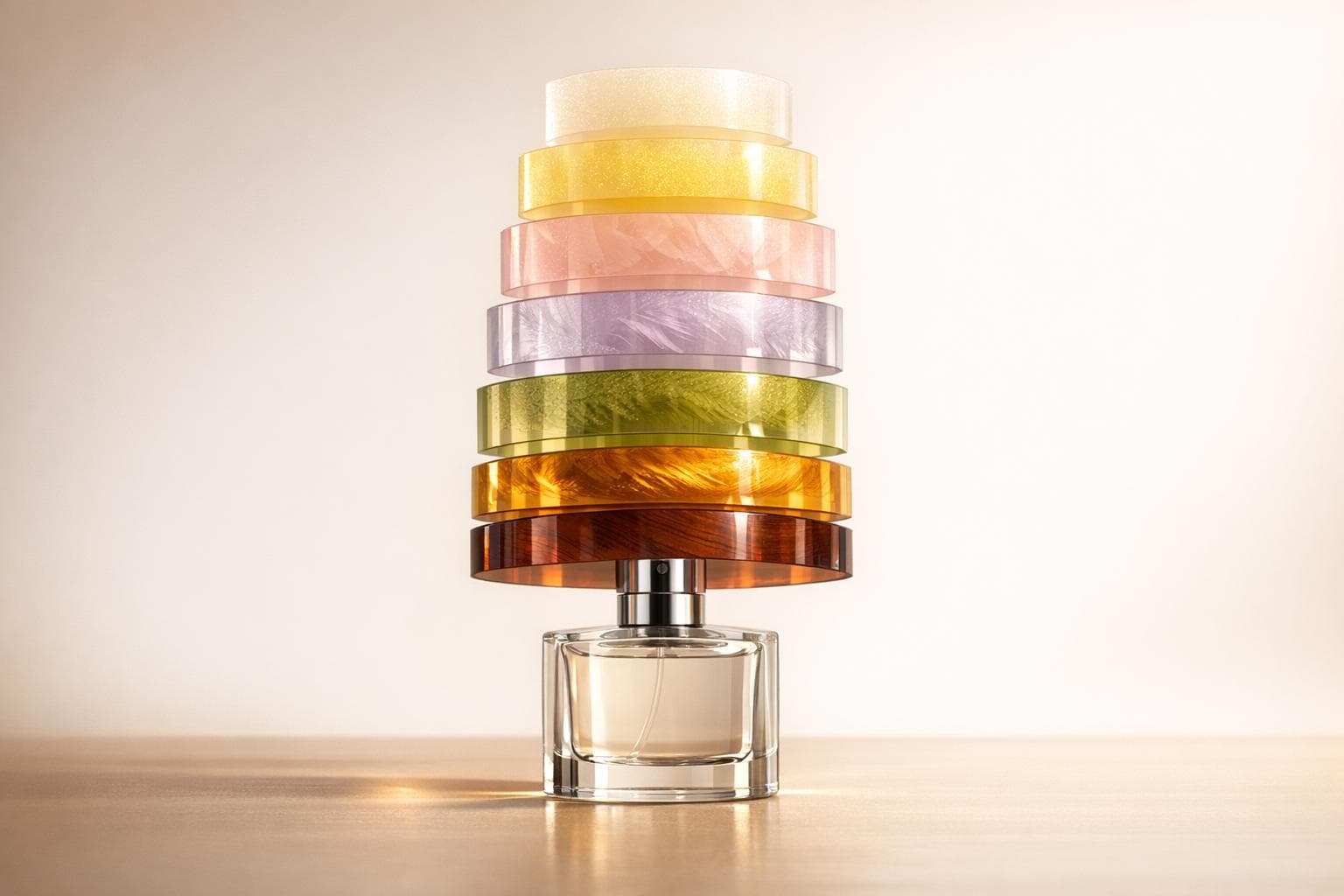
Vrstvení vůní spočívá ve vytváření harmonické kompozice, podobně jako u struktury tradičního parfému, který se rozvíjí v základních, středních a vrchních tónech.
Začněte základní vrstvou a soustřeďte se na vůně s dřevitými, ambrovými nebo pižmovými tóny. Tyto těžší prvky fungují jako fundament, dodávají kombinaci hloubku a dlouhou výdrž. Poté zařaďte střední vrstvu a zvolte květinové, kořenité nebo gurmánské tóny, které propojí těžší základ s lehčí špičkou. Nakonec přidejte vrchní tóny, jako jsou citrusy nebo svěží akordy, které dodají jas a okamžitý dojem. Tento postup krok za krokem zajistí, že se jednotlivé vrstvy budou doplňovat, nikoli vzájemně přehlušovat.
Než směs nanesete na pokožku, vyzkoušejte ji na papírových blotterech. Nastříkejte každou vůni na samostatný proužek a poté je na chvíli přidržte u sebe, abyste viděli, jak spolu reagují. Tento rychlý test vás může uchránit před zklamáním z nevydařené kombinace po aplikaci. Jakmile jste s výsledkem spokojeni, naneste těžší vůni na pulzní body, jako jsou zápěstí, krk nebo oblast za ušima, a lehčí vůni vrstvíte na ni nebo v její blízkosti pro nejlepší efekt.
| Vonná rodina | Nejlépe se páruje s | Efekt |
|---|---|---|
| Květinová | Citrusová, zelená nebo vanilková | Dodává svěžest nebo krémovou hebkost |
| Citrusová | Květinová, dřevitá nebo akvatická | Projasňuje a pozvedá těžší tóny |
| Kořenitá | Dřevitá, květinová nebo ambrová | Vnáší hřejivost a komplexnost |
| Gurmánská | Ovocná, květinová nebo dřevitá | Vytváří sladké, hravé nebo svůdné zakončení |
| Ambra/Pižmo | Vanilka, citrusy nebo květiny | Zvyšuje výdrž a dodává tajemný rozměr |
| Zelená | Citrusová nebo bylinná | Přináší živý, křehký a energizující pocit |
Pro nejlepší výsledky se vyhněte vrstvení dvou mimořádně komplexních vůní. Spojení těžkých oudů nebo výrazných kožených tónů může vytvořit chaotickou směs, v níž se tóny střetávají místo toho, aby splývaly. Podobně kombinace pryskyřičných základů, jako je myrha, s jasnými citrusy nebo zemitých pačuli s jemnými květinami často vede spíše k nesouladu než k harmonii. Volbu vrstev přizpůsobte i ročnímu období: lehčí, svěží kombinace skvěle fungují v létě, zatímco těžší, kořenité či dřevité akcenty vyniknou v zimě.
Experimentujte s odstřiky od Scento

Jakmile zvládnete základy vrstvení vůní, posuňte své objevování dál s cenově dostupnými odstřiky od Scento. Plnohodnotná balení mohou být nákladná, zejména pokud experimentujete s různými kombinacemi, ale Scento nabízí elegantní řešení. Jejich odstřiky jsou dostupné ve třech velikostech – 0,75 ml, 2 ml a 8 ml – takže můžete testovat směsi z kolekce více než 1 000 designérských i niche vůní, aniž byste zatížili svůj rozpočet.
2ml odstřik je obzvlášť praktický pro zkoušky vrstvení. Nabízí dostatek vůně pro více testů a pomáhá vám objevit, jak různé vonné rodiny reagují s chemií vaší pokožky. Tuto velikost využijete pro experimentování s kombinacemi ještě předtím, než se rozhodnete pro celodenní nošení. Jakmile najdete směs, kterou si zamilujete, 8ml odstřik nabídne přibližně 120 střiků, což znamená týdny nošení a prostor si svou tvorbu skutečně vychutnat.
| Velikost odstřiku | Nejlepší využití | Hlavní výhoda |
|---|---|---|
| 0,75ml | První objevování | Finančně dostupná možnost pro prozkoumání jedné vonné rodiny. |
| 2ml | Experimenty s vrstvením | Dostatečný objem pro testování více kombinací. |
| 8ml | Každodenní nošení & cestování | Přibližně 120 střiků, ideální pro delší používání nebo na cesty. |
Tyto odstřiky nejsou jen praktické, ale i snadno přenosné, takže jsou ideální pro osvěžení během dne. Protože vrchní a střední tóny vyprchávají rychleji než tóny základní, umožní vám odstřik obnovit vůni v průběhu dne, aniž by přehlušil původní aplikaci. Díky rozsáhlé knihovně Scento, která zahrnuje dřevité základy, citrusové vrchní tóny i květinová srdce, můžete zdokonalovat své dovednosti ve vrstvení a vytvořit si signaturní směs ještě před investicí do plnohodnotných flakonů.
Kromě pohodlí pomáhají odstřiky také snižovat plýtvání a zároveň budovat personalizovaný vonný šatník. Pro ještě elegantnější dojem přichází velikost 8 ml v křišťálových vialkách, což z ní činí praktickou i stylovou volbu pro každodenní použití i cestování. S odstřiky od Scento můžete experimentovat sebejistě, ladit své kombinace a s lehkostí vytvářet skutečně osobitou vůni.
Závěr
Vrstvení vůní nabízí cestu k vytvoření parfému, který bude zcela váš – odraz vaší nálady, ročního období i konkrétní příležitosti. Spojením dřevitého základu s jiskrou citrusů nebo propojením gurmánského srdce se svěžími vrchními tóny můžete vytvořit signaturní vůni, která bude působit osobitě a nezaměnitelně.
Právě flexibilita činí vrstvení tak přitažlivým. Lehká květinová vůně se může snadno proměnit z nenuceného denního doprovodu v elegantní večerní parfém pouhým přidáním bohatších orientálních či dřevitých vrstev. Tento přístup vám umožní objevovat rozmanité kombinace, aniž by se váš toaletní stolek zaplnil poloprázdnými flakony.
Možnosti odstřiků od Scento dělají experimentování snadným a cenově dostupným. Jejich velikost 2 ml je ideální pro testování směsí na různých pulzních bodech, zatímco varianta 8 ml nabízí zhruba 120 střiků – skvělé pro delší nošení vámi vybrané kombinace. Tento koncept podporuje hravé experimentování a umožňuje vám s jistotou objevovat nové kombinace.
Začněte jednoduše: zkuste vrstvit dřevitý základ s jasným citrusovým vrchním tónem nebo spojit gurmánské srdce s něčím svěžím a křehkým. Zaznamenávejte si poměry, které vám fungují, abyste své oblíbené směsi mohli znovu vytvořit. Krása vrstvení spočívá ve svobodě objevování – neexistují žádná pravidla, pouze nekonečné příležitosti najít něco, co bude jedinečně vaše.
Často kladené otázky
Jak poznám, která vůně by měla tvořit základní vrstvu?
Při vrstvení vůní je nejlepší začít kompozicí, která má výraznější a dlouhotrvající charakter. Skvělou volbou jsou dřevité, orientální nebo sladké vůně. Dodávají hloubku a vytvářejí pevný základ, takže představují dokonalý podklad pro spojení s lehčími či jemnějšími vůněmi.
Jak mohu docílit toho, aby vrstvené vůně na mé pokožce vydržely déle?
Pro delší výdrž vrstvených vůní je klíčový správný přístup i příprava. Začněte nanášením vůní v promyšleném pořadí – nejprve lehčí, svěžejší tóny a nakonec bohatší, těžší, čímž vznikne vyvážený vývoj. Zásadní je také předchozí hydratace pokožky, protože vyživená pleť vůni drží mnohem lépe. Pro ještě výraznější efekt kombinujte parfém s ladícími nebo doplňkovými produkty, jako jsou tělová mléka či vlasové mlhy. Ty nejen prohloubí charakter vůně, ale také pomohou prodloužit její přítomnost.
Jaká je nejjednodušší „bezpečná“ kombinace vrstvení pro začátečníky?
Pro ty, kteří s vrstvením teprve začínají, je snadnou a přístupnou volbou spojit lehkou, svěží vůni – například citrusovou nebo květinovou – s teplejší, bohatší kompozicí. Můžete například zkombinovat jasný citrusový tón s jemnými květinami nebo smíchat čistou, vzdušnou vůni s náznaky dřeva či pižma. Výsledkem je hloubka a charakter bez přehnané intenzity.