Používání vůní při pohřebních rituálech provází lidstvo celou jeho historií a vždy plnilo jak symbolický, tak ryze praktický účel. Od starověkého Egypta až po moderní smuteční obřady sloužily aromatické látky k uchování těl, uctění památky i ke spojení s božským světem. Klíčové body:
- Starověké zvyky: Egypťané používali myrhu, kadidlo a kyphi při mumifikaci, aby uchovali tělesnou schránku a zajistili duši bezpečnou pouť na věčnost. Římané pálili pryskyřice a pomazávali těla oleji na počest zesnulých.
- Mezoamerika: Kopálová pryskyřice a vůně aksamitníku symbolizovaly modlitby a spojení s bohy, přičemž pohřební rituály často zahrnovaly vrstvení aromatických látek.
- Moderní tradice: V současnosti se při pohřbech využívají tóny kadidla a lilií, které odrážejí kulturní i náboženské zvyklosti. Technologický pokrok dokonce umožnil zrekonstruovat starověké vonné směsi pro výstavní účely.
Vůně zůstává mostem mezi hmotným a duchovním světem – vzdává hold zesnulým a přináší útěchu pozůstalým.
Starověké civilizace: Vůně v pohřebních obřadech
Egyptská mumifikace a posvátné parfémy
Ve starověkém Egyptě představovala mumifikace mnohem více než pouhou konzervační techniku – byla to duchovní nezbytnost k ochraně Ka, neboli duše, na její pouti do posmrtného života. Zásadní roli v tomto procesu hrály aromatické suroviny. Těla se ovazovala plátnem napuštěným oleji a prosyceným pryskyřicí jehličnanů spolu s rostlinnými výtažky, což zajišťovalo jak trvanlivost, tak posvátnou čistotu.
Parfémy a vonné oleje nebyly určeny pouze živým; považovaly se za nezbytnost, které se měl zesnulý těšit i na onom světě. Egyptské hrobky byly těmito vůněmi hojně zásobeny, aby naplnily spirituální potřeby mrtvých. Pozoruhodné je, že když archeologové v roce 1897 hrobky otevřeli, zjistili, že některé parfémy ukryté po tisíce let si stále uchovaly svou sladkou vůni. Rituály, jako bylo každovečerní pálení směsi Kyphi, symbolizovaly bezpečný průchod boha slunce Rea podsvětím a odrážely hluboké sepětí mezi vůní a nakloněním božské přízně.
Fascinující objev v balzamovací dílně 26. dynastie v Sakkáře odhalil celosvětový dosah egyptských vonných rituálů. Balzamovači pracovali se surovinami, jako jsou pryskyřice elemi a damara, dováženými až z daleké jihovýchodní Asie. S aromatickou úctou se přistupovalo dokonce i ke zvířatům. Bohaté rodiny nechávaly mumifikovat své domácí mazlíčky, například kočky, zdobily je šperky a zacházely s nimi se stejnou péčí jako s lidskou honorací. Smuteční rituály za milovanou kočku zahrnovaly oholení obočí – veřejný projev zármutku, který dokládá hluboký kulturní význam těchto zvyků.
Důmyslné využívání vonných esencí v egyptských pohřebních obyčejích ovlivnilo sousední civilizace a zanechalo odkaz, který se promítl do mezopotámských i středomořských tradic.
Pohřební aromatické látky v Mezopotámii a Středomoří
Mezopotámie, často považovaná za kolébku parfémářského umění, začala experimentovat s vůněmi již kolem roku 3 000 př. n. l. Do druhého tisíciletí př. n. l. dovedly parfumérky jako Tapputi techniky míchání aromatických ingrediencí k dokonalosti. Archeologické vykopávky v Mari, městě na území dnešní Sýrie, odkryly specializované mísicí dílny, v nichž řemeslníci pracovali se dřevem jehličnanů a borovic. Mezi nimi se mimořádné úctě těšil libanonský cedr, který symbolizoval přepych i duchovní vznešenost.
Středomořský svět včetně Římanů tyto tradice přejal a dále rozvinul. Římské pohřební obřady často zahrnovaly pálení pryskyřic, jako jsou kadidlo a myrha, kolem zesnulého. Věřilo se, že stoupající dým a vůně vytvářejí přímé spojení s bohy. Výzkumníci Rhea Brettell a Carl Heron tento proces popisují slovy:
Věřilo se, že spolu se stoupající vůní vzniká pouto s bohy.
Římané také nanášeli vonné substance přímo na tělo nebo pohřební rubáše, aby usnadnili přechod duše do posmrtného života. Na pohřební hranice se spolu s vínem a obilím sypaly aromatické byliny a pryskyřice, které sloužily jako obětiny k potěšení zesnulého.
Působivým příkladem těchto zvyků je pohřeb urozené římské ženy ze 4. století, známé jako dáma ze Spitalfields. Její tělo spočívalo na vavřínových listech a bylo zahaleno do vlněného roucha napuštěného pryskyřicemi z čeledí Pinaceae (borovicovité) a Pistacia (řečík). Pokročilá chemická analýza prokázala přítomnost exotických surovin včetně kadidla, které do římské Británie putovalo z daleké Arábie a Afriky. Jiný nález, žárový hrob z 2. století na ostrově Mersea Island, naopak ukázal úspornější přístup. Nespálené kadidlo zde bylo smícháno s levnější jehličnanovou pryskyřicí, což dokládá snahu o snížení nákladů, o níž se zmiňují i starověké texty. Řecký filozof Theofrastos vyzdvihoval syrskou pryskyřici Pistacia slovy:
Syrská pryskyřice Pistacia byla „nejlepší, neboť pevně tuhne, je nejvonnější a má nejjemnější vůni“.
Tyto příklady dokazují, že vůně nepředstavovaly pouhý luxus, nýbrž byly hluboce duchovním prvkem pohřebních rituálů, který spojoval smrtelnou a božskou říši.
Předkolumbovské mezoamerické pohřební zvyklosti
Vůně jako spojení s božským světem
V náboženském pojetí Aztéků a Mayů měly vůně hlubokou duchovní úlohu – sloužily jako potrava pro bohy a předky. Na rozdíl od fyzických obětin, jako bylo jídlo či pití, tyto božské bytosti přijímaly samotnou esenci, tedy vůni toho, co jim bylo nabídnuto. Kopálová pryskyřice získávaná ze stromů Protium copal a Bursera bipinnata byla uctívána jako „pokrm bohů“.
Při spalování uvolňoval kopál dým, který symbolicky unášel modlitby k nebesům. Jak vysvětluje The Grace Museum:
Stoupající dým odnáší modlitby k nebesům a k bohům.
Tento obyčej se neomezoval pouze na kopál. Květina cempasúchitl (aksamitník neboli afrikán) se svou zářivou barvou a pronikavou vůní symbolizovala „dechovou duši“ a tvořila most mezi pozemským a duchovním světem.
Yucatecké tradice význam vůní ještě více podtrhují. Podle jejich věrouky se dávní mayští předkové (hach uchben Maya) neživili kukuřicí, nýbrž právě vůněmi květin. Tato představa vysvětluje, proč vonné substance hrály v rituálech smrti tak zásadní roli. Běžnou obětinou byl také tabák, který se spaloval spolu s kopálem k uctění božstev deště a plodnosti. Tyto mytologické zvyklosti jsou doloženy archeologickými nálezy, jež odhalují jejich hluboké kulturní kořeny.
Archeologické doklady používání vůní
Hmatatelný důkaz těchto aromatických tradic nabízejí archeologické nálezy. Ve struktuře III-9 v lokalitě Calakmul vědci odkryli hrob hodnostáře z raného klasického období. Tělo pokrývala vrstva červeného hematitu smíchaného s vonnou pryskyřicí z čeledi Pinaceae (borovicovité). Tato kombinace pigmentu a vůně zesnulého symbolicky chránila a obklopovala.
Podobně v Chrámu nápisů v Palenque byl král Janaab’ Pakal (7. století) uložen k věčnému odpočinku ve střídajících se vrstvách červeného rumělky a průhledných organických pryskyřic. Tyto ceremonie zvané mukhaj trvaly až 10 dní a vyvrcholily utěsněním sarkofágu vápennou omítkou, aby se zadržely „emanace“ rozkladu. Archeologové Marisa Vázquez de Ágredos, Vera Tiesler a Arturo Romano Pacheco popisují tento proces následovně:
Těla těchto králů a šlechticů vydávala těžký pach rozkladu, který byl tlumen, a dokonce částečně neutralizován zapouzdřením do ‚rubášů‘ tvořených pigmenty a vonnými esencemi.
Tyto aromatické úpravy sloužily duchovním i ryze pragmatickým cílům. Ve vlhkém tropickém klimatu mayských nížin představoval rozklad zásadní problém. Parfémované vody z květinových extraktů a pryskyřičné nátěry pomáhaly tyto vlivy mírnit, přičemž zachovávaly důstojnost zesnulého a posilovaly jeho sepětí s nadpozemskou říší.
Aromatické látky v pohřebních rituálech starověkého Egypta
Váš osobní odborník na parfémy už čeká
Vyplňte náš rychlý vonný kvíz a objevte autentické designové a nišové parfémy vybrané podle vašeho vkusu – prozkoumejte je jako 2–8ml dekanty a vzorky, abyste si každý mohli vyzkoušet, než se rozhodnete pro celou lahvičku.
Najděte svou vůniPříprava vůní a jejich symbolika napříč kulturami
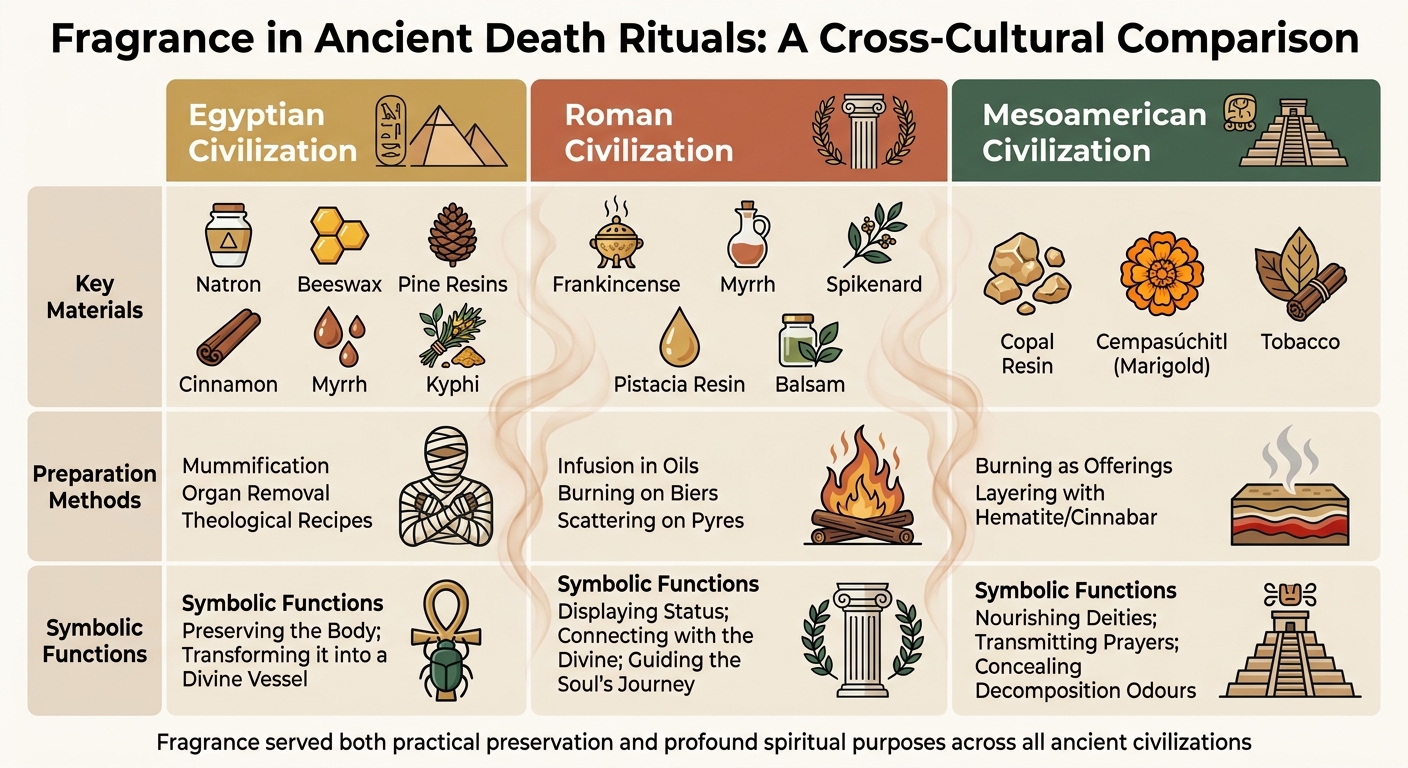
Vůně ve starověkých rituálech smrti: Srovnání egyptských, římských a mezoamerických tradic
Aromatické suroviny a jejich funkce
Různé civilizace v průběhu věků pečlivě vybíraly vonné látky pro duchovní i praktické účely spojené s pohřebními rituály. Římané pálili během obřadů kadidlo, aby propojili lidský a božský svět, zatímco Egypťané spoléhali na myrhu v balzamovacích mastech, které těla konzervovaly a posvěcovaly. Dalším vysoce ceněným materiálem byla pryskyřice z řečíku (Pistacia), proslulá svou trvanlivostí a vytříbeným aroma. Římané ji zapracovávali do pohřebních rubášů, ačkoli nebylo neobvyklé, že ji obchodníci míchali s levnějšími pryskyřicemi jehličnanů, aby zvýšili svůj zisk. Nard, dovážený z Indie, byl dalším klíčovým prvkem sloužícím k pomazání zesnulého. Římský básník Ausonius jeho použití působivě vylíčil:
Skrápěj můj popel čistým vínem a vonným olejem z nardu; přines i balzám, cizinče, spolu s nachovými růžemi.
Tyto esence plnily mnohem více než jen praktickou roli – nesly hlubokou symbolickou váhu a utvářely rituály i představy o smrti a posmrtném životě.
Přípravné techniky a mistři řemesla
Vytváření těchto vonných kompozic představovalo náročný proces svěřený do rukou zkušených řemeslníků a kněží, jejichž postupy se lišily podle kultury a zamýšleného účelu.
V pohřebním kontextu vyžadovala příprava esencí preciznost a rozsáhlé znalosti. Techniky jako macerace, enfleuráž a rané formy destilace se zdokonalovaly po celá staletí. Egyptští kněží například připravovali kyphi – posvátný parfém skládající se ze 16 pečlivě zvolených ingrediencí, který se používal při náboženských i pohřebních ceremoniích. Klíčovou roli hrál představený balzamování, jenž navrhoval směsi nejen s ohledem na jejich vůni, ale také pro jejich antimikrobiální účinky, nezbytné pro zachování těla. Římské parfumerie mezitím míchaly aromatické oleje určené pro smuteční průvody a obřadní kněží pálili kadidlo, aby překryli pach rozkladu a posvětili prostor.
Tyto promyšlené metody dokládají, jak mistři vůní a jejich umění hluboce ovlivňovali posvátné rituály a zanechali odkaz, který rezonuje až do dnešních dnů.
Využití vůní napříč kulturami
| Civilizace | Klíčové suroviny | Způsob přípravy | Symbolická funkce |
|---|---|---|---|
| Egyptská | Natron, včelí vosk, borovicové pryskyřice, skořice, myrha, kyphi | Mumifikace, vyjmutí orgánů, teologické receptury | Uchování těla; jeho proměna v božskou schránku |
| Římská | Kadidlo, myrha, nard, pryskyřice Pistacia, balzám | Infuzování do olejů, pálení u már, sypání na hranice | Vyjádření společenského statusu; spojení s bohy; doprovod duše na onen svět |
| Mezoamerická | Kopálová pryskyřice, cempasúchitl (aksamitník), tabák | Pálení jako obětina, vrstvení s hematitem/rumělkou | Syčení a potrava pro božstva; přenos modliteb; potlačení pachu rozkladu |
Tento přehled ukazuje společné i rozdílné způsoby, jimiž různé civilizace využívaly vůně k uctění památky zesnulých, přičemž harmonicky propojovaly praktické potřeby s hlubokou duchovní symbolikou.
Moderní vonné tradice při pohřbech a vzpomínkových obřadech
V návaznosti na starověké obyčeje moderní svět přizpůsobuje využívání vůní soudobým vzpomínkovým rituálům.
Regionální rozdíly v moderních smutečních vůních
I dnes jsou pohřby neodmyslitelně spjaty s charakteristickými vůněmi, ačkoli konkrétní volba se často odvíjí od kulturních tradic. V západním světě se běžně volí bílé květiny, jako jsou lilie, karafiáty, mečíky a chryzantémy, které dotvářejí důvěrně známou a slavnostní atmosféru.
Náboženské obřady rovněž přinášejí své vlastní vonné tradice. Katolické a pravoslavné liturgie často provází pálení kadidla během zádušních mší, zatímco islámské zvyky využívají bakhoor a oud k provonění a posvěcení prostoru. Na vzestupu je navíc specializovaný segment parfémů inspirovaných tematikou pomíjivosti a vzpomínek. Tyto kompozice často staví na zemitých tónech hlíny, sladké trávy, santalového dřeva a mahagonu, které evokují tichou a pokojnou atmosféru hřbitovů.
Přenesení starověkých zvyků do moderního kontextu
Starodávné vonné rituály nacházejí nový život i v dnešním světě vzpomínkových obřadů. Díky pokročilé plynové chromatografii s hmotnostní spektrometrií (GC–MS) dokázali vědci zrekonstruovat 3 500 let starou mumifikační vůni z kanopických nádob šlechtičny Senetnay – dílo dnes známé jako „The Scent of Eternity“ (Vůně věčnosti). Tento průlom nejen oživuje historické rituály, ale také je přibližuje široké veřejnosti prostřednictvím muzejních expozic. Jak uvedl Terp Laursen, vedoucí katedry orientálních studií v Moesgaard Museum:
Doufám, že tato výstava navrátí lidem něco, co bylo ztraceno po celé 4 tisíce let.
Moderní vzpomínkové obřady čerpají ze starověkých tradic také prostřednictvím personalizovaných vůní tvořených k uctění památky blízkých. Současní tvůrci často sahají po pryskyřici benzoe, myrze, kadidlu, cedru a levanduli, aby vytvořili kompozice evokující posvátnost a vzpomínku. Tyto tóny překlenují propast mezi minulostí a přítomností – nabízejí způsob, jak oslavit život zesnulého a zároveň poskytnout hlubokou útěchu těm, kteří zůstávají. Neutuchající role vůní v těchto rituálech potvrzuje jejich výsadní postavení v lidské kultuře napříč tisíciletími.
Závěr
V průběhu dějin představovala vůně pevný pilíř smutečních obřadů a vždy nabízela mnohem více než jen praktický užitek. Od hrobek římské Británie prosycených kadidlem až po slavnostní vykuřování při současných obřadech sloužily vůně vždy jako most mezi hmotným a duchovním světem.
Tato nepřerušená tradice dokládá, že ušlechtilé esence vždy pomáhaly uctít památku zesnulých a skýtat útěchu truchlícím. Vědecké studie potvrzují, že i v odlehlých římských provinciích byly vzácné pryskyřice jako Pistacia nesmírně ceněny. Dnes tento prastarý zvyk přetrvává v citlivém zapojení tradičních tónů do moderních pohřebních rituálů.
Vůně má výjimečnou schopnost probouzet vzpomínky a navazovat spojení s dávnými tradicemi. Římský básník Ausonius tuto myšlenku vyjádřil mistrně:
Skrápěj můj popel čistým vínem a vonným olejem z nardu; přines i balzám, cizinče, spolu s nachovými růžemi. Nekonečné jaro plní mou urnu bez slz: nezmizel jsem ze světa, jen změnil své bytí.
Tato slova, napsaná před celými staletími, stále rezonují v dnešních pietních chvílích a ukazují, jak vůně dokáže proměnit zármutek v trvalou poctu. Od starověkých krypt až po dnešní síně zůstává vonná esence neoddělitelnou součástí toho, jak vzpomínáme na ty, kteří nás předešli.
Často kladené otázky
Proč byly vůně tak důležité při rituálech smrti?
Vůně hrály v pohřebních obřadech napříč historií klíčovou úlohu, v níž se prolínal praktický užitek se spirituální symbolikou. Ve starověkém Egyptě byly parfémy neoddělitelnou součástí mumifikace a věřilo se, že provázejí duši na její cestě do posmrtného života. Římané využívali vonné pryskyřice, jako je kadidlo, k uctění zesnulého a vyjádření společenského postavení. Kromě překrytí pachu rozkladu sloužily tyto ušlechtilé esence jako most k emocím a duchovnímu světu a dodnes tvoří hlubokou součást rozloučení a vzpomínání.
Které pryskyřice a květiny se napříč kulturami používaly nejčastěji?
Výsadní postavení v mnoha tradicích měly vonné pryskyřice jako kadidlo a myrha, které sloužily k pomazání těl nebo se pálily jako kadidlo při posvátných obřadech. Zásadní roli v parfumérském umění zasvěceném poctě zesnulým hrály také květiny, vzácná dřeva, semena a aromatické kořeny.
Jak se vůně využívají při moderních pohřbech?
Vůně hrají při současných smutečních obřadech jemnou, avšak působivou roli – pomáhají navodit uklidňující a důstojnou atmosféru. Ať už jde o smuteční květinové vazby, vykuřování kadidlem, či dokonce na míru vytvořené parfémy, vůně dokážou vyvolat drahocenné vzpomínky a zrcadlit osobnost zesnulého. Historicky vůně sloužily k uctění památky a symbolizovaly přechod duše, což je tradice, která si uchovává svůj význam i dnes. Vůně zůstává hlubokým vyjádřením vzpomínky a citového pouta v těchto intimních okamžicích rozloučení.

