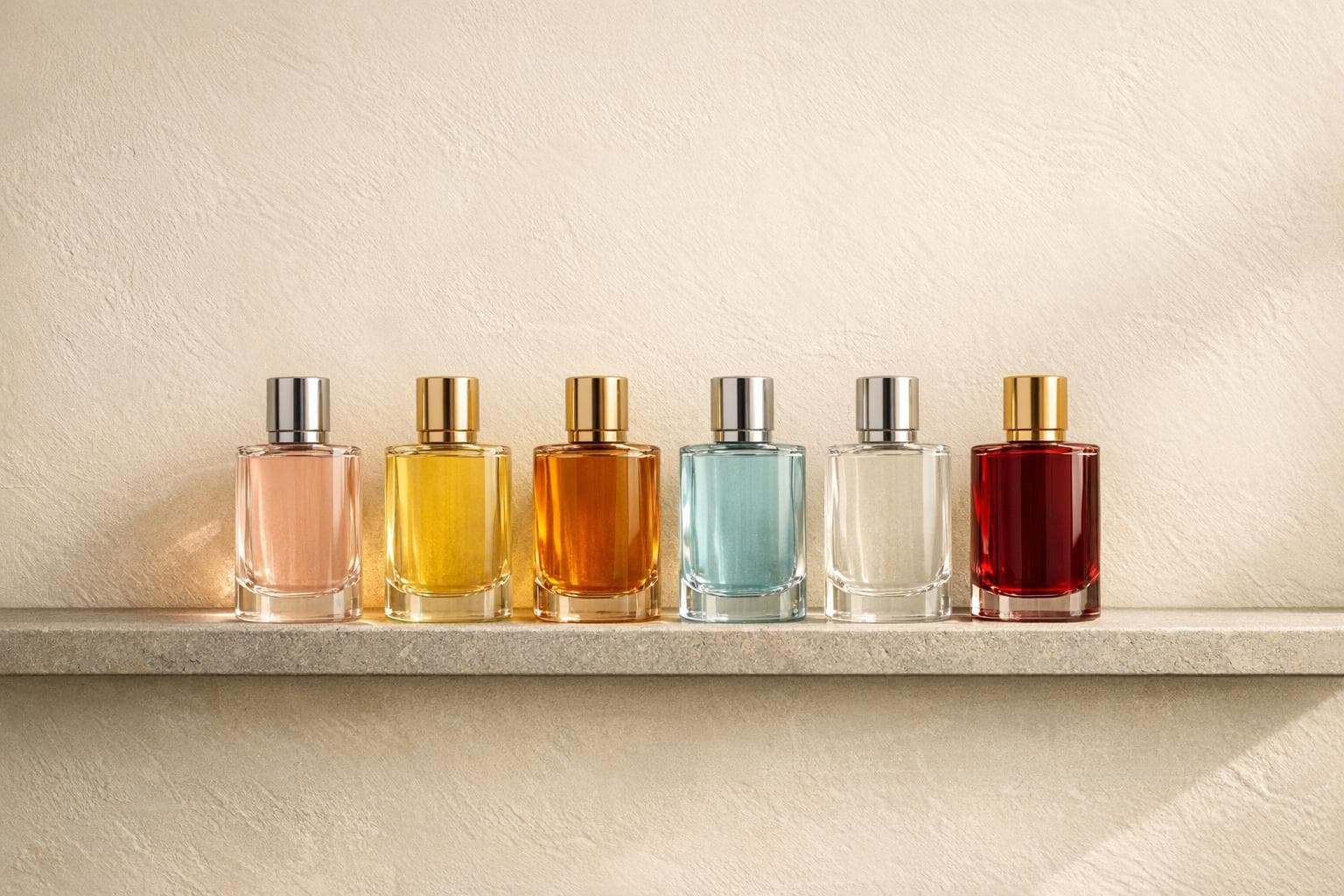
Budování vonného šatníku se podobá sestavování oděvní garderoby – zajistí vám dokonalou vůni pro každou náladu, roční období i příležitost. Místo spoléhání se na jediný parfém promyšlená kolekce podtrhne váš osobní styl a posílí sebevědomí. Zde je vše, co potřebujete vědět:
- Rodiny vůní: Poznejte čtyři hlavní skupiny – květinové, dřevité, orientální a svěží. Každá se hodí pro jiné rozpoložení a prostředí, od romantických večerů po pracovní jednání.
- Ikonická osobní vůně (Signature Scent): Zvolte si jeden parfém, který dokonale vystihuje vaše „já“ a skvěle funguje při každodenním nošení.
- Sezónní vůně: Lehčí, citrusové kompozice zazáří v létě, zatímco syté, kořenité tóny lépe vyniknou v zimě.
- Vůně pro konkrétní příležitosti: Do zaměstnání volte decentní tóny, na schůzky hřejivé květinové akordy a pro slavnostní okamžiky odvážné kompozice.
- Vrstvení a výdrž: Experimentujte s kombinováním různých parfémů a sledujte, jak se vysoké, střední a základní tóny postupně rozvíjejí.
Začněte pozvolna: se svou osobní signaturou, jednou sezónní volbou a jednou výraznou kompozicí pro zvláštní události. Odtud svou sbírku promyšleně rozšiřujte podle svého životního stylu a preferencí. Se správným výběrem se váš vonný šatník stane odrazem vaší identity a zanechá nezapomenutelný dojem všude, kam vstoupíte.
The 4 Main Fragrance Families
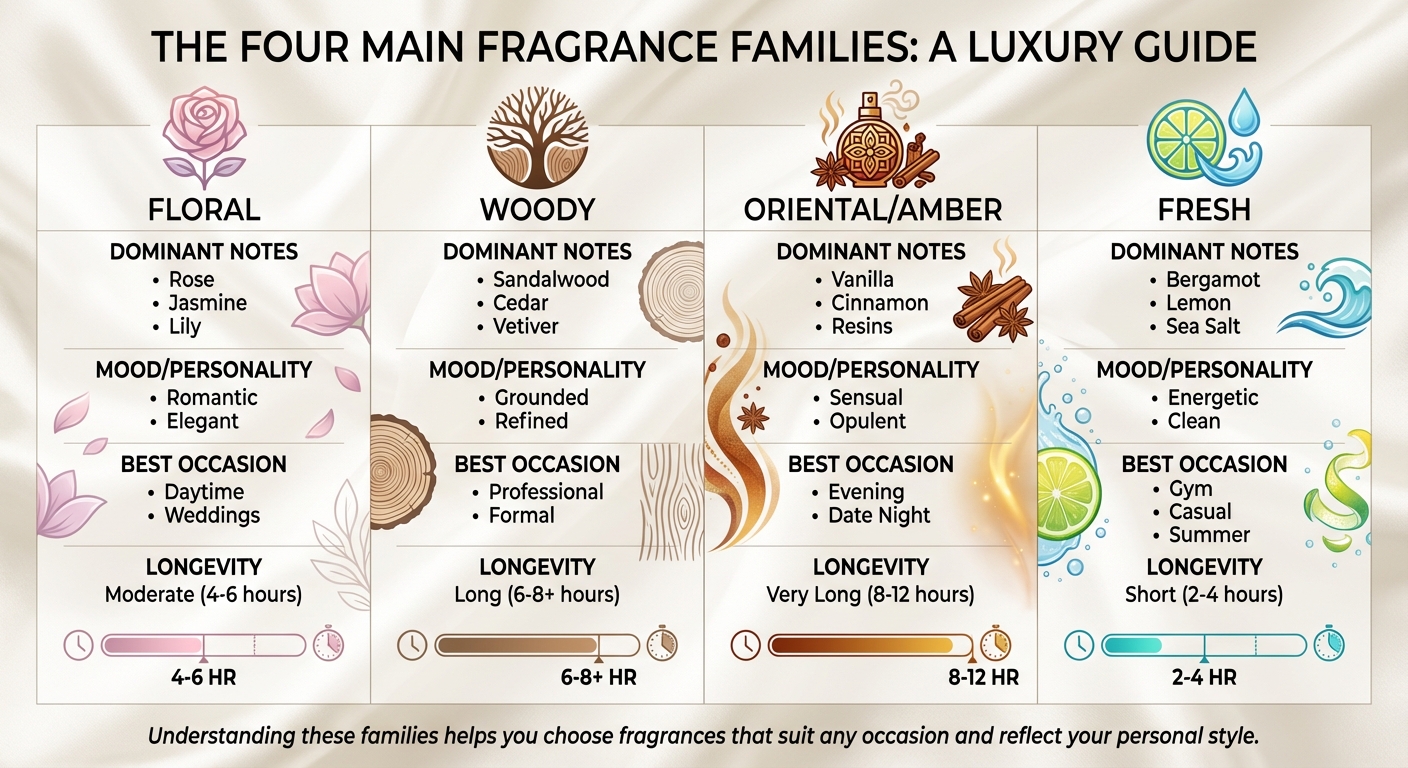
4 hlavní rodiny vůní: Průvodce tóny, náladami, příležitostmi a výdrží
Sestavení vyváženého vonného šatníku začíná pochopením čtyř primárních rodin vůní. Tyto kategorie, poprvé formalizované v čichovém kruhu již v roce 1983, slouží jako základ pro klasifikaci parfémů. Každá rodina přináší osobitý charakter, odlišnou výdrž i ideální příležitosti a usnadní vám výběr dokonalého tónu pro každý okamžik.
Paul Guerlain, uznávaný parfumér ze společnosti IFF, jejich podstatu vystihuje slovy:
„Každá rodina vůní je vytvořena tak, aby vyvolávala odlišné emocionální reakce – od zářivosti a svěžesti až po hřejivost a svůdnost.“
Díky porozumění těmto skupinám dokážete vůni sladit s momentální náladou i prostředím – ať už toužíte po povzbuzení na ranní schůzce, nebo po smyslném doteku pro večerní společnost. Podívejme se blíže na to, čím se od sebe liší.
Květinové vůně
Květinové parfémy staví na tónech, jako jsou růže, jasmín a lilie, a nabízejí romantický, mimořádně přizpůsobivý profil. Na pokožce obvykle přetrvávají 4 až 6 hodin a představují dokonalou rovnováhu mezi zřetelnou přítomností a jemnou decentností. Jejich předností je všestrannost: lehká květinová aranžmá jsou ideální na den, zatímco hlubší a komplexnější kompozice zazáří na svatbách nebo večerních společenských akcích.
Dřevité vůně
Dřevité kompozice stojí na zemitých tónech, mezi něž patří santalové dřevo, cedr a vetiver. Jak uvádí Paul Guerlain:
„Dřevité vůně jsou vyhlášené svými zemitými, uzemňujícími kvalitami, které navozují pocit klidu, stability a sofistikovanosti.“
Tyto parfémy vyzařují teplo a ušlechtilou eleganci, což z nich činí perfektní volbu pro profesní či formální příležitosti. S výdrží přesahující 6 až 8 hodin na ně můžete spoléhat během náročných dnů i dlouhých večerů. Dřevitým esencím se daří především v chladnějším počasí, kdy chladný vzduch umocňuje jejich hloubku. V letním parnu však mohou působit až příliš těžkopádně.
Orientální vůně
Orientální kompozice, často označované jako ambrové, jsou bohaté a exotické. Opírají se o hřejivé, kořenité tóny vanilky, skořice a pryskyřic. Paul Guerlain je popisuje takto:
„Ambrové parfémy se vyznačují teplými, smyslnými a exotickými aromaty, která vytvářejí auru tajemství, intenzity a okázalého luxusu.“
Tyto mimořádně působivé kreace vydrží 8 až 12 hodin a nejlépe se hodí na večer nebo pro slavnostní momenty. Jejich podmanivá intenzita by však v teplém počasí či neformálním prostředí mohla působit příliš dominantně, proto se méně hodí pro běžné denní nošení.
Svěží vůně
Svěží parfémy jsou čisté, povzbuzující a čerpají z citrusových, zelených i akvatických nót. Jsou jako stvořené pro volný čas, teplé slunečné dny i sportovní aktivity. Tyto povznášející, odlehčené esence oceníte ve chvílích, kdy toužíte po jemném a nevtíravém vyznění.
Daň za jejich lehkost? Jde o rodinu s nejkratší trvanlivostí, která obvykle odeznívá během 2 až 4 hodin. Jejich vzdušné složení rychle vyprchává, obzvláště v horku. Právě to z nich však dělá osvěžující a diskrétní společníky pro situace, kde by výrazný parfém nebyl vhodný.
| Rodina vůní | Dominantní tóny | Nálada / Charakter | Nejvhodnější příležitost | Výdrž |
|---|---|---|---|---|
| Květinová | Růže, jasmín, lilie | Romantická, elegantní | Běžný den, svatby | Střední (4–6 hod.) |
| Dřevitá | Santalové dřevo, cedr, vetiver | Uzemněná, vytříbená | Pracovní, formální | Dlouhá (6–8+ hod.) |
| Orientální / Ambrová | Vanilka, skořice, pryskyřice | Smyslná, opulentní | Večer, romantická schůzka | Velmi dlouhá (8–12 hod.) |
| Svěží | Bergamot, citron, mořská sůl | Energická, čistá | Sport, volný čas, léto | Krátká (2–4 hod.) |
Znalost těchto vonných rodin vám umožní vybírat parfémy, které nejen bezchybně odpovídají dané chvíli, ale také dokonale zrcadlí váš osobní styl i vnitřní rozpoložení.
Vaše osobní ikonická vůně (Signature Scent)
Ikonická vůně představuje mnohem více než jen příjemný parfém – je odrazem vaší osobnosti a každodenním věrným společníkem. Jak vystihuje Eden Perfumes:
„Signature scent je parfém, ve kterém se cítíte nejvíce sami sebou. Je to vůně, po které sáhnete v běžný den zcela bez přemýšlení. Jednoduše působí přirozeně a hodí se pro většinu příležitostí.“
Je to esence, pro niž instinktivně natáhnete ruku, ať už míříte do kanceláře, na kávu s přáteli, nebo vyřizujete každodenní pochůzky. Na rozdíl od kreací vyhrazených pro slavnostní události nebo vybraná roční období by vaše osobní vůně měla být dokonale univerzální – měla by působit jako vaše přirozené prodloužení po celý rok. Výběr tohoto klíčového parfému je základním kamenem budování celého vonného šatníku.
Jak si zvolit svou osobní vůni
Začněte zhodnocením svého denního režimu. Trávíte-li většinu času prací z domova, nejlépe vám budou vyhovovat intimnější, jemnější kompozice s něžným pižmem či nevtíravými květinami. Kancelářské prostředí naopak vyžaduje kultivované, decentní tóny, jakými jsou lehké dřevité akordy nebo pudrové květiny. Svou roli hraje i klima: těžké, syté esence mohou v horku a vlhku působit dusivě, zatímco jiskřivé citrusy se v mrazivém vzduchu snadno ztratí.
Zásadním faktorem je také chemie vaší pokožky. Parfém reaguje na přirozené kožní lipidy a pH, což znamená, že vůně na testovacím papírku může vonět zcela jinak než na vašem těle. Vždy testujte parfém přímo na sobě a dopřejte mu dostatek času, aby prošel všemi fázemi vývoje. Zaznamenávání dojmů – jak dlouho vydrží, jaké pocity ve vás vyvolává a při jakých příležitostech se v něm cítíte nejlépe – vám výběr nesmírně usnadní.
Oblíbené profily pro osobní vůni
Ikonické parfémy nejčastěji spadají do několika vyhledávaných kategorií:
- Čistá pokožka (Clean Skin): Tyto kompozice sázejí na hebká pižma a křehké květiny a vytvářejí dojem „vaší vlastní kůže, jen ještě dokonalejší“. Skvělým příkladem je Maison Margiela ‘REPLICA’ Lazy Sunday Morning.
- Moderní květiny: Propojují nadčasové tóny růže či jasmínu se svěžími nebo dřevitými akcenty, které jim dodávají současný šmrnc. Dokonalým zástupcem je Gucci Bloom.
- Uzemňující dřeva: Zásluhou krémového santalového dřeva či kouřového vetiveru působí tyto parfémy velmi sofistikovaně a nadčasově genderově neutrálně. V této kategorii vyniká například Santal 33.
Vodítkem vám mohou být i preference z vaší stávající sbírky. Volíte-li často vanilku, budou vám pravděpodobně blízké gurmánské vůně s tóny karamelu, kávy nebo medu. Pokud nedáte dopustit na svěží zelená aromata, vezměte v úvahu pohled, který nabízí Chriselle Lim, majitelka a kreativní ředitelka značky Phlur:
„Zelená vůně mi připomíná procházku bujnou, svěží zahradou – je jiskřivá a často v sobě nese tóny vetiveru nebo fíků.“
Vlastní vkus vás nakonec neomylně dovede k parfému, který budete nosit s naprostou samozřejmostí a v němž zůstanete věrní sami sobě. Tato osobní signatura se stane úhelným kamenem vašeho vonného repertoáru – čichovým vyjádřením vaší identity.
Sezónní vůně
Střídání ročních období není jen impulsem k obměně šatníku – je to také skvělá příležitost osvěžit skladbu vašich parfémů. Vyšší teploty urychlují odpařování a posilují projekci, zatímco chladné počasí vývoj vůně zpomaluje a vytváří intimnější atmosféru.
Chcete-li udržet svou kolekci aktuální, vyzkoušejte přístup „Reflektovat, obměnit, zredukovat, doplnit“. Zhodnoťte, co vám přináší radost, vyměňte flakony podle aktuální sezóny, odložte kousky, které vás již neoslovují, a doplňte novinky pro nadcházející měsíce. Tento postup zajistí, že vaše sbírka zůstane promyšlená a flexibilní. Podívejme se, jaké esence nejlépe vyniknou v různých fázích roku.
Vůně na jaro a léto
Když se dny prodlužují a oteplují, sáhněte po parfémech, které působí lehce, jiskřivě a povzbudivě. Jarní vůně často tíhnou k orosené svěžesti, zatímco léto volá po vzdušných, chladivých tónech. Hledejte akordy jako:
- Citrusy: bergamot, mandarinka a citron
- Akvatické tóny: evokující mořský vánek či chlad horských potoků
- Zelené bylinky: bazalka, máta a šalvěj
- Jemné květiny: neroli a květ pomerančovníku
Například Tom Ford Mandarino di Amalfi zachycuje atmosféru pobřeží Amalfi díky mandarince, bazalce a bergamotu, zatímco Jo Malone Wood Sage & Sea Salt přináší esenci větrem ošlehané pláže prostřednictvím mořské soli, šalvěje a semen ibiškovce.
Než se definitivně rozhodnete pro letní parfém, vyzkoušejte „Test počasí na zápěstí“: aplikujte vůni za chladného rána a znovu v odpoledním teple, abyste viděli, jak reaguje. Ve vlhkém klimatu volte spreje na bázi alkoholu a vyhněte se hutným tělovým olejům, abyste předešli pocitu mastnoty. Tyto svěží, vitální kreace jsou pro jaro a léto ideálními společníky.
Vůně na podzim a zimu
S chladnějšími měsíci přichází čas na sytější, hřejivější vůně. V podzimních kompozicích hrají prim dřevité tóny santalu a cedru, hřejivé koření jako skořice a kardamom nebo sezónní ovoce v podobě švestek a fíků. Zima jde ještě dál – otevírá prostor pro hluboké gurmánské akordy (vanilka, fazole tonka), pryskyřičné ambry (myrha, benzoin) i opojné kapky koňaku či rumu. Jak vysvětluje Elodie Durande, parfumérka domu Ffern:
„Dřevité, kořenité vůně a pryskyřice vnášejí do chladných měsíců hřejivý pocit konejšivého bezpečí.“
Chladné počasí zpomaluje odpařování a zvýrazňuje hutné základní tóny, jako jsou vanilin a cedrol, díky čemuž tyto vůně působí hřejivě a obklopujícím dojmem. Pokud vás láká nosit těžší zimní vůni i v teplejším dni, zkuste místo přímé aplikace na pokožku nanést 1–2 střiky na látkový doplněk, například šálu.
Hladký přechod mezi ročními obdobími zajistí také sezónní vrstvení. Při přechodu z léta do podzimu můžete například jiskřivý citrusový parfém zkombinovat s kouřovým vanilkovým nebo dřevitým základem. Díky těmto promyšleným kombinacím zůstane váš vonný šatník variabilní za jakéhokoliv počasí.
Vůně pro různé příležitosti
Vyzvění parfému vždy úzce souvisí s prostředím, v němž jej nosíte. Mnoho znalců vůní si proto buduje kapsulovou kolekci o 5 až 7 parfémech, přizpůsobenou rozmanitým životním situacím.
Vůně do práce
V profesním prostředí je cílem působit kultivovaně a přirozeně. Decentní tóny jako kosatec, neroli nebo pižmo fungují znamenitě – zajistí, že vůně podtrhne vaši osobnost, aniž by zahltila sdílený prostor. Mezi další vyhledávané tóny pro pracovní den patří bergamot, citron, cedrové dřevo a santal, jež vyzařují sebejistotu bez zbytečné okázalosti.
Prada L’Homme vyniká svou čistou kompozicí kosatce a neroli připomínající svěže vyprané prádlo a nabízí ryze sofistikovaný profil. Bleu de Chanel v sobě mísí citrusy a dřeva a představuje univerzální volbu, která vás bez zaváhání provede od porad až po neformální večeři. Hledáte-li vůni s větší hloubkou, Boss Bottled kombinuje jablko se santalovým dřevem a je skvělou volbou pro celý pracovní den. Zásadní je vybírat parfémy s čistou, vyrovnanou projekcí, které spolehlivě vydrží po celou pracovní dobu.
Intimnější chvíle si však žádají zcela jiný přístup.
Romantické vůně
Romantické příležitosti si říkají o vřelost, blízkost a tóny, které působí přitažlivě a osobně. Květinové akordy růže, jasmínu či pivoňky jsou ideální pro denní schůzky, zatímco orientální kompozice s vanilkou, ambrou nebo myrhou vnášejí do večerních setkání smyslné napětí.
YSL La Nuit De L’Homme je oblíbenou volbou díky svůdnému spojení kardamomu a levandule. Dior Homme Intense snoubí kosatec, ambrette, levanduli a hrušku v elegantním, hluboce smyslném souznění. Toužíte-li po ještě výraznějším dojmu, Tom Ford Noir Extreme vrství kardamom, muškátový oříšek, vanilku a santalové dřevo do podoby bohatého, nezapomenutelného zážitku. Útulnou a hřejivou atmosféru vhodnou pro chvíle ve dvou dokážou vytvořit také gurmánské tóny karamelu, kávy a vanilky.
Výrazné reprezentativní vůně (Statement Scents)
Mimořádné události vyžadují parfémy, které zanechají hluboký dojem. Jsou to chvíle jako stvořené pro vůně s výraznou stopou (sillage) a výjimečnou výdrží, jež zajistí, že vaše přítomnost nezůstane bez povšimnutí. Victoria, zakladatelka Bois de Jasmin, to popisuje přesně:
„Některé příležitosti si žádají odvážné, dramatické parfémy, které vyjádří postoj: svůdné orientální tóny, přepychové ambry, opulentní květiny a podobně.“
Pro formální gala večery zvolte kompozice se suchými ambrovými tóny, kadidlem nebo vzácným kořením, které vyzařují aristokratickou eleganci. Než takový parfém zvolíte, zeptejte se sami sebe, zda se v něm cítíte skutečně výjimečně a sebevědomě, nikoli pouze příjemně. Vzhledem k tomu, že se komplexní parfémy od prvního nástřiku až po závěrečné odeznění výrazně proměňují, vyplatí se využít objevitelské sady (discovery sets) či odstřiky a vyzkoušet jejich chování v průběhu času.
Váš osobní odborník na parfémy už čeká
Vyplňte náš rychlý vonný kvíz a objevte autentické designové a nišové parfémy vybrané podle vašeho vkusu – prozkoumejte je jako 2, 5, 8 a 30 ml dekanty a vzorky, abyste si každý mohli vyzkoušet, než se rozhodnete pro celou lahvičku.
Najděte svou vůniJak je parfém vystavěn
Pochopení toho, jak se vůně v čase proměňuje, je základním předpokladem pro vytvoření dokonalého vonného šatníku. Zdokonalí také vaši schopnost vybírat flakony, které budou v dokonalé shodě s vaším vkusem i životním stylem.
Hlava, srdce a základ
Parfémy jsou strukturovány do vrstev, často popisovaných jako „čichová pyramida“. Tato architektura odráží postupné rozvíjení vůně podle toho, jak rychle se jednotlivé složky odpařují.
- Hlava (vysoké tóny): První vjemy, které po nanesení zaznamenáte. Zpravidla je tvoří lehčí, těkavější ingredience jako citrusy, bylinky nebo jemná aromata – představte si citron, bergamot či levanduli. Ačkoliv tyto tóny obvykle odeznívají během 5 až 20 minut, u špičkových formulací může jejich jiskra přetrvávat až 2 hodiny. Jak vysvětluje Man For Himself:
„Parfém prochází na pokožce různými fázemi odpařování, v důsledku čehož voní v průběhu času odlišně. Právě to je životní cyklus vůně v praxi.“ – Man For Himself
- Srdce (střední tóny): Jakmile odezní hlava, přicházejí ke slovu tóny srdce. Ty představují samotnou duši parfému a znějí přibližně 1 až 4 hodiny. V této vrstvě se běžně objevují jasmín, kakost (geranium), skořice a pepř, přičemž srdce tvoří zhruba 70 % celkového vyznění kompozice.
- Základ (nízké tóny): Poslední fáze přináší hloubku a celkovou trvanlivost. Tyto těžší molekuly se plně rozvíjejí po 3 až 4 hodinách a na kůži přetrvávají od 4 do více než 12 hodin. Tuto dlouhotrvající oporu obvykle zajišťují santalové dřevo, vanilka, ambra, vzácné pryskyřice a pižma.
Než si parfém pořídíte, dopřejte mu 1 až 2 hodiny, aby se na kůži rozvinul do plné krásy. Po nanesení se vyvarujte tření zápěstí o sebe – třením můžete narušit přirozený vývoj kompozice poškozením jemných molekul.
Výdrž a siláž (Sillage)
Při hodnocení parfému jsou rozhodující dva klíčové pojmy: výdrž (longevity) a siláž (sillage).
- Výdrž udává, jak dlouho zůstává vůně na vaší kůži rozpoznatelná.
- Siláž představuje stopu či auru, kterou za sebou parfém zanechává při vašem pohybu v prostoru.
- Projekce, která se siláží úzce souvisí, vyjadřuje vzdálenost, do níž vůně vyzařuje, když klidně stojíte na místě.
Klíčový vliv na trvanlivost má koncentrace vonných olejů. Zde je stručný přehled:
- Eau de Toilette (5–15 % vonných látek): Výdrž přibližně 4 až 7 hodin.
- Eau de Parfum (10–20 % vonných látek): Výdrž až 8 hodin.
- Parfum / Extrait (15–40 % vonných látek): Zajišťuje 12 i více hodin luxusní přítomnosti.
Koncentrace však není jediným faktorem. Toaletní voda postavená na dřevitém základě může díky stabilitě pryskyřic vydržet déle než parfémovaná voda založená na lehkých citrusech.
Chcete-li vůni zhodnotit objektivně, vyzkoušejte ji jak na testovacím papírku, tak na vlastní kůži. Počkejte alespoň 3 až 4 hodiny na plné rozvinutí závěrečného základu (tzv. dry down), který odhalí její pravou povahu. K vyzkoušení parfémů během několika dnů a v různých prostředích jsou ideální odstřiky (dekanty), díky nimž získáte reálnou představu o chování vůně v každodenním životě.
Pro zachování kvality parfému je nezbytné správné skladování. Flakony uchovávejte na chladném a temném místě mimo vlhkost, abyste předešli nežádoucí oxidaci. Při správné péči si parfémy uchovají svou prvotřídní kvalitu po dobu 3 až 5 let.
Vrstvení a míchání vůní
Vrstvení parfémů je fascinující způsob, jak vytvořit vůni, která bude patřit výhradně vám. Kombinací dvou či více kompozic dosáhnete neotřelého, bohatě strukturovaného aroma. Umění spočívá v odhadu, které tóny k sobě ladí a jak je vyvážit, aby výsledek působil harmonicky a elegantně. Tato technika dodá vašemu vonnému šatníku nový rozměr sofistikovanosti a otevře neomezené možnosti osobitého vyjádření.
Jak správně vrstvit parfémy
Pro začátek vybírejte vůně s kompatibilními tóny. Mimořádně působivá jsou například spojení kůže a květin – surový charakter kůže krásně zjemní něžné fialky nebo kosatec. Další skvělou volbou jsou zelené a dřevité kombinace, jako je vetiver doplněný cedrem, které navozují atmosféru hlubokého lesa. Zpočátku volte parfémy s jednodušší pyramidou (kolem 12–20 složek), aby výsledná směs nepůsobila chaoticky.
Při vrstvení naneste nejprve těžší podkladovou vůni a poté ji citlivě doplňte sekundárním parfémem, který ji rozjasní, aniž by ji přehlušil. Moderní alternativou je molekulární vrstvení za použití jednomolekulární vůně, jako je Molecule 01 (Iso E Super). Ta poslouží jako čistý dřevitý základ, který lichotí téměř jakékoliv kompozici. Jak radí Celine Roux, ředitelka tvorby vůní v Jo Malone London:
„Každá kombinace je možná – je to čistě vaše volba. Buďte odvážní a zkoušejte cokoliv, neexistuje zde žádné správně ani špatně.“
Než kombinaci aplikujete na tělo, vyzkoušejte obálkovou metodu: nastříkejte jednotlivé parfémy na samostatné testovací proužky, vložte je na hodinu do obálky a poté zhodnoťte výsledek. Chcete-li prodloužit výdrž, naneste ihned po sprše neparfémovaný hydratační krém nebo neutrální jojobový olej – vůně tak získá optimální základ, ke kterému lépe přilne. Jakmile objevíte slibný akord, dolaďte ho experimentováním s dekanty.
Testování pomocí odstřiků
Odstřiky (dekanty) představují skvělý způsob, jak vrstvení prozkoumat bez nutnosti investovat do plných balení. Na Scento vám vybrané vzorky umožní objevovat různé kombinace za zlomek běžné ceny. Vzorek o objemu 2 ml vystačí na 3 až 5 celodenních nošení, což vám poskytne dostatek času zjistit, jak se kreace chová přímo na vaší pokožce, místo abyste se spoléhali pouze na papírový proužek. Toto praktické zkoušení je pro vybudování promyšleného vonného šatníku naprosto zásadní.
„Vzorek za 9–15 €, který vám poskytne 3–5 celodenních nošení, představuje rozdíl mezi nákupem na jistotu a drahou chybou.“ – Rare Scents
Poznamenejte si poměry a pulzní body, které se vám nejlépe osvědčily, abyste dokázali zdařilou směs snadno zopakovat. Testujete-li více kombinací najednou, osvěžte své čichové buňky přivoněním k neutrálnímu místu, například k loketní jamce, nebo ke kávovým zrnům. Vynikajícím řešením jsou také objevitelské sady (discovery sets), jež vám představí celou rodinu vůní – od oudových po květinové – a usnadní výběr doplňkových akcentů pro vaše oblíbené kousky.
Průvodce vaším vonným šatníkem
K vonnému šatníku přistupujte podobně jako ke své módní garderobě: měl by obsahovat kousky pro každodenní nošení, reprezentativní modely do společnosti i výrazné akcenty pro nevšední chvíle. Cílem je vytvořit pestrou paletu napříč různými rodinami, abyste byli připraveni na jakoukoliv příležitost i náladu.
Přehled podle rodiny a využití
Začněte se svou osobní ikonickou vůní – kompozicí, která vyjadřuje vaši osobnost a bezvadně funguje při běžném denním nošení. Poté svou sbírku rozšiřte o tyto nezbytné pilíře: lehké, svěží parfémy pro volný čas (citrusové či zelené tóny), decentní a kultivované vůně do pracovního prostředí (jemná dřeva, kosatec, pižmo) a bohaté, hluboké esence pro slavnostní večery (ambra, oud, hřejivé koření). Rotaci vůní přizpůsobujte střídání ročních období.
Do své sbírky můžete zařadit také parfémy pro konkrétní náladu – kompozice, které dokážou povzbudit mysl nebo naopak navodit vnitřní klid. Čisté, vzdušné vůně vnášejí harmonii, zatímco jiskřivé citrusy dodávají novou energii. Usilujte o vyvážené zastoupení napříč spektrem: svěží, květinové, dřevité a orientální, abyste měli po ruce vždy tu pravou volbu.
Jak doporučuje Emma South, expertka na vůně a životní styl ze společnosti Jo Malone London:
„Udělejte krok zpět a položte si otázku, které vůně ve vás vyvolávají ryzí radost nebo vás v mysli přenášejí na vaše vysněná místa.“
Aby si parfémy uchovaly svou původní krásu, uchovávejte je na chladném, temném a suchém místě. Jakmile vybudujete pevný základ, můžete svou kolekci obohatit o nikové klenoty či limitované edice, které jí dodají punc neobyčejné exkluzivity.
Zařazení nikových a limitovaných vůní
Nikové parfémy a limitované edice dokážou vašemu stylu vtisknout nečekaný a originální ráz. Často sázejí na nekonvenční akordy, jakými jsou kůže, inkoust, kovové tóny či absint – prvky, které vystupují z řady běžné designové produkce. Například Oud Wood a Ombre Leather od Tom Ford prosluly svou odvážnou, dramatickou hloubkou, zatímco Santal 33 od Le Labo nabízí moderní dřevitý unisex zážitek, který skvěle souzní s jemnými květinami. Baccarat Rouge 540 od Maison Francis Kurkdjian přináší luxusní harmonii sladké ambry a cedru, což z něj činí ideální volbu pro chladnější dny.
Tyto výjimečné kompozice jsou dokonalé pro slavnostní chvíle, na cesty nebo k podtržení mimořádného rozpoložení. Pokud váháte nad koupí celého flakonu, odstřiky na Scento vám umožní tyto nikové klenoty v klidu otestovat a s jistotou rozhodnout, zda si zaslouží čestné místo ve vaší stálé sbírce.
Závěr
Při budování vonného šatníku mějte na paměti především všestrannost a autentické sebevyjádření. Nejde o to hromadit desítky lahviček, ale vybrat parfémy, které budou souznít s různými rolemi a náladami vašeho života. Jeden jediný parfém totiž stěží postihne všechny aspekty vaší osobnosti – ať už usedáte k pracovnímu stolu, užíváte si brunch s přáteli, nebo záříte na galavečeru. Jak výstižně poznamenává Neomania Magazine:
„Představa, že by vás měla po celý život definovat jediná vůně, působí v dnešním světě již překonaně.“
Vaše sbírka by měla odrážet pestrost vašich zážitků a pomáhat vám cítit se sebejistě v jakémkoliv prostředí. Pestřejší vonný repertoár navíc předchází takzvané čichové únavě, kdy nos po čase přestává vnímat parfém nošený den co den. Pravidelnou obměnou vonných rodin – svěžích, květinových, dřevitých a orientálních – udržujete své smysly neustále vnímavé. Stejně důležité je přizpůsobení ročním obdobím, kdy lehké akvatické tóny ladí s letním sluncem a sytější, hluboké kompozice dotvářejí atmosféru chladných měsíců.
Ideální odrazový můstek? Základna složená ze čtyř flakonů: jedna čistá vůně na běžný den, jeden hřejivý podzimní či zimní parfém, jedna zářivá jarní či letní kompozice a jedna podmanivá kreace pro slavnostní okamžiky. Z tohoto základu pak můžete svou sbírku promyšleně rozvíjet. Odstřiky od Scento vám tuto cestu maximálně usnadní. Místo investic do velkých balení, na která by mohl padat prach, můžete vyzkoušet autentické designové i nikové parfémy v praktických velikostech 2 ml, 5 ml a 8 ml, a u většiny parfémů i jako dekant o objemu 30 ml. To vám dává svobodu objevovat a ladit svůj styl bez zbytečného plýtvání a vysokých výdajů.
Vnímejte svůj vonný šatník jako umění proměny. Správná vůně dokáže pozvednout náladu, zarámovat výjimečný okamžik a odhalit nové stránky vašeho já. S pečlivě sestavenou kolekcí budete mít vždy po ruce dokonalou esenci pro každou příležitost. Nespěchejte, vybírejte srdcem a užívejte si kouzlo, kterým vytříbené parfémy obohacují váš svět.
Často kladené otázky
S kolika parfémy je ideální začít?
K položení kvalitního základu vonného šatníku nepotřebujete desítky flakonů. Odborníci doporučují začít se 3 až 5 všestrannými vůněmi. Může jít o spolehlivou denní osobní vůni, formální či večerní parfém a svěží sezónní volbu. Tento uvážlivý přístup vám umožní najít kompozice, které dokonale ladí s vaší osobností i životním tempem, a vyvarovat se zbytečných investic do celých balení, jež by vás časem omrzela.
Jak nejlépe vyzkoušet parfém před koupí velkého balení?
Nejlepším způsobem, jak parfém poznat, je vyzkoušet vzorky nebo odstřiky (dekanty). Ty vám umožní sledovat, jak se vůně v průběhu dne na vaší kůži rozvíjí a jak reaguje s vaší chemií. Skutečný charakter parfému se odhaluje postupně během několika hodin, proto je čas pro rozvinutí zcela klíčový. Prodejci jako Scento nabízejí jednotlivé odstřiky, které představují pohodlnou cestu k objevování nových esencí bez nutnosti pořizovat celý flakon.
Jak nejsnadněji zkombinovat dvě různé vůně?
Pro harmonické vrstvení použijte jako první lehčí kompozici, která vytvoří základ. Na ni následně naneste těžší a komplexnější parfém. Tento postup zajistí vyvážený, osobitý výsledek, který nebude působit přehnaně intenzivně. Podstatou úspěchu je volba doplňujících se kompozic – lehčí vůně poskytne svěží podkres, zatímco sytější tón dodá hloubku a rafinovanost.

