V roce 2025 přijalo odvětví vůní ekologicky uvědomělé postupy, poháněné poptávkou spotřebitelů po transparentnosti a přísnějšími regulacemi. Mezi klíčové pokroky patřily nízkoteplotní metody pro křehké botanické suroviny, techniky bez rozpouštědel a obnovitelné zdroje. Superkritická extrakce CO₂ si získala oblibu díky schopnosti uchovat vonné profily bez poškození teplem, zatímco biotechnologie představila laboratorně vytvořené ingredience, jako je vanilka a ambra. Umělá inteligence zároveň optimalizovala extrakční procesy, zvýšila efektivitu a omezila odpad. Významné značky přijaly postupy s nulovým odpadem, například upcyklaci vedlejších produktů do nových vůní. Tyto proměny odrážejí rostoucí důraz na čistší, účinnější a etickou výrobu vůní.
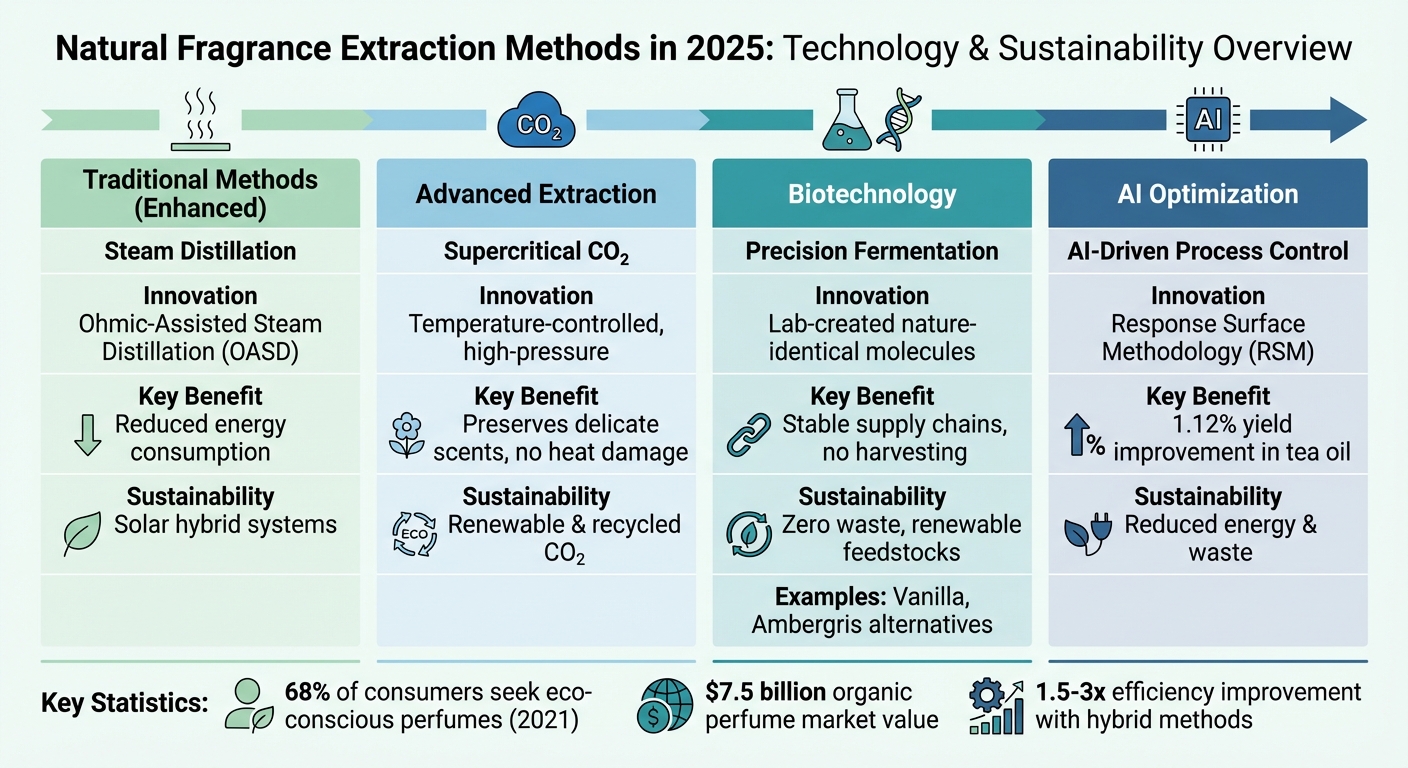
Srovnání metod extrakce přírodních vůní 2025
Zdokonalení tradičních extrakčních metod
Do roku 2025 se očekává, že pokroky v parní destilaci výrazně sníží spotřebu energie, zlepší výtěžnost a lépe ochrání jemné aromatické sloučeniny. Cílem těchto snah je vyhovět přísnějším regulačním požadavkům a zároveň zachovat kvalitu vůní, kterou spotřebitelé vyžadují.
Moderní parní destilace pro esenciální oleje
Parní destilace s ohmickou asistencí (OASD) přináší zásadně nový přístup: využívá přirozený elektrický odpor rostliny k vytvoření vnitřního tepla. Tato metoda urychluje extrakční proces a spotřebovává méně energie než konvenční kotlové systémy. Další inovace, hybridní solární destilace, začleňuje solární energii přímo do zařízení, čímž snižuje náklady i emise – obzvláště přínosně v regionech s hojností slunečního svitu. Kromě toho se využívají enzymatické předúpravy k narušení pevných rostlinných buněčných stěn, což zvyšuje výtěžnost oleje bez potřeby dodatečného tepla či tlaku. Tyto pokroky otevírají cestu k vytříbenějším technikám, jako je pokročilá frakcionace.
Frakční destilace pro odstranění alergenů
Díky zdokonaleným metodám extrakce olejů se nyní k rafinaci esenciálních olejů pro splnění standardů IFRA používá vakuová frakční destilace. Tato technika pracuje při nižších teplotách a umožňuje oddělit oleje do frakcí, které odstraňují alergeny, zatímco primární aromatický profil zůstává zachován. U prémiových surovin, jako je růžový olej, se využívá dvojitá molekulární destilace k vytvoření vysoce specializovaných aromatických frakcí. Tyto metody nejen zajišťují soulad s regulacemi, ale zároveň uchovávají hloubku a dlouhotrvající charakter vůně.
Nové technologie v extrakci přírodních vůní
Jak se odvětví vůní vyvíjí, moderní technologie proměňují způsob, jakým se získávají přírodní vonné esence. Tyto pokroky se soustředí na zlepšení udržitelnosti, zvýšení kvality a zachování jemných detailů vonných profilů.
Superkritická extrakce CO₂ pro jemné vůně
Superkritická extrakce CO₂ využívá oxid uhličitý pod vysokým tlakem a řízenou teplotou k získávání aromat bez použití tepla, které by mohlo jemné vůně poškodit. Tato technika je obzvláště účinná při zachování subtilních charakteristik květinových tónů, které se mohou při tradičních metodách, jako je parní destilace, ztratit. Významným příkladem je Tonka Bean CO₂ Absolute od LMR Naturals by IFF, uvedený v březnu 2026 jako součást jejich „Conscious Collection.“ Vyrábí se v jejich závodě ve francouzském Aubracu a tato metoda využívá obnovitelný a recyklovaný CO₂, čímž výrazně snižuje emise uhlíku a zároveň prohlubuje komplexnost vůně.
Bertrand de Préville, generální ředitel LMR Naturals by IFF, tento závazek zdůraznil:
„Uvedením Tonka Bean CO₂ Absolute znovu potvrzujeme náš závazek k planetě šetrné superkritické extrakci CO₂ a inovacím v parfumerii.“
Podobně společnost Mane spojila tradiční enfleurage – při níž se květy macerují v rostlinných olejích – se superkritickou extrakcí CO₂, aby vytvořila své „E Pure Jungle Essences.“ Parfumérka Violaine Collas popsala výsledek takto:
„Krása E Pure Jungle Essences spočívá v tom, že voní jako květ ve chvíli, kdy se otevírá, a zachycují přirozenou vůni květu takovou, jaká je v přírodě.“
Biotechnologie a fermentační metody
Kromě samotné extrakce biotechnologie revolučně mění získávání vzácných ingrediencí tím, že napodobuje přírodní procesy. Přesná fermentace umožňuje tvorbu molekul identických s přírodními bez závislosti na tradiční sklizni. Mikroorganismy mohou například přeměňovat obnovitelné suroviny, jako je organický třtinový cukr, na ingredience typu vanilky a ambry. Tato metoda nejen stabilizuje dodavatelské řetězce, ale také se řídí principy zelené chemie a zajišťuje minimální odpad.
Mezi výrazné příklady patří:
- Givaudan Ambrofix: Biologicky odbouratelná alternativa ambry vyrobená fermentací organického třtinového cukru, která eliminuje znečišťující látky i uhlíkový odpad.
- Lallemand Hevani™: Přesně fermentovaná vanilková ingredience nabízející krémový a konzistentní profil s obnovitelným původem.
- Takasago Biocyclamol: Květinová molekula připomínající konvalinku, vyráběná pomocí bílé biotechnologie.
Tyto biotechnologické inovace umožňují vytváření „captive molecules“ – udržitelných, exkluzivních ingrediencí, které se dokonale propojují s tradičními extrakty, povyšují vonné profily a zároveň minimalizují dopad na životní prostředí. Studie z roku 2021 odhalila, že 68 % spotřebitelů vyhledává parfémy vyráběné ekologicky uvědomělejšími postupy.
Optimalizace extrakce řízená umělou inteligencí
Umělá inteligence hraje transformační roli v optimalizaci extrakce vůní a činí procesy efektivnějšími a méně odpadovými. Nástroje jako Response Surface Methodology (RSM) využívají matematické modelování k předpovědi nejlepších podmínek – například teploty, tlaku a průtoků – bez nutnosti energeticky náročného fyzického testování. Tento přístup například dosáhl výtěžnosti 1,12 % při extrakci čajového oleje a zároveň snížil spotřebu energie.
Umělá inteligence se uplatňuje také inovativními způsoby, například:
- Skleníky řízené AI: Systémy jako BioPod pěstují vysoce hodnotné plodiny pro parfumerii s minimální spotřebou vody a energie.
- Strojové učení ve výzkumu a vývoji: AI urychluje vývoj formulací tím, že přesně určuje kombinace ingrediencí a snižuje potřebu experimentování metodou pokus–omyl.
Tyto technologie nejen zvyšují efektivitu, ale také integrují senzorickou analytiku, což umožňuje tvorbu personalizovaných vůní při zachování stability aromatických sloučenin. Přechodem od reaktivního testování k proaktivní optimalizaci AI snižuje odpad i spotřebu energie v každé fázi extrakčního procesu.
Ekologické a etické postupy v extrakci vůní
Odvětví vůní prochází proměnou a soustředí se na etické získávání surovin a extrakci s nulovým odpadem, aby odpovídalo měnícím se hodnotám spotřebitelů i regulatorním požadavkům. S trhem organických parfémů oceněným na 7,5 miliardy dolarů značky přehodnocují, jak suroviny získávají a zpracovávají. Cílem už není pouze minimalizovat škodu, ale proměnit odpad v nové příležitosti.
Extrakce s nulovým odpadem a upcyklace
Upcyklace mění způsob využívání vedlejších produktů. Například použitá kávová sedlina a recyklované cedrové dřevo se proměňují v aromatické akordy, jako je Sylvamber, čímž se snižuje odpad a zároveň posilují dodavatelské řetězce prostřednictvím cirkulární výroby. Moderní metody superkritické extrakce CO₂ zanechávají čistou biomasu, kterou lze dále využít ke kompostování či jiným aplikacím. Naproti tomu tradiční rozpouštědlové metody často vytvářejí toxické vedlejší produkty vyžadující specializovanou likvidaci. Přijetím technik, které produkují znovu využitelné materiály, mohou výrobci vůní výrazně snížit odpad, aniž by slevili z kvality vůně. Tyto inovace zároveň vdechují nový život tradičním metodám tím, že do nich začleňují ekologicky uvědomělé postupy.
Nízkodopadová extrakce ve stylu Grasse
Inspirovány Grasse, historickým srdcem parfumerie, jsou nízkodopadové metody modernizovány tak, aby vyhovovaly dnešním environmentálním standardům. Enfleurage 2.0 například nahrazuje živočišné tuky rostlinnými oleji, jako je jojobový olej, a vytváří „E — Oils“, které zachycují květinové vůně bez závislosti na petrochemických rozpouštědlech. Podobně Osmobloom využívá extrakční techniky založené na vzduchu, které nevyžadují rozpouštědla ani vodu a umožňují květům opětovné použití pro další extrakce. Tyto metody zachovávají řemeslnou esenci tradiční parfumerie a zároveň reagují na požadavky udržitelnosti.
Souběžně s tím vývoj zelených rozpouštědel, jako je dimethylkarbonát, nabízí biologicky odbouratelnou alternativu k hexanu. Tato inovace, kterou EPA uznává jako vyňatou z klasifikace těkavých organických látek (VOC), podtrhuje, jak se tradiční řemeslné mistrovství může přizpůsobit moderním environmentálním potřebám a zároveň si uchovat autenticitu, díky níž jsou přírodní vůně tak žádoucí.
Váš osobní odborník na parfémy už čeká
Vyplňte náš rychlý vonný kvíz a objevte autentické designové a nišové parfémy vybrané podle vašeho vkusu – prozkoumejte je jako 2–8ml dekanty a vzorky, abyste si každý mohli vyzkoušet, než se rozhodnete pro celou lahvičku.
Najděte svou vůniRegulační a tržní dopady na extrakční metody
Přísnější regulace a rostoucí vliv ekologicky uvědomělých spotřebitelů proměňují způsob extrakce parfemářských ingrediencí. Už nestačí splnit základní požadavky – konkurenceschopnost dnes závisí na transparentnosti a environmentálně odpovědných postupech.
Plnění standardů IFRA
Vyvíjející se regulační rámce, například ty stanovené Mezinárodní asociací pro vonné látky (IFRA), podněcují výrobce k přehodnocení jejich extrakčních technik. Tento posun urychlil využívání zelenějších rozpouštědel, jako jsou iontové kapaliny (ILs) a přírodní hluboce eutektická rozpouštědla (NaDESs). Tato pokročilá rozpouštědla dokážou izolovat specifické aromatické sloučeniny, které tradiční metody často přehlížejí.
Aby výrobci splnili tyto přísnější standardy a zároveň si zachovali efektivitu, stále častěji se obracejí k hybridním metodám. Například mikrovlnně asistovaná extrakce (MAE) a ultrazvukem asistovaná extrakce (UAE) se kombinují se zelenými rozpouštědly. Tyto technologie nejen zkracují dobu extrakce, ale také snižují spotřebu energie a předcházejí tepelné degradaci jemných aromatických sloučenin. Výsledek? Proces, který zachovává přirozenou integritu vůní a zároveň splňuje požadavky na shodu.
Tyto pokroky nedělají pouze zadost regulacím – zároveň odpovídají rostoucí spotřebitelské preferenci pro udržitelné a eticky vyráběné vůně.
Poptávka spotřebitelů po ekologických vůních
Kromě regulačních tlaků pohánějí inovace v extrakčních metodách také očekávání spotřebitelů. Dnešní zákazníci věnují stále větší pozornost celému životnímu cyklu vůně, od získávání surovin až po nakládání s odpadem. Tato poptávka po čistších výrobních procesech vynesla do popředí metody, jako je superkritická extrakce CO₂. Díky využití recyklovatelného CO₂ nabízí tato technika jak environmentální přínosy, tak provozní efektivitu.
Volba extrakční metody nyní hraje klíčovou roli v tržní přitažlivosti produktu. Tradiční techniky, jako je parní destilace, často vyžadují značné množství energie a mohou měnit vonné profily vlivem tepla, zatímco rozpouštědlová extrakce nese riziko zbytků petrochemických látek. Naproti tomu superkritická extrakce CO₂ poskytuje čistší a udržitelnější alternativu, která rezonuje se spotřebiteli hledajícími autenticitu. Tento posun ve spotřebitelských hodnotách nutí i zavedené parfumérské domy přijímat moderní technologie, jež zachovávají kvalitu a zároveň naplňují environmentální očekávání.
Budoucí výhled extrakce přírodních vůní
Budoucnost extrakce přírodních vůní se bude vyvíjet prostřednictvím hybridních extrakčních technologií, které kombinují různé metody do plynulých a efektivních systémů. Výrazným příkladem je mikrovlnně asistovaná extrakce s iontovými kapalinami (IL — MAE). Díky použití zelených rozpouštědel, jako jsou iontové kapaliny, spolu s mikrovlnnou energií tato metoda zvyšuje extrakční účinnost 1,5 až 3krát ve srovnání s tradičními technikami tepelného refluxu. Podobně se očekává, že pokročilé platformy spojující ultrazvukové a mikrovlnné technologie výrazně zvýší výtěžnost díky kombinaci účinků kavitace a elektromagnetického ohřevu.
Další slibný vývoj spočívá ve spojení superkritického CO₂ s přírodními hluboce eutektickými rozpouštědly (NaDES) jako ko-rozpouštědly. Tento přístup umožňuje současnou extrakci polárních i nepolárních sloučenin, eliminuje potřebu více fází a celkově snižuje spotřebu energie. Odvětví navíc stále více zkoumá bezrozpouštědlové techniky, které odpovídají jak cílům efektivity, tak environmentálním ambicím.
Bezrozpouštědlové zachycování vzduchem je jednou z takových alternativ, které si získávají pozornost. Technologie jako Osmobloom využívají proudění vzduchu namísto petrochemických rozpouštědel nebo vody ke sběru těkavých aromatických molekul z křehkých „tichých květů.“ Koncem roku 2023 představila společnost L’Oréal vůni „Private Talk“ v rámci řady Anatomy of Dreams značky Valentino, vytvořenou pomocí technologie Osmobloom vyvinuté společností Cosmo International Fragrances. Alexandrine Demachy, Managing Director France ve společnosti Cosmo International Fragrances, popsala proces takto:
„Tato pomalá technika spočívá v zachycování těkavých vonných molekul pomocí proudění vzduchu... květy zůstávají po celou dobu procesu neporušené a mohou získat druhý život.“
Kromě těchto metod připravují půdu pro ještě větší pokrok vznikající technologie řízené umělou inteligencí. Pěstování řízené AI pomáhá optimalizovat růst vysoce hodnotných parfemářských plodin v kontrolovaných prostředích, jako jsou skleníky BioPod, které využívají minimum zdrojů. Současně upcyklační technologie, například SymTrap, získávají aromatické sloučeniny ze zemědělských vedlejších produktů, jako jsou zbytky ovocných šťáv. Ve spojení s uhlíkově neutrálními extrakčními procesy tyto inovace směřují odvětví vůní k čistší a zdrojově úspornější budoucnosti.
Časté dotazy
Jak se CO₂ extrakty liší od esenciálních olejů?
CO₂ extrakty vznikají pomocí vysokotlakého oxidu uhličitého při nízkých teplotách. Tento proces zachycuje těkavé i netěkavé sloučeniny a vytváří extrakt, který se velmi blíží přirozenému chemickému složení rostliny. Naproti tomu esenciální oleje se obvykle vyrábějí parní destilací. Tato metoda zachycuje především těkavé složky rostliny, zatímco těžší, netěkavé sloučeniny zůstávají stranou.
Jsou fermentované ingredience stále považovány za přírodní?
Ano, fermentované ingredience jsou klasifikovány jako přírodní. Často se používají v přírodních vůních, které jsou odvozeny z esenciálních olejů, botanických extraktů a přirozeně získaných aromatických sloučenin. To dokonale odpovídá rostoucí poptávce po produktech s čistým složením a ekologicky uvědomělým přístupem, trendu, který v roce 2025 nadále sílí.
Jak pravidla IFRA ovlivňují složení parfému?
Mezinárodní asociace pro vonné látky (IFRA) stanovuje bezpečnostní standardy pro parfémové ingredience na základě vědeckého výzkumu. Tyto standardy mohou omezit nebo zakázat použití určitých látek, aby bylo zajištěno, že vůně jsou pro spotřebitele bezpečné. Regulací koncentrací ingrediencí hraje IFRA klíčovou roli při utváření parfémových kompozic a současně upřednostňuje bezpečnost.