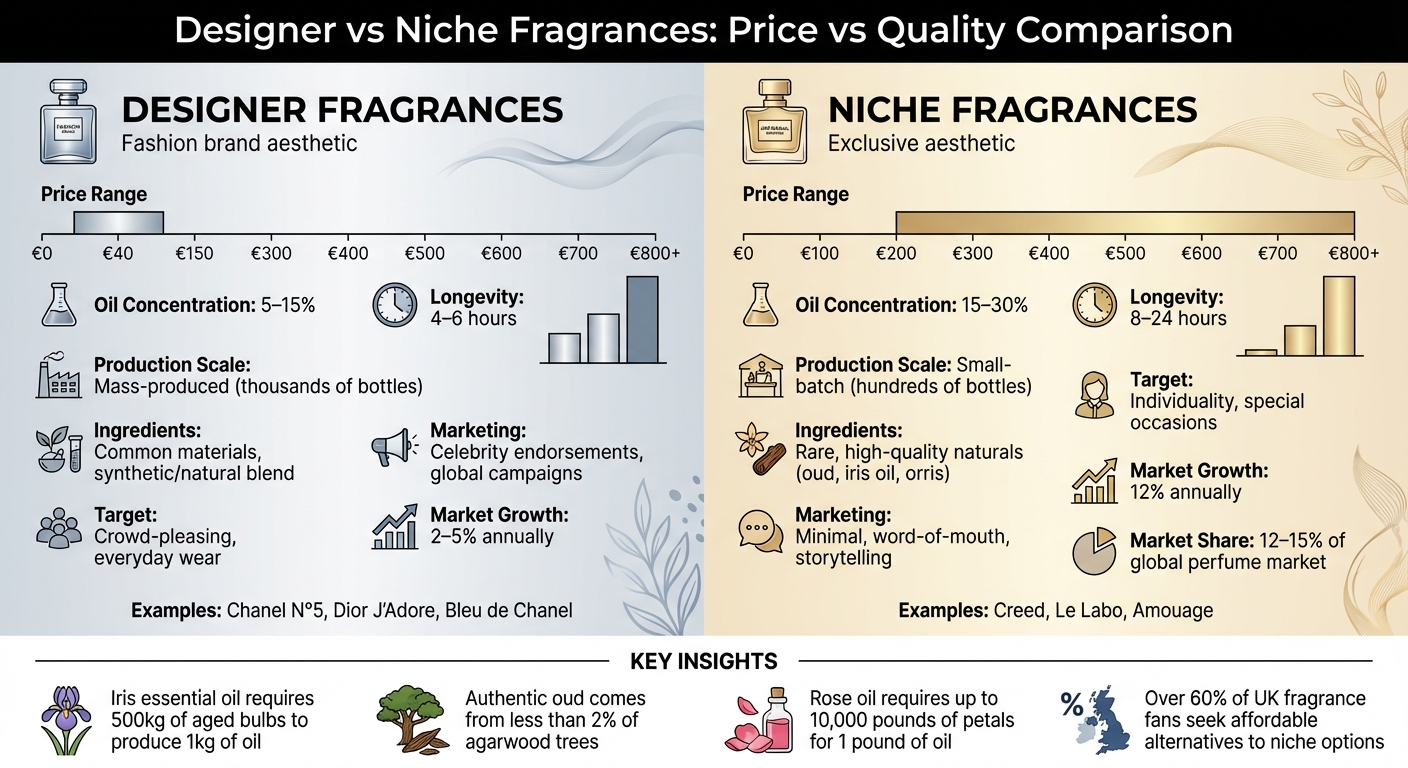
Při výběru mezi designérskými a niche vůněmi se rozhodování často zužuje na cenu, kvalitu a osobní preference. Designérské vůně, obvykle v ceně do 150 €, jsou vytvořeny pro širokou oblibu a každodenní nošení. Vyvažují dostupnost a kvalitu známými, univerzálními tóny, jako jsou květiny, citrusy a vanilka. Niche vůně, jejichž cena se pohybuje od 200 € do 800 € či více, kladou důraz na umělecké pojetí a vzácné ingredience, nabízejí odvážné, jedinečné kompozice a delší výdrž (8–24 hodin oproti 4–6 hodinám u designérských vůní). Vyšší cena odráží malosériovou výrobu, luxusní materiály jako oud či kosatcový olej a minimální marketing.
Klíčové poznatky:
- Designérské vůně jsou dostupné, líbivé pro široké publikum a cenově přístupné.
- Niche vůně se zaměřují na vzácné materiály, individualitu a dlouhou výdrž.
- Cenové rozdíly vycházejí z ingrediencí, rozsahu výroby a marketingového zaměření.
- Vaši volbu by měly určovat osobní preference a zamýšlené použití (např. každodenní nošení vs. výjimečné příležitosti).
Rychlé srovnání:
| Vlastnost | Designérské vůně | Niche vůně |
|---|---|---|
| Cenové rozpětí | 40–150 € | 200–800 €+ |
| Koncentrace olejů | 5–15 % | 15–30 % |
| Výdrž | 4–6 hodin | 8–24 hodin |
| Rozsah výroby | Masová výroba | Malosériová výroba |
| Ingredience | Běžná synteticko-přírodní směs | Vzácné, vysoce kvalitní přírodní složky |
| Marketing | Reklamy s celebritami, globální kampaně | Minimální, doporučení ústním podáním |
Nejlepší vůní je nakonec ta, která odpovídá vašemu stylu a potřebám. Než se rozhodnete pro celý flakon, zvažte vyzkoušení obou kategorií.
Designérské vs. niche vůně: kompletní srovnávací průvodce
Pravda, kterou vám nikdo neřekne! Jaký je skutečný rozdíl mezi designérskými a niche parfémy? 💎🌹
Co jsou designérské vůně?
Designérské vůně jsou parfémy vytvářené luxusními módními domy nebo velkými kosmetickými značkami, které kromě vůní nabízejí i řadu dalších produktů. Představte si značky jako Chanel, Dior, Gucci nebo Hermès – tyto společnosti vytvářejí vůně jako rozšíření svého celkového životního stylu, nikoli jako jediný středobod své tvorby. Jak vysvětluje smell stories:
"Designérské parfémy vytvářejí luxusní značky, které produkují širokou škálu produktů – oblečení, šperky, doplňky a mnoho dalšího. Parfém, ačkoli je podstatnou součástí jejich portfolia, obvykle není jejich hlavním zaměřením." – smell stories
Tyto vůně se vyrábějí ve velkém měřítku, aby byla zajištěna konzistentní kvalita, a jsou navrženy tak, aby byly široce dostupné. Pro mnohé představují vstupní bránu do světa parfumerie. Designérské značky často spolupracují se zavedenými parfumérskými domy, aby vytvořily vůně ladící s identitou jejich značky. Ikonickými příklady jsou Chanel N°5 a Dior J’Adore. Velkosériová výroba a marketingové strategie je činí dostupnějšími ve srovnání s niche vůněmi, což je v této kategorii zásadní rozdíl.
Hlavní charakteristiky designérských vůní
Designérské vůně jsou známé svými přístupnými kompozicemi, které oslovují široké publikum. Často pracují se známými tóny, jako jsou květiny, citrusy, pižmo, vanilka a dřeva, díky čemuž jsou univerzální pro každodenní nošení. Jak výstižně popisuje Henry z M Streets Life Magazine:
"Dobrá designérská vůně je jako oblek šitý na míru – funguje dobře při mnoha příležitostech a jen zřídka působí nepatřičně." – Henry, autor v M Streets Life Magazine
Tyto vůně se obvykle prodávají za 50 až 150 $ za flakon o objemu 3,4 oz (100 ml), což je činí relativně dostupnými. Je to především díky úsporám z rozsahu a stabilním výrobním metodám. Jejich popularitu dále posilují výrazné marketingové kampaně, včetně okázalých reklam a podpory celebrit, které vůně propojují s prestiží mateřské značky.
Co jsou niche vůně?
Niche vůně pocházejí z parfumérských domů, které se soustředí výhradně na tvorbu vůní, na rozdíl od značek působících napříč módou či lifestylem. Představte si jména jako Creed, Le Labo nebo Amouage – tyto společnosti existují čistě proto, aby vytvářely vůně, které vynikají, a často upřednostňují uměleckou vizi před mainstreamovými trendy.
V srdci niche parfumerie stojí závazek ke kreativní svobodě a exkluzivitě. Parfuméři, často přezdívaní "nosy", jsou vedeni k experimentování s odvážnými, nekonvenčními směsmi a k vyprávění jedinečných příběhů prostřednictvím svých výtvorů. Mistryně parfumérka Nathalie Feisthauer toto étos vystihuje dokonale:
"Niche parfumerie umožňuje upřímnější, neomezenou formu tvorby a dává tvůrcům možnost používat výjimečné suroviny, které by větším společnostem mohly připadat ekonomicky neproveditelné." – Nathalie Feisthauer, mistryně parfumérka
Tyto vůně se prodávají prostřednictvím pečlivě vybraných kanálů – butiků, luxusních prodejců nebo přímo od značky – což zajišťuje jejich exkluzivitu. Nenajdete je v každém obchodním domě ani v každém duty-free obchodě, a přesně o to jde. Tato omezená dostupnost nejen udržuje jejich jedinečnou přitažlivost, ale také odráží jejich rostoucí vliv, protože niche vůně dnes tvoří 12–15 % světového trhu s parfémy.
Hlavní charakteristiky niche vůní
Niche vůně se vyrábějí v malých sériích, někdy jen v několika stovkách flakonů, na rozdíl od masové produkce designérských značek. Tato omezená výroba zajišťuje precizní pozornost věnovanou detailům a posiluje exkluzivitu, kterou milovníci niche parfémů tolik oceňují.
Cenová hladina tuto exkluzivitu odráží. Typický flakon může stát 100 až 500 $+, přičemž vzácné nebo zakázkové kreace přesahují 800 $. Tyto vyšší ceny často vycházejí z použitých koncentrovaných parfémových olejů – obvykle 15–30 %, oproti 5–15 % u designérských vůní.
Marketing niche vůní se ubírá jinou cestou. Namísto okázalých reklam či podpory celebrit tyto značky stavějí na vyprávění příběhů a autenticitě. Zdůrazňují původ ingrediencí, tvůrčí proces a vizi parfuméra. Vzácné materiály se často stávají ústředním bodem těchto příběhů – například pravý oud, který pochází z méně než 2 % stromů agarového dřeva, nebo esenciální olej z kosatce, k jehož výrobě je potřeba 500 kilogramů vyzrálých oddenků na pouhý jeden kilogram oleje. Právě důraz na řemeslo a příběh odlišuje niche vůně a oslovuje ty, kteří hledají něco skutečně osobního a osobitého.
Výroba a ingredience: designérské vs. niche
Způsob výroby vůní vypráví příběh o hodnotě a řemeslném mistrovství ukrytém v každém flakonu. Designérské značky fungují v obrovském měřítku a v průmyslových provozech chrlí tisíce flakonů, aby udržely konzistenci napříč každou šarží. Niche značky naopak volí řemeslnější přístup a tvoří malé série – někdy jen několik stovek flakonů – kde je pečlivě sledován každý detail.
Ingredience používané v těchto vůních dále zdůrazňují jejich rozdíly. Designérské parfémy spoléhají na kombinaci přírodních a syntetických složek a hledají rovnováhu, která zajišťuje konzistenci i cenovou efektivitu. Niche parfuméři se však přiklánějí ke vzácným a prémiovým materiálům, které jsou pro masovou výrobu často příliš nákladné nebo nepraktické. Například autentický oud, získávaný pouze přibližně ze 2 % stromů agarového dřeva, je typickým znakem niche kreací. Andy Tauer, zakladatel Tauer Perfumes, tuto filozofii vystihuje dokonale:
"K tvorbě krásných vůní potřebujete absolutní svobodu. A potřebujete čas. A ty nejlepší ingredience, které můžete získat." – Andy Tauer, zakladatel Tauer Perfumes
Další zásadní rozdíl spočívá v koncentraci olejů a době nošení. Designérské vůně obvykle obsahují 5–15 % parfémového oleje a nabízejí 4–6 hodin výdrže. Niche vůně se naproti tomu pyšní koncentrací 15–30 %, což přináší působivou výdrž 8–24 hodin. Tyto rozdíly ve výrobě a ingrediencích výrazně formují zážitek i vnímání kvality v každé kategorii.
Srovnání výroby a ingrediencí
| Aspekt | Designérské vůně | Niche vůně |
|---|---|---|
| Rozsah výroby | Masová výroba (tisíce) | Malosériová výroba (stovky) |
| Zaměření ingrediencí | Synteticko-přírodní směs | Vzácné, vysoce kvalitní přírodní složky |
| Koncentrace olejů | 5–15 % | 15–30 % |
| Výdrž | 4–6 hodin | 8–24 hodin |
| Původ materiálů | Běžné materiály | Vzácné materiály (oud, kosatec, ambra) |
| Tvůrčí cíl | Tržní trendy a široká obliba | Umělecká svoboda a originalita |
Tato tabulka shrnuje klíčové rozdíly na základě oborového výzkumu.
Po představení výrobních metod a volby ingrediencí je dalším krokem prozkoumat nákladové faktory, které tyto rozdíly ovlivňují.
Váš osobní odborník na parfémy už čeká
Vyplňte náš rychlý vonný kvíz a objevte autentické designové a nišové parfémy vybrané podle vašeho vkusu – prozkoumejte je jako 2–8ml dekanty a vzorky, abyste si každý mohli vyzkoušet, než se rozhodnete pro celou lahvičku.
Najděte svou vůniCo stojí za cenovým rozdílem?
Cenová propast mezi designérskými a niche vůněmi není náhodná – je přímým důsledkem jejich odlišných obchodních strategií. Designérské značky vyčleňují značnou část rozpočtu na marketing, což znamená, že velká část toho, co zaplatíte, směřuje na ambasadory z řad celebrit, globální reklamní kampaně a zajištění prémiového prostoru v maloobchodě. Niche značky naopak soustředí své zdroje na samotný parfém a volí vzácné ingredience a pečlivé řemeslné zpracování namísto okázalé propagace.
Dalším zásadním faktorem je rozsah výroby. Niche značky často vytvářejí malé série, což přirozeně zvyšuje cenu za kus. Designérské značky naproti tomu těží z úspor z rozsahu díky velkoobjemové produkci. Jakmile se však připočtou marže distributorů (30–40 %) a obchodních zástupců (10–15 %), niche vůně se stávají ještě dražšími.
Velkou roli hrají také použité ingredience. Zatímco tekutina uvnitř flakonu obvykle tvoří méně než 1 % maloobchodní ceny, niche značky výrazně investují do vzácných a luxusních materiálů. Například kořen kosatce může stát až 60 000 $ za kilogram a k výrobě pouhého 1 kilogramu esenciálního oleje z kosatce je potřeba 500 kilogramů vyzrálých oddenků.
K tomu se přidává skutečnost, že luxusní prodejci často podporují niche značky v nastavování cen nad 220 $, aby posílili jejich exkluzivitu. Tato cenová strategie pomáhá udržovat pocit prestiže a chrání značky před rozmělněním na trhu zaplaveném trendy inspirovanými TikTokem a levnými duplikáty.
Srovnání cenových faktorů
| Faktor | Designérské vůně | Niche vůně |
|---|---|---|
| Typické cenové rozpětí | 40–150 € | 120–500 €+ |
| Hlavní nákladový faktor | Marketing a distribuce | Ingredience a řemeslné zpracování |
| Objem výroby | Masová výroba (tisíce) | Malosériová výroba (stovky) |
| Marketingový rozpočet | Vysoký (celebrity, globální kampaně) | Minimální (doporučení, storytelling) |
| Náklady na ingredience | Synteticko-přírodní směs pro efektivitu | Vzácné přírodní složky (oud, kosatec, ambra) |
| Koncentrace olejů | 5–15 % | 15–30 % |
| Investice do obalu | Standardizované pro masovou výrobu | Často zakázkové (např. křišťál Baccarat, těžký kov) |
| Distribuční náklady | Široká maloobchodní přítomnost | Exkluzivní butiky s distributorskými podíly 30–40 % |
Tento přehled ukazuje, jak tyto faktory ovlivňují nejen cenu, ale i vnímání kvality. Tyto rozdíly připravují půdu pro pochopení toho, jak se kvalita vůně hodnotí.
Jak měřit kvalitu vůně
Kvalita vůně se často posuzuje podle její výdrže, komplexnosti a řemeslného mistrovství stojícího za jejím vznikem. Jedním z nejjednodušších způsobů, jak vůni zhodnotit, je sledovat, jak dlouho vydrží na vaší pokožce. Tuto trvanlivost ovlivňuje molekulová hmotnost jejích ingrediencí. Například základní tóny, jako jsou dřeva, pryskyřice a pižma, mohou přetrvávat 6–24 hodin. Roli hraje také koncentrace vůně: Parfum s 15–30 % parfémového oleje vydrží 6–24 hodin, zatímco Eau de Toilette se 4–8 % oleje vyprchá během 2–4 hodin.
Kromě výdrže je dalším ukazatelem kvality komplexnost vůně. Vysoce kvalitní vůně jsou obvykle strukturovány pomocí olfaktorické pyramidy, která zahrnuje hlavu (trvající 15–60 minut), srdce (trvající 2–4 hodiny) a základ (trvající 6+ hodin). Niche parfémy jsou často oceňovány pro své plynulé přechody a odvážná, nekonvenční spojení. Naproti tomu mnoho masově prodávaných designérských vůní upřednostňuje jednodušší, lineárnější kompozice. Jak výstižně říká Paolo Terenzi, prezident a parfumér značky Tiziana Terenzi:
"Je mnohem lepší mít vůni vynikající kvality, s velkou silou a dlouhou výdrží, než sto průměrných kreací." – Paolo Terenzi, prezident a parfumér Tiziana Terenzi
Kvalita ingrediencí je dalším zásadním faktorem. Luxusní a niche parfémy často používají vzácné přírodní extrakty vysoké jakosti. Například k výrobě pouhé 1 libry růžového oleje může být potřeba až 10 000 liber růžových okvětních lístků. Designérské vůně naopak často volí známější a široce přitažlivé tóny, jako jsou citrusy a vanilka. Zajímavé je, že ve flakonu luxusního parfému za 150 $ mohou samotné parfémové oleje představovat jen přibližně 1,50 $ z maloobchodní ceny.
Významnou roli při určování kvality vůně hrají také exkluzivita a tvůrčí vize. Niche značky si díky malosériové výrobě mohou udržovat přísnější kontrolu kvality a začleňovat jedinečné tóny, jako je oud, kůže či kouř. Designérské značky sice spoléhají na masovou výrobu, přesto však dokážou nabídnout působivé výsledky – vůně jako Dior Sauvage nebo Chanel Bleu jsou známé skvělou projekcí a výdrží a často konkurují niche nabídce. Nakonec je klíčovým faktorem celkové kvality to, jak vůně reaguje s vaší pokožkou. Tyto prvky pomáhají vysvětlit, proč některé vůně dosahují tak vysokých cen a jsou považovány za hodnotnou investici.
Znamená vyšší cena lepší kvalitu?
Vyšší cenovka u vůní neznamená vždy záruku lepší kvality. Například niche parfémy často obsahují 15–30 % parfémového oleje oproti 5–15 %, které se obvykle nacházejí v designérských vůních, což může vést k delší výdrži. To však nemusí nutně znamenat univerzální přitažlivost. Vezměte si například Bleu de Chanel – designérskou vůni za méně než 150 $, která nabízí vyvážený, mistrovsky vytvořený profil a působivý výkon. Na druhé straně některé niche vůně, jejichž cena může přesáhnout 400 $, mohou působit příliš experimentálně nebo polarizujícím dojmem pro každodenní nošení.
Rozdíl v ceně často odráží odlišné priority. Niche značky se obvykle zaměřují na vzácné a prémiové ingredience, jako je autentický oud nebo kosatcový olej, k jehož výrobě je potřeba ohromujících 1 100 liber vyzrálých oddenků na pouhých 2,2 libry esence. Designérské značky mezitím výrazně investují do podpory celebrit a globálních reklamních kampaní. Jak poznamenává odbornice na vůně Aimee Majoros:
"Luxusní vůně téměř vždy vydrží na pokožce déle než levnější varianta... dražší vůně se nakonec může ukázat jako výhodnější, protože někdy stačí opravdu malé množství, aby zanechala dojem." – Aimee Majoros, odbornice na vůně
Hodnota je nakonec subjektivní. Vůně za 25 $, kterou nosíte denně, může působit smysluplněji než flakon za 200 $, na který se práší na poličce. Zajímavé je, že trh s niche vůněmi roste téměř o 12 % ročně – výrazně rychleji než masový trh s parfémy, který roste o 2–5 %. To naznačuje rostoucí zájem spotřebitelů o řemeslnou kvalitu. Zároveň více než 60 % britských milovníků vůní aktivně vyhledává dostupné alternativy k drahým niche možnostem, což ukazuje, že cena zůstává klíčovým faktorem. Kvalita ingrediencí sice hraje roli, ale skutečně rozhodující jsou osobní preference.
Jak si vybrat tu pravou vůni pro vás
Protože vyšší cena nemusí vždy znamenat lepší soulad s vaším stylem, hledání ideální vůně je hluboce osobní proces. Klíčem je testování – nikdy se nezavazujte k celému flakonu, aniž byste vůni nejprve vyzkoušeli. Discovery sady nebo odstřiky vám umožní během několika dní poznat, jak vůně reaguje s chemií vaší pokožky. Například Scento nabízí odstřiky ve velikostech 0,75 ml, 2 ml a 8 ml, takže můžete vyzkoušet autentické designérské i niche možnosti bez rizika nákladné chyby.
Abyste z testování vytěžili maximum, naneste vůni a počkejte alespoň 20 minut, než zhodnotíte její plný vývoj. Vůni tak umožníte odhalit její skutečný charakter. Užitečné může být také budování vonného šatníku – pro každodenní nošení volte univerzální designérské vůně a propracovanější niche možnosti si nechte pro výjimečné příležitosti. Přemýšlejte o tom, kde a kdy budete vůni nosit: designérská vůně s širokou přitažlivostí může být ideální do sdílené kanceláře, zatímco odvážný niche parfém zazáří ve chvíli, kdy chcete vyjádřit osobní postoj.
Závěrečné myšlenky
Při srovnání designérských a niche vůní závisí správná volba především na vašich osobních preferencích a životním stylu. Designérské vůně jsou vhodné pro ty, kteří hledají univerzální, široce přijatelné možnosti do 150 $ – ideální pro každodenní nošení a sdílené prostředí. Niche parfémy, často v ceně mezi 200 a 800 $+, se naopak soustředí na umělecké pojetí a vzácné ingredience, jako je autentický oud (získávaný pouze ze 2 % stromů agarového dřeva), a nabízejí působivou výdrž 8–24 hodin.
Dvanáctiprocentní roční růst niche trhu – rychlejší než u designérských vůní – zdůrazňuje rostoucí zájem o osobitější vonné profily. Přesto zůstávají designérské vůně skvělou volbou a díky promyšleným formulacím a nákladové efektivitě nabízejí rovnováhu kvality a dostupnosti.
Klíčem je nechat se vést chemií vaší pokožky a každodenními potřebami, nikoli jen cenou. Designérská vůně za 120 $, která se stane vaším každodenním favoritem, může přinést větší hodnotu než niche flakon za 400 $, který zůstane netknutý. Mnoho milovníků vůní si buduje kolekci – spoléhá na osvědčené designérské vůně do práce či na běžné příležitosti a odvážné niche kreace si nechává pro výjimečné okamžiky nebo osobní vyjádření.
Než se rozhodnete, testujte vůni alespoň 20 minut, abyste viděli, jak se na vaší pokožce vyvíjí. Odstřiky jsou skvělým způsobem, jak prozkoumat obě kategorie bez rizika plného nákupu. Nejlepší vůní je nakonec ta, kterou nosíte s jistotou. Vybírejte promyšleně a obohaťte svou vonnou cestu.
Časté dotazy
Jak poznám, zda niche vůně stojí za vyšší cenu?
Vyšší cena niche vůně obvykle vychází z použití vzácných materiálů, mistrovského řemeslného zpracování a osobitých kompozic. Tyto parfémy často obsahují eticky získávané složky, jako je vyzrálý oud nebo vzácné květy, pečlivě zpracované zkušenými parfuméry. Pokud s vámi vůně rezonuje, přináší nezapomenutelný zážitek a odpovídá vašim preferencím, může svou cenu ospravedlnit. Nakonec její hodnota spočívá v tom, jak moc si ceníte její kvality a jedinečnosti.
Proč stejná vůně vydrží na některých lidech déle než na jiných?
Výdrž vůně výrazně závisí na individuální chemii pokožky. Faktory jako typ pleti, hodnota pH a tělesná teplota hrají klíčovou roli v tom, jak vůně s vaší pokožkou interaguje. Například mastná pleť má tendenci vůni udržet déle, zatímco suchá pleť může způsobit její rychlejší odpařování. Parfémy s bohatými základními tóny, jako jsou dřeva nebo pižma, případně s propracovanými kompozicemi často typickými pro niche vůně, mají obecně delší výdrž bez ohledu na typ pokožky.
Jaký je nejlepší způsob, jak vyzkoušet parfémy před nákupem celého flakonu?
Nejchytřejším způsobem, jak otestovat parfémy před investicí do celého flakonu, je použití pečlivě vybraných odstřiků. Tyto menší velikosti – obvykle dostupné ve variantách 0,75 ml, 2 ml nebo 8 ml – vám umožní naplno poznat vůni bez závazku a ceny plnohodnotného flakonu. Je to praktický způsob, jak objevovat různé vůně a zároveň minimalizovat náklady i plýtvání.