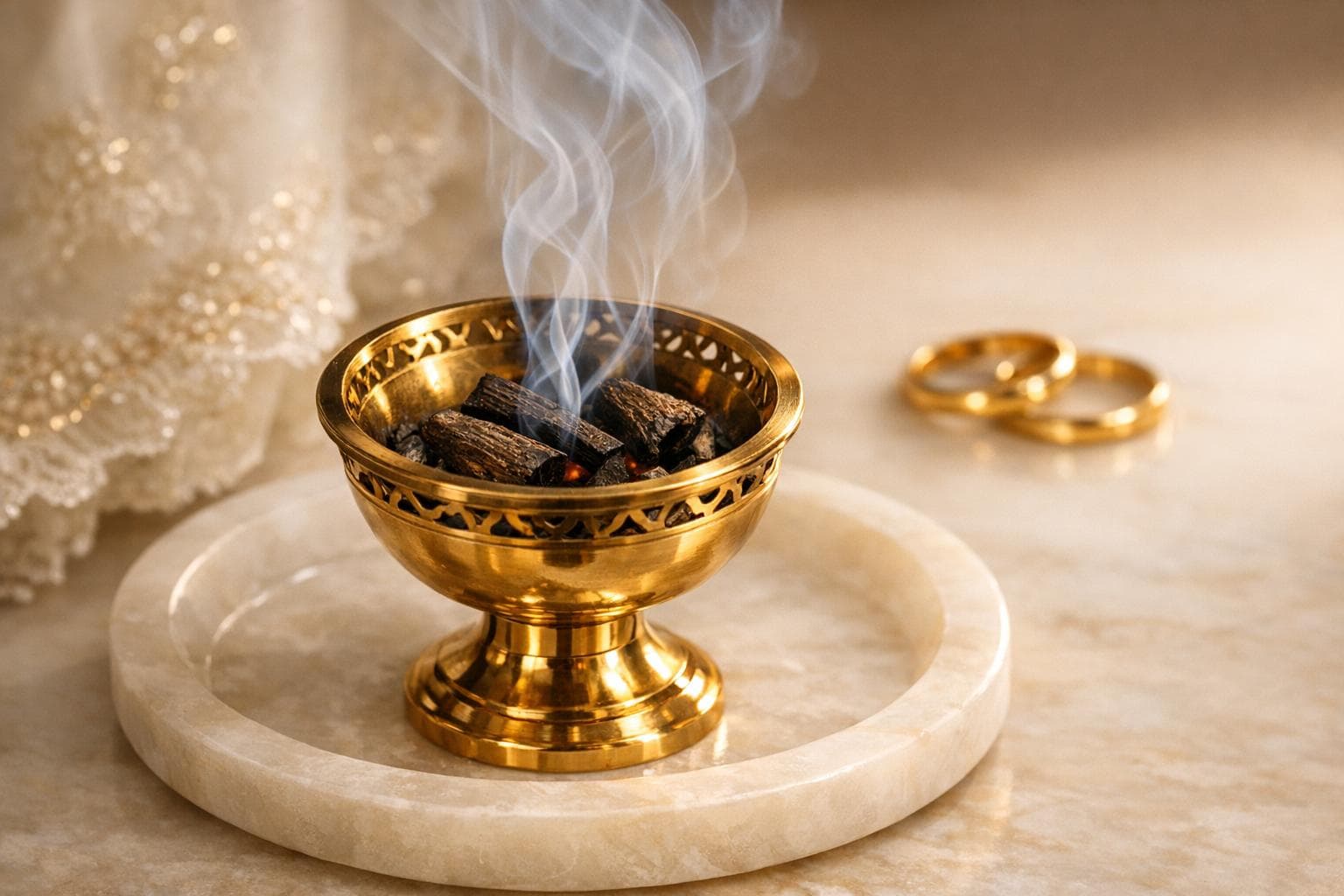
Na svatbách na Blízkém východě je vůně oudu víc než jen parfém – je symbolem dědictví, luxusu a oslav. Oud, získávaný z pryskyřice stromu Aquilaria, je ceněn již více než 3 000 let a využíval se při posvátných rituálech i královských výměnách darů. Dnes hraje klíčovou roli ve svatebních obřadech, od příprav nevěsty až po atmosféru svatebního místa.
Hlavní body:
- Využití pro nevěstu: Oudový olej se nanáší na pokožku, vlasy i oděv nevěsty a vytváří dlouhotrvající vůni, která podtrhuje její přítomnost po celý den.
- Atmosféra místa konání: Rodiny pálí bukhoor (oudové kadidlo), aby přivítaly hosty a očistily prostor, čímž dodávají prostředí hřejivost a eleganci.
- Rodinné tradice: Vlastní oudové směsi, předávané z generace na generaci, propojují svatby s rodinným odkazem.
- Dárky: Odstřiky parfémů nebo mini flakony oudu či hořáky na bukhoor se dávají hostům jako památka.
Hluboké, dřevité aroma oudu, často doplněné květinami, jako je jasmín nebo růže, z něj činí nezapomenutelný prvek. Kromě smyslové přitažlivosti odráží bohatství, úctu a trvalé pouto páru a propojuje starobylé zvyklosti s moderními prvky.
Historické a kulturní kořeny oudu ve svatbách
Oud jako symbol oslavy a prosperity
Arabský poloostrov je po tisíce let srdcem obchodu s oudem. Tato vzácná pryskyřice, jejíž vznik může trvat desítky let, byla kdysi směňována mezi panovníky a dokonce obětována božstvům, což vyjadřovalo luxus a mimořádnou prosperitu.
Postupem času se jeho role rozšířila z předislámských královských dvorů do islámských tradic, kde získal ještě hlubší kulturní význam. Historické prameny zmiňují užívání oudu prorokem Mohamedem a oud se stal ceněnou součástí svateb, kde symbolizoval pohostinnost a štědrost. Pálení prémiového oudu při takových událostech se stalo způsobem, jak uctít hosty a oslavit svazek.
"Oud je víc než vůně; v arabských společnostech představuje luxus, prestiž a dědictví." – newarabia
Vysoká cena oudu, který patří k nejdražším parfémovým ingrediencím na světě, dále posilovala jeho postavení jako symbolu bohatství a hojnosti. Jeho přítomnost na svatbách nebyla jen o vůni; představovala přání prosperující a úspěšné budoucnosti pro novomanžele.
Rodinné tradice a dědictví
Role oudu na svatbách často přesahuje jeho materiální hodnotu a hluboce se zapisuje do rodinných tradic. Mnohé rodiny vytvářejí vlastní charakteristické oudové směsi, které se předávají z generace na generaci a stávají se velmi osobní součástí svatebních obřadů.
Pro nevěsty se volba oudové vůně často stává způsobem, jak uctít tradice mateřské linie a propojit svůj výjimečný den s historií své rodiny. Tyto směsi a jedinečné způsoby jejich aplikace jsou pečlivě předávány a uchovávány, aby každá svatba odrážela jak tradici, tak začátek nové kapitoly. Oud se v tomto kontextu stává mostem mezi minulostí a budoucností, nese dál rodinný odkaz a zároveň oslavuje společnou cestu páru.
Váš osobní odborník na parfémy už čeká
Vyplňte náš rychlý vonný kvíz a objevte autentické designové a nišové parfémy vybrané podle vašeho vkusu – prozkoumejte je jako 2, 5, 8 a 30 ml dekanty a vzorky, abyste si každý mohli vyzkoušet, než se rozhodnete pro celou lahvičku.
Najděte svou vůniOud v přípravách nevěsty
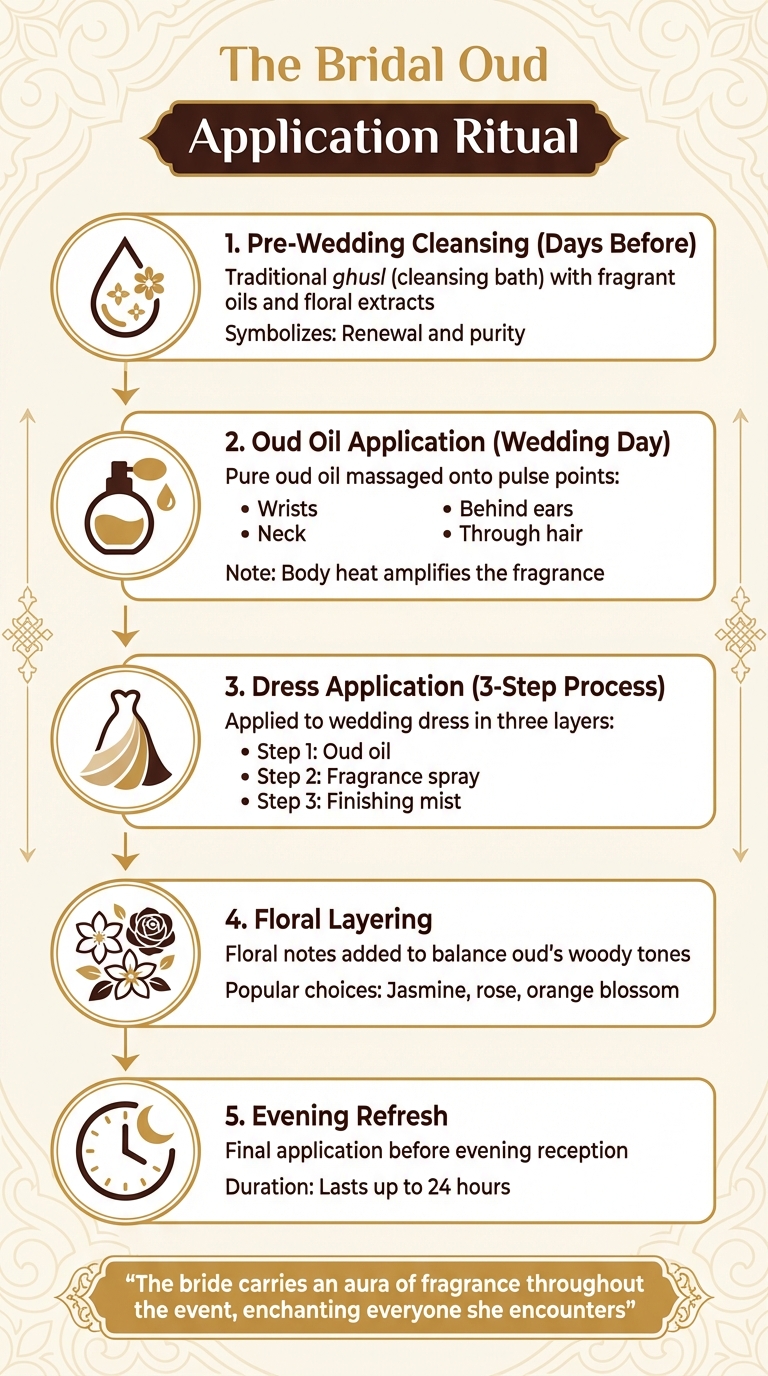
Tradiční rituál aplikace oudu pro nevěsty na Blízkém východě
Jak se oud aplikuje na nevěstu
Oud hraje v přípravách nevěsty ústřední roli a následuje detailní a smysluplný rituál, který podtrhuje její přítomnost jeho charakteristickým aroma. Ve dnech před svatbou se nevěsta účastní očistné koupele neboli ghusl, obohacené o vonné oleje a květinové extrakty – symbolu obnovy a čistoty.
V samotný svatební den se shromažďují ženské příbuzné, aby nevěstě pomohly s kosmetickými rituály a aplikací tradičních vůní. Oudový olej se jemně vmasírovává na klíčová pulzní místa, včetně zápěstí, krku, za ušima a dokonce i do vlasů. Tato místa jsou vybírána proto, že přirozené teplo těla zesiluje vůni a zajišťuje, že vydrží po celý den. Pozoruhodné je, že jediná aplikace oudu může vydržet až 24 hodin a provází vůni nevěsty každým okamžikem oslav.
"Cílem je, aby nevěsta nesla po celou událost auru vůně a okouzlovala každého, koho potká." – Parfums Najmi
Oud se neomezuje pouze na pokožku nevěsty. Často se aplikuje i na samotné svatební šaty, aby se vůně stala trvalou součástí její přítomnosti. Tento proces obvykle zahrnuje tři kroky: nanesení oudového oleje, poté spreje a nakonec jemné mlhy. Poslední osvěžení se obvykle provádí těsně před večerní recepcí, aby vůně zůstala zářivá. Tyto praktiky plynule propojují tradici s moderními svatebními zvyklostmi, dodávají přípravám hloubku a význam a zvýrazňují přirozený půvab nevěsty.
Kombinace oudu s květinovými vůněmi
Po rituální aplikaci oudu se často vrství s květinovými tóny, aby vznikla vyváženější a mnohovrstevnatější vůně. Hluboké, kouřové a dřevité tóny oudu jsou zjemněny a rozjasněny květinovými akcenty. Mezi oblíbené volby patří jasmín, pomerančový květ a růže, které do celkové vůně vnášejí svěžest, romantiku a eleganci.
Toto promyšlené míchání umožňuje nevěstám vytvořit vůni, která je osobní a zároveň hluboce zakořeněná v rodinné tradici. Mnohé nevěsty obnovují květinově-oudové kombinace předávané po generace a spojují tak svou jedinečnou vůni s drahými vzpomínkami a kulturním dědictvím. Spojení oudu a květin také symbolizuje ctnosti, jako jsou krása, síla a prosperita, což je pro tuto příležitost obzvlášť vhodné. Pro denní nebo venkovní obřady se upřednostňují lehčí květinově-oudové kombinace, zatímco bohatší a opulentnější směsi jsou ideální pro večerní či chladnější svatby. Tato souhra tradice a osobního přístupu zajišťuje, že vůně nevěsty bude stejně nezapomenutelná jako samotný den.
Vytváření svatební atmosféry s oudem
Pálení bukhooru na svatebních místech
Oud není jen o osobní vůni – proměňuje prostory v pohlcující smyslový zážitek. Na mnoha svatbách na Blízkém východě hostitelé pálí bukhoor – vonné dřevěné štěpky napuštěné oleji – v mabkhara (tradičních kadidelnicích) umístěných u vstupů a na klíčových místech. Tím vzniká nepřetržitá, vítající vonná stopa, která hosty přivítá už při příchodu. Aromatický kouř naplňuje vzduch hřejivostí a elegancí a udává tón celé oslavě. Rodiny často bukhoor obohacují o tóny růže, jasmínu nebo kadidla a během večera jej doplňují, aby vůně zůstala živá.
Pálení prémiových oudových štěpků má také hlubší význam. Odráží pohostinnost, čest a bohatství rodiny a zároveň dodává události pocit tradice a spirituality. Uklidňující a uzemňující vlastnosti oudu vyvažují živou energii oslavy a vytvářejí harmonickou atmosféru, která působí luxusně i posvátně.
Vítání hostů oudovým kouřem
Vřelé přivítání začíná už u vchodu, kde jsou hosté vyzváni, aby přejeli rukama nad aromatickým kouřem z hořáku s bukhoor. Toto jednoduché, avšak významné gesto odráží osobní oudový rituál nevěsty, rozšiřuje vůni do prostoru a posiluje slavnostní náladu.
"Před vstupem na svatební místo jsou hosté často vyzváni, aby přejeli rukama nad kouřem z hořáku s bukhoorem."
Protože vůně má jedinečnou schopnost vyvolávat vzpomínky, stává se bohaté aroma oudu trvalým symbolem svatebního dne. I po letech může závan této známé vůně hosty okamžitě přenést zpět k radosti a kráse oslavy.
Oud pro ženichy, hosty a dary
Jak ženichové používají oud
Pro ženichy je oud víc než jen vůně – je to rituál. Proces výběru svatební vůně často začíná nanesením čistého oudového oleje na pulzní body, jako jsou zápěstí, krk a dokonce i vlasy. Tím se zajistí, že vůně bude reagovat s tělesným teplem, což podpoří její výdrž i hloubku. Pro zesílení aroma se navrch vrství parfémový sprej a poté vlasová mlha, která uvolňuje vůni při každém pohybu.
Tento přístup nejen prodlužuje přítomnost vůně, ale nese i hluboký význam. Pro mnohé je oud spojením s rodinnými tradicemi a regionálním dědictvím, ztělesňuje sebejistotu, čest a společenské postavení. Není neobvyklé, že ženichové zařazují tento vonný rituál do svých závěrečných příprav, často po boku dalších symbolických úkonů, jako je slavnostní holení prováděné členem rodiny. Aby parfém vydržel ještě déle, někteří ženichové před aplikací oudového oleje používají neparfémované tělové mléko.
Tato tradice požitku a významu přesahuje samotného ženicha, protože páry často sdílejí tento smyslový zážitek i se svými hosty.
Oud jako svatební dar pro hosty
Darování oudu svatebním hostům je praxe hluboce zakořeněná v blízkovýchodní pohostinnosti a štědrosti. Běžnou volbou jsou miniaturní lahvičky oudového oleje nebo malé hořáky na bukhoor, které hostům umožňují odnést si domů voňavou vzpomínku na oslavu.
Některé páry posouvají tuto tradici ještě dál a vytvářejí pro svůj výjimečný den vlastní vůně na míru. Tyto jedinečné kreace jsou prezentovány jako personalizované památky, často uložené v ozdobných lahvičkách nebo umně navržených flakonech, které odrážejí velkolepost dané příležitosti. Tyto dary proměňují jednoduché gesto ve smysluplnou a trvalou připomínku elegance a radosti svatby.
Smyslový a duchovní význam oudu
Vonný profil oudu
Oud nabízí vícerozměrnou smyslovou cestu a v čase se rozvíjí ve vrstvách. Často začíná kořenitými nebo květinovými vrchními tóny, připomínajícími šafrán či citrusy. Jak se rozvíjí, přechází do hlubších dřevitých a pižmových tónů a nakonec se usazuje v pryskyřičném a smyslném základu, který může přetrvávat déle než 24 hodin. Tato výjimečná výdrž mu propůjčuje zvláštní význam pro páry skládající si sliby, protože symbolizuje závazek určený k trvání.
"Oud je destilovanou esencí tohoto infikovaného jádrového dřeva – kouřový, dřevitý a komplexní. Jeho vůně se nepodobá ničemu jinému: zemitá, a přitom sladká, animální, a přesto éterická." — Perfame
Jeho vůně je jedinečnou směsí zemitých, sladkých, kouřových a animálních prvků. Regionální variace jeho přitažlivost ještě umocňují: indický oud je známý svou výraznou, koženou hloubkou, zatímco kambodžský oud inklinuje ke sladším a jemnějším tónům. Oud z Bornea zase přináší svěžejší, téměř mentolový charakter. Tento propracovaný profil nejen uchvacuje smysly, ale zároveň podtrhuje jeho hluboký kulturní a duchovní význam.
Oud v islámských tradicích
V islámské kultuře je oud hluboce ceněný a zaujímá zvláštní místo v historii. Je zmiňován v hadísu jako jedna z oblíbených vůní proroka Mohameda, používaná jak jako osobní vůně, tak jako kadidlo, což z něj činí základní kámen každé sbírky vůní. Jeho role v posvátných rituálech sahá více než 3 000 let zpět do starověké Mezopotámie. Tento odkaz propůjčuje svatebním obřadům hluboké spojení s bohatou kulturní a historickou tradicí.
Duchovní význam oudu je vetkán do praktik, jako jsou očistné rituály nevěsty a vítání hostů aromatickým kouřem bukhoor. Tyto zvyklosti povyšují vůni nad její smyslovou přitažlivost a vytvářejí atmosféru naplněnou emocionální a duchovní hloubkou. Vůně se nezdržuje jen ve vzduchu – stává se součástí duše obřadu a obohacuje zážitek všech zúčastněných.
Závěr
Oud si nadále udržuje výjimečné místo na svatbách na Blízkém východě jako ztělesnění dědictví, vytříbenosti a radostné oslavy. Představuje symbol prosperity, úcty a odkazu předávaného z generace na generaci, s historií dlouhou více než 3 000 let. Tím, že páry zvolí správnou svatební vůni a zahrnou oud do svých obřadů, plynule propojují starobylé tradice s moderní elegancí.
"Oud není jen vůně. Je to historie, luxus, kultura a emoce zabalené do jediné mocné vonné esence." — The Scent Lab ME
Tento citát dokonale vystihuje dvojí povahu oudu: smyslové mistrovské dílo i kulturní poklad.
Časem prověřené zvyklosti – jako pálení bukhooru, nošení oudu a darování malých lahviček hostům – naplňují svatby duchovní hloubkou a kulturním bohatstvím. Tyto rituály proměňují oslavu v nezapomenutelný zážitek a zanechávají trvalý dojem ve všech, kdo se jí účastní. Mnohé nevěsty se k magii svého výjimečného dne vracejí tím, že při výročích nosí svůj charakteristický oud.
Oud, známý jako "tekuté zlato", svou exkluzivitou a hodnotou – od 28 000 € do 93 000 € za kilogram – představuje příhodnou volbu pro svatby, které oslavují postavení a opulenci. Jeho přitažlivost však přesahuje materiální hodnotu. Dlouhá výdrž vůně odráží trvalé sliby, které si páry dávají, zatímco její duchovní rezonance v islámské tradici dodává svazku božské požehnání.
Moderní páry také oudové tradice nově interpretují – kombinují jej s lehčími květinovými tóny, vytvářejí pro hosty vlastní vůně a dokonce nahrazují tradiční uhlíkové hořáky ultrazvukovými difuzéry. Tyto inovace zajišťují, že oud zůstává živou součástí svateb a propojuje minulost se současností způsobem, který ctí lásku i kulturní kořeny.
Často kladené otázky
Jaký je rozdíl mezi oudovým olejem a bukhoorem?
Oudový olej je vysoce koncentrovaná pryskyřice získávaná z infikovaných stromů Aquilaria, ceněná pro svou hlubokou, kouřovou a dřevitou vůni. Naproti tomu Bukhoor je směs vonných dřevěných štěpků, pryskyřic a esenciálních olejů, která se pálí za účelem vytvoření aromatického kouře. Přestože oba zaujímají důležité místo v tradicích Blízkého východu, používají se odlišně – oudový olej se často nosí jako osobní vůně, zatímco Bukhoor se běžně používá k dotváření atmosféry a očištění prostor.
Jak vybrat oudovou vůni, která nebude na svatbu příliš intenzivní?
Na svatbu vybírejte oudové vůně, které jsou jemné a sofistikované a vyhýbají se přehnané intenzitě. Zvolte vůně s delikátní rovnováhou dřevitých a kouřových tónů, navržené tak, aby působily nenápadně a elegantně. Tyto vytříbené varianty zajistí, že vůně doplní danou příležitost, aniž by ji přebila.
Je pálení bukhooru v interiéru bezpečné a jaké existují čistší alternativy?
Pálení bukhoor v interiéru může produkovat kouř, který může ovlivnit kvalitu vzduchu a potenciálně představovat zdravotní rizika. Pokud hledáte bezpečnější způsob, jak si užít vůně v interiéru, vyzkoušejte alternativy, jako jsou elektrické kadidelnice nebo tyčinkové difuzéry. Tyto možnosti nabízejí způsob bez kouře, jak naplnit váš prostor okouzlujícími vůněmi.

