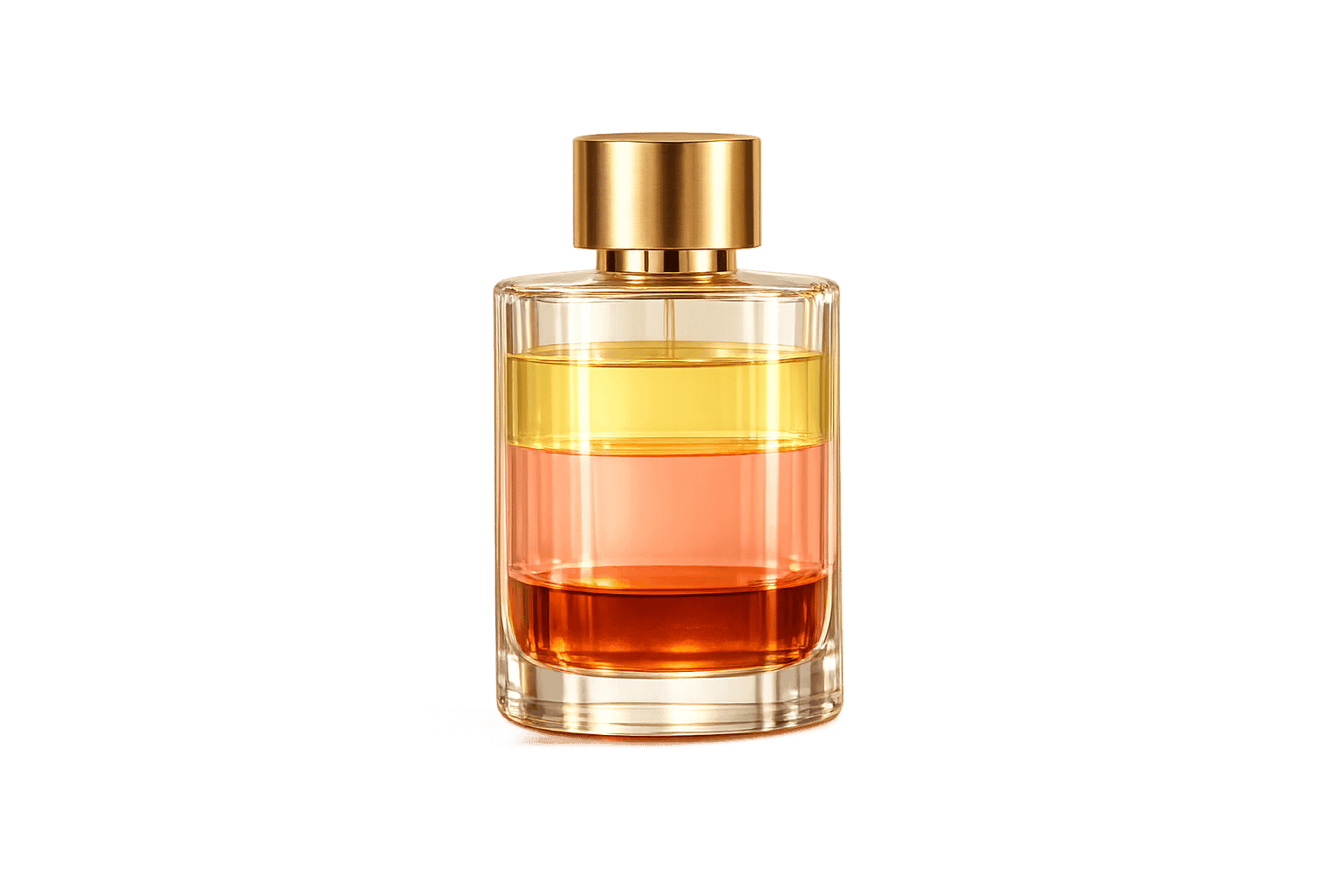
Vytvořit si vlastní signature vůni je v roce 2026 jednodušší, než si myslíte. Zde je vše, co potřebujete vědět:
- Proč na tom záleží: Ikonická osobní vůně odráží vaši osobnost i styl a ve srovnání s masovými parfémy nabízí jedinečný, intimní nádech.
- Jak vůně fungují: Parfémy se skládají ze tří vrstev – hlavy, srdce a základu. Každá fáze se rozvíjí postupně a vytváří podmanivou vonnou cestu.
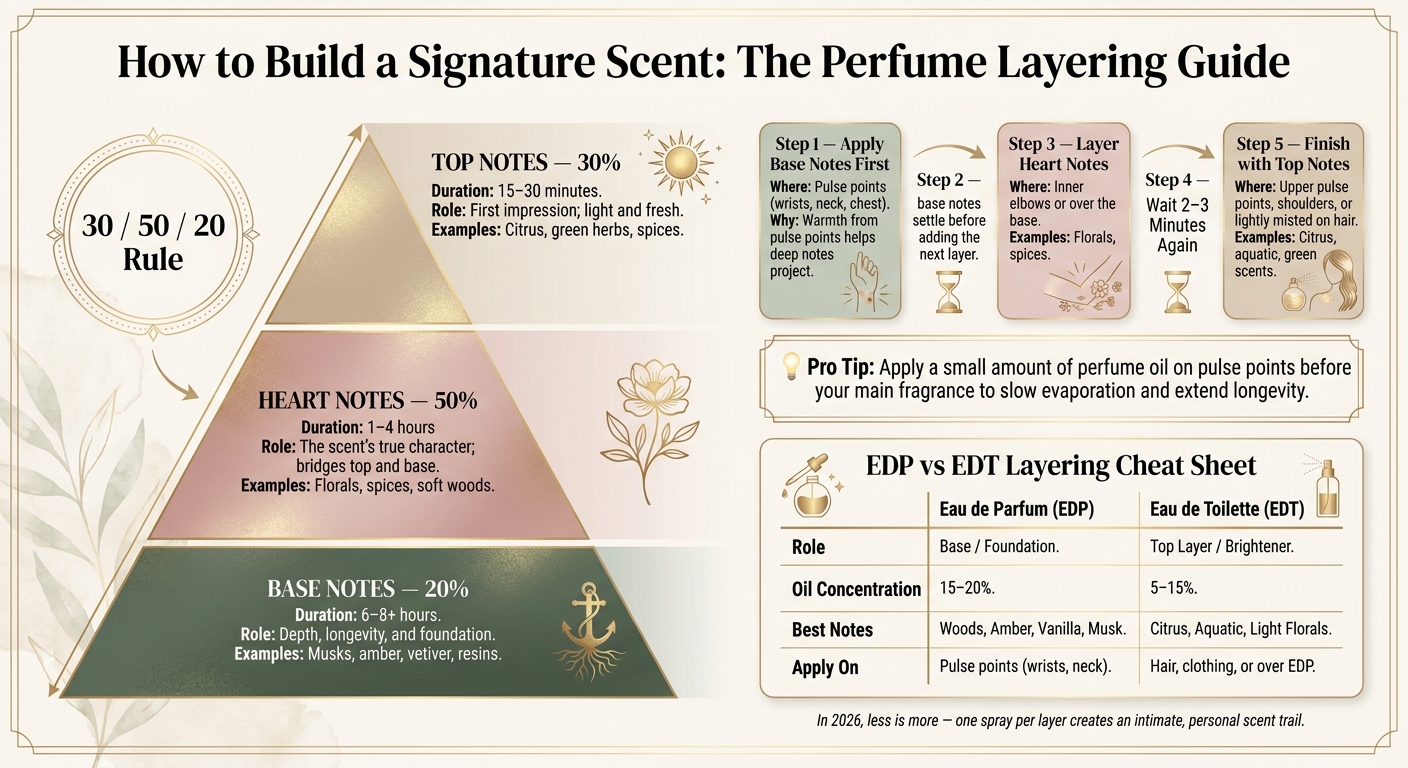
- Klíč k rovnováze: Pro harmonickou kompozici použijte pravidlo 30/50/20 (30 % tóny hlavy, 50 % srdce, 20 % základ).
- Trendy tóny roku 2026: Mezi oblíbené fúze patří pistácie + santalové dřevo, matcha + ovesné mléko a jahoda + kůže.
- Tipy pro vrstvení: Začněte základními tóny, přidejte srdce a kompozici završte lehčími svrchními tóny. Každé vrstvě dopřejte několik minut na usazení.
- Testování a zdokonalování: Pozorujte, jak se vaše kreace vyvíjí v průběhu hodin, a přizpůsobte ji různým příležitostem – do práce, na večer i podle ročního období.
Základy vrstvení vůní: Osvědčené kombinace i tipy pro celodenní výdrž
Jak fungují vonné tóny v parfému
Vůně se rozvíjejí ve třech odlišných fázích. Možná jste si všimli, že parfém ihned po aplikaci působí jiskřivě a citrusově, ale postupem času přechází v hřejivější a hlubší akordy. Tato proměna se řídí promyšlenou strukturou vrstev: tóny hlavy, srdce a základu.
Hlava, srdce a základ: Jak se liší
Jednotlivé vrstvy jsou definovány rychlostí, jakou se jejich molekuly odpařují z pokožky. Právě rychlost odpařování určuje trvanlivost tónu a jeho úlohu v celkové kompozici. Následující tabulka tyto vrstvy přehledně shrnuje:
| Vrstva vůně | Výdrž na pokožce | Úloha v kompozici |
|---|---|---|
| Hlava (Top notes) | 15–30 minut | Vytváří první dojem; lehká a svěží |
| Srdce (Middle notes) | 1–4 hodiny | Představuje podstatu vůně; propojuje hlavu se základem |
| Základ (Base notes) | 6–8+ hodin | Dodává hloubku a výdrž; tvoří nosnou kostru |
Tóny hlavy osloví vaše smysly jako první. Bývají lehké a těkavé – typicky citrusy, zelené byliny či jemné koření. Zanechají bezprostřední dojem, ale rychle vyprchají. Jakmile odezní, naplno se projeví tóny srdce, které utvářejí pravý charakter parfému. Často v nich dominují květiny, koření nebo měkká dřeva. Nakonec nastupují tóny základu – nejtěžší a nejstálejší molekuly, jako je pižmo, ambra, vetiver a pryskyřice. Ty vůni ukotvují, propůjčují jí hloubku a zaručují její dlouhou stopu na kůži.
Proč je rovnováha tónů zásadní
Právě souhra těchto vrstev umožňuje parfému rozvíjet se do okouzlující krásy. Dosažení správné rovnováhy mezi tóny je pro celkovou harmonii naprosto zásadní.
Přílišný důraz na základní tóny může působit těžkopádně, zatímco převaha hlavy způsobí, že vůně příliš rychle vyprchá. K dosažení ideálního souladu se mnozí parfuméři drží pravidla 30/50/20: 30 % tóny hlavy, 50 % srdce a 20 % základ. Tento poměr dokonale odpovídá přirozené rychlosti odpařování jednotlivých složek. Rovnoměrné rozdělení 33/33/33 naopak často vede k disharmonii, jelikož nerespektuje odlišné chování molekul.
Při experimentování s vlastními směsmi vám skvěle poslouží jednoduchý test na vonných papírcích (blotterech). Namočte jednotlivé proužky do vybraných vonných esencí a vějířovitě je k sobě přiložte, abyste prozkoumali jejich interakci. Jakmile směs namícháte, nechte ji 24 až 48 hodin odpočívat. Během této doby se molekuly dokonale propojí a odhalí svůj skutečný vonný profil.
Kolo vůní jako průvodce kompatibilními tóny
Jakmile si osvojíte základy vrstvení, stane se pro vás vonné kolo neocenitelným pomocníkem při hledání vzájemně se doplňujících ingrediencí. Představte si ho jako kruhovou mapu seskupující rodiny vůní, která jasně znázorňuje jejich vzájemné vztahy.
Princip je prostý: vůně ze stejné rodiny k sobě ladí zcela přirozeně, zatímco tóny ze sousedních rodin vytvářejí lákavé, a přesto harmonické kontrasty. Čím dále však od sebe dvě rodiny na kole leží, tím vyšší je riziko nežádoucího střetu.
„Vůně ze sousedních rodin na vonném kole... vytvářejí zajímavý kontrast bez rušivých tónů. Esence na protilehlých stranách... představují nejvyšší riziko – mohou fungovat naprosto geniálně, nebo vyznít zcela disharmonicky.“ – HIQILI
Při míchání začněte spolehlivým základem z rodiny dřevitých, orientálních nebo ambrových vůní. Přidejte vrchní tóny a srdce ze sousedních kategorií, abyste dosáhli elegance a rovnováhy. Dřevitý základ se například nádherně pojí s citrusovou hlavou, která rozjasní jeho zemitou hloubku. Květinové či vanilkové srdce pak poslouží jako most, jenž zjemní veškeré ostré přechody.
Hlavní rodiny vůní a jejich vzájemná souhra
Čtyři primární vonné rodiny – květinová, citrusová, dřevitá a orientální/ambrová – vnášejí do kompozice svůj osobitý charakter. Květinové tóny jsou něžné a romantické, citrusy dodávají energii, dřeva přinášejí ušlechtilost a orientální/ambrové akordy propůjčují hřejivost i smyslné bohatství. V roce 2026 se navíc na výsluní drží rodiny gurmánských (s akordy vanilky a karamelu) a svěžích/akvatických tónů, především v oblasti niche a personalizovaných parfémů.
Mnoho vonných esencí navíc nelze jednoznačně zařadit do jediné škatulky. Květinový olej může mít například zelené či vodní podtóny, díky nimž přirozeně propojuje různé výseče kola. Nechte se vést svým nosem – vonné kolo je flexibilním průvodcem, nikoli striktním souborem pravidel.
Kombinace, které fungují, a které raději vynechat
Zde je stručný přehled nejlepších spojení i těch, ke kterým je třeba přistupovat s opatrností:
| Rodina vůní | Nejlépe ladí s | Kombinace, kterým se vyhnout |
|---|---|---|
| Květinová | Citrusová, zelená, vanilková nebo ambrová | Těžké zemité tóny, které přehluší jemné okvětní lístky |
| Citrusová | Dřevitá, květinová, gurmánská nebo akvatická | Hluboké pryskyřičné tóny jako myrha či kadidlo |
| Dřevitá | Citrusová, květinová, orientální nebo gurmánská | Přeslazené akordy jako hutný karamel |
| Orientální (Ambrová) | Květinová, dřevitá nebo gurmánská | Spojení dvou příliš těžkých orientálních kompozic |
| Gurmánská | Ovocná, květinová nebo dřevitá | Těžké zemité pačuli nebo pronikavé pižmo |
| Svěží / Akvatická | Dřevitá, pižmová nebo květinová | Těžké gurmánské tóny |
| Chyprová | Květinová, ovocná nebo zelená | Křehké květiny, pokud je základ s pačuli příliš dominantní |
Základem úspěchu je vyvarovat se spojení, kde se přetlačují dva příliš dominantní prvky. Výrazná kůže ve vrstvě s temným oudem nebo pryskyřičná myrha v přímém kontrastu s jiskřivým citrusem mohou smysly zahltit a vytvořit chaotický vjem. Pokud váháte, držte se sousedních rodin na kole vůní – získáte vyvážený a spolehlivě harmonický výsledek.
Tento princip představuje ideální odrazový můstek pro objevování trendů v kombinování vonných tónů pro rok 2026.
Nejoblíbenější kombinace vonných tónů pro rok 2026
Jaké tóny určují trendy roku 2026
Svět parfémů se v roce 2026 přiklání ke konceptu „tichého luxusu“ (quiet luxury) – k vůním, které působí intimně, sofistikovaně a splývají s nositelem, místo aby na sebe křiklavě poutaly pozornost. Tento posun dává vyniknout tónům, jež do kompozice vnášejí texturu, hřejivost a noblesní hloubku.
Gurmánské tóny se stále drží na vrcholu zájmu, získaly však mnohem rafinovanější, téměř delikátně slaný podtón. Jak uvádí parfumér Carlos Huber:
„Věřím, že gurmánské tóny budou populární i nadále, ovšem v mnohem nuancovanější a zajímavější podobě – v podobě ušlechtilých tónů inspirovaných gastronomií, které dodávají texturu a pocit pohodlí, daleko od obvyklých vanilkových karamelů.“
Mezi klíčové ingredience na vzestupu patří pistácie, matcha, pražený sezam, sluncem provoněná jahoda a oud. Krémové akordy jako ovesné mléko a rýžové mléko se využívají ke zjemnění výraznějších tónů, zatímco svěží, prosluněné esence jako pomelo a zimolez vnášejí do kompozic vzdušnou eleganci, ideální pro jarní a letní měsíce. Tyto tendence otevírají prostor pro neobyčejné kombinace, které definují olfaktorickou tvář roku 2026.
Harmonická a osvědčená spojení tónů
Tyto moderní tóny umožňují vznik fascinujících duetů, které dokonale vyvažují kontrast a harmonii.
Pistácie + santalové dřevo tvoří fúzi, jež ztělesňuje hřejivé bezpečí i čistý přepych. Pistácie přináší delikátní oříškovou krémovost, která souzní s hebkým, dřevitým teplem santalu. Příkladem této harmonie je vůně Dreams Starlight od Coach (cca 72 €), jež zanechává ušlechtilý, a přitom velmi přístupný dojem.
Matcha + ovesné mléko kombinuje vlnu wellness trendů s gurmánským potěšením. Matcha nabízí jemný, decentně nahořklý zelený nádech zaručující lehkost, zatímco ovesné mléko obklopuje konejšivou měkkostí. Kompozice Freedom Musk Matcha 45 od značky Kayali, představená koncem roku 2025, spojuje tyto akordy se sladkým pižmem a vytváří moderní, uklidňující auru. Mona Kattan, zakladatelka značky Kayali, poznamenává:
„Pozoruji nástup jemnějšího, smyslovějšího směru: klidné sebevědomí namísto okázalé intenzity, hřejivost namísto ostrých hran a hloubka bez zbytečné tíhy.“
Bergamot + oud oslavuje půvab protikladů. Zářivá jiskra bergamotu prosvětluje hlubokou, pryskyřičnou bohatost oudu, což přináší vůni, která je neobyčejně vrstevnatá a nositelná.
Jahoda + kůže představuje hravý a současně svrchovaně sofistikovaný kontrast. Parfémovaná voda Vine Thief Eau de Parfum od Liberty spojuje zralé jahody s kůží a kořenem kosatce, čímž vzniká vyvážená kompozice ovocné sladkosti a odvážného koženého podtónu.
| Kombinace tónů | Proč skvěle funguje | Ideální pro |
|---|---|---|
| Pistácie + santalové dřevo | Krémová, oříšková hřejivost | Každodenní nošení, nenucená elegance |
| Matcha + ovesné mléko | Zelená svěžest v objetí krémového komfortu | Kancelář, relaxační chvíle |
| Bergamot + oud | Jiskřivý citrus prosvětluje hluboké dřevo | Přechod ze dne do večera |
| Jahoda + kůže | Sladké ovoce zjemňuje podmanivou kůži | Večerní události, chladnější počasí |
| Zelený čaj + cedr | Vzdušná a ukotvující čistota | Náročné dny, pracovní prostředí |
| Ambra + grapefruit | Smyslné teplo v kontrastu se šťavnatým akcentem | Podzimní všestrannost od rána do noci |
Váš osobní odborník na parfémy už čeká
Vyplňte náš rychlý vonný kvíz a objevte autentické designové a nišové parfémy vybrané podle vašeho vkusu – prozkoumejte je jako 2–8ml dekanty a vzorky, abyste si každý mohli vyzkoušet, než se rozhodnete pro celou lahvičku.
Najděte svou vůniJak vrstvit parfémy pro vytvoření vlastní vůně na míru
Jak si vytvořit ikonickou osobní vůni: Průvodce vrstvením parfémů
Umění vrstvení vůní nespočívá pouze ve volbě ladících tónů, ale také ve způsobu jejich aplikace. Správná technika zajistí, že se esence dokonale propojí a vytvoří mnohorozměrnou, osobitou stopu.
Pořadí a místa aplikace
Vždy začínejte základními tóny, jako je oud, ambra, pižmo nebo vanilka. Aplikujte je na pulzní body – zápěstí, krk či dekolt. Tato místa vyzařují tělesné teplo, které napomáhá hlubokým tónům krásně se rozvinout. Poté navrstvěte střední tóny (květiny či koření) na vnitřní stranu loktů nebo přímo přes základ. Nakonec vše doplňte lehčími svrchními tóny, jako jsou citrusy, mořské nebo zelené akordy. Ty nejlépe vyniknou na horních pulzních bodech, na ramenou nebo jemně rozprášené do vlasů, kde vytvoří jemný vonný závoj.
Pro dokonale vyváženou stopu (sillage) zkuste nanést hutnější Eau de Parfum (EDP) na zápěstí a doplnit ji lehkou Eau de Toilette (EDT) na krku. Tento dialog koncentrací vytvoří přirozeně se proměňující auru, jež se bude vznášet všude kolem vás.
Profesionální tip: Naneste na pulzní body nepatrné množství parfémového oleje ještě před aplikací hlavní vůně. Olej nejen zvýrazní hloubku tónů, ale také zpomalí odpařování, čímž výrazně prodlouží výdrž. Mezi jednotlivými vrstvami vyčkejte 2–3 minuty, aby se každá složka mohla na kůži usadit.
A jaký je současný trend? Vytříbená střídmost. V roce 2026 platí, že méně je více – jedno stříknutí každé vrstvy bohatě postačí k vytvoření intimního vonného podpisu namísto těžkého mračna.
Kombinování parfémované a toaletní vody
Chcete-li efektivně zkombinovat různé koncentrace, použijte EDP jako nosný základ a EDT jako jiskřivou svrchní vrstvu. Parfémovaná voda s koncentrací vonných olejů 15–20 % nabízí hloubku a stálost, zatímco toaletní voda s 5–15 % vnáší lehkost a osvěžení.
U velmi intenzivních EDP, například s obsahem oudu či tabáku, postačí jediný střik, který pro vyvážení celku doplníte štědřejší dávkou EDT. Než směs nanesete na pokožku, vyzkoušejte ji na papírcích. Nastříkejte každou vůni na samostatný blotter, přiložte je k sobě a zamávejte jimi před nosem. Získáte tak jasnou představu o jejich souhře, aniž byste museli riskovat aplikaci na kůži.
| Vlastnost | Eau de Parfum (EDP) | Eau de Toilette (EDT) |
|---|---|---|
| Role při vrstvení | Základ / Tělo vůně | Vrchní vrstva / Rozjasnění |
| Koncentrace vonných složek | 15–20 % | 5–15 % |
| Optimální tóny | Dřeva, ambra, vanilka, pižmo | Citrusy, akvatické a svěží květinové tóny |
| Místa aplikace | Pulzní body (zápěstí, krk) | Vlasy, oděv, případně přes EDP |
Cílem je dosáhnout harmonického propojení, kde se obě kompozice vzájemně vyzdvihují. Žádná by neměla zcela převládnout; měly by splynout v jediný ucelený akord, který bude nezaměnitelně váš.
Jak testovat a zdokonalovat vlastní vonnou kreaci
Testování navrstvené kompozice je klíčovým krokem k vytvoření osobního parfému, jenž věrně vystihne váš styl. Jakmile vůně nanesete, nastává čas sledovat, jak se na vaší pokožce v čase proměňují. Parfémy jsou živé – proměňují se, prohlubují a občas odhalí nečekané fazety. Důkladné testování je zárukou, že se z jednorázového experimentu stane váš každodenní favorit.
Pochopení fáze rozvonění (drydown)
Nikdy nehodnoťte vůni pouze podle jejího úvodního akordu. Hlava vyprchá během chvíle, často za pár minut, zatímco srdce a základ se zvolna rozvíjejí po celé hodiny. Skutečná duše vaší vrstvené kreace se ukáže až v momentě, kdy se tyto hlubší složky plně usadí.
„Hlava parfému vytváří první dojem... soudit však vůni pouze podle jejích svrchních tónů je jako hodnotit tříchodové menu jen podle grafiky jídelního lístku.“ – Aysire
Sledujte vývoj své směsi v pravidelných intervalech – po 30 minutách, 2 hodinách a 6 hodinách. U vlastnoručně míchaných esencí vyčkejte 24–48 hodin, než vůně dospěje, neboť její profil se v tomto čase ještě přirozeně zaobluje.
Až plně porozumíte tomu, jak se vůně chová, můžete ji doladit pro nejrůznější příležitosti.
Přizpůsobení vůně pro různé příležitosti
Po vyhodnocení fáze rozvonění můžete složení upravit konkrétním situacím na míru. Ikonická osobní vůně nemusí být neměnným dogmatem – může sloužit jako všestranný základ, který přizpůsobíte náladě, programu či počasí. Zvolte vhodné akordy i intenzitu vrstvení podle příležitosti:
| Příležitost | Doporučené tóny | Strategie vrstvení |
|---|---|---|
| Kancelář / Běžný den | Kosatec, vetiver, světlá dřeva, bílé pižmo | Aplikujte střídmě na pulzní body pro decentní stopu |
| Večer / Společnost | Vanilka, ambra, santalové dřevo, koření, oud | Navrstvěte parfémový olej pod EDP pro výraznější projekci |
| Léto / Pohyb | Akvatické akordy, citrusy, zelený čaj, neroli | Jemně rozprašte do vlasů nebo na oděv pro delší svěžest |
| Zima / Útulné večery | Gurmánské tóny, pryskyřice, balzámy, ušlechtilá dřeva | Použijte parfémovaný tělový krém jako základ pro ukotvení vůně |
Pokud se vrstvy nepropojí podle vašich představ nebo vůně nepůsobí harmonicky, nezoufejte. Rychlé přetření kůže alkoholem – například dezinfekcí na ruce – směs neutralizuje a poskytne vám čisté plátno pro další experimenty.
Závěr: Vydejte se na cestu za svou vlastní vůní
Hledání vlastní vonné signatury je hluboce osobní proces, který zrcadlí vaši individualitu. Vyzbrojeni znalostmi o pyramidě vůní, vonném kole, trendech pro rok 2026 i mistrovských technikách vrstvení můžete směle začít.
Začněte zlehka. Zvolte si po jednom tónu z každé úrovně pyramidy a dodržte prověřený poměr 30/50/20. Tím zajistíte dokonalou rovnováhu přecházející od jiskřivé svěžesti hlavy až po hlubokou stálost základu. Je to spolehlivý základ, který můžete při testování libovolně kultivovat.
„Výsledkem není pouhý parfém, ale příběh, který můžete vnímat čichem.“ – Viti Vinci
Zaznamenávejte si své pokusy do vonného deníku. Pište si použité esence, počet kapek i své dojmy s odstupem času. Nejenže tak budete schopni zopakovat vydařené kompozice, ale snadno odhalíte i složku, která v celku nefunguje.
Především však volte tóny, které rezonují s vaším vnitřním já, a nenechte se svazovat pomíjivými trendy. Vaše signature vůně by měla být vaším přirozeným prodloužením – nadčasová, osobitá a neopakovatelná.
Často kladené otázky
Jak vybrat tóny, které ladí s chemií mé pokožky?
K nalezení tónů, jež dokonale souzní s chemií vaší pokožky, je nezbytné pochopit, jak parfémy reagují s tělesným teplem a přirozeným kožním filmem. Vždy vyzkoušejte vzorek přímo na vlastní kůži a sledujte proměnu hlavy, srdce i základu v průběhu několika hodin. Začněte rodinami vůní, které se k sobě přirozeně hodí, jako jsou květiny v kombinaci s pižmem nebo citrusy s vodními tóny. Proporce následně upravujte tak, aby výsledný akord dokonale vyhovoval právě vám.
Jak vrstvit vůně, aby nepůsobily těžce a nesourodě?
Vrstvení parfémů je umění. Abyste se vyhnuli disharmonickému či těžkopádnému výsledku, nepřekračujte kombinaci 2 až 3 vzájemně se doplňujících vůní. Jako nosný pilíř zvolte hlubší základní akordy, jako je oud či ambra. Poté přidejte tóny srdce, například květiny nebo koření, jež dodají kompozici ušlechtilost. Na závěr naneste lehkou hlavu v podobě citrusů nebo zeleného čaje pro dotek svěžesti.
Aplikujte s citem – méně je často více – a dopřejte každé vrstvě prostor, aby přirozeně splynula s pokožkou, než přidáte další. Vyvarujte se tření zápěstí o sebe, které strukturu vůně narušuje. Chcete-li mít jistotu, otestujte kombinaci nejprve na vonných papírcích, a teprve poté ji naneste na tělo.
Jak zajistit, aby má osobitá vůně vydržela po celý den?
Chcete-li maximalizovat trvanlivost vůně, naneste po koupeli na pokožku hydratační krém nebo neparfémované tělové mléko. Hydratovaná pokožka vonné esence lépe váže. Skvělou službu odvede také vrstvení s tělovou kosmetikou stejného či příbuzného vonného profilu. Parfém aplikujte na pulzní body – na zápěstí, krk nebo za ušní lalůčky. Pokud složení parfému neohrožuje textilie, jemné přestříknutí oděvu životnost vůně ještě prodlouží. Vyvarujte se však nadměrné aplikace; cílem je harmonický a přitažlivý dojem, který vás bude příjemně provázet po celý den.

