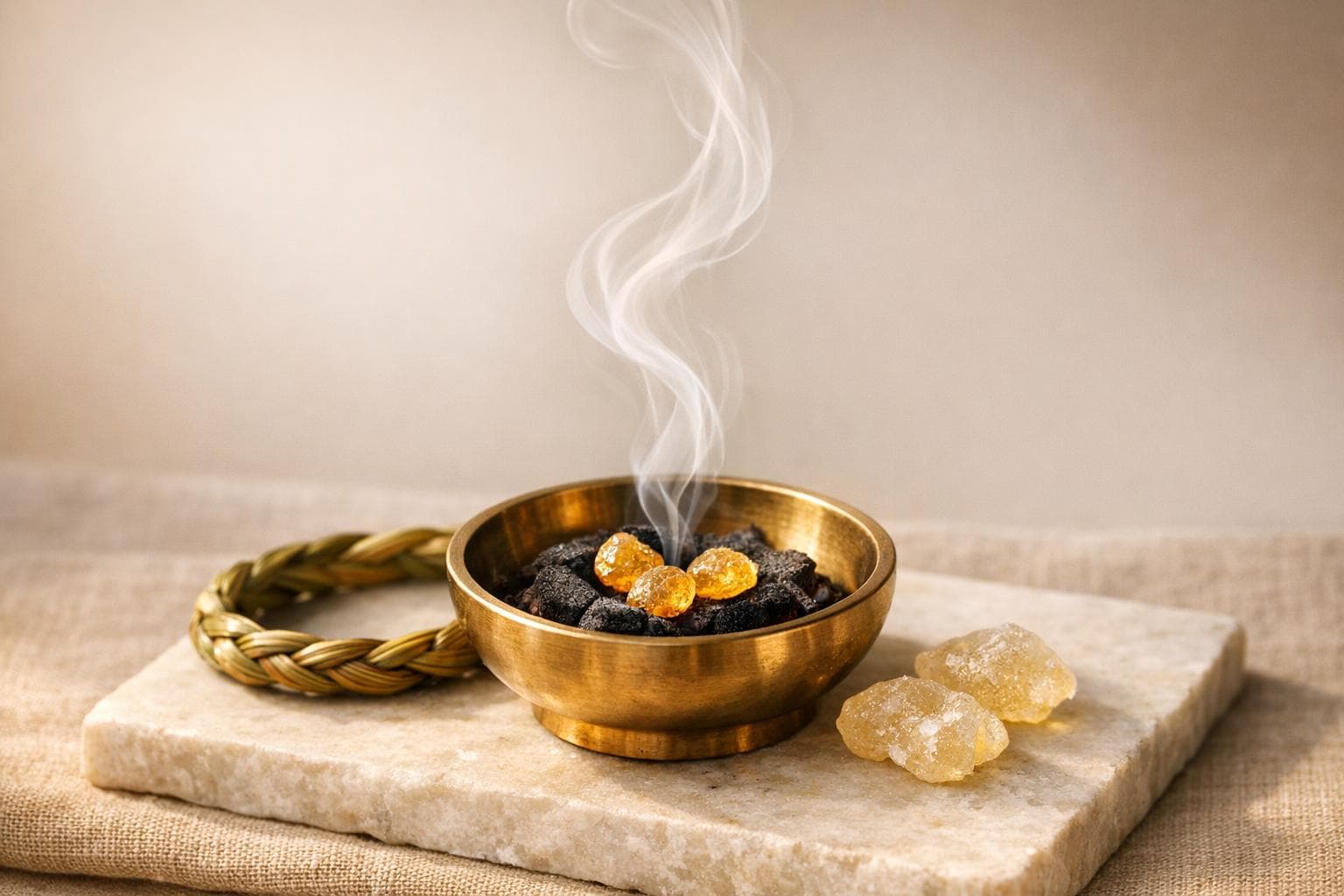
Posvátné vůně se po staletí používají k propojení lidí s jejich dědictvím, emocemi a spiritualitou. Vůně jako sladká tráva, pryskyřice kopálu a kadidlo slouží jako mocné nástroje pro předávání znalostí, posilování paměti a vytváření smysluplných rituálů. Tyto vůně nejen obohacují vyprávění příběhů, ale také fungují jako mosty mezi generacemi a spojují jednotlivce s jejich předky a kulturními praktikami.
Klíčové body:
- Paměť a emoce: Vůně přímo oslovují emocionální a paměťová centra mozku, díky čemuž jsou živé a působivé.
- Posvátné praktiky: Vůně jako sladká tráva a kopál jsou nedílnou součástí rituálů, symbolizují jednotu, očistu a duchovní propojení.
- Mezigenerační spojení: Obřadní vůně zajišťují předávání tradic a identity napříč generacemi.
- Současná relevance: Pokroky, jako jsou esenciální oleje a difuze studeným vzduchem, činí tyto praktiky dnes dostupnými a zároveň zachovávají jejich podstatu.
Posvátné vůně nesou příběhy, které přesahují čas a propojují minulost s přítomností v každém nádechu.
Sacred Aromas and Their Cultural Stories
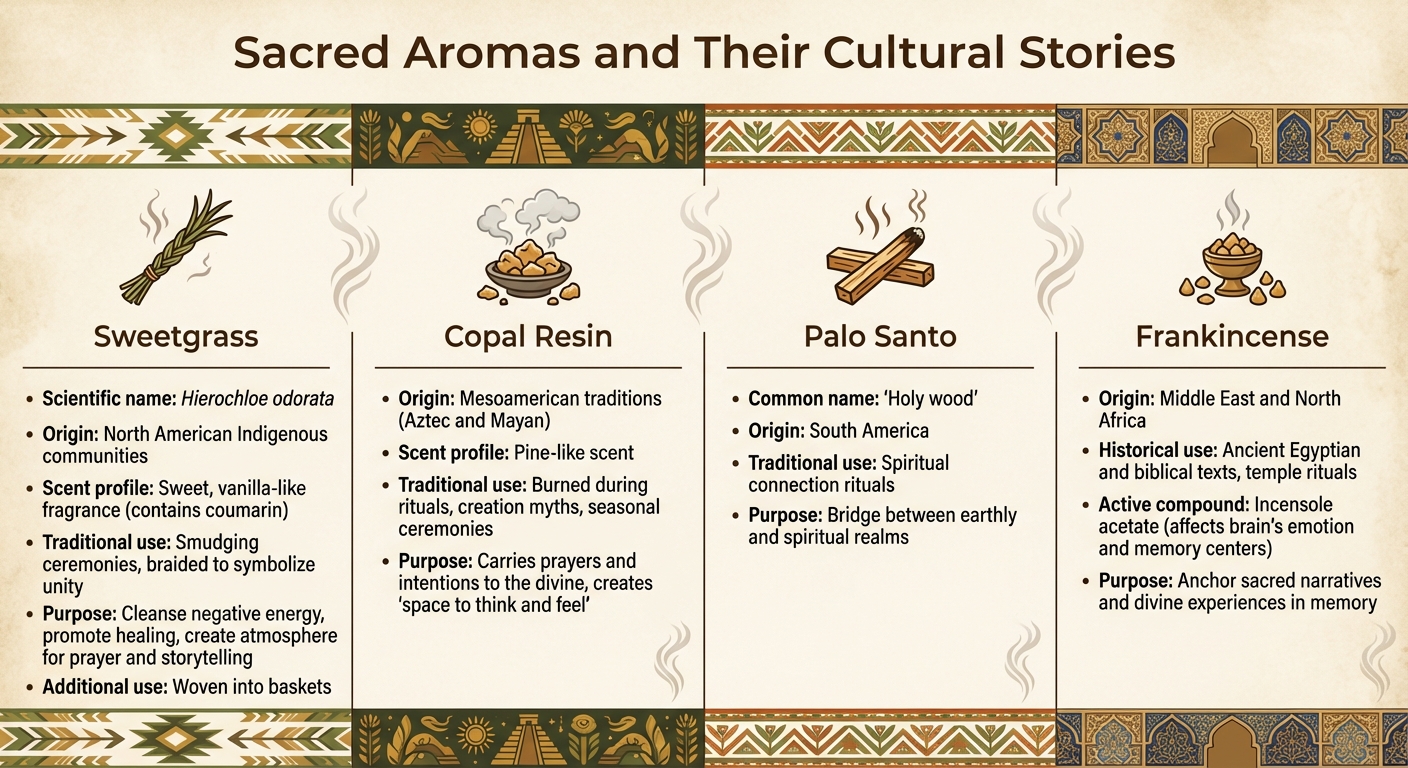
Posvátné vůně napříč kulturami: vlastnosti a tradiční použití
Sladká tráva: harmonie a vděčnost
Sladká tráva (Hierochloe odorata) zaujímá zvláštní místo v duchovních praktikách původních obyvatel Severní Ameriky. Tato vytrvalá tráva, známá svou sladkou vůní připomínající vanilku díky obsaženému kumarinu, se po usušení nebo spálení stává ještě aromatičtější. Tradičně se sladká tráva splétá do copů jako symbol jednoty a propojenosti fyzické a duchovní sféry. Když se pálí při očistných obřadech, věří se, že její kouř očišťuje negativní energii, podporuje uzdravení a vytváří atmosféru pro modlitbu a vyprávění příběhů.
"Sladká tráva je fascinující rostlina s bohatým kulturním dědictvím. Její příjemná vůně a historický význam z ní činí cenný doplněk zahrad i duchovních praktik."
– Natural Communities LLC
Kromě obřadního využití se sladká tráva vplétá i do košíků, kde spojuje praktičnost s kulturním vyjádřením. Její schopnost rychle se šířit pomocí podzemních oddenků zdůrazňuje potřebu udržitelných postupů, například získávání z školek podporujících obnovu přírodních stanovišť namísto vyčerpávání volně rostoucích populací.
Toto propojení mezi posvátnými vůněmi a kulturními narativy sahá daleko za hranice sladké trávy.
Pryskyřice kopálu: posvátný kouř mezoamerické mytologie
V mezoamerických tradicích je pryskyřice kopálu uctívána pro svůj posvátný kouř. Při spalování uvolňuje vůni připomínající borovici, o níž se věří, že nese modlitby a záměry k božstvům. Aztécká i mayská civilizace používaly kouř z kopálu během rituálů doprovázejících mýty o stvoření, sezónní obřady a vyprávění o předcích. Vířící kouř dodával vizuální i emocionální rozměr a vytvářel to, co původní badatelé označují jako "prostor pro myšlení a cítění".
Tato tradice smyslového vyprávění rezonuje napříč mnoha kulturami, v nichž posvátné vůně hrají ústřední roli.
Palo Santo, kadidlo a další aromatické legendy
Palo Santo a kadidlo jsou dalšími příklady vůní, které přemosťují propast mezi pozemskou a duchovní sférou. Palo Santo, doslova "svaté dřevo", pochází z Jižní Ameriky, zatímco kadidlo má kořeny v oblastech, jako je Blízký východ a severní Afrika. Obě mají bohatou historii jako prostředky spojení s božským. Kadidlo se například objevuje ve staroegyptských i biblických textech, kde bylo používáno při chrámových rituálech k ukotvení posvátných příběhů a božských zkušeností v paměti.
V severních tradicích národů Anishinaabeg a Inninuwag v Manitobě a severozápadním Ontariu se tabákové obětiny pojí s vyprávěním příběhů neboli dibaajimowinan. Výzkumnice Agnieszka Pawłowska — Mainville během více než 15 let (2008–2023) zdokumentovala, jak "muži země" (akiwenziyag a kitayatisuk) využívali pokládání tabáku jako způsob uchovávání znalostí "uložených v kostech" prostřednictvím sdílených příběhů.
"Pojem ‚Indigenous storywork‘ začal zahrnovat ohromnou šíři způsobů, jakými domorodé vyprávění slouží jako historický záznam, jako forma výuky a učení a jako vyjádření domorodé kultury a identity."
– Jo — Ann Archibald Q’um Q’um Xiiem
Tyto aromatické rituály povyšují vyprávění na multisenzorický zážitek a zajišťují, že kulturní identita a znalosti jsou předávány mezi generacemi hluboce smysluplným způsobem.
Jak vůně obohacují ústní tradice
Vytváření multisenzorických zážitků z vyprávění
Posvátné vůně proměňují ústní vyprávění v bohatý, multisenzorický zážitek. Pálení šalvěje, kopálu či dalších posvátných rostlin přidává vizuální prvek v podobě stoupajícího kouře, zatímco vůně aktivuje hluboká centra emocí a paměti v mozku. Toto propojení činí příběhy sdílené během těchto rituálů působivějšími a zapamatovatelnějšími, než by kdy dokázala samotná slova.
Vykuřování, tedy rituál spalování těchto rostlin, přesahuje rámec vytváření voňavé atmosféry – připravuje prostor pro vyprávění tím, že jej duchovně i fyzicky očišťuje. Autorka a učitelka Molly Larkin vysvětluje, že vykuřování "propojuje naši fyzickou rovinu s říší posvátna". Tento akt pomáhá účastníkům odložit rozptýlení každodenního života a podporuje stav vědomé přítomnosti, který je zásadní pro skutečné vstřebání ústních tradic. Z praktického hlediska navíc vykuřování čistí prostředí a zajišťuje vstřícný a soustředěný prostor pro vyprávění.
Každá rostlina používaná při vykuřování nese svůj vlastní symbolický význam: šalvěj podporuje harmonii, cedr očišťuje a sladká tráva podněcuje vděčnost. Tyto vůně v kombinaci s vyprávěním vytvářejí to, co původní badatelé popisují jako multisenzorický historický záznam – takový, který propojuje fyzickou, emocionální a duchovní dimenzi. Tento vrstvený zážitek nejen obohacuje samotný okamžik vyprávění, ale také navazuje spojení s tradicemi předků a prohlubuje jeho význam.
Propojování generací prostřednictvím aromatických rituálů
Aromatické rituály dělají víc než jen obohacují vyprávění – slouží jako most mezi generacemi. Když se mladší lidé účastní vykuřovacích obřadů praktikovaných jejich staršími, přicházejí do kontaktu se stejnými vůněmi a rituály, které po staletí uchovávaly kulturní moudrost.
Tato kontinuita byla přirovnána ke sdílenému podpisu – tichému jazyku, který s každým nádechem propojuje lidi, místa a vzpomínky. Když například babička učí své vnouče vést šalvějový kouř přes srdce pro harmonii, přes hlavu pro humor, před tělem pro pokoru a za zády pro čestnost, předává mu víc než jen rituál. Předává celý pohled na svět, zakódovaný ve vůni i gestu. Tyto sdílené praktiky ukazují, jak zásadní roli hrají posvátné vůně při ochraně kulturních příběhů a zajištění jejich trvání napříč generacemi.
Váš osobní odborník na parfémy už čeká
Vyplňte náš rychlý vonný kvíz a objevte autentické designové a nišové parfémy vybrané podle vašeho vkusu – prozkoumejte je jako 2, 5, 8 a 30 ml dekanty a vzorky, abyste si každý mohli vyzkoušet, než se rozhodnete pro celou lahvičku.
Najděte svou vůniModerní využití a zachování kulturního dědictví
Posvátné vůně v současném léčení a obřadech
Posvátné vůně nadále hrají smysluplnou roli v integrativních zdravotních přístupech a propojují fyzickou, mentální i duchovní sféru. Dnešní praktici spojují pradávné tradice s moderní vědou. Studie například ukázaly, že sloučeniny jako incensole acetate – obsažené v kadidle – ovlivňují oblasti mozku spojené s emocemi a pamětí, což je v souladu s dlouhodobými domorodými přesvědčeními. Podobně esenciální olej z bílé šalvěje, který obsahuje 24,6 % až 71,7 % 1,8-cineolu, prokázal antimikrobiální a expektorační účinky. Tato zjištění dodávají vědeckou věrohodnost rituálům předávaným z generace na generaci.
Dr. Gerald Weissmann, šéfredaktor časopisu The Federation of American Societies for Experimental Biology Journal, tuto souvislost zdůrazňuje:
"Objev toho, jak incensole acetate, izolovaný z kadidla, působí na konkrétní cíle v mozku... poskytuje biologické vysvětlení pro tisícileté duchovní praktiky, které přetrvaly napříč časem, vzdáleností, kulturou, jazykem i náboženstvím."
Pokrok v technologiích také proměňuje způsob, jakým tyto tradiční vůně prožíváme. Metody jako difuze studeným vzduchem umožňují lidem užívat si zklidňující účinky santalového dřeva či růže bez kouře a zbytků spojených s tradičním pálením. Díky tomu jsou posvátné vůně praktičtější pro moderní interiéry a zároveň si zachovávají svůj symbolický význam. Domorodé znalosti, jako je dokumentace více než 400 rostlin v tradiční medicíně kmene Cherokee, nadále inspirují nový vědecký výzkum.
Tento vývoj zajišťuje, že posvátné vůně zůstávají relevantní, i když komercializace představuje výzvy pro jejich kulturní a duchovní integritu.
Zachování posvátných vůní v globálním světě
Zatímco moderní výzkum potvrzuje tradiční využití, ochrana posvátného kontextu těchto praktik je zásadní. Jednou z hlavních dnešních výzev je zabránit tomu, aby se z posvátných vůní staly pouhé komerční produkty zbavené svého hlubšího významu. Jak tyto tradice vstupují na globální trhy, spojení mezi jejich duchovním účelem a smyslovým prožitkem může slábnout. Řešení vyžaduje vzdělávání, etické získávání surovin a uvědomělou inovaci.
Pochopení kulturních nuancí je klíčovým krokem. Například smudging označuje specificky obřadní praktiky původních obyvatel Severní Ameriky, které jsou hluboce zakořeněny v tradici a protokolu. Naproti tomu očišťování kouřem je širší pojem používaný po celém světě pro spalování rostlin za duchovními či zdravotními účely, jak je tomu v keltských, hinduistických a afrických tradicích. Respektování těchto rozdílů pomáhá předcházet kulturnímu přivlastňování a chrání nadměrně sbírané druhy, jako je bílá šalvěj.
Úsilí o zachování těchto tradic nabírá na síle. Muzeum parfému (MUPE) v Mexico City seznamuje návštěvníky s historickým a kulturním významem vůní prostřednictvím workshopů, přednášek a interaktivních expozic. Podobně luxusní značky jako Coqui Coqui a XINU začleňují do svých produktů domorodé příběhy a zajišťují, že se tyto narativy dostávají ke globálnímu publiku. Při nákupu posvátných bylin je důležité podporovat dodavatele z řad původních obyvatel Ameriky nebo volit společnosti, které nabízejí identifikaci druhů a nezávislé testování čistoty. Pro osobní očišťování kouřem zvažte používání lokálně pěstovaných bylin, jako je rozmarýn nebo levandule, abyste snížili tlak na ohrožené volně rostoucí populace.
Přistupovat k posvátným vůním se záměrem a vděčností je zásadní. Vnímat je jako něco víc než jen vůně ctí jejich původ a umožňuje jim obohatit moderní wellness praktiky. Tento vědomý přístup respektuje kulturní dědictví, které představují, a zajišťuje, že jejich role při předávání moudrosti a identity zůstane zachována.
Používání vůní pro osobní vyprávění
Výběr vůní, které ladí s vašimi osobními příběhy
Náš čich je hluboce spojen s emocemi a pamětí díky přímému propojení s limbickým systémem. Toto spojení, často označované jako Proustův efekt, vysvětluje, jak nás jediná vůně – například parfém vaší babičky nebo slaný vzduch z dětské cesty k moři – může okamžitě přenést do jiného času a místa.
Chcete-li najít vůně, které rezonují s vaším osobním příběhem, zkuste slepé testování vůní. Tato technika spočívá v hodnocení vůní bez znalosti jejich složení či značky, což vám umožní soustředit se výhradně na to, jak na vás působí. Je to způsob, jak objevit svou "emocionální pravdu" bez vlivu marketingu. Jak krásně říká Tonya Kidd — Beggs, zakladatelka STORIES Parfums:
Vůně je emoce v neviditelné podobě. Je to paměť, identita a uzdravení. Je to příběh o tom, kým jsme.
– STORIES Parfums
Při výběru vůně přemýšlejte o okamžicích či kapitolách svého života, které chcete zachytit. Zemité tóny, jako je santalové dřevo, vám mohou připomínat klidná a uzemňující období, zatímco citrusové akordy mohou evokovat energii minulých dobrodružství. Můžete také prozkoumat ajurvédské principy: levanduli pro zklidnění, růži pro ochlazení intenzivních emocí nebo eukalyptus pro příval energie. Začleňte konkrétní vůně do svých každodenních rituálů – mátu peprnou ráno pro zostření soustředění nebo heřmánek večer pro uvolnění. Tyto volby nejen obohacují váš každodenní život, ale zároveň vytvářejí kotvy pro smysluplné vzpomínky.
Výběrem vůní, které odrážejí vaši osobní historii, můžete začít vytvářet kolekci, jež se bude vyvíjet spolu s příběhem vašeho života.
Vytvoření osobní kolekce vůní se Scento

Jakmile určíte vůně, které promlouvají k vašim vzpomínkám, zvažte vytvoření osobní kolekce parfémů, která toto spojení ještě prohloubí. Budování takové kolekce je víc než jen shromažďování parfémů – je to způsob, jak objevovat různé stránky sebe sama, aniž byste se museli zavázat k plným balením, která by mohla zůstat nevyužita. Scento nabízí promyšlený způsob experimentování s lahvičkami 2 ml, 5 ml a 8 ml a u většiny parfémů i dekantem o objemu 30 ml. Díky tomu můžete objevovat vůně bez tlaku velké investice. Lahvička o objemu 8 ml, která poskytne přibližně 120 střiků, je ideální pro poznání toho, jak se vůně na vaší pokožce v průběhu času rozvíjí.
Stejně jako se příběh odvíjí v kapitolách, i vůně se odhaluje ve vrstvách – horních, srdcových a základních tónech – a odráží tak vývoj osobních příběhů.
S více než 1 000 designérskými i niche možnostmi otevírá Scento dveře k celé škále „nosičů příběhů“, z nichž každý zachycuje náladu, vzpomínku nebo aspiraci. Postupem času si můžete vybrat vůni, která rezonuje s vaší cestou, a tím rozšiřovat svůj aromatický slovník. Lahvičky vhodné na cesty navíc usnadňují začlenění těchto osobních rituálů do každodenního života, ať už si jimi označujete ranní záměr, nebo slavíte výjimečný okamžik.
Jak vaše kolekce poroste, věnujte pozornost ingrediencím, které s vašimi zkušenostmi rezonují nejvíce. Možná vám santalové dřevo pomáhá cítit se ukotveně, jasmín pozvedá náladu nebo ambra přináší pocit útěchy a tepla. Postupem času se vaše kolekce stává něčím víc než jen souborem vůní – proměňuje se v osobní archiv vašeho života, kde každá lahvička představuje jedinečnou kapitolu. Tímto způsobem pokračujete v nadčasové tradici vyprávění prostřednictvím vůně, podobně jako původní kultury uchovávaly vzpomínky skrze posvátné aroma.
Závěr: spojení mezi vůní a příběhem
Vůně hovoří jazykem, který překračuje hranice i éry a splétá spojení napříč generacemi. Od posvátných rituálů starověkého Egypta po kadidlové tradice domorodých komunit a hinduistické bohoslužby slouží vůně po dlouhá staletí jako kotvy kulturní paměti. Důkazy o tomto trvalém propojení lze nalézt na místech, jako je 4 000 let stará továrna na parfémy objevená na Kypru, i v indickém odkazu předního producenta kadidla.
Pouto mezi vůní, emocemi a pamětí je tím, co nám umožňuje, aby nás aroma přenášelo časem i mezi světy. Vezměme si například santalové dřevo – jeho přítomnost v meditačních praktikách napříč Asií svědčí o tom, jak posvátné vůně inspirují duchovní rozjímání a úctu bez ohledu na kulturu.
"Vzduch se stává něčím víc než jen atmosférou; stává se příběhem, který propojuje lidi, místa a paměť v každém nádechu."
Tyto dávné tradice vydláždily cestu moderním inovacím ve vyprávění prostřednictvím vůně. Dnešní tvůrci vůní propojují minulost se současností a vytvářejí zážitky, které ctí dědictví a zároveň přijímají nové technologie. Systémy difuze studeným vzduchem například obnovují posvátné prostory bez kouře, zatímco personalizované kolekce vůní umožňují jednotlivcům vyprávět vlastní příběhy. Výběrem vůní, které odrážejí naši osobní historii – instinktem, který původní kultury praktikují po staletí – neseme dál tuto bohatou tradici uchovávání identity a paměti prostřednictvím vůně. Posvátné vůně dál vyprávějí nadčasové příběhy, nádech po nádechu.
Často kladené otázky
Jaký je rozdíl mezi smudgingem a očišťováním kouřem?
Smudging je hluboce duchovní praxe pocházející z tradic původních obyvatel, při níž se určité byliny, jako je bílá šalvěj nebo cedr, pálí jako součást posvátných obřadů za účelem očištění prostor, předmětů nebo jednotlivců. Tento rituál má hluboký kulturní význam a často se provádí s konkrétními záměry a s respektem k jeho kořenům.
Očišťování kouřem je naopak obecnější praxe, která zahrnuje pálení bylin či jiných materiálů za účelem vyčištění energie. Na rozdíl od smudgingu není spojena s žádnou konkrétní kulturou ani obřadní tradicí. Ačkoli obě praktiky sdílejí cíl očisty, jejich původ i kontext se liší.
Jak mohu posvátné vůně používat s respektem, aniž by šlo o kulturní přivlastňování?
Chcete-li posvátné vůně začlenit do svých praktik s respektem, začněte tím, že porozumíte jejich původu a kulturním či duchovním významům, které nesou. Nezacházejte s nimi jako s pouhými estetickými doplňky ani je nepoužívejte způsobem, který je zbavuje jejich hlubšího významu. Kdykoli je to možné, vyhledejte vedení kulturních nositelů tradic nebo lidí, kteří jsou s těmito tradicemi hluboce spojeni. Přistupovat k těmto vůním uvědoměle znamená ctít jejich bohatou historii i komunity, z nichž pocházejí.
Co mohu použít místo bílé šalvěje, pokud je nadměrně sbíraná?
Můžete zvolit ekologicky šetrné a respektující alternativy, jako jsou palo santo, cedr nebo levandule. Tyto rostliny jsou často doporučovány jako náhrada za bílou šalvěj a lze je získávat způsoby, které respektují jak ekologickou rovnováhu, tak kulturní praktiky.

