Die Niederlande dominieren die globale Duftlandschaft in zweierlei Hinsicht: als Land mit dem höchsten Pro — Kopf — Verbrauch von Düften und als bedeutende europäische Drehscheibe für Re — Exporte. Bis 2026 werden niederländische Verbraucher voraussichtlich 836 kg Duft pro 1.000 Einwohner verbrauchen, was einen wachsenden Trend zu vielfältigen und hochwertigen Duftkompositionen widerspiegelt. Dieses Wachstum wird von jüngeren Käufern, sich wandelnden Vorlieben wie dem "Smellmaxing" sowie fortschrittlichen Einzelhandelsstrategien angetrieben. Auf der Handelsseite rangieren die Niederlande als der weltweit siebtgrößte Duftexporteur und nutzen ihre erstklassige Logistik, um Produkte in ganz Europa zu distribuieren.
Zentrale Highlights:
- Konsum: Der niederländische Duftverbrauch übertrifft den europäischer Nachbarländer, wobei Trends wie "Fragrance Wardrobing" und KI-gestützte Personalisierung die Gewohnheiten neu prägen.
- Handel: Die Exporte erreichten 2023 872 Mio. €, wobei Deutschland, Belgien und das Vereinigte Königreich zu den wichtigsten Abnehmern zählten.
- Einzelhandel: E — Commerce — Investitionen großer Händler wie Douglas und De Bijenkorf bedienen die steigende Nachfrage nach Premium- und Nischendüften.
- Zukunftsausblick: Der Benelux — Duftmarkt soll von 1,3 Mrd. € im Jahr 2025 auf 2,09 Mrd. € bis 2034 wachsen, wobei Premium — Eau de Parfum den Takt vorgibt.
Die Niederlande geben beim Duftkonsum und -handel weiterhin das Tempo vor und verbinden Verbrauchertrends mit effizienter Distribution und innovativem Einzelhandel.
Statistiken zum niederländischen Duftmarkt 2026: Konsum, Handel & Wachstum
Niederlande: Höchster Pro — Kopf — Duftverbrauch
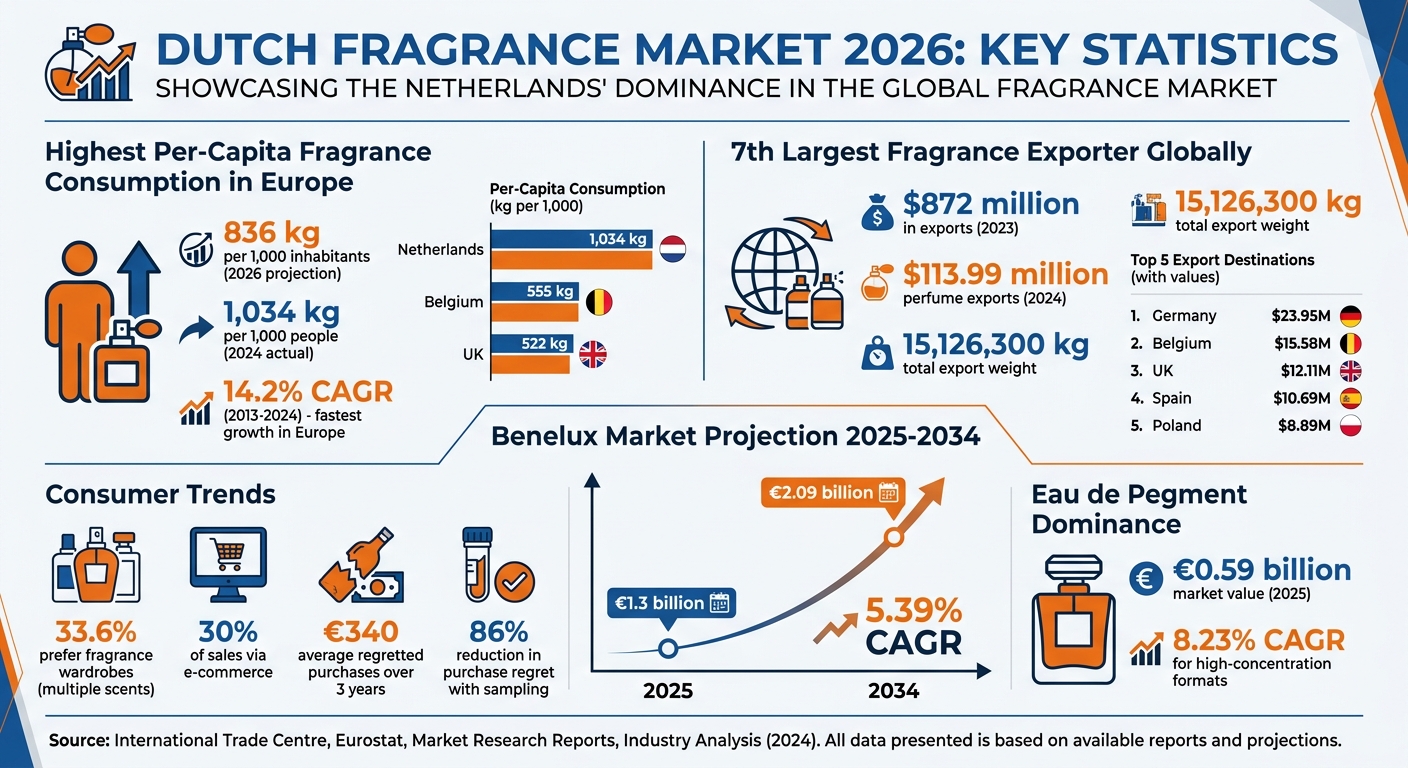
Bis 2026 werden die Niederlande voraussichtlich 836 kg Duft pro 1.000 Einwohner erreichen und damit einen konstanten und rasanten Wachstumskurs unter Beweis stellen. Zwischen 2013 und 2024 erzielte der niederländische Duftmarkt eine beeindruckende durchschnittliche jährliche Wachstumsrate von 14,2 % und übertraf damit alle großen europäischen Märkte. Im Jahr 2024 verzeichneten die Niederlande 1.034 kg pro 1.000 Personen – fast doppelt so viel wie Belgiens 555 kg und deutlich mehr als die 522 kg des Vereinigten Königreichs.
Diese bemerkenswerte Position spiegelt veränderte Verbraucherpräferenzen und eine breiter werdende demografische Attraktivität wider. Jüngere Käufer treiben den Wandel voran und greifen Trends wie "Smellmaxing" auf, was die Verbraucherbasis erweitert hat. Wirtschaftliche Stabilität und steigende verfügbare Einkommen haben dieses Wachstum zusätzlich gestützt. Zugleich haben Handelsinnovationen – wie umfangreiche E — Commerce — Investitionen von Douglas, Ici ParisXL und De Bijenkorf – das Entdecken und Kaufen von Düften einfacher denn je gemacht. Diese Faktoren verdeutlichen die besonderen kulturellen und marktspezifischen Dynamiken, die den niederländischen Duftkonsum prägen.
Vergleich des europäischen Duftkonsums
Auch wenn die Niederlande beim gesamten Marktvolumen nicht an der Spitze stehen, hebt sich ihr Umgang mit Düften deutlich ab. Deutschland dominiert beim Gesamtmarktwert mit 950 Mio. €, gefolgt vom Vereinigten Königreich (700 Mio. €) und Frankreich (600 Mio. €). Der niederländische Markt zeichnet sich jedoch durch seine Nutzungsintensität aus und verbindet häufige Anwendung mit einer vielfältigen Auswahl an Düften.
Der Trend des "Fragrance Wardrobing" ist in den Niederlanden besonders stark ausgeprägt. Dabei besitzt man mehrere Düfte, abgestimmt auf verschiedene Anlässe, Stimmungen oder soziale Kontexte, anstatt bei einem einzigen Signature — Duft zu bleiben. Diese Praxis spiegelt nicht nur den Wandel der Verbrauchergewohnheiten wider, sondern treibt auch den hohen Pro — Kopf — Duftverbrauch des Landes an.
Gründe für den hohen Pro — Kopf — Verbrauch
Mehrere innovative Trends und demografische Veränderungen tragen zum hohen Duftverbrauch in den Niederlanden bei. Eine bemerkenswerte Entwicklung ist der "Smellmaxing" — Trend unter jungen Männern, die zunehmend in Premium — Düfte investieren, um ihre soziale Präsenz zu stärken.
Darüber hinaus gewinnen technologische Fortschritte wie KI-gesteuerte, maßgeschneiderte Düfte an Bedeutung. So nutzt beispielsweise EveryHuman, ein niederländisches Unternehmen, KI, um personalisierte Düfte auf Basis der Antworten eines Nutzers in einem Persönlichkeitstest zu kreieren.
Das wachsende Interesse an "Aromachologie" – der Nutzung von Düften zu therapeutischen Zwecken wie Stressabbau oder Energiesteigerung – hat den Anwendungsbereich von Düften ebenfalls erweitert. Diese funktionale Verschiebung fördert häufigere Anwendungen über den Tag hinweg und steigert so den Gesamtkonsum zusätzlich. Diese kulturellen und technologischen Entwicklungen zeigen, wie die Niederlande den Duftkonsum in Europa weiterhin neu definieren.
Die Niederlande als Europas Drehscheibe für Duft — Re — Exporte
Die Niederlande sind nicht nur führend beim Pro — Kopf — Duftverbrauch, sondern auch ein essenzieller Akteur in Europas Lieferkette für Düfte. Als Tor zu Europa verbinden sie internationale Produzenten mit europäischen Märkten über ihre erstklassigen Häfen und Vertriebsnetze. Im Jahr 2023 hoben sich die Niederlande als der siebtgrößte Duftexporteur weltweit hervor, mit Exporten im beeindruckenden Wert von 872 Mio. US — Dollar. Damit lagen sie vor namhaften Märkten wie der Tschechischen Republik (784 Mio. US — Dollar), dem Vereinigten Königreich (744 Mio. US — Dollar) und den Vereinigten Arabischen Emiraten (682 Mio. US — Dollar).
Handelsvolumen und Marktdaten
Das Ausmaß des niederländischen Dufthandels ist bemerkenswert. Im Jahr 2024 exportierten die Niederlande Parfüms und kosmetische Zubereitungen im Wert von 113,99 Mio. US — Dollar bei einem Gesamtgewicht von 15.126.300 kg. Deutschland erwies sich als wichtigstes Zielland und importierte Produkte im Wert von 23,95 Mio. US — Dollar (2.467.350 kg). Belgien folgte dicht dahinter mit 15,58 Mio. US — Dollar (3.881.190 kg), während das Vereinigte Königreich 12,11 Mio. US — Dollar (849.010 kg) importierte. Spanien und Polen vervollständigten die Top Fünf mit Importen im Wert von 10,69 Mio. US — Dollar bzw. 8,89 Mio. US — Dollar.
Auch die breitere Benelux — Region zeigt ein starkes Marktpotenzial. Bis 2025 soll ihr Duftmarkt 1,3 Mrd. € erreichen, mit Prognosen für ein Wachstum auf 2,09 Mrd. € bis 2034 bei einer jährlichen Wachstumsrate von 5,39 %. Eau de Parfum führt den Markt an und wird 2025 auf 0,59 Mrd. € geschätzt. Diese Zahlen unterstreichen die zentrale Rolle der Niederlande als Re — Export — Hub, insbesondere für Düfte, die aus Nordamerika und Asien nach Europa gelangen.
Dieser florierende Handel wird zusätzlich durch die fortschrittliche Logistik und Infrastruktur des Landes gestützt.
Logistik- und Handelsinfrastruktur
Die Niederlande verdanken einen großen Teil ihres Erfolgs als Re — Export — Drehscheibe ihrer strategischen Lage und ihren außergewöhnlichen Logistikfähigkeiten. Niederländische Häfen und Distributionszentren ermöglichen es Unternehmen, Düfte effizient an Verbraucher in ganz West- und Mitteleuropa zu liefern.
Neben ihren geografischen Vorteilen haben sich niederländische Unternehmen zu wichtigen Akteuren in der White — Label — Parfümproduktion entwickelt und schaffen Produkte sowohl für Nischen- als auch für Luxusmarken. Investitionen in nachhaltige Logistik, einschließlich CO2-neutraler Lieferketten, stärken den Wettbewerbsvorteil des Landes zusätzlich. Kooperationen mit Biotechnologie — Start-ups treiben darüber hinaus Innovationen in der Duftentwicklung voran. Zusammen festigen diese Faktoren die Position der Niederlande als Grundpfeiler von Europas Dufthandelsnetzwerk.
Kaufmuster niederländischer Verbraucher
Der niederländische Duftmarkt zeichnet sich durch seinen Fokus auf Premium — Qualität und Personalisierung aus. Bei stabilen wirtschaftlichen Rahmenbedingungen und steigenden verfügbaren Einkommen tendieren niederländische Verbraucher zunehmend zu hochwertigen, langanhaltenden Düften, die ihre kultivierten Vorlieben widerspiegeln.
Eau de Parfum ist aufgrund seiner beeindruckenden Haltbarkeit und Performance besonders beliebt. Dank höherer Ölkonzentrationen halten diese Düfte oft bis zu 12 Stunden und erfordern nur zwei bis drei Sprühstöße für einen Duft, der den ganzen Tag anhält. Diese Langlebigkeit rechtfertigt den höheren Preis und entspricht der niederländischen Vorliebe für beständigen Wert.
Der "Smellmaxing" — Trend, insbesondere unter der Gen Z, hat das Interesse an markanten, hochwertigen Düften zusätzlich verstärkt. Diese sich wandelnden Präferenzen unterstreichen den wachsenden Appetit des niederländischen Marktes auf Premium — Produkte und innovative Wege, sie zu entdecken.
Präferenzen für Premium und Eau de Parfum
Die Entwicklung hin zu Premium — Düften spiegelt breitere Veränderungen im Lebensstil in den Niederlanden wider. Mehr als ein Drittel der niederländischen Verbraucher (33,6 %) bevorzugt inzwischen eine Vielfalt an Düften für unterschiedliche Anlässe, Stimmungen oder Jahreszeiten und entfernt sich damit von der Idee eines einzigen Signature — Duftes. Dieser Trend fördert Investitionen in mehrere hochwertige Optionen.
Auch Innovation prägt diese Premium — Entscheidungen. So hat EveryHuman, ein niederländisches Unternehmen, die "algorithmische Parfümerie" eingeführt, bei der KI genutzt wird, um personalisierte Duftformeln auf Basis individueller Vorlieben und Emotionen zu entwickeln. Gleichzeitig gewinnen wellness-inspirierte Düfte mit beruhigenden Inhaltsstoffen wie Lavendel und Bergamotte bei gesundheitsbewussten Verbrauchern an Bedeutung. Führende Händler wie Douglas, Ici Paris XL und De Bijenkorf bauen ihr Online — Angebot aus, um dieser wachsenden Nachfrage nach Premium — Düften gerecht zu werden.
Wachstum von Discovery — Formaten
Mit der Ausweitung des Marktes für Premium — Düfte greifen niederländische Verbraucher zunehmend zu Probiergrößen, um neue Düfte zu entdecken. Decants in Größen wie 2 ml, 5 ml und 8 ml werden immer beliebter, da sie eine erschwingliche Möglichkeit bieten, Premium — Düfte auszuprobieren, ohne sich direkt auf einen Flakon in Originalgröße festzulegen.
Reisebeschränkungen, wie die 100-ml — Flüssigkeitsgrenze der TSA, haben die Nachfrage nach kompakten Optionen ebenfalls angekurbelt. Viele Reisende bevorzugen inzwischen 10-ml- oder 30-ml — Reisesprays, die hohe Performance in einem portablen Format bieten. Marken wie Scento bedienen diesen Trend mit einer Auswahl kuratierter Decants in 2 ml, 5 ml und 8 ml. Ein 8-ml — Vial bietet beispielsweise etwa 120 Sprühstöße – genug, um einen Duft in verschiedenen Situationen und Jahreszeiten zu testen.
Dieser entdeckungsorientierte Ansatz spricht besonders jüngere Verbraucher an, die sich stark zu Nischenparfüms hingezogen fühlen und gerne vielfältige Kollektionen aufbauen. Der wachsende Markt für Abo — Boxen, der jährlich um 16,2 % wächst, spiegelt diese Begeisterung für Vielfalt und Sampling wider. Diese Verlagerung weg vom traditionellen Kauf ganzer Flakons zeigt, wie niederländische Verbraucher ihre Kaufgewohnheiten an moderne Lebensstile anpassen.
Führende Marken auf dem niederländischen Duftmarkt
Der niederländische Duftmarkt lebt von einer Mischung aus etablierten Luxusmarken und aufstrebenden Nischenanbietern, geprägt durch sich wandelnde Verbrauchergeschmäcker und eine wachsende Vorliebe für Premium — Düfte.
Globale Namen wie Chanel S.A., Parfums Christian Dior, L’Oréal S.A. und Coty Inc. dominieren die Szene und vereinen traditionsreiche Handwerkskunst mit moderner Innovation. Diese Marken vertreiben vor allem über wichtige Händler wie Douglas, Ici Paris XL und De Bijenkorf, die eine zentrale Rolle dabei spielen, niederländische Verbraucher mit Luxusparfüms zu verbinden.
Was den niederländischen Markt jedoch wirklich auszeichnet, ist der Aufstieg von Nischendüften, die zunehmend als Form des Selbstausdrucks gelten – besonders bei jüngeren Verbrauchern wie Männern der Gen Z. Der Benelux — Markt für Nischenparfüms, bei dem die Niederlande ein wichtiger Wachstumstreiber sind, wurde 2025 auf 0,12 Mrd. US — Dollar geschätzt und soll bis 2034 auf 0,23 Mrd. US — Dollar wachsen. Diese Entwicklung spiegelt einen breiteren Trend wider, wonach 33,6 % der niederländischen Verbraucher inzwischen zu personalisierten Duftkombinationen tendieren, statt an einem einzigen Signature — Duft festzuhalten. Diese doppelte Nachfrage nach Luxus- und Nischenoptionen unterstreicht die Dynamik des Marktes.
Luxusmarken in den Niederlanden
Luxushäuser wie Chanel und Dior bleiben ein zentraler Bestandteil des niederländischen Duftmarktes und bieten eine Verbindung aus traditionsreicher Handwerkskunst und modernster Innovation. Ihre hochwertigen Produkte, bekannt für überlegene Ölkonzentrationen und langanhaltende Performance von bis zu 12 Stunden, entsprechen dem Fokus niederländischer Verbraucher auf Qualität und Wertigkeit.
Auch jüngere Zielgruppen wenden sich diesen Marken zu, angezogen von personalisierten Angeboten und digitalen Innovationen. Händler wie Douglas und De Bijenkorf spielen dabei eine entscheidende Rolle, indem sie die Zugänglichkeit über Online — Plattformen erhöhen. Ein bemerkenswertes Beispiel ist EveryHuman, ein niederländisches Unternehmen, das KI einsetzt, um individuelle Düfte nach persönlichen Vorlieben zu kreieren – und damit Tradition und Technologie weiter miteinander verbindet.
Wachstum von Nischenduftmarken
Nischendüfte gewinnen stark an Dynamik; für dieses Segment wird von 2026 bis 2034 eine durchschnittliche jährliche Wachstumsrate von 7,21 % prognostiziert. Dieses Wachstum wird von Verbrauchern getragen, die einzigartige Düfte, seltene Inhaltsstoffe und handwerkliche Perfektion suchen, die sich deutlich von Angeboten des Massenmarktes abheben.
Der Nischenmarkt lässt sich in drei Kategorien einteilen: Premium/Luxus, Ultra — Premium/Limited Edition und erschwingliche Nische. Während Boutique — Parfümerien und Fachgeschäfte wichtige Vertriebskanäle bleiben, expandiert der Online — Handel rasant, um die steigende Nachfrage zu bedienen.
Obwohl globale Player wie L’Oréal und Chanel weiterhin bedeutende Marktanteile halten, schaffen sich Nischenmarken ihren eigenen Raum und ziehen Verbraucher an, die nach unverwechselbaren Duftkreationen suchen. Plattformen wie Scento bedienen diese Neugier, indem sie kuratierte Decants in kleineren Größen (2 ml, 5 ml und 8 ml) anbieten und es niederländischen Käufern ermöglichen, sowohl Luxus- als auch Nischenparfüms zu entdecken, ohne sich sofort auf Flakons in Originalgröße festlegen zu müssen. Dieser Ansatz unterstreicht die Verlagerung des Marktes hin zu Discovery und Personalisierung.
Your Personal Fragrance Expert Awaits
Take our quick scent quiz to discover authentic designer and niche fragrances matched to your taste — explore them as 2–8ml decants and samples, so you can try each one before committing to a full bottle.
Find Your ScentWachstum des Online — Duftmarktes in den Niederlanden
Die Niederlande gestalten ihre Duft — Handelslandschaft neu und verbinden ihren starken Pro — Kopf — Konsum sowie ihre Re — Export — Kompetenz mit Fortschritten in der digitalen Innovation. Der niederländische Duftmarkt hat Online — Kanäle früh aufgegriffen und spiegelt damit den breiteren Aufschwung des europäischen E — Commerce wider. Weltweit entfällt etwa 30 % aller Duftverkäufe auf den E — Commerce, und die Niederlande heben sich in diesem Wandel als Vorreiter hervor. Große Händler wie Douglas, Ici ParisXL und De Bijenkorf investieren massiv in ihre Online — Präsenz, um ihren Marktanteil auszubauen.
Eines der wichtigsten Unterscheidungsmerkmale des niederländischen Marktes ist sein Fokus auf digitale Innovation. Unternehmen wie EveryHuman treiben mit algorithmischer Parfümerie die Entwicklung voran und nutzen KI sowie Datenanalysen, um personalisierte Duftformeln zu kreieren. Dieser Ansatz verbessert nicht nur das Online — Einkaufserlebnis, sondern fördert auch Fortschritte bei Duftpersonalisierung und Handelsstrategien.
E — Commerce vs. stationärer Einzelhandel
Obwohl stationäre Geschäfte nach wie vor eine bedeutende Rolle spielen, wachsen die Online — Umsätze deutlich schneller. Niederländische Verbraucher priorisieren zunehmend Komfort und Vielfalt, wobei 33,6 % inzwischen bevorzugen, ihre Düfte regelmäßig zu wechseln. Online — Plattformen eignen sich perfekt für diesen Trend und bieten Tools wie Duft — Mapping, virtuelles Sampling und KI-gestützte Empfehlungen. Auch das Konzept der "Fragrance Wardrobes", bei dem Personen Düfte je nach Stimmung, Jahreszeit oder Anlass wählen, gewinnt an Zugkraft.
Scentos Beitrag zum Online — Wachstum
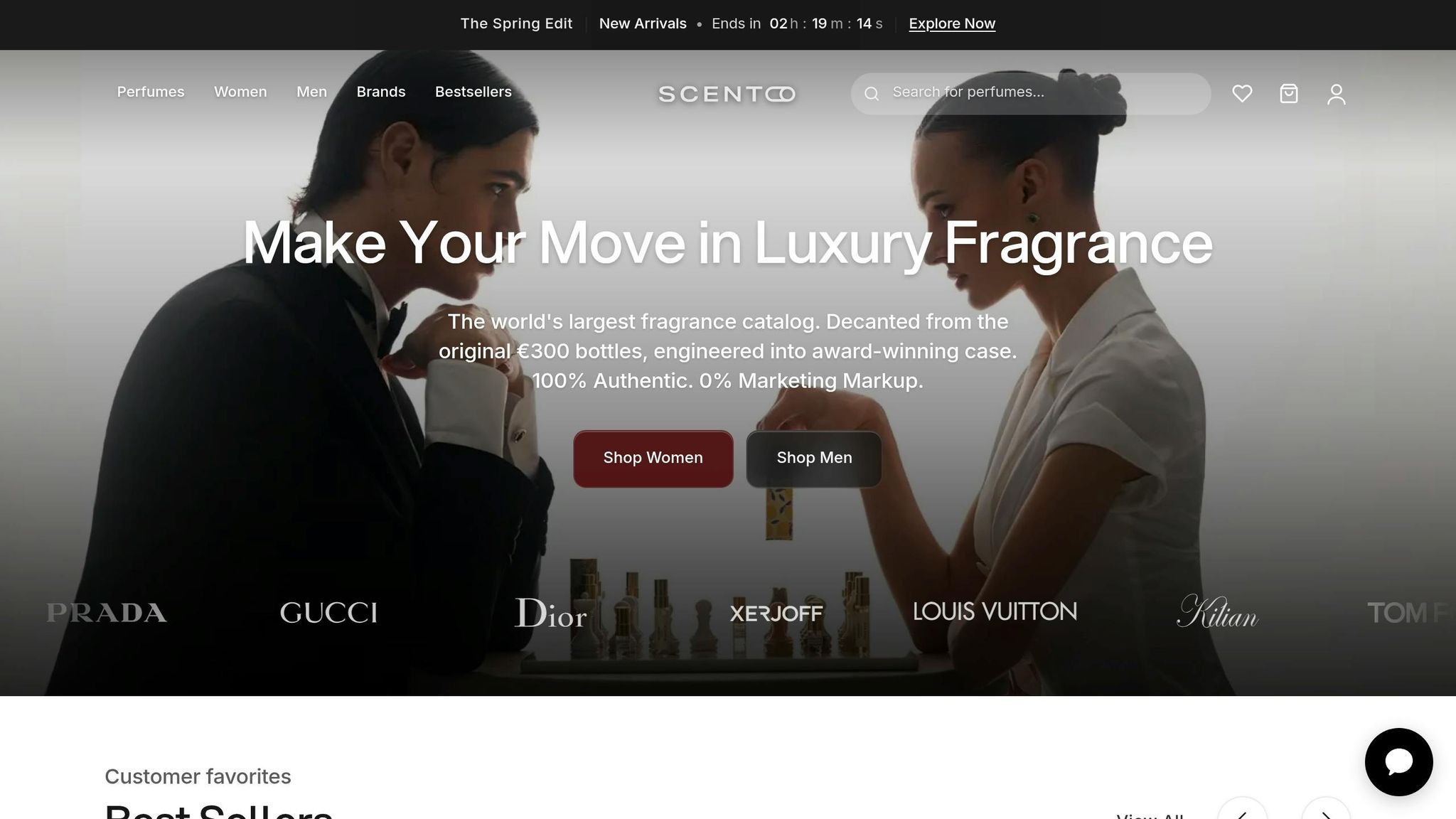
Scento ist ein hervorragendes Beispiel dafür, wie sich der Duftmarkt an diese digitalen Trends anpasst. Die Plattform bietet kuratierte Decants in Größen von 2 ml, 5 ml und 8 ml und ermöglicht es Kunden, über 1.000 Designer- und Nischenparfüms in kleineren, testfreundlichen Formaten zu entdecken. Dieser Ansatz entspricht der wachsenden Nachfrage nach Reisegrößen und Discovery Sets.
Für alle, die kontinuierlich Neues entdecken möchten, bietet Scento ein monatliches 8-ml — Abonnement ab 12,90 € pro Monat und Parfüm. Jedes Vial enthält ungefähr 120 Sprühstöße und ist damit eine ideale Möglichkeit, mehrere Düfte zu testen, ohne sich auf Flakons in Originalgröße festzulegen. Mit Funktionen wie personalisierten Empfehlungen, schnellem EU-weitem Versand und einer 30 — Tage — Geld-zurück — Garantie beseitigt Scento die typischen Hürden der Duftentdeckung. So wird es für Verbraucher einfacher, vielfältige und maßgeschneiderte Duftgarderoben aufzubauen.
Ausblick auf den niederländischen Duftmarkt bis 2030
Globale und europäische Marktprognosen
Die Niederlande sind hervorragend positioniert, ihre Stellung als europäischer Spitzenreiter beim Duftkonsum bis 2030 zu behaupten – getragen von soliden Marktfundamenten und konstanten Wachstumstrends. Für die Benelux — Region wird von 2026 bis 2034 ein CAGR von 5,39 % erwartet, wobei der Marktwert voraussichtlich von 1,3 Mrd. US — Dollar im Jahr 2025 auf 2,09 Mrd. US — Dollar bis 2034 steigen wird. Diese Wachstumsrate ist nahezu doppelt so hoch wie der europäische Durchschnitt von 2,8 % und unterstreicht die starke Marktdynamik der Region.
"Die Niederlande weisen unter den Schlüsselmärkten den höchsten Pro — Kopf — Verbrauch und die schnellste Wachstumsrate auf." — IndexBox
Die Niederlande zeichnen sich im Duftsektor zudem sowohl als großer Importeur als auch als Exporteur aus. Mit einem Import — CAGR von 9,4 % und dem Rang als weltweit siebtgrößter Exporteur – bewertet mit 872 Mio. US — Dollar im Jahr 2023 – profitiert das Land von grüner Logistik, White — Label — Produktion und Partnerschaften mit Biotech — Start-ups in der Duft — F&E, um seinen Wettbewerbsvorteil zu sichern.
Diese Faktoren schaffen einen fruchtbaren Boden für innovative Verbrauchermodelle, die auf sich verändernde Präferenzen zugeschnitten sind.
Chancen für Discovery- und Full — Bottle — Angebote
Der wachsende Trend zu Duftgarderoben, bei denen Menschen ihre Düfte je nach Stimmung, Jahreszeit oder Anlass wechseln, eröffnet neue Möglichkeiten für Plattformen, die Discovery mit dem Kauf ganzer Flakons verbinden. Derzeit bevorzugen 33,6 % der niederländischen Verbraucher einen regelmäßigen Wechsel ihrer Düfte, was auf einen Rückgang des traditionellen Modells eines einzelnen Signature — Duftes hinweist – insbesondere bei Käufern der Gen Z.
Ein hervorragendes Beispiel für diesen Wandel ist der Ansatz von Scento, der einfach auszuprobierende Decant — Optionen mit dem Übergang zu größeren Designerflakons kombiniert. Diese Strategie entspricht der Vorliebe für Duftgarderoben und ermöglicht es Kunden, ihren Geschmack zunächst über kleinere Formate zu erkunden, bevor sie sich für Flakons in Originalgröße entscheiden. Die Einführung von Designerflakons ab 30 ml hilft Verbrauchern nicht nur beim Aufbau vielseitiger Duftkollektionen, sondern begegnet auch Bedenken hinsichtlich von Verschwendung.
Dieses Modell wird zusätzlich durch den Premiumisierungstrend gestützt. In der Benelux — Region ist Eau de Parfum das führende Segment und soll bis 2025 einen Wert von 0,59 Mrd. US — Dollar erreichen. Gleichzeitig verzeichnen hochkonzentrierte "Parfum" — Formate ein starkes Wachstum mit einem CAGR von 8,23 %. Niederländische Verbraucher sind zunehmend bereit, für Qualität zu bezahlen, verlangen aber zugleich Flexibilität und Vielfalt – Bedürfnisse, die Discovery-to — Full — Bottle — Plattformen ideal erfüllen.
Fazit
Die Niederlande haben sich als Europas führende Duftnation etabliert und weisen mit 836 kg pro 1.000 Einwohner den höchsten Pro — Kopf — Verbrauch auf dem Kontinent auf. Diese beeindruckende Zahl spiegelt eine wachsende Wertschätzung für Düfte über alle demografischen Gruppen hinweg wider, wobei besonders jüngere Käufer Trends wie "Smellmaxing" aufgreifen, um mit Premium — Düften starke gesellschaftliche Statements zu setzen.
Im Handel rangieren die Niederlande als Europas siebtgrößter Duftexporteur. Dieser Erfolg wird durch ihre erstklassige Logistikinfrastruktur und wachsende White — Label — Produktionskapazitäten getragen. Mit großen Häfen und Investitionen in CO2-neutrale Lieferketten ist das Land zu einem zentralen Distributions — Hub für internationale Duftmarken geworden, die den europäischen Markt anvisieren.
Das Verbraucherverhalten auf dem niederländischen Markt entwickelt sich rasant weiter, insbesondere durch den Aufstieg der Online — Duftentdeckung. Dennoch bleiben Herausforderungen bestehen – niederländische Verbraucher meldeten über drei Jahre hinweg bedauerte Duftkäufe im Wert von 340 €, wobei 82 % dies auf die fehlende Möglichkeit zurückführten, Düfte online zu testen. Sampling — First — Modelle haben sich als wirksam erwiesen und verringern Kaufreue um 86 %. Dieser Wandel unterstreicht die Bedeutung innovativer Handelsansätze, die Entdeckung mit informierter Kaufentscheidung verbinden.
Niederländische Käufer entfernen sich zudem von der Idee eines einzigen Signature — Duftes und entscheiden sich stattdessen dafür, vielfältige Duftgarderoben zu kuratieren. Dieser Trend passt zur prognostizierten Entwicklung des Benelux — Duftmarktes, der von 1,3 Mrd. US — Dollar im Jahr 2025 auf 2,09 Mrd. US — Dollar bis 2034 steigen soll. Händler wie Douglas, Ici ParisXL und De Bijenkorf bauen ihre digitalen Strategien bereits aus, um von diesem Momentum zu profitieren.
Mit Blick auf 2030 wird der niederländische Duftmarkt voraussichtlich weiterhin Premium — Angebote, nachhaltige Logistik und verbraucherfreundliche Innovationen priorisieren. Die Integration von Sampling- und Discovery — Formaten mit Full — Size — Käufen wird entscheidend sein, um den sich wandelnden Ansprüchen niederländischer Verbraucher gerecht zu werden, eine Kultur der Entdeckung zu fördern und zugleich Verschwendung zu reduzieren. Die Niederlande sind bestens positioniert, auch künftig an der Spitze der europäischen Duftlandschaft zu bleiben.
FAQs
Warum ist der Duftgebrauch in den Niederlanden so hoch?
Die Niederlande stechen als bedeutende Drehscheibe für Düfte in Europa hervor, vor allem aufgrund ihrer Rolle als größtes Re — Exportzentrum des Kontinents für diese Produkte. Diese strategische Position treibt nicht nur den internationalen Handel an, sondern beeinflusst auch den inländischen Konsum und das Exportvolumen erheblich. Darüber hinaus verstärkt die starke Stellung des Landes in der globalen Duftlogistik seine Marktaktivität und den hohen Einsatz von Düften zusätzlich.
Wie funktionieren die Niederlande als Drehscheibe für Duft — Re — Exporte?
Die Niederlande spielen im globalen Dufthandel eine wichtige Rolle und dienen als zentrale Drehscheibe für den Re — Export ätherischer Öle, Parfüms, Kosmetika und Toilettenartikel. Im Jahr 2024 erreichte der Exportwert dieser Waren beeindruckende 6,36 Mrd. €. Dieser Erfolg wird durch die stabile Wirtschaft des Landes und steigende verfügbare Einkommen gestützt, was seine Position als wichtiger Akteur der Branche festigt.
Wie kann ich Düfte online testen und Reue nach einem Blindkauf vermeiden?
Ein Duft sollte vor dem Kauf getestet werden, um spätere Reue zu vermeiden. Viele Marken und Online — Shops bieten Probiergrößen oder Discovery Sets an, sodass Sie Düfte ausprobieren können, ohne direkt in einen Flakon in Originalgröße zu investieren. Tragen Sie die Probe direkt auf Ihre Haut auf und beobachten Sie über mehrere Stunden, wie sich der Duft entwickelt – die Chemie Ihrer Haut kann das finale Aroma deutlich beeinflussen. Diese Methode hilft Ihnen nicht nur dabei, Düfte zu finden, die Ihrem Geschmack entsprechen, sondern minimiert auch das Risiko eines kostspieligen Fehlkaufs.