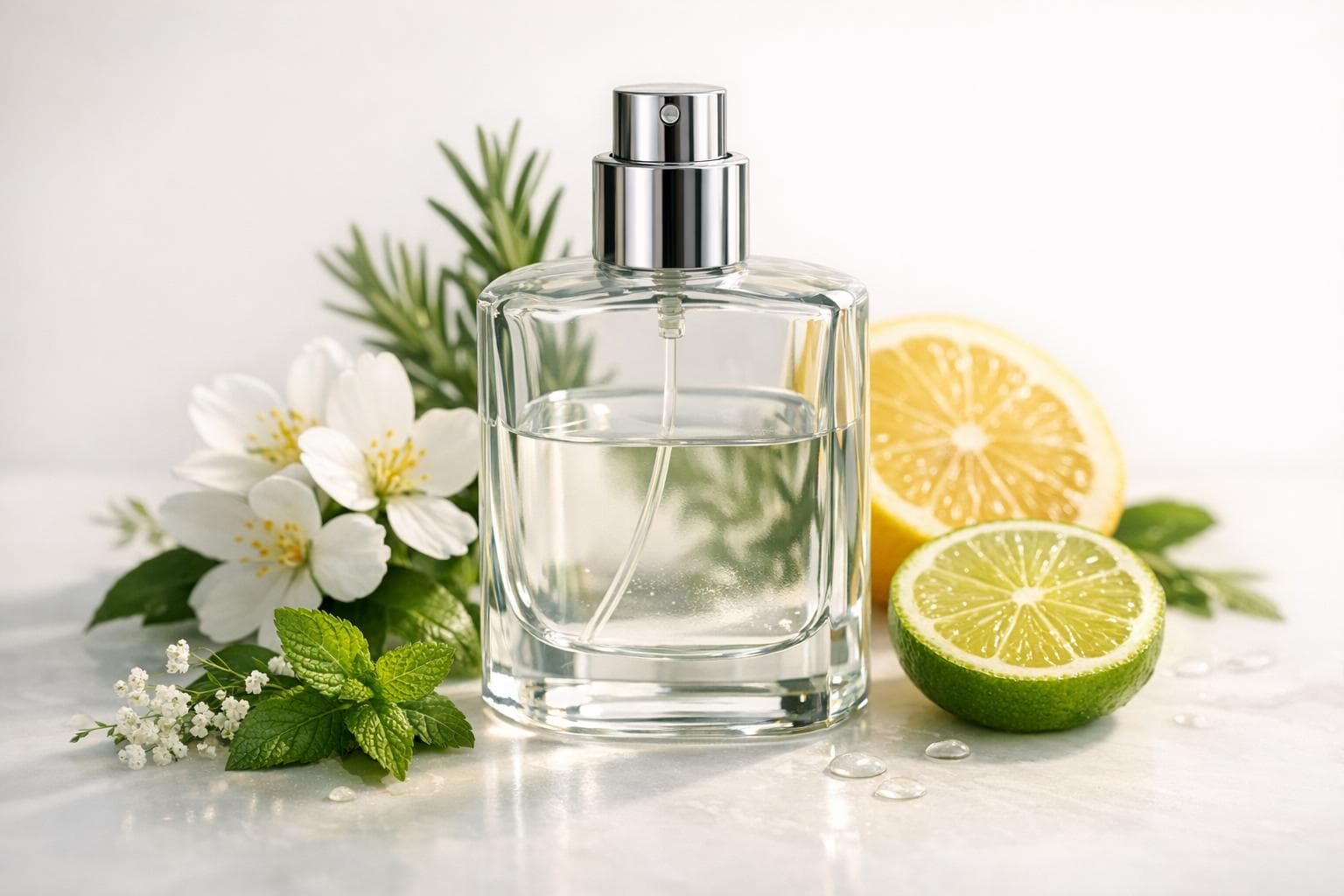
Clean Fragrances erfreuen sich rasant wachsender Beliebtheit, da Gesundheit, Sicherheit und ethische Entscheidungen in der Schönheitsroutine zunehmend im Mittelpunkt stehen. Diese Düfte verzichten auf potenziell bedenkliche Inhaltsstoffe wie Phthalate, Parabene und synthetischen Moschus. Stattdessen bieten sie Transparenz und allergenfreie Alternativen, die den Werten von heute entsprechen. Da sich der globale Markt für natürliche Deodorants und Parfums von 13,51 Milliarden Euro im Jahr 2024 auf prognostizierte 26,09 Milliarden Euro bis 2030 nahezu verdoppeln wird, ist dieser Wandel unübersehbar.
Zu den wichtigsten Gründen für diesen Trend zählen:
- Gesundheitsbewusstsein: Über 65 % der Konsumenten bevorzugen Produkte mit unbedenklichen Inhaltsstoffen, um Allergene und hormonelle Disruptoren zu meiden.
- Ethische Prioritäten: Käufer schätzen tierversuchsfreie, vegane und umweltbewusste Produkte – 73 % sind sogar bereit, für nachhaltige Optionen mehr zu bezahlen.
- Dezentere Duftprofile: Leichte, hautnahe Düfte lösen schwere, opulente Parfums ab und spiegeln den Wunsch nach zurückhaltender Eleganz wider.
- Transparenz: Clean-Beauty-Marken deklarieren alle Inhaltsstoffe – oft weit über die gesetzlichen Vorgaben hinaus – und nutzen QR-Codes für detaillierte Informationen.
Hersteller reagieren auf diese Nachfrage mit biotechnologisch gewonnenen Inhaltsstoffen, nachfüllbaren Flakons und kleineren Reisegrößen, was Clean Fragrances ebenso alltagstauglich wie verantwortungsbewusst macht. Ob Sie nach sanfteren Alternativen suchen oder Ihre Werte zum Ausdruck bringen möchten: Clean Fragrances verkörpern einen zeitgemäßen Zugang zur Welt der Düfte, der anspruchsvolle Genießer von heute begeistert.
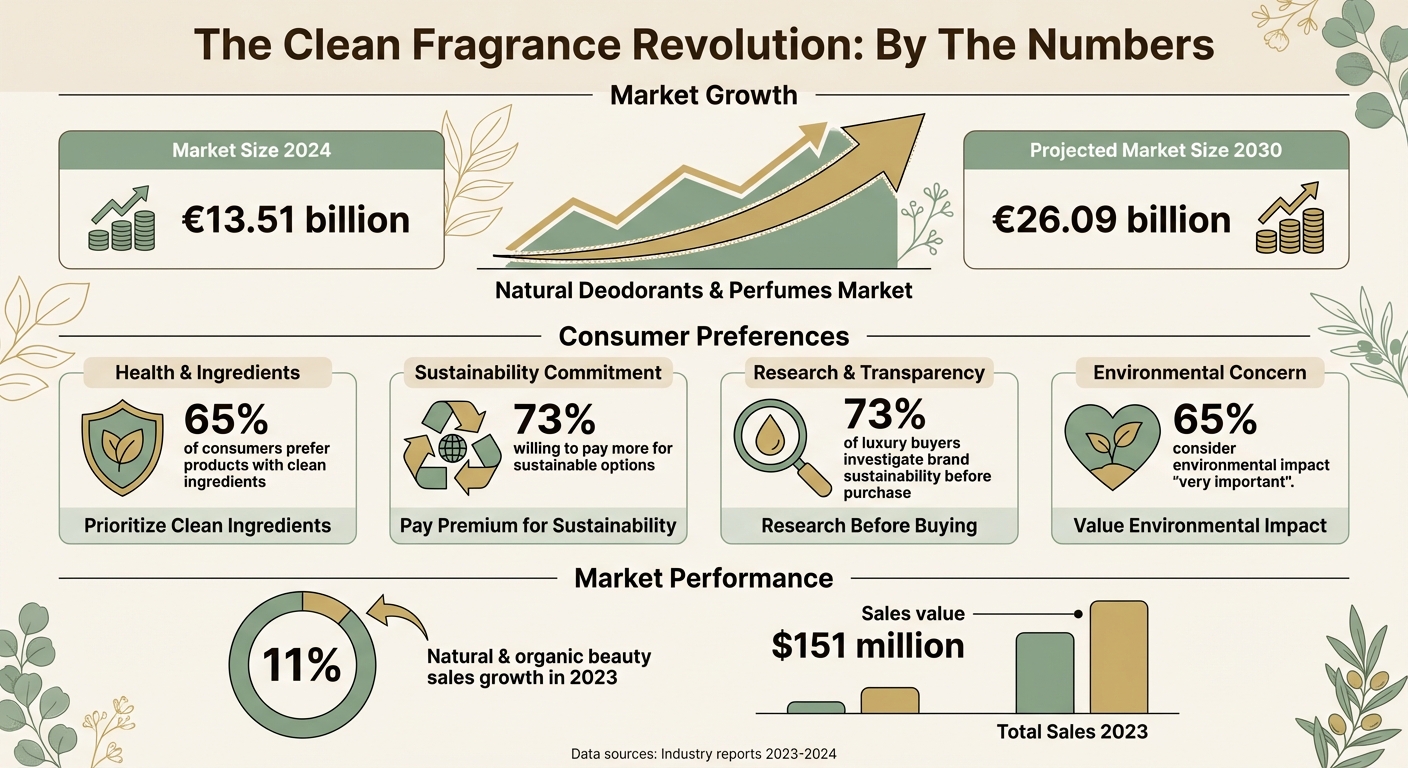
Clean Fragrance Industry Growth and Consumer Preferences Statistics
Bedenken bei konventionellen Parfums
Verborgene Inhaltsstoffe und vage Kennzeichnungen
Ist Ihnen schon einmal aufgefallen, wie viele Parfümetiketten schlicht „Fragrance“ oder „Parfum“ anführen? Hinter diesem einzelnen Begriff kann sich eine Zusammensetzung aus Hunderten nicht offengelegter chemischer Verbindungen verbergen. Aufgrund rechtlicher Ausnahmeregelungen sind Marken nicht verpflichtet, jeden einzelnen Inhaltsstoff anzugeben – was Konsumenten oft im Unklaren darüber lässt, was sie tatsächlich auf ihre Haut auftragen.
Dieser Mangel an Transparenz hat das Vertrauen spürbar geschwächt. Tatsächlich informieren sich heute 73 % der Käufer von Luxusdüften vor dem Kauf über die Nachhaltigkeits- und Inhaltsstoffpraktiken einer Marke. Parfümliebhaber verlangen Klarheit – insbesondere mit Blick auf potenzielle Allergene oder synthetische Stoffe auf Erdölbasis. Die Zeiten des blinden Vertrauens in Duftetiketten neigen sich dem Ende zu.
Gesundheitsreaktionen und Hautempfindlichkeiten
Für viele Menschen kann das Tragen traditioneller Düfte unangenehme Begleiterscheinungen mit sich bringen. Häufig sind es versteckte synthetische Inhaltsstoffe, die Hautreizungen und allergische Reaktionen auslösen.
Zwei der bekanntesten Problemstoffe – Phthalate und Parabene – finden sich noch immer regelmäßig in konventionellen Parfums. Diese Stoffe stehen gesundheitlich in der Kritik, weshalb Clean-Fragrance-Marken gänzlich auf sie verzichten. Ein weiteres Beispiel sind Nitromoschus-Verbindungen, die einst weit verbreitet als synthetische Alternative zu tierischem Moschus dienten. Im Laufe der Zeit stellte sich heraus, dass sie krebserregend sein können und sich in der Umwelt anreichern. Obwohl sie größtenteils vom Markt genommen wurden, hat ihr Vermächtnis viele Duftliebhaber vorsichtiger gestimmt.
Umweltbezogene und ethische Fragen
Die Auswirkungen traditioneller Parfums reichen weit über den Flakon hinaus. Die meisten synthetischen Duftmoleküle werden aus Erdöl gewonnen – einem nicht erneuerbaren Rohstoff, dessen Förderung und Verarbeitung zu CO2-Emissionen und Umweltverschmutzung beiträgt. Zudem erfordert der Herstellungsprozess oft erhebliche Mengen an Wasser, wodurch kontaminiertes Abwasser entstehen kann, das lokale Ökosysteme belastet.
Ethische Bedenken sind von gleicher Tragweite. Die enorme Nachfrage nach natürlichen Rohstoffen wie Sandelholz und Adlerholz (Oud) hat zu einer Übernutzung geführt, die diese Arten bedroht. Sandelholzbäume beispielsweise benötigen 30 bis 60 Jahre Reifezeit, bevor sie geerntet werden können. Historisch setzte die Industrie zudem auf tierische Ingredienzen – die Gewinnung von echtem Moschus bedeutete etwa die Tötung des bedrohten Moschushirsches. Hinzu kommen opulente, nicht recycelbare Verpackungen sowie unzureichende Arbeitsbedingungen in manchen Erzeugerregionen, die die Branche vor große Herausforderungen stellen.
Wie Jeremy Compton, Head of Science and Technology bei Givaudan, offen einräumte:
„Viele Moleküle werden auch in Zukunft aus Erdöl stammen.“
Diese Realität veranlasst immer mehr Menschen dazu, nach reineren, ethischeren Alternativen zu suchen, während die traditionelle Parfümindustrie nach Antworten auf diese drängenden Fragen sucht.
Was zeichnet eine Clean Fragrance aus?
Grundprinzipien sauberer Düfte
Clean Fragrances verfolgen einen grundlegend neuen Ansatz bei der Formulierung: Statt aus Tausenden von Chemikalien – in der konventionellen Parfümerie werden oft über 3.500 Stoffe eingesetzt – schöpfen sie aus einer sorgfältig geprüften Auswahl von nur rund 300 Inhaltsstoffen. Bedenkliche Substanzen wie Phthalate, polyzyklische synthetische Moschusverbindungen wie Galaxolid sowie bekannte Karzinogene wie Styrol und Formaldehyd sind konsequent ausgeschlossen.
Darüber hinaus setzen Clean-Marken alles daran, Allergene zu minimieren, und übertreffen dabei nicht selten strenge regulatorische Vorgaben. Während die EU unlängst ihre Liste deklarationspflichtiger Duftallergene von 26 auf über 80 erweitert hat, gehen viele Clean-Rezepturen noch einen Schritt weiter und reduzieren oder eliminieren diese potenziellen Reizstoffe vollständig. Inhaltsstoffe wie Lyral und Lilial, die als häufige Auslöser von Kontaktdermatitis bekannt sind, werden bewusst vermieden. Diese akribische Selektion bildet das Fundament für eine verantwortungsvollere und zukunftsfähige Duftkreation.
Umweltfreundliche und ethische Standards
Clean Fragrances setzen auf schonende Herstellungsverfahren. Technologien wie die überkritische CO2-Extraktion senken den Wasser- und Energieverbrauch um 30 bis 50 % bei einer Prozesseffizienz von bis zu 98 %. Um die Übernutzung geschützter Rohstoffe wie Sandelholz zu stoppen, weichen visionäre Parfümeure vermehrt auf biotechnologisch und durch Fermentation hergestellte Alternativen aus dem Labor aus.
Auch beim Packaging setzen moderne Dufthauser Maßstäbe. Refill-Systeme können den Verpackungsmüll um bis zu 70 % verringern und die Treibhausgasemissionen im Vergleich zur Neuproduktion von Flakons um 82 % senken. 2024 begann Coty damit, aus industriellen CO2-Emissionen gewonnenen Alkohol für seine Düfte zu nutzen, anstatt auf traditionelle Agrarrohstoffe zurückzugreifen. Ellis Brooklyn präsentierte 2023 mit „Dear Sky“ eine Komposition mit sieben Upcycling-Ingredienzen, darunter Sylvamber, das aus Resten der Zedernholzverarbeitung gewonnen wird.
Vollständige Offenlegung und Vertrauen der Verbraucher
Offenheit ist das Herzstück von Clean Fragrances und stärkt das Vertrauen durch die lückenlose Angabe aller Inhaltsstoffe. Ein wegweisendes Beispiel ist Henry Rose: Das Haus wurde im April 2019 als eine der ersten Marken sowohl mit EWG Verified als auch mit Cradle-to-Cradle Certified ausgezeichnet, indem es 100 % seiner Rezepturen offenlegte. Cat Chen, Gründerin von Skylar, beschreibt die Problematik herkömmlicher Deklarationen treffend:
„Wenn man die Inhaltsstoffe eines Parfums liest, sieht man meist nur Alkohol … und den Begriff Fragrance oder Parfum. Dieser Begriff ist wie ein Trojanisches Pferd für buchstäblich Tausende von Inhaltsstoffen, darunter auch potenziell allergieauslösende.“
Um maximale Sicherheit zu bieten, versehen zeitgemäße Marken ihre Verpackungen mit QR-Codes. Diese führen direkt zu detaillierten Inhaltsstoffprofilen und Sicherheitsnachweisen, die oft durch unabhängige Siegel untermauert werden. Zertifizierungen wie EWG Verified, MADE SAFE – dessen weltweiter Einzelhandelsumsatz von 2020 bis 2023 eine jährliche Wachstumsrate von 63 % verzeichnete – sowie Leaping Bunny bürgen für unabhängige Kontrollen. Zusammengenommen definieren diese Initiativen das Erlebnis luxuriöser Düfte neu: transparenter, verantwortungsvoller und kompromisslos auf den Träger ausgerichtet.
Warum Duftliebhaber Clean Fragrances bevorzugen
Gesundheits- und Sicherheitsbedenken
Die wachsende Begeisterung für Clean Fragrances ist eng mit einem gestärkten Gesundheitsbewusstsein verknüpft. Laut einer Erhebung aus dem Jahr 2023 bevorzugen über 65 % der Konsumenten Kosmetikprodukte mit unbedenklichen Inhaltsstoffen, wobei Allergieprävention und Nachhaltigkeit die Hauptmotive darstellen. Anstelle diffuser Sammelbezeichnungen setzen Clean Fragrances auf vollständige Offenheit, verzichten auf endokrine Disruptoren wie Phthalate und Parabene und begegnen damit den Vorbehalten gegenüber versteckten Chemikalien.
Zudem widmen sich Clean-Fragrance-Marken gezielt den Bedürfnissen empfindlicher Haut durch allergenarme sowie alkoholfreie Formulierungen, die das ganzheitliche Wohlbefinden unterstützen. In Deutschland sind beispielsweise 79 % der Duftverwender überzeugt, dass Düfte die mentale Verfassung positiv beeinflussen können. Dieser Anspruch an Reinheit harmoniert perfekt mit dem Wunsch nach Produkten, die einen gesundheitsbewussten Lebensstil unterstreichen.
Im Einklang mit persönlichen Überzeugungen
Für viele Parfumkenner ist ein Duft längst mehr als ein Accessoire – er ist ein Bekenntnis. Beachtliche 73 % der Verbraucher sind bereit, einen Aufpreis für umweltfreundliche Produkte zu zahlen, während 57 % der EU-Bürger im Jahr 2024 vor dem Kauf gezielt prüften, ob eine Marke ihren persönlichen Werten entspricht. Neben dem Umweltschutz gewinnt die Nachfrage nach tierversuchsfreien und veganen Formulierungen ohne tierische Essenzen wie Zibet oder echtem Moschus rasant an Bedeutung.
Transparenz ist dabei das Fundament dauerhaften Vertrauens. Die Marktzahlen sprechen für sich: 2023 wuchs der weltweite Absatz von Natur- und Biokosmetik um 11 % auf 151 Millionen Dollar. Dies verdeutlicht, dass werteorientierter Konsum längst im Premiumsegment angekommen ist.
Vorliebe für leichte und schlichte Düfte
Ein weiterer Impulsgeber für die Hinwendung zu Clean Fragrances ist der Wunsch nach subtiler, unangestrengter Eleganz. Viele Parfumliebhaber bevorzugen heute feine, hautnahe Kompositionen gegenüber schweren, raumfüllenden Duftwolken. Diese Entwicklung ist auch eine Antwort auf die Reizüberflutung des digitalen Alltags: Sanfte, behagliche Akkorde wie gedämpfte Milch oder Reis vermitteln Geborgenheit und Ruhe. Ende 2024 traf Glossier mit „You Doux“ genau diesen Ton – ein zarter, intimer Gourmand-Skin-Scent, der bewusst als Gegenpol zu lauten „Beastmode“-Düften konzipiert wurde. Auch Diptyques „Le Papier“ begeisterte 2024 mit einem Akkord von gedämpftem Reis, der einen puren, tröstlichen Duftcharakter entfaltet und sich wie eine zweite Haut an seinen Träger schmiegt.
Diese Vorliebe für Reduktion spiegelt den Geist des „Quiet Luxury“ wider – Düfte, die nobel, intim und meisterhaft komponiert sind, um eine persönliche Aura zu schaffen, statt aufzufallen. 57 % der Luxuskonsumenten suchen heute nach Düften, die eine tiefere emotionale Resonanz erzeugen. Wie Linda Levy, Präsidentin der Fragrance Foundation, treffend bemerkt:
„Ich bin fest davon überzeugt, dass sich Düfte gewandelt haben: Es geht nicht mehr um Sex, Rock ‘n’ Roll oder darum, jemanden an der Bar zu verführen. Ein Duft ist heute eine bedeutungsvolle Art auszudrücken, wer man ist und wofür man steht.“
Ihr persönlicher Duftexperte erwartet Sie
Machen Sie unser kurzes Duftquiz und entdecken Sie authentische Designer- und Nischenparfums, die zu Ihrem Geschmack passen – als 2, 5, 8 & 30 ml Dekants und Proben, damit Sie jeden Duft testen können, bevor Sie sich für einen ganzen Flakon entscheiden.
Finden Sie Ihren DuftWie renommierte Häuser auf die Clean-Fragrance-Bewegung reagieren
Kreation sauberer Düfte mit neuen Techniken
Parfümeure nutzen zukunftsweisende Methoden wie Biotechnologie, Präzisionsfermentation und Upcycling, um der Nachfrage nach reinen Düften auf höchstem Niveau gerecht zu werden. Durch die Replikation seltener Duftmoleküle im Labor lässt sich der Druck auf empfindliche Naturressourcen mindern. Einige Dufthauser verwerten sogar Nebenprodukte aus der Lebensmittel- und Agrarwirtschaft, indem sie kostbare Essenzen aus Fruchtkernen, Kaffeesatz oder Rückständen der Weinproduktion destillieren.
2019 sorgte Henry Rose als erste geschlechtsneutrale Haute-Parfum-Kollektion mit 100 % transparenter Offenlegung aller Inhaltsstoffe für Aufsehen. Diese Innovationen in der Duftkreation ebnen den Weg für nachhaltigere Praktiken, darunter umweltfreundliche Verpackungen und Maßnahmen zur Abfallreduzierung.
Kleinere Flakons, weniger Abfall
Der Nachhaltigkeitsgedanke prägt zunehmend auch die Flakongestaltung. Der klassische 100-ml-Flakon (3,4 oz) weicht immer öfter handlicheren Größen wie 50 ml (1,7 oz), die sich als neuer Standard etablieren. Duftliebhaber von heute binden sich seltener an ein einziges Signatur-Parfum, sondern kuratieren eine facettenreiche Duftgarderobe. Luxushäuser wie Mugler, Le Labo und Diptyque begegnen diesem Trend mit nachfüllbaren Flakons, die Glasabfälle minimieren.
Reisegrößen und Discovery Sets gewinnen ebenfalls stark an Zuspruch. Ganze 78 % der Konsumenten der Generation Z entdecken neue Parfums über handliche Travel Sizes. Scento hat diese Philosophie verinnerlicht und bietet kuratierte Abfüllungen in Größen wie 2 ml, 5 ml und 8 ml sowie bei den meisten Düften eine Flakon-Abfüllung mit 30 ml an. Ein 8-ml-Zerstäuber reicht für rund 120 Sprühstöße – ideal, um einen Duft im Alltag ausgiebig kennenzulernen, bevor man in einen großen Flakon investiert.
Transparenz durch Technologie
Technologische Lösungen revolutionieren den Dialog zwischen Marken und Parfümliebhabern und ersetzen vage Angaben durch fundierte Details. QR-Codes auf den Umverpackungen führen direkt zu Herkunftsnachweisen, vollständigen Rezepturen und unabhängigen Zertifikaten. Plattformen wie Novi unterstützen Häuser dabei, ihre Kompositionen mit weltweiten Standards abzugleichen – eine wertvolle Hilfe angesichts strenger werdender Auflagen.
Die Europäische Union hat ihre Liste der auszuweisenden Duftallergene von 26 auf über 80 Stoffe erweitert, deren vollständige Umsetzung bis 2026 verpflichtend ist. Zugleich sorgen lückenlose Systeme zur Lieferketten-Rückverfolgung dafür, dass Versprechen zu ethischer Beschaffung und Nachhaltigkeit transparent und belegbar bleiben.
Conclusion
Clean Fragrances vereinen das Beste dreier Welten: Sie fördern das Wohlbefinden, schonen die Umwelt und spiegeln persönliche Ideale wider. Die Wahl transparenter Formulierungen schützt vor unliebsamen Allergenen sowie fragwürdigen Synthetikstoffen und unterstützt Marken, die ethisch und nachhaltig agieren. Bemerkenswert ist, dass 73 % der Käufer von Luxusparfums vorab die Nachhaltigkeitspraktiken einer Marke prüfen und 65 % den ökologischen Fußabdruck als kaufentscheidend einstufen.
Kompaktere Duftgrößen machen das Entdecken reiner Düfte unkompliziert und ressourcenschonend. Anstatt über 300 Euro für einen großen Flakon auszugeben, der am Ende vielleicht nicht zu Ihnen passt, bieten sich Proben und Travel Sizes an. Eine 8-ml-Abfüllung schenkt rund 120 Duftmomente – mehr als genug, um eine Kreation in jeder Facette zu erleben, ganz ohne Reue. Plattformen wie Scento bieten handverlesene Duftabfüllungen in 2 ml, 5 ml und 8 ml sowie bei den meisten Düften eine Flakon-Abfüllung mit 30 ml an, mit denen Sie Ihre persönliche Duftgarderobe stilsicher und bewusst aufbauen können.
Refill-Konzepte reduzieren zudem das Verpackungsvolumen um bis zu 70 % und sparen eindrucksvolle 82 % der Treibhausgase ein.
Diese Neuausrichtung der Duftwelt lässt sich kaum treffender zusammenfassen:
„Der neue Luxus in der Parfümerie definiert sich nicht durch Überfluss, sondern durch Bewusstheit – ein achtsamer Ansatz, der unsere Erde ehrt, Gemeinschaften respektiert und außergewöhnliche olfaktorische Erlebnisse ohne Kompromisse schafft.“ – nyc.ph
Kleinere Formate sind der eleganteste Weg, um in die Welt der Clean Fragrances einzutauchen. Sie schenken Ihnen die Freiheit, unbeschwert Neues auszuprobieren, Düfte zu finden, die Ihre Seele berühren, und Entscheidungen zu treffen, die im Einklang mit Mensch und Natur stehen. Mit Clean Fragrances verbinden Sie modernes Wohlgefühl mit nachhaltiger Exklusivität und vollendetem individuellem Stil.
Häufig gestellte Fragen
Welche gesundheitlichen Vorzüge bieten Clean Fragrances?
Clean Fragrances zeichnen sich durch ihre gesundheitsbewussten Rezepturen aus: Sie verzichten weitgehend auf bedenkliche synthetische Chemikalien und flüchtige organische Verbindungen (VOCs), die in konventionellen Parfums vorkommen können. Solche Stoffe stehen im Verdacht, die Atemwege zu reizen, Allergien zu triggern oder Beschwerden wie Asthma zu verstärken. Durch den Verzicht auf diese Ingredienzen tragen Clean Fragrances zu einer besseren Raumluftqualität bei und minimieren das Risiko von Atemwegsreizungen.
Zudem reduzieren sie den Kontakt mit potenziellen Hormonstörern und Hautallergenen. Damit erweisen sie sich als ideale Wahl für alle mit sensibler Haut, Allergien oder einer allgemeinen Unverträglichkeit gegenüber intensiven Chemikalien. Die Hinwendung zu Clean Fragrances bedeutet weniger Reizpotenzial und ein unverfälschtes, sanftes Dufterlebnis für Körper und Geist.
Wie tragen Clean Fragrances zur Nachhaltigkeit und Müllvermeidung bei?
Clean Fragrances leisten einen wertvollen Beitrag zum Umweltschutz, indem sie erdölbasierte Synthetik durch nachwachsende, natürliche Rohstoffe wie Samen, edle Hölzer und Fruchtschalen ersetzen. Viele dieser Ingredienzen stammen aus regenerativer Landwirtschaft, die die Bodengesundheit fördert und die Artenvielfalt wahrt. Zudem nutzen progressive Dufthäuser schonende Extraktionsverfahren wie die Wasserdampfdestillation oder die CO₂-Extraktion, was den Energiebedarf und die CO2-Emissionen spürbar senkt.
Auch beim Thema Verpackungsmüll setzen viele Vorreiter auf durchdachte Lösungen: recycelbare oder nachfüllbare Flakons sowie zirkuläre Konzepte. Scento geht diesen Weg konsequent weiter und bietet fein kuratierte Duftabfüllungen in Größen von 2 ml, 5 ml und 8 ml sowie bei den meisten Düften eine Flakon-Abfüllung mit 30 ml an. Scento ist ein Händler für Parfümabfüllungen und -proben, und jedes Produkt ist als einmaliger Kauf ganz ohne Abonnement erhältlich. Scento+ ist die optionale Mitgliedschaft von Scento: Der Monatsbeitrag kommt vollständig als Guthaben zurück, einlösbar auf jedes Parfum, Mitglieder erhalten 10 % Rabatt, eine Gratisprobe zu jeder Bestellung, alle sechs Monate ein kostenloses Parfum und ein Geburtstagsgeschenk, und pausieren können Sie jederzeit; zum Kündigen kontaktieren Sie unser Team. So lässt sich die Vielfalt edler Düfte ohne die Verpflichtung zu großen Flakons entdecken: nachhaltig, exklusiv und ohne überflüssigen Abfall.
Was unterscheidet Clean Fragrances von traditionellen Parfums?
Clean Fragrances heben sich durch erlesene, achtsam gewählte Ingredienzen hervor und verzichten konsequent auf umstrittene Zusätze wie Phthalate, Parabene und synthetischen Moschus. Statt undurchsichtiger Duftmischungen präsentieren diese Parfums vollkommen transparente Rezepturen auf Basis pflanzlicher ätherischer Öle und botanischer Extrakte. Das macht sie besonders hautschmeichelnd und spricht Menschen an, die ihr Wohlbefinden ganzheitlich verstehen.
Ein weiteres zentrales Merkmal ist ihr Bekenntnis zu ökologischer Verantwortung. Von der fairen Rohstoffgewinnung bis hin zu umweltfreundlichen, wiederbefüllbaren oder recycelbaren Flakons achten diese Marken darauf, ihren ökologischen Fußabdruck so gering wie möglich zu halten. Dieser respektvolle Anspruch trifft den Nerv all jener, die zeitlosen Luxus harmonisch mit nachhaltigen Werten verbinden möchten.

