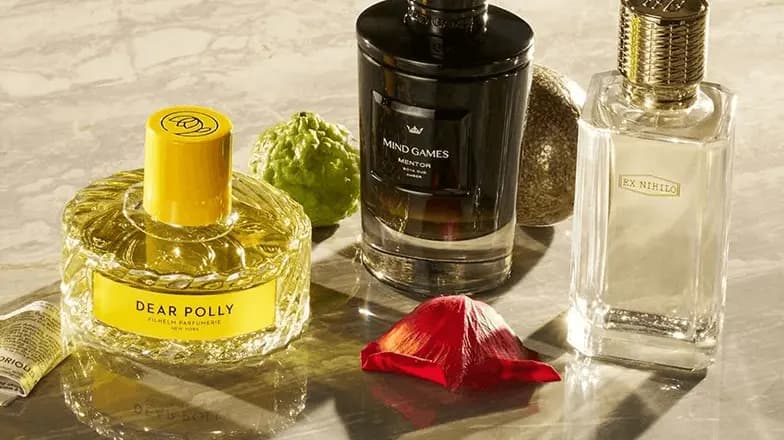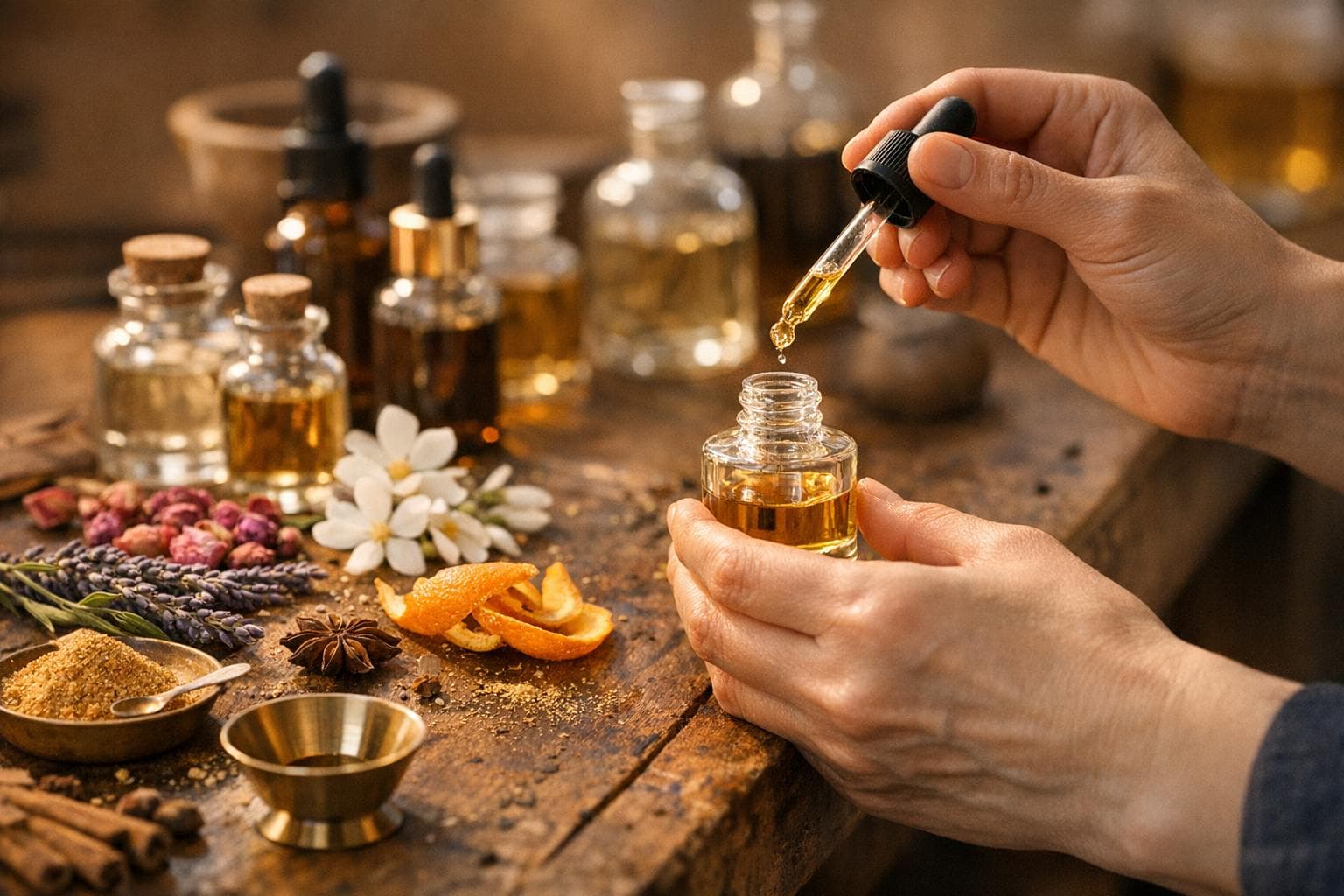
Les parfums en petites séries se distinguent des fragrances produites en masse par leur exigence de qualité, leurs ingrédients rares et leur dimension artistique. Ces parfums sont créés en quantités limitées à partir de matières naturelles telles que les huiles essentielles et les absolues, souvent nettement plus coûteuses que les matières synthétiques. Le processus implique l’assemblage, le vieillissement (macération) et l’affinage de la fragrance pendant plusieurs semaines, voire plusieurs mois, afin d’obtenir profondeur et équilibre.
Points clés :
- Ingrédients : Botaniques rares, extraits naturels et alcool ou huiles porteuses de haute qualité.
- Processus : Assemblage des notes de tête, de cœur et de fond, suivi d’une macération de 1 à 2 mois.
- Outils : Balances de précision, verrerie et flacons foncés pour la conservation.
- Structure : Les parfums évoluent en trois strates - tête (15 à 30 min), cœur (2 à 4 h) et fond (6 à 24 h).
- Temps & savoir-faire : La création d’une seule fragrance peut nécessiter des années et des centaines d’essais.
La parfumerie artisanale allie expertise technique et inspiration personnelle, offrant une expérience sensorielle riche, nuancée et singulière.
Parfumerie artisanale : guide d’initiation par 4160Tuesdays

La philosophie derrière la création de parfums artisanaux
La parfumerie en petites séries repose sur un principe fondamental : privilégier l’expression artistique plutôt que les décisions guidées par le marché. Contrairement aux maisons de parfums commerciales, qui s’appuient fortement sur les études démographiques et les tendances de consommation pour séduire le plus grand nombre, les parfumeurs artisans font confiance à leur intuition personnelle, à leurs souvenirs et à ce que l’on appelle souvent l’inspiration olfactive. Jean — Claude Ellena, maître parfumeur de renom, explique cette approche avec éloquence :
En tant que parfumeur, j’aime montrer et convaincre… Je suis simplement la trajectoire d’un artiste - quelqu’un qui cherche et, parfois, trouve.
Cet état d’esprit artistique influence chaque étape du processus, depuis la sélection des matières premières jusqu’à l’élaboration du produit final.
Le rôle des ingrédients
La sélection des ingrédients est le domaine où les artisans expriment pleinement leur attachement à l’authenticité. Au lieu de privilégier les matières synthétiques, plus abordables et plus faciles à obtenir, ils choisissent souvent des matières botaniques telles que les huiles essentielles, les absolues, les résines et les teintures. Ces ingrédients naturels ont un coût élevé - un kilogramme de matière odorante synthétique peut coûter environ 50 $, tandis que son équivalent naturel peut dépasser 500 $. Cet engagement envers la qualité reflète une philosophie qui valorise la profondeur et le caractère plutôt que la facilité.
Patience et précision
Le temps joue un rôle essentiel dans le processus artisanal. Après l’assemblage, les parfums sont laissés à mûrir dans un espace frais et sombre pendant plusieurs semaines, voire plusieurs mois. Cette période de macération permet aux molécules naturelles de fusionner et de former de nouvelles liaisons chimiques, renforçant l’harmonie globale de la fragrance. Cette approche méticuleuse contraste fortement avec les méthodes industrielles, où la rapidité prime souvent sur la profondeur.
Créer un parfum artisanal relève à la fois de l’art et de la science. À l’aide d’outils d’une grande précision, comme des balances numériques mesurant au 0,01 gramme près, les artisans procèdent à des ajustements progressifs et réalisent des dilutions pouvant atteindre 0,1 %. Le développement d’une seule fragrance peut exiger jusqu’à 1 000 essais et prendre jusqu’à trois ans. Avec seulement 500 à 1 000 parfumeurs pleinement formés, ou "nez", dans le monde, cette expertise est exceptionnellement rare. Chaque étape du processus témoigne de leur dévouement absolu.
Faire revivre les techniques traditionnelles
Certains parfumeurs artisans remettent même au goût du jour des méthodes historiques comme l’enfleurage, une technique de l’époque victorienne qui utilise des graisses végétales pour capturer le parfum de fleurs délicates telles que le jasmin, incapables de résister aux procédés modernes de distillation à chaud. Ces méthodes traditionnelles mettent en lumière la complexité et la richesse des ingrédients naturels. C’est cet engagement indéfectible envers l’authenticité - malgré des coûts plus élevés et des délais plus longs - qui définit la philosophie de la parfumerie artisanale.
Matières et équipement pour la création de parfums
La création de parfums en petites séries exige deux éléments essentiels : des ingrédients aromatiques et des outils de précision. La qualité de chacun joue un rôle déterminant dans la profondeur et la tenue de la fragrance.
Les matières aromatiques comprennent une variété d’extraits et de composés naturels. Elles vont des huiles essentielles dérivées de plantes aux absolues obtenues par extraction aux solvants, en passant par les extraits CO₂ créés grâce à des méthodes avancées, ainsi que les résines ou baumes issus des sécrétions d’arbres. Les teintures, réalisées par macération de matières botaniques dans l’alcool, ajoutent également des facettes uniques au profil d’un parfum. Les ingrédients naturels sont prisés pour leurs structures moléculaires complexes, qui permettent au parfum d’évoluer magnifiquement sur la peau.
Pour la base, l’alcool de parfumeur (éthanol à 190–200 proof) est le choix de référence pour les parfums à base d’alcool. À l’inverse, des huiles porteuses comme le jojoba ou l’huile de coco fractionnée conviennent parfaitement aux mélanges huileux. Pour renforcer la tenue de la fragrance, des fixateurs tels que le benjoin, le labdanum ou la graine d’ambrette sont couramment ajoutés. L’équilibre entre matières de haute qualité et outils précis constitue la pierre angulaire de la création de parfums artisanaux.
La structure en 3 notes des parfums
Un parfum bien construit se déploie selon une structure en trois notes, qui lui confère un caractère dynamique et évolutif.
- Les notes de tête sont les premières à se révéler, offrant des senteurs légères et volatiles comme la bergamote, le citron ou le poivre rose. Ces notes durent environ 15 à 30 minutes et représentent 10 à 30 % du mélange.
- Les notes de cœur révèlent la personnalité centrale du parfum. Des senteurs comme la rose, le jasmin ou la cannelle dominent cette strate, qui dure 2 à 4 heures et constitue 30 à 50 % de la formule.
- Les notes de fond apportent la structure grâce à leurs qualités riches et persistantes. Des ingrédients comme le santal, la vanille ou le patchouli demeurent pendant 6 à 24 heures, voire davantage, et composent 15 à 30 % du mélange.
Cette architecture en strates garantit que la fragrance ne se contente pas de s’estomper, mais évolue avec grâce au fil du temps.
L’équipement nécessaire
La régularité dans la création de parfums repose sur l’utilisation des bons outils. Les instruments de précision sont indispensables pour garantir l’exactitude et la reproductibilité des formules. Une balance numérique d’une précision de 0,01 gramme est incontournable pour des mesures rigoureuses. Les outils complémentaires comprennent :
- Béchers en verre (50–100 mL) pour un mélange propre
- Pipettes graduées (1–3 mL) pour des transferts liquides précis
- Tiges d’agitation en verre afin d’éviter toute contamination
- Bandelettes olfactives (mouillettes) pour tester l’évolution de la fragrance
Une conservation appropriée joue également un rôle essentiel. Utilisez des flacons en verre ambré foncé ou bleu cobalt afin de protéger les matières premières comme les parfums finis de la lumière UV, contribuant ainsi à préserver leur qualité.
Les kits de démarrage pour ces outils coûtent généralement entre 70 € et 300 €, reflétant le niveau de précision nécessaire pour passer de simples expérimentations à la création de fragrances artisanales de qualité professionnelle.
Votre expert parfum personnel vous attend
Faites notre quiz olfactif express pour découvrir des parfums de créateurs et de niche authentiques, choisis selon vos goûts – explorez-les en décants et échantillons de 2–8ml, pour essayer chaque fragrance avant de vous engager sur un flacon entier.
Trouvez votre parfumComment créer des parfums en petites séries : étape par étape
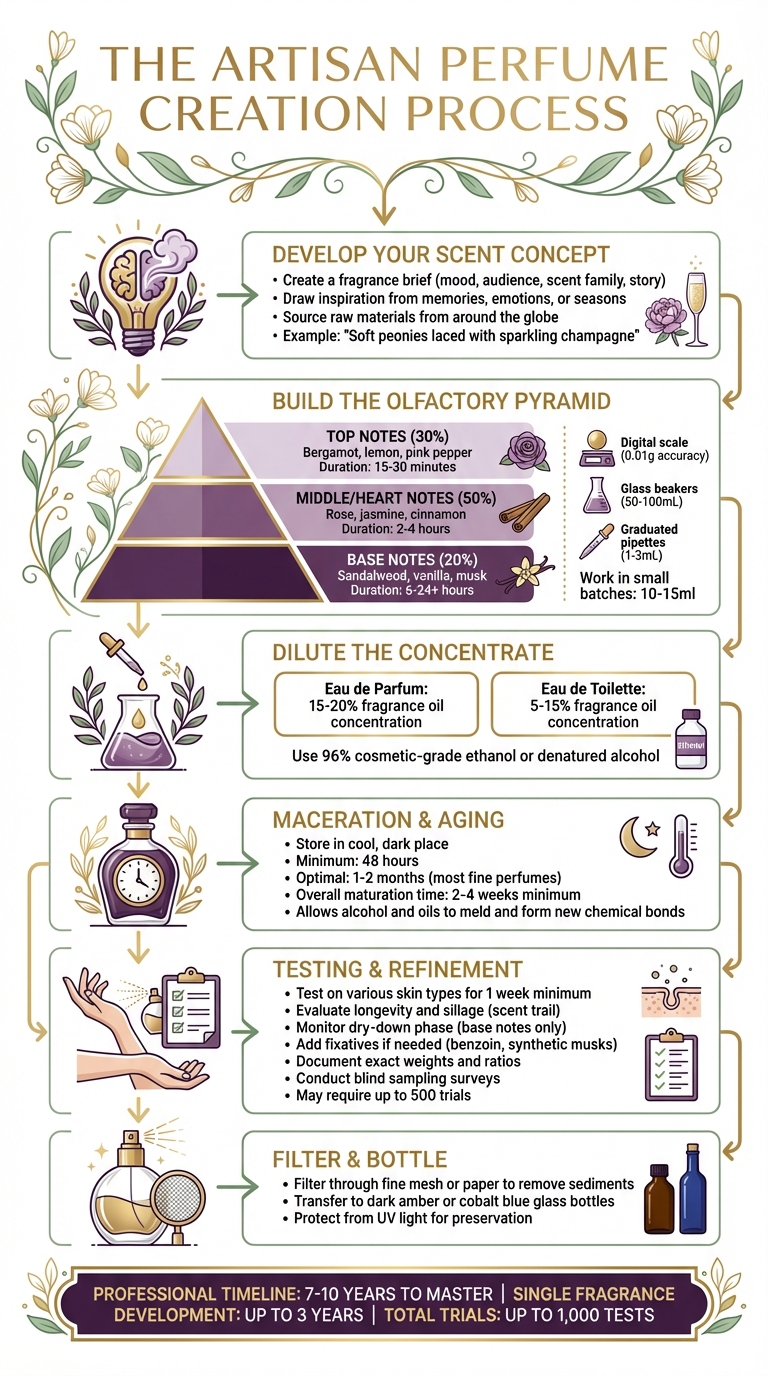
Processus de création d’un parfum en petite série : du concept à la fragrance finale
Développer votre concept olfactif
Chaque parfum commence par une vision créative - un brief olfactif qui définit son humeur, son public cible, sa famille olfactive et son histoire. Ce concept initial sert de fondation à votre création. Il peut être inspiré par un souvenir vividement ressenti, comme l’arôme délicat de "pivoines tendres rehaussées de champagne pétillant", ou par une émotion liée à une saison ou à un instant particulier.
La création d’un parfum commence par une vaste palette de matières premières. Au cœur de l’espace de travail du parfumeur, l’"orgue", se trouve un véritable trésor d’ingrédients provenant du monde entier. Pensez aux roses de Grasse ou au oud d’Asie du Sud — Est. Aux côtés de ces matières naturelles, les molécules synthétiques jouent un rôle essentiel, reproduisant des senteurs que la nature ne peut fournir, comme le muguet. Ce processus exige non seulement une créativité artistique, mais aussi une expertise technique pour donner vie au concept.
Assembler et superposer vos notes
L’art de l’assemblage consiste à construire une pyramide olfactive, en superposant les notes de tête, de cœur et de fond afin de créer une fragrance équilibrée. Commencez par les notes de fond - des senteurs riches et ancrées comme le santal, la vanille ou le musc. Construisez ensuite les notes de cœur, souvent florales ou épicées. Enfin, complétez la composition avec des notes de tête telles que les agrumes ou les herbes fraîches.
Pour les débutants en création de parfum, la règle 30-50-20 constitue un repère utile : visez 30 % de notes de tête, 50 % de notes de cœur et 20 % de notes de fond. Utilisez une balance numérique pour mesurer les ingrédients avec précision, et travaillez en petites quantités (environ 10–15 ml) afin d’économiser vos matières lors des expérimentations.
Une fois votre mélange prêt, diluez l’huile parfumée concentrée avec de l’éthanol de qualité cosmétique à 96 % ou de l’alcool dénaturé afin d’obtenir l’intensité souhaitée. Pour une Eau de Parfum, visez une concentration d’huile parfumée de 15 à 20 %, tandis qu’une Eau de Toilette requiert généralement 5 à 15 %. Après l’assemblage vient l’étape de la macération, où le parfum prend véritablement vie.
Macération et vieillissement de votre parfum
La macération est le moment où la magie opère. Cette étape permet à l’alcool et aux huiles essentielles de fusionner en un ensemble unifié et harmonieux. Conservez votre parfum dans un endroit frais et sombre afin de le protéger de l’oxydation.
"La macération est la sauce secrète qui élève une fragrance d’un simple mélange de senteurs à un arôme complexe et captivant." — Maison D’Abba
La durée de la macération peut varier considérablement. Si certains mélanges bénéficient déjà de 48 heures de repos, la plupart des grands parfums s’améliorent nettement avec au moins un mois de vieillissement. Pendant cette période, vérifiez régulièrement votre mélange afin de vous assurer que la fragrance a mûri à votre convenance. Une fois le vieillissement terminé, filtrez le mélange à travers une maille fine ou du papier afin d’éliminer tout dépôt. Enfin, transférez le parfum fini dans des flacons en verre foncé pour préserver sa qualité.
Tester et affiner votre formule
Une fois votre mélange élaboré par macération et formulation précise, l’étape suivante consiste à le tester afin d’en affiner l’équilibre. Commencez par évaluer votre parfum en conditions réelles - sur la peau. Testez-le sur différents types de peau pendant une semaine afin d’observer son évolution. Comme le souligne Francis Kurkdjian, parfumeur chez Maison Francis Kurkdjian :
Généralement, je demande à mon client de le porter pendant au moins une semaine... C’est un long processus, et ce n’est pas si simple.
Observez attentivement les performances de la fragrance, notamment sa longévité et son sillage - la trace parfumée laissée derrière elle. La phase de fond, lorsque seules les notes de fond demeurent, révèle tout particulièrement sa tenue. Si la fragrance s’estompe trop rapidement, vous devrez peut-être incorporer des fixateurs comme le benjoin ou des muscs synthétiques afin de stabiliser les notes de tête les plus volatiles. Fait intéressant, environ 90 % des matières premières utilisées dans la parfumerie moderne sont synthétiques, souvent choisies pour leur capacité à améliorer la stabilité et la projection.
La précision est essentielle tout au long de ce processus. Documentez soigneusement les poids exacts et les proportions de vos ingrédients, car une seule goutte peut modifier l’équilibre de votre composition. Soyez prêt à réaliser jusqu’à 500 essais pour perfectionner votre fragrance.
Pour obtenir des avis objectifs, utilisez des échantillonnages à l’aveugle et des enquêtes structurées afin d’évaluer l’attrait et les performances de votre parfum. Les tests olfactifs à l’aveugle - où les testeurs découvrent la fragrance sans connaître ses composants - peuvent fournir des retours sincères, guidés par l’émotion. Testez également votre parfum dans différentes conditions de température et d’humidité afin de vous assurer qu’il conserve son caractère dans divers environnements.
Conclusion
Créer des parfums en petites séries est un processus méticuleux qui associe créativité et précision. Du concept initial à l’approvisionnement en ingrédients, puis à l’affinage du mélange final à travers des étapes telles que la maturation, la dilution, la macération et la filtration, chaque étape exige une attention minutieuse aux détails . Au cœur de toute fragrance réussie se trouve l’art d’un empilement harmonieux des notes.
La patience est l’un des piliers de cet artisanat. La maturation et la macération à elles seules prennent souvent au moins 2 à 4 semaines, permettant à l’alcool et aux huiles essentielles de s’harmoniser et au parfum de se stabiliser. Les parfumeurs professionnels consacrent 7 à 10 ans à perfectionner leur savoir-faire, à mémoriser des milliers de senteurs et à maîtriser des formulations complexes. La précision est capitale - obtenir le bon assemblage exige souvent une exactitude de l’ordre de la partie par million, et une seule goutte peut déséquilibrer toute une composition. C’est pourquoi la tenue rigoureuse de registres des poids et des proportions n’est pas seulement recommandée, mais essentielle .
FAQ
Pourquoi les parfums en petites séries sont-ils plus chers que ceux produits en masse ?
Les parfums en petites séries affichent un prix plus élevé en raison de l’utilisation d’ingrédients rares et d’exception, souvent issus de sources naturelles et sélectionnés avec soin pour leur qualité et leur durabilité. Ces fragrances sont produites en quantités limitées, en s’appuyant sur la précision et l’art de parfumeurs qualifiés qui assemblent et perfectionnent chaque senteur avec minutie.
Contrairement aux parfums de grande diffusion, les créations en petites séries ne bénéficient pas des économies d’échelle de la production massive. Cela entraîne des coûts plus élevés pour les matières, la main-d’œuvre spécialisée et, fréquemment, un packaging élégant et haut de gamme. Le résultat ? Une fragrance unique, offrant une expérience sensorielle plus intime et raffinée.
Comment les parfumeurs artisans créent-ils des fragrances uniques et de haute qualité ?
Les parfumeurs artisans choisissent soigneusement leurs ingrédients parmi des sources naturelles et synthétiques, en s’appuyant sur des fournisseurs de confiance pour obtenir des botaniques, résines et composés de premier choix. Grâce à des techniques comme la distillation à la vapeur, l’extraction aux solvants et les méthodes au CO₂, ils extraient les éléments aromatiques les plus purs afin de créer des fragrances au caractère distinctif et raffiné.
La création d’une fragrance est un processus complexe fait d’essais et d’ajustements. Les parfumeurs commencent par assembler de petites quantités, testent la senteur sur des bandelettes et sur la peau, puis modifient la formule à plusieurs reprises afin d’atteindre l’équilibre parfait entre notes de tête, de cœur et de fond. Une fois le mélange finalisé, il vieillit dans des conditions contrôlées, permettant aux ingrédients de fusionner et de gagner en complexité, afin que le produit final réponde aux standards les plus élevés.
La production en petites séries garantit un contrôle qualité méticuleux à chaque étape, de l’inspection des matières premières à la mise en flacon finale. Des plateformes comme Scento rendent ces créations exclusives accessibles à un public plus large en proposant des décants dans des formats tels que 0,75 ml, 2 ml et 8 ml. Leur abonnement de 8 ml permet aux passionnés de parfums de découvrir facilement des senteurs singulières sans s’engager dans l’achat d’un flacon entier.
Quel rôle joue la macération dans la création de parfums en petites séries ?
La macération joue un rôle important dans l’art de créer des parfums en petites séries. C’est au cours de cette phase que les ingrédients de la fragrance se réunissent, mûrissent et gagnent en profondeur avec le temps. Les huiles essentielles, l’alcool et les autres composants interagissent, se mêlant de manière à développer un profil olfactif plus harmonieux et plus nuancé.
Ce processus exige de la patience, car le temps nécessaire à la macération varie selon la formule spécifique. Il s’agit toutefois d’une étape indispensable pour garantir que la fragrance finale offre une expérience riche, équilibrée et durable.