
Vendre du parfum en ligne est un véritable défi. Sans pouvoir sentir, de nombreux acheteurs hésitent. Mais le storytelling s’est imposé comme un moyen puissant de combler cet écart, aidant les marques à nouer un lien émotionnel avec leurs clients et à stimuler les ventes de fragrances en ligne.
Voici pourquoi le storytelling fonctionne :
- Le parfum et la mémoire sont liés. Un langage descriptif évoque des émotions et des souvenirs, aidant les clients à imaginer la fragrance.
- Les récits personnalisés comptent. Des outils tels que les quiz et les consultations guident les acheteurs vers des senteurs qui correspondent à leurs préférences.
- Les réseaux sociaux amplifient les histoires. Des plateformes comme TikTok (#PerfumeTok) transforment les fragrances en expériences accessibles et partageables.
- Des pages produit immersives. Des descriptions évocatrices et des visuels captivants aident les clients à se sentir confiants dans leurs choix.
Les données montrent que cette approche fonctionne : 68 % des consommateurs affirment que les histoires de marque influencent leurs décisions d’achat, et le storytelling peut augmenter les taux de conversion jusqu’à 30 %. En misant sur les connexions émotionnelles, les marques transforment le marché de la parfumerie en ligne.

Comment le storytelling influence les ventes de parfums en ligne : statistiques clés
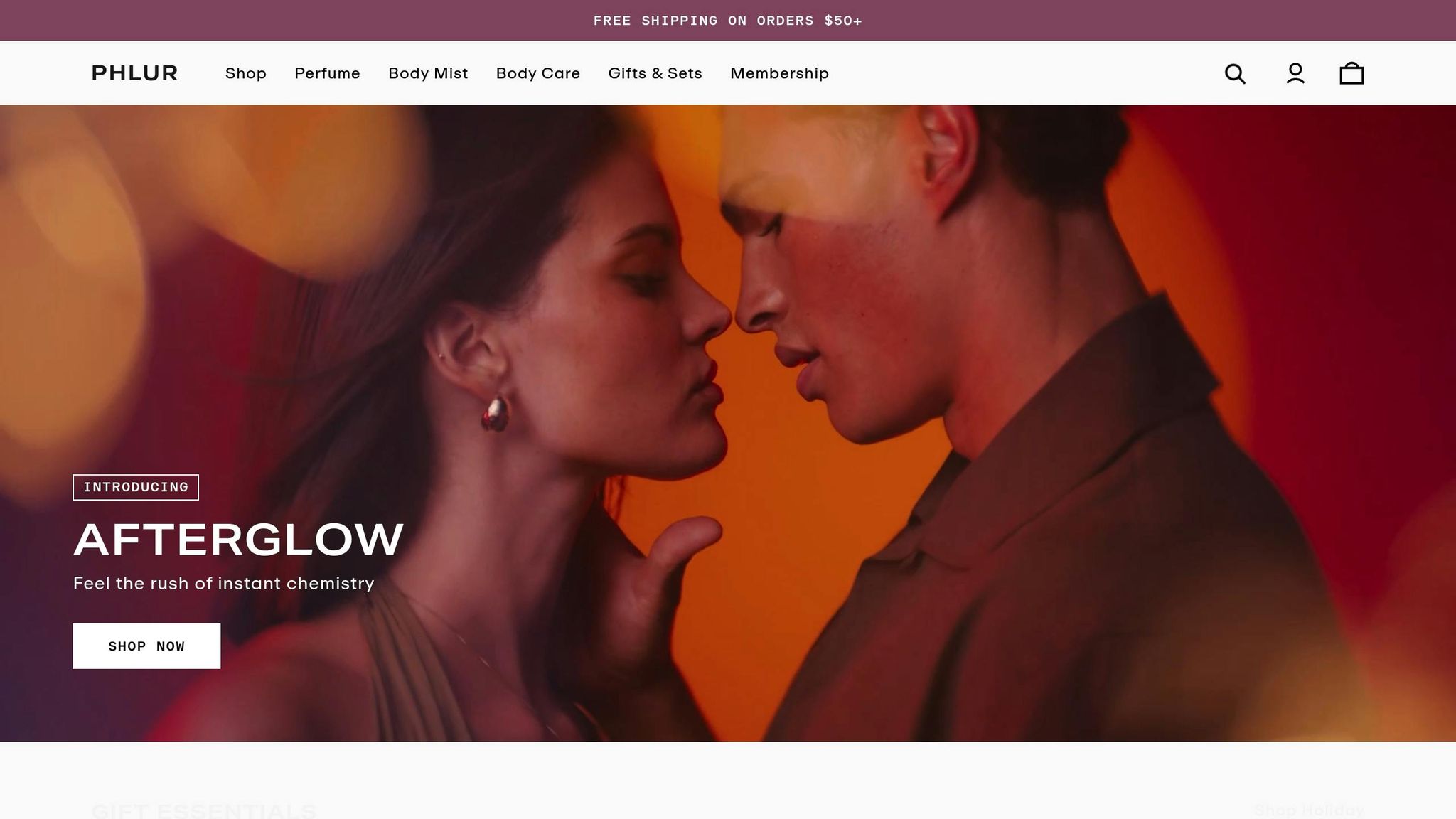
Dans les coulisses de Phlur : Chriselle Lim sur le storytelling, l’art du parfum et la création d’une marque de fragrance
How Storytelling Fills the Sensory Gap
Lorsqu’il s’agit de vendre des fragrances en ligne, le défi le plus évident est l’impossibilité de faire découvrir le parfum directement. Le storytelling intervient pour combler cet écart en mobilisant des zones clés du cerveau, comme l’amygdale et l’hippocampe, liées à l’émotion et à la mémoire. Une histoire bien racontée ne se contente pas de décrire une fragrance : elle invite les clients à l’imaginer, créant une connexion émotionnelle plus profonde.
Utiliser des récits émotionnels pour créer un lien avec les clients
Le parfum et la mémoire sont intimement liés. Les recherches montrent que les personnes peuvent se souvenir des odeurs avec une précision de 65 % même après un an, tandis que les souvenirs visuels chutent à 50 % après seulement trois mois. Le storytelling exploite ce pouvoir singulier du parfum en associant les fragrances à des moments vivants et émotionnels. Par exemple, décrire une senteur comme évoquant « l’enfance portée par la brise » ou « une promenade dans une boutique de luxe exclusive » peut réveiller des souvenirs personnels chez le client. Ces récits dépassent l’esprit conscient et résonnent à un niveau subconscient.
"Une fragrance doit être soigneusement conçue pour correspondre à la personnalité de votre marque, à votre public cible et à l’expérience client."
– Francoise Rapp, experte en branding olfactif
Lorsque le storytelling d’une marque ressemble à une expérience plutôt qu’à une tactique marketing, les clients sont plus enclins à se connecter au message.
Un langage descriptif qui éveille l’imagination
Les mots justes peuvent faire ressentir une fragrance aux clients sans qu’ils ne l’aient jamais sentie. Le langage descriptif, ancré dans les détails sensoriels, active ce que l’on appelle la cognition incarnée. Cela signifie que les descriptions sensorielles peuvent déclencher des simulations mentales, influençant les décisions à un niveau subconscient. Au lieu d’énumérer des ingrédients comme "bergamote et bois de santal", les marques peuvent utiliser des expressions telles que « pieds nus et libre » ou « la terre sous mes ongles » pour évoquer des images saisissantes. Cette approche ne se contente pas de créer des liens émotionnels : elle apporte aussi des bénéfices tangibles, le marketing olfactif ayant démontré sa capacité à augmenter les ventes au détail de 11 % et à améliorer la satisfaction client de 20 %.
La personnalisation à travers des récits centrés sur le client
Si les descriptions évocatrices sont puissantes, la personnalisation va encore plus loin. La fragrance est profondément personnelle, et les descriptions génériques ne parviennent souvent pas à saisir ce qui rend une senteur spéciale pour un individu. En se concentrant sur le client, les marques peuvent créer des histoires qui semblent sur mesure et porteuses de sens. Ce changement est devenu particulièrement important pendant la pandémie, lorsque l’échantillonnage traditionnel en boutique n’était plus possible.
Par exemple, en 2020, la marque de luxe Sana Jardin a lancé des consultations personnalisées sur Zoom afin d’aider les clients à découvrir des fragrances correspondant à leurs préférences, tout en partageant les valeurs de la marque. Ces séances individuelles permettaient une exploration intime du parfum, guidée par le récit.
Les outils interactifs jouent également un rôle clé dans la personnalisation. Des fonctionnalités comme les quiz “Perfume Finder” interrogent les clients sur leurs émotions, leurs goûts et leur mode de vie afin de recommander des fragrances alignées avec leur personnalité. Atelier Cologne a utilisé cette approche pour accompagner les acheteurs dans un parcours collaboratif, les aidant à trouver une senteur qui leur semblait véritablement personnelle. En reconnaissant l’individualité des choix olfactifs, ces méthodes personnalisées instaurent la confiance et aident les clients à choisir avec assurance des parfums qu’ils aimeront, même sans les avoir essayés en personne.
Les stratégies de storytelling qui augmentent les ventes de parfums
Les grandes marques de fragrance maîtrisent l’art de transformer des senteurs abstraites en histoires captivantes qui résonnent auprès des clients, même dans un environnement en ligne où l’odorat est absent.
Collaborer avec des influenceurs pour partager des histoires auxquelles on s’identifie
Le storytelling comble le fossé sensoriel, et les influenceurs jouent un rôle clé pour rendre ces récits personnels et authentiques. Contrairement à la publicité traditionnelle, les influenceurs apportent une impression de confiance et de proximité. Lorsqu’ils montrent comment une fragrance s’intègre à leur quotidien ou sublime des moments particuliers, cela semble vrai. Chris Gilbert, Senior Social Strategist chez Kettle, souligne ce point :
"Pour beaucoup de marques, les influenceurs sont la manière idéale de créer du contenu généré par les utilisateurs... ils insufflent une forme d’authenticité tout en continuant à vendre le rêve" – Chris Gilbert, Senior Social Strategist chez Kettle
Cette stratégie ne sonne pas seulement juste : elle produit des résultats. Il a été démontré que le contenu généré par les utilisateurs et intégrant une option d’achat peut augmenter les taux de conversion jusqu’à 12 %. Un exemple emblématique est le pop-up "Daisy" de Marc Jacobs pendant la Fashion Week de New York en 2014, où les clients utilisaient des publications sur les réseaux sociaux portant le hashtag #mjdaisychain comme monnaie d’échange pour recevoir des produits. Cette campagne ingénieuse a transformé l’engagement en ligne en récompenses concrètes.
L’essor du #PerfumeTok sur TikTok a poussé cette approche encore plus loin. Les créateurs de la génération Z et les passionnés de fragrance utilisent le storytelling vidéo pour transformer des senteurs de niche en symboles de statut convoités. En tissant des récits autour de l’humeur, de la personnalité et du style de vie, ils font de l’exploration des parfums une aventure intime et personnelle.
Créer des expériences digitales multisensorielles
Pour répondre aux défis de la vente de fragrances en ligne, les marques développent des stratégies digitales qui sollicitent plusieurs sens. Puisque les clients ne peuvent pas sentir physiquement les parfums, ces approches s’appuient sur des indices visuels et descriptifs afin de créer une connexion sensorielle. Les recherches sur la cognition incarnée suggèrent que lorsque les éléments sensoriels agissent ensemble, ils se renforcent mutuellement et peuvent influencer les décisions d’achat de manière subconsciente. Par exemple, les marques associent des visuels "frais" à des fragrances aquatiques ou utilisent des images chaudes et dorées pour des senteurs ambrées, afin d’évoquer les émotions justes.
Les outils interactifs jouent également un rôle majeur. En novembre 2023, The Fragrance Shop a lancé la première machine à parfums alimentée par l’IA au Royaume-Uni, dans son flagship londonien. Cet outil pose des questions liées au mode de vie, comme "Votre style est-il plutôt business, hipster ou sportif ?", afin de créer des profils olfactifs personnalisés reflétant les identités individuelles.
Au-delà de l’écran, certaines marques enrichissent l’expérience de déballage en intégrant leurs senteurs signatures dans les emballages e-commerce. Cette tactique crée une mémoire sensorielle à domicile, renforçant la présence de la marque. Les études révèlent qu’une odeur peut inciter les clients à rester 40 % plus longtemps dans un environnement de marque et qu’environ 75 % des décisions quotidiennes sont influencées par l’odorat, même de manière subconsciente.
Transformer les pages produit en récits immersifs
Une page produit devrait aller au-delà de la simple liste de notes et de formats de flacon : elle devrait plonger les clients dans l’univers de la fragrance. Au lieu de simplement mentionner des ingrédients comme "bergamote et bois de santal", les marques partagent l’inspiration derrière la senteur, qu’il s’agisse d’un lieu précis, d’un moment ou d’une émotion ayant façonné sa création.
Des descriptions détaillées des notes et familles olfactives aident les clients à imaginer le profil de la fragrance. Lorsque ces détails sont associés à des occasions, des saisons ou des humeurs spécifiques — comme "une chaleureuse soirée d’hiver" ou "un élan d’énergie matinale" — les acheteurs peuvent immédiatement visualiser la place de cette fragrance dans leur vie. L’ajout de contenus experts, tels que des interviews de parfumeurs, des avis approfondis et des histoires produit détaillées, renforce la confiance et l’authenticité. Ces pages guidées par le récit donnent aux clients l’assurance d’acheter, même sans avoir senti le produit au préalable.
Ensemble, ces techniques de storytelling redéfinissent l’achat de fragrances en ligne en remplaçant l’expérience physique par des récits captivants et profondément émotionnels.
Votre expert parfum personnel vous attend
Faites notre quiz olfactif express pour découvrir des parfums de créateurs et de niche authentiques, choisis selon vos goûts – explorez-les en décants et échantillons de 2, 5, 8 et 30 ml, pour essayer chaque fragrance avant de vous engager sur un flacon entier.
Trouvez votre parfumComment le storytelling a transformé le marché de la fragrance
Les changements dans la manière dont les consommateurs achètent des fragrances
La façon dont les consommateurs achètent des fragrances a connu une transformation spectaculaire, en particulier ces dernières années. Avant la pandémie, les ventes de parfums en ligne aux États-Unis ne représentaient que 17 % du marché. À la fin de 2020, ce chiffre avait presque doublé pour atteindre environ 30 %. Ce changement ne relevait pas seulement de la praticité : il a marqué une nouvelle ère dans l’approche de l’achat de parfums. Traditionnellement, les achats en ligne visaient surtout à remplacer des senteurs déjà connues, souvent essayées en boutique ou reçues en cadeau. Mais le storytelling a transformé cette expérience, faisant de l’achat de fragrances en ligne une aventure de découverte. Grâce à des descriptions évocatrices, des visuels captivants et la preuve sociale, les marques ont permis aux clients d’acheter avec plus de confiance des fragrances qu’ils n’avaient jamais senties.
Les jeunes consommateurs, en particulier la génération Z, ont pleinement adopté cette évolution. Pour eux, la fragrance est plus qu’un simple produit : c’est une forme d’expression de soi. Les études montrent que 70 % de la génération Z estime que son choix de parfum reflète son identité, et 60 % est prête à dépenser généreusement pour trouver l’accord parfait. Cette génération valorise davantage l’histoire et l’aura qu’une fragrance représente que ses détails techniques, ouvrant la voie aux réseaux sociaux comme espace central du storytelling olfactif.
Le rôle des réseaux sociaux dans le storytelling olfactif
Les réseaux sociaux ont porté le storytelling olfactif à un niveau entièrement nouveau. Des plateformes comme TikTok et Instagram sont devenues de puissants outils de découverte de fragrances, notamment auprès des publics plus jeunes. Le hashtag #PerfumeTok, par exemple, a transformé des fragrances de niche et indépendantes en symboles de statut recherchés par la génération Z. Les vidéos courtes sur ces plateformes permettent aux créateurs de tisser des histoires captivantes autour d’un seul flacon, en le reliant à des humeurs, des esthétiques et une identité personnelle d’une manière que la publicité traditionnelle n’aurait jamais pu atteindre.
Un exemple marquant de cette évolution digitale est le lancement par Coty de Marc Jacobs "Perfect" à la fin de 2020. Au lieu de s’appuyer sur des publicités glamour traditionnelles, Coty a opté pour une approche digital-first, en organisant une soirée de lancement sur Zoom avec la chanteuse Kim Petras. L’événement a réuni plus de 1 700 participants venus de 50 pays. Cette stratégie innovante a porté ses fruits : "Perfect" est devenu le lancement parfum de l’année aux États-Unis comme au Royaume-Uni, propulsant Marc Jacobs de la 10e à la 4e place du classement du marché américain. Stéphane de La Faverie, Group President chez Estée Lauder Companies, a parfaitement résumé la tendance :
"Les gens aspirent à la connexion, à la fois dans leur vie personnelle et avec les marques." – Stéphane de La Faverie, Group President, Estée Lauder Companies
Les réseaux sociaux ont en quelque sorte remplacé le comptoir beauté traditionnel. Les avis d’influenceurs et le contenu généré par les utilisateurs fournissent désormais le contexte et la réassurance que les acheteurs recherchaient autrefois en boutique. Cette évolution a facilité l’exploration et l’achat de fragrances sans jamais les tester en personne.
Comment Scento utilise le storytelling dans son modèle de décants

S’appuyant sur la puissance du storytelling, Scento a réinventé la découverte olfactive avec son modèle de décants. Plutôt que de demander aux clients de s’engager dans l’achat de flacons grand format coûteux, Scento propose de plus petits formats — fioles de 2 ml, 5 ml et 8 ml, ainsi qu’un décant en flacon de 30 ml sur la plupart des parfums — conçus pour rendre l’exploration des fragrances plus accessible. Chaque design d’atomiseur, comme Limone di Capri, Rosso Fiore, Le Moooo et Toile de Jouy, raconte sa propre histoire, évoquant une humeur ou une expérience particulière.
Des sélections soigneusement conçues aident les clients à bâtir une "garde-robe olfactive", leur permettant d’accorder leurs choix de fragrance aux différentes facettes de leur identité et de leur style de vie. Cette approche répond à un problème fréquent sur le marché de la parfumerie : la frustration de dépenser plus de 300 € pour un flacon entier qui finit par rester inutilisé. Avec des flacons de 8 ml offrant environ 120 pulvérisations, Scento propose une manière abordable et pratique d’explorer des fragrances premium.
La beauté du storytelling de Scento réside dans le fait qu’il dépasse les parfums eux-mêmes. Il crée un récit autour de l’ensemble du processus de découverte, encourageant les clients à embrasser la variété et l’expression de soi. Au lieu de s’en tenir à une seule signature olfactive, les acheteurs peuvent associer et alterner leurs fragrances, les utilisant pour refléter les multiples facettes de leur personnalité.
Conclusion
Ce que les marques e-commerce doivent savoir
Vendre des fragrances en ligne présente un défi unique : on ne peut pas sentir à travers un écran. Pourtant, le storytelling comble ce fossé sensoriel, aidant les clients à se connecter à des fragrances qu’ils n’ont pas encore expérimentées directement. En tissant des récits émotionnels, en utilisant des descriptions évocatrices qui éveillent l’imagination et en mettant en avant une preuve sociale authentique, les marques peuvent bâtir la confiance nécessaire pour que les clients achètent des produits de luxe avec assurance, sans les avoir physiquement essayés.
Les données soutiennent cette approche : 68 % des consommateurs déclarent que les histoires de marque influencent leurs décisions d’achat, et le storytelling peut générer jusqu’à 30 % de conversions de ventes supplémentaires. De plus, 60 % des acheteurs considèrent le contenu généré par les utilisateurs comme la forme de contenu la plus fiable. Lorsque les marques délaissent le jargon technique au profit de descriptions sensorielles accessibles — comme "des draps fraîchement lavés par un matin de printemps vif" au lieu de "floraux aldéhydés" — elles rendent les fragrances plus personnelles et plus approchables.
Le secret consiste à privilégier l’authenticité plutôt qu’un excès de sophistication. La transparence sur l’origine des ingrédients, les pratiques éthiques et les valeurs de la marque — en somme, l’histoire derrière la fragrance — résonne profondément auprès des consommateurs. Comme l’explique Florine Eppe Beauloye, fondatrice de Luxe Digital :
"Le storytelling de marque n’est pas un concept nouveau... nous nous souvenons encore de ce que ces histoires nous ont fait ressentir : la manière dont elles ont ému nos émotions, éveillé nos sens et capturé notre imagination".
Le storytelling authentique s’impose comme un outil puissant pour créer des liens significatifs sur le marché digital de la fragrance.
L’approche de Scento pour la découverte de fragrances
Scento illustre la manière dont le storytelling et l’accessibilité peuvent redéfinir la façon dont les gens achètent des parfums. Plutôt que d’attendre des clients qu’ils s’engagent sur un flacon grand format qu’ils pourraient ne pas aimer, Scento propose des formats plus petits : fioles de 2 ml, 5 ml et 8 ml, ainsi qu’un décant en flacon de 30 ml sur la plupart des parfums. Ces formats rendent l’exploration simple et sans risque. Le flacon de 8 ml, par exemple, offre environ 120 pulvérisations — suffisamment pour permettre aux clients d’expérimenter et de composer une "garde-robe olfactive" en accord avec leur personnalité et leur style de vie.
Grâce à son format décant, Scento présente la découverte olfactive comme un voyage d’expression personnelle. En associant des sélections soigneusement choisies à des récits captivants, la marque transforme l’achat de fragrances en une expérience profondément intime. Cette approche rend non seulement les parfums plus accessibles, mais favorise aussi une connexion émotionnelle, prouvant que le storytelling peut révolutionner la manière dont les consommateurs découvrent et adoptent les senteurs en ligne.
FAQ
Comment le storytelling aide-t-il les gens à imaginer une fragrance qu’ils ne peuvent pas sentir physiquement ?
Le storytelling joue un rôle puissant pour combler l’écart entre l’imagination d’un acheteur et l’absence physique de senteur. Lorsqu’un parfum est décrit avec des images évocatrices — comme "une brise méditerranéenne fraîche traversant des vergers d’agrumes au lever du soleil" — il suscite des émotions, réveille des souvenirs et dessine une image mentale. Cela permet aux clients de presque "vivre" la fragrance sans jamais la sentir.
Les marques renforcent cette connexion en intégrant des outils tels que des vidéos, des noms évocateurs et des packagings artistiques pour créer une expérience multisensorielle. Ces éléments narratifs aident à façonner un "profil olfactif" mental, offrant aux acheteurs une impression de familiarité et de confiance dans leur choix. Chez Scento, nous allons encore plus loin en associant des fragrances de créateurs et de niche à des histoires riches qui explorent leurs inspirations et leurs origines. Grâce à des mots et des visuels soigneusement élaborés, nous aidons les acheteurs américains à explorer les fragrances et à s’y connecter avant de décider d’essayer un décant ou un abonnement.
Comment les réseaux sociaux et les influenceurs enrichissent-ils le storytelling olfactif ?
Les plateformes de réseaux sociaux sont devenues un outil essentiel pour permettre aux marques de fragrance de raconter leurs histoires, d’autant plus que la senteur elle-même ne peut pas être expérimentée en ligne. Grâce à des visuels captivants et à des récits engageants, des plateformes comme TikTok, Instagram Reels et YouTube Shorts donnent vie à une fragrance. Ces vidéos courtes présentent tout, de l’inspiration derrière une senteur à ses ingrédients clés et à l’humeur qu’elle évoque, permettant aux spectateurs d’imaginer comment le parfum pourrait se ressentir ou s’intégrer à leur vie. Cette approche rend non seulement les parfums plus accessibles, mais encourage aussi le partage, suscitant des connexions émotionnelles avec les acheteurs potentiels.
Les influenceurs ajoutent une dimension essentielle à ce storytelling en apportant un élément personnel et identifiable. Qu’ils partagent de véritables premières impressions, proposent des idées d’associations olfactives ou intègrent les fragrances à du contenu lifestyle, ils offrent un contexte qui aide leurs abonnés à comprendre des senteurs qu’ils ne peuvent pas expérimenter physiquement. Par exemple, des marques comme Scento collaborent avec des influenceurs pour créer des récits porteurs de sens — comme une vidéo explorant le souvenir lié à une note précise ou une publication montrant comment une fragrance accompagne les moments du quotidien. Cette stratégie bâtit la confiance et comble le fossé sensoriel, transformant la curiosité en l’assurance nécessaire pour passer à l’achat.
Comment la personnalisation enrichit-elle l’achat de fragrances en ligne ?
La personnalisation joue un rôle crucial dans la vente de fragrances en ligne, en comblant l’écart créé par l’impossibilité de sentir directement les parfums. Sans l’expérience sensorielle de l’odorat, les marques doivent captiver les acheteurs grâce à un storytelling sur mesure, des visuels évocateurs et des éléments interactifs qui résonnent personnellement. Ces stratégies éveillent l’imagination, attisent la curiosité et incitent les clients à essayer de nouvelles fragrances.
Chez Scento, la personnalisation est intégrée à tout ce que nous faisons. Scento est un détaillant de décants et d’échantillons de parfum, et chaque produit peut être acheté à l’unité, sans aucun abonnement. Scento+ est l’adhésion optionnelle de Scento : la cotisation mensuelle vous revient intégralement sous forme de crédit en magasin, à dépenser sur n’importe quel parfum ; les membres bénéficient de 10 % de réduction, d’un échantillon offert avec chaque commande, d’un parfum offert tous les six mois et d’un cadeau d’anniversaire, et vous pouvez mettre en pause à tout moment ; pour résilier, contactez notre équipe. Cette approche réduit non seulement le risque d’investir dans des flacons grand format coûteux qui pourraient ne pas correspondre aux préférences individuelles, mais contribue aussi à limiter le gaspillage. Plus important encore, elle nourrit un sentiment de découverte et d’aventure, essentiel pour bâtir la fidélité dans le marché florissant de la fragrance, estimé à 52 milliards de dollars.

