
L’industria dei profumi si sta orientando verso una produzione a impatto climatico zero per ridurre la propria impronta ecologica. Questo processo implica la sostituzione del tradizionale etanolo, spesso ricavato da coltivazioni agricole, con etanolo ottenuto dalla cattura delle emissioni industriali. Ad esempio, Coty Inc. ha lanciato nel 2023 la fragranza "Where My Heart Beats" di Gucci, formulata con etanolo ottenuto al 100% da carbonio catturato: una svolta che riduce l’uso di risorse idriche e la dipendenza dall’agricoltura intensiva.
Punti chiave:
- Il ruolo dell’etanolo: costituisce l’80% della maggior parte dei profumi ed è tradizionalmente estratto da coltivazioni come la canna da zucchero, che richiedono grandi estensioni di suolo e ingenti volumi d’acqua.
- Etanolo da cattura del carbonio: sfrutta i gas di scarto industriali, preservando le risorse idriche e abbattendo le emissioni.
- Le sfide: costi elevati, complessità tecniche e la transitoria dipendenza dal carbonio di origine fossile.
- Innovazioni per il futuro: biotecnologie e upcycling danno vita a ingredienti sostenibili per la profumeria, come il legno di sandalo coltivato in laboratorio e le scorze di agrumi riciclate.
Il settore sta inoltre affrontando il tema delle emissioni legate a produzione, packaging e trasporto, impiegando al contempo compensazioni ambientali ed energie rinnovabili per raggiungere gli obiettivi di neutralità carbonica. Tuttavia, scalare queste soluzioni su ampia scala rimane complesso, a causa dei costi e dei limiti intrinseci della catena di fornitura.
What Carbon-Neutral Perfume Production Means
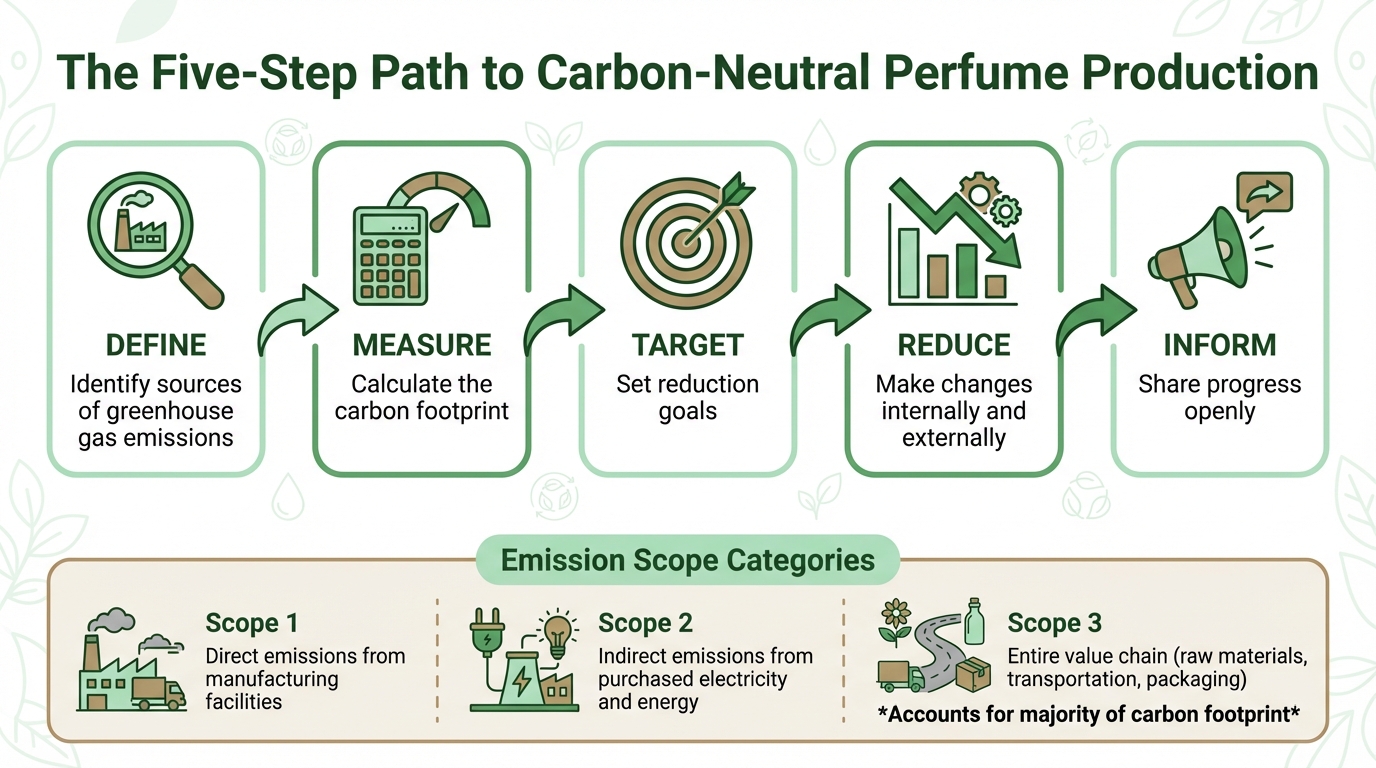
Processo in cinque fasi per raggiungere la neutralità carbonica nella produzione di profumi
La neutralità carbonica nella produzione di fragranze implica il bilanciamento delle emissioni generate durante l’intero ciclo di vita del prodotto, riducendole ovunque possibile e compensando la quota residua. A questo scopo, l’industria dei profumi adotta solitamente un processo strutturato in cinque fasi: Definire (identificare le fonti di emissioni di gas serra), Misurare (calcolare la carbon footprint), Fissare gli obiettivi (stabilire traguardi di riduzione), Ridurre (attuare cambiamenti interni ed esterni) e Comunicare (condividere i progressi in modo trasparente).
Questa strategia si articola su tre aree principali di emissione. L’Ambito 1 (Scope 1) include le emissioni dirette generate dagli impianti di produzione. L’Ambito 2 (Scope 2) riguarda le emissioni indirette dovute all’acquisto di energia elettrica e calore. L’Ambito 3 (Scope 3), che rappresenta spesso la fetta più consistente dell’impronta carbonica di un profumo, copre l’intera catena del valore: materie prime, trasporto, packaging e smaltimento. Queste categorie guidano il settore nell’implementazione di misure pratiche di riduzione e compensazione, descritte dettagliatamente nei paragrafi successivi.
Le emissioni nel ciclo di vita della produzione di profumi
Nel percorso verso la neutralità carbonica, comprendere le emissioni lungo tutto il ciclo di vita di una fragranza è fondamentale. Dall’approvvigionamento delle materie prime alla manifattura, ogni passaggio contribuisce all’impronta complessiva. L’etanolo, che rappresenta circa l’80% del volume di molte composizioni, ne è il principale responsabile. Tradizionalmente, viene estratto da colture quali canna da zucchero o barbabietola, che richiedono terreni agricoli estesi e notevoli risorse idriche; pratiche spesso collegate al disboscamento in regioni come la Foresta Atlantica brasiliana.
All’inizio del 2022, Coty ha raggiunto un traguardo storico nel suo stabilimento di Granollers, in Spagna, introducendo nei propri processi produttivi oltre 20 tonnellate di etanolo da cattura del carbonio sviluppato da LanzaTech. Questo etanolo viene ricavato dal riciclo di emissioni industriali anziché tramite metodi agricoli convenzionali. La Dr.ssa Jennifer Holmgren, CEO di LanzaTech, ha sottolineato l’importanza di questo traguardo:
"Dopo due anni di lavoro a stretto contatto con i ricercatori di Coty per mettere a punto un etanolo di elevata purezza destinato all’alta profumeria, siamo entusiasti di vedere Coty lanciare sul mercato globale le prime fragranze create con etanolo CarbonSmart™".
La produzione di questo alcol da carbonio catturato richiede una quantità minima d’acqua e riduce la pressione sui terreni coltivabili. La tecnologia sviluppata da LanzaTech ha il potenziale di rimpiazzare fino al 30% del consumo di petrolio greggio e di abbattere del 10% le emissioni globali di CO₂.
Il ruolo delle compensazioni e delle pratiche rinnovabili
Accanto ai miglioramenti interni, le misure esterne rivestono un ruolo cruciale per la sostenibilità. Il processo si fonda su due strategie cardine: l’abbattimento interno, volto a ridurre le emissioni all’interno della filiera, e la compensazione esterna, attuata attraverso i crediti di carbonio. L’abbattimento interno include iniziative quali il passaggio a fonti di energia rinnovabile, spesso certificate tramite Certificati di Attributo Energetico (EAC), per ridurre le emissioni Scope 2.
I crediti di carbonio, dal canto loro, finanziano progetti certificati per la cattura o la riduzione dei gas serra, come interventi di riforestazione o impianti per l’energia pulita. Tali iniziative generano crediti capaci di neutralizzare le emissioni residue. Tuttavia, consapevoli che le compensazioni da sole non bastano, molte maison stanno adottando l’insetting: interventi di mitigazione diretta realizzati all’interno del proprio ecosistema produttivo.
Sue Nabi, CEO di Coty, ha illustrato il duplice vantaggio di questa visione:
"Il passaggio all’etanolo da cattura del carbonio non è soltanto la scelta eticamente corretta, ma ha anche un forte senso commerciale: la clientela di oggi esige, a ragion veduta, che i propri marchi d’elezione condividano un impegno autentico verso la sostenibilità".
Coty si è impegnata a ridurre le proprie emissioni assolute di CO₂ del 30% entro il 2030, a testimonianza della determinazione del settore verso obiettivi ambientali misurabili e a lungo termine.
Metodi all’avanguardia per ingredienti sostenibili
L’arte profumiera sta integrando metodologie di frontiera per minimizzare l’impatto ambientale. I progressi della biotecnologia e il perfezionamento dei sistemi di estrazione naturale aprono nuove strade per la creazione di essenze raffinate e sostenibili.
La biotecnologia nello sviluppo delle molecole olfattive
La biotecnologia sta ridefinendo le modalità di sintesi delle molecole aromatiche. Attraverso l’ingegneria metabolica, gli scienziati convertono microrganismi come Escherichia coli e Saccharomyces cerevisiae in autentiche "fabbriche cellulari", capaci di produrre composti cardine come patchoulolo, santalolo e limonene tramite processi fermentativi.
Un’innovazione di assoluto rilievo è la fermentazione gassosa, che riutilizza le emissioni dell’industria siderurgica convertendole in etanolo purissimo. LanzaTech ha già prodotto oltre 20 milioni di galloni di questo alcol, evitando l’immissione nell’atmosfera di 115.000 tonnellate di CO₂, con un consumo quasi nullo di suolo e acqua.
Nel maggio 2021, BASF e LanzaTech hanno compiuto un passo decisivo sintetizzando n-ottanolo su scala di laboratorio. Mediante la fermentazione dei gas, hanno trasformato composti di scarto industriale quali monossido di carbonio e idrogeno in alcoli grassi, ideali per sostituire l’olio di palma o i derivati del petrolio nei cosmetici e nelle fragranze. Freya Burton, Chief Sustainability Officer di LanzaTech, prospetta un futuro in cui le materie prime provengano dal recupero del carbonio:
"Immaginiamo un futuro in cui l’agricoltura sia riservata, ove possibile, esclusivamente alla produzione alimentare. Altre materie prime, come l’etanolo, saranno ottenute direttamente dal riciclo del carbonio di scarto".
Un altro esempio emblematico è "Dreamwood" di Symrise, una molecola dalle note di sandalo creata per via fermentativa. A differenza del sandalo tradizionale, che richiede oltre 25 anni di maturazione della pianta, questa soluzione biotecnologica assicura una qualità olfattiva impeccabile e costante, azzerando le criticità ambientali legate al taglio degli alberi. Inoltre, la biotecnologia consente la sintesi enantioselettiva dei composti, garantendo una purezza e una costanza spesso precluse ai raccolti naturali a causa delle mutevoli condizioni stagionali o climatiche.
Accanto alla sintesi biotech, anche i metodi di estrazione classici si stanno evolvendo per garantire una maggiore efficienza delle risorse.
Metodi di estrazione naturale
Parallelamente alla biotecnologia, le tecniche di estrazione botanica si perfezionano per limitare l’impronta ecologica. L’estrazione con CO₂ supercritica sta guadagnando ampio consenso per la capacità di riciclare i solventi ed eliminare i residui chimici. Questo approccio non solo richiede meno energia rispetto alla classica distillazione in corrente di vapore, ma preserva l’integrità delle frazioni olfattive restituendo composti di straordinaria purezza.
Il concetto di upcycling rappresenta un’altra vera rivoluzione. Il programma "Citrus Circularity" di Givaudan trasforma le scorze di arance, limoni e pompelmi avanzate dalla produzione di succhi in oli essenziali pregiati. Questa iniziativa limita il ricorso a coltivazioni dedicate alla profumeria valorizzando i sottoprodotti dell’industria alimentare. Chiudendo il cerchio dello spreco, l’upcycling risponde pienamente agli imperativi di sostenibilità della profumeria d’eccellenza.
| Caratteristica | Estrazione vegetale tradizionale | Sintesi chimica | Biotecnologia (microbica) |
|---|---|---|---|
| Fonte | Colture agricole (es. canna da zucchero, fiori) | Petrolio/combustibili fossili | Carbonio di scarto, biomassa o zuccheri |
| Impatto di carbonio | Elevato (deforestazione, trasporti) | Elevato (dipendenza da fonti fossili) | Da basso a negativo |
| Omogeneità qualitativa | Variabile (clima/stagioni) | Elevata | Elevata |
| Scalabilità | Limitata dalla disponibilità di terreno | Elevata ma ad alto consumo di risorse | In costante crescita |
Queste conquiste stanno guidando l’alta profumeria verso una produzione carbon-neutral. Abbandonando le tecniche più energivore in favore di processi virtuosi che riducono scarti ed emissioni, le maison ridefiniscono il concetto stesso di lusso sostenibile.
Tecnologia e partnership al servizio della sostenibilità
Il comparto delle fragranze si affida a soluzioni digitali avanzate e a collaborazioni strategiche per accelerare la transizione ecologica. Questo connubio sta rivoluzionando la ricerca delle materie prime, la misurazione dell’impatto ambientale e la scalabilità dei metodi virtuosi.
L’intelligenza artificiale per il monitoraggio della carbon footprint
Strumenti digitali di ultima generazione consentono alle maison di quantificare e minimizzare con precisione le emissioni. I software di eco-design permettono oggi di calcolare l’impatto ambientale delle formulazioni sin dalle prime fasi di sviluppo. Tra le funzionalità più avanzate spiccano i sistemi di verifica degli ingredienti, capaci di valutare la sostenibilità di ciascuna componente prima della sua integrazione nel jus finale.
Si tratta di un fattore determinante, considerando che l’etanolo costituisce fino al 95% della composizione di una fragranza. Utilizzando la tecnologia per monitorare e ottimizzare l’uso di questo ingrediente essenziale, i brand possono compiere passi da gigante nella riduzione della propria impronta climatica. Inoltre, questi strumenti garantiscono la segregazione della filiera, consentendo alle aziende di superare il modello del "bilancio di massa" — che miscela alcol convenzionale e sostenibile — per approdare a formulazioni create interamente con carbonio riciclato.
Queste piattaforme gettano le basi per ampie partnership di settore, elementi imprescindibili per conseguire una vera neutralità carbonica.
Sinergie strategiche per un futuro a basse emissioni
Se gli strumenti informatici sono fondamentali, le partnership strategiche rappresentano il vero motore del cambiamento. Ne è un esempio l’intesa tra Coty e LanzaTech, culminata nell’aprile 2023 con il debutto dell’Eau de Parfum "Where My Heart Beats" di Gucci: la prima fragranza distribuita su scala globale formulata con alcol al 100% da carbonio catturato. Illustrando la portata del progetto, Sue Y. Nabi, CEO di Coty, ha dichiarato:
"La sostenibilità è il propulsore supremo dell’innovazione e Coty è determinata a creare prodotti straordinari, autenticamente etici ed ecologici. L’etanolo è l’ingrediente primario per volume d’acquisto nella profumeria: questa sinergia con LanzaTech ridurrà significativamente l’impatto ambientale delle nostre creazioni."
In un’altra iniziativa pionieristica, tre celebri maison del gruppo LVMH — Parfums Christian Dior, Givenchy Parfums e Kenzo — hanno stretto un accordo con la cooperativa agricola CristalCo per favorire la transizione agroecologica di 380 ettari coltivati a barbabietola in Francia. Il progetto impiega l’agricoltura rigenerativa per produrre alcol a basso tenore di carbonio, coprendo circa il 45% del loro fabbisogno complessivo. Inoltre, a inizio 2025, Intact Regenerative ha avviato le attività vicino a Orléans, in Francia, impiegando una tecnologia brevettata per la lavorazione di leguminose. Questa metodologia abbatte le emissioni produttive di oltre l’80% e impiega il 75% di acqua in meno rispetto ai metodi convenzionali.
Questi traguardi dimostrano come tecnica e alleanze collaborative stiano riscrivendo i canoni dell’industria del profumo, delineando nuovi standard di eccellenza etica.
sbb-itb-fb213bc
I benefici di una produzione a neutralità carbonica
Metriche di impatto ambientale
La conversione a processi a impatto zero offre vantaggi tangibili e misurabili. L’acquisizione della tecnologia di cattura del carbonio permette di intercettare i gas esausti di origine industriale — come le emissioni delle acciaierie — trasformandoli in etanolo purissimo. Tale procedimento evita il rilascio di gas climalteranti e offre al contempo un’alternativa virtuosa all’alcol tradizionale. Poiché l’etanolo rappresenta circa l’80% di come nasce un profumo di lusso, tale svolta riduce drasticamente l’impronta ecologica dell’intero settore.
La tutela delle risorse idriche è un altro fattore chiave. Dati alla mano, la sintesi di alcol da carbonio catturato consuma frazioni d’acqua nettamente inferiori rispetto all’agricoltura intensiva. Diminuendo la pressione sui terreni agricoli, queste pratiche contribuiscono inoltre a preservare gli habitat naturali e a difendere la biodiversità. Innovazioni che attestano la concretezza degli impegni assunti dalla profumeria contemporanea.
Con stime che indicano per il settore di aromi e fragranze una movimentazione di 800.000 tonnellate di materiali entro il 2025, il potenziale trasformativo di queste tecnologie è enorme. Oltre a limitare le emissioni, l’industria adotta l’upcycling per ottimizzare ogni singola risorsa.
Upcycling ed efficienza delle risorse
L’upcycling svolge un ruolo chiave nella definizione di un modello circolare, trasformando scarti di altri settori in materie prime di pregio olfattivo. Come ha evidenziato con efficacia la Dr.ssa Shimei Fan, Chief Scientific & Sustainability Officer di Coty:
"Siamo di fronte alla massima espressione dell’upcycling: convertire emissioni industriali destinate all’atmosfera in alcol pregiato per i nostri profumi".
Un simile approccio riduce i rifiuti e dimostra come la creatività scientifica possa elevare la sostenibilità ai massimi vertici del lusso.
Sfide aperte e prospettive della ricerca
La scalabilità delle biotecnologie e delle pratiche ecologiche
Realizzare profumi a emissioni zero su scala industriale comporta complessità notevoli. Il principale ostacolo risiede nel costo e nella complessità termodinamica della conversione della CO₂ in etanolo. Come spiega Martin Mulvihill, co-fondatore e Managing Partner di Safer Made:
"Poiché la molecola di CO₂ contiene un solo atomo di carbonio, aggregarla per formare la catena di un alcol multi-carbonio richiede una notevole quantità di energia."
La frammentazione del mercato dei profumi rende ancor più ardua l’omogeneizzazione delle filiere sostenibili. Accanto ai grandi gruppi industriali operano innumerevoli piccole e medie imprese; armonizzare gli standard tra realtà così diverse è un percorso complesso. Se i grandi colossi possono finanziare progetti biotech avanzati e formulazioni basate sull’intelligenza artificiale, le case di profumeria indipendenti raramente dispongono delle risorse necessarie per investimenti così onerosi. A ciò si aggiunge l’instabilità climatica, che minaccia la disponibilità delle materie prime naturali, rendendo ancora più delicate catene di fornitura già sollecitate.
Anche le alternative naturali presentano una serie di sfide. Si pensi, per esempio, al legno di sandalo gestito in modo sostenibile. Questi alberi impiegano almeno 20 anni per raggiungere la maturità prima che se ne possa raccogliere il durame profumato. Tempi così lunghi richiedono pazienza e notevole stabilità finanziaria: qualità che molti produttori faticano a mantenere.
Queste difficoltà operative si riflettono inevitabilmente sul piano economico e della ricerca analitica.
Bilanciamento tra investimenti e benefici a lungo termine
Gli investimenti richiesti per implementare le tecnologie sostenibili rappresentano una voce di spesa importante. In media, le grandi aziende del settore destinano circa l’8% del fatturato a ricerca e sviluppo. La transizione verso metodologie green esige ingenti capitali iniziali per acquisire nuove tecnologie e adeguare gli impianti: una dinamica che si riflette sui prezzi al pubblico delle fragranze formulate con etanolo da carbonio catturato, posizionate nella fascia più alta del mercato.
Un’altra questione cruciale riguarda la rendicontazione delle emissioni Scope 3, responsabili di circa il 95% dell’impronta carbonica totale di un ingrediente naturale. Bernard Toulemonde, consulente ed esperto di materie prime naturali, sottolinea questa discrepanza:
"È facile cogliere la portata del divario tra i dati pubblicati fino a oggi, circoscritti agli Ambiti 1 e 2, e la reale carbon footprint calcolata lungo l’intera catena del valore."
La riservatezza delle formulazioni complica ulteriormente il quadro. Le formule dei profumi sono custodite gelosamente come segreti industriali, rendendo arduo reperire i dati analitici dettagliati indispensabili per completare accurati studi di Life Cycle Assessment (LCA). Senza parametri standardizzati e un dialogo trasparente tra i player del settore, strutturare piani di decarbonizzazione infallibili rimane una sfida complessa.
Risolvere questi nodi economici e informativi è essenziale per esprimere l’intero potenziale della profumeria carbon-neutral, garantendo la convergenza ideale tra tutela dell’ambiente e successo commerciale.
Conclusioni
La produzione carbon-neutral sta trasformando l’universo dei profumi, ridefinendo il modo in cui le fragranze vengono create, presentate e vissute. Sostituendo la petrolchimica e l’alcol da colture tradizionali con etanolo da cattura del carbonio e ingredienti biotecnologici, il settore nobilita i gas di scarto trasformandoli in essenze d’eccezione, in una perfetta sintesi di upcycling contemporaneo.
Questo cambiamento non risponde solo a una responsabilità etica, ma genera ritorni economici concreti. Le analisi di mercato evidenziano come la sostenibilità possa ridurre i costi di gestione sul lungo termine e favorire la crescita. Le nuove generazioni di consumatori, guidate da valori di chiarezza e responsabilità ecologica, scelgono marchi capaci di scelte coraggiose. Il profumo di Gucci, proposto al pubblico a 330 € per 100ml, dimostra come il prestigio del lusso e la salvaguardia ambientale possano armonizzarsi perfettamente, confermando che l’innovazione verde si integra in modo naturale nella fascia più esclusiva del mercato.
Affinché questa evoluzione si compia appieno, le case profumiere devono porre i criteri ESG al centro dei propri reparti R&D. Allinearsi agli Obiettivi di Sviluppo Sostenibile dell’ONU, servirsi di strumenti di valutazione comparativa come EcoScent Compass e puntare su flaconi ricaricabili sono passi fondamentali. Al contempo, gli acquirenti hanno il potere di premiare le maison che offrono trasparenza sui cicli di vita dei propri prodotti, orientando la rotta dell’intero mercato.
In definitiva, la creazione di profumi a zero emissioni non è una tendenza passeggera, ma una visione d’avanguardia che tramuta le emissioni industriali in composizioni olfattive di rara bellezza. Più che un traguardo, è il profilo stesso della profumeria di domani.
Domande frequenti
In che modo l’alcol da cattura del carbonio rende più sostenibile la produzione di profumi?
L’etanolo da cattura del carbonio offre un’alternativa virtuosa al classico etanolo ricavato da mais o canna da zucchero. Convertendo la CO₂ industriale in alcol purissimo, questo procedimento abbatte l’impatto ambientale della materia prima: a differenza delle coltivazioni tradizionali, azzera quasi del tutto il consumo idrico, non occupa terreni fertili e cancella la necessità di pesticidi e diserbanti chimici.
Riducendo drasticamente le emissioni complessive connesse alla composizione, questa tecnica contrasta il riscaldamento globale e tutela la biodiversità, rappresentando un passo essenziale verso la profumeria a impatto zero.
Quali ostacoli incontrano le maison nella realizzazione di profumi a zero emissioni?
Formulare fragranze a impatto climatico zero è un’operazione complessa sin dalla selezione delle materie prime. Reperire ingredienti certificati e sostenibili costituisce una sfida primaria, soprattutto per note iconiche come il legno di sandalo o l’essenza di rosa, legate a piante a crescita lenta o soggette a raccolti intensivi. Gestire questi approvvigionamenti implica sostenere progetti di riforestazione, filiere eque e partnership locali, fattori che accrescono la complessità gestionale e i costi di produzione.
I metodi estrattivi tradizionali per gli oli essenziali richiedono ingenti quantità di acqua ed energia, lasciando residui considerevoli. La conversione a soluzioni a basse emissioni, come i solventi a base biologica o l’etanolo da riciclo del carbonio, impone importanti adeguamenti strutturali. Inoltre, queste materie prime alternative devono superare test olfattivi e analitici rigorosi per assicurare che la purezza del jus risponda ai massimi standard qualitativi.
Un’ulteriore complessità deriva dall’adozione di protocolli scientifici per il monitoraggio delle emissioni e dall’impiego di tecnologie green dedicate. Tali processi richiedono cospicui investimenti di partenza, particolarmente gravosi per i marchi indipendenti. Mantenere l’equilibrio tra queste spese di sviluppo e la desiderabilità del prodotto sul mercato è il nodo cruciale per rendere i profumi a zero emissioni una realtà duratura.
In che modo le biotecnologie e l’upcycling rendono gli ingredienti più sostenibili?
Le biotecnologie e l’upcycling stanno riscrivendo la creazione dei profumi riducendone l’impronta sul pianeta. La biologia sintetica consente di sostituire le fonti fossili impiegate nella chimica aromatica: mediante microrganismi selezionati, è possibile valorizzare i gas di scarico industriali trasformandoli in etanolo puro e preziose molecole odorose, abbattendo la carbon footprint fin dall’origine.
L’upcycling nobilita invece materiali che altrimenti verrebbero scartati. Recuperando sottoprodotti o residui di lavorazione — come le bucce degli agrumi dell’industria conserviera — questo approccio genera nuove essenze profumate, azzera gli sprechi e promuove un virtuoso modello circolare. Insieme, questi sviluppi aprono orizzonti innovativi riducendo l’uso di prodotti petrolchimici, sebbene le economie di scala e i costi rimangano variabili da perfezionare nel cammino verso la piena neutralità carbonica.

